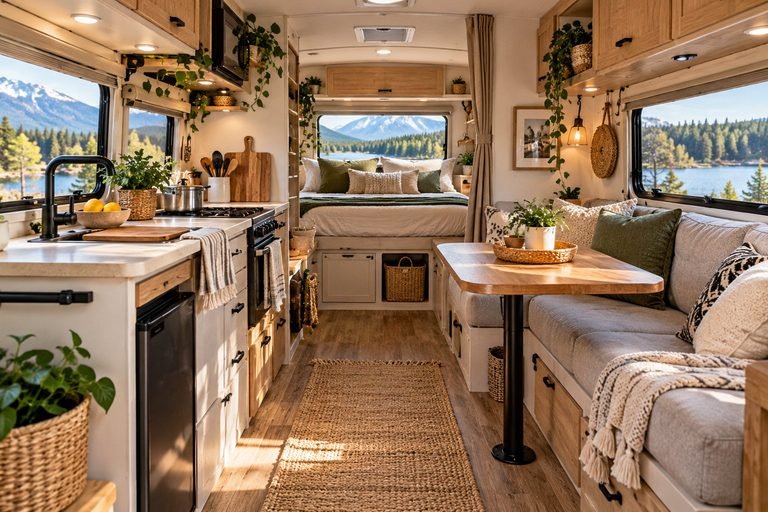
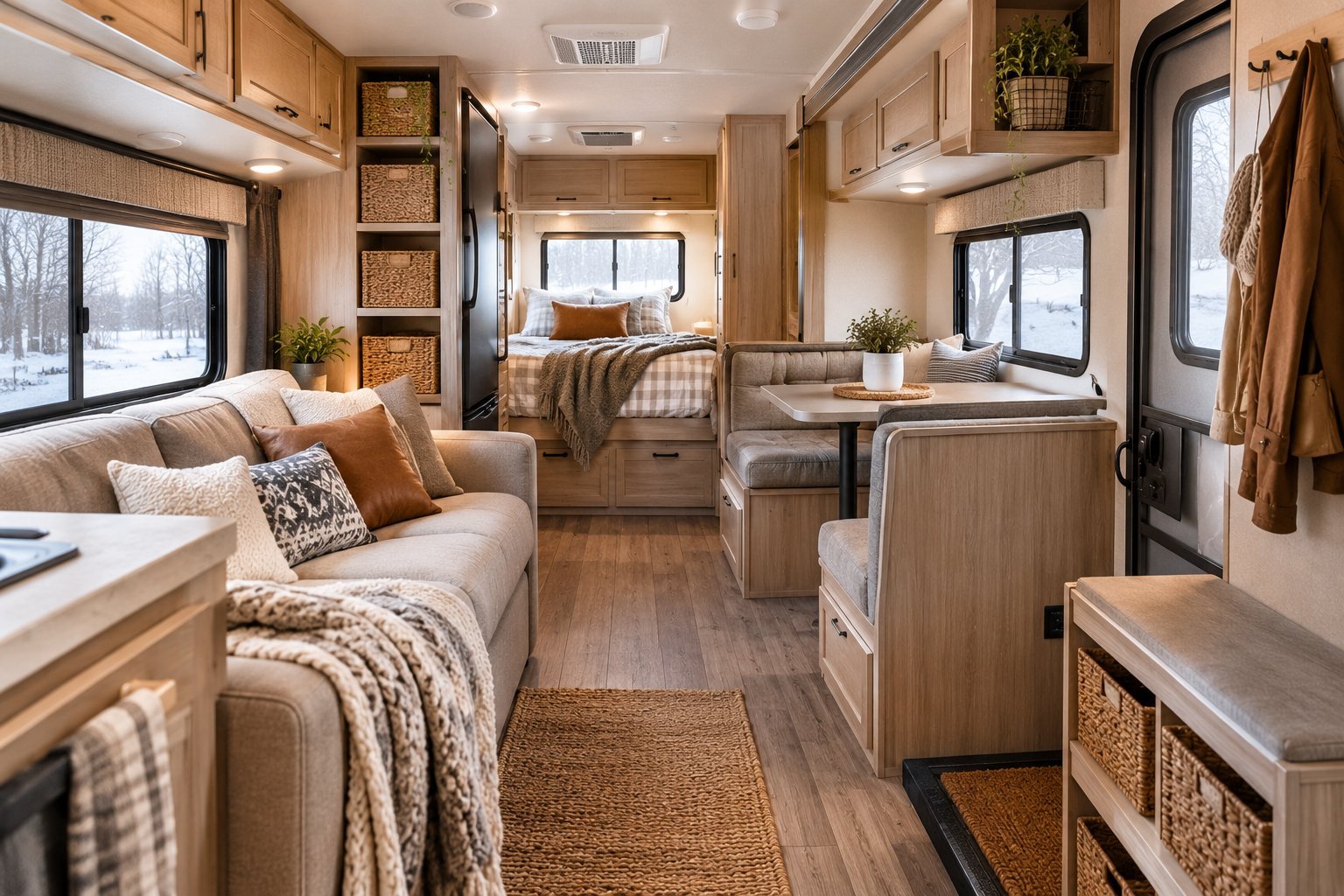
Cozy Indoor Organization Hacks and Space-Saving Tips for Spending Winter Inside an RV
Winter RV living can feel wonderfully cozy, but spending more time indoors also makes every inch of storage space matter. Bulky coats, thick blankets, extra food supplies, wet shoes, and cold-weather gear can quickly crowd a small camper.
A setup that feels perfectly organized during summer may become frustrating when the weather keeps you inside for days.
The key to staying comfortable is making your RV work harder without filling it with more stuff. Clever storage, warm textiles, multipurpose furniture, and a few simple daily habits can help you create a space that feels welcoming instead of cramped.

You do not need an expensive renovation or a long list of organizing products to make a noticeable difference.
These cozy indoor organization hacks and space-saving tips focus on practical ways to arrange your RV for winter. From keeping blankets within reach to managing damp clothing and creating more usable counter space, each idea helps make everyday routines easier when temperatures drop.
Whether you live in a motorhome, travel trailer, fifth wheel, or tiny camper, you can adapt these ideas to suit your layout and the storage you already have.
1. Create a Cozy Blanket Station Without Losing Storage Space
<text> </text>
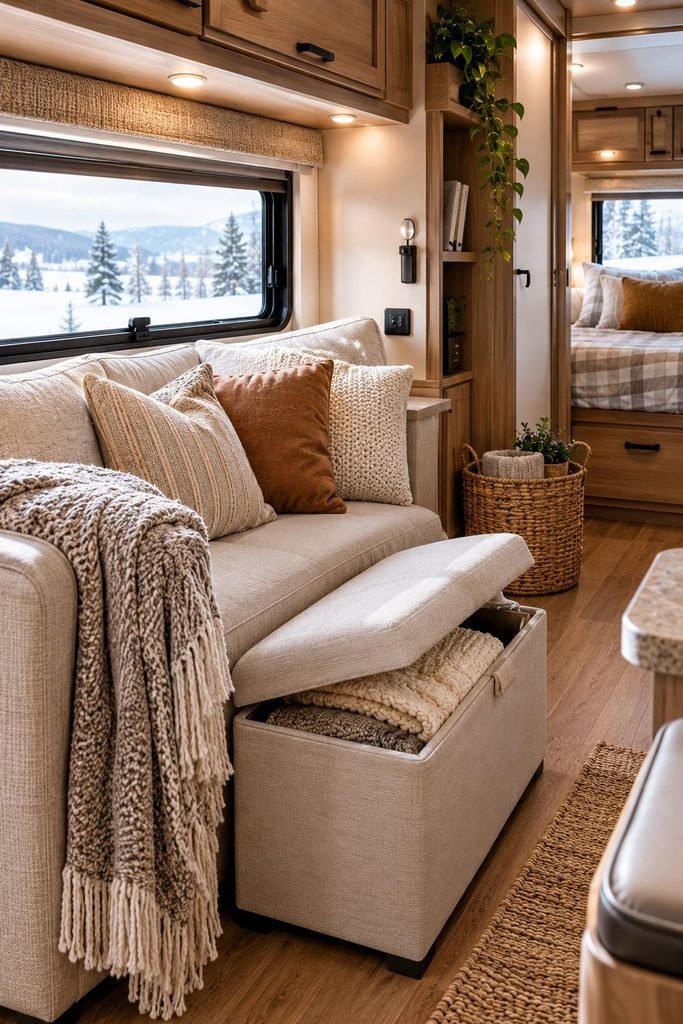
<WritingBlock id=”61843″ variant=”standard”>When cold weather arrives, blankets tend to end up everywhere. One gets left on the sofa, another covers the bed, and a third sits on the dinette after an evening of relaxing indoors. In a small RV, this can make the living area feel cluttered surprisingly quickly.
Create a dedicated blanket station using storage you already have. An ottoman with an interior compartment works well if your RV has room for one, while a lidded basket beside the sofa can hold a couple of throws without taking over the floor. If space is especially tight, use a fabric storage cube that slides beneath a dinette seat or bed.
Choose blankets that are warm but not unnecessarily bulky. Fleece throws, lightweight quilts, and compact thermal blankets can provide plenty of comfort without consuming an entire cabinet. Fold them into similar sizes so they stack neatly and are easy to grab when the temperature drops.
I also recommend keeping one everyday blanket within arm’s reach and storing extra bedding elsewhere. This simple arrangement reduces the temptation to spread blankets across every available surface.
For a coordinated look, choose throws that complement your cushions and curtains. Matching or complementary colors make the storage area feel like part of the decor rather than another collection of supplies.
Space-saving tip: Use the inside of an existing storage ottoman or a clear under-seat compartment before purchasing a separate blanket basket. In a compact RV, using space you already have is often the easiest way to stay organized.
2. Turn Awkward Corners Into Useful Winter Storage
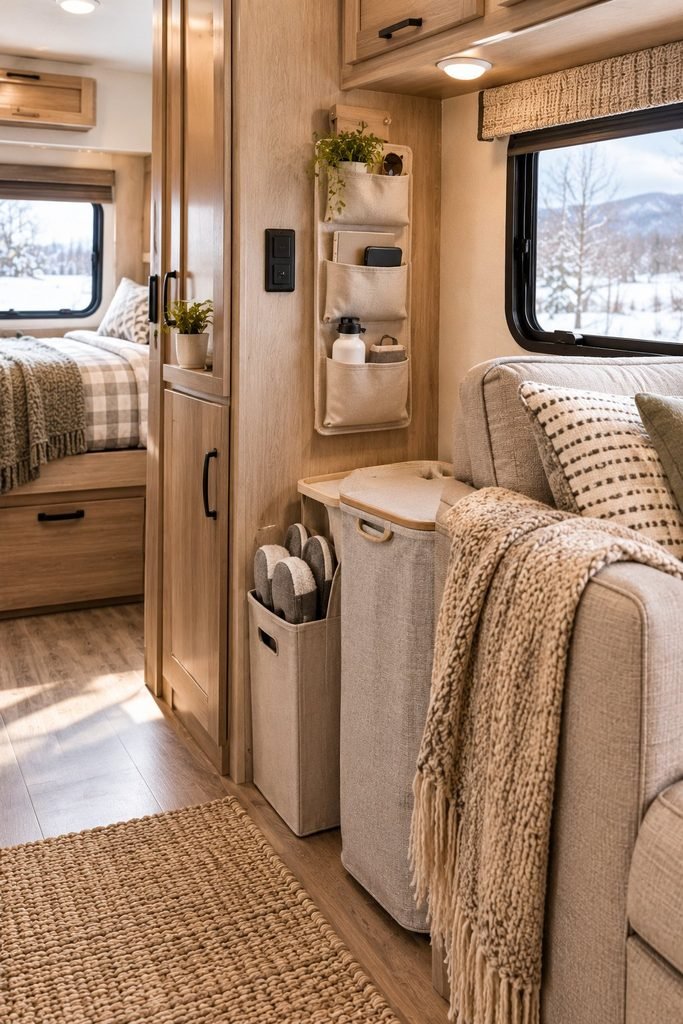
RV interiors often have narrow gaps beside furniture, unused corners near the dinette, and small spaces between cabinets that seem too awkward for ordinary storage. During winter, these overlooked areas can become valuable places for keeping frequently used items close at hand.
Start by looking at the spaces you walk past every day. A narrow gap beside a sofa might accommodate a slim storage bin for slippers or reading materials. An empty corner near the bed could hold a small soft-sided hamper. A compact organizer beside the entryway may provide a convenient home for gloves, hats, and scarves.
Measure each space before buying anything. RV furniture can have unusual dimensions, and an organizer that fits perfectly in a house may block a cabinet door or interfere with a walkway in a camper. Look for containers with rounded edges, flexible sides, or narrow profiles that suit the available space.
Vertical space can help, too. A few lightweight wall pockets may hold charging cables, a small notebook, tissues, or other everyday items that otherwise collect on the dinette. Use appropriate mounting hardware and avoid placing storage where it could obstruct windows, ventilation, emergency exits, or essential equipment.
Keep heavy objects low and secure anything that could slide or fall when the RV moves. Even if you spend most of winter parked at a campground, you may need to relocate unexpectedly.
Space-saving tip: Before adding a new shelf or organizer, remove items that no longer belong in that corner. Empty space becomes useful only when it serves a clear purpose without making the RV harder to move around in.
3. Organize Cold-Weather Clothing With Compact Storage

Winter clothing creates a particular challenge in an RV because thick sweaters, insulated jackets, wool socks, and accessories take up much more room than warm-weather clothes. Piling everything into one cabinet makes it difficult to find what you need and can leave the rest of your wardrobe crumpled.
Begin by separating clothing into three groups: items you wear almost every day, pieces you need occasionally, and clothing that can stay packed until the weather changes.
Keep your daily essentials in the easiest-to-reach drawers or closet section. Store less frequently used items in labeled fabric bins beneath the bed or inside an available overhead compartment, provided the storage is suitable and the items are secured.
Compression bags can reduce the volume of clean, dry seasonal clothing and spare bedding. However, avoid compressing items that need to retain their loft or shape, and do not pack damp garments. Moisture trapped inside a sealed bag can lead to unpleasant odors and mildew.
For smaller accessories, use one compact container for gloves, hats, scarves, and thermal socks. Drawer dividers or small fabric pouches keep these items from becoming tangled together. If you have limited hanging space, use slim hangers and hang only the pieces that benefit from being kept wrinkle-free.
It also helps to establish a simple rule: one item comes out, and one item returns to its assigned place. This prevents clothing from accumulating on the bed or dinette during long stretches indoors.
Space-saving tip: Keep a small rotation of winter outfits accessible rather than storing every clothing option in the main closet. A smaller, well-planned wardrobe leaves more room for other essentials without sacrificing comfort.
4. Make Your RV Dinette Work Harder During Winter
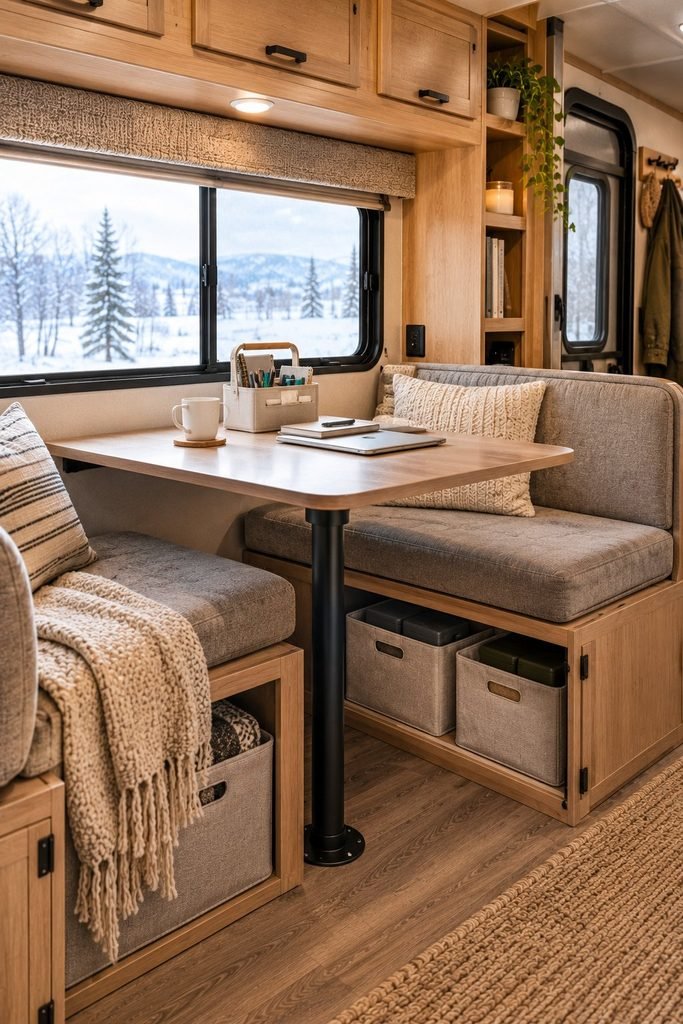
The dinette often becomes the busiest spot in an RV during cold weather. It may serve as a dining table, work desk, craft station, game table, and place to enjoy a hot drink while watching the snow outside. Without a clear system, it can quickly turn into a permanent pile of belongings.
Give the dinette a simple reset routine. Keep only the items needed for the current activity on the table, then return everything else to a designated storage spot when you finish. A small caddy can hold pens, notebooks, remote controls, or craft supplies and be moved out of the way when it is time to eat.
Look underneath the seating, too. Many RV dinettes have storage compartments that can hold table linens, board games, spare chargers, or other lightweight items. Use separate bins to prevent smaller objects from getting mixed together, and check that storage lids and seats can still close safely.
If your table has a removable or adjustable section, use its intended configuration to create more floor space when you do not need the full dining area. Before changing the layout, make sure the table remains stable and does not block access to the RV’s exit or essential equipment.
A soft cushion or washable seat cover can make the dinette feel more inviting for extended indoor use. Choose materials that are easy to clean, particularly if the area doubles as a work or hobby space.
Space-saving tip: Keep a single portable caddy for the activities you do most often. Moving one organized container is much easier than clearing a whole table covered with individual items.
5. Create a Warm, Organized Entryway for Wet Boots and Coats
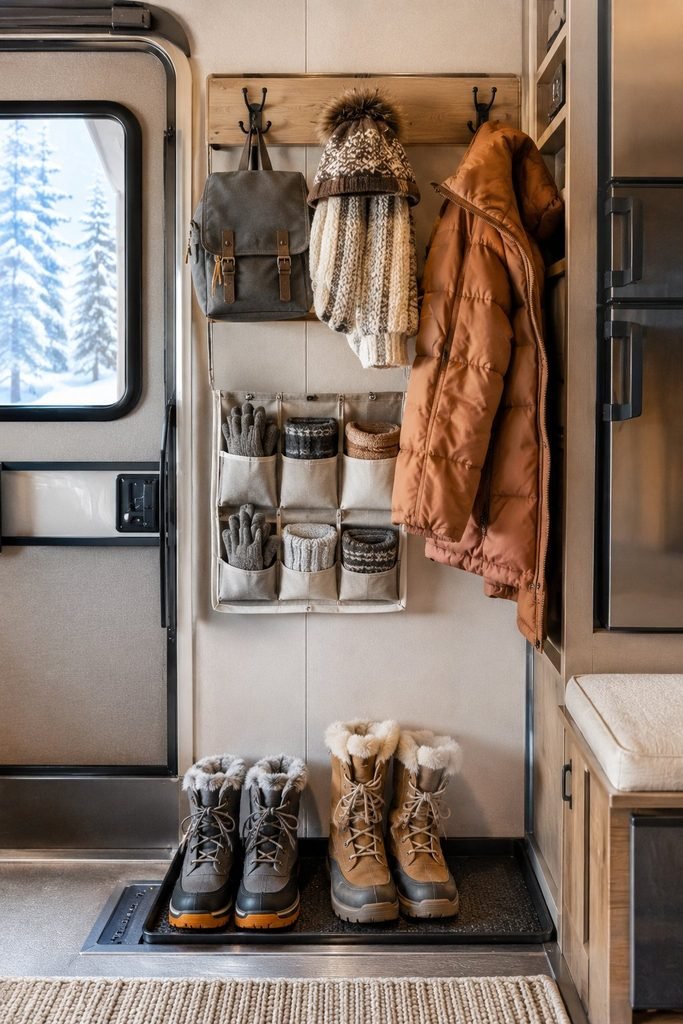
The RV entrance is one of the easiest places for winter clutter to build up. Wet boots, muddy shoes, damp jackets, umbrellas, and gloves can occupy the floor and spread moisture throughout the living space. A small entryway system helps contain the mess before it travels any farther.
Start with a shallow, washable boot tray positioned where it will not interfere with the door or walking path. Use it for footwear that needs to be removed when coming inside. Empty standing water and clean the tray regularly so moisture and dirt do not collect underneath the shoes.
Add a few sturdy hooks for jackets and bags, but avoid hanging so many items that they block the doorway. A small wall pocket or container can keep hats and gloves together.
If your RV has a closet near the entrance, assign one section to outerwear and keep everyday footwear in a compact shoe organizer.
Wet clothing needs airflow to dry properly. Avoid stuffing damp coats into closed cupboards or leaving wet boots inside sealed containers.
Use a suitable drying area with adequate ventilation, keeping fabrics and footwear away from heaters, open flames, and hot surfaces. Follow the RV’s ventilation and heating safety guidance, especially during cold weather when windows tend to remain closed.
For extra comfort, keep a pair of indoor slippers near the entrance. Changing out of outdoor footwear helps the living area stay cleaner and gives the RV a more home-like feeling.
Space-saving tip: Limit the entryway to the footwear and outerwear currently in use. Store spare boots and additional coats in a separate, suitable location so the entrance remains clear and easy to navigate.
6. Use Soft Storage Bins to Keep Cabinets Neat

RV cabinets can hold a surprising amount, but deep shelves and oddly shaped compartments often make it difficult to keep everything in order.
During winter, when you may carry extra pantry supplies, warm accessories, and indoor entertainment, loose items can quickly become difficult to manage.
Soft-sided storage bins are useful because they fit into many cabinet shapes and can be lifted out as a single unit. Use one bin for spare gloves and hats, another for cables and small electronics, and a separate container for craft supplies or games. In kitchen cabinets, choose food-safe containers suitable for the products being stored.
Measure the cabinet’s usable height and depth before purchasing bins. Leave enough room to remove them comfortably, and make sure they do not prevent doors from closing or interfere with latches. In cabinets used while traveling, secure containers so they cannot slide out when the RV turns or brakes.
Choose a consistent system rather than buying containers in many different sizes and styles. A small collection of bins that fit together neatly is easier to maintain and often creates more usable space than a cabinet filled with mismatched organizers.
Clear bins can be helpful when you need to see what is inside, while fabric bins create a softer appearance in living areas. For frequently used supplies, keep the container near the activity it supports. For example, place games near the dinette and spare linens near the bed.
Space-saving tip: Use bins to group items you already own, not as an excuse to store more than your RV can comfortably hold. If a container is too full to lift or remove easily, reduce its contents.
7. Add Over-the-Door Organizers for Small Winter Essentials

When winter keeps you inside the RV, small everyday items seem to multiply. Hand cream, tissues, charging cables, reading glasses, toiletries, and spare socks can quickly fill drawers and countertops. An over-the-door organizer helps give these loose items a home without taking up additional floor space.
Choose a slim organizer with pockets that suit the items you plan to store. A lightweight fabric version can work well for scarves, gloves, toiletries, or small accessories. Clear pockets make it easier to see what you need, while fabric pockets create a softer look that blends into a cozy interior.
Before installing one, check the door’s thickness, clearance, and weight capacity. RV doors and cabinet doors vary, and a hanging organizer should not prevent a door from closing or interfere with its latch. Avoid placing heavy objects in the pockets, especially if the RV will be moving.
You can also use the inside of a suitable pantry or closet door for lightweight supplies. This keeps frequently used items accessible while freeing up shelves for larger belongings.
The most important part is assigning each pocket a purpose. If everything goes into the organizer without a system, it can become another cluttered storage spot. Keep related items together and remove anything you no longer need.
Space-saving tip: Use an over-the-door organizer for lightweight items that currently occupy valuable drawer or counter space. Check its fit carefully before buying, since even a small amount of extra thickness can prevent an RV door from closing properly.
8. Create a Cozy Winter Reading and Relaxation Corner
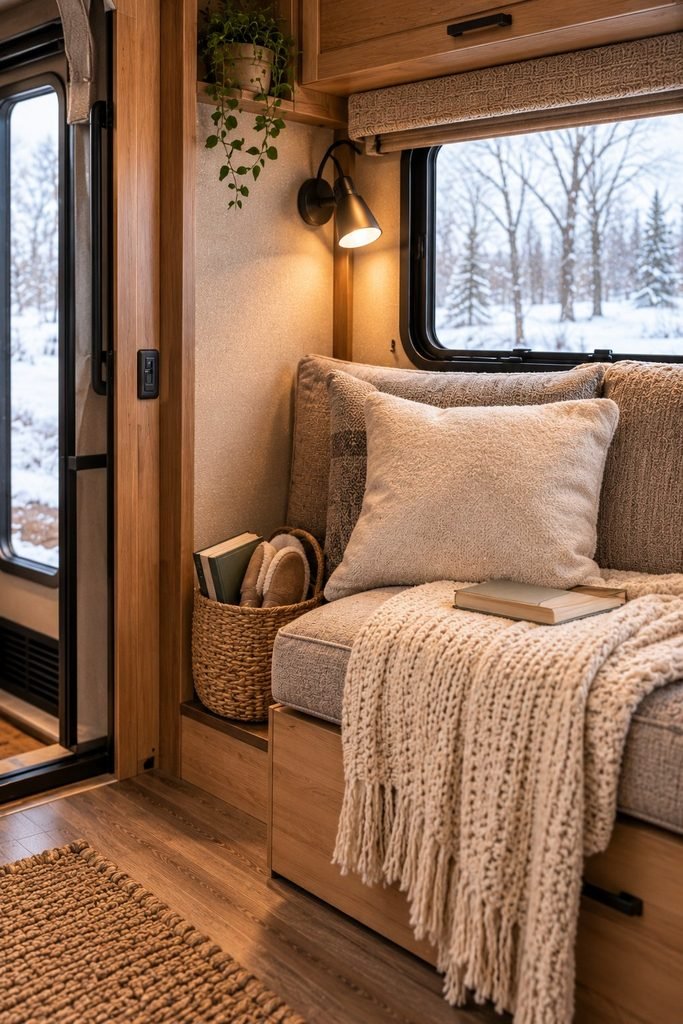
Spending more time indoors can make an RV feel cramped if the living area serves too many purposes without a clear arrangement. Creating a small relaxation corner gives you a comfortable place to read, journal, listen to music, or enjoy a quiet evening without spreading supplies across the entire camper.
You do not need a separate armchair or a major furniture change. A corner of the existing sofa can work just as well. Add a comfortable cushion, one warm throw, and a small reading light that is suitable for your RV’s electrical setup. A compact basket beside the seat can hold a book, a journal, and a pair of slippers.
Keep the basket small enough to tuck away when you need the space for another activity. If you have a dinette that doubles as a lounge area, use a portable cushion and a small caddy to create the same effect without adding permanent furniture.
Lighting can make a noticeable difference during darker winter afternoons. A warm-toned LED lamp or appropriately rated rechargeable light can create a relaxing atmosphere without requiring additional overhead lighting. Secure portable lamps and accessories when traveling, and keep cords away from walkways.
Choose textiles that add warmth without making the seating area difficult to use. One or two coordinated cushions usually look better and take up less room than a large collection of decorative pillows.
Space-saving tip: Make your relaxation corner from furniture and accessories already inside the RV. A dedicated place for relaxing does not have to mean dedicating an entire section of your floor plan to one activity.
9. Store Winter Food Supplies Without Overcrowding the Kitchen
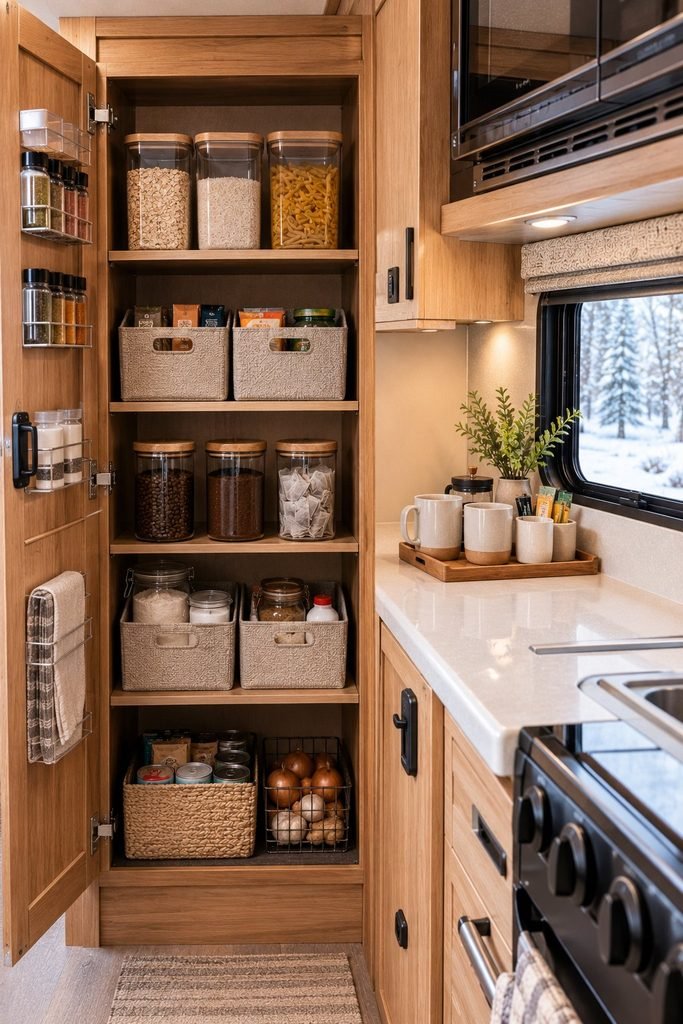
Cold weather can encourage more indoor cooking, hot drinks, and comforting meals. Keeping the right ingredients available makes daily routines easier, but buying too many pantry items can quickly overwhelm a small RV kitchen.
Start by checking your existing supplies before shopping. Make a short list of ingredients you use regularly, such as oats, rice, pasta, soup ingredients, tea, coffee, and cooking basics. Choose quantities that fit your available storage instead of stocking up simply because an item is on sale.
Use shelf bins to group similar products. Keep breakfast supplies together, organize baking ingredients in another section, and place frequently used seasonings where they are easy to reach. Store heavier containers on lower shelves and make sure food is protected from pests and moisture.
Square or rectangular containers can use shelf space efficiently, but transferring every product into matching jars is not essential. Keep original labels and relevant cooking instructions whenever you decant food, and use airtight containers appropriate for the ingredients. Avoid storing food in areas exposed to excessive heat or temperature changes.
It also helps to create a small hot-drink station. A compact tray can hold tea bags, coffee, sweetener, and a few mugs, provided it does not crowd the counter or interfere with cooking. Store the tray in a cabinet when you need the work surface for meal preparation.
Remember that RV kitchens have limited counter space and ventilation. Keep cooking areas clear, and never use an oven or stovetop as a room heater.
Space-saving tip: Organize your pantry around meals you actually prepare. A smaller, well-planned supply of versatile ingredients is easier to store and use than a collection of products that sit untouched for months.
10. Keep Cords, Chargers, and Electronics Under Control
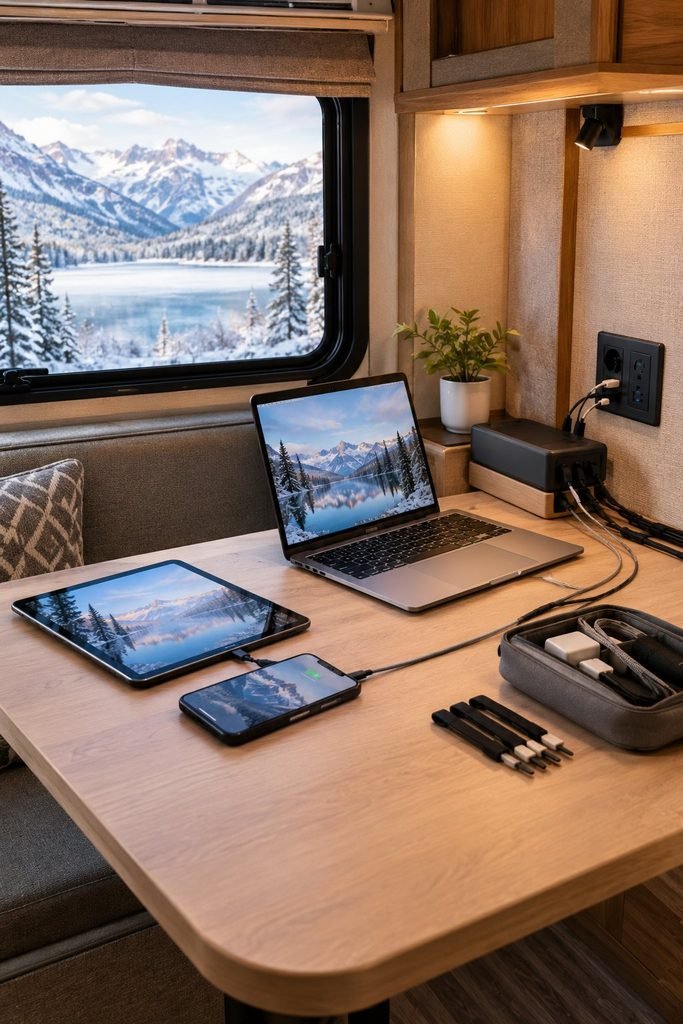
Long winter evenings often mean more time watching movies, using laptops, playing games, or charging devices indoors. Without a dedicated place for electronics, cables can spread across the dinette, bedside shelves, and seating areas.
Create a small charging station using a compact tray or storage box designed for electronics. Keep charging cables grouped by device, and use reusable cable ties or simple clips to prevent them from tangling. A small pouch can hold spare adapters, earbuds, and memory cards.
Position the charging area near a suitable power outlet, away from wet entryways and places where cables could become tripping hazards. Use electrical accessories that are rated for your devices and the RV’s power system. Avoid overloading outlets, daisy-chaining power strips, or covering chargers while they are in use, since these practices can increase the risk of overheating.
If several people share the RV, assign each person a small section of the charging station or use separate pouches for personal accessories. This makes it easier to find the right cable without emptying an entire drawer.
For devices you rarely use, store the cables and accessories together rather than leaving them plugged in or spread across the living space. Keep essential emergency communication equipment accessible, particularly when winter weather could affect travel plans.
Space-saving tip: Keep only the chargers and accessories you use regularly in the main living area. Store occasional-use cables together in a labeled pouch in a designated cabinet.
11. Make Use of Under-Bed and Under-Sofa Storage
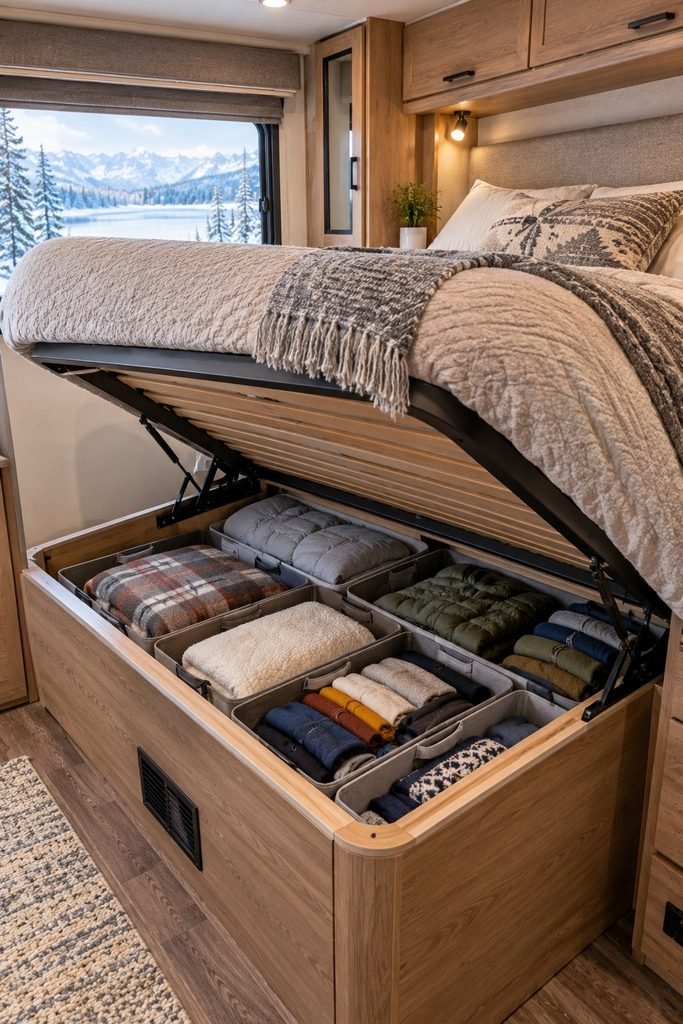
Under-bed and under-sofa compartments are some of the most valuable storage spaces in an RV. They are particularly useful during winter, when spare bedding, heavier clothing, and additional supplies can take up more room than usual.
Begin by checking what each compartment can safely accommodate. Some spaces may contain plumbing, electrical components, heating ducts, or access panels that must remain clear. Do not block ventilation openings or store items against equipment that needs airflow or servicing access.
Use low-profile bins or soft storage bags that slide out easily. Spare sheets, clean blankets, seasonal clothing, and lightweight hobby supplies are good candidates, provided the compartment is dry and appropriate for the items. Keep frequently used belongings closer to the opening and reserve harder-to-reach spaces for items you need less often.
Moisture management is especially important in cold weather. Make sure bedding and clothing are completely dry before storing them, and inspect compartments periodically for condensation, musty odors, or signs of water intrusion. Avoid packing items so tightly that air cannot circulate.
A simple inventory can prevent duplicate purchases. Keep a short list of what is stored in each compartment, or use a small label on the bin rather than writing directly on furniture.
Space-saving tip: Store bulky, infrequently used items under the bed and reserve easy-access cabinets for everyday essentials. This keeps the main living area clear while making the most of hidden storage.
12. Use Foldable and Multipurpose Items to Free Up Floor Space
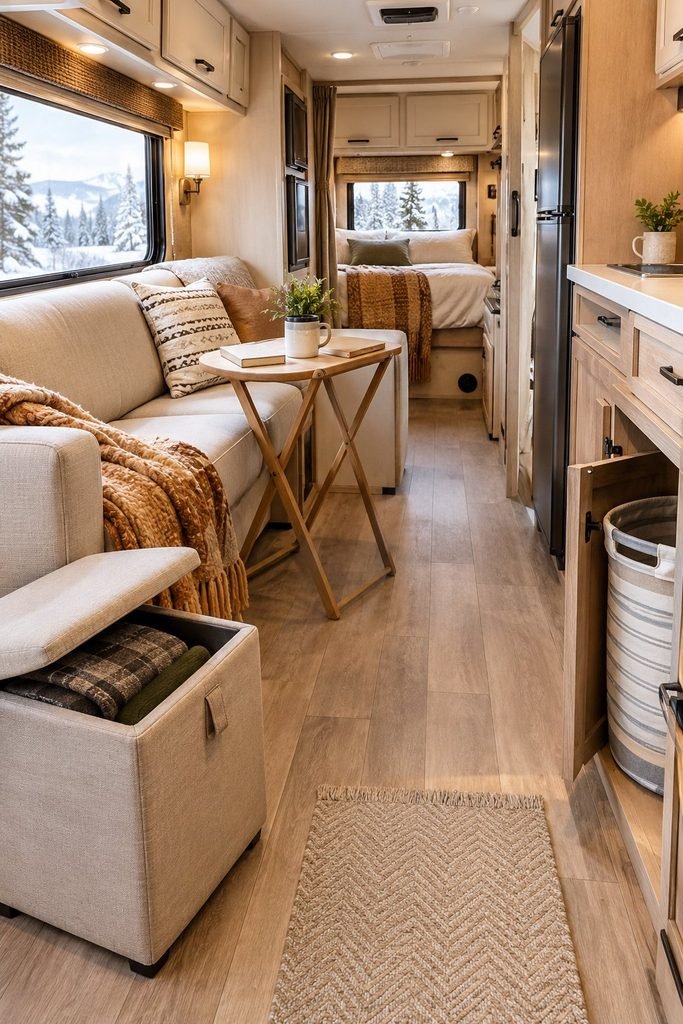
Every item inside an RV competes for limited storage and walking room. During winter, when you spend more time indoors, furniture and accessories that serve only one purpose can make the space feel even smaller.
Look for opportunities to use multipurpose items. A storage ottoman can provide a footrest, extra seating, and a place for blankets. A folding tray table can serve as a temporary work surface and be put away after use. Collapsible laundry baskets can be opened when needed and stored flat when empty.
The best choices depend on your RV’s layout. Before adding anything, check where it will be stored when not in use and whether it will block drawers, doors, or walkways. An item is not truly space-saving if it takes up more room in storage than it provides during use.
Choose furniture and accessories that are stable and suitable for the environment. Lightweight folding furniture should be secured while traveling, and any item used near a heater or cooking appliance must be kept at a safe distance.
It is also worth reconsidering items that have accumulated over time. If you have a separate table, extra seating, or bulky organizer that rarely gets used, removing it may create more useful space than buying a new storage product.
Space-saving tip: Before purchasing a multipurpose item, decide where it will live when folded or stored. If you cannot identify a practical storage location, it may not be the right fit for your RV.
13. Keep Laundry and Damp Indoor Gear From Taking Over
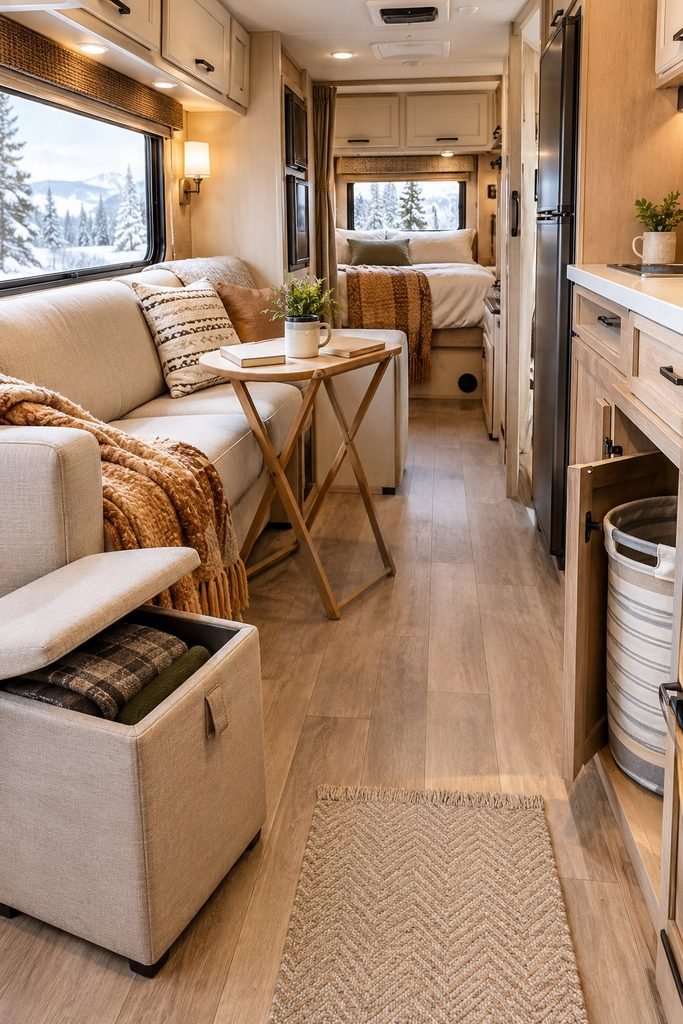
Winter laundry can be difficult to manage in a compact RV. Thick socks, sweaters, towels, and outdoor layers may take longer to dry, while wet items can create clutter and excess moisture if they are left around the living area.
Use a collapsible laundry hamper that fits inside a closet or under a bed when empty. Separate damp clothing from dry laundry rather than placing everything in the same basket. If your RV has a suitable bathroom or designated drying area, use it to manage wet items while maintaining the ventilation recommended for your vehicle.
For small items such as socks and gloves, a compact drying rack can be useful if you have enough room to set it up safely. Choose a stable design that folds away when not needed. Do not place drying racks against heaters, block air vents, or hang wet clothing over cooking appliances.
Make sure the RV has adequate ventilation to help manage indoor humidity. Cooking, showering, and drying laundry can add moisture to the air, increasing the risk of condensation on cold windows and walls. Use built-in ventilation systems as directed, and address any persistent dampness rather than covering it up with storage or decor.
A small routine makes the system easier to maintain: put dirty laundry in the hamper, hang wet outerwear in an appropriate drying area, and return dry items to their assigned storage spaces.
Space-saving tip: Choose a hamper that collapses and a drying solution that can be put away when not in use. Permanent laundry equipment may not be worth the space it consumes in a small RV.
How to Make Your RV Feel Cozy Without Adding Clutter

Organization helps make an RV functional, but comfort matters just as much when winter weather keeps you inside. You can create a warm atmosphere without filling every shelf and surface with decorations.
Start with soft furnishings that have a practical purpose. A warm throw, a washable cushion cover, and a compact rug suitable for your floor can make the living area feel more inviting. Choose colors and textures that work together instead of introducing too many competing patterns.
Use warm, appropriately rated lighting to create a relaxed atmosphere during long evenings. Keep decorations small and easy to store, and avoid covering windows, blocking ventilation, or placing flammable materials near heating equipment.
A few simple habits also make a difference. Clear the dinette after meals, return blankets to their storage spot, and spend a few minutes each evening putting loose items away. These small resets prevent clutter from accumulating while making the next morning easier.
Pay attention to indoor moisture as well. Winter condensation can develop when warm indoor air meets cold surfaces. Ventilate appropriately, use the RV’s moisture-management features, and investigate recurring damp spots. If you use a portable dehumidifier, choose a model appropriate for the space and follow its electrical and operating instructions.
Most importantly, leave enough room to move comfortably. A cozy RV should still have clear walkways, accessible exits, and unobstructed heating and ventilation systems. Practical comfort is more valuable than a perfectly styled interior.
Frequently Asked Questions
How do you keep a small RV organized during winter?
Give frequently used items designated storage spots, use under-bed compartments and cabinet bins, and keep walkways clear. Store bulky seasonal items in suitable hidden spaces and return loose belongings to their places each day.
How can I make my RV cozy without taking up too much space?
Use a few warm blankets, comfortable cushions, soft lighting, and coordinated textiles. Choose accessories that can be stored easily, and prioritize items that serve both a practical and decorative purpose.
Where should I store winter coats and boots in an RV?
Keep daily coats on secure hooks or in an accessible closet, and use a shallow boot tray near the entrance. Allow damp clothing and footwear to dry in a suitable ventilated area before putting them away.
How do I prevent condensation inside my RV during winter?
Use the RV’s ventilation systems as directed, ventilate during cooking and showering, and manage indoor humidity. Keep wet clothing in a designated drying area, inspect cold surfaces for recurring moisture, and address leaks or persistent dampness promptly.
What are the best space-saving products for winter RV living?
Useful options include collapsible hampers, low-profile storage bins, fabric organizers, cable pouches, compact boot trays, and multipurpose ottomans. Measure your available space before buying and avoid products that obstruct access or reduce safe clearance around equipment.
Final Thoughts
Spending winter inside an RV becomes much more enjoyable when everyday items have a clear place and the living area can adapt to different activities. A blanket station, compact clothing storage, an organized entryway, and a few multipurpose accessories can make a noticeable difference without requiring a major renovation.
Start with the area that causes the most frustration. If coats and boots crowd the entrance, organize that space first. If blankets and clothes fill every seat, focus on hidden storage. If the dinette is constantly covered with belongings, create a simple system for clearing it after each activity.
You do not need to use every idea in this list. Choose the solutions that suit your RV’s layout, storage capacity, and winter routine. With a little planning and regular tidying, even a small camper can feel warm, organized, and comfortable throughout the colder months.