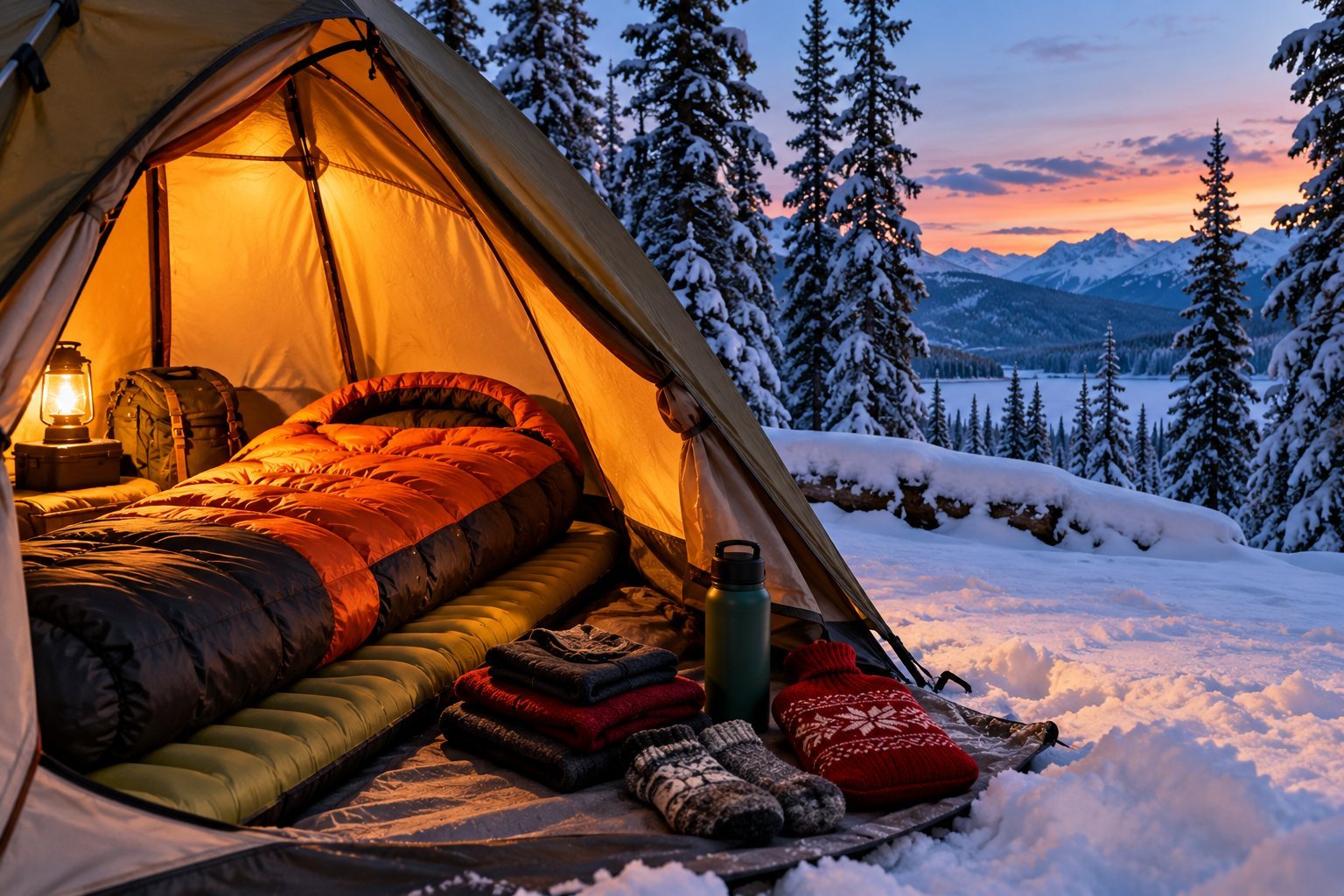
Winter Camping Hacks for Staying Warm on Freezing Nights
Freezing nights can make winter camping uncomfortable when your sleeping setup, clothing, or campsite is not prepared for the temperatures ahead.
Even after an enjoyable day outdoors, crawling into a cold sleeping bag and struggling to warm your feet can quickly take the fun out of the experience.
The good news is that a few practical changes can make a noticeable difference without requiring an expensive collection of winter camping gear.
The biggest secret to staying warm overnight is understanding where heat escapes and how moisture affects your comfort.
A thick sleeping bag alone may not be enough if the cold ground pulls warmth away from your body or your base layers are damp from the day’s activities.
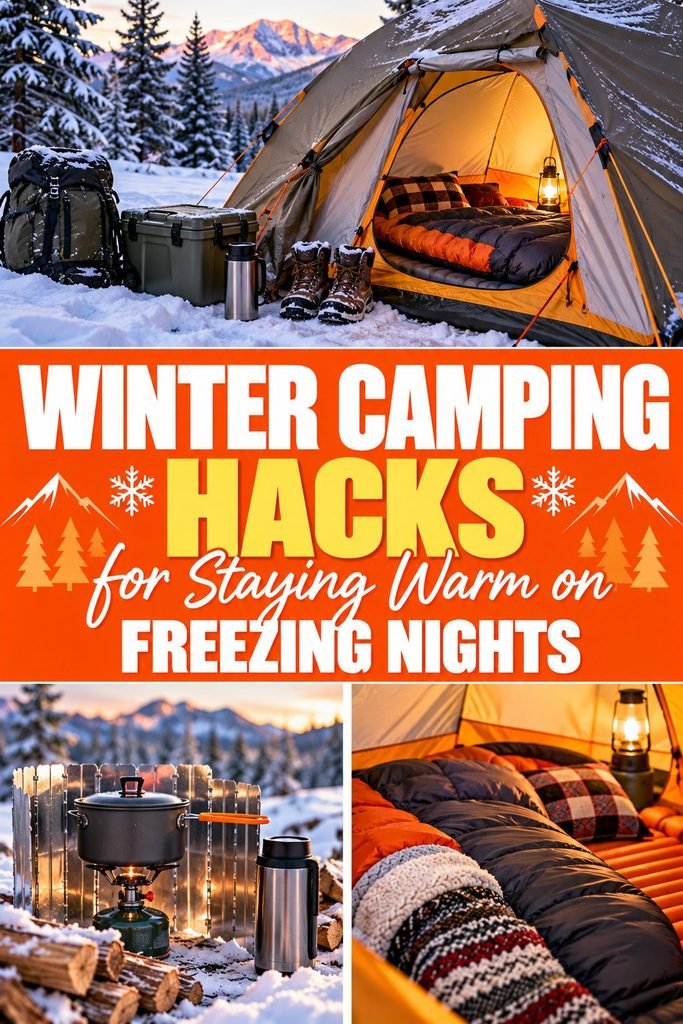
The way you arrange your sleeping area, choose your clothes, and prepare before bedtime matters just as much as the equipment you bring.
These winter camping hacks for staying warm on freezing nights focus on simple, realistic ways to improve your sleeping setup, retain body heat, and avoid common cold-weather mistakes.
Whether you sleep in a tent, camper, or RV, these tips can help you prepare for chilly nights and make your winter camping experience more comfortable and safer.
Why Staying Warm at Night Takes More Than a Thick Sleeping Bag
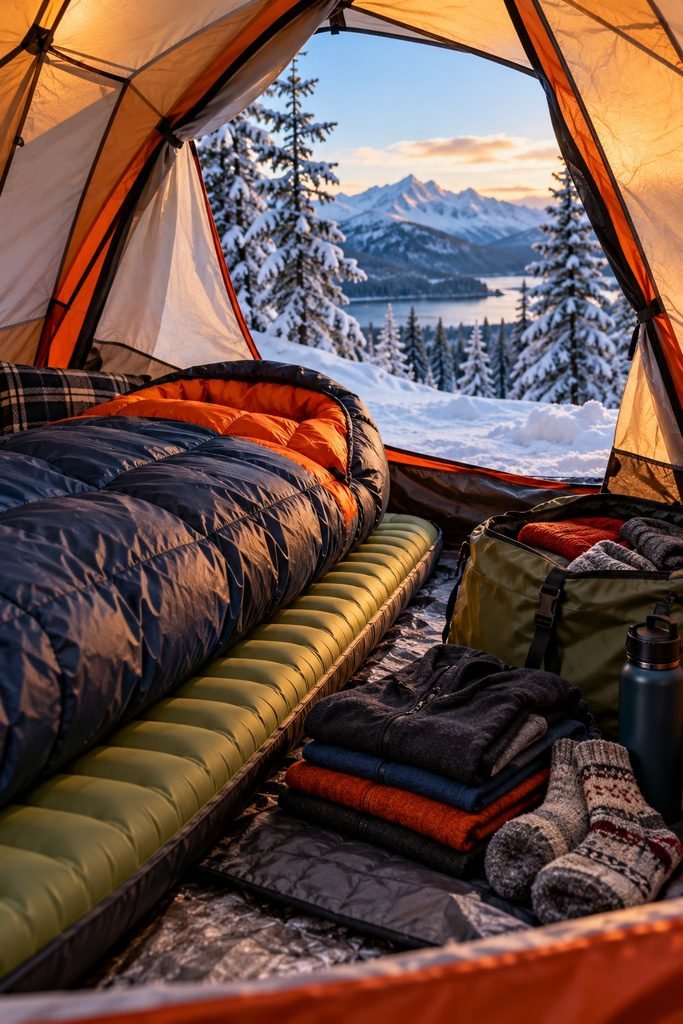
A sleeping bag is an important part of your winter camping setup, but it works best when the rest of your equipment supports it.
Heat can escape into the ground beneath you, wind can make your shelter feel colder, and moisture from sweat or condensation can leave your sleeping gear damp.
Your body also produces less heat when you are resting than when you are hiking or setting up camp. That means a clothing system that feels comfortable during the day may not provide enough warmth once you settle down for several hours.
Start by checking the lowest temperature expected overnight, not just the afternoon forecast. Choose a sleeping bag with an appropriate temperature rating, an insulated sleeping pad suited to the conditions, and clothing that helps manage moisture.
Keep dry sleepwear available, protect your equipment from rain and snow, and make sure your shelter is suitable for the weather you expect.
Personal comfort also varies. Some campers naturally sleep colder than others, so equipment that works for one person may not be sufficient for someone else.
If freezing temperatures are expected, it is better to prepare for them before leaving home than to rely on improvised fixes in the middle of the night.
1. Choose a Sleeping Bag Rated for Freezing Temperatures

One of the most important winter camping hacks is choosing a sleeping bag that matches the temperatures you will actually experience.
A bag that feels comfortable during autumn camping may not provide enough insulation when nighttime temperatures drop below freezing.
Check the temperature information provided by the manufacturer before buying or packing your sleeping bag.
When a bag lists separate comfort, limit, and extreme ratings, pay particular attention to the comfort rating as a starting point for choosing a bag for a comfortable night’s sleep.
Extreme ratings are not intended to represent a temperature at which ordinary users should expect to sleep comfortably.
Think about your personal sleeping habits, too. If you tend to feel cold at night, you may need more insulation than someone who sleeps warm.
Allow for changes in the forecast, especially when camping in mountainous areas or locations where temperatures can fall quickly after sunset.
The bag’s shape and fit can affect warmth. A well-fitting mummy-style bag often reduces empty space that your body needs to warm, while a roomier rectangular bag may feel more comfortable for campers who dislike restrictive sleeping bags. The best choice balances insulation, fit, and freedom of movement.
Keep your sleeping bag dry during transport and setup. Store it in a waterproof stuff sack or dry bag, and avoid placing it directly on damp ground. Once you are ready for bed, loosen restrictive clothing and position yourself comfortably so the insulation can trap warm air around your body.
2. Insulate Yourself From the Cold Ground With a Sleeping Pad

A warm sleeping bag cannot do its job properly if you lose too much heat to the ground beneath you.
This is one of the easiest winter camping problems to overlook, particularly when you are upgrading your sleeping bag but continuing to use a thin summer pad.
The ground can draw heat away from your body throughout the night. Snow and frozen soil make this especially important because the surface beneath your tent may be much colder than the air inside your shelter.
Choose a sleeping pad with an R-value suitable for the expected temperatures. R-value measures thermal resistance, so a higher number generally means better insulation.
For freezing conditions, many campers benefit from an insulated sleeping pad with a higher R-value than they would need during summer.
If your equipment and sleeping arrangement allow it, combining an insulated air pad with a closed-cell foam pad can provide additional insulation and a useful backup layer.
Check that the combination is stable and comfortable, and follow the manufacturers’ instructions for both products.
Before going to bed, inspect your pad for leaks and clear sharp debris from the tent floor. Position the pad on a dry, level surface and make sure it extends far enough to support your body.
This simple change can improve overnight comfort significantly. Instead of trying to compensate for heat loss with extra blankets alone, address the insulation beneath your body first.
3. Change Into Completely Dry Clothes Before Bed

The clothes you wear during the day are not always the best choice for sleeping. Walking, hiking, carrying equipment, and pitching a tent can cause sweat to collect in your base layers, even when the weather is freezing.
Once you stop moving, that moisture can make you feel cold. Changing into dry sleepwear before getting into your sleeping bag helps reduce this problem and gives you a more comfortable starting point for the night.
Pack a dedicated set of dry thermal underwear, socks, and a comfortable top. Keep these items sealed in a waterproof bag so they remain protected from rain, snow, and damp camping equipment.
Choose materials designed to manage moisture, such as suitable merino wool or synthetic base layers. Avoid relying on cotton next to your skin in cold conditions because it can retain moisture and dry slowly.
Do not automatically put on every layer you own. Tight clothing can restrict circulation, and compressed layers may provide less insulation. Start with dry base layers, then add comfortable insulating clothing as needed.
It is also useful to remove damp hats, gloves, and outer layers before settling down. Keep your daytime clothing separate from your sleeping clothes so you do not accidentally use the dampest items when temperatures are lowest.
If your clothing is wet through and you cannot dry it safely, prioritize getting into a sheltered environment and replacing wet layers with dry ones. Persistent cold exposure can become dangerous, so do not treat wet sleepwear as a minor inconvenience.
4. Warm Your Sleeping Bag Before Climbing Inside

Getting into a cold sleeping bag can feel miserable, especially when your hands and feet are already chilly. A simple way to make bedtime more comfortable is to warm the sleeping bag slightly before you settle in.
A hot water bottle designed for hot water can help. Fill it according to the manufacturer’s instructions, close it securely, check for leaks, and use an appropriate protective cover. Place it inside the sleeping bag for a short period while you prepare for bed.
Position the bottle near the foot area or another comfortable location, making sure the heat is not concentrated against bare skin. Remove it or reposition it if it becomes uncomfortably hot. Never use a damaged bottle or exceed its recommended water temperature.
You can also help your sleeping bag feel warmer by keeping it dry, allowing its insulation to loft properly, and avoiding unnecessary compression. If the bag has been packed tightly all day, take it out early enough to expand before bedtime, following the manufacturer’s care instructions.
Do not use a camping stove, charcoal burner, or open flame to warm your sleeping bag or tent. These create serious fire and carbon monoxide hazards. The safest approach is to use suitable insulation and approved warming accessories rather than attempting to heat an enclosed sleeping space.
A little preparation before bed can make climbing into your sleeping bag more comfortable and reduce the temptation to use unsafe heating methods.
5. Wear Warm Socks Without Making Your Boots or Sleepwear Too Tight

Cold feet can make it difficult to fall asleep, but wearing the thickest socks you can find is not always the answer. If socks or other clothing fit too tightly, they can restrict circulation and leave your feet feeling colder.
Choose dry, comfortable socks made for cold-weather use. Wool and suitable synthetic materials are popular options because they can help manage moisture and retain useful insulation. Keep a clean pair reserved for sleeping, especially if your daytime socks become damp.
Check that your sleeping bag has enough room for your feet. If your toes press tightly against the end of the bag, the insulation may become compressed, reducing its effectiveness. A bag with adequate foot space can help you stay comfortable without needing to add several bulky layers.
Before bedtime, remove wet socks and dry your feet carefully. If your feet are cold, make sure the rest of your body is warm enough as well. Your hands and feet can remain uncomfortable when your overall clothing system is insufficient.
Avoid using disposable heat packs directly against bare skin or keeping them pressed against your feet throughout the night. Prolonged heat exposure can cause burns, particularly when sensation is reduced. Follow the manufacturer’s instructions and never sleep with a heat pack in direct contact with your skin.
If your feet remain numb, unusually pale, or painful, take the symptoms seriously and get to a warmer environment. Persistent cold exposure may require prompt attention rather than another pair of socks.
6. Use the Right Layers to Trap Body Heat

Layering correctly can make a freezing night much more manageable. Rather than relying on one thick jacket or piling on every item of clothing, build a comfortable system that traps warm air without making you sweat or restricting your movement.
Start with a dry base layer that manages moisture. Add an insulating layer, such as fleece or suitable wool clothing, and use additional insulation when temperatures demand it. Your outer layer should protect you from wind and moisture while remaining appropriate for the conditions.
When preparing for bed, choose layers that fit comfortably inside your sleeping bag. Bulky clothing that compresses the bag’s insulation can reduce its effectiveness. Tight waistbands, restrictive socks, and clothing that bunches around your feet can also make it harder to stay comfortable.
Keep a warm hat nearby if your head feels cold, and consider a neck gaiter that allows comfortable breathing without restricting airflow. Avoid pulling fabric over your nose and mouth inside the sleeping bag, because moisture from your breath can accumulate in the insulation.
Your clothing needs will depend on the temperature, the sleeping bag you use, and how warm you naturally sleep. Start with dry layers, adjust as needed, and pay attention to any signs of overheating. The goal is to stay comfortably warm without becoming sweaty.
7. Eat a Satisfying Evening Meal Before Bed

Your body needs energy to maintain its normal functions, including producing heat. Arriving at bedtime hungry after a day of hiking, setting up camp, or carrying equipment can make you feel less comfortable during a freezing night.
Plan a satisfying evening meal that provides carbohydrates, protein, and fats. Easy camping options include oatmeal with nut butter, rice with beans, pasta with a protein source, or a hearty soup paired with bread. Choose foods that suit your dietary needs and can be prepared safely with your camping equipment.
You do not need an unusually large meal just before sleeping. Instead, eat enough to meet your activity level and have a convenient snack available if you become hungry later. Trail mix, crackers, or another energy-dense snack can be useful when stored properly.
A warm meal can also help you feel more comfortable before bedtime, although the warmth from the food itself will not replace proper sleeping insulation. Keep your cooking area outdoors and away from tents or enclosed vehicles when using fuel-burning equipment.
If you are camping in very cold conditions, plan meals in advance so you do not have to spend unnecessary time preparing complicated dishes after dark. Warm food, adequate hydration, and a reliable sleeping setup work together to make cold-weather camping easier.
8. Drink Enough Water Throughout the Day

Staying hydrated is important during winter camping, even when cold weather makes you less likely to feel thirsty. You still lose water through breathing, physical activity, and normal bodily functions, and dehydration can affect how well you feel during a long outdoor trip.
Do not wait until bedtime to drink a large amount of water. Sip fluids throughout the day and include drinks with meals and snacks. A warm, nonalcoholic drink can be comforting in the evening, especially after spending hours outdoors.
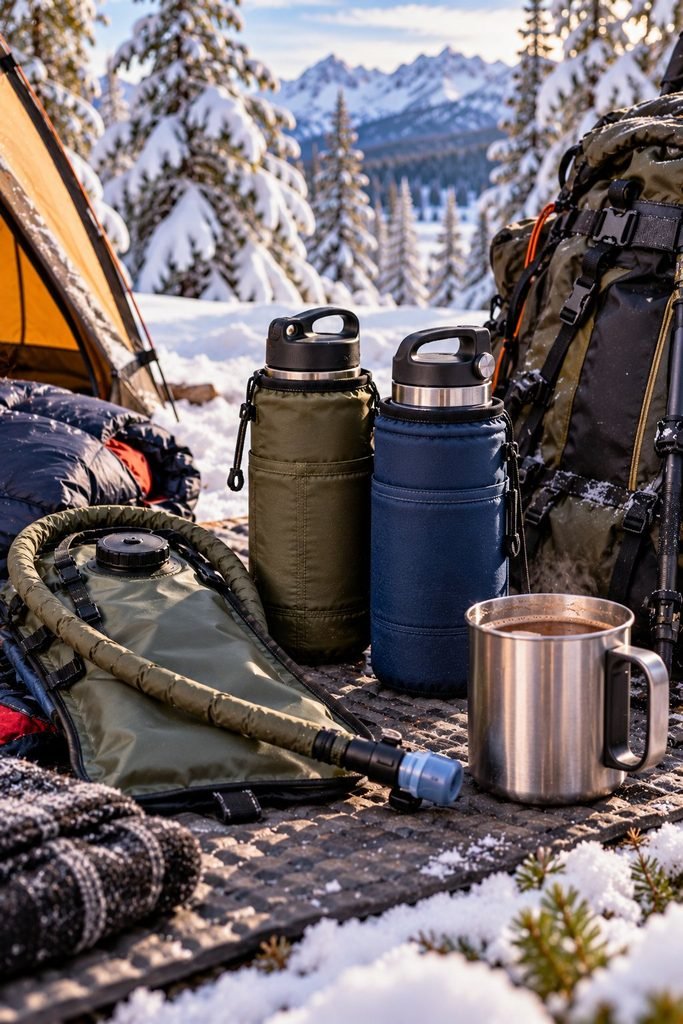
Protect your water supply from freezing. Insulated bottle sleeves can slow heat loss, but they may not prevent freezing when temperatures remain very low. Keep containers sheltered where practical, check them regularly, and carry enough water for the expected conditions.
Avoid drinking excessive amounts immediately before sleeping, since repeated trips outside can interrupt your rest. However, do not deliberately restrict water to avoid getting up during the night. Maintain sensible hydration and plan your evening routine around your needs.
Alcohol is not a good way to stay warm in freezing conditions. It can impair judgment and increase heat loss, creating additional risks when you are exposed to cold weather.
9. Keep Wind and Moisture Out of Your Sleeping Area
A comfortable sleeping bag can lose effectiveness when your shelter is exposed to strong wind or moisture. Preparing your campsite properly helps protect your sleeping system and makes it easier to stay comfortable throughout the night.
Choose a tent designed for the weather you expect. A shelter suitable for mild summer conditions may not be appropriate for heavy snow, powerful winds, or severe winter storms. Check local forecasts and select a safe campsite before setting up.
Secure tent lines and anchors according to the manufacturer’s instructions. Where conditions allow, choose a location with some natural wind protection, but avoid dangerous areas beneath dead branches, near unstable slopes, or in places where snow or water could accumulate.
Keep your sleeping bag and spare clothing away from wet boots, melting snow, and damp outerwear. If your tent has a vestibule, use it to organize muddy or snowy equipment while keeping your sleeping area clear.
Ventilation is just as important as weather protection. Your breath and damp clothing release moisture that can condense on tent walls and sleeping equipment. Keep the tent’s intended ventilation openings clear rather than sealing the shelter completely to trap warmth.
Never use a campfire, charcoal grill, or ordinary camping stove inside a tent. These can cause fires and deadly carbon monoxide poisoning. Staying warm safely depends on suitable insulation, weather protection, and equipment designed for the conditions.
10. Keep Your Head and Neck Comfortable

A cold head or exposed neck can make it difficult to relax at bedtime. Keeping these areas comfortably covered is a simple addition to your winter sleeping routine.
Choose a lightweight, breathable hat that fits comfortably without feeling tight. A soft wool or synthetic beanie may work well, depending on your personal preference and the temperature. Keep a clean, dry hat reserved for sleeping if your daytime headwear becomes damp.
A neck gaiter can provide extra comfort around your neck, particularly if cold air enters your shelter. Make sure it does not restrict breathing, and avoid covering your nose and mouth with fabric inside the sleeping bag, where moisture can build up.
Your headwear should complement the rest of your sleeping system. If you are still cold despite wearing a hat, check whether your sleeping pad has adequate insulation and whether your sleeping bag is rated for the expected temperature.
Avoid wearing a hat so tight that it becomes uncomfortable or interferes with sleep. The goal is to maintain a comfortable temperature while allowing you to rest naturally.
11. Place Essential Items Within Reach Before Bed
Getting out of a warm sleeping bag to search for a headlamp, water bottle, gloves, or an extra layer can be frustrating on a freezing night. Organizing your essentials before bedtime helps you stay comfortable and reduces unnecessary movement in the cold.
Create a small nighttime kit containing your headlamp, a water bottle, spare gloves, lip balm, and any personal items you need overnight. Keep these supplies in a predictable place inside your tent or camper.
Store your phone and other electronics according to the manufacturer’s temperature recommendations. Cold weather can reduce battery performance, so keep essential communication equipment protected and maintain a backup plan when camping in remote areas.
If you use a hot water bottle, inspect it before bedtime and position it safely according to the manufacturer’s instructions. Keep it away from sharp objects and avoid leaving loose equipment where it could become a tripping hazard.
For tent camping, make sure your essentials do not block the entrance or interfere with ventilation. For RV camping, keep walkways and exits clear, particularly if you need to move around in low light.
A few minutes of preparation before getting into bed can save time and help you settle down without repeatedly unpacking your gear.
12. Use a Sleeping Bag Liner When Extra Insulation Is Needed
A sleeping bag liner can be a useful addition to your winter camping setup. Depending on its material and design, a liner can provide a little extra warmth, help keep the inside of your sleeping bag cleaner, and make your sleeping arrangement more comfortable.
Fleece liners are often chosen for additional insulation, while lightweight silk or synthetic liners may be preferred for comfort and easier cleaning. The amount of warmth added varies by product, so check the manufacturer’s guidance rather than assuming every liner will make a sleeping bag suitable for much colder temperatures.
Choose a liner that fits your sleeping bag without creating excessive tightness. If the liner makes the bag too restrictive, it may compress the insulation and reduce the benefit you were hoping to gain.
Keep the liner dry between trips and allow it to dry fully after washing. If moisture collects inside your sleeping system, separate the layers when practical and follow the care instructions for each item.
A liner is best treated as an extra layer of comfort rather than a substitute for an adequately rated sleeping bag and insulated pad. For freezing nights, the underlying sleeping system still needs to be suitable for the expected conditions.
13. Prepare a Warm, Comfortable Bedtime Routine
A consistent bedtime routine can help you settle into your sleeping bag before you become uncomfortably cold. Rather than waiting until you are shivering to prepare for sleep, complete your essential tasks while you still feel reasonably warm.
Finish cooking and campsite chores early enough to organize your sleeping area before temperatures fall further. Change into dry sleepwear, put damp clothing aside, and check that your sleeping pad and bag are positioned correctly.
Have your nighttime essentials ready, including your headlamp, water, warm hat, and any additional layer you may need. If you plan to use a hot water bottle, prepare it safely and inspect it for leaks before placing it inside your sleeping bag.
Avoid going to bed in sweaty clothing after a strenuous activity. If you need to walk around the campsite before sleeping, wear suitable outer layers and change back into dry sleepwear afterward.
You can also prepare your morning clothes in advance. Keeping them organized in a dry bag makes getting dressed easier when the tent is cold and the sun has not yet risen.
The routine does not need to be complicated. The most useful habits are the ones you can repeat consistently, even when you are tired after a long day outdoors.
14. Know When Extra Blankets Help and When They Do Not
Extra blankets can make a winter sleeping setup more comfortable, particularly when camping in an RV, camper, or a spacious shelter with enough room to arrange bedding properly. However, more layers are not always better.
A blanket placed over a sleeping bag may add insulation, but it can also compress the sleeping bag’s loft if it is heavy. Choose lightweight layers that do not restrict movement or interfere with the insulation underneath you.
Inside an RV or camper, additional bedding can be useful when the sleeping surface is cold or when different people prefer different levels of warmth. Make sure blankets remain clear of heaters, cooking appliances, and other heat sources.
For tent camping, prioritize a suitable sleeping bag and insulated pad before relying on extra blankets. Household bedding can become bulky, absorb moisture, and take a long time to dry. Camping-specific layers are often easier to manage in wet or cold conditions.
Keep all bedding dry and avoid piling so many layers around your face that breathing becomes uncomfortable. If your sleeping setup still feels cold, reassess the sleeping bag’s rating, the pad’s insulation, and your clothing rather than simply adding more fabric.
15. Recognize the Warning Signs of Dangerous Cold
Comfort matters during winter camping, but safety should always come first. Even a well-prepared camper can experience unexpectedly harsh weather, equipment problems, or prolonged exposure to cold.
Learn the warning signs of hypothermia, which can include shivering, confusion, unusual tiredness, poor coordination, and slurred speech. Frostbite may cause numbness, tingling, pale or waxy-looking skin, and changes in skin color, particularly on fingers, toes, ears, and the nose.
If you suspect a cold-related injury, move to a warmer, sheltered location as soon as it is safe to do so. Remove wet clothing, protect the person from further heat loss, and seek appropriate medical or emergency assistance. Severe symptoms require urgent help. Do not rub suspected frostbitten skin or apply direct high heat to numb areas.
Do not ignore symptoms because you are close to your campsite or expect the temperature to rise soon. Cold injuries can worsen quickly, and impaired judgment may make it difficult to recognize how serious the situation has become.
Before a winter trip, check the forecast, understand the hazards in the area, and have a clear plan for leaving or seeking help if conditions deteriorate. Turning back or ending a trip early is a sensible decision when your safety is at risk.
Extra Tips for Staying Warm on Freezing Nights
A few additional habits can improve your comfort without adding much weight to your pack.
Let your sleeping bag loft before bedtime. Remove it from its compression sack early enough for the insulation to expand according to the manufacturer’s instructions.
Keep spare sleepwear protected. Use a waterproof bag to prevent clean clothing from becoming damp during setup or overnight.
Check the sleeping pad before every trip. A slow leak can make an otherwise good sleeping system uncomfortable by morning.
Avoid overheating before bed. Adjust your layers during physical activity so you do not become sweaty, then change into dry clothing before sleeping.
Prepare for the actual overnight low. Weather at the campsite can differ from conditions in a nearby town, particularly in higher elevations and exposed locations.
Keep emergency equipment accessible. A headlamp, first-aid supplies, and suitable communication equipment can be important if weather or equipment problems force you to leave your sleeping area.
Common Mistakes That Can Make You Colder at Night
Even campers with good equipment can lose comfort through a few avoidable mistakes.
Using a summer sleeping bag in freezing weather. Choose a sleeping bag appropriate for the expected temperature instead of assuming extra clothing will compensate for inadequate insulation.
Sleeping directly on a thin pad. Insufficient insulation beneath your body can undermine an otherwise warm sleeping bag.
Going to bed in damp clothes. Sweat and moisture can make it harder to stay comfortable once you stop moving.
Wearing restrictive layers. Tight socks, cramped footwear, and compressed sleeping bag insulation can reduce comfort and may interfere with effective insulation.
Ignoring condensation. Sealing a tent completely to keep warm can allow moisture to build up inside. Use the shelter’s intended ventilation system.
Using unsafe heating methods. Never run a cooking stove or charcoal burner inside a tent to warm the sleeping area. Carbon monoxide poisoning and fire can be fatal.
Frequently Asked Questions
How do I stay warm while sleeping in a tent in freezing weather?
Use a sleeping bag rated for the expected conditions, an adequately insulated sleeping pad, and dry sleepwear. Protect your gear from moisture, maintain appropriate tent ventilation, and prepare your sleeping area before temperatures fall.
Should I wear clothes inside my sleeping bag?
Yes, comfortable, dry base layers can help you stay warm. Avoid tight clothing that restricts circulation or compresses the sleeping bag’s insulation. Adjust your layers to the temperature and your personal comfort.
Does a sleeping pad really make a difference in winter?
Yes. A sleeping pad reduces heat loss to the cold ground. In freezing conditions, choosing a pad with an appropriate R-value is an important part of a warm sleeping system.
Is it safe to use a heater inside a camping tent?
Only heating equipment specifically designed and approved for the exact setting should ever be considered, and all manufacturer instructions and ventilation requirements must be followed. Ordinary camping stoves, charcoal grills, and open flames must never be used inside a tent. Carbon monoxide and fire are serious hazards.
What should I do if I am still cold inside my sleeping bag?
Check your sleeping pad’s insulation, make sure your clothing and bedding are dry, and confirm that your sleeping bag is suitable for the temperature. Add appropriate insulation if available, and move to a warmer safe location if you cannot maintain a safe body temperature.
Can I use a hot water bottle to stay warm while camping?
A hot water bottle designed for hot water can provide temporary warmth when used according to the manufacturer’s instructions. Check it for leaks, use a suitable cover, and avoid prolonged direct contact with your skin. Never use a damaged bottle or an unsuitable container.
Final Thoughts
Staying warm on freezing nights starts with a sleeping system suited to the weather, but the details surrounding it matter just as much. An insulated sleeping pad, dry sleepwear, comfortable layers, a protected sleeping bag, and a sensible bedtime routine can all improve your overnight comfort.
You do not need to buy every accessory available. Start by checking the temperature ratings of your sleeping equipment, making sure your sleeping pad provides enough insulation, and keeping moisture away from your bedding. Add other items according to your camping style and the conditions you expect.
Most importantly, do not confuse being uncomfortable with being safe. If you experience signs of hypothermia or frostbite, or if the weather becomes dangerous, take action instead of trying to push through the night.
With careful preparation and realistic expectations, winter camping can be a rewarding experience, even when the temperature drops well below freezing.