DIY Camping Hacks: 28 Cool Camping Ideas and Tips That Actually Make Camping Easier
Camping can be one of the best ways to slow down, spend time outside, and enjoy a change of scenery, but the little things can make a big difference in how comfortable the trip feels.
After dealing with crowded camp kitchens, damp gear, limited storage, messy food preparation, and those small items that somehow disappear around the campsite, I have learned that a few simple DIY camping hacks can save a surprising amount of time and frustration.
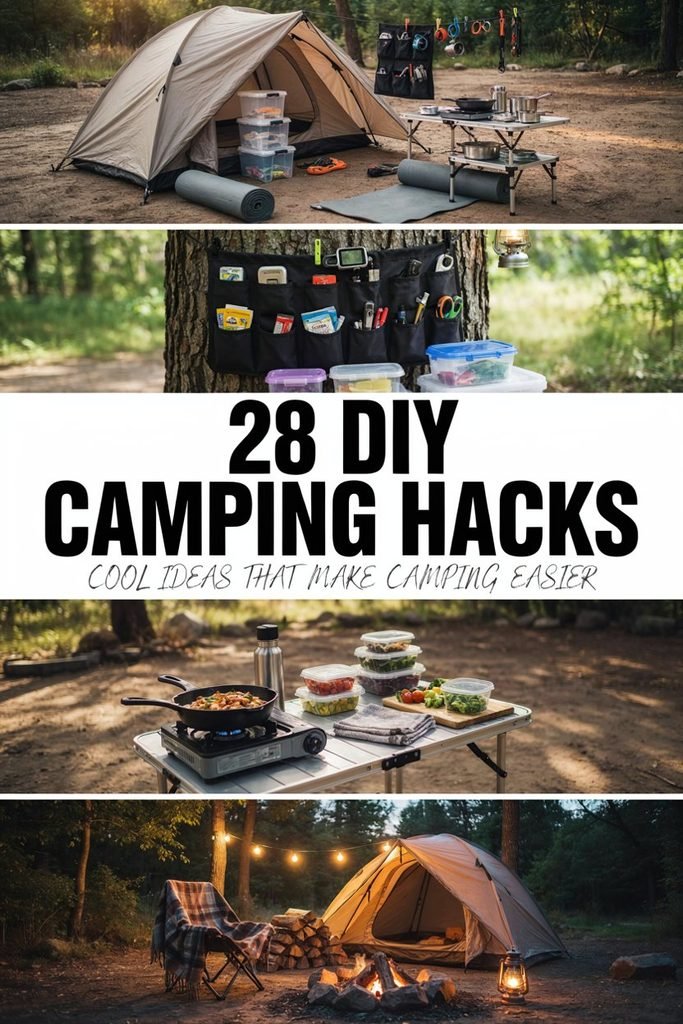
The best camping ideas are not necessarily expensive or complicated. Often, they involve using something you already have at home in a smarter way.
In this guide, I am sharing 28 practical camping hacks and tips that can help with organization, cooking, storage, comfort, cleanup, and everyday campsite problems. These are the kinds of ideas I find especially useful when packing for a family camping trip because they make the campsite easier to manage without bringing an entire house along.
1. Turn a Plastic Storage Bin Into a Camping Kitchen
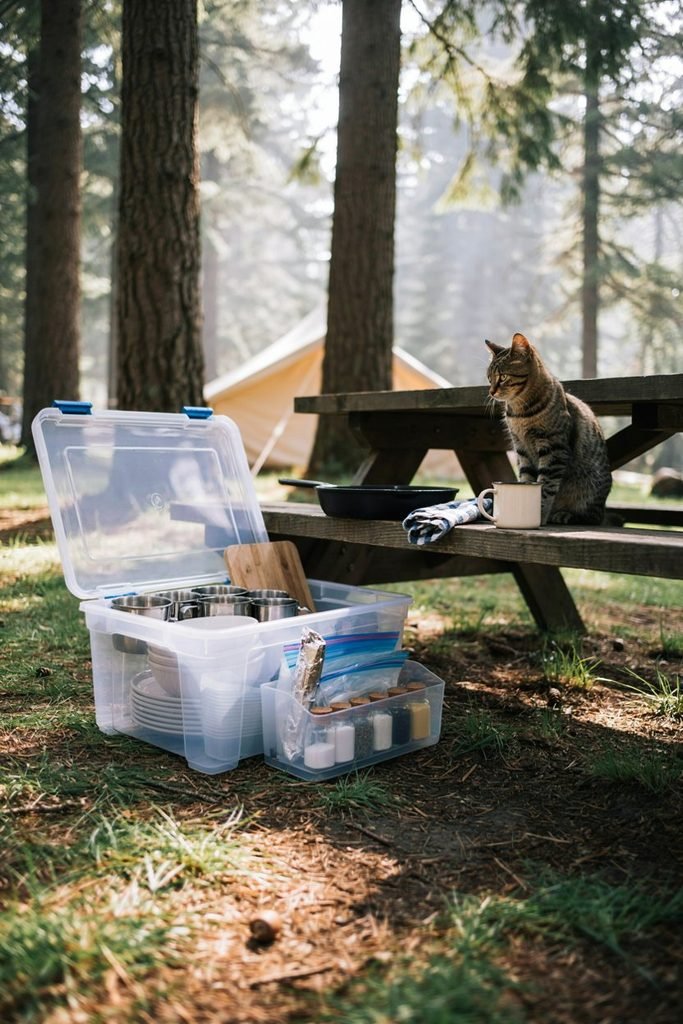
One of my favorite camping organization tricks is creating a dedicated kitchen box before leaving home.
Instead of throwing cooking supplies into several bags, use a sturdy plastic storage bin to keep everything together. Depending on the size of your camping setup, you can store plates, cups, cooking utensils, cutting boards, aluminum foil, food storage bags, napkins, seasonings, dish soap, sponges, and other small kitchen supplies inside.
I like this approach because everything has a designated place. When you arrive at camp, you can pull out one container instead of searching through multiple bags.
For an even better setup, use smaller containers inside the main bin to separate utensils, spices, and cleaning supplies.
A camping kitchen box also makes packing easier for the next trip because you can restock anything that was used instead of starting from scratch.
2. Use a Hanging Shoe Organizer for Campsite Storage
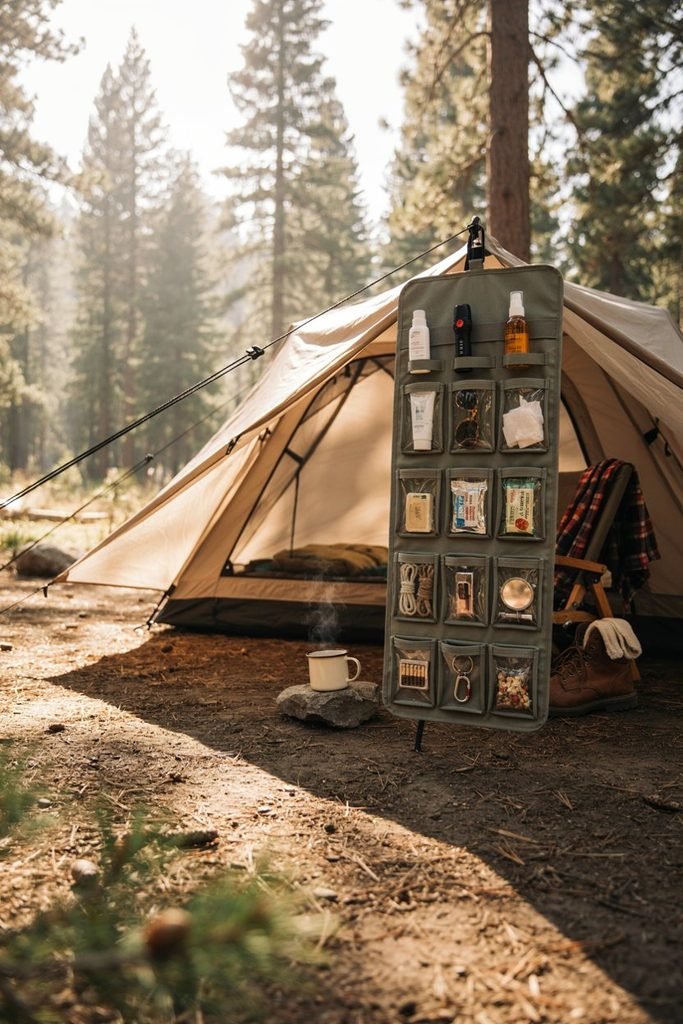
A hanging shoe organizer can become surprisingly useful at a campsite.
The individual pockets are perfect for keeping small items that tend to get lost. You can use them for sunscreen, insect repellent, flashlights, tissues, sunglasses, snacks, hand sanitizer, charging cables, and other frequently used items.
Hang the organizer inside your tent, under a sheltered area, or from a suitable campsite structure where it can stay dry and secure.
This is especially helpful when several people are sharing one tent because everyone can see where small essentials are kept.
I have found that campsite organization is less about having more storage and more about making the storage you already have easier to access.
3. Make a Simple DIY Campfire Starter
Getting a fire started can be frustrating when the wood is slightly damp or the weather is not cooperating.
A simple homemade fire starter can make this part of camping much easier.
One easy option is to save cardboard egg cartons and fill the cups with small pieces of dry cardboard, untreated paper, or dryer lint. A little candle wax can be added to help the material burn longer.
Prepare these at home and store them in a sealed container or bag until your trip.
The important thing is to use only safe, dry materials and follow the campsite rules for fires. Never use gasoline or other dangerous accelerants to start a campfire.
I like making fire starters ahead of time because it turns one of those annoying little campsite jobs into something you can handle quickly.
4. Keep Your Tent Floor Cleaner With a DIY Shoe Station
A surprising amount of dirt enters a tent through shoes.
A simple shoe station placed just outside the tent entrance can make a noticeable difference. You can use a small outdoor mat, a piece of rubber flooring, or another washable surface as the designated shoe area.
Everyone leaves their shoes there before getting inside.
For rainy camping trips, this becomes even more useful because wet shoes can quickly make the inside of a tent muddy.
If space allows, keep a small towel nearby for wiping feet and drying wet footwear.
This is one of those simple camping habits that takes almost no effort but can make the sleeping area feel much cleaner.
5. Create a DIY Camping Handwashing Station
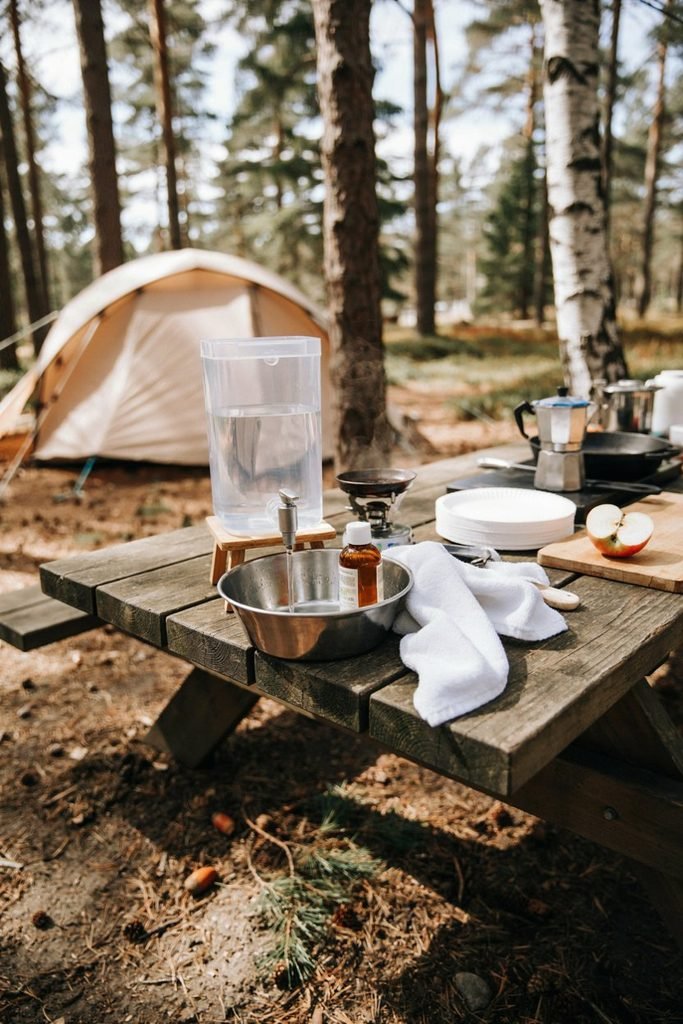
A handwashing station is one of the most useful additions you can make to a campsite, especially when you are camping with children.
You can create a simple setup using a clean water container with a controlled spout, a small basin, biodegradable soap where permitted, and a towel.
Place it near the cooking area but far enough away from food preparation surfaces that splashing water does not create a mess.
I prefer having handwashing supplies in one location rather than constantly reaching into the camping kitchen box. It makes cleaning hands before meals much easier and gives everyone a convenient place to wash up after handling food.
Always follow local campsite rules regarding wastewater disposal.
6. Use Reusable Containers for Prepped Meals
One of the easiest ways to make camping meals less stressful is to prepare as much as possible before leaving home.
Instead of bringing every ingredient separately, portion ingredients into reusable containers.
For example, you can chop vegetables, measure spices, prepare sauces, and portion ingredients for individual meals before packing the cooler.
Labeling the containers with the meal they belong to can save even more time.
When everyone is hungry after a long day outside, the last thing I want is to spend half an hour figuring out which ingredients belong together.
Prepping meals at home also reduces the amount of packaging you need to bring to the campsite.
7. Make a DIY Camping Utensil Roll
A utensil roll is an easy way to keep cooking tools together.
You can make one using a piece of sturdy fabric with sewn or secured pockets. Add spaces for wooden spoons, spatulas, tongs, knives, and other small cooking tools.
Roll it up and secure it with a strap or tie.
The biggest advantage is that your cooking utensils stay together rather than spreading across the kitchen box.
It also makes cleanup easier because you can quickly see whether everything has been returned to its place.
If sewing is not your thing, you can create a similar setup with a small organizer or fabric tool pouch.
8. Keep Matches and Fire Starters Dry
Wet matches are one of those small camping problems that can become a major inconvenience.
Keep matches, lighters, and fire starters inside a waterproof container rather than leaving them loose in a backpack.
A sealed plastic container can work for short trips, while a proper waterproof container is a better option for wet conditions.
I also recommend keeping your primary fire starting supplies in a location that is protected from rain but easy for adults to reach.
Having a backup lighter is another simple precaution that takes almost no space.
9. Use a Cooler as More Than a Cooler
Your cooler can serve several purposes around camp.
Besides keeping food and drinks cold, it can provide a sturdy surface for food preparation when you need an additional workspace.
A flat, stable cooler can also be useful for organizing food while preparing meals.
The key is keeping raw foods, cooked foods, drinks, and frequently opened items organized so the cooler does not become one large pile.
I like grouping food according to when it will be used. Items for the first day can stay near the top, while food for later meals can remain deeper inside.
That small change can help keep the cooler colder because you are not digging through everything every time you need something.
10. Make a Dedicated Camping Cleaning Kit
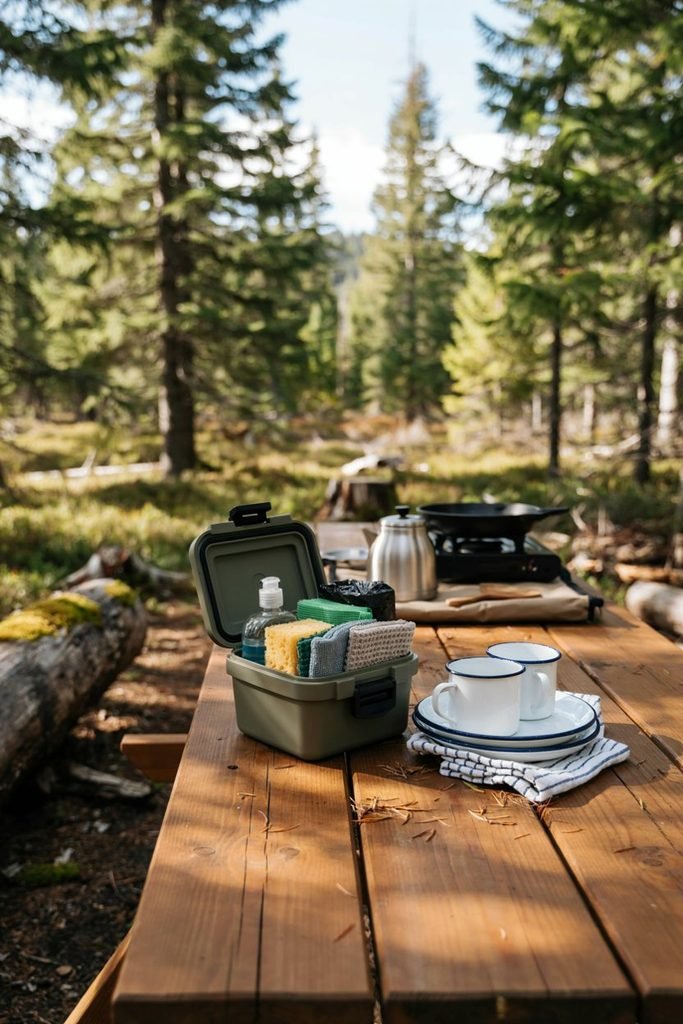
Cleaning becomes much easier when all your supplies are stored together.
Create a small cleaning kit containing items such as biodegradable dish soap where permitted, sponges, scrubbers, microfiber cloths, trash bags, paper towels, and a small drying towel.
Keep the kit in a waterproof container so wet sponges do not soak other equipment.
I prefer having a separate cleaning container instead of keeping these supplies mixed with cooking equipment.
After meals, you can simply bring out the cleaning kit, wash the dishes, wipe down the cooking surface, and put everything away.
Always check the rules at your campsite for washing dishes and disposing of wastewater.
11. Use a Tarp to Create Extra Covered Space
A tarp can be one of the most useful pieces of camping gear you bring.
With the right setup, it can provide additional shade during hot weather or create a sheltered area for sitting and cooking when light rain starts.
The trick is learning how to secure it properly using appropriate poles, ropes, and stakes.
Before setting it up, consider where rainwater will flow and make sure the tarp is positioned so water does not collect in the middle.
I especially like having a covered area because it gives everyone somewhere to sit when the weather changes without forcing the entire group into the tent.
Never attach tarps to unsafe structures or trees that could fall, and always secure the setup properly before leaving it unattended.
12. Create a Simple Campsite Lighting System
Good lighting can make a campsite feel much more comfortable after sunset.
Instead of relying on one flashlight, create several lighting points around the campsite.
A rechargeable lantern can provide general light while smaller lights can be placed near the cooking area, tent entrance, and seating area.
You can also use battery powered string lights designed for outdoor use to make the campsite easier to navigate.
I recommend keeping one flashlight or headlamp specifically for emergencies rather than using every light source around camp until the batteries are almost empty.
Place lights where people can easily find them without walking through dark areas.
13. Use Headlamps for Hands Free Camping
A headlamp is one of those camping items that seems unnecessary until you actually need one.
When you are cooking after dark, setting up equipment, walking to the restroom, or searching through a storage container, having both hands free makes everything easier.
Keep at least one headlamp somewhere that is immediately accessible after arriving at camp.
I also like putting headlamps in the same location every night so nobody has to search for them when the sun goes down.
If you are camping with children, having a properly fitted light for each child can also make nighttime routines easier.
14. Turn a Small Container Into a Camping Emergency Box
A compact emergency box can keep important supplies together instead of scattered across your camping bags.
Depending on the trip, it can contain a basic first aid kit, spare batteries, a whistle, waterproof matches, a flashlight, basic repair supplies, and emergency contact information.
The contents should be appropriate for your group and the type of camping you are doing.
Keep the box somewhere dry and accessible.
The goal is not to create a giant survival kit. It is simply to make sure the basic items you might suddenly need are easy to find.
I have learned that organization matters most when something goes wrong because searching through five different bags is the last thing anyone wants to do during a stressful moment.
15. Pack Clothing in Individual Outfits
Instead of packing one large clothing bag, organize clothes into complete outfits.
For example, place a shirt, underwear, socks, and bottoms together for each day.
You can use reusable packing bags or separate fabric bags to keep everything organized.
This is particularly useful for children because you can hand them one outfit rather than asking them to search through an entire duffel bag.
It also helps protect clean clothes from dirty clothing and makes it easier to see what you actually have available.
For unpredictable weather, pack one extra warm layer and a waterproof option even if the forecast looks favorable.
16. Freeze Water Bottles Before Your Camping Trip
If you have enough freezer space at home, freezing some of your water bottles before a camping trip can give you an extra cooling option.
Instead of filling every bottle completely, leave some room for the water to expand as it freezes. Place the frozen bottles inside your cooler and use them alongside your regular ice packs.
As they thaw, you have cold drinking water available without dealing with melting ice water.
I like this idea because it gives the cooler a practical second purpose. The frozen bottles help keep food cold and eventually become something you can drink.
Just make sure the bottles you freeze are designed to handle freezing and leave enough space for expansion.
17. Make a DIY Camping Spice Kit
You do not need to bring an entire collection of spice jars when you go camping.
A small container with individual sections can hold the seasonings you use most often. Salt, pepper, garlic powder, paprika, chili flakes, and your favorite seasoning blend are usually enough for several simple meals.
Label each section clearly so you know what you are reaching for.
I started doing this because full size spice containers take up much more room than you would expect. A compact spice kit also makes the camp kitchen feel much more organized.
For longer trips, prepare enough seasoning for the meals you have planned instead of carrying large quantities.
18. Pack a Separate Dirty Laundry Bag
A dedicated laundry bag can prevent dirty clothes from taking over your camping bags.
Use a washable fabric bag or another suitable container and put worn clothing inside as soon as you change.
This keeps clean clothing separate and makes packing up at the end of the trip much easier.
For a family camping trip, I find this especially useful because children can put their own dirty clothes in one place instead of leaving them around the tent.
If anything becomes particularly wet or muddy, let it dry when possible before sealing it inside a bag for the journey home.
19. Bring a Small Repair Kit for Camping Gear
A small repair kit can save a camping trip when something unexpected happens.
You do not need a huge toolbox. A compact kit can contain strong tape, cord, zip ties, a small multi tool, spare tent stakes, a few basic fasteners, and repair patches appropriate for your equipment.
Keep everything in one waterproof container.
A broken strap, loose tent component, damaged storage container, or small gear problem is much easier to handle when you have basic repair supplies available.
I always prefer carrying a small repair kit rather than assuming every piece of equipment will work perfectly throughout the trip.
20. Use a Plastic Bag System for Wet Items
Wet towels, swimsuits, muddy clothes, and damp footwear can quickly make the rest of your camping gear wet.
Pack a few reusable waterproof bags specifically for these situations.
When someone comes back from swimming or gets caught in the rain, the wet items can go directly into the designated bag instead of being thrown into a backpack.
For footwear, make sure wet shoes have an opportunity to dry when conditions allow.
This simple system can make packing up after a rainy day much less chaotic.
21. Make a DIY Camp Table Organizer
A small hanging organizer can make a camping table much easier to use.
You can create one from a fabric organizer or repurpose a suitable storage pouch with several compartments.
Hang it beside your cooking or eating area and use the pockets for napkins, utensils, condiments, bottle openers, small towels, and other items you reach for regularly.
Without an organizer, these little things tend to spread across the table.
I prefer keeping the center of the table clear because it gives me more room for food preparation and serving.
22. Use a Cutting Board as Extra Camp Kitchen Space
A sturdy cutting board is useful for more than chopping vegetables.
When you are working with a small camping table, it can create a clean, stable preparation surface.
Choose a board that is easy to wash and large enough for your normal food preparation without taking up too much packing space.
I usually prepare as much as possible at home, but having a proper cutting surface at camp still makes cooking much easier.
A cutting board can also protect the surface of a camping table from scratches and food stains.
Keep raw meat preparation separate from ready to eat foods and clean the surface properly between uses.
23. Keep a Camp Bathroom Bag Ready
A dedicated bathroom bag can save you from searching through your main luggage every time someone needs toiletries.
Keep basic items together, such as toothbrushes, toothpaste, soap, toilet paper, towels, personal hygiene products, and any other essentials your family needs.
A waterproof toiletry bag works particularly well.
If the campsite has shared bathrooms or showers, you can simply grab the bag and take it with you.
This is one of those small organizational tricks that seems insignificant at home but becomes incredibly useful once you are living out of bags at a campsite.
24. Put Your Tent Gear Together Before Leaving Home
One of the best camping hacks does not actually happen at the campsite.
Set up or inspect your tent equipment before the trip.
Make sure the tent, poles, stakes, rainfly, guylines, footprint, and storage bag are all together.
If you have not used the tent for a while, setting it up at home can reveal missing or damaged parts before you arrive at your destination.
I strongly prefer discovering that something is missing in the backyard rather than discovering it after driving several hours to a campsite.
You can also take a few minutes to organize the tent bag so the items you need first are easy to reach.
Why Simple Camping Hacks Make Such a Difference
The biggest lesson I have learned from camping is that convenience usually comes from preparation rather than buying more equipment.
A campsite does not need to look like a fully equipped outdoor kitchen. You simply need a system that makes the things you already have easier to use.
When food is organized, clothes are separated, cleaning supplies are together, and important equipment has a designated place, the entire camping experience becomes less stressful.
These small systems are especially helpful when camping with family because there are more people using the same limited space.
I also find that the best camping hacks are the ones that make packing easier when it is time to go home. Anything that has a specific storage place can be packed quickly instead of becoming part of the usual end of trip mess.
25. Make a DIY Camping Trash Station
Keeping trash under control is one of those things that can make or break the feel of a campsite.
Rather than leaving loose garbage bags around the cooking area, create one dedicated trash station. A sturdy container or suitable hanging setup can keep the bag upright and make it easier for everyone to use.
I like putting the trash station close enough to the cooking area that people actually use it, but far enough away from where food is being prepared.
Keep food scraps and trash contained, especially in areas where wildlife may be present. Follow the campsite’s rules for food storage and waste disposal.
At the end of the day, check the entire campsite for small pieces of food, wrappers, and other waste before going to bed.
A clean campsite is not just more pleasant. It is also part of being a responsible camper.
26. Create a DIY Camp Shower Bag
If you are camping somewhere without convenient shower facilities, a simple shower setup can make staying fresh much easier.
A solar shower bag can be filled with water and placed in a suitable sunny location so the water can warm naturally. You can keep biodegradable soap, a small towel, and other shower essentials in a separate waterproof bag.
Before using any homemade or portable shower setup, check the rules of your campsite and make sure wastewater is handled properly.
For short trips, you may not need a full shower every day. A washcloth, small basin, and clean water can be enough for a quick refresh.
I have found that keeping these supplies together makes outdoor hygiene feel much less complicated.
27. Use a Simple Rope Line for Drying Clothes
A short clothesline can be incredibly useful when camping.
Tie a suitable cord securely between appropriate supports and use it to hang towels, swimsuits, dish towels, or clothing that becomes damp during the day.
Use proper outdoor cord and make sure the line is positioned where it will not create a tripping hazard.
I prefer keeping the line relatively short and placing it somewhere visible rather than stretching it across a busy walking area.
For rainy weather, remember that hanging something outside does not necessarily mean it will dry. Having a backup place under shelter can be helpful.
This little addition can keep damp items from being thrown into the tent or packed away while still wet.
28. Make a DIY Camping Comfort Kit
The final hack is really about creating a small personal comfort kit.
Everyone has different things that make camping more enjoyable. For me, it is having a comfortable sleeping setup, a warm layer for cooler evenings, a headlamp, a small towel, lip balm, insect protection, and something simple to do when everyone is relaxing around camp.
You can create a small bag for each person containing the things they are most likely to need during the day.
For children, the bag might include a flashlight, small activity book, comfortable clothing, and personal essentials.
For adults, it might contain sunglasses, sunscreen, a book, personal toiletries, and other everyday items.
The point is not to pack more. It is to keep the small things you actually use together and easy to reach.
How I Would Organize These Camping Hacks Before a Trip
One thing I have learned is that a good camping hack is only useful if it makes the trip simpler.
I would not recommend trying to use every idea in this article on one camping trip. Start with the problems you normally experience.
If your campsite always becomes messy, focus on the storage and organization ideas.
If cooking is the part you dislike, prepare meals at home and create a dedicated kitchen box.
If rain is usually your biggest problem, prioritize waterproof storage, tarps, dry clothing bags, and sheltered areas.
If you are camping with children, focus on easy access to clothing, snacks, toiletries, lighting, and personal items.
The best setup is the one that matches the way you actually camp.
Camping Hacks That Are Worth Preparing at Home
Some of the biggest improvements happen before you even leave your driveway.
Here are the things I would prepare at home first.
Prepare Your Food
Chop vegetables, portion ingredients, prepare sauces, and organize meals before leaving.
This reduces both cooking time and the amount of loose packaging at the campsite.
Organize Your Kitchen Box
Put cooking utensils, seasonings, plates, cups, cleaning supplies, and other kitchen essentials in designated sections.
Do not wait until you arrive at camp to figure out where everything belongs.
Test Your Equipment
Check your tent, sleeping bags, lanterns, stove, cooler, chairs, and other important equipment before packing.
This is particularly important if the equipment has been stored for several months.
Prepare Clothing
Pack clothing according to the expected weather and organize complete outfits where possible.
Always consider bringing an extra layer because outdoor temperatures can change quickly.
Prepare Your Emergency Supplies
Keep your basic first aid supplies, flashlights, batteries, repair materials, and emergency items together.
Knowing exactly where these things are can save valuable time.
Camping Mistakes These Hacks Can Help You Avoid
Even experienced campers can make small mistakes that make a trip more difficult.
One common mistake is bringing too much equipment.
It is tempting to prepare for every possible situation, but excessive gear can create its own problems. More bags mean more things to organize, carry, protect from rain, and pack back into the vehicle.
Another mistake is failing to plan where things will go once you arrive.
A campsite may feel spacious when you first arrive, but once the tent, chairs, cooler, kitchen supplies, food, clothing, and personal items are spread out, the available space disappears quickly.
I always find it easier when each category has a designated location.
Another mistake is leaving food exposed.
Even when you are only stepping away for a few minutes, food should be stored appropriately according to local campsite rules. Wildlife can quickly become attracted to an improperly stored food supply.
It is also easy to underestimate wet weather.
A sunny forecast does not mean every piece of gear should be left uncovered. Having waterproof bags and some form of shelter can make a major difference when conditions suddenly change.
Finally, do not forget about cleanup.
The campsite should look as close as possible to how you found it. Pack out your trash, clean cooking equipment properly, and check the ground around your tent and cooking area before leaving.
How to Choose the Best DIY Camping Hacks for Your Trip
You do not need to build complicated camping gadgets to have a better outdoor experience.
Before your next trip, think about the three things that usually cause the most frustration.
Maybe it is finding small items.
Maybe it is keeping food organized.
Maybe it is getting everyone ready in the morning.
Maybe it is dealing with wet clothes.
Choose a few hacks that directly solve those problems.
For example, if organization is your biggest issue, start with a camping kitchen box, hanging organizer, clothing system, bathroom bag, and emergency box.
If cooking is the problem, focus on meal preparation, a spice kit, a utensil roll, a cutting board, and an organized cooler.
If weather is the problem, prioritize waterproof storage, a tarp, dry bags, a clothesline, and a reliable lighting setup.
This approach keeps your camping system practical instead of turning it into another source of work.
A Few Safety Rules for DIY Camping Hacks
DIY does not mean improvising with unsafe materials.
Anything involving fire, food, water, electricity, climbing, or shelter deserves extra care.
Only use fire starters made from appropriate materials and follow local fire restrictions.
Do not use gasoline, lighter fluid in inappropriate ways, or other dangerous substances to start fires.
Keep food preparation surfaces clean and separate raw foods from ready to eat foods.
Use clean drinking water and follow local guidance for wastewater.
Secure tarps and other structures properly so they cannot become hazards in changing weather.
Keep sharp tools and potentially dangerous equipment away from children.
Most importantly, make sure a DIY solution actually improves the situation rather than creating another risk.
Final Thoughts
The camping trips I enjoy most are rarely the ones where I bring the most equipment. They are the trips where everything has a place, meals are simple, clothes stay reasonably dry, and everyone knows where the important things are.
That is why I like practical camping hacks so much.
A plastic storage bin can become a complete camp kitchen. A hanging organizer can stop small supplies from disappearing. A few reusable bags can keep wet clothing away from dry gear. A simple tarp can create a comfortable place to sit when the weather changes.
None of these ideas needs to be complicated.
The goal is simply to make camping easier so you can spend less time dealing with little problems and more time enjoying the reason you went outside in the first place.
Before your next camping trip, choose a few of these ideas that fit your own camping style. Prepare them at home, test them before you leave, and adjust them based on what actually works for you.
That is the part I have found most useful. The best camping setup is not necessarily the one you see in a perfect campsite photo. It is the one that works for your family, your vehicle, your campsite, and the way you genuinely like to spend time outdoors.