
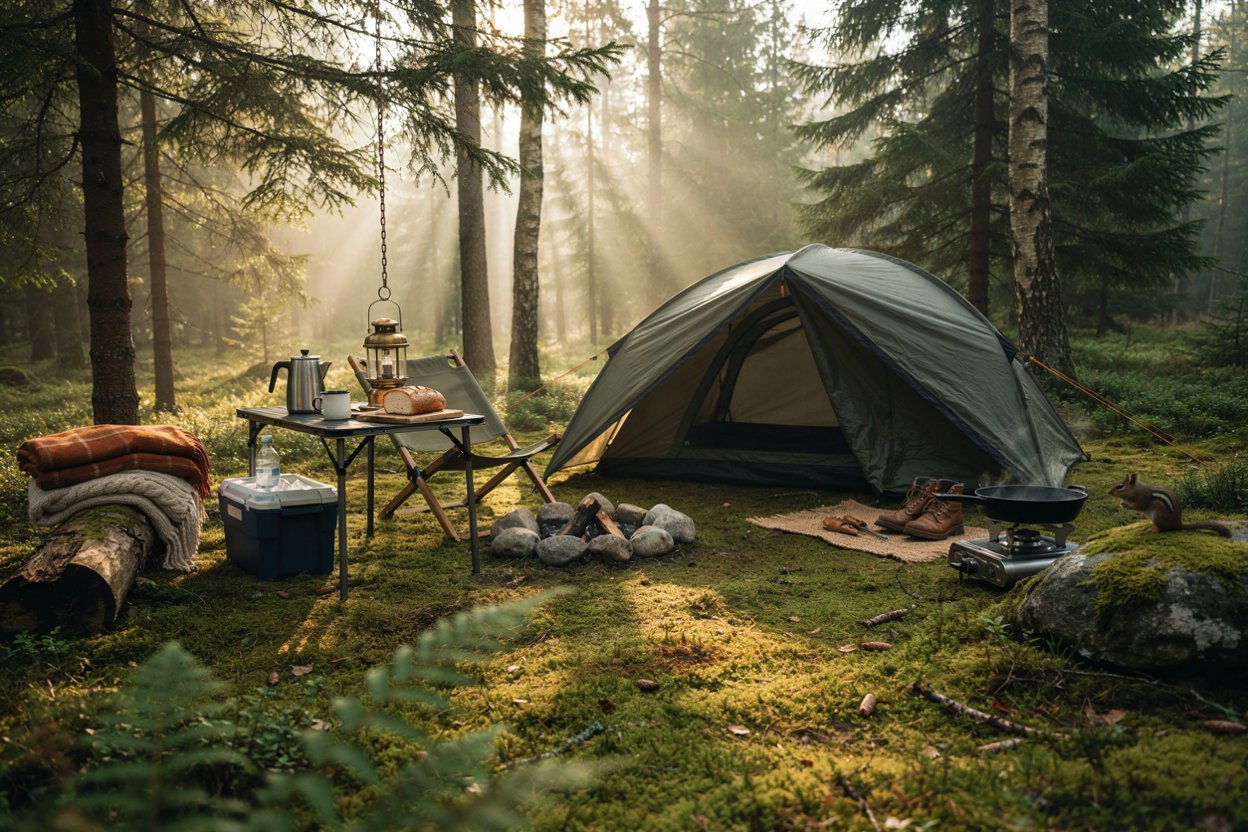
The Best Camping Hacks and Tips
Camping becomes much easier when you know a few simple tricks before you leave home. After spending time organizing camping gear, setting up campsites, cooking outdoors, and figuring out what is actually worth packing, I have learned that the smallest changes can make a surprisingly big difference.
A well planned campsite feels more comfortable, takes less time to set up, and saves you from digging through bags every time you need something.
Some of my favorite camping hacks are not complicated or expensive. They are simple ways to organize gear, keep food protected, make the sleeping area more comfortable, and deal with the little problems that can quickly become frustrating outdoors. I also like camping tips that help me pack less without leaving behind something important.
Whether you are planning a weekend camping trip, a longer outdoor adventure, or simply want to make your next campsite more comfortable, these practical camping hacks can help you spend less time dealing with your gear and more time enjoying where you are.
Why Simple Camping Hacks Make Such a Difference
Good camping is not necessarily about having the most expensive tent, the newest cooking equipment, or a vehicle packed with every possible accessory. In my experience, organization matters just as much as the gear itself.
When everything has a designated place, setting up camp becomes much easier. I can find the flashlight without emptying an entire storage bin, reach the cooking supplies without moving sleeping gear, and pack everything away without wondering where something belongs.
The same idea applies to comfort. A few thoughtful additions can make a basic campsite feel considerably better.
Something as simple as keeping frequently used items within reach, creating a dedicated cooking area, or protecting clothes from moisture can save time and prevent unnecessary frustration.
I also try to think about camping hacks before I buy another piece of gear. Sometimes the solution to a camping problem is already sitting at home.
Reusing containers, organizing small supplies into bags, or preparing certain things before leaving can work just as well as purchasing another specialized camping product.
1. Make a Camping Checklist Before You Pack
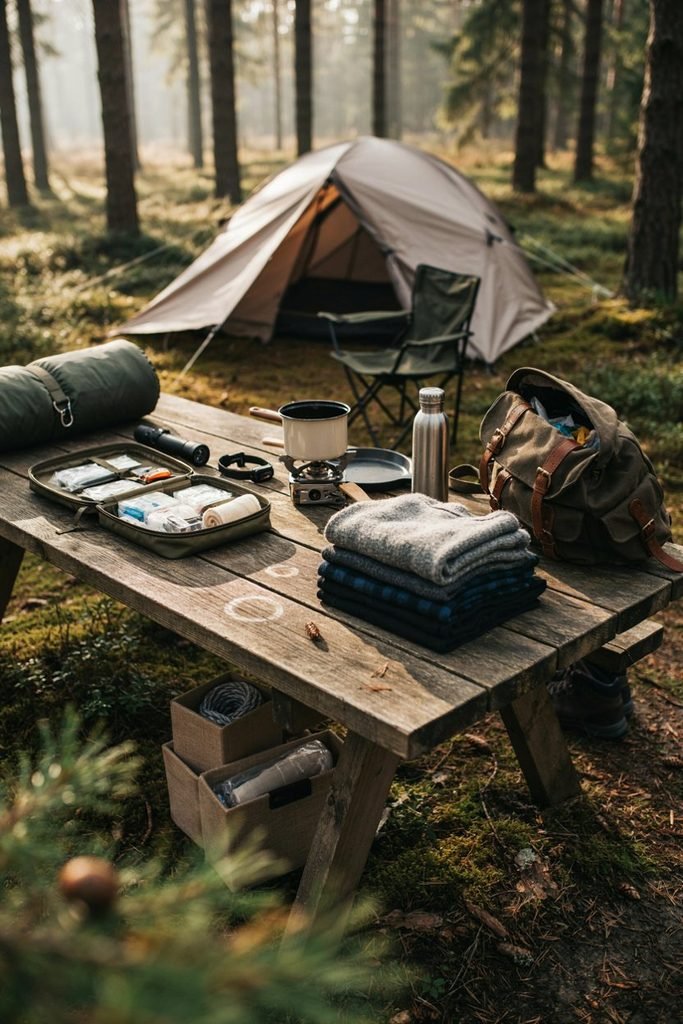
A camping checklist is one of the simplest hacks, but it is also one of the easiest to underestimate.
Before packing, I like to separate everything into categories instead of creating one enormous list. This makes it much easier to see what I actually need and prevents small but important items from getting forgotten.
My basic categories usually include:
Shelter: tent, tent stakes, rainfly, footprint, guylines and repair supplies
Sleeping: sleeping bag, sleeping pad, pillow, blanket and extra layers
Cooking: stove, fuel, cookware, utensils, plates, cups, food and cleaning supplies
Lighting: lantern, headlamp, flashlight and spare batteries
Clothing: comfortable clothes, extra socks, rain gear and warm layers
Personal items: toiletries, medications, sunscreen, insect repellent and towels
Campsite supplies: folding chairs, table, storage containers, trash bags and rope
Emergency supplies: first aid kit, basic tools, lighter or matches and emergency supplies appropriate for the location
One thing that has helped me is checking the list again immediately before leaving rather than assuming everything was packed the night before. That final check catches the things that are surprisingly easy to overlook.
2. Pack Your Camping Gear by Function
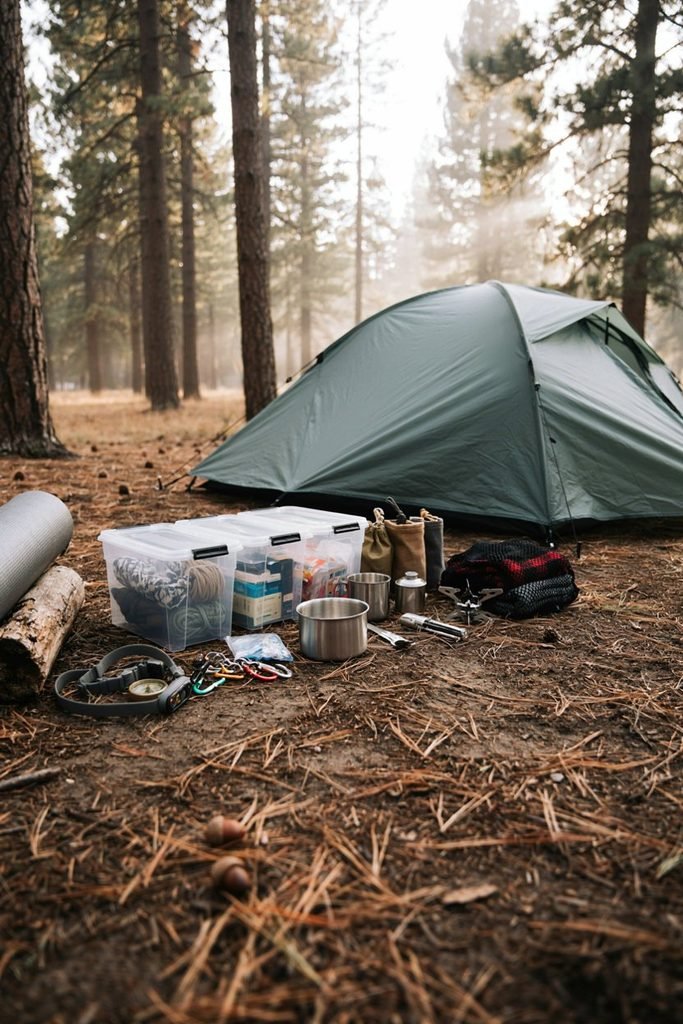
Instead of putting everything wherever it fits, organize your gear according to how you will use it.
For example, I prefer keeping cooking supplies together, sleeping equipment together, and lighting supplies in an easy to reach location. This means I am not searching through several bags after arriving at camp.
Clear storage containers can be particularly useful because you can see what is inside without opening every container. For smaller items, zippered pouches or smaller organizers work well.
I also recommend keeping the things you are most likely to need shortly after arriving somewhere near the top of your vehicle or storage area.
That usually means:
Tent
Tent stakes
Mallet
Headlamp
Flashlight
Camp chairs
Water
Basic cooking equipment
Weather appropriate clothing
Nobody wants to unload half the vehicle just to find the tent after arriving at a campsite in the evening.
3. Keep a Small Camp Essentials Bag
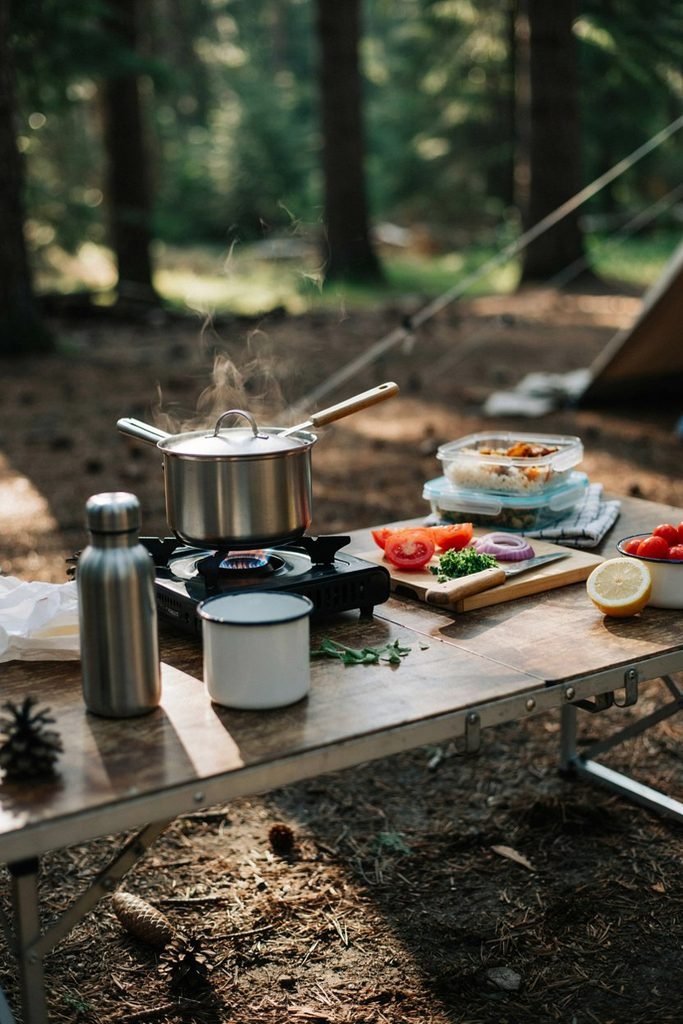
One of my favorite organization tricks is having one small bag dedicated to things I use constantly around camp.
Instead of scattering these items throughout different containers, keep them together so you always know where to look.
You could include:
Headlamp
Lighter
Pocket knife
Small flashlight
Batteries
Sunscreen
Insect repellent
Hand sanitizer
Multi tool
Small first aid supplies
Cordage
This bag becomes your quick access kit. I find this especially useful after dark because searching through large storage bins with a flashlight is much more annoying than simply grabbing one small pouch.
4. Use Packing Cubes or Small Bags for Clothing
Camping clothing can become messy surprisingly quickly, especially when you are living out of a duffel bag for several days.
Packing cubes or separate fabric bags help keep everything organized. I like separating underwear and socks from everyday clothes, then keeping sleepwear in its own bag.
Another useful trick is having one dedicated bag for dirty clothes. That keeps worn clothing separate from everything clean and makes packing up at the end of the trip much easier.
I also recommend bringing more socks than you think you will need. Wet or dirty socks can make an otherwise comfortable camping trip miserable, and they take up very little space.
5. Put Frequently Used Items in Easy Reach
Once you arrive at your campsite, think about what you will use repeatedly throughout the day.
Water bottles, sunscreen, insect repellent, sunglasses, towels, flashlights and snacks should not be buried underneath everything else.
I like creating a small “grab and go” area where frequently used items stay throughout the trip. It keeps the campsite organized and means I am not constantly opening storage bins.
This is one of those little changes that seems insignificant before a trip but becomes extremely useful once you are actually living at the campsite.
6. Create a Dedicated Cooking Area
A dedicated cooking area makes outdoor meals much easier.
Keep your stove, fuel, cookware, utensils, seasonings and cleaning supplies together rather than spreading them across the campsite.
I also like preparing as much as possible at home. Washing and chopping ingredients beforehand can reduce the amount of work you have to do at camp and makes cleanup considerably easier.
For longer trips, think about your meals before you leave. Planning breakfast, lunch and dinner prevents you from bringing random ingredients that eventually go unused.
It also makes it easier to pack the right amount of food instead of bringing far more than you need.
7. Bring a Separate Bag for Trash
Keeping trash organized is one of the easiest ways to keep a campsite clean.
I like having a dedicated trash bag or container in an obvious location rather than trying to collect waste in random grocery bags.
A sturdy bag works particularly well for food packaging and other campsite waste. Keep it secured and follow the campsite’s rules for food storage and waste disposal, especially in areas where wildlife is present.
Leaving food scraps around the campsite can attract unwanted visitors, so cleaning up after every meal is worth the extra few minutes.
8. Prepare Your Tent Before You Need It
Before your camping trip, practice setting up your tent at home if you are unfamiliar with it.
Even experienced campers can benefit from checking the tent, poles, stakes and rainfly before leaving. I like making sure everything is complete and functioning properly before it becomes necessary.
When you arrive at camp, choose your tent location carefully. Look for reasonably level ground and avoid areas where rainwater could collect.
A few extra minutes spent choosing the right spot can make a noticeable difference in how comfortable you are throughout the night.
9. Keep a Dry Set of Clothes for Sleeping
One camping habit I strongly recommend is keeping your sleeping clothes completely separate from the clothes you wear around camp.
If your daytime clothing becomes damp from rain, morning dew, or outdoor activities, you do not want to climb into your sleeping bag wearing the same clothes.
Keep one clean, dry outfit protected inside a waterproof bag or other reliable storage.
Having warm, dry clothes ready at night can make a cold campsite feel much more manageable.
10. Use Waterproof Bags for Important Items
You do not need to assume that your tent will keep every item perfectly dry.
I prefer protecting important belongings separately, especially clothing, electronics, documents and anything that would be difficult to replace.
Waterproof dry bags are useful, but even sturdy resealable bags can help with smaller items.
Keep your phone, wallet, keys and other important belongings somewhere protected from rain and accidental spills.
This is particularly important when camping in unpredictable weather.
11. Bring More Than One Lighting Option
A single flashlight is not always enough.
I like having a combination of a headlamp and a larger flashlight or lantern. A headlamp is especially useful because it leaves both hands free while cooking, setting up the tent, walking around camp, or searching through storage.
Keep spare batteries or make sure rechargeable lights are fully charged before leaving.
I also recommend keeping at least one light somewhere you can reach easily from inside the tent. Walking around a dark campsite looking for a flashlight is exactly the kind of small problem that good preparation prevents.
12. Freeze Water Bottles Before Your Trip
If your camping setup allows it, freezing some water bottles before leaving can serve two purposes.
They can help keep a cooler cold while gradually becoming drinking water as they thaw.
I prefer this approach over filling a cooler with loose ice when I want to keep things cleaner and avoid water accumulating inside the cooler.
Just remember to leave appropriate space when freezing water in a container because water expands as it freezes.
13. Bring Extra Layers Instead of One Heavy Jacket
Outdoor temperatures can change quickly, particularly between daytime and nighttime.
Rather than relying on one extremely heavy layer, I prefer bringing several lighter layers that can be added or removed as needed.
A basic combination could include:
Moisture managing base layer
Long sleeve shirt
Fleece or warm mid layer
Weather resistant outer layer
This gives you more flexibility when the temperature changes throughout the day.
14. Keep Your Shoes Outside the Sleeping Area
Shoes bring dirt, moisture, leaves and all kinds of campsite debris into a tent.
I prefer keeping them outside the sleeping area whenever conditions allow. If rain is expected, place them somewhere protected while still keeping them outside the sleeping space.
A small mat or designated area near the tent entrance can also help reduce the amount of dirt that gets tracked inside.
15. Carry a Small Repair Kit
A small repair kit can save an otherwise enjoyable trip when something breaks.
You do not need to bring a giant toolbox. A compact kit can include duct tape, zip ties, cordage, a small multitool, basic patches and a few other items suited to your equipment.
These supplies can be useful for temporary repairs to camping chairs, tent components, bags, tarps and other gear.
The goal is not to repair everything permanently at the campsite. It is simply to have enough basic supplies to keep a small problem from becoming a major inconvenience.
What Makes These Camping Hacks Worth Using?
The best camping hacks are the ones that save time, reduce clutter, improve comfort, or prevent avoidable problems.
I have found that camping becomes much more enjoyable when I spend a little extra time organizing before leaving home. Once the campsite is set up properly, everything feels easier. Cooking takes less effort, finding gear is faster, and packing up at the end does not feel like a complete battle.
16. Use a Tarp Under Your Tent
A tarp can be one of the most useful pieces of extra camping gear you bring, especially when the weather is unpredictable.
I like having a groundsheet or tarp underneath the tent because it adds another layer between the tent floor and the ground. It can help protect against moisture, dirt, small rocks, and rough surfaces.
The important part is making sure the tarp does not extend far beyond the edges of the tent. If rain collects on the exposed tarp, it can run underneath the tent instead of away from it.
If you are using a separate tarp, tuck the excess underneath the tent or choose a size that fits the footprint properly.
17. Bring a Small Outdoor Mat
A small mat near the entrance of your tent or camping setup can make a bigger difference than you might expect.
I use one as a simple place to wipe my feet before going inside. It helps keep dirt, grass, mud, and small pieces of debris from ending up throughout the sleeping area.
This is especially useful after rain when the ground around the campsite becomes muddy.
You do not need anything fancy. A lightweight outdoor mat that can be shaken or cleaned easily is usually enough.
18. Store Food Away From Your Sleeping Area
Food storage is one area where convenience should never come before campsite safety.
Keep food, leftovers, cooking supplies, and anything with a strong smell stored according to the rules and wildlife guidance for the campground you are visiting.
In areas with bears or other wildlife, this can mean using a designated food locker, bear resistant container, or vehicle storage when permitted. Never assume that keeping food inside your tent is safe.
Even where large wildlife is not a concern, properly storing food helps prevent insects and other animals from getting into your supplies.
19. Prep Your Meals Before Leaving Home
Meal preparation is one of my favorite camping shortcuts.
Instead of bringing every ingredient and preparing everything from scratch at the campsite, I like doing some of the work at home.
You can wash vegetables, portion ingredients, mix sauces, prepare marinades, and organize snacks before leaving.
I find that this makes outdoor cooking much less stressful, particularly after a long drive when the last thing I want to do is spend an hour chopping ingredients.
Labeling meal portions also makes it easier to know exactly what you are cooking each day.
20. Pack Ingredients in Reusable Containers
Reusable containers can keep camping food organized and prevent spills inside your cooler or storage bins.
I prefer containers that stack neatly because they use less space than several loose packages.
For smaller ingredients, resealable bags can be useful for things such as spices, chopped vegetables, snacks, and sandwich ingredients.
Try to remove unnecessary packaging before leaving home when practical. This reduces clutter and means you have less packaging waste to manage at the campsite.
21. Keep a Separate Cleaning Station
Camping dishes become much easier to manage when you have a dedicated place for washing them.
Keep your dish soap, sponge, scrubber, drying towel, and water container together instead of scattering them around the cooking area.
I also like cleaning dishes immediately after eating rather than letting them pile up.
It only takes a few minutes when you do it straight away. Leave them until later and the job becomes much more annoying, especially when food has dried onto the cookware.
Always follow local campground rules regarding wastewater and dishwashing.
22. Use a Cooler Strategically
A cooler works much better when you organize it properly.
Put the foods you will use most frequently toward the top so you are not constantly removing everything to find one item.
I also recommend keeping drinks separate from food when possible. Drinks tend to be accessed frequently, and repeatedly opening the food cooler allows cold air to escape.
Keep the cooler out of direct sunlight and avoid opening it more often than necessary.
These simple habits can help your ice last longer and keep food at a safer temperature.
23. Freeze Some Meals Ahead of Time
Another useful camping food hack is preparing certain meals at home and freezing them before the trip.
Depending on the meal and your camping setup, frozen portions can gradually thaw in the cooler and then be heated at camp.
This gives you an easy meal without requiring much preparation.
It also helps keep the cooler cold during the early part of the trip.
Just make sure refrigerated and frozen foods remain at safe temperatures throughout storage and transport.
24. Keep Snacks Easily Accessible
I always like having a small selection of snacks somewhere that is easy to reach.
Nuts, crackers, dried fruit, granola bars, trail mix, and other shelf stable options can be useful between meals or during hikes.
Instead of searching through the main food storage every time someone wants a snack, put frequently eaten items into one container.
This small change can make your campsite feel much more organized.
25. Bring a Simple Coffee Setup
If you enjoy coffee in the morning, decide how you will make it before you leave home.
You do not necessarily need a complicated camping coffee setup. A basic pour over, French press, instant coffee, or another method that works with your available equipment can be enough.
I prefer keeping coffee supplies together in one small container so everything is ready when I wake up.
Keeping the coffee, filters, mug, spoon, and other essentials together saves a surprising amount of time in the morning.
26. Keep a Small Bin for Dirty or Wet Items
Wet towels, muddy shoes, damp clothing, and used camping gear can quickly make an organized campsite messy.
A dedicated waterproof bin or bag gives these items somewhere to go until they can be properly dried and cleaned.
I especially like this idea for rainy trips because it prevents wet items from getting mixed with dry clothes and bedding.
Do not seal damp gear away for long periods, though. Once you have access to a dry area, allow wet items to dry properly to reduce odors and mildew.
27. Use Cordage to Create Extra Storage
A length of sturdy cord can be surprisingly useful around a campsite.
You can use it for hanging towels, creating a temporary drying line, organizing lightweight items, or securing certain campsite equipment where permitted.
I like bringing a small amount rather than carrying a huge bundle.
Just make sure anything you set up is secure and does not create a tripping hazard for you or other campers.
28. Hang Towels and Clothes to Dry
Instead of leaving damp towels and clothing on chairs or inside your tent, create a designated drying area.
A simple clothesline can work well when campground rules allow it.
Morning dew can leave clothing surprisingly damp, so giving everything plenty of airflow is important.
Before packing up, make sure your tent, rainfly, towels, and other equipment are as dry as possible. Packing wet gear is one of the easiest ways to end up with unpleasant odors and mildew later.
29. Use a Headlamp Instead of Holding a Flashlight
A headlamp is one of those camping items I recommend even if you already own a good flashlight.
Having both hands free makes everyday campsite tasks much easier.
You can use one while cooking, washing dishes, setting up the tent, looking through storage bins, or walking to the bathroom at night.
I also like keeping the headlamp somewhere consistent so I know exactly where it is after dark.
30. Make Your Sleeping Area More Comfortable
A good night’s sleep can completely change how you feel the following day.
The sleeping pad is particularly important because sleeping directly on the tent floor can leave you cold and uncomfortable.
I also like bringing a pillow that provides enough support without taking up too much room.
Extra blankets can be useful when temperatures drop, but make sure your sleeping system matches the expected conditions.
Before going to bed, keep your shoes, flashlight, water bottle, and any other nighttime essentials within easy reach.
31. Put Tomorrow’s Clothes Inside Your Sleeping Bag
When temperatures are cold, putting the next day’s clothes inside your sleeping bag can help keep them from feeling freezing when you get dressed.
I usually put the clothes in a small bag first so they stay organized and protected.
This also means I do not have to crawl out of my warm sleeping setup and immediately start searching through cold bags for clothes.
32. Keep Electronics in a Protected Pouch
Phones, cameras, charging cables, batteries, and other electronics deserve their own protected storage.
I prefer keeping all of these items together instead of allowing chargers and cables to disappear into different bags.
A small waterproof pouch can also protect them from rain and accidental spills.
If you are camping away from reliable electricity, bring a power bank that has enough capacity for your trip and charge it before leaving.
33. Pack a Portable Power Bank
A power bank can be useful for emergencies as well as everyday convenience.
You may need your phone for navigation, campground information, communication, weather updates, or emergency calls.
I do not recommend relying entirely on your phone while camping, but keeping it charged gives you another useful safety resource.
If you are traveling somewhere remote, think about how you will recharge essential equipment before you leave.
34. Keep Basic First Aid Supplies Accessible
Your first aid kit should not be buried underneath your camping equipment.
Keep it somewhere that can be reached quickly.
A basic kit can include supplies for minor cuts, blisters, scrapes, burns, insect bites, and other common outdoor problems, along with any personal essentials you normally need.
Check the contents before every trip because supplies can expire or run out.
For longer or remote trips, your first aid supplies should be appropriate for the environment and activities you are planning.
35. Check the Weather Before Leaving
Checking the weather forecast before a camping trip sounds obvious, but it should influence what you pack and where you camp.
I pay attention to expected temperatures, rain, wind, storms, and overnight conditions rather than only looking at the daytime forecast.
This helps me decide what clothing, shelter protection, sleeping gear, and cooking equipment to bring.
Weather can also change quickly outdoors, so check conditions again during the trip when possible.
36. Have a Rain Plan
A camping trip does not have to be ruined by rain, but you need to be prepared for it.
Pack rain jackets, waterproof storage, suitable footwear, and protection for important gear.
I also like having a simple plan for what we will do if spending several hours outside becomes uncomfortable.
If your campsite has a shelter or covered picnic area, know where it is before bad weather arrives.
Never use camping stoves or other fuel burning equipment inside a tent or enclosed sleeping area because of the risk of carbon monoxide poisoning and fire.
37. Keep a Towel or Cloth Near the Tent Entrance
A small towel has more uses around camp than you might expect.
It can help wipe condensation, dry wet feet, clean muddy equipment, or deal with a small spill.
Keeping one near the tent entrance means you do not have to search through your bags whenever something gets wet.
I usually keep a couple of inexpensive cloths specifically for campsite cleanup rather than using the same towels I use for bathing.
38. Bring Zip Ties
Zip ties take up almost no room but can be useful for temporary repairs and organization.
They can help secure loose equipment, bundle cables, hold certain items together, or make a quick temporary fix when something unexpected happens.
I keep a small handful in my repair kit.
They are inexpensive, lightweight, and one of those items you rarely think about until you suddenly need one.
39. Pack Multipurpose Items
One of the easiest ways to reduce the amount of gear you carry is choosing items that have several uses.
A bandana can work as a cleaning cloth, towel, head covering, or temporary wrap. A sturdy container can store food, organize equipment, or protect small items.
Before packing something, I like asking myself whether it has more than one useful purpose.
This prevents the camping gear from becoming unnecessarily bulky.
40. Leave Some Empty Space in Your Storage
Do not pack every storage container completely full.
You will accumulate trash, dirty clothes, empty food packaging, and other items during the trip.
Having a little extra space makes packing up much easier.
It also gives you somewhere to put things temporarily when you are reorganizing the campsite.
A camping setup that has a little breathing room is much easier to manage than one where every bag and container is packed to maximum capacity.
41. Keep Your Campsite Simple
One of the biggest lessons I have learned from organizing camping setups is that more equipment does not automatically mean more comfort.
Every extra item needs to be transported, unloaded, cleaned, organized, and packed again.
I now try to focus on the things that genuinely improve the camping experience.
A comfortable sleeping setup, reliable shelter, useful cooking equipment, good lighting, appropriate clothing, food storage, and basic safety supplies are much more important than bringing every camping gadget available.
The goal is to make your campsite functional without turning setup and cleanup into a project of their own.
42. Make Cleanup Part of the Routine
Do not wait until the morning you leave to start cleaning the campsite.
I prefer doing small cleanup jobs throughout the day.
After cooking, clean the dishes. After changing clothes, put dirty clothing in its designated bag. After using equipment, return it to its storage container.
This keeps the campsite manageable and makes the final pack up much faster.
Before leaving, walk around the entire campsite and check the ground for small items, food scraps, packaging, tent stakes, and personal belongings.
Leaving the site clean is part of being a responsible camper.
43. Take Photos of Your Campsite Setup
This is a simple trick that can make future trips easier.
When you create a campsite arrangement that works particularly well, take a quick photo.
Later, you can use it as a reference when setting everything up again.
I find this especially useful for storage arrangements. Once I know where cooking supplies, sleeping equipment, chairs, and other essentials work best, I can recreate the setup without having to figure it out from scratch.
44. Keep a Camping Notes List
After every camping trip, write down what worked and what did not.
Maybe you packed too much food. Maybe you forgot an extra layer. Maybe one piece of equipment was difficult to use or something turned out to be completely unnecessary.
Those notes become incredibly useful for the next trip.
I like keeping a running camping list rather than starting from zero every time I pack.
It is one of the easiest ways to improve your camping setup gradually without constantly buying new equipment.
45. Use Clear Containers for Small Camping Gear
Small camping items have a habit of disappearing into larger bags. I have found that clear containers make it much easier to keep track of things such as batteries, matches, cooking utensils, cords, toiletries, and repair supplies.
Being able to see what is inside without opening every container saves time, especially when you are trying to find something after dark.
I also like using smaller containers inside larger storage bins. This creates sections for different types of gear and keeps everything from becoming one large pile.
46. Keep a Dedicated Bathroom Bag
If you are camping at a campground with shared bathrooms or showers, having one small bathroom bag can make mornings much easier.
Keep your toothbrush, toothpaste, soap, shampoo, towel, toilet paper, and other personal items together.
A waterproof toiletry bag is particularly useful because it can handle damp environments without getting everything else in your camping storage wet.
I prefer keeping this bag somewhere easy to grab rather than buried underneath the sleeping equipment.
47. Bring Extra Water
Water is one camping supply I would rather have slightly too much of than not enough.
You need water for drinking, cooking, washing dishes, cleaning, and basic personal hygiene.
Before leaving, check whether your campsite provides potable water and whether there are any restrictions on collecting or treating water.
If you are camping somewhere without a reliable water source, calculate your needs carefully and bring an appropriate supply.
Do not assume a nearby stream or lake is safe to drink from without proper treatment.
48. Pack a Small Broom and Dustpan
A tiny broom and dustpan can be surprisingly useful, especially for tent camping or longer stays.
Sand, leaves, dirt, and small pieces of debris quickly accumulate around your sleeping area.
A quick sweep at the end of the day can keep the campsite much cleaner.
This is one of those inexpensive items that does not take much room but can make a noticeable difference in comfort.
49. Keep a Dedicated Fire Starting Kit
If campfires are permitted where you are staying, keep your fire starting supplies together.
Depending on local rules and conditions, this might include waterproof matches, a lighter, and appropriate fire starting material.
Always check campground regulations before building a fire and use designated fire rings or pits when provided.
Never leave a campfire unattended, and make sure it is completely extinguished before leaving or going to sleep.
50. Bring a Backup Way to Cook
Outdoor cooking equipment can fail, fuel can run out, and weather can make certain cooking methods difficult.
Having a simple backup meal that does not require your primary cooking setup can save you from a frustrating evening.
I like keeping a few easy meal options available that require minimal preparation.
This does not mean packing an entire second kitchen. It simply means having a practical alternative if your main cooking plan does not work.
51. Use Smaller Portions for Camping Meals
Pre portioning food before leaving home can reduce waste and make meal preparation easier.
Instead of bringing a large package and measuring everything at camp, divide ingredients into the amounts you will actually use.
This saves space and means you are not carrying unnecessary packaging around.
It also makes it easier to estimate how much food you need for the entire trip.
52. Keep Condiments and Seasonings Together
Small bottles of sauces and loose seasoning containers can quickly create clutter.
I prefer keeping them together in one small container or pouch.
Salt, pepper, cooking oil, sauces, spices, and other frequently used ingredients can then be reached without searching through your main food storage.
A small leakproof container is especially useful for liquids.
53. Bring Extra Garbage Bags
Garbage bags have far more uses around a campsite than simply holding trash.
They can temporarily protect wet gear, separate dirty clothing, contain muddy items, line certain containers, or help with campsite cleanup.
I usually bring more than I expect to need because they weigh almost nothing and take up very little storage space.
Just make sure waste is handled according to the campground’s rules and never leave garbage where wildlife can access it.
54. Use a Waterproof Cover for Your Backpack
If you plan on hiking from your campsite, weather protection for your backpack can be extremely useful.
A rain cover can help keep clothing, food, electronics, and other supplies dry if conditions change unexpectedly.
You can also organize the contents inside waterproof bags so that an unexpected shower does not ruin everything inside.
I prefer preparing for rain before leaving rather than trying to protect everything once the weather has already changed.
55. Keep an Emergency Light in Your Car
Even if you have several flashlights at camp, having another one in your vehicle provides useful backup.
I like keeping an emergency light with basic emergency supplies rather than relying exclusively on the lights stored with the camping equipment.
If something goes wrong during packing, driving, or returning to the vehicle after dark, you will have another light available.
56. Learn How to Read Your Tent’s Ventilation
Good ventilation can make your tent much more comfortable.
Condensation can build up when warm, moist air from your breathing meets the cooler fabric of the tent.
Use the ventilation points provided by the tent and avoid blocking them unnecessarily.
In damp weather, good airflow can help reduce condensation and keep the interior more comfortable.
57. Do Not Overpack Your Tent
It can be tempting to move everything into the tent when the weather gets bad.
Try to keep the sleeping area limited to the things that actually need to stay protected.
Too much equipment inside makes the tent harder to organize and can reduce usable sleeping space.
I prefer keeping outdoor gear in appropriate covered storage whenever possible and reserving the tent for sleeping and personal items.
58. Bring Earplugs
Camping can be peaceful, but not every campsite is quiet.
You may hear nearby campers, vehicles, animals, wind, or other nighttime activity.
A small pair of earplugs takes virtually no space and can be useful when you want to sleep without every unfamiliar sound waking you.
59. Bring an Eye Mask
An eye mask can be helpful during summer camping when sunrise comes earlier than expected.
It is especially useful if you are sharing a tent with someone who wakes up before you.
Combined with comfortable bedding and a good sleeping pad, small comfort items like this can make sleeping outdoors much easier.
60. Check Your Gear Before Every Trip
Do not wait until you arrive at the campsite to discover that your equipment has a problem.
Before leaving, inspect your tent, poles, stakes, sleeping pad, stove, fuel, lanterns, batteries, chairs, cooler, and other important equipment.
Look for holes, damaged straps, missing parts, leaks, and worn components.
I find that a short inspection at home is much easier than trying to solve the same problem outdoors.
61. Download Important Information Before Leaving
Cell service can be unreliable in some camping areas.
If you are traveling somewhere with limited connectivity, download maps, directions, campground information, reservation details, and other important information before leaving.
I also like keeping important addresses and phone numbers available offline.
Your phone can be extremely useful, but your camping plans should not completely depend on having a strong signal.
62. Tell Someone Where You Are Going
For camping trips, particularly those involving hiking or remote areas, make sure someone you trust knows your plans.
Share the general location, expected dates, route when appropriate, and when you expect to return.
If plans change significantly, update them.
This is a simple safety habit that does not cost anything and gives someone outside your camping group useful information if an emergency occurs.
63. Check Your Tires and Vehicle Before a Camping Trip
For road trips to campsites, the vehicle deserves just as much preparation as the camping gear.
Check tire pressure, fluids, lights, spare tire condition, and other basics before leaving.
If you are traveling a long distance or driving on rough roads, make sure your vehicle is appropriate for the route and conditions.
I would rather spend a few minutes checking everything at home than discover a problem halfway to a remote campsite.
64. Keep Your Campsite Organized at Night
Before going to bed, take a few minutes to put everything back where it belongs.
Store food properly, secure trash, put away loose equipment, close containers, and make sure important items are easy to reach.
This is particularly useful because mornings can be much easier when you wake up to an organized campsite instead of yesterday’s mess.
It also means you are less likely to leave something exposed to rain or wildlife overnight.
65. Make a Simple Morning Routine
A predictable morning routine can make camping feel much less chaotic.
I like starting with the same basic sequence:
Get dressed
Pack away sleeping gear
Make breakfast
Clean dishes
Check the campsite
Refill water
Prepare the day’s gear
Check the weather
Once you develop a routine that works for you, mornings become faster and there is less chance of forgetting something.
66. Do Not Forget Sun Protection
You can spend much more time outside while camping than you normally do at home.
Bring sunscreen, sunglasses, protective clothing, and a hat when appropriate.
Apply sunscreen according to the product directions and remember areas that are easy to overlook, including the ears, neck, and tops of the feet.
Shade is also important, particularly during the hottest part of the day.
67. Protect Yourself From Insects
Insects can quickly turn a relaxing campsite into an uncomfortable one.
Pack insect repellent suitable for the environment and follow the product directions.
Keep food covered and clean up spills promptly because food residue can attract insects.
It is also helpful to learn about the insects commonly found in the area you are visiting so you know what precautions are appropriate.
68. Choose Your Campsite Carefully
Where you place your tent can affect your entire camping experience.
Look for relatively level ground, consider drainage if rain is possible, and avoid areas beneath unstable branches or other obvious hazards.
Think about wind direction, shade, proximity to facilities, and how easy it will be to move around the campsite.
Do not camp in areas that are closed or restricted, and always follow local campground rules.
69. Give Yourself Extra Setup Time
Trying to set up camp in a hurry usually makes the process more stressful.
I prefer arriving with enough daylight and time to organize the campsite properly.
That gives me time to choose a suitable tent location, set up the sleeping area, organize food, establish the cooking area, and figure out where everything belongs.
A calm setup usually leads to a much more enjoyable evening.
70. Leave No Trace
One of the most important camping tips is also one of the simplest: leave the campsite as you found it, or better.
Pack out your trash, dispose of wastewater correctly, respect wildlife, stay on designated trails where required, and follow local fire regulations.
Avoid taking natural objects from the area and do not feed wildlife.
The goal is to enjoy the outdoors without leaving unnecessary evidence that you were there.
71. Make a Camping Bin That Is Always Ready
If you camp regularly, creating a permanent camping storage bin can save a lot of preparation time.
I like keeping frequently used items together so I do not have to search through the house before every trip.
Things such as:
Lantern
Headlamps
Batteries
Rope
Zip ties
Small tools
Matches
Repair supplies
Cleaning cloths
Garbage bags
Can stay together between trips.
Before each outing, simply check the bin and replace anything that has been used.
72. Create a Post Trip Checklist
The trip does not end when you pull into your driveway.
I like checking camping equipment once everything is unpacked.
Dry the tent completely before storing it. Clean cooking equipment. Empty coolers. Wash reusable containers. Check batteries. Restock supplies.
This prevents you from discovering a dirty or damaged piece of equipment right before the next trip.
73. Keep a List of Things You Did Not Use
This is one of the best ways to improve your camping packing list.
After each trip, look at everything you brought and ask yourself what actually got used.
If something repeatedly comes home untouched and does not serve an important emergency or safety purpose, consider leaving it behind next time.
Over time, this can make your camping setup lighter, simpler, and much easier to manage.
74. Focus on Comfort Where It Matters
You do not need to make every part of camping luxurious.
Instead, focus on the areas that affect you most.
For me, that means paying attention to sleeping comfort, food organization, lighting, weather protection, and keeping frequently used items accessible.
Spending a little extra thought on these areas can make a bigger difference than filling the campsite with unnecessary gadgets.
75. Remember That Preparation Beats More Gear
The biggest camping lesson I have learned is that preparation often solves problems better than buying more equipment.
A carefully planned meal is easier than bringing a huge cooking setup. Organized storage is better than adding another bag. Checking the weather is better than discovering bad conditions after arriving. A properly packed emergency kit is more useful than a collection of random gadgets.
The more camping trips you take, the easier it becomes to recognize what you genuinely need.
Final Camping Tips I Always Keep in Mind
Camping does not have to be complicated to be comfortable and enjoyable. The best hacks are usually simple habits that save time, prevent messes, protect your gear, and make everyday tasks easier.
My biggest recommendation is to build your camping system gradually. Pay attention to what causes problems during each trip and make one small improvement before the next one.
You might reorganize your storage, prepare meals differently, upgrade your sleeping setup, or create a better way to handle wet clothing.
You do not need to buy everything at once.
A well organized campsite, reliable shelter, comfortable sleeping setup, sufficient food and water, appropriate clothing, good lighting, basic first aid supplies, and sensible safety planning will take you a long way.
Most importantly, give yourself enough time to enjoy the experience. Camping is supposed to get you outside, slow things down, and give you a chance to enjoy your surroundings.
Once your gear and routines are organized, you can spend less time searching for things and more time enjoying the campsite, exploring the area, cooking outdoors, relaxing around camp, and making the trip memorable.

One Comment