10 Things You Should Never Do in an RV: Mistakes Every Camper Should Avoid
RV travel gives you the freedom to explore new places, enjoy scenic campsites, and bring many of the comforts of home on the road. But living and traveling in a recreational vehicle comes with responsibilities that are easy to overlook, especially if you’re new to RV life.
A few everyday habits can lead to expensive repairs, uncomfortable trips, or avoidable safety risks. Something as simple as forgetting to secure a cabinet before driving or ignoring the weight limit of your RV can create problems you don’t want to deal with while traveling.
The good news is that most of these mistakes are preventable. With a little preparation and a better understanding of how your RV works, you can protect your vehicle, make your trips more comfortable, and spend more time enjoying the journey.
Here are the first five things you should never do in an RV, along with practical tips to help you avoid common camping mistakes.
Why Avoiding Common RV Mistakes Matters
RV travel gives you the freedom to explore at your own pace, but your vehicle also serves as your transportation, kitchen, bedroom, and sometimes even your workspace. That means small mistakes can have bigger consequences than they would at home.
For example, forgetting to secure a cabinet before driving can lead to broken dishes, while neglecting tire pressure or exceeding your RV’s weight limits can create serious road safety risks.
Other mistakes, such as mishandling wastewater or leaving an awning exposed to strong winds, can lead to expensive repairs and unnecessary stress.
The good news is that you don’t need to be an experienced RVer to avoid these problems. A few simple habits can make a significant difference:
- Check before you leave: Inspect tires, storage compartments, hookups, and exterior equipment before every trip.
- Know your RV’s limits: Follow the manufacturer’s guidance for weight, electrical systems, appliances, and towing.
- Prepare for changing conditions: Monitor weather forecasts and secure outdoor equipment when necessary.
- Keep a routine: Use a departure checklist so important tasks don’t get forgotten when you’re eager to hit the road.
Understanding these common mistakes before they happen can help you protect your RV, avoid unnecessary expenses, and enjoy a safer, more comfortable camping experience.
1. Never Drive With Unsecured Items Inside Your RV
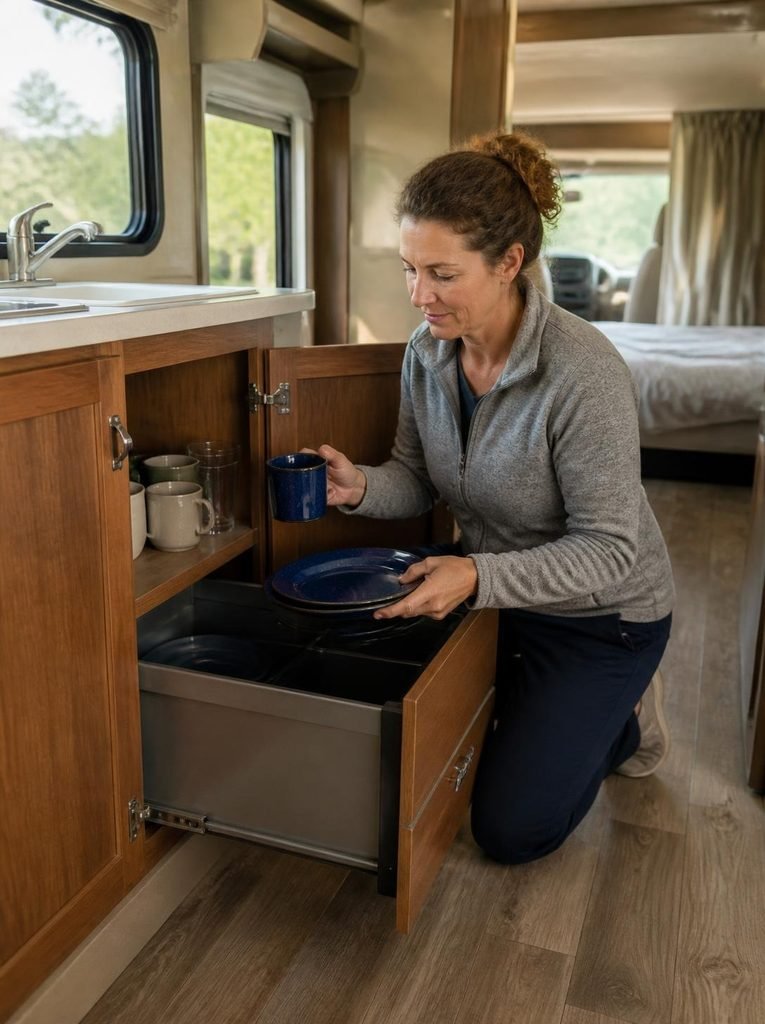
One of the easiest mistakes to make is assuming that everything inside your RV will stay in place while you’re driving. Even a short journey can cause loose belongings to slide, fall, or break when you brake suddenly or take a sharp turn.
Kitchen utensils can fly out of drawers, toiletries can spill, and unsecured appliances can shift across countertops. These problems can damage your belongings and distract the driver.
Before leaving a campsite, take a few minutes to walk through your RV and check every area.
What to do instead:
- Secure cabinet and refrigerator doors before driving.
- Store heavy objects low and close to the floor.
- Put loose kitchen items inside drawers or storage bins.
- Secure televisions, appliances, and other heavy equipment according to the manufacturer’s instructions.
- Remove items from countertops and tables that could fall during travel.
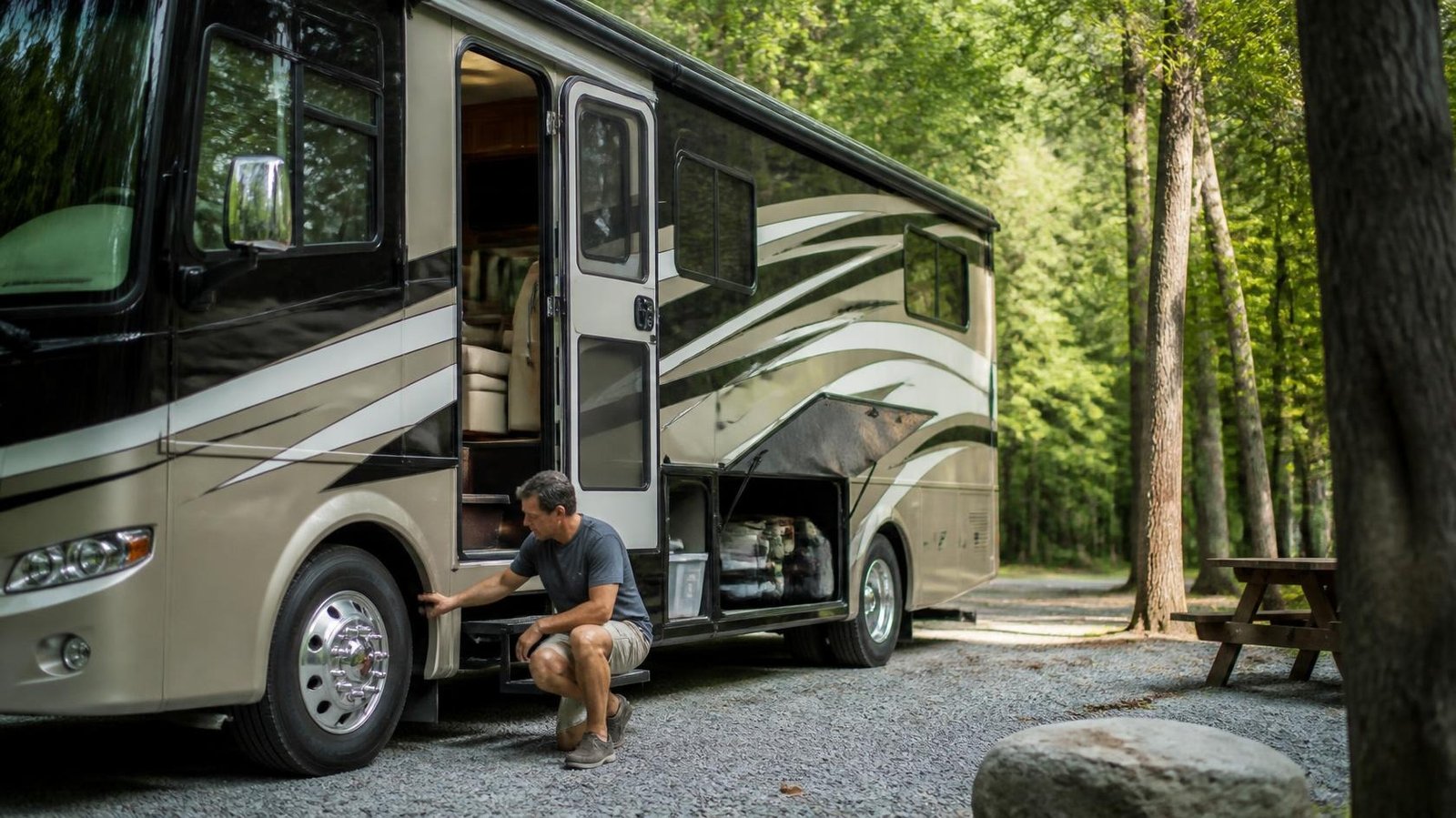
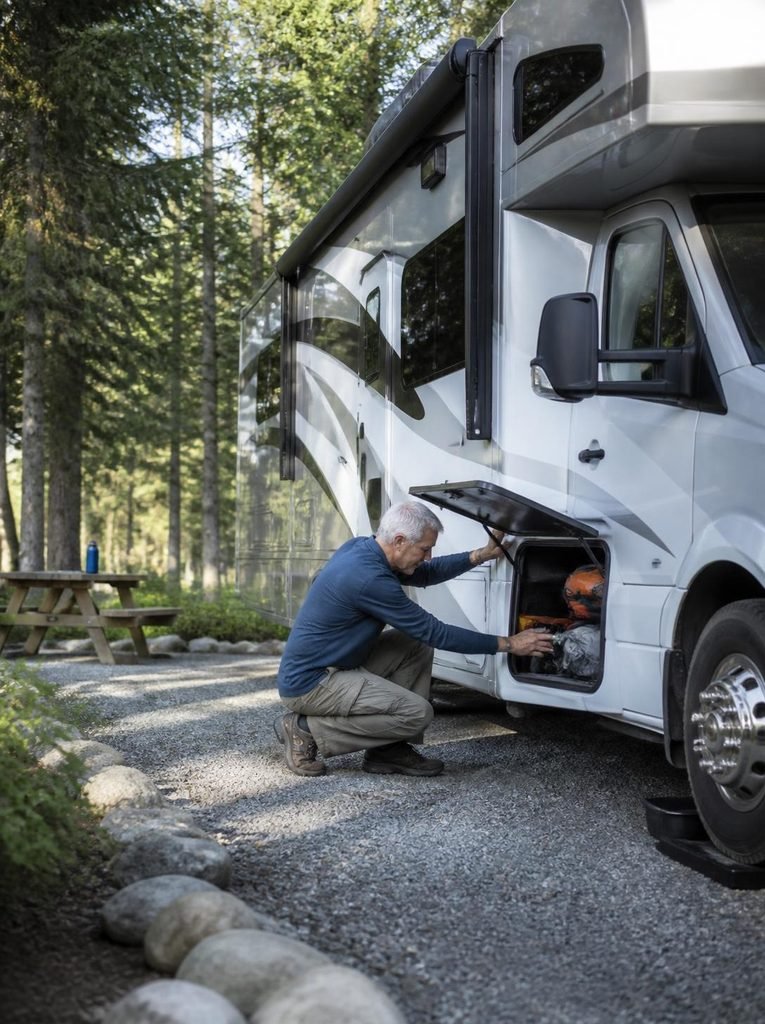
- Check that exterior storage compartments are latched properly.
Helpful tip: Create a short departure checklist and use it before every trip. Checking the same things in the same order makes it easier to catch something you might otherwise forget.
2. Never Ignore Your RV’s Weight Limits
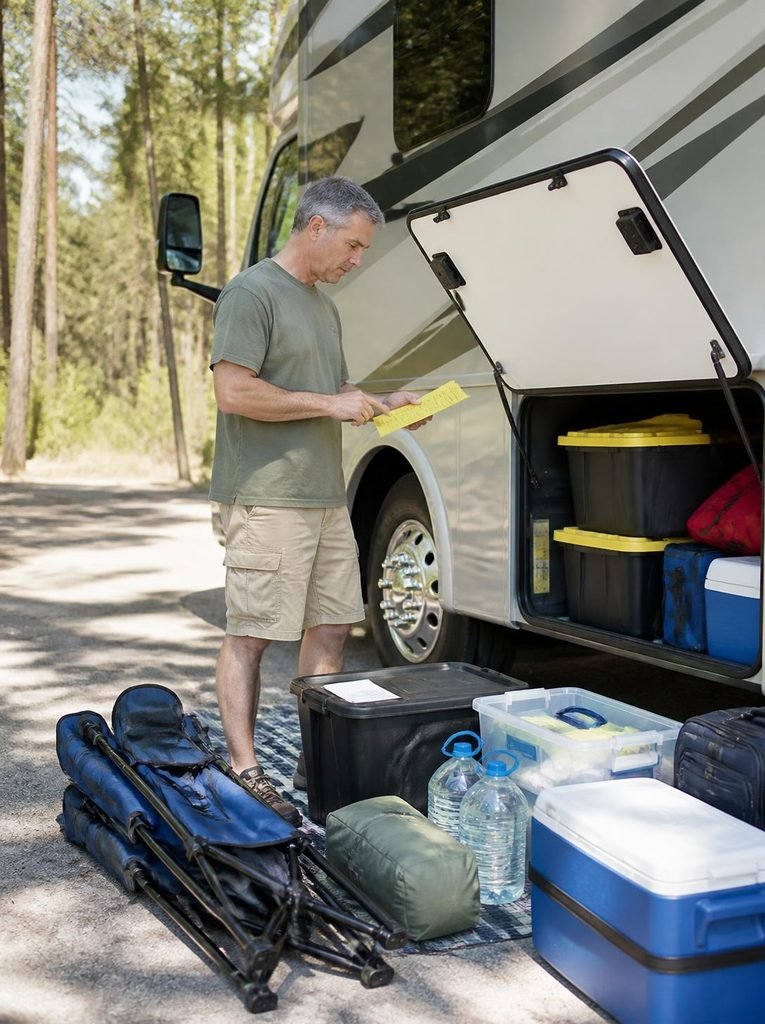
It’s tempting to bring extra clothes, kitchen equipment, camping chairs, outdoor decorations, tools, and supplies for every possible situation. However, an RV has specific weight limits, and packing too much can affect handling, braking, tire performance, and overall safety.
Your RV’s maximum weight rating is not simply a suggestion. You also need to consider how the weight is distributed and whether the axles and tires are carrying loads within their individual limits.
What to do instead:
- Check the vehicle’s certification label and owner’s manual for its weight ratings.
- Understand the difference between gross vehicle weight rating (GVWR), gross axle weight rating (GAWR), and available cargo capacity.
- Include passengers, water, food, fuel where applicable, and personal belongings in your calculations.
- Distribute weight according to the manufacturer’s guidance.
- Use a suitable public or certified vehicle scale when you need to verify your loaded weight.
Helpful tip: Water can add substantial weight. A gallon of fresh water weighs approximately 8.34 pounds, so a full water tank can make a noticeable difference. Plan your water supply according to your route and the RV’s capacity.
3. Never Forget to Check Your Tires
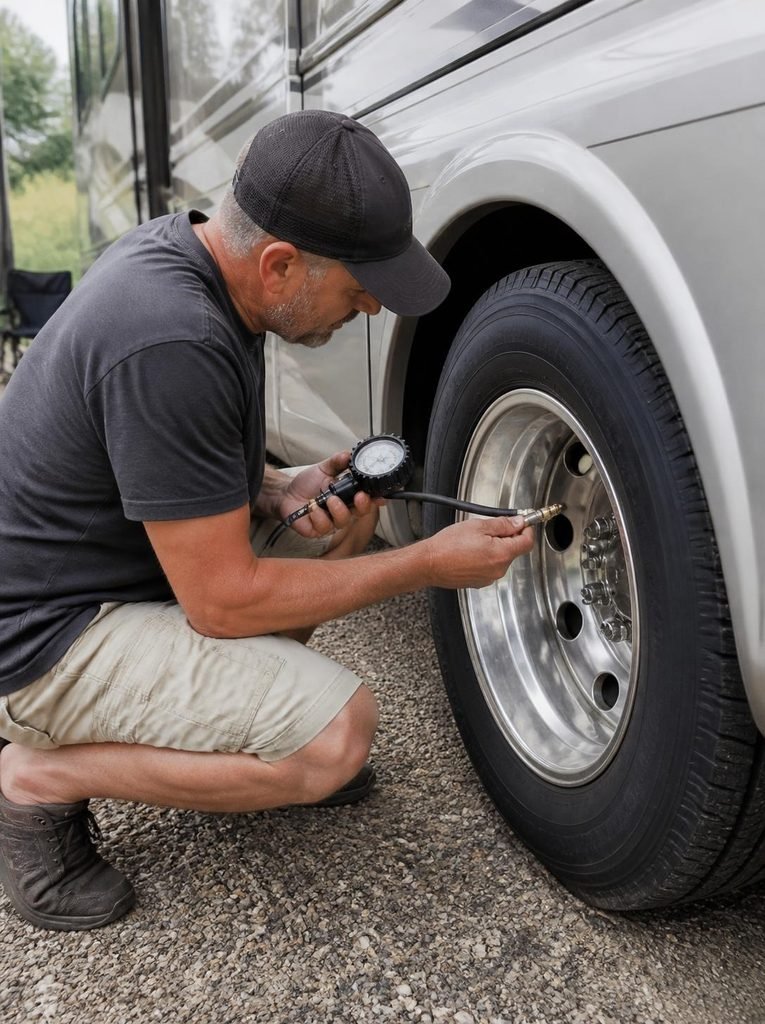
Your RV’s tires carry the weight of the vehicle and play a major role in keeping you safe on the road. Neglecting them can increase the risk of a tire failure, poor handling, or damage to the RV.
Tires can lose pressure while parked, deteriorate with age, or develop problems that aren’t obvious at a quick glance. A tire may also be overloaded even if it looks properly inflated.
Before a trip, check your tires rather than assuming they’re ready to go.
What to do instead:
- Check tire pressure when the tires are cold.
- Follow the tire and vehicle manufacturer’s pressure guidance for your actual loading conditions.
- Inspect the tread and sidewalls for cuts, bulges, cracking, or other damage.
- Check the spare tire, if your RV has one.
- Make sure your tires are suitable for the load they carry.
- Follow the manufacturer’s recommendations for tire inspection and replacement.
Helpful tip: Don’t rely on visual appearance alone. A tire can be underinflated without looking obviously flat. A reliable pressure gauge or suitable tire-pressure monitoring system can help you spot problems early.
4. Never Leave Your RV’s Awning Open in Strong Winds
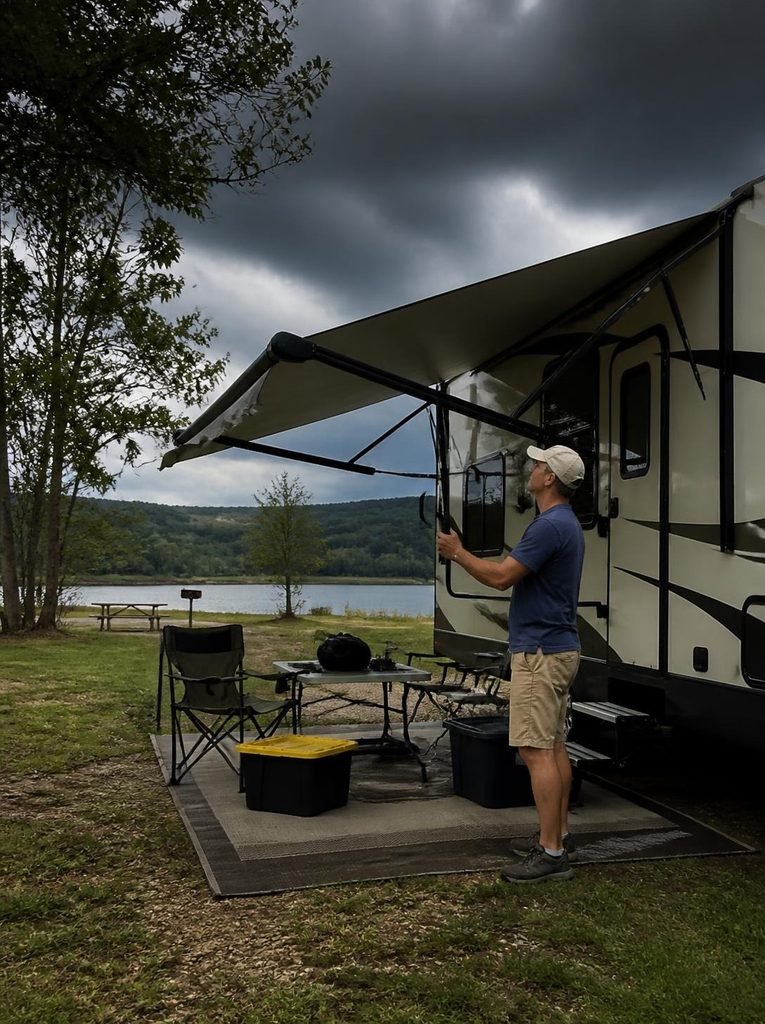
An RV awning can provide welcome shade during a sunny afternoon, making your campsite more comfortable. However, an awning is not designed to withstand every weather condition.
Strong gusts can lift, twist, or tear the fabric and damage the supporting arms. In severe conditions, the awning may even pull against the RV’s mounting points.
Even when the weather seems calm, conditions can change quickly, particularly in exposed campsites.
What to do instead:
- Retract the awning before leaving the campsite.
- Follow the awning manufacturer’s wind and weather guidance.
- Retract it when strong gusts or storms are approaching.
- Avoid leaving the awning unattended during uncertain weather.
- Check that the awning is fully secured before driving.
- Inspect the fabric and support arms regularly for damage.
Helpful tip: Make retracting the awning part of your departure routine. If you expect changing weather, putting it away early is usually easier than dealing with damage afterward.
5. Never Ignore Your RV’s Electrical Safety
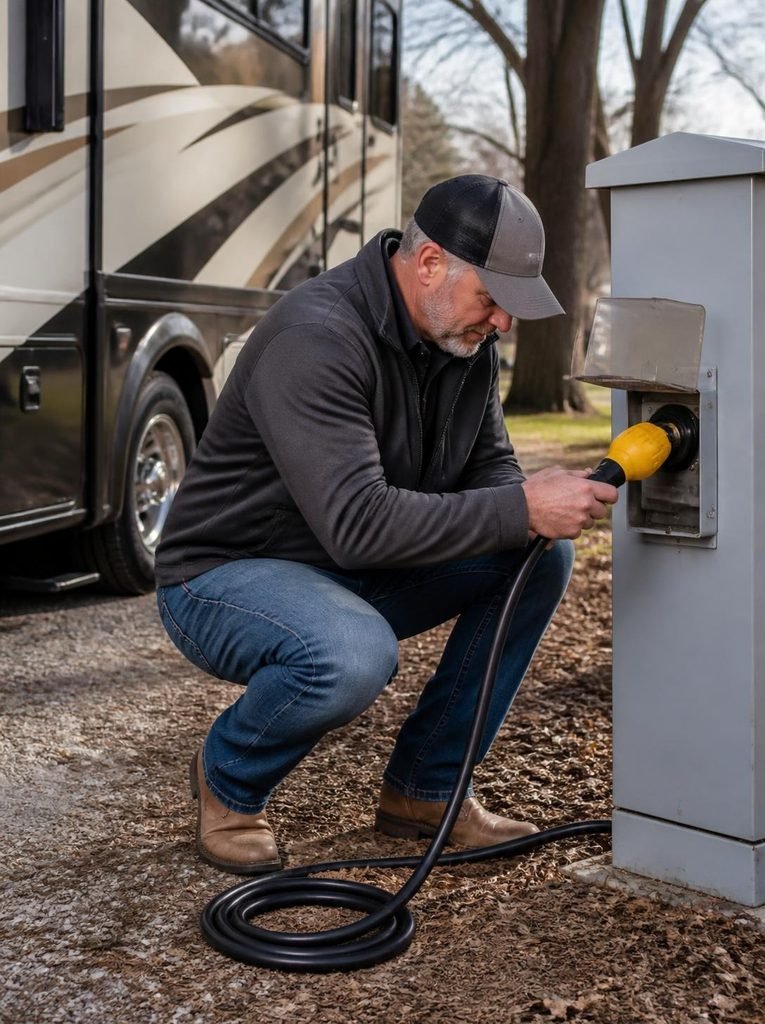
An RV’s electrical system may include shore power, a generator, batteries, inverters, and multiple appliances. Using these systems incorrectly can cause electrical shock, overheating, equipment damage, or fire.
A common mistake is assuming that any extension cord, adapter, or campsite electrical connection will work safely with an RV. The correct setup depends on the RV’s electrical requirements and the available power supply.
What to do instead:
- Use properly rated RV electrical equipment and compatible connections.
- Inspect power cords, plugs, and connectors for damage before use.
- Follow the manufacturer’s instructions when connecting or disconnecting shore power.
- Use appropriate electrical protection, including a correctly rated surge protector or electrical management system when suitable.
- Avoid overloading circuits with multiple high-power appliances.
- Have electrical faults or damaged wiring inspected by a qualified technician.
Helpful tip: Never use a household extension cord as a substitute for a properly rated RV shore-power connection. Also, never operate a generator in an enclosed space or near openings where exhaust can enter the RV. Carbon monoxide is odorless and potentially fatal.
6. Never Mishandle Your RV’s Water and Waste Systems
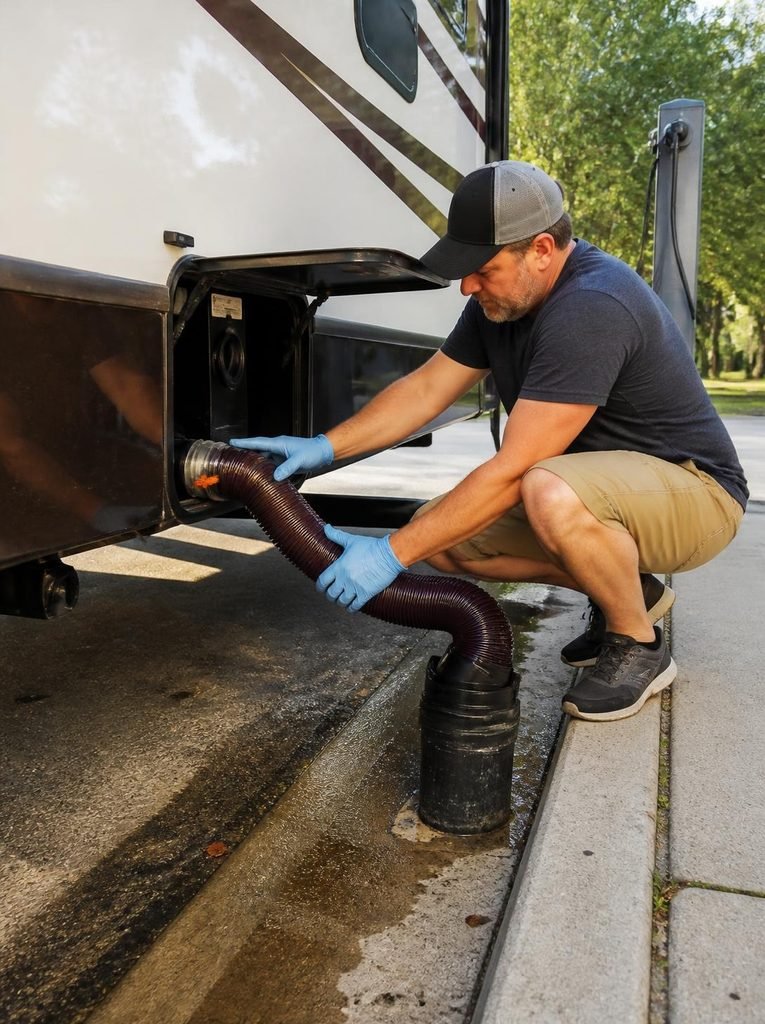
Your RV’s water and waste systems are essential for comfortable travel, but incorrect handling can lead to unpleasant odors, leaks, blockages, and sanitation problems.
One common mistake is leaving the black tank valve open while connected to a campground sewer hookup. Depending on the system and conditions, liquid can drain away while solid waste accumulates, contributing to a blockage often called a waste pyramid.
Using the wrong chemicals or neglecting routine cleaning can also create problems.
What to do instead:
- Keep the black tank valve closed during normal use and empty the tank according to your RV manufacturer’s instructions.
- Use toilet paper and tank treatments only if they’re compatible with your system.
- Wear disposable gloves when handling sewer hoses and connections.
- Use a dedicated drinking-water hose for potable water.
- Keep freshwater equipment separate from wastewater equipment.
- Check hoses, fittings, and tank connections for leaks.
- Follow campground rules for wastewater disposal.
Helpful tip: Emptying the black tank before the gray tank can help rinse residue from the sewer hose, provided your setup and campground procedures allow it. Always disconnect and store wastewater equipment carefully after dumping.
7. Never Ignore Your RV Refrigerator’s Operating Instructions
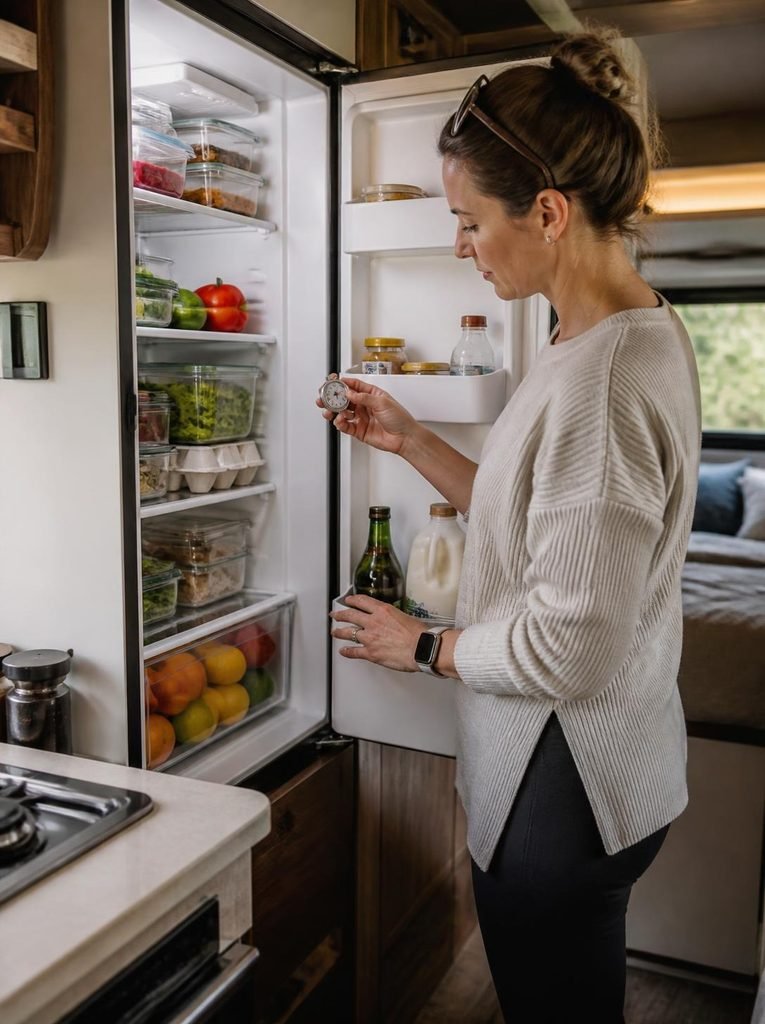
An RV refrigerator helps keep food fresh, but its operation may differ from the refrigerator in your house. Depending on the model, it may run on electricity, propane, or a combination of power sources.
Using the wrong settings, blocking ventilation, or failing to secure the refrigerator before travel can lead to poor cooling, food spoilage, or equipment problems.
Refrigerator safety also depends on the type of appliance installed in your RV.
What to do instead:
- Read the refrigerator manufacturer’s operating and maintenance instructions.
- Pre-cool the refrigerator before loading it with food.
- Avoid overpacking it, since restricted airflow can affect cooling.
- Check that the door is securely latched before driving.
- Keep ventilation openings clear.
- Monitor the temperature with a suitable refrigerator thermometer.
- Follow the manufacturer’s guidance for propane operation and safe use while traveling.
Helpful tip: Keep perishable food at or below 40°F (4°C). If food has been held above safe temperatures for an extended period, don’t assume it is safe simply because it still smells normal. When in doubt, discard it.
8. Never Skip Proper Leveling and Stabilization
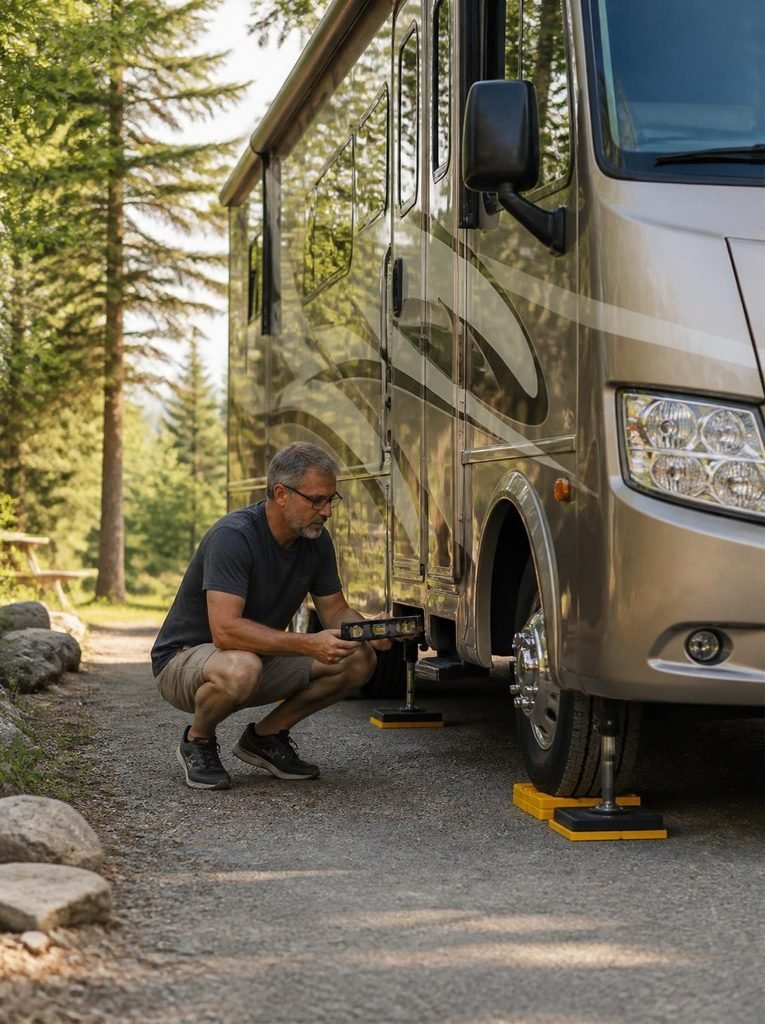
Parking your RV on an uneven surface can make sleeping, cooking, and using appliances uncomfortable. Depending on the refrigerator type and the degree of tilt, it may also affect equipment operation.
Another mistake is confusing leveling equipment with stabilizing equipment. Leveling systems help bring the RV into the correct position, while stabilizers are primarily designed to reduce movement once parked.
Using the wrong equipment or positioning it incorrectly can damage components or create an unsafe setup.
What to do instead:
- Choose a reasonably level parking area whenever possible.
- Check the RV’s level using an appropriate leveling tool.
- Use approved leveling blocks or the installed leveling system according to the manufacturer’s instructions.
- Place stabilizers on suitable, firm surfaces.
- Use wheel chocks where required to prevent unwanted movement.
- Confirm that the RV is secure before extending slide-outs or using interior equipment.
Helpful tip: Never use stabilizer jacks to lift the entire RV unless the system is specifically designed for that purpose. Follow the manufacturer’s sequence for parking, leveling, stabilizing, and deploying slide-outs.
9. Never Leave Your RV Unprepared for Bad Weather
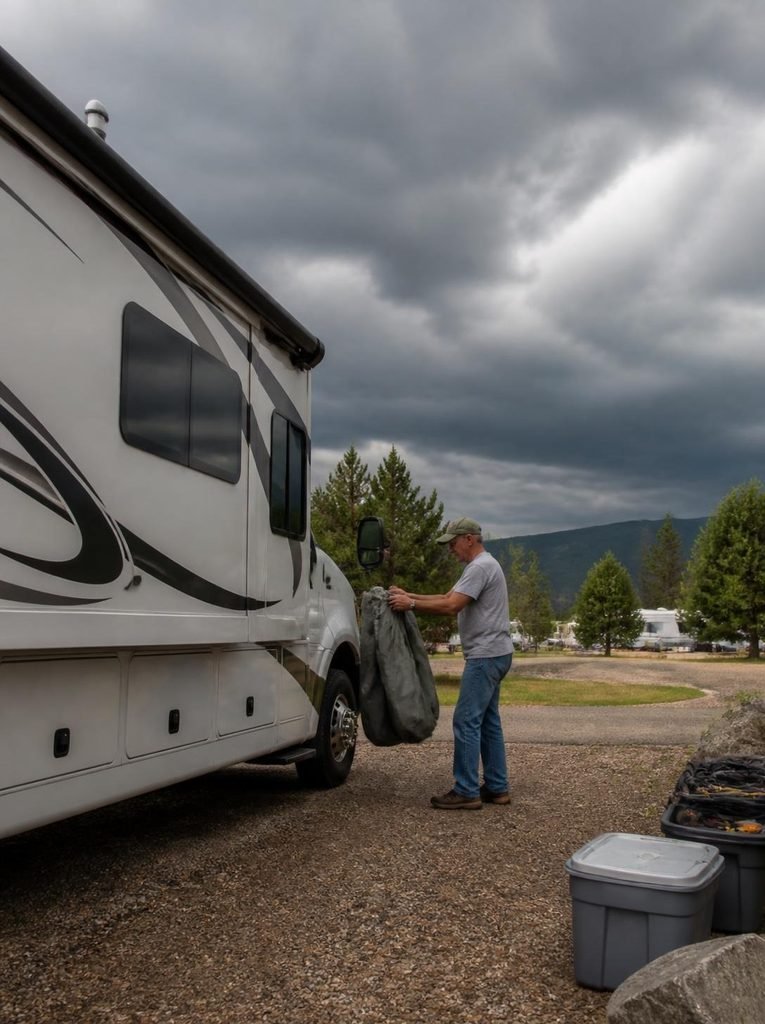
A peaceful campsite can change quickly when heavy rain, strong winds, extreme heat, or thunderstorms arrive. An RV offers shelter, but it still requires preparation to remain safe and comfortable.
Ignoring weather forecasts can leave outdoor furniture unsecured, awnings exposed, and electrical equipment vulnerable to water or storm damage.
What to do instead:
- Check local weather forecasts before setting up camp.
- Retract awnings and secure lightweight outdoor furniture when conditions deteriorate.
- Close windows, roof vents, and exterior storage compartments when appropriate.
- Keep emergency supplies, flashlights, and charged communication devices accessible.
- Know the campground’s severe-weather procedures and nearby shelter options.
- Avoid flooded roads and low-lying areas where water could rise.
- Disconnect or protect equipment according to manufacturer guidance when severe weather threatens.
Helpful tip: An RV is not a safe shelter from every type of storm. If tornadoes, severe thunderstorms, or flash flooding threaten your campsite, follow official emergency guidance and move to a designated safe shelter when advised. Never attempt to drive through floodwater.
10. Never Drive Without a Pre-Trip Safety Check
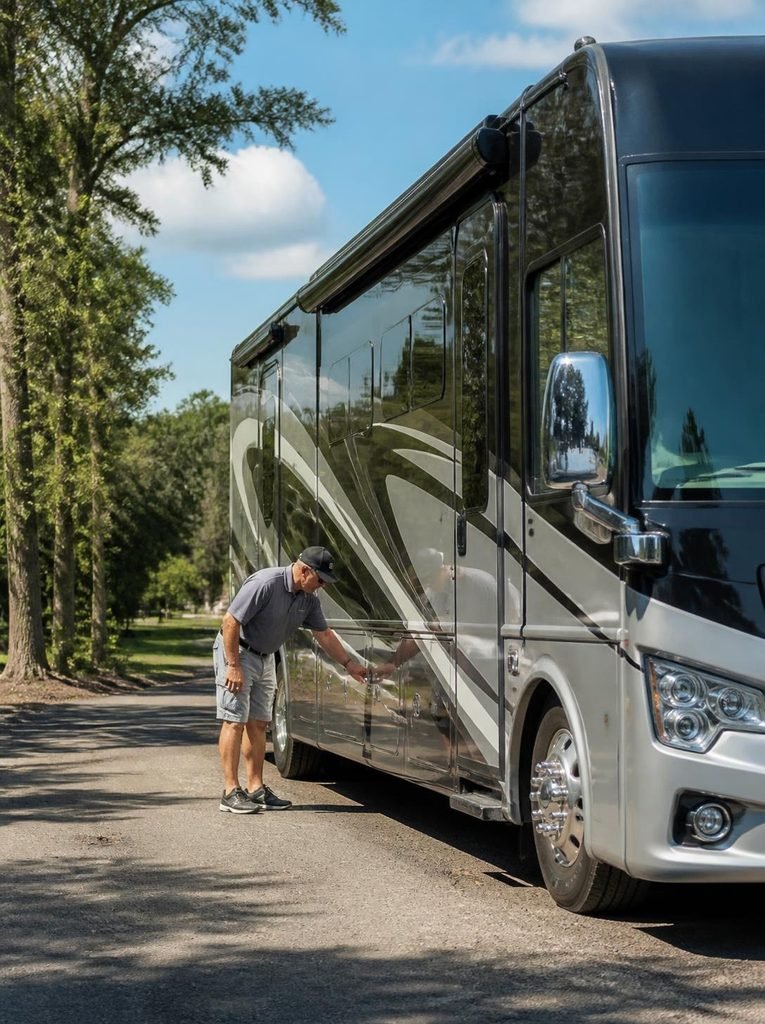
One of the most important RV rules is to avoid rushing your departure. Even if everything worked perfectly when you arrived at the campsite, you still need to check that the RV is ready to travel.
Forgetting to disconnect utilities, secure slide-outs, or inspect the towing setup can damage equipment and create serious road hazards.
A quick walk-around before driving can prevent many common mistakes.
What to do instead:
- Disconnect and store shore power, freshwater hoses, and sewer equipment.
- Retract slide-outs and awnings completely.
- Close and latch exterior storage compartments.
- Check tires and inspect the area around the vehicle.
- Confirm that steps, antennas, and other movable equipment are secured.
- Verify that tow bars, trailer couplings, safety chains, breakaway systems, and lights are correctly connected where applicable.
- Adjust mirrors and check your route for height, weight, and road restrictions.
- Confirm that everyone is seated and wearing seat belts in approved travel positions.
Helpful tip: Use a written departure checklist, even if you have owned an RV for years. A consistent routine is more reliable than trying to remember every task while other campers are waiting to leave.
Travel Safely: Simple Habits for a Safer RV Adventure
Traveling in an RV is a wonderful way to explore new destinations, enjoy scenic campsites, and experience the freedom of the open road.
However, a successful trip requires more than choosing a beautiful route and packing your favorite camping essentials. Taking a few safety precautions before and during your journey can help prevent breakdowns, protect your passengers, and make your trip more enjoyable.
Before leaving home, inspect your tires, check your lights, secure loose belongings, and make sure your RV is within its weight limits.
If you’re towing a travel trailer, inspect the hitch, safety chains, electrical connections, and trailer lights before departure. Take time to understand your vehicle’s height and width, especially when planning routes that include bridges, tunnels, narrow roads, or low-clearance structures.
It’s also important to adjust your driving habits to suit your RV. Recreational vehicles are generally heavier and longer than ordinary cars, so they need more room to turn, stop, and maneuver.
Leave extra following distance, reduce speed in poor weather, and avoid sudden braking or sharp turns. If you’re unfamiliar with driving a large vehicle, practice in an open area before tackling busy roads or tight campground entrances.
When you reach your destination, choose a suitable parking area and level your RV according to the manufacturer’s instructions.
Secure outdoor furniture, retract the awning when necessary, and check electrical and water connections before using them. Keep an emergency kit with a flashlight, first-aid supplies, basic tools, and essential contact information.
Weather awareness is equally important. Check forecasts along your route, not just at your destination. If severe storms, flooding, or dangerous winds are expected, change your plans when necessary.
Remember that an RV is not a safe shelter during every type of severe weather, so know where to find appropriate shelter at your campground.
Most importantly, never rush your preparations. A simple checklist and a few extra minutes of inspection can help you avoid problems that might otherwise interrupt your trip.
With careful planning, responsible driving, and regular maintenance, you can spend more time enjoying the journey and less time worrying about preventable mistakes.
Frequently Asked Questions About RV Safety
1. What should you never do in an RV?
Never exceed your RV’s weight limits, drive with unsecured belongings, ignore tire problems, overload electrical circuits, or operate equipment against the manufacturer’s instructions. You should also avoid unsafe wastewater handling, driving while distracted, and leaving awnings extended in strong winds.
2. What should you check before driving an RV?
Before departure, inspect the tires, lights, mirrors, and exterior compartments. Make sure slide-outs and awnings are retracted, hookups are disconnected and stored, cabinets are secured, and passengers are properly seated with seat belts fastened. If towing, check the hitch, safety chains, trailer lights, and breakaway system where applicable.
3. Is it safe to sleep in an RV overnight?
Yes, sleeping in an RV can be safe when the vehicle is properly maintained and you follow the manufacturer’s instructions.
Make sure smoke and carbon monoxide alarms work, keep ventilation and heating systems in proper condition, and use cooking appliances only as intended.
Never operate a portable generator inside the RV or in an enclosed or poorly ventilated area where exhaust could enter.
4. Can you leave an RV plugged into shore power overnight?
Generally, yes, provided the campground connection is compatible with your RV, the electrical equipment is properly rated, and the system is in good condition. Inspect cables and connectors for damage, use appropriate electrical protection, and follow the manufacturer’s instructions.
If you notice overheating, burning smells, or damaged wiring, disconnect power only if it is safe to do so and seek qualified assistance.
5. Should you leave your RV awning open overnight?
It’s usually best to retract the awning when you’re sleeping or leaving the campsite, particularly if wind or storms are possible.
Even a sudden gust can damage the fabric and support arms. Follow the awning manufacturer’s guidance and avoid leaving it unattended in uncertain weather.
6. How often should you check RV tire pressure?
Check tire pressure before each trip while the tires are cold, and inspect the tires regularly during longer journeys.
Use the pressure specified for your RV’s loading conditions and the manufacturer’s recommendations. A tire-pressure monitoring system can provide additional warning of pressure changes while traveling.
7. Is it safe to drive an RV in heavy rain?
Driving in heavy rain can be risky because visibility decreases, stopping distances increase, and water can collect on the road.
Reduce speed, increase following distance, use appropriate lights, and avoid sudden maneuvers. If conditions become unsafe, pull over at a suitable location and wait. Never drive through floodwater.
8. What safety equipment should every RV carry?
Useful equipment includes a first-aid kit, flashlight, emergency warning devices, tire pressure gauge, basic tools, suitable fire extinguisher, and working smoke and carbon monoxide alarms.
Depending on your RV, you may also need wheel chocks, leveling blocks, a spare tire or roadside assistance plan, and appropriate electrical protection.
9. Should you keep your RV’s black tank valve open at a campsite?
For most conventional RV holding-tank systems, keep the black tank valve closed during normal use and empty it when appropriate.
Leaving it open continuously can allow liquids to drain while solids accumulate. Follow your RV manufacturer’s instructions and the campground’s wastewater disposal rules.
10. What is the most important RV safety habit?
Use a consistent pre-trip inspection checklist. Checking tires, lights, compartments, hookups, slide-outs, awnings, and towing connections before departure helps catch problems before they become dangerous or expensive. Combine that routine with responsible driving and regular maintenance for safer RV travel.
Final Thoughts
RV travel can be comfortable, rewarding, and enjoyable when you prepare properly and understand your vehicle’s limits. Many common problems begin with small oversights, such as forgetting to retract an awning, overloading storage compartments, or skipping a tire inspection.
The easiest way to avoid these mistakes is to develop a few dependable habits: check your RV before departure, follow the manufacturer’s operating instructions, maintain your water and electrical systems, and prepare for changing weather.
You don’t need to become an expert mechanic to travel responsibly. You simply need to know when a task requires attention, when equipment should be inspected, and when it’s best to ask a qualified professional for help.
With good preparation and a consistent safety routine, you can spend less time dealing with preventable problems and more time enjoying the freedom of RV travel.