How to Survive a Wet Camping Trip Without Going Miserable
Rain can turn an exciting camping adventure into a frustrating experience when your tent gets damp, your clothes refuse to dry, and every little task becomes harder than it should be.
A campsite that looked perfect under blue skies can feel completely different when the ground turns muddy and rain keeps falling for hours.
The good news is that a wet camping trip does not have to ruin your time outdoors. With the right preparation, a few useful camping essentials, and a plan for staying warm and dry, you can make rainy conditions much more manageable.
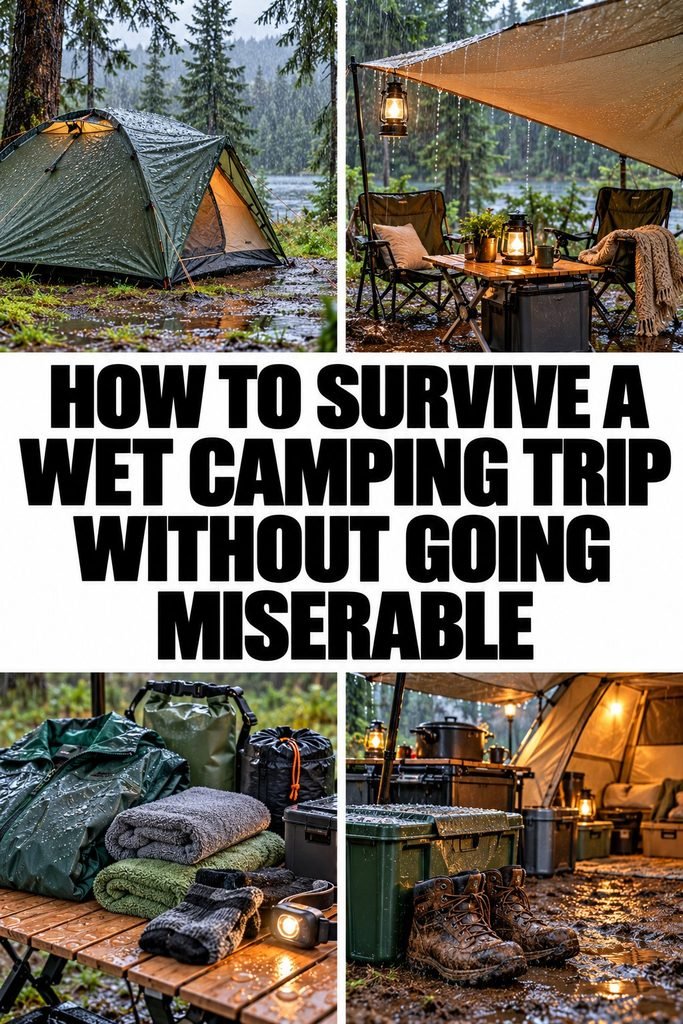
The biggest difference often comes from handling small problems early instead of waiting until everything is soaked.
When planning for rainy camping, I focus on three priorities: keeping sleeping gear dry, staying comfortable throughout the day, and preventing wet belongings from spreading moisture through the entire campsite.
These simple habits are useful whether you are tent camping, traveling in a camper, or spending a weekend at a rainy campground.
In this guide, we will cover practical ways to prepare for rain, protect your campsite, manage wet clothing, and stay comfortable when the weather refuses to cooperate.
What to Know Before Camping in the Rain
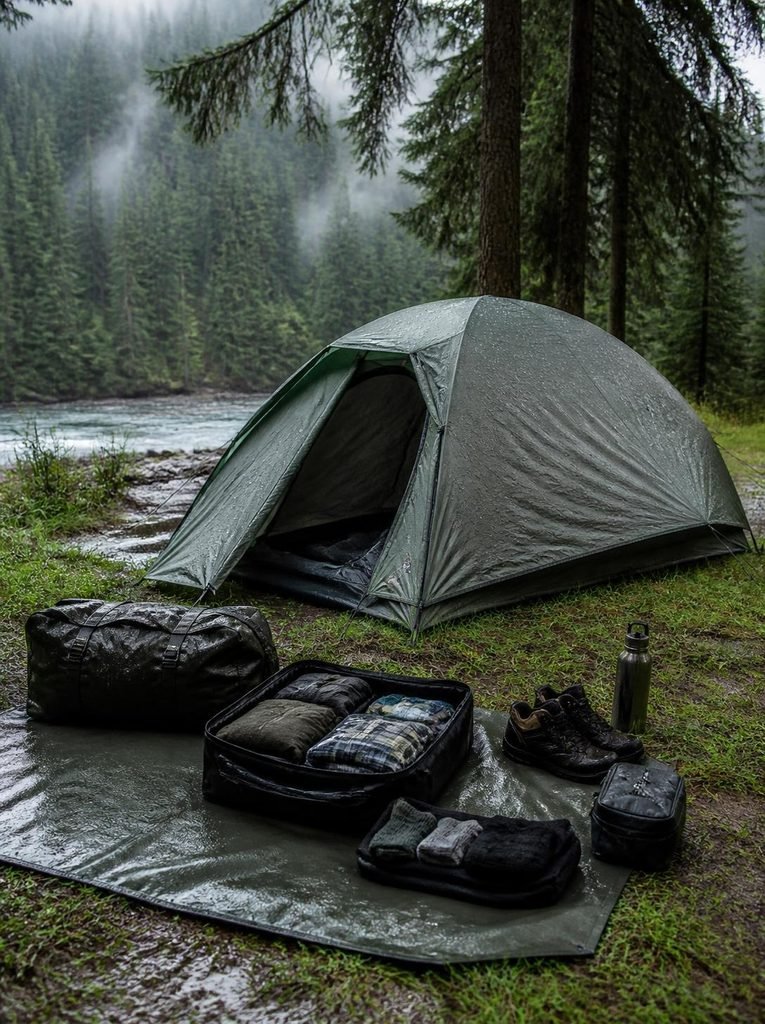
Rainy camping becomes much easier when you prepare for wet conditions before leaving home. The biggest difference comes from keeping your sleeping area dry, choosing the right campsite, and having a backup plan if the weather gets worse.
Before your trip, check the forecast for your destination and pack clothing that can handle changing temperatures. Bring a waterproof jacket, extra socks, dry sleeping clothes, and bags to separate wet equipment from clean supplies. Test your tent and rainfly at home so you can spot damaged seams, loose guylines, or missing stakes before you arrive.
It also helps to organize your gear into separate categories. Keep sleeping equipment, cooking supplies, clothing, and emergency essentials easy to locate. When rain starts unexpectedly, you will not have to empty every bag just to find a dry layer or flashlight.
Most importantly, remember that a comfortable rainy camping trip does not require perfect weather. It requires preparation, flexibility, and knowing when conditions have become unsafe.
1. Choose a Campsite That Drains Well
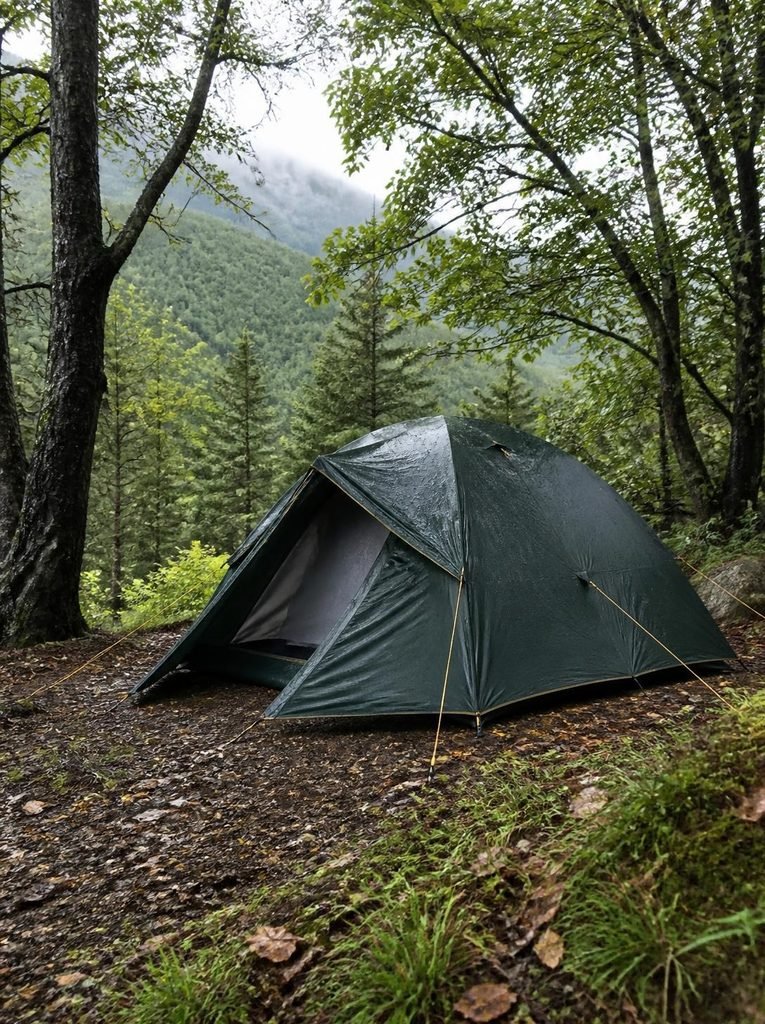
Your campsite location can determine how comfortable you remain after several hours of rain. Even the best tent and waterproof equipment cannot compensate for a pitch that turns into a puddle or collects runoff from the surrounding ground.
Before setting up, look for a slightly elevated, relatively level area with firm ground and good drainage. Avoid depressions, ditches, dry streambeds, and places where water naturally flows downhill. These areas may look convenient when the weather is clear, but they can become hazardous during heavy rainfall.
Pay attention to the surrounding landscape. If you notice exposed roots, washed-out soil, or signs of previous flooding, choose another location. Stay away from riverbanks and other areas where water levels could rise quickly. Follow campground guidance about designated pitches and weather-related closures.
You should also consider the trees above your tent. Although tree cover may provide some shelter from light rain, large branches can become dangerous in strong winds or storms. Avoid setting up beneath dead or unstable trees.
Once you find a suitable spot, position your tent so the entrance is convenient to access without directing runoff toward it. Keep the sleeping area away from low points where water could collect.
Rain camping tip: Never dig trenches around your tent unless the campground specifically permits it. Instead, select a well-drained site and use the tent’s intended waterproofing and setup features.
2. Use a Proper Rainfly and Waterproof Tent Setup
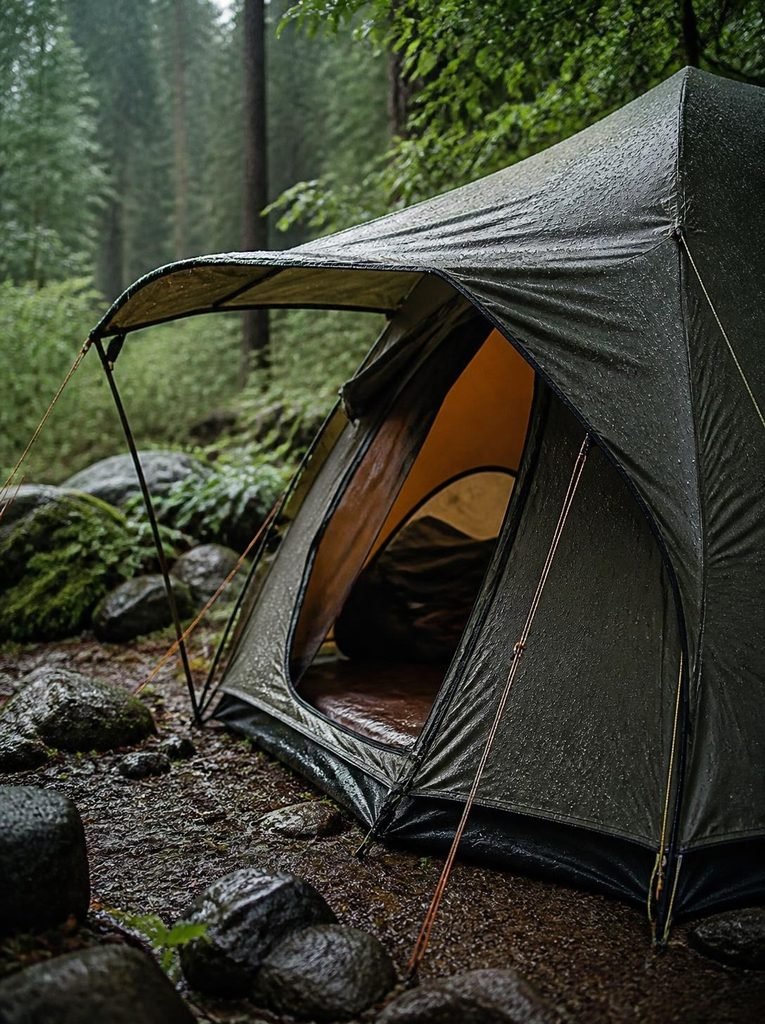
A reliable rainfly is one of the most important pieces of equipment for wet-weather camping. It creates a protective outer layer that directs rain away from the tent body and helps keep your sleeping area dry.
Before leaving home, inspect your tent for damaged seams, worn waterproof coatings, broken zippers, and small tears. Check that the rainfly fits correctly and that all attachment points work as intended. If the manufacturer recommends seam sealing or periodic waterproofing, complete those maintenance tasks before the trip.
During setup, make sure the rainfly is properly tensioned and does not press against the inner tent walls. Contact between wet outer fabric and the inner tent can allow moisture to transfer inside. Stake out the tent according to the manufacturer’s instructions so rainwater drains away from the structure.
A compatible groundsheet or footprint can provide additional protection, but its dimensions matter. If the groundsheet extends beyond the tent floor, rain can collect on it and flow underneath the tent. Choose a footprint designed for your tent or position a suitable groundsheet so exposed edges do not collect water.
Check the tent again after setting up. Close openings that allow rain to enter, while maintaining the ventilation recommended for your shelter.
Rain camping tip: Test your shelter at home before your trip. Discovering a leaking seam in the backyard is much easier than discovering it at a remote campsite in the middle of a downpour.
3. Pack Waterproof Bags for Your Sleeping Gear
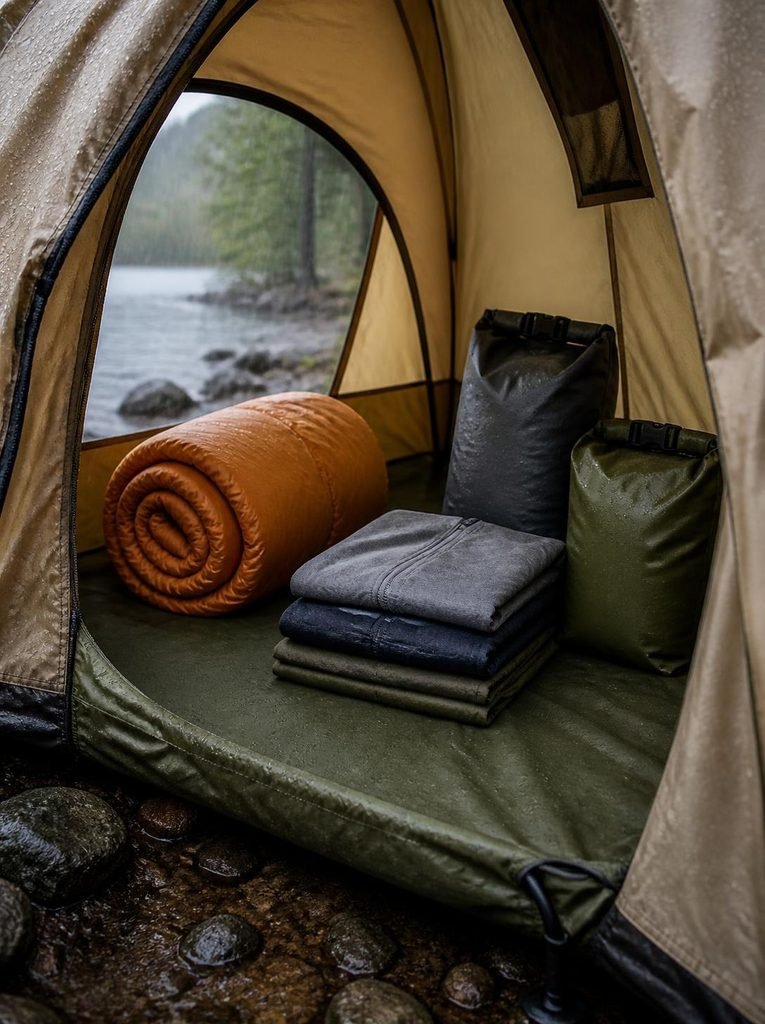
A dry sleeping bag can make the difference between a manageable rainy night and an exhausting one. Once bedding becomes damp, it can be difficult to dry, particularly when the weather stays wet for several days.
Use waterproof dry bags or suitable waterproof packing bags for your sleeping bag, spare clothes, and other items that must remain dry. Pack these items before leaving home rather than waiting until the forecast changes. Even a short walk from the car to the tent can expose your gear to rain.
It helps to separate belongings into categories. Keep sleeping equipment in one waterproof bag, clean clothes in another, and electronics or important documents in a smaller protective pouch. This makes it easier to find things without exposing every item whenever you open your luggage.
Avoid assuming that an ordinary backpack or duffel bag is waterproof simply because the outer material looks durable. Water can enter through zippers, seams, and openings. A rain cover can help, but an internal waterproof liner provides an additional layer of protection.
When you arrive at camp, keep dry bags closed and store them away from standing water. Place them on a raised surface or inside a dry section of the tent rather than directly against a wet tent wall.
Rain camping tip: Reserve one complete set of dry sleeping clothes. Keep it sealed until bedtime so you always have something comfortable to change into, even if the clothes you wear during the day become soaked.
4. Wear Layers Instead of Relying on One Thick Jacket
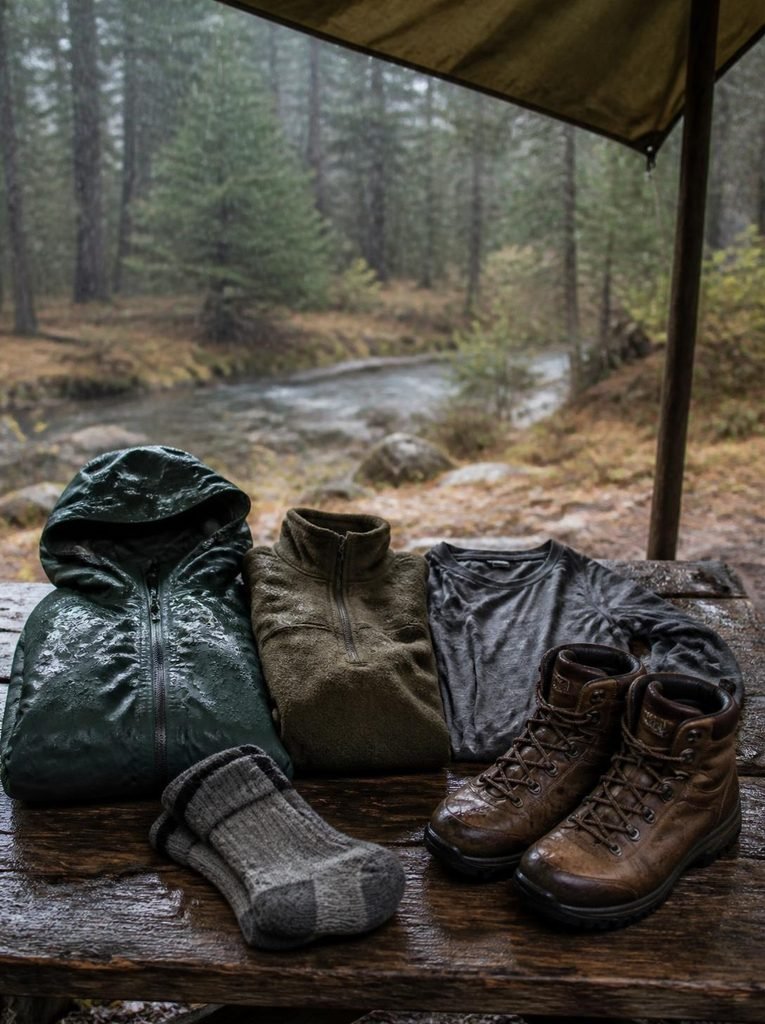
Staying warm in rainy weather is easier when you can adjust your clothing to changing conditions. A single thick jacket may feel comfortable at first, but it can become unpleasant when you sweat during activity or when moisture gets inside.
A practical clothing system usually includes a moisture-managing base layer, an insulating middle layer, and a waterproof outer shell. The base layer helps move perspiration away from your skin, the insulating layer provides warmth, and the outer layer protects against wind and rain.
Avoid cotton as your main clothing layer in cold, wet conditions because it can retain moisture and lose much of its insulating ability when wet. Synthetic fabrics and wool are generally more suitable for base layers and socks.
Choose waterproof footwear appropriate for the terrain, and consider gaiters if you expect persistent rain or muddy trails. Bring spare socks so you can change into dry ones when necessary.
Your clothing should also suit the temperature. Waterproof outerwear can trap heat during strenuous activity, so use ventilation and adjust your layers before becoming excessively sweaty. At the same time, avoid removing protective layers when cold rain or wind could chill you quickly.
Rain camping tip: Keep a lightweight waterproof jacket and rain trousers easily accessible. Having to unpack your entire bag during a sudden shower can leave your other belongings exposed.
5. Create a Covered Cooking and Relaxation Area
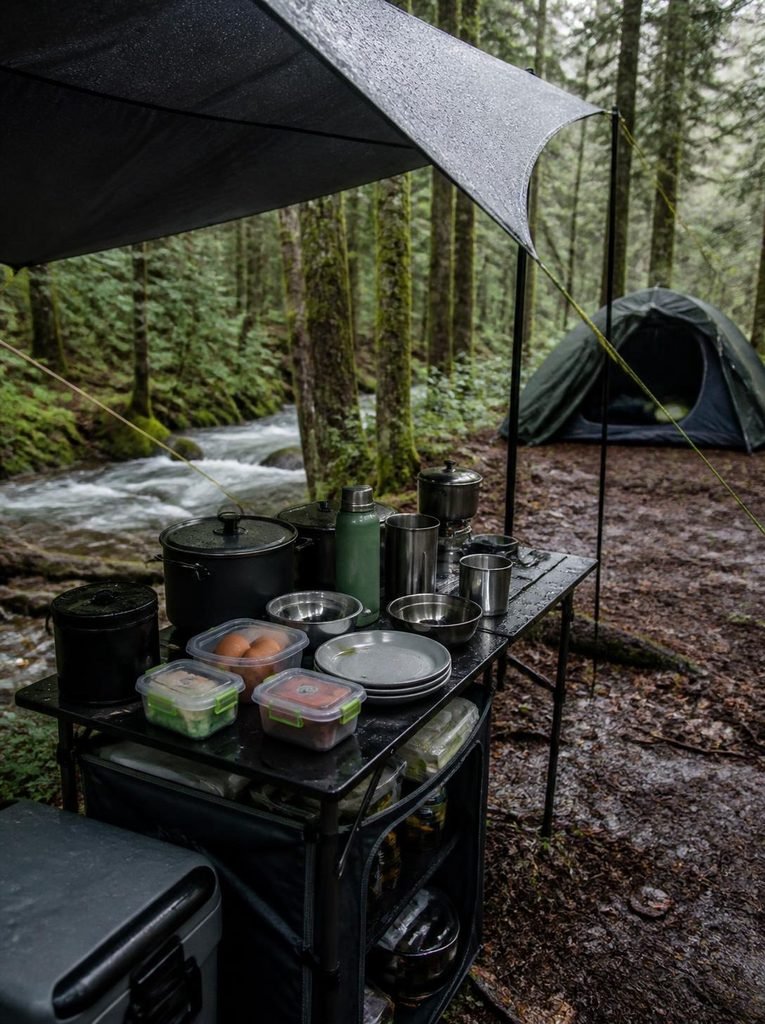
A small covered area can make rainy camping much more comfortable by giving you a place to prepare food, organize gear, and sit outside the sleeping tent without getting soaked.
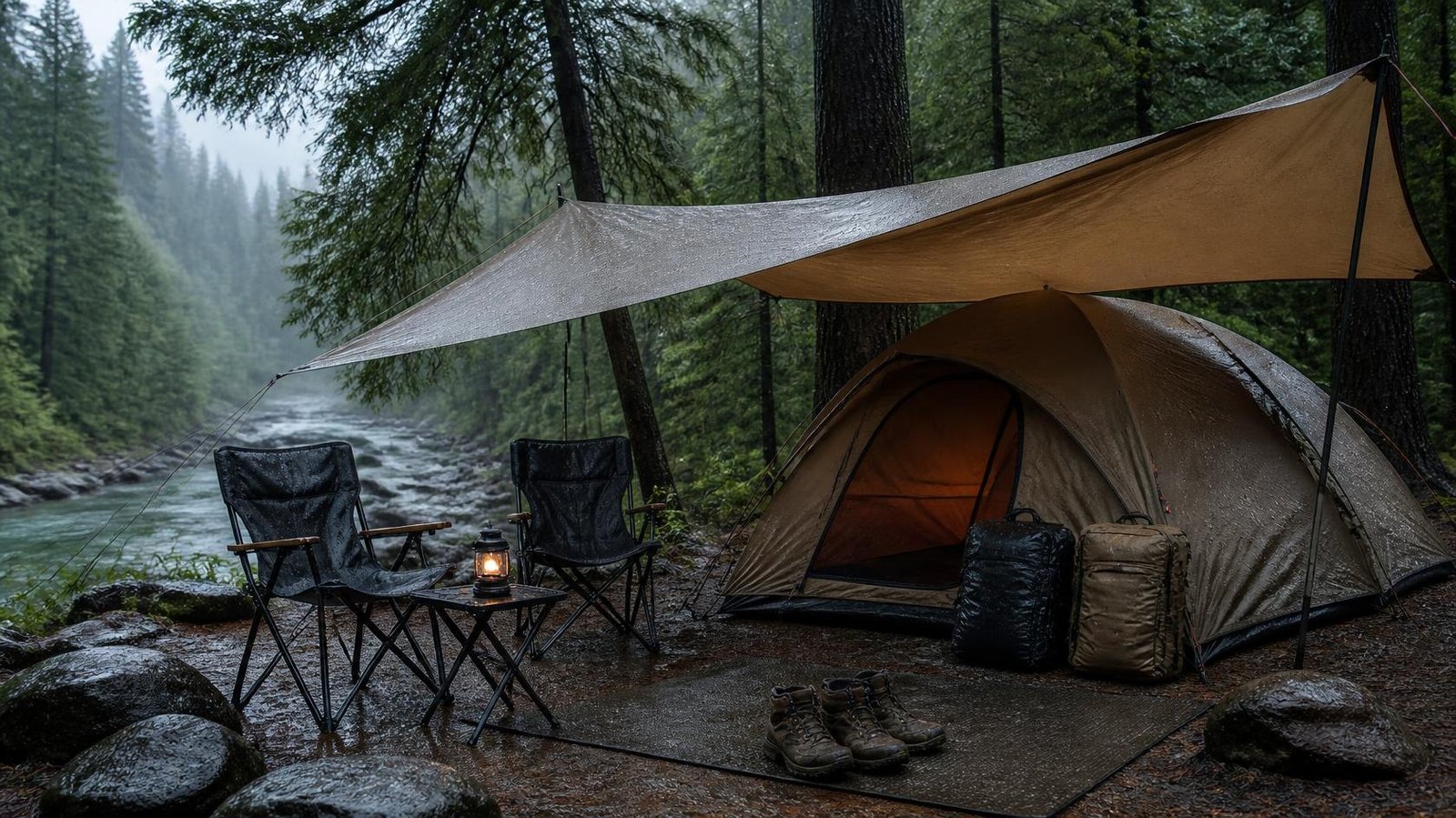
A compatible camping tarp or shelter can provide useful protection over a cooking or seating area. Choose a location that drains well and set up the shelter according to its instructions, with secure attachment points and suitable tension. Avoid creating a pocket where rainwater can collect on top.
Consider the wind direction when positioning the shelter, but do not assume a tarp will remain safe in strong gusts. Lower or dismantle it if conditions exceed its intended limits. Keep the shelter away from unstable branches and avoid blocking paths or neighboring campsites.
For cooking, use equipment only in the manner specified by its manufacturer. Never operate a barbecue, charcoal stove, or fuel-burning camping stove inside a tent or enclosed shelter that is not explicitly designed and ventilated for that appliance. Carbon monoxide is odorless and can be fatal. Even when cooking outdoors, maintain the required clearance from tent fabric, dry vegetation, and other combustible materials.
A covered seating area also gives you a place to play cards, read, organize tomorrow’s gear, or enjoy a warm drink while waiting for the rain to ease.
Rain camping tip: Test your tarp setup before the trip and pack the correct guylines, stakes, and attachments. A shelter that is difficult to erect in dry weather will be even more frustrating in the rain.
6. Bring Quick-Drying Towels and a Dedicated Wet-Gear Bag
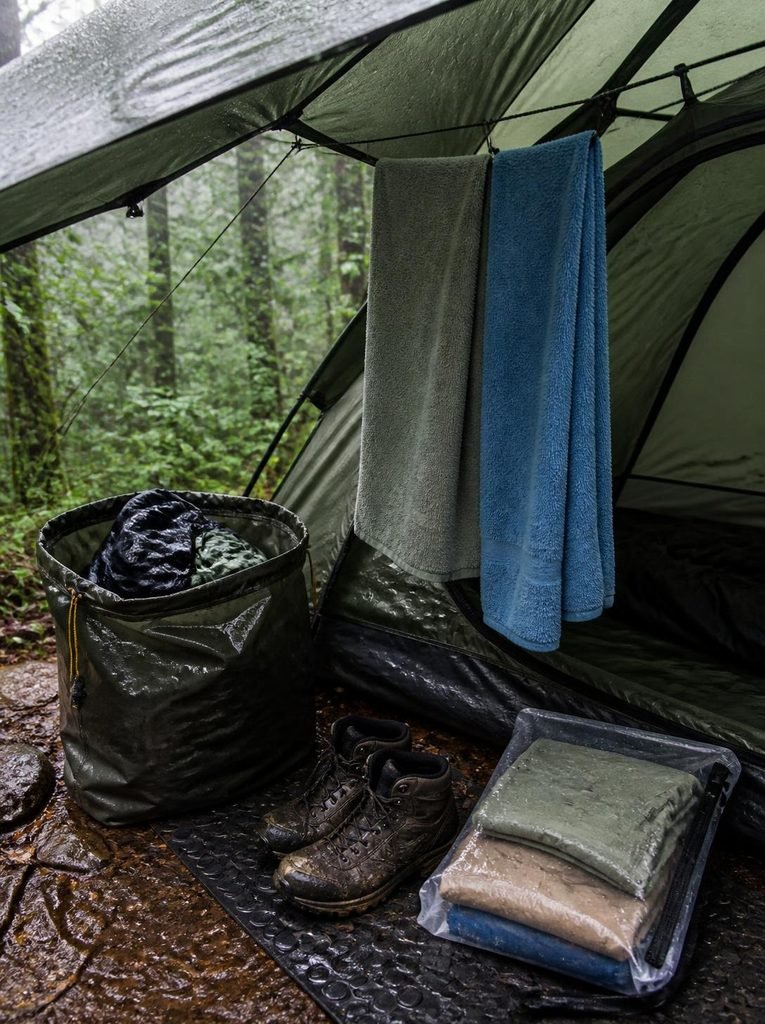
Wet clothing and towels can spread moisture throughout a small tent or camper. If you leave them mixed with dry sleeping equipment, you may find that everything begins to feel damp.
Pack a few quick-drying towels for drying your hands, wiping down equipment, and managing small spills. Microfiber towels can be convenient because they are lightweight and generally dry faster than many thick cotton towels, although their performance depends on the material and conditions.
Bring a separate waterproof bag for soaked socks, muddy clothing, and other wet belongings. If you use a fully waterproof bag, open it periodically when conditions allow so damp items do not remain sealed for unnecessarily long periods. Waterproof bags are useful for containment, but they do not dry clothing.
At camp, remove muddy footwear before entering the sleeping area. Use a designated mat or a suitable container near the entrance to keep dirt away from bedding.
If the rain stops, take advantage of any available airflow to dry your gear. Hang wet clothing under a properly secured shelter or in another well-ventilated location, keeping it away from cooking flames and heaters.
Rain camping tip: Keep a small cloth or towel near the tent entrance for wiping wet hands and footwear before touching sleeping bags, pillows, or dry clothes.
7. Reduce Tent Condensation Before It Becomes a Problem
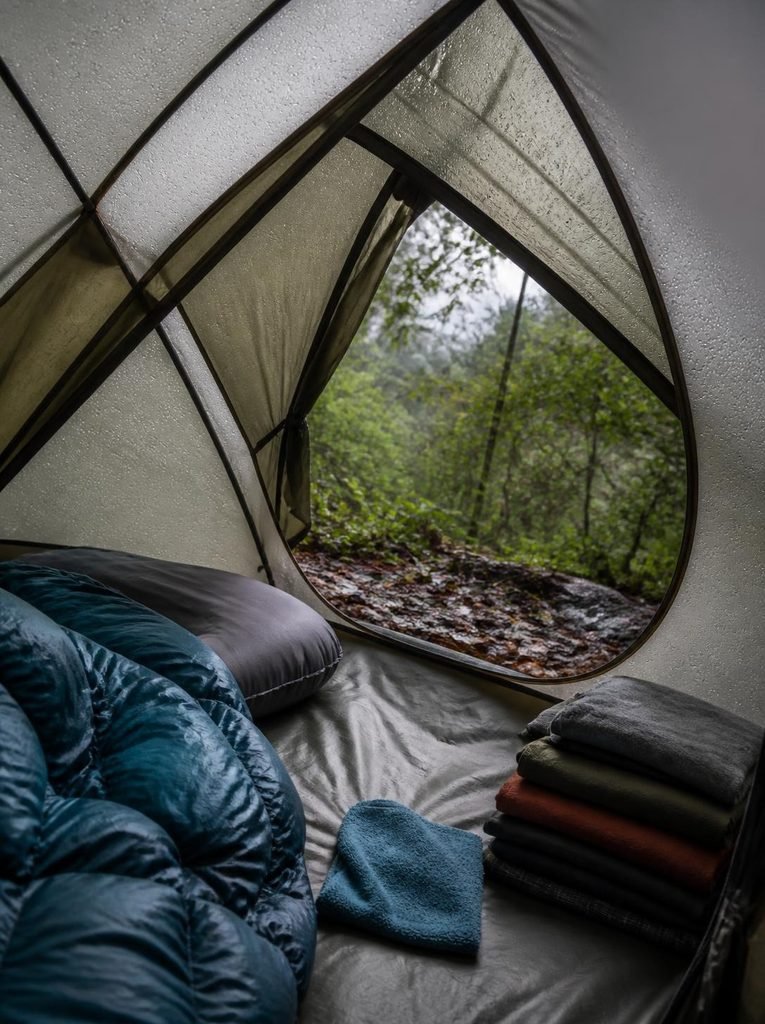
Rain is not the only thing that can make the inside of a tent damp. Condensation can leave sleeping bags, clothing, and tent walls wet even when rain has not entered through the fabric.
Condensation forms when warm, moist air inside the tent meets a cooler surface. Breathing, damp clothing, and wet equipment all add moisture to the air. When the weather is cold and rainy, the problem can become more noticeable because campers tend to keep every opening closed.
Keep your tent ventilated as much as the weather allows. Open the available vents, and use doors or windows designed for ventilation when conditions permit. Make sure the rainfly is properly positioned so air can circulate without allowing rain to enter.
Avoid bringing wet clothing and muddy footwear into the sleeping area. Keep them in a separate vestibule or covered storage area whenever possible. Wipe moisture from the tent walls with a small towel when necessary, and let damp sleeping gear air out whenever the weather improves.
A little ventilation can make a considerable difference to overnight comfort. Even if you cannot eliminate condensation completely, reducing excess moisture helps keep your sleeping area more comfortable.
8. Protect Your Food and Cooking Supplies
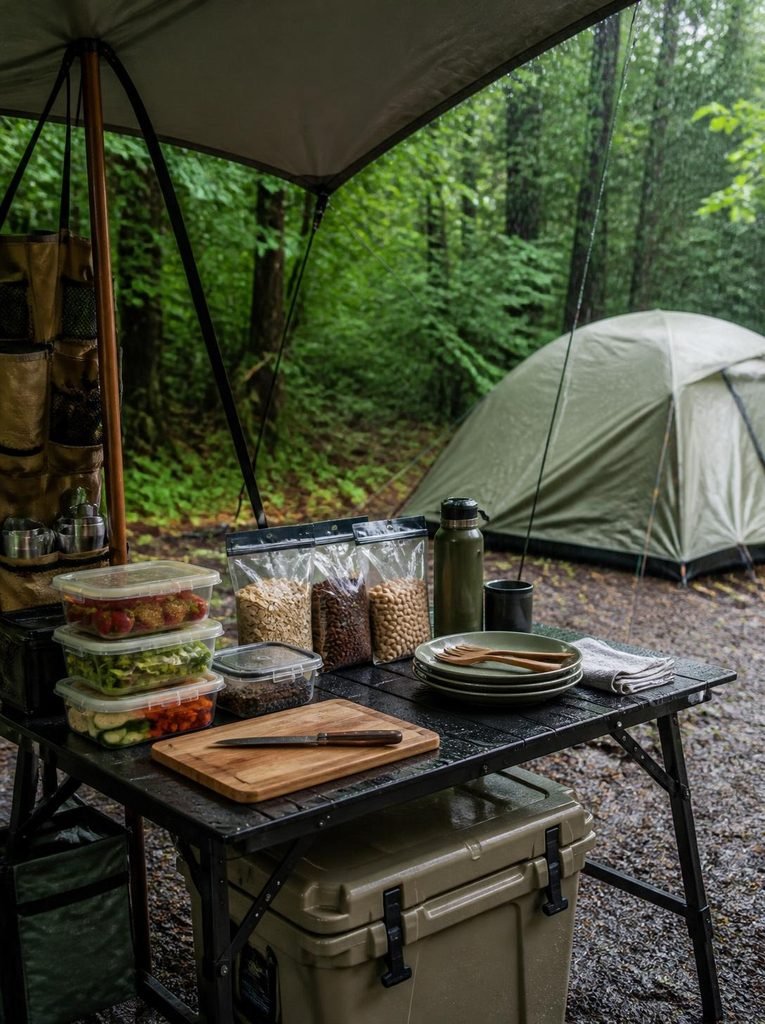
Rain can make meal preparation frustrating, especially when your ingredients, utensils, and cooking equipment are scattered around the campsite. Keeping everything organized before the weather turns bad makes cooking much easier.
Pack food in sealed containers or waterproof bags. Store dry ingredients in a protected cooler or storage bin, depending on the type of food and the conditions. Keep paper packaging away from damp surfaces, and store matches or other ignition supplies in a waterproof container suitable for their intended use.
A covered cooking area is useful, but safety matters more than convenience. Never operate a barbecue, charcoal grill, or fuel-burning stove inside a tent or an enclosed shelter. These devices can produce deadly carbon monoxide, and open flames can ignite tent materials. Use cooking equipment outdoors in a well-ventilated area, following the manufacturer’s instructions and campground fire rules.
Plan a few simple meals that require minimal preparation. Sandwiches, wraps, pre-prepared ingredients, and other foods that need little cooking can save time when rain makes the campsite uncomfortable.
Keep a small meal-preparation kit together so you are not searching through several bags for a knife, plate, or utensil. When the rain finally stops, you can get a warm meal ready without having to reorganize the entire campsite.
9. Keep Mud From Taking Over Your Campsite
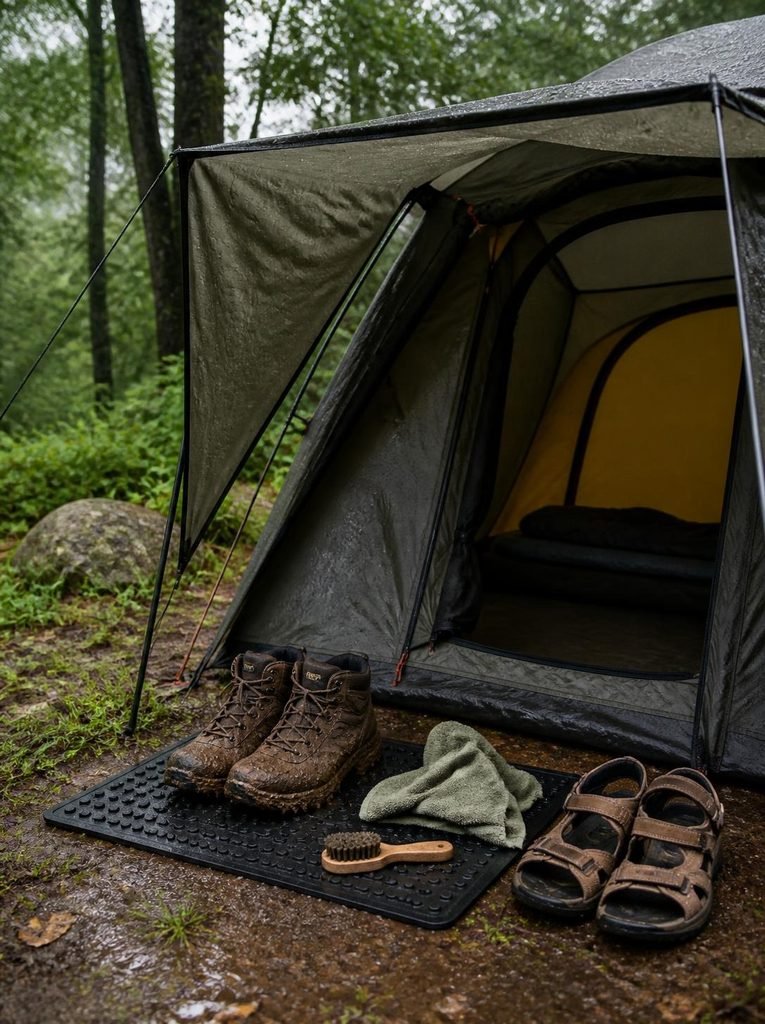
Mud is one of the quickest ways for a rainy camping trip to become unpleasant. It gets tracked into the tent, sticks to footwear, and makes simple activities feel like chores.
Before setting up camp, identify a spot where you can leave muddy shoes without bringing them into the sleeping area. A durable outdoor mat placed near the tent entrance gives everyone a place to wipe their feet. Keep an old towel nearby for cleaning footwear and removing excess moisture.
Bring a separate pair of lightweight shoes or sandals for use inside the tent or under a covered shelter. This gives your feet a break from wet hiking boots and reduces the amount of dirt that reaches your sleeping bags.
If you are camping with children or several people, establish a simple routine: remove muddy shoes at the entrance, wipe your feet, and keep clean clothing separate from outdoor gear. Small habits like these help prevent the tent floor from becoming slippery and dirty.
Avoid digging drainage trenches around your tent unless the campsite specifically permits it. Trenches can damage the ground, cause erosion, and violate campground rules. Instead, choose an established, well-drained pitch and move to safer ground if water begins collecting around your shelter.
10. Prepare a Rainy-Day Activity Kit
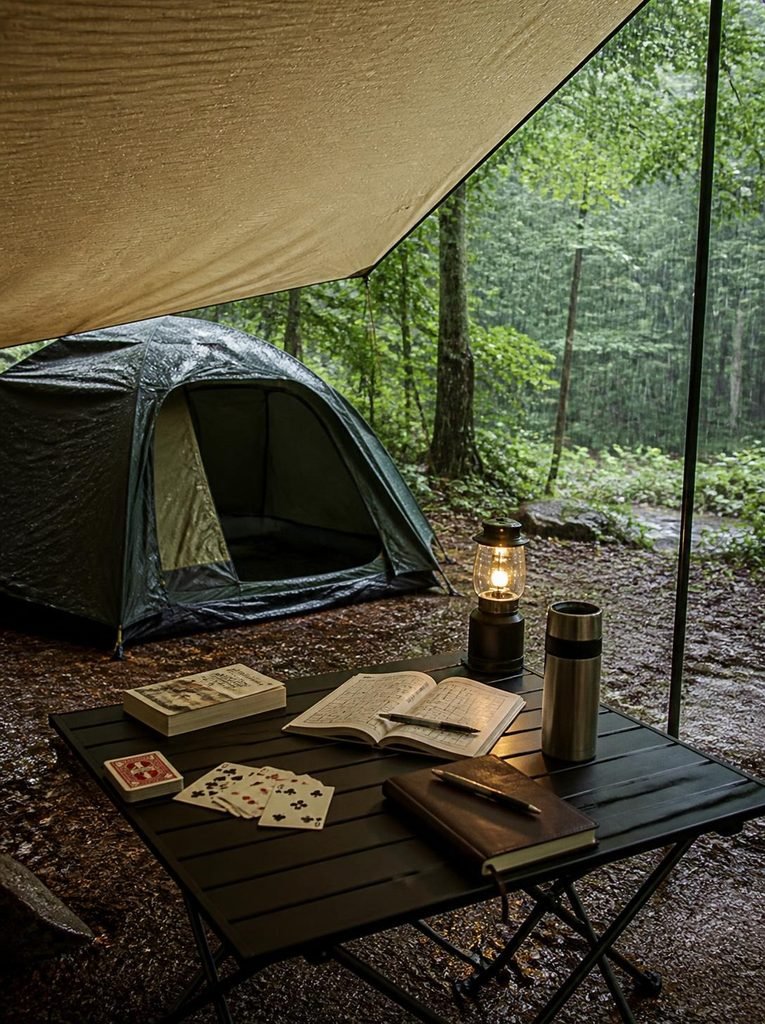
Rain does not have to mean sitting inside a tent feeling bored. A little preparation can make a wet afternoon feel more relaxing, particularly when the rain continues for several hours.
Pack a small collection of activities that do not require much space. Playing cards, travel-sized board games, puzzle books, a journal, and a downloaded audiobook can all provide entertainment without needing a large setup.
If you enjoy photography, use breaks in the rain to capture misty trees, raindrops on leaves, or reflections on the campsite. Always protect your camera and phone from moisture, and avoid exposing electronic equipment to heavy rain.
For families, simple games and storytelling can keep children occupied when outdoor activities are limited. Let everyone choose one activity to pack before the trip so the group has a few different options available.
Download movies, music, podcasts, and offline maps before leaving home. Mobile service may be unreliable at remote campsites, and wet weather is not the best time to discover that your entertainment or navigation apps need an internet connection.
Keep electronics in waterproof cases or sealed bags, and bring a power bank stored in a dry place. Save battery power by reducing screen brightness and switching devices to airplane mode when a cellular connection is unnecessary.
11. Make Your Campsite Comfortable With Small Essentials
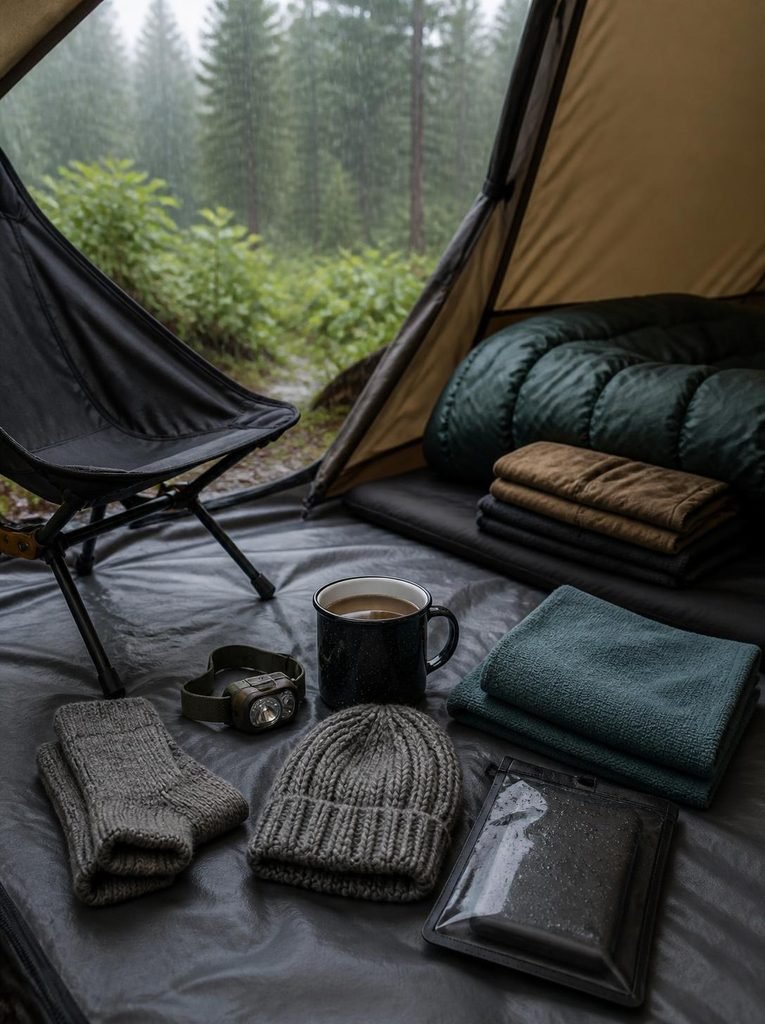
When the weather is wet, small comfort items can make a bigger difference than bulky camping equipment. You do not need to pack your entire home, but a few carefully chosen essentials can help you stay warm, dry, and organized.
A headlamp is useful because cloudy skies can make the campsite feel darker earlier than expected. It also keeps your hands free when you need to find clothing, prepare a meal, or secure equipment.
Pack extra socks, a warm hat, and a dry set of sleeping clothes. Even if your daytime clothing becomes damp, having clean, dry clothes reserved for the evening gives you something comfortable to change into.
A compact camp chair is helpful when you have a sheltered place to sit, but choose one that dries quickly and can be stored under cover. A small microfiber towel can serve several purposes, from wiping condensation to drying hands and cleaning equipment.
Consider bringing an insulated mug for warm drinks. Tea, coffee, hot chocolate, or another favorite beverage can make a chilly afternoon more enjoyable. Store your drink supplies in an accessible container rather than burying them beneath other camping gear.
The goal is to make your campsite practical, not crowded. Choose items that solve specific problems, and leave unnecessary equipment at home.
12. Check the Weather and Know When to Leave
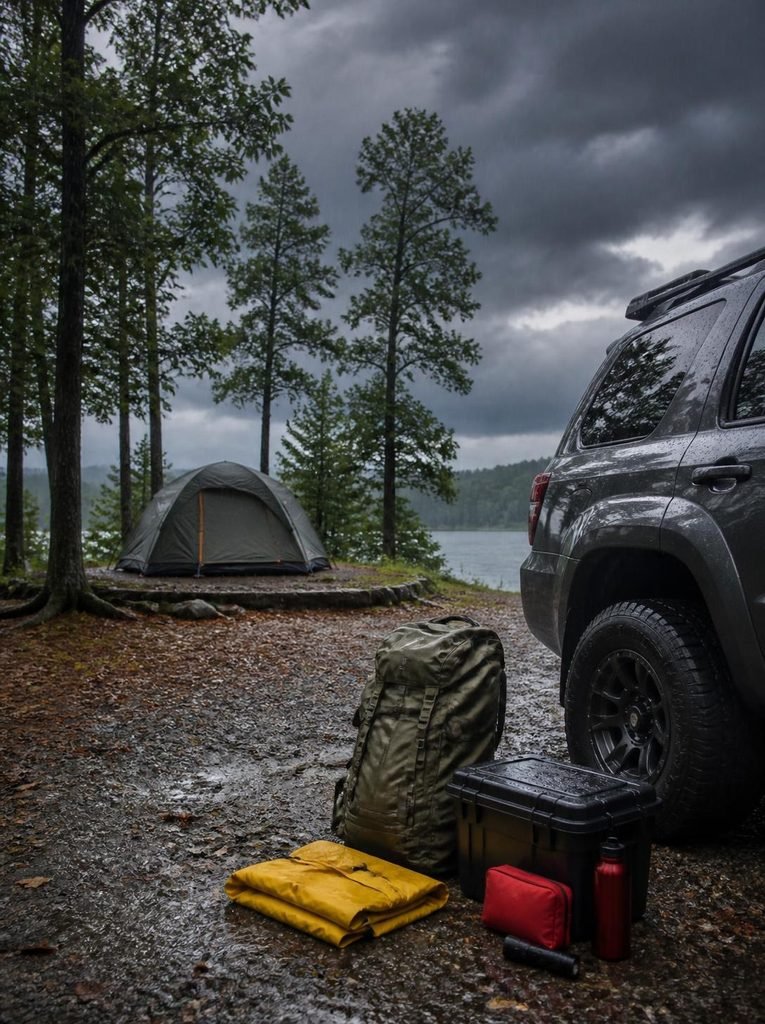
Staying positive during a rainy camping trip is useful, but it should never come at the expense of safety. Ordinary rain may be manageable with the right equipment, while severe weather can turn a campsite into a dangerous place.
Check the forecast before departure and continue monitoring local weather alerts during your trip. Pay attention to warnings for thunderstorms, strong winds, flash flooding, and other hazardous conditions. A forecast that changes significantly may require you to adjust your plans.
Avoid camping in low-lying areas, dry creek beds, riverbanks, and places where water can collect or rise quickly. Never assume a location is safe simply because it looks dry when you arrive.
If water starts flowing through your campsite, move toward safer ground rather than waiting to see whether conditions improve. If flooding threatens your route, do not attempt to drive or walk through floodwater. Follow campground staff instructions and local emergency guidance.
Strong winds can also make a wet campsite unsafe. If officials or campground staff direct campers to evacuate, follow those instructions promptly. Do not stay outside trying to rescue equipment during dangerous weather.
A practical backup plan should include knowing where the nearest suitable shelter is, keeping vehicle keys accessible, and ensuring essential medication, identification, phones, and emergency supplies are protected from moisture.
Leaving early does not mean your trip has failed. Sometimes the best camping decision is recognizing when conditions are no longer safe.
13. Dry and Pack Your Gear Properly After the Rain
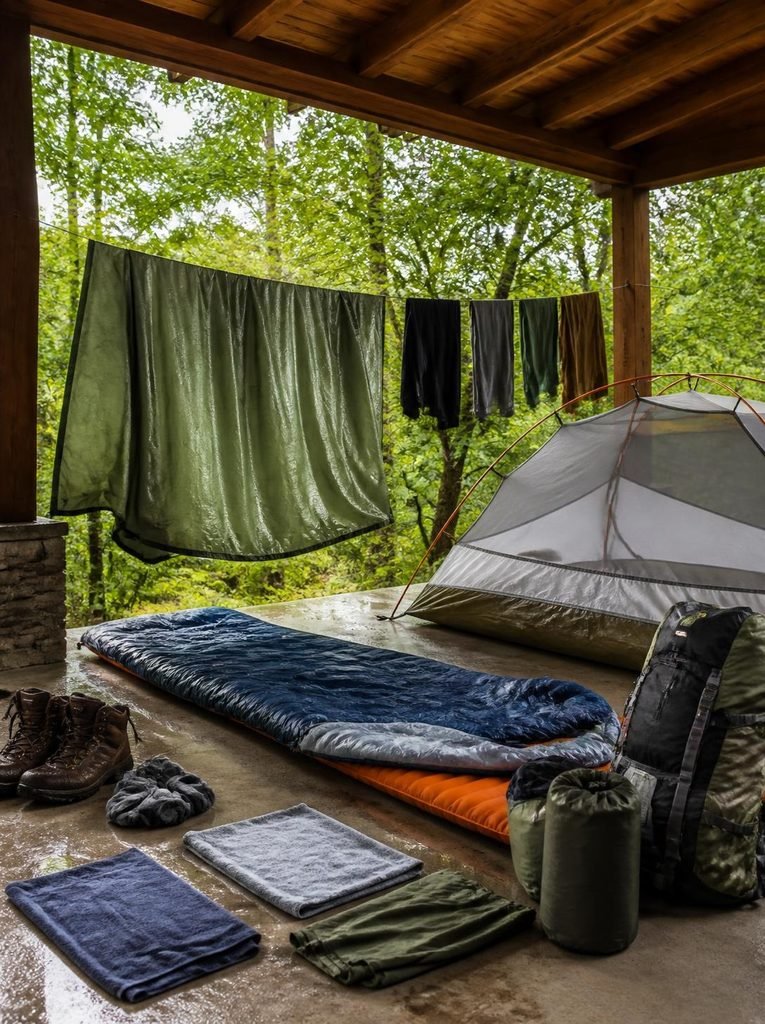
The work is not over when the rain stops. Packing damp equipment without a plan can lead to unpleasant odors, mildew, and damaged camping gear.
Whenever the weather allows, spread out your tent, rainfly, footprint, and other damp equipment so they can dry. Choose a safe location where the materials will not be damaged by sharp objects, excessive heat, or direct exposure beyond the manufacturer’s recommendations.
If you must leave before everything dries, pack wet items separately from clean clothing, bedding, and dry supplies. A dedicated waterproof bag can keep moisture contained during the journey, but it should not become a long-term storage solution.
Once you get home, unpack your equipment as soon as practical. Hang the tent and rainfly in a well-ventilated area until they are completely dry. Clean off mud according to the manufacturer’s care instructions, and inspect seams, zippers, guylines, and stakes for damage.
Wash damp clothing and towels promptly. Allow sleeping bags and other insulated items to dry according to their care labels before storing them. Store tents and sleeping gear in the recommended conditions, usually in a cool, dry location.
It is also worth checking your waterproof equipment before your next trip. Repair damaged seams, replace worn-out guylines, and test any rain protection that performed poorly. A little maintenance now can prevent a much bigger problem on your next rainy camping adventure.
Extra Tips for a More Comfortable Wet Camping Trip
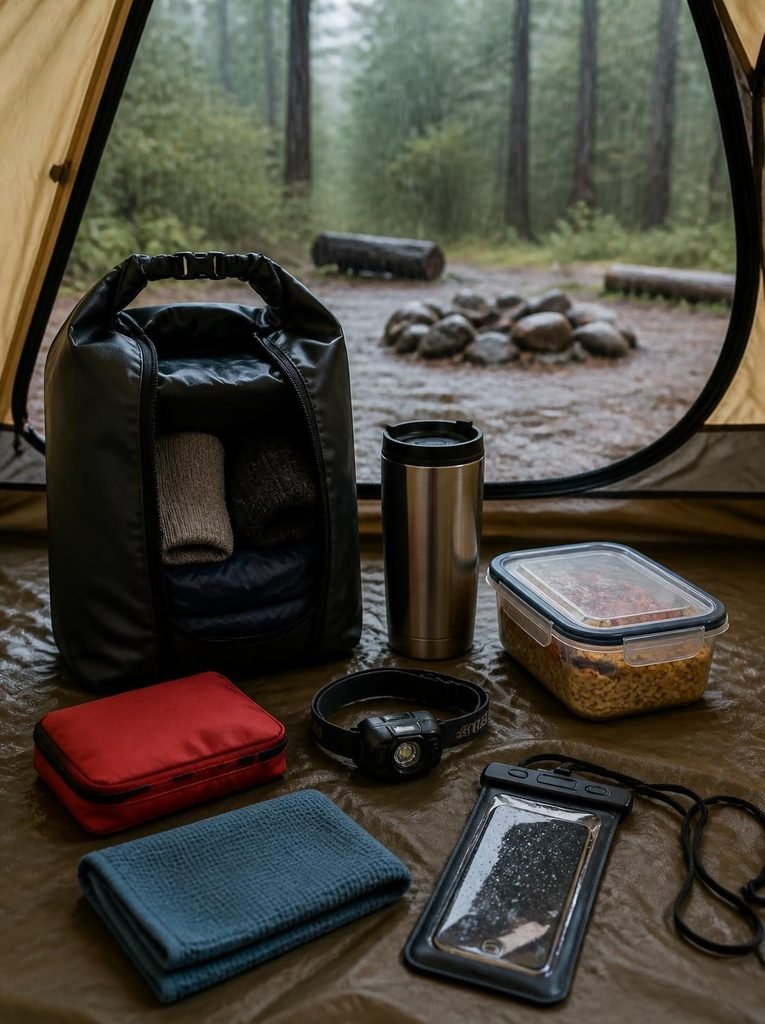
1. Pack a separate set of clothes for sleeping. Keep these clothes sealed in a waterproof bag and reserve them for bedtime. Changing into dry clothing can make a cold, damp evening much more comfortable.
2. Bring more socks than you think you need. Wet socks can make walking uncomfortable and contribute to blisters. Store spare pairs in a dry bag and change them whenever necessary.
3. Use smaller waterproof bags inside your backpack. Instead of relying on one large rain cover, separate your electronics, clothing, toiletries, and other important items into individual waterproof bags.
4. Prepare an easy meal before you leave home. Pre-chopped ingredients and simple meals reduce the amount of time you need to spend preparing food in wet weather. Keep perishable ingredients properly chilled.
5. Keep essential items within easy reach. Store your headlamp, rain jacket, phone, medication, and vehicle keys where you can access them without unpacking your entire campsite.
6. Check your tent after setting it up. Look for loose guylines, poorly secured stakes, gaps around the rainfly, and places where water might collect. Fixing these issues early is easier than dealing with them during heavy rain.
7. Protect your feet during longer walks. Wear suitable waterproof footwear when conditions call for it, and avoid walking in wet socks for extended periods. Dry your feet and change footwear when you return to camp.
8. Keep an eye on the ground around your tent. Water can collect as rain continues, even when the campsite initially looks dry. If pooling water or rising water levels threaten your shelter, move to safer ground.
Common Mistakes to Avoid When Camping in the Rain
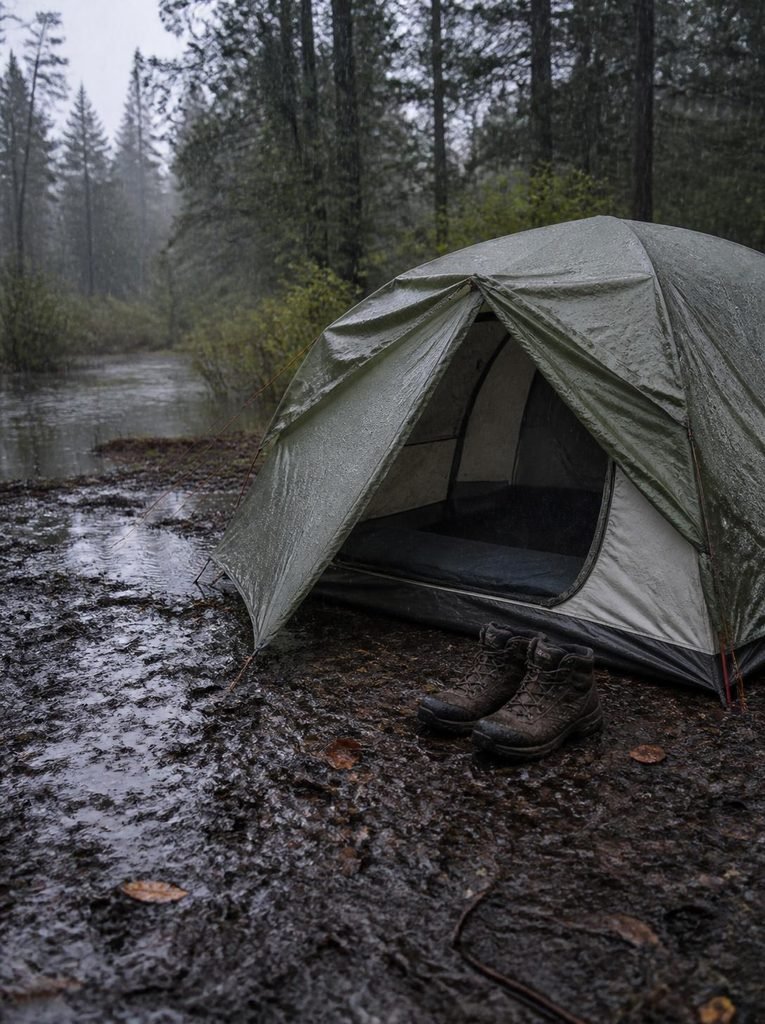
1. Pitching your tent in a low spot. Depressions in the ground can collect rainwater and leave your tent surrounded by puddles. Choose a suitable, established campsite with good drainage instead.
2. Assuming a waterproof tent cannot leak. Worn seams, damaged fabric, incorrectly fitted rainflies, and loose guylines can allow water inside. Inspect your equipment before the trip and follow the manufacturer’s setup instructions.
3. Packing all your clothes in one bag. If that bag gets wet or is opened in the rain, you could lose access to every dry layer. Separate clothing into waterproof bags and reserve a clean outfit for sleeping.
4. Closing every tent vent. Keeping a tent completely sealed can increase condensation, leaving the interior damp even without a leak. Maintain ventilation as the weather and tent design allow.
5. Bringing wet boots and clothing into the sleeping area. This transfers mud and moisture to the tent floor and bedding. Create a designated spot for wet gear outside the sleeping area, using a vestibule or suitable covered area.
6. Using a camping stove inside a tent. Fuel-burning stoves can produce carbon monoxide and create a serious fire risk. Cook outdoors in an appropriate, well-ventilated location and follow all equipment and campground safety instructions.
7. Forgetting to check the forecast during the trip. Weather can change after you arrive. Monitor local alerts and be ready to change your plans if thunderstorms, strong winds, or flooding threaten the campsite.
8. Leaving wet equipment packed away for days. Damp tents, sleeping bags, and clothing can develop mildew and unpleasant odors. Unpack everything as soon as practical and dry it thoroughly before storage.
Frequently Asked Questions
Is it safe to go camping when rain is forecast?
Yes, camping in ordinary rain can be manageable when you have suitable shelter, waterproof clothing, and a well-drained campsite. However, check the forecast and official weather alerts before leaving. Severe thunderstorms, strong winds, flash flooding, and other dangerous conditions may require postponing or ending the trip.
How do you keep a tent dry while camping in the rain?
Use a properly fitted rainfly, secure the guylines, choose a well-drained campsite, and keep your sleeping gear away from wet tent walls. Maintain ventilation to reduce condensation, and inspect your setup for leaks before the rain becomes heavy.
What should I wear for camping in wet weather?
Wear moisture-wicking base layers, an insulating midlayer when temperatures are cool, and a waterproof outer layer suited to the conditions. Waterproof footwear can also help. Pack spare socks and dry sleeping clothes, and avoid remaining in damp clothing longer than necessary.
How do you stay warm when camping in the rain?
Keep your sleeping bag and insulating layers dry, eat regular meals, and change out of wet clothing promptly. Use a sleeping pad appropriate for the expected temperatures and a sleeping bag rated for the conditions. If you develop signs of hypothermia, such as confusion, unusual drowsiness, or loss of coordination, seek emergency assistance.
What is the best tent for rainy camping?
A suitable tent has a reliable rainfly, sealed or properly protected seams, a waterproof floor, secure guy points, and adequate ventilation. The right choice also depends on the expected weather, campsite, and number of campers. Check the manufacturer’s specifications and inspect the tent before relying on it in prolonged rain.
What food is easiest to prepare during a rainy camping trip?
Simple meals with minimal preparation work well, including wraps, sandwiches, pre-prepared ingredients, and easy one-pot meals when conditions allow safe outdoor cooking. Keep perishable food at safe temperatures, and store dry ingredients in sealed containers.
How do you prevent condensation inside a tent?
Open the tent’s designated vents when possible, avoid bringing wet equipment into the sleeping area, and allow moist air to escape without exposing the interior to rain. Wipe condensation from tent walls when necessary, and dry your sleeping equipment whenever conditions permit.
Should you pack up your tent if it starts raining heavily?
Not necessarily. Ordinary rain alone does not mean you need to leave. However, evacuate or relocate when flooding, rising water, dangerous winds, lightning, or official warnings make the campsite unsafe. Never wait until water is already flowing around your tent to consider your options.
Can you pack a tent while it is wet?
Yes, if you need to leave before it dries. Keep the wet tent separate from dry clothing and sleeping gear, then unpack and dry it thoroughly as soon as possible. Leaving a damp tent packed away for an extended period can encourage mildew and damage the fabric.
What is the most important item to bring for rainy camping?
A reliable waterproof shelter is essential, but keeping your sleeping bag and spare clothing dry is equally important for comfort and warmth. Waterproof storage bags, suitable rainwear, and a dependable headlamp are also valuable additions to a rainy-weather camping kit.
Final Thoughts
A wet camping trip can still be enjoyable when you prepare for the conditions instead of trying to ignore them. Choosing a well-drained campsite, keeping sleeping gear dry, wearing suitable layers, and organizing a sheltered cooking area can make a rainy day much easier to manage.
The most important thing is to separate discomfort from genuine danger. Damp shoes and muddy tent entrances are frustrating, but flooding, lightning, and dangerous winds require a more serious response.
With the right supplies and a flexible attitude, you can spend less time dealing with wet equipment and more time enjoying the experience. And when the weather becomes unsafe, knowing when to leave is just as important as knowing how to prepare.