Space-Saving RV Must-Have Essentials for a More Organized Camper
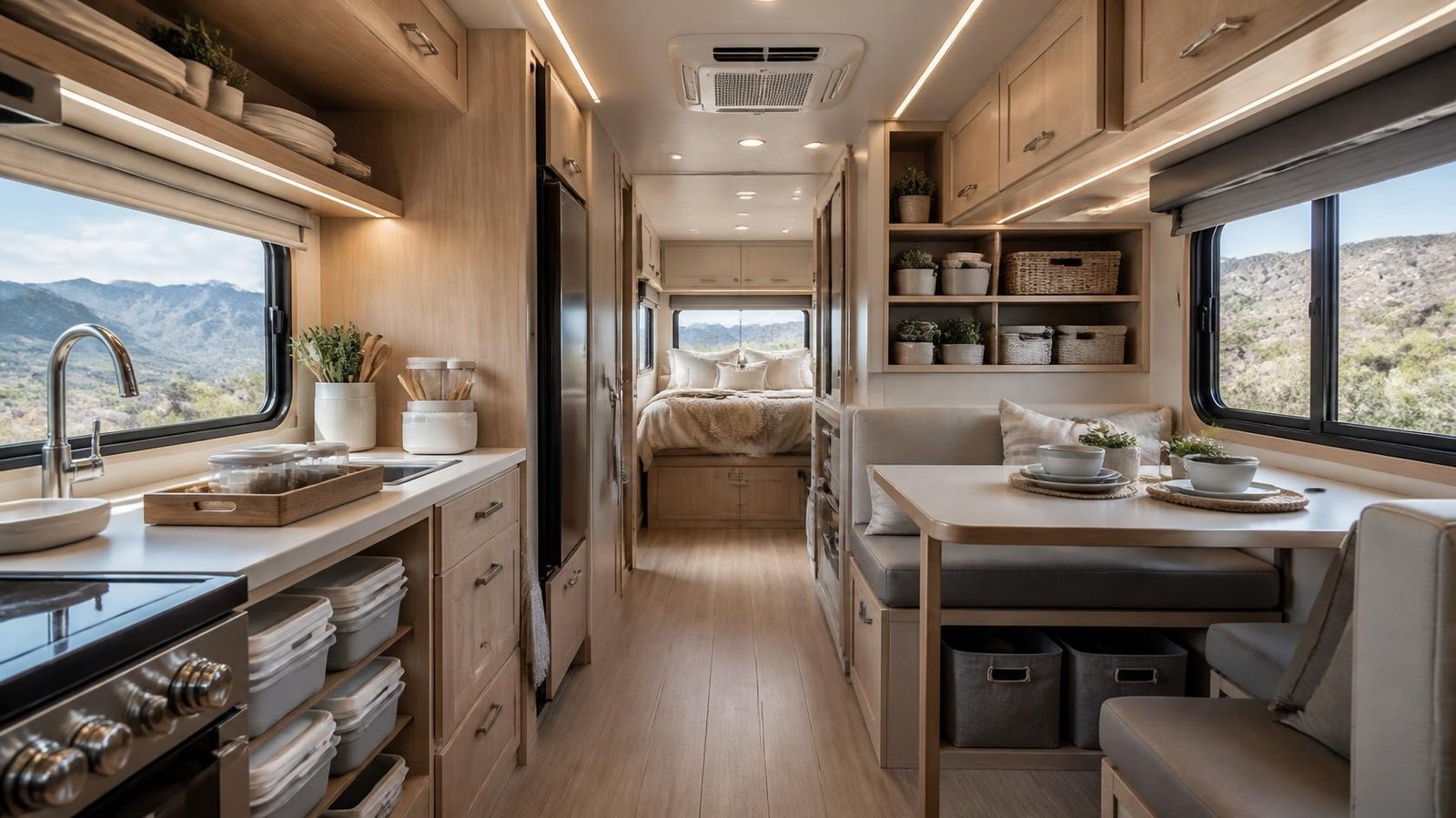
Living in an RV means learning how to make every inch count. The kitchen counter may be small, the bathroom cabinets may barely fit everyday toiletries, and the bedroom storage can fill up faster than expected. Even a few unnecessary belongings can make the entire camper feel crowded, especially when you are preparing meals, getting dressed, or trying to relax after a long day on the road.
The right space-saving RV must-have essentials can make a noticeable difference without requiring a major renovation. Compact organizers, multipurpose furniture, collapsible kitchen tools, and clever storage accessories help you keep everyday necessities within reach while leaving more room to move around.
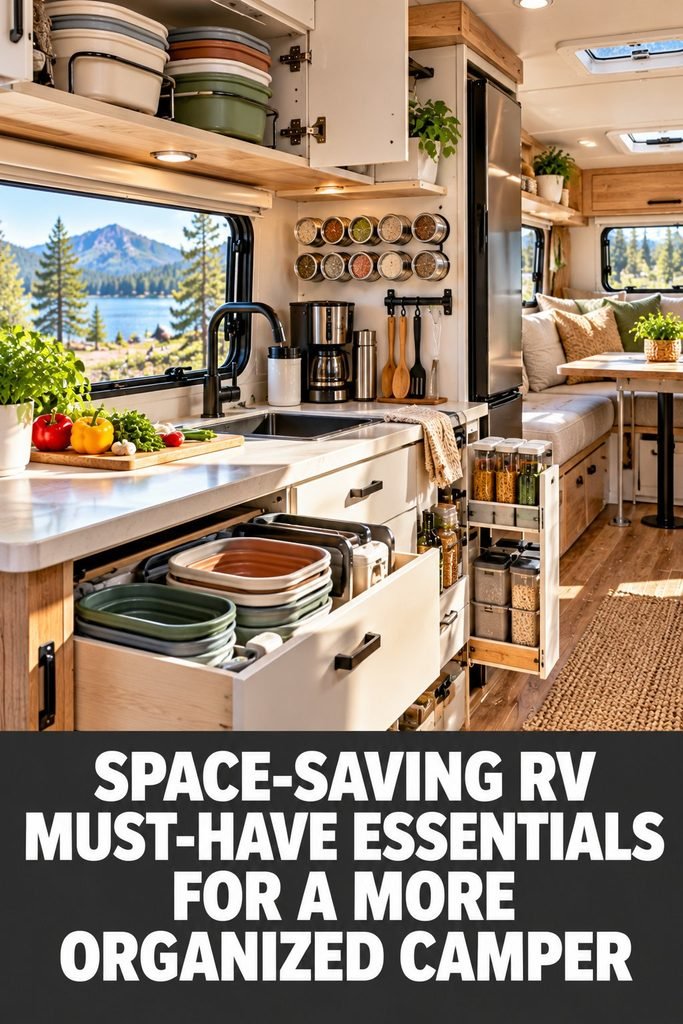
When choosing RV essentials, I focus on products that solve real problems rather than adding more things to an already limited space. An organizer should make an area easier to use, a storage container should fit the available cabinet, and a multipurpose item should replace something you would otherwise need to pack separately.
In this guide, we will look at practical space-saving essentials for RV kitchens, bathrooms, bedrooms, closets, and living areas. These ideas are useful for motorhomes, travel trailers, campervans, and tiny campers where storage space is always at a premium.
1. Collapsible Kitchen Containers
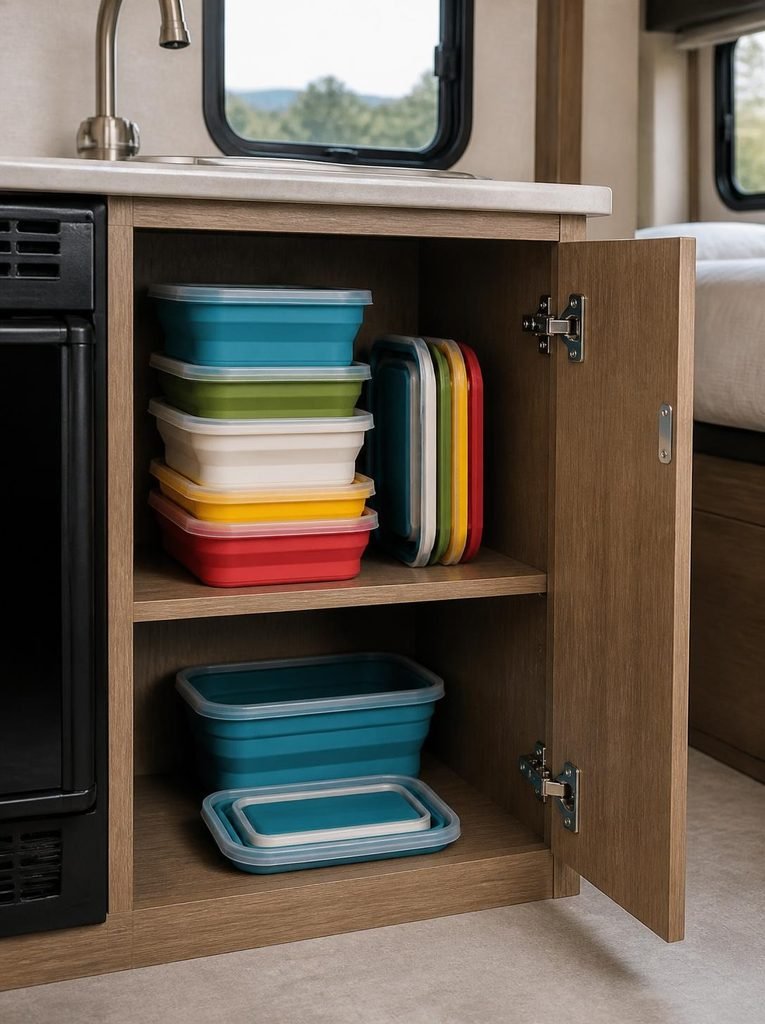
Collapsible kitchen containers are useful for RV owners who want practical food storage without dedicating an entire cabinet to empty containers. Traditional food storage bowls can take up considerable room, especially when you keep several sizes for leftovers, meal preparation, and snacks.
Collapsible versions compress when they are not in use, allowing you to stack them in a drawer or tuck them into a narrow cabinet. They can be particularly helpful in compact RV kitchens where every shelf needs to serve a purpose.
Look for food-safe containers with secure lids and a design that folds down easily. Different sizes can accommodate leftovers, chopped ingredients, or snacks for travel days. Before buying a set, check the collapsed dimensions to make sure the containers will fit your existing storage space.
It is also important to check the manufacturer’s instructions for microwave use, freezer use, and cleaning. Not every collapsible container is suitable for every purpose.
Why they are worth packing: They provide flexible food storage while taking up less room when empty.
RV storage tip: Keep only the sizes you regularly use. A small, practical collection is often easier to store than a large assortment of containers.
2. Over-the-Door Storage Organizers
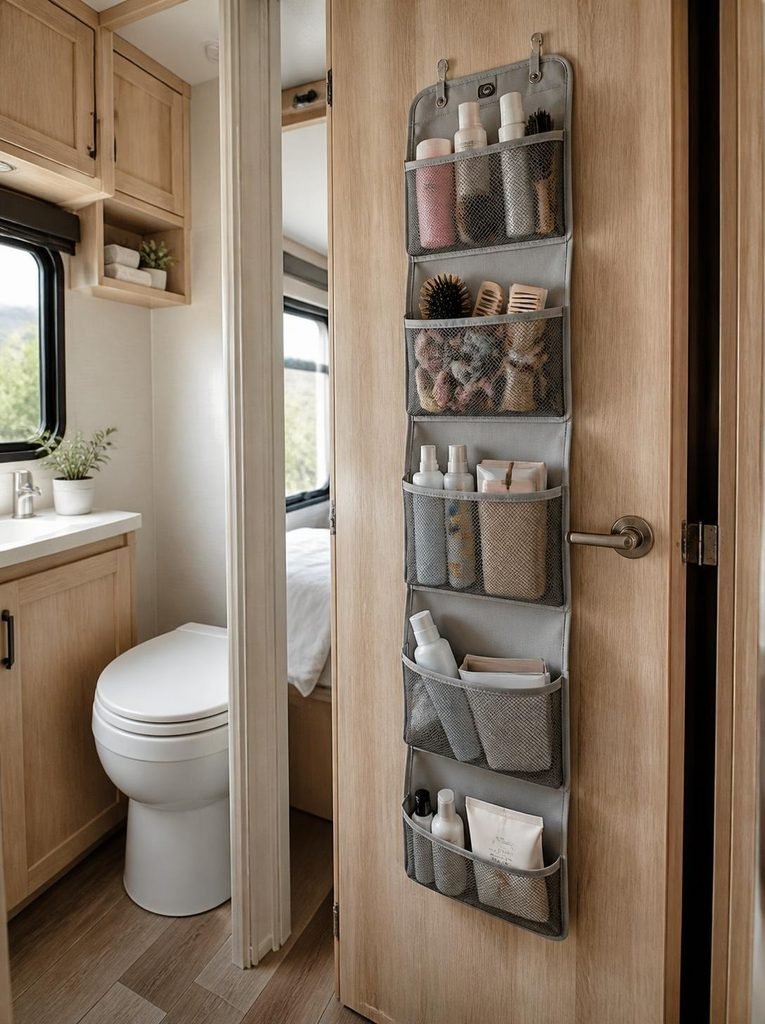
Over-the-door organizers make use of vertical space that often goes unused in RVs. Depending on the design, they can hang over a suitable cabinet door, closet door, or other compatible surface to hold lightweight everyday essentials.
In an RV bathroom, pocket organizers can hold toiletries, hair accessories, and small personal care items. Inside a closet, they can store socks, travel accessories, or lightweight clothing. Some designs are also useful for organizing cleaning cloths and small household supplies.
The main advantage is that you gain extra storage without placing another box or shelf on the floor. This can be especially helpful in compact campers where a few inches of additional floor space make movement easier.
However, RV doors and cabinets vary in thickness and construction. Measure the door and check the organizer’s mounting requirements before purchasing. Make sure it does not prevent the door from closing or interfere with nearby fixtures.
For travel, secure the contents and make sure the organizer cannot swing excessively or come loose while the vehicle is moving.
Why they are worth packing: They turn suitable unused door space into convenient storage.
RV storage tip: Reserve the organizer for lightweight belongings and avoid placing heavy bottles or metal tools in pockets that are not designed to support them.
3. Stackable Storage Bins
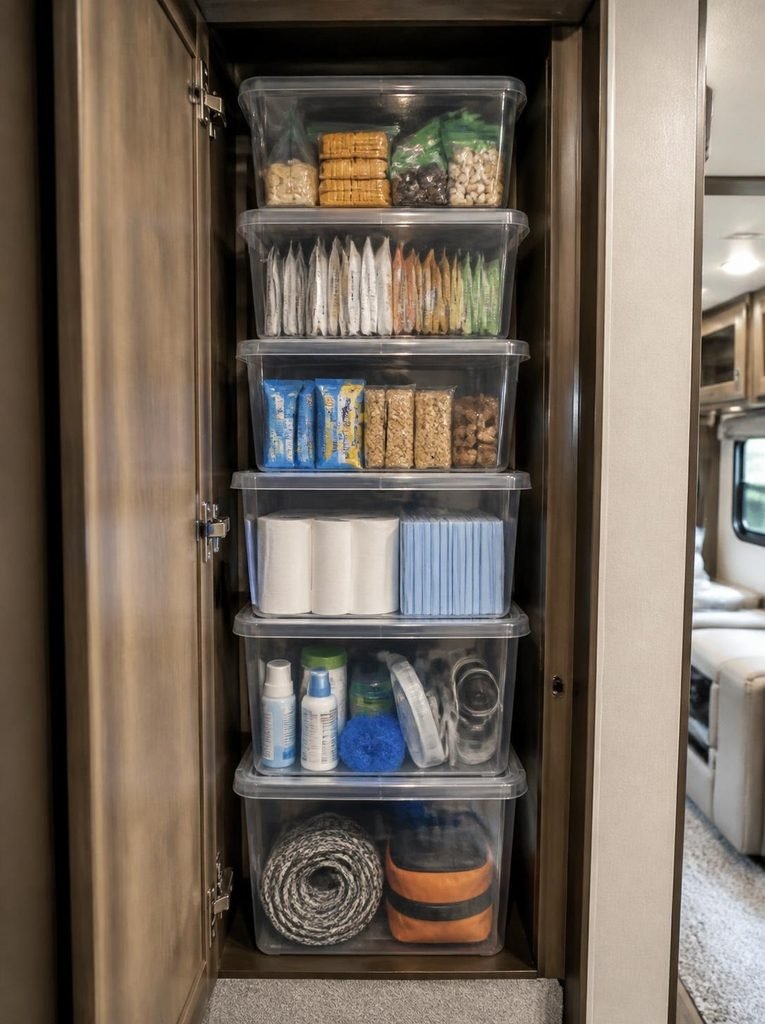
Stackable storage bins help create order inside RV cabinets, closets, pantries, and under-bed compartments. Without containers or defined storage zones, small belongings can slide around, become mixed together, or disappear behind larger items.
The right bins allow you to group similar belongings and use vertical cabinet space more efficiently. You might dedicate one bin to snacks, another to cooking supplies, and a third to cleaning products. In a bedroom closet, smaller bins can hold accessories, socks, or seasonal items.
Choose bins based on the measurements of your existing cabinets rather than purchasing a standard set and hoping it fits. RV storage compartments can have unusual dimensions, and a container that is slightly too tall may prevent a cabinet door from closing.
Clear bins make it easier to identify the contents, while opaque bins can give open shelving a tidier appearance. Lidded designs are useful for items that need additional protection from dust, but frequently used belongings may be easier to access in open-top containers.
Remember that storage bins add weight and can reduce the space available if they are too bulky. Use them to organize belongings you need, not to justify keeping unnecessary items.
Why they are worth packing: They keep small essentials grouped together and make limited storage areas easier to manage.
RV storage tip: Use a few well-fitting bins instead of filling every cabinet with containers. Leave enough room to remove each bin without having to unpack the entire shelf.
4. Magnetic Spice Containers
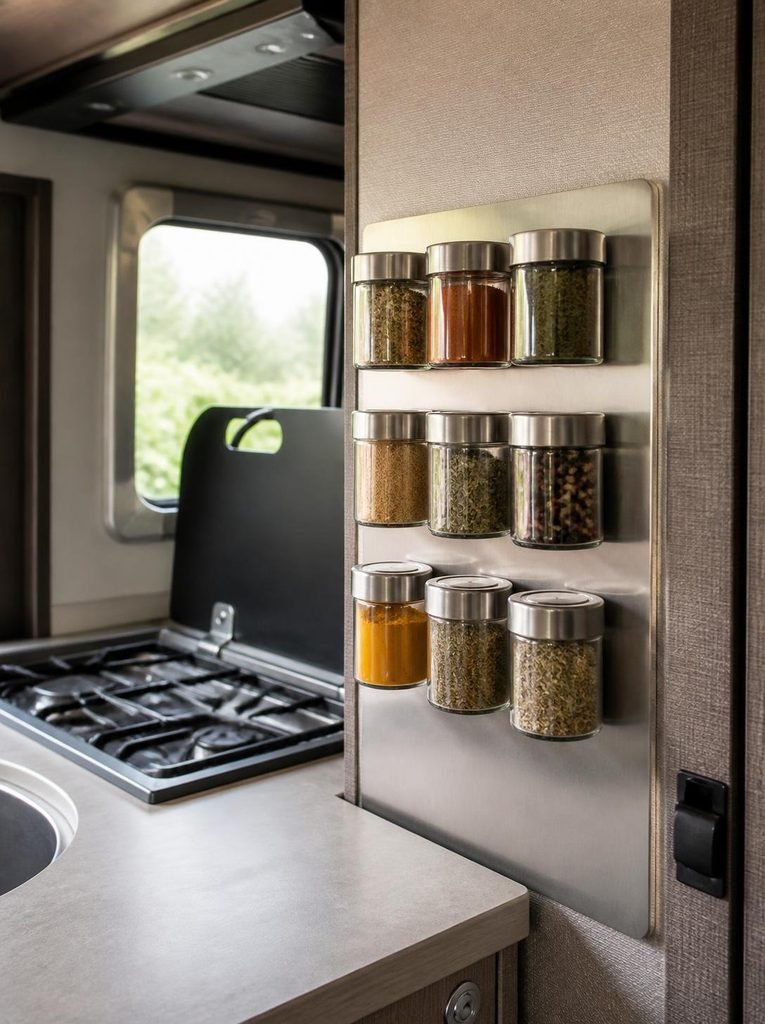
RV kitchens often have limited counter space and narrow cabinets, making traditional spice racks difficult to accommodate. Magnetic spice containers offer an alternative by allowing compatible containers to attach to a suitable metal surface.
Depending on the product, you may be able to arrange them on a metal panel or another manufacturer-approved mounting surface. This can free up a drawer or shelf for other cooking essentials while keeping frequently used seasonings accessible.
Look for containers with secure closures and labels that remain easy to read. Choose a size that suits the spices you use most often rather than transferring your entire collection into small containers that need frequent refilling.
Before installing a magnetic spice system, confirm that the mounting surface is suitable and that the containers remain secure during travel. Magnets alone may not prevent lids from loosening or containers from moving when an RV turns or brakes.
Avoid placing them where they could fall onto a hot cooking surface or obstruct access to appliances.
Why they are worth packing: They can free up valuable cabinet space while keeping everyday seasonings within reach.
RV storage tip: Keep only your most-used spices in the main cooking area and store occasional-use seasonings in a secure cabinet.
5. Collapsible Dish Drying Rack
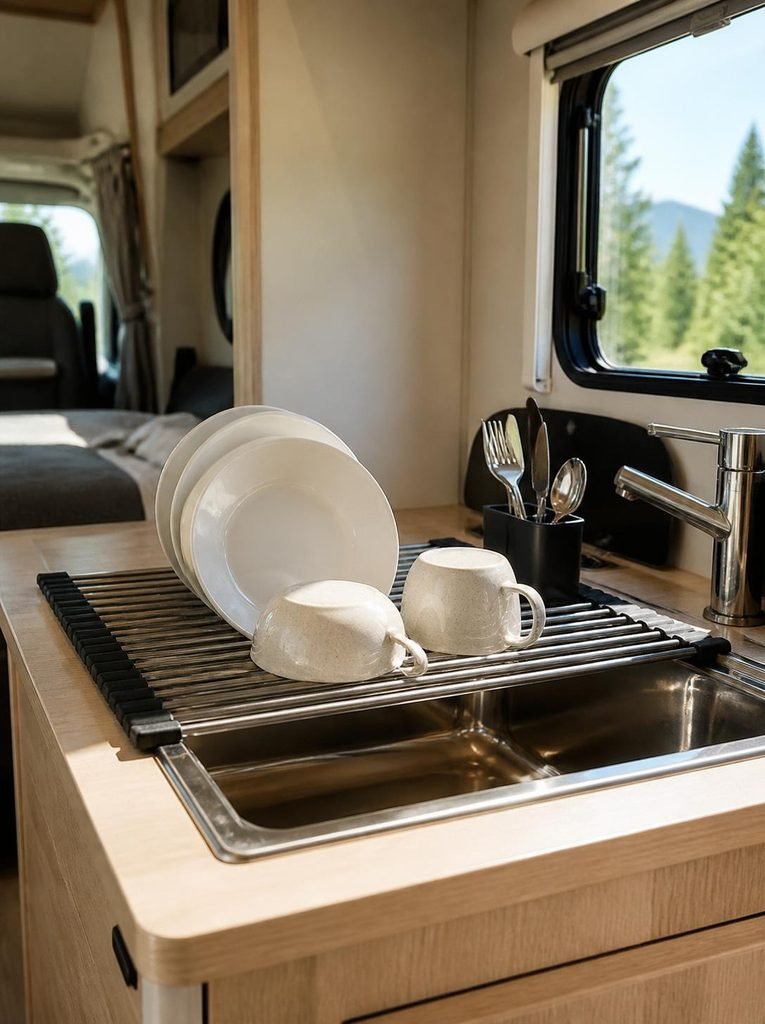
A traditional dish drying rack can occupy a large portion of a small RV sink or countertop, even when you are not washing dishes. A collapsible rack offers a more flexible option because it can fold flat when it is no longer needed.
This makes it useful for campers with compact kitchens and limited drying space. You can open it after washing dishes, allow the items to drain, and then fold it away once everything is dry.
Some designs fit inside the sink, while others sit on the counter. Measure your sink and available counter area before selecting a model. A rack that fits over the sink can preserve some preparation space, but it must be stable and compatible with the sink’s dimensions.
Look for a design that drains properly and is easy to clean. Areas that remain damp can collect residue, so the rack should dry thoroughly before being stored.
If you travel frequently, check whether the folded rack can be secured inside a drawer or cabinet without putting pressure on other items.
Why it is worth packing: It provides a practical dish drying area without permanently taking up counter space.
RV storage tip: Choose a rack that folds compactly and can be stored close to the sink, making it easy to use and put away after each meal.
6. Hanging Closet Organizers
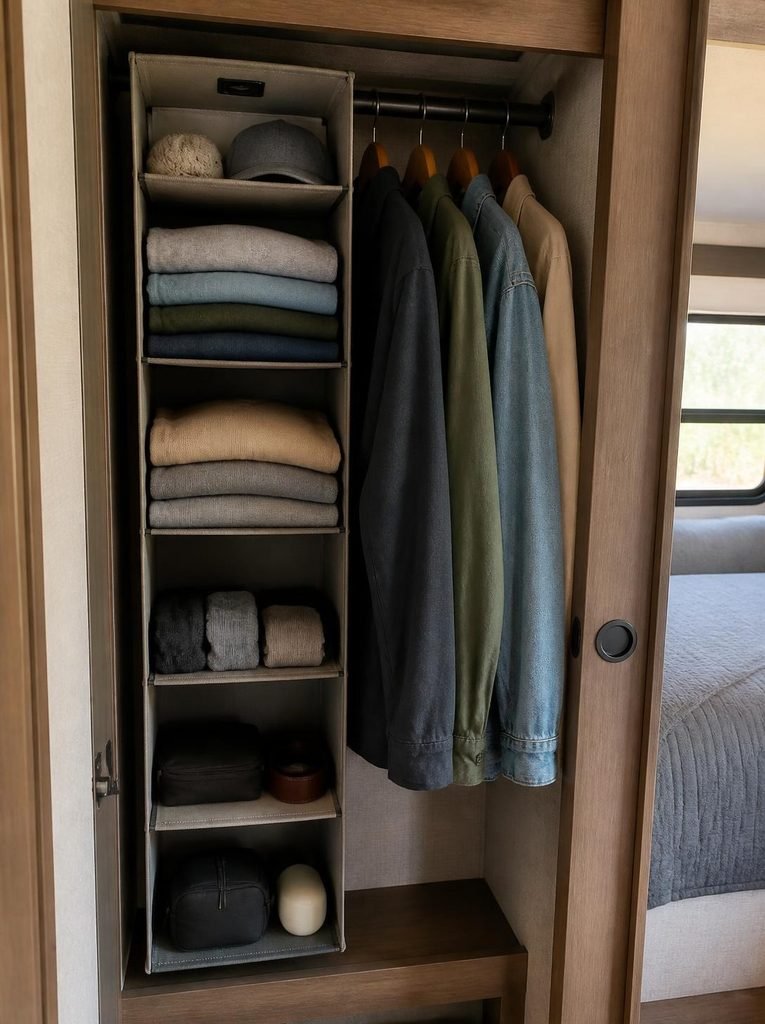
RV wardrobes often have limited hanging space, and small closets can become cluttered when clothes, shoes, and accessories are all stored together. A hanging closet organizer can create additional compartments without requiring another piece of furniture.
These organizers typically attach to a closet rod and provide shelves or pockets for folded clothing, lightweight shoes, bags, or travel accessories. They can help separate everyday essentials from items used less frequently.
Before choosing one, measure the height and width of your closet. A long organizer may reduce the available space for hanging clothes, so consider whether a shorter design would fit better.
Weight is another important consideration. Avoid overloading the shelves, especially if the organizer hangs from a lightweight rod. During travel, secure loose items and make sure the organizer cannot swing into other belongings or interfere with closet doors.
For the best results, use it for items that fold neatly and are easy to retrieve. Bulky belongings can make the compartments difficult to access and may stretch the fabric.
Why it is worth packing: It makes better use of vertical closet space and keeps small clothing items organized.
RV storage tip: Store lightweight essentials in the organizer and reserve the main hanging rod for clothing that needs to remain on hangers.
7. Collapsible Laundry Hamper
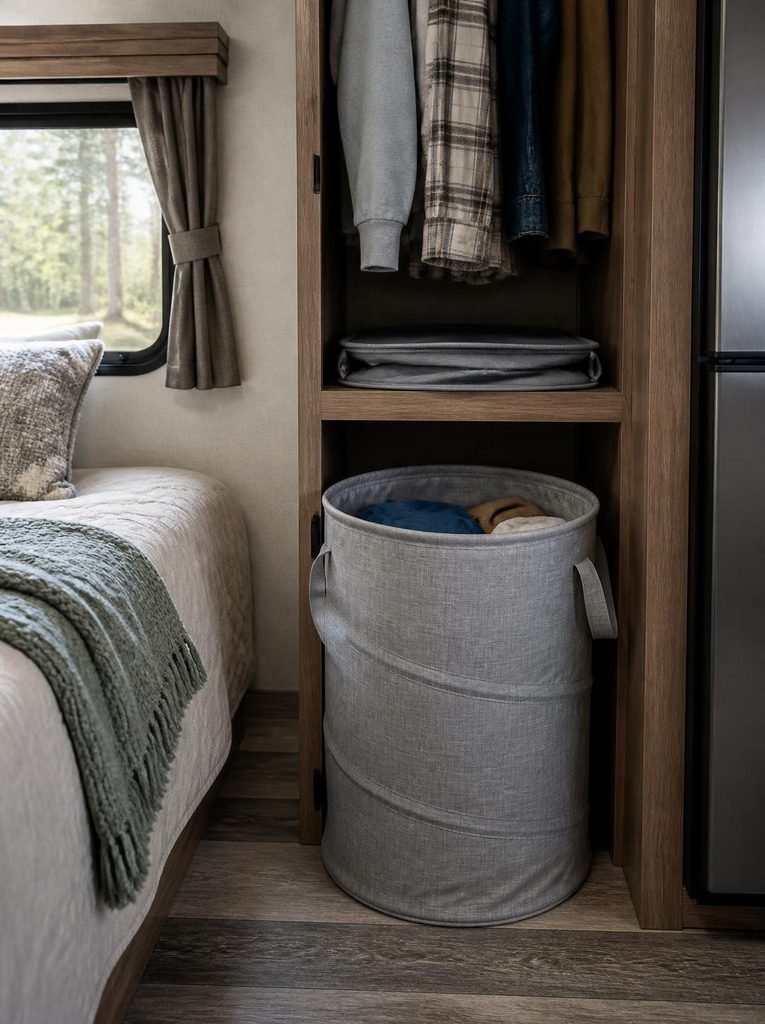
Laundry can take up more room in an RV than expected, especially during longer trips when clean clothes and worn clothing need separate storage. A traditional laundry basket occupies valuable floor or closet space even when it is empty. A collapsible laundry hamper solves this problem by folding flat when it is not being used.
Look for a lightweight design that opens easily and has enough capacity for your usual laundry load. Mesh hampers allow airflow, while fabric versions may offer a neater appearance and handles for carrying clothes to a laundromat.
Before buying one, measure the space where you intend to store it. Some models fit beside a wardrobe, inside a cabinet, or beneath a bed when collapsed. Choose a hamper that is easy to fold and unfold, since complicated designs can become inconvenient during everyday use.
For RV travel, avoid leaving a full hamper unsecured. Laundry can shift while the vehicle is moving, so keep it in a stable compartment or another suitable location before driving.
Why it is worth packing: It gives dirty clothes a designated home without permanently occupying limited floor space.
RV storage tip: Choose a hamper that folds down small enough to fit inside the closet or under the bed when empty.
8. Under-Bed Storage Containers
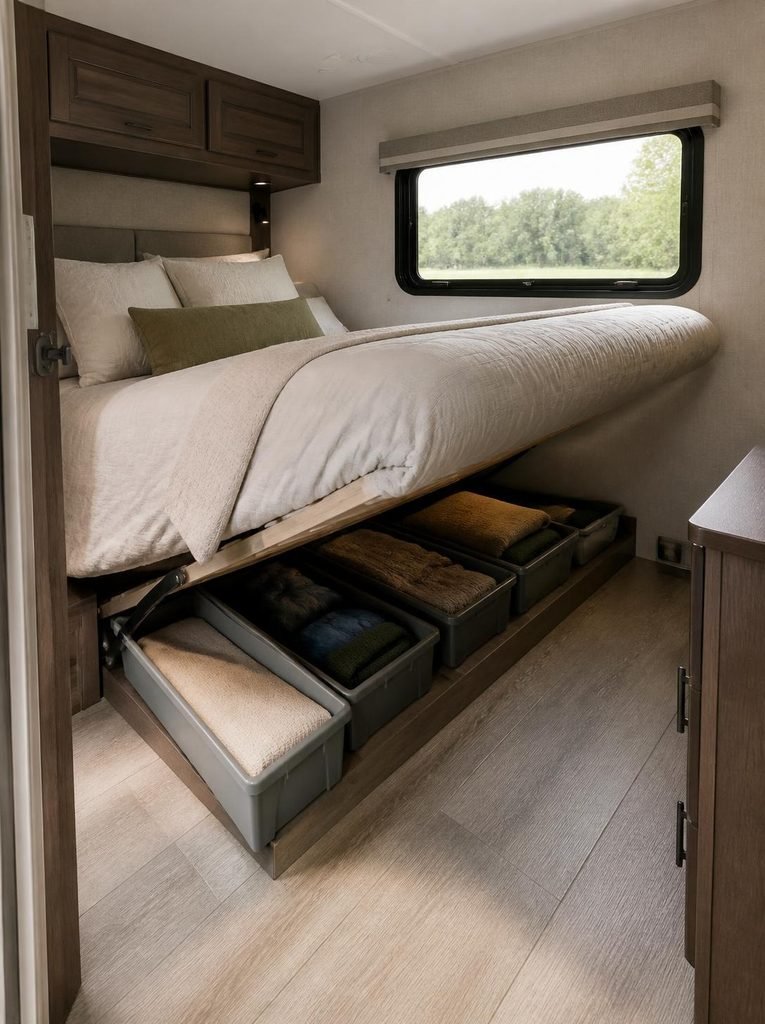
The space beneath an RV bed can provide valuable storage, particularly when the bedroom has limited closet space. Instead of allowing this area to become a collection of loose bags and boxes, use suitable under-bed containers to keep belongings organized and easy to retrieve.
These containers are useful for spare bedding, seasonal clothing, extra towels, and other items you do not need every day. Low-profile designs work well when the available clearance is limited, while containers with handles can make retrieval easier.
Measure the height, width, and depth of the available space before purchasing anything. RV beds may have storage compartments, access panels, or structural supports that limit the type of container you can use.
It is also worth considering how frequently you need the contents. Items used regularly should not be placed beneath a bed if retrieving them requires moving several other belongings. Keep occasional-use items in the least accessible areas and everyday necessities somewhere easier to reach.
Use lids when appropriate to protect stored belongings from dust, and ensure clothing and bedding are completely dry before putting them away.
Why they are worth packing: They turn otherwise unused space into organized storage without adding furniture.
RV storage tip: Label containers clearly and secure them so they cannot slide around when the RV is in motion.
9. Foldable Step Stool
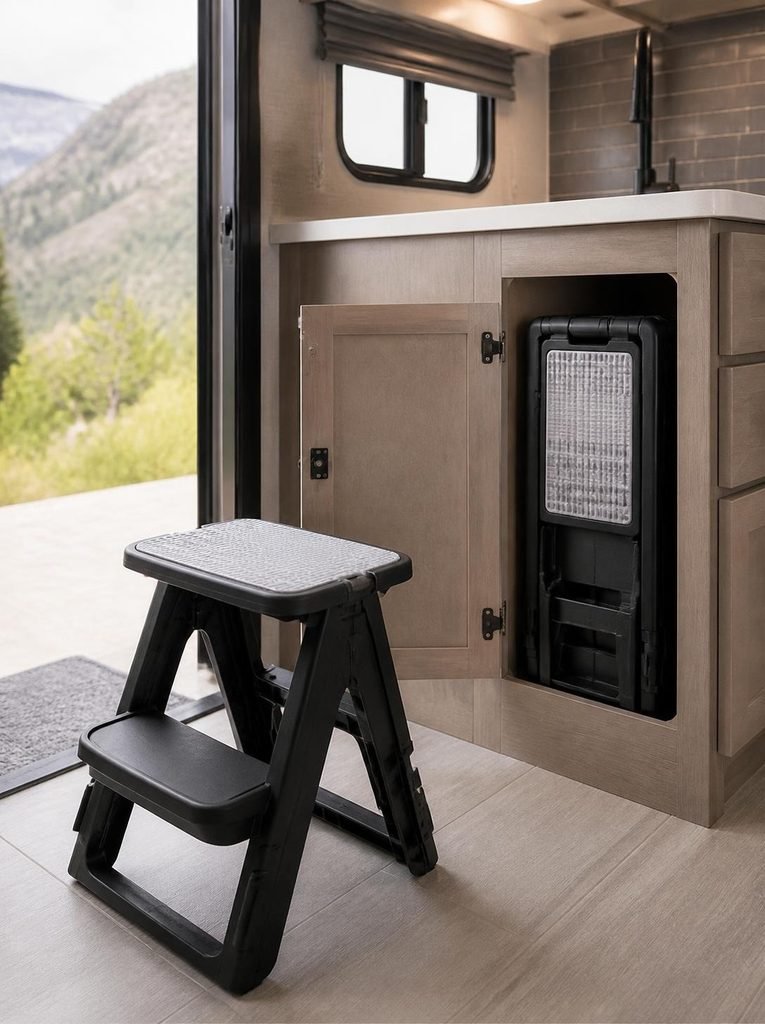
An RV kitchen or bathroom may have cabinets positioned higher than you can comfortably reach. A compact folding step stool can make those storage areas more accessible without requiring a permanently placed stool that takes up valuable floor space.
Choose a sturdy model with a weight rating appropriate for the person using it. Non-slip feet and a stable standing surface are important, particularly when using the stool on smooth flooring.
The best design for an RV is one that folds flat and fits inside a cabinet, closet, or storage compartment. Check its folded dimensions before buying it, and make sure it is easy to open and close without pinching your fingers.
Use the stool only when the RV is parked and stable. Never climb on a stool while the vehicle is moving, and avoid standing on it if the floor is uneven or slippery.
Why it is worth packing: It improves access to higher cabinets while taking up very little room when folded.
RV storage tip: Store the folded stool in a secure compartment so it cannot move around during travel.
10. Over-the-Sink Cutting Board
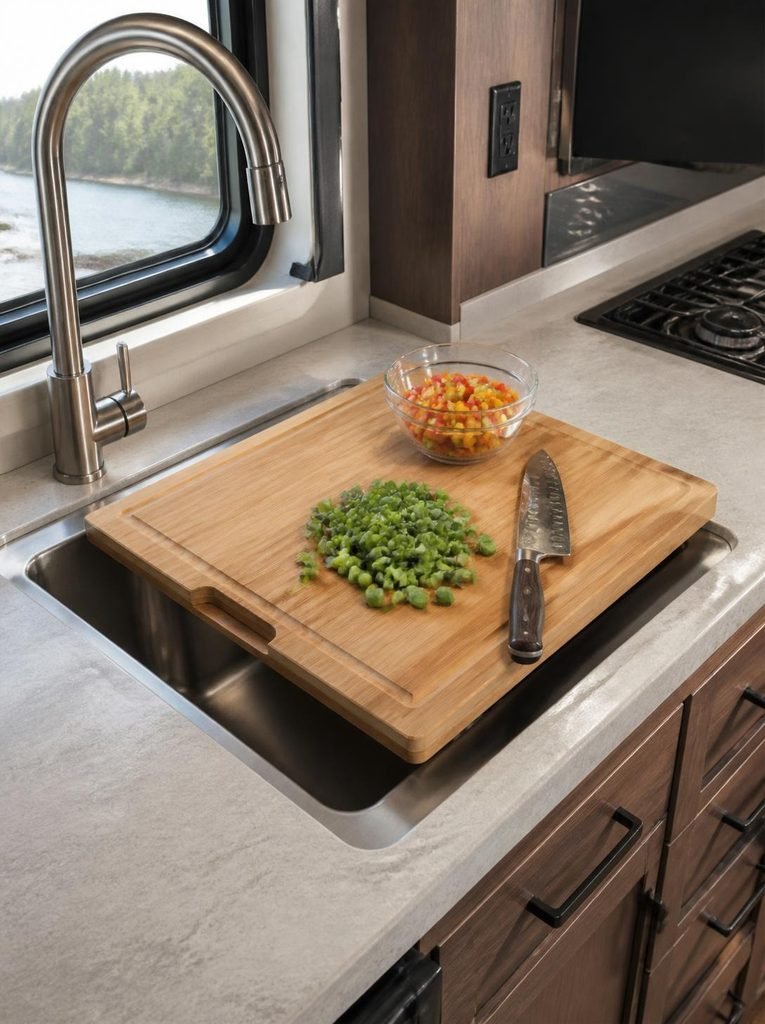
Counter space is often limited in an RV kitchen, particularly when you are preparing meals for more than one person. An over-the-sink cutting board can provide an additional preparation surface by using the space above the sink.
This design can be useful for chopping vegetables, preparing sandwich ingredients, or organizing ingredients before cooking. Some models include a colander or drainage section, making food preparation more convenient.
Measure your sink carefully before purchasing one. The board should sit securely across the sink without rocking, slipping, or obstructing the faucet. Make sure the material is suitable for food preparation and easy to clean.
An over-the-sink board is not a replacement for adequate food hygiene. Clean it properly after handling raw meat, poultry, seafood, or other ingredients that require careful separation.
When you finish cooking, remove the board, clean it, and store it in a suitable cabinet or vertical slot if available. Avoid leaving it across the sink when you need access to the faucet.
Why it is worth packing: It provides extra preparation space without requiring a larger countertop.
RV storage tip: Select a lightweight board that fits your sink and stores easily against the inside of a cabinet when not in use.
11. Adjustable Drawer Dividers
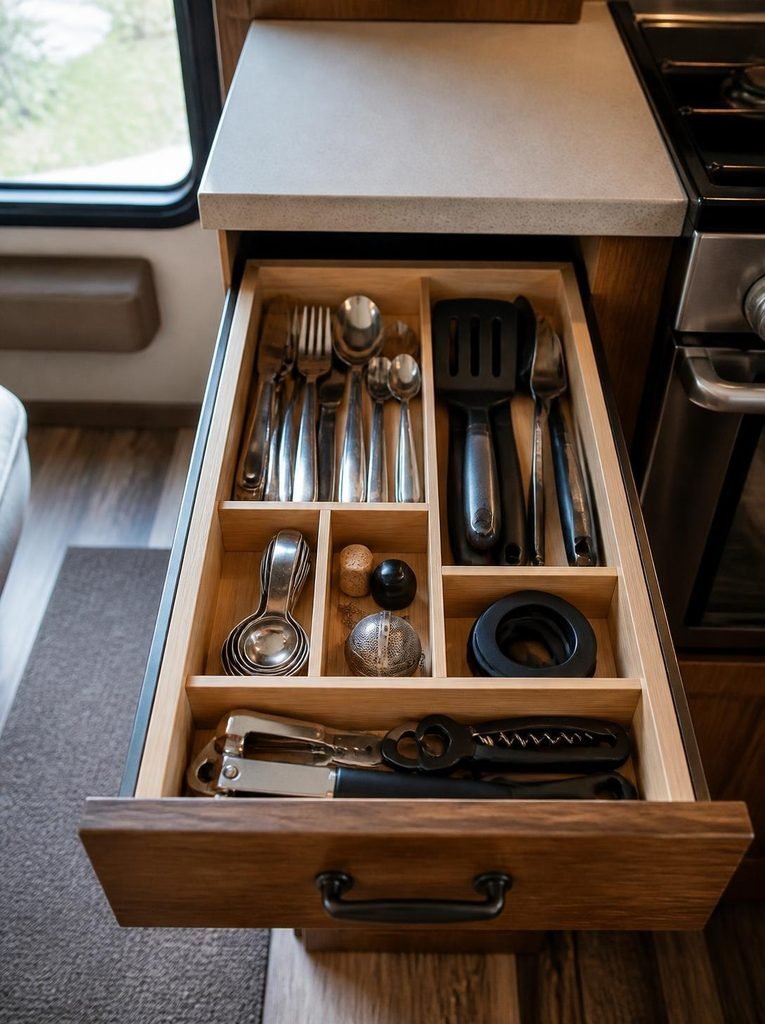
RV drawers can become messy when utensils, cooking accessories, toiletries, or small tools slide together. Adjustable drawer dividers create separate sections so each item has a designated place.
Unlike fixed organizers, adjustable dividers can be repositioned to suit the dimensions of your drawers and the belongings you store inside them. This is particularly helpful when RV cabinetry has unusual measurements.
Use them to separate cooking utensils, cutlery, charging accessories, bathroom essentials, or small repair supplies. Grouping similar items together makes it easier to find what you need without emptying the entire drawer.
Measure the inside dimensions of your drawers before purchasing dividers. Check that they fit securely and do not prevent the drawer from closing properly. For travel, choose a design that will remain in position when the RV moves.
Avoid dividing every drawer into too many tiny sections. A few useful compartments are often more practical than a complicated arrangement that makes larger items difficult to store.
Why they are worth packing: They help you organize small belongings without adding another bulky storage container.
RV storage tip: Reserve each drawer for a clear purpose, such as kitchen utensils, bathroom supplies, or electronic accessories, so items do not become mixed together.
12. Multipurpose Furniture With Hidden Storage
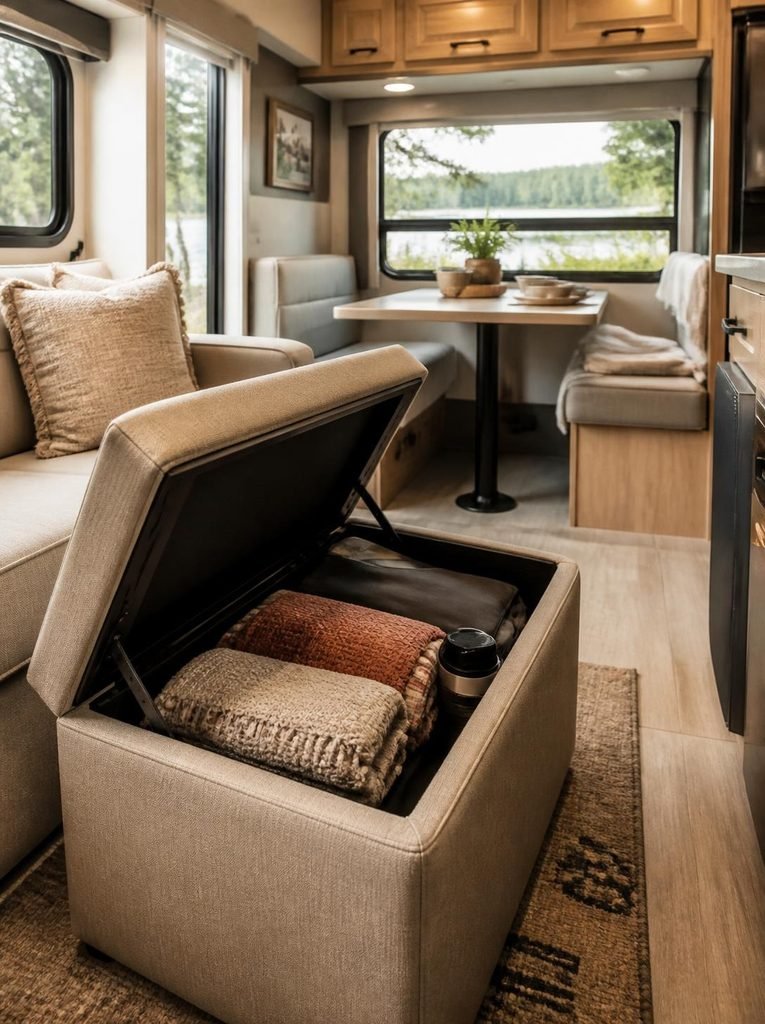
Furniture can consume a significant amount of space in a compact RV, so choosing pieces that serve more than one purpose can help keep the interior comfortable.
Depending on your layout, a storage ottoman, bench with a compartment, or table with integrated storage may provide a place to sit, a surface for everyday activities, and additional room for belongings.
These pieces can be useful for storing blankets, books, small accessories, or other lightweight items you want nearby. However, multipurpose furniture only saves space when it replaces something you would otherwise need. Adding another storage bench to an already crowded living area may create more problems than it solves.
Before purchasing furniture, measure your available floor space and consider how it affects movement around the RV. Check the item’s weight, dimensions, and stability, especially if it will remain inside the vehicle during travel.
Keep heavy or fragile belongings out of furniture compartments that may open unexpectedly while driving. Secure movable pieces and follow the RV manufacturer’s guidance for transporting interior furnishings.
Why it is worth considering: One well-chosen piece can serve multiple everyday needs without requiring separate furniture.
RV storage tip: Look for furniture that fits your existing layout rather than buying a piece simply because it includes hidden storage.
13. Wall-Mounted Hooks and Holders
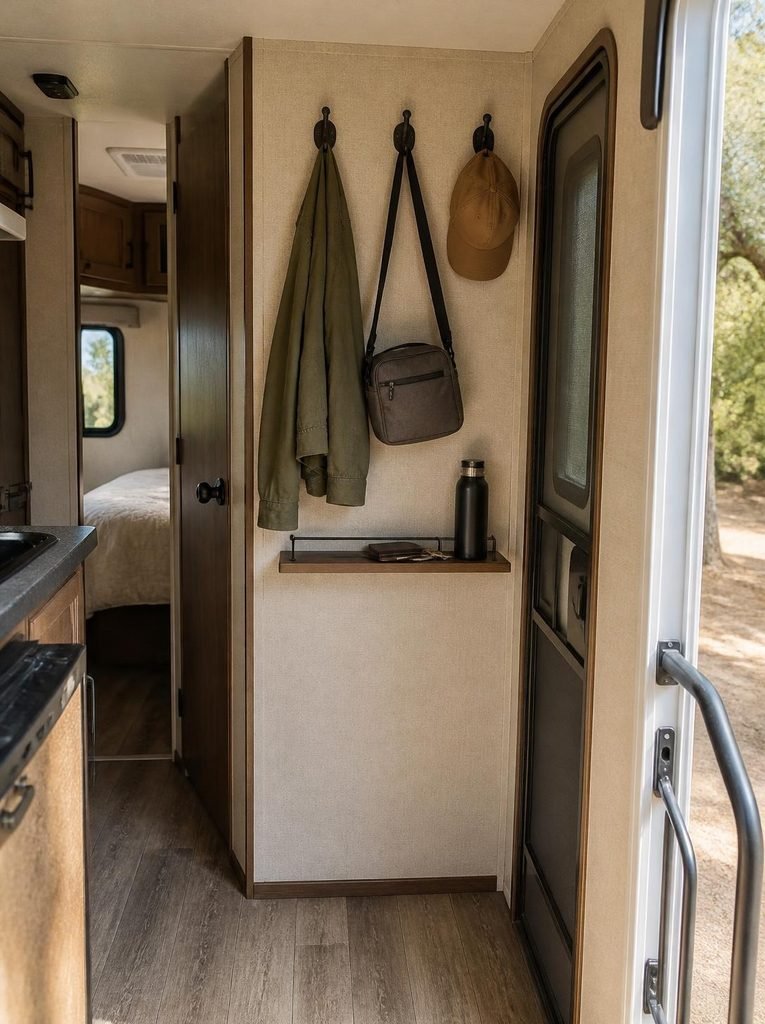
Walls and other suitable vertical surfaces can provide storage opportunities in an RV where floor and cabinet space are limited. Hooks and holders can keep lightweight everyday items accessible without requiring another shelf or storage box.
Depending on the mounting method and available space, you can use hooks for jackets, hats, keys, lightweight bags, or towels. A holder near the entrance may help keep everyday essentials organized, while hooks in a suitable bathroom location can provide space for towels.
Choose mounting hardware that is appropriate for the RV’s wall material and the weight of the items. Adhesive hooks may work for some lightweight belongings, but temperature changes, moisture, and movement can affect how well adhesives hold. Do not assume that a hook is secure simply because it sticks firmly at first.
Avoid mounting accessories where they could obstruct doors, windows, ventilation, or safety equipment. Items must also be secured before driving so they cannot fall or become projectiles during sudden braking.
Why they are worth packing: They use vertical space and keep frequently used belongings off counters and furniture.
RV storage tip: Start with a few carefully placed hooks. Too many hanging items can make the interior look cluttered and interfere with everyday movement.
14. Collapsible Trash Can
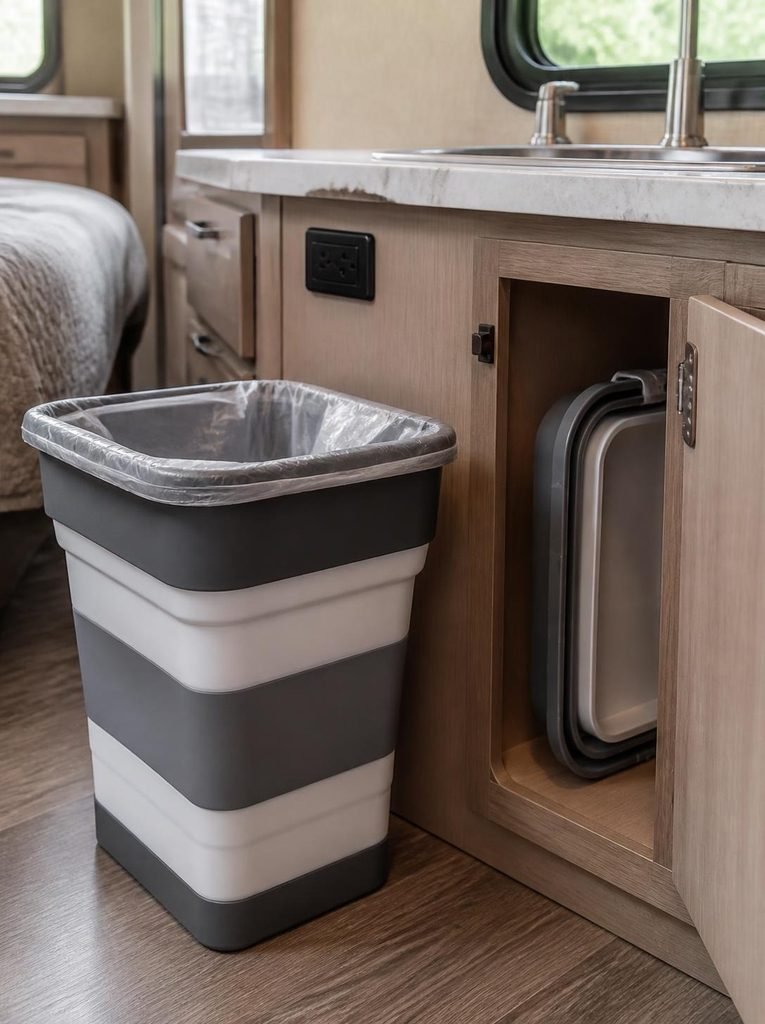
A compact RV kitchen needs a convenient place for everyday rubbish, but a full-size trash can may take up valuable floor space. A collapsible trash can offers a flexible alternative that can be expanded when needed and folded down for storage.
Depending on the design, it may fit inside a cabinet, attach to a suitable door, or sit beside a compact kitchen workspace. Look for a model with a secure lid or an opening that helps contain rubbish and odors.
Check the dimensions before buying one. A hanging model must be compatible with the cabinet door or mounting surface, and it should not prevent the door from closing. If you choose a collapsible floor-standing version, make sure it remains stable during use.
Empty the trash regularly, particularly in warm weather, and clean the container as needed. Before driving, remove or secure the rubbish bag and store the container so it cannot tip over or move around.
Why it is worth packing: It provides a practical rubbish collection point without permanently taking up much space.
RV storage tip: Choose a size that suits your household and the frequency of your rubbish disposal. An oversized bin can consume unnecessary space in a small kitchen.
15. Compact Cordless Handheld Vacuum
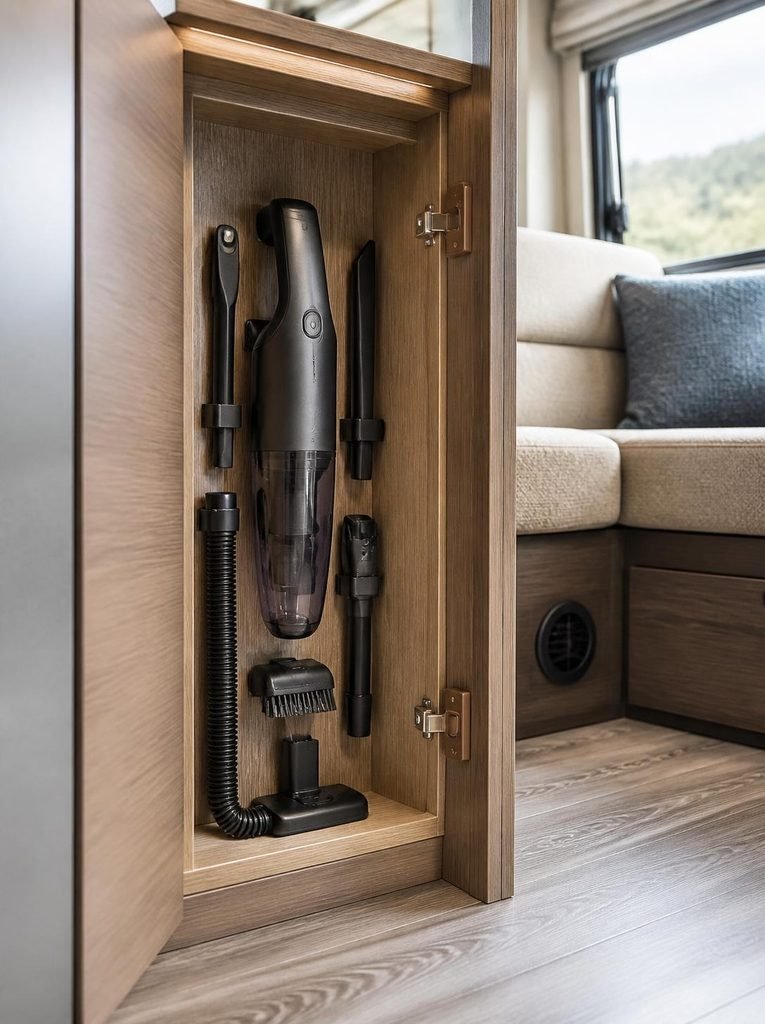
Crumbs, dust, pet hair, and dirt from shoes can accumulate quickly in an RV. Because the living area is small, even a little debris can make the interior feel untidy. A compact cordless handheld vacuum can make quick cleanups easier without requiring a full-size vacuum cleaner.
Look for a lightweight model with enough suction for your flooring, upholstery, and typical cleaning needs. A narrow attachment can help reach corners and gaps between furniture, while a brush attachment may be useful for upholstery.
Battery life, charging requirements, filter maintenance, and storage dimensions are worth checking before you buy. A powerful vacuum is not necessarily the best choice if it is too bulky to store conveniently.
Keep the vacuum and its accessories in a designated compartment, and secure them before driving. Empty the dust container regularly and clean the filters according to the manufacturer’s instructions.
For larger RVs or frequent deep cleaning, you may still need a more capable vacuum. The handheld version is most useful for quick daily maintenance between more thorough cleanups.
Why it is worth packing: It makes it easier to handle small messes before dirt spreads throughout the camper.
RV storage tip: Choose a compact model that fits in an existing cabinet and can be charged conveniently without creating another tangle of cables.
How to Choose the Best Space-Saving RV Essentials
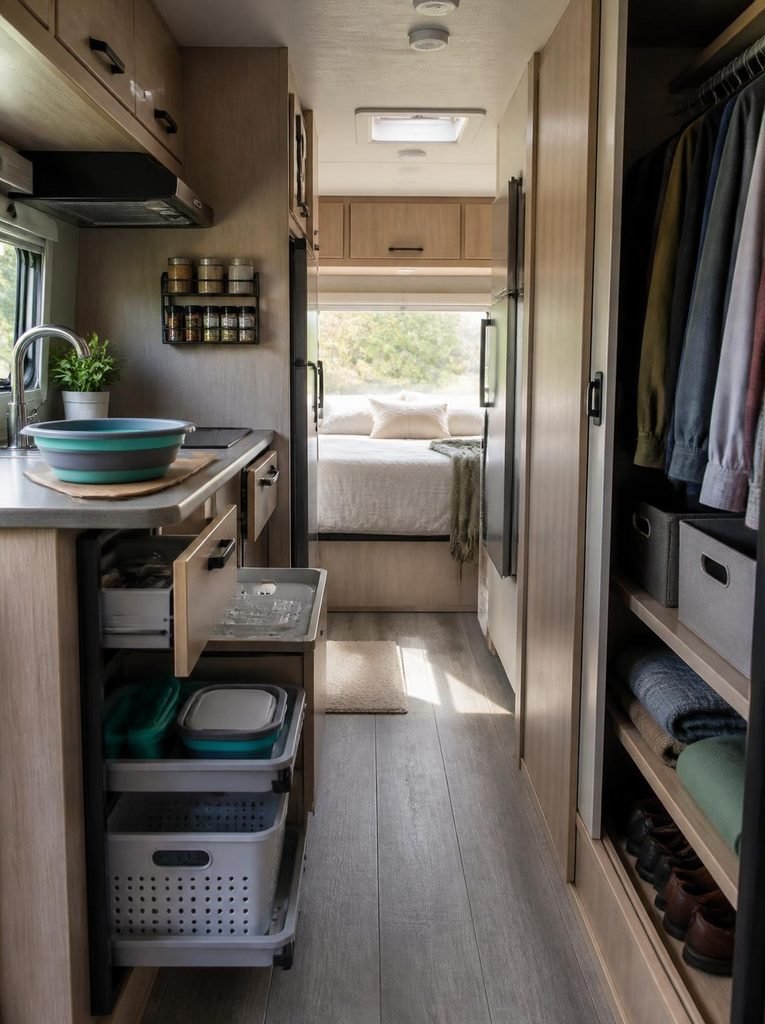
Not every space-saving product is right for every RV. A storage solution that works well in a large motorhome may be awkward in a compact campervan. Before buying anything, consider how you use your space and which problems repeatedly make everyday life difficult.
Here are a few things to check:
1. Measure before purchasing. Check the dimensions of cabinets, drawers, closets, and under-bed compartments so your new essentials fit properly.
2. Choose lightweight products. Storage accessories and furniture add weight. Consider the RV’s cargo carrying capacity and follow the manufacturer’s loading guidance.
3. Prioritize multipurpose items. Products that replace separate belongings can reduce both clutter and the amount you need to pack.
4. Consider travel safety. Containers, furniture, hooks, and hanging organizers should remain secure while the RV is moving. Keep exits and safety equipment accessible.
5. Buy for your actual routine. Choose products that solve a problem you experience regularly rather than purchasing every clever organizer you see.
6. Declutter before organizing. Removing unnecessary belongings often creates more usable space than adding storage products.
Common Mistakes to Avoid When Saving Space in an RV
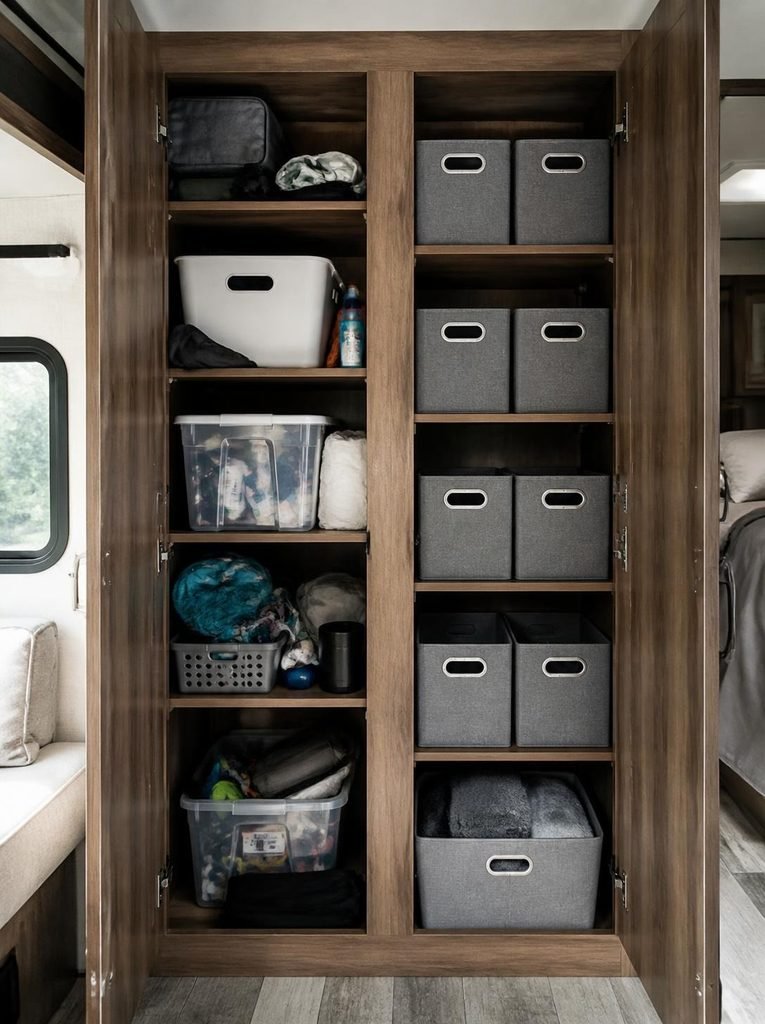
One common mistake is buying too many organizers. Containers, baskets, and shelves can look useful individually, but they still occupy space. Before adding another product, decide whether removing unused belongings would solve the problem more effectively.
Another mistake is ignoring weight. A storage system may look compact but still add unnecessary weight when filled with heavy items. Keep the RV’s weight limits in mind and avoid overloading overhead cabinets, doors, or furniture.
It is also easy to overlook access. An organizer that blocks a cabinet door or makes everyday essentials difficult to reach may be more frustrating than helpful. Test how you will use the product during ordinary activities before committing to a permanent setup.
Finally, do not leave loose items unsecured for travel. Sudden braking and sharp turns can cause belongings to move or fall. Put away loose objects, secure storage containers, and follow your RV manufacturer’s travel-safety recommendations before setting off.
Final Thoughts
The best space-saving RV must-have essentials are the ones that make your camper easier to use without filling it with unnecessary products. Collapsible kitchen items, adjustable drawer dividers, under-bed containers, hanging organizers, and compact cleaning tools can all help you make better use of limited space.
Start by identifying the areas that cause the most frustration in your RV. If your kitchen counter is constantly crowded, focus on collapsible tools and practical cabinet storage. If clothing and laundry take over the bedroom, consider a hanging organizer and a folding hamper. Choose each item with your available space, travel routine, and storage needs in mind.
Most importantly, remember that organizing a small RV is not about fitting as many belongings as possible into every compartment. It is about keeping the essentials you need, making them easy to access, and leaving enough room to move around comfortably.
With a few thoughtful choices and regular decluttering, your RV can feel more spacious, functional, and ready for the next adventure.