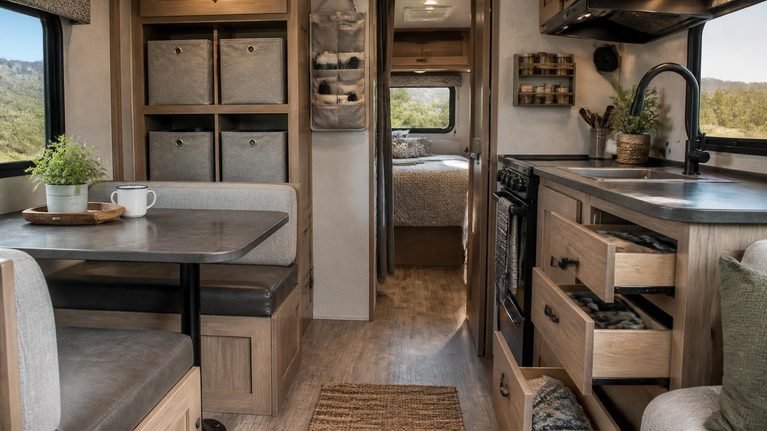
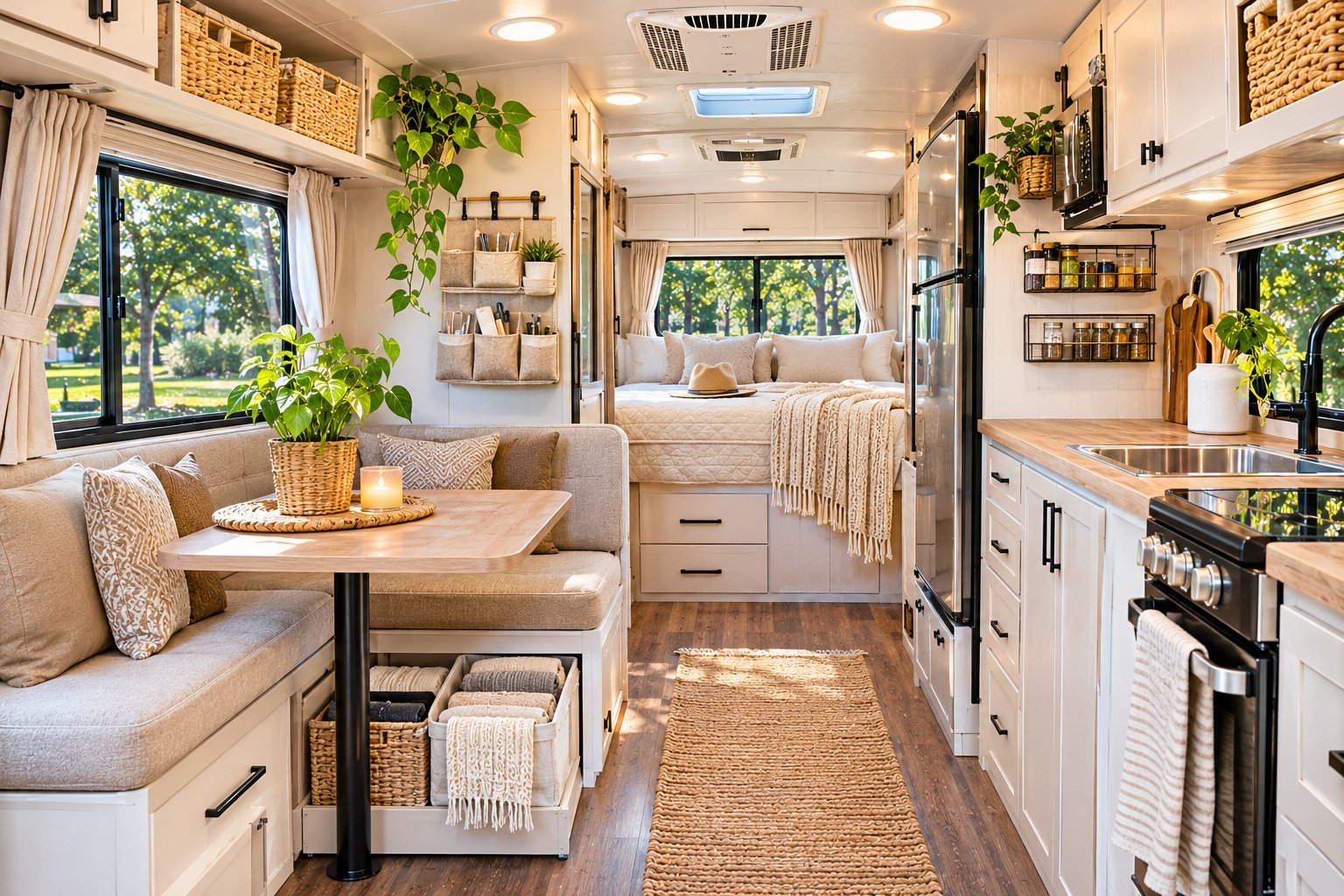
11 RV Organization Ideas to Maximize Tiny Space
Living in a small RV can be surprisingly comfortable when everything has its own place. However, keeping a tiny camper organized isn’t always easy.
Between kitchen supplies, clothing, toiletries, cleaning products, bedding, and everyday essentials, storage space can disappear much faster than expected.
I have found that the biggest challenge with small-space living isn’t necessarily having too many belongings. It’s figuring out where to put everything without making the RV feel crowded.
A kitchen counter can quickly become a storage area, shoes can take over the entrance, and cabinets can become difficult to manage when everything is stacked together.
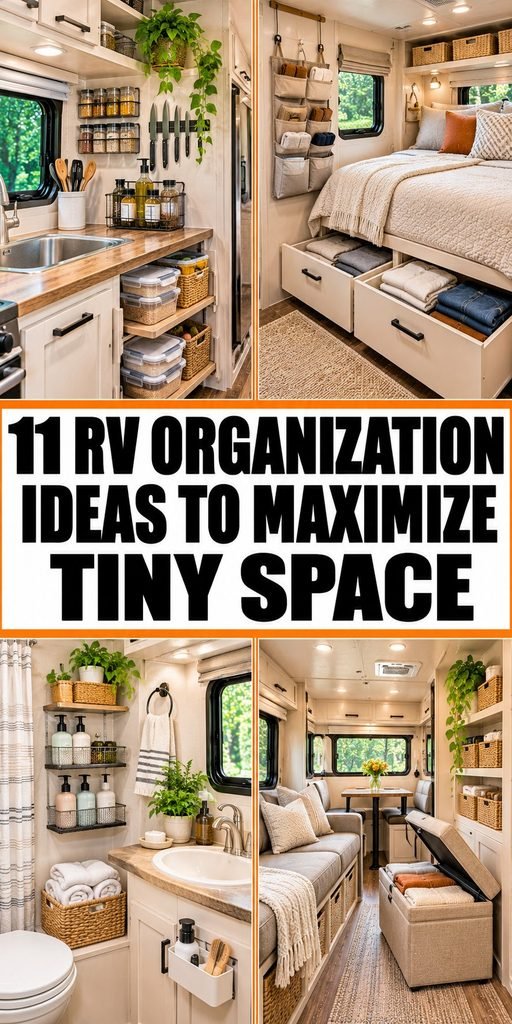
The good news is that you don’t need a larger motorhome or expensive custom cabinets to make better use of your space. A few clever storage solutions, some practical organization habits, and the right accessories can make a noticeable difference.
In this guide, I’m sharing 11 RV organization ideas that help maximize tiny spaces while keeping your camper comfortable, functional, and easy to maintain.
Whether you’re living in an RV full time, traveling on weekends, or renovating a small campervan, these ideas can help you use every available inch more efficiently.
Why Organization Matters in a Small RV
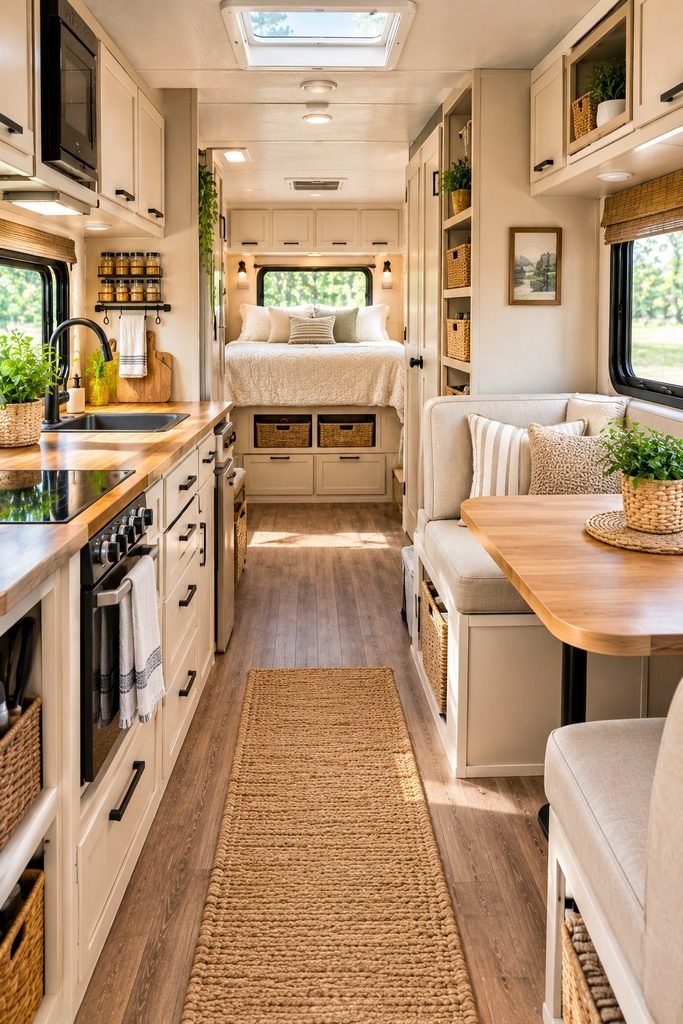
Organization is especially important when you’re living or traveling in a compact RV because almost every area serves more than one purpose.
Your dining table might become your workspace, your kitchen cabinets may need to hold several different categories of supplies, and the area beneath your bed could be your main storage compartment.
When belongings aren’t organized properly, even a relatively spacious camper can start feeling cramped.
Good RV organization helps you:
- Keep countertops and walkways clear.
- Find everyday essentials without searching through several cabinets.
- Make better use of vertical and hidden storage.
- Reduce unnecessary purchases because you know what you already own.
- Keep belongings secure while traveling.
- Make cleaning and maintaining your RV easier.
The goal isn’t to fill every empty corner with storage containers. It’s to create a system that makes everyday living easier without sacrificing the space you need to move around comfortably.
1. Use Hanging Organizers to Maximize Vertical Space
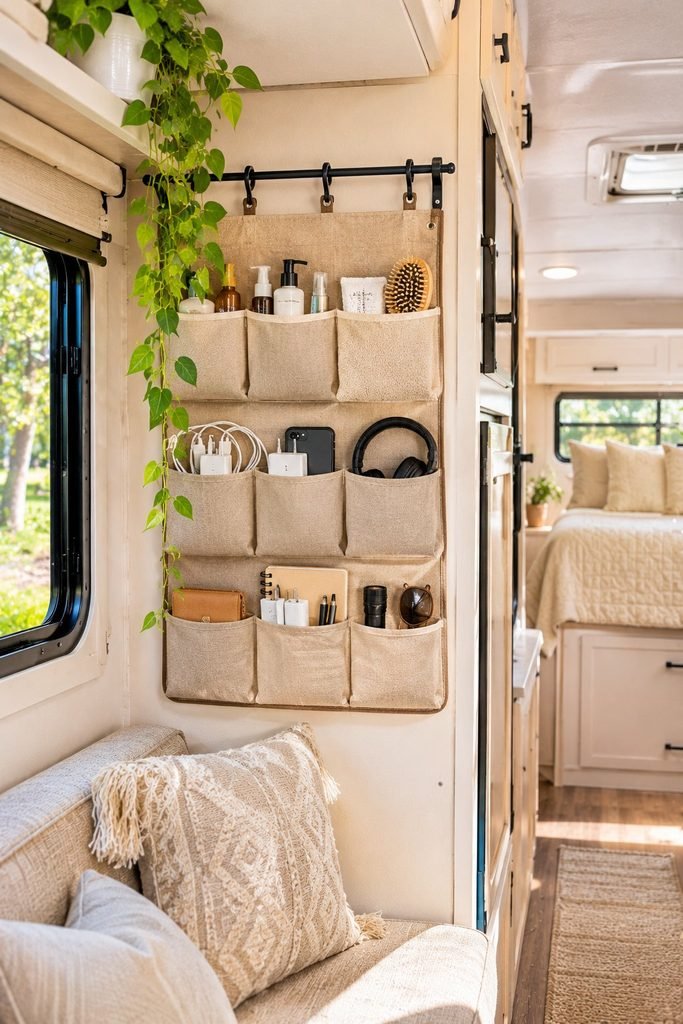
One of the easiest ways to create additional storage in a tiny RV is to make better use of your walls and vertical surfaces.
Many campers have limited cabinet space, which means everyday belongings often end up on countertops, dining tables, or inside already crowded drawers.
Hanging organizers provide another place to keep smaller items without taking up valuable floor space.
How to organize this space
Start by identifying areas where hanging storage would be genuinely useful. The back of a suitable cabinet door, an unused wall section, or the inside of a closet can provide convenient storage opportunities.
You can use hanging organizers for:
- Toiletries and personal care products.
- Charging cables and small electronics.
- Cleaning cloths and lightweight supplies.
- Socks, underwear, and small clothing accessories.
- Kitchen utensils and other lightweight essentials.
For example, a hanging pocket organizer near the bathroom can keep toothpaste, brushes, and everyday toiletries together instead of spreading them across a tiny sink counter.
In the kitchen, a suitable organizer can hold lightweight items that you regularly reach for.
Why this idea works
The biggest advantage is that everything becomes easier to locate. Instead of opening several drawers to find one small item, you have a designated place for frequently used belongings.
Choose organizers that fit your available space and secure them properly. Avoid placing heavy objects in hanging pockets, especially in areas where they could swing or fall while driving.
2. Make the Most of Under-Bed Storage
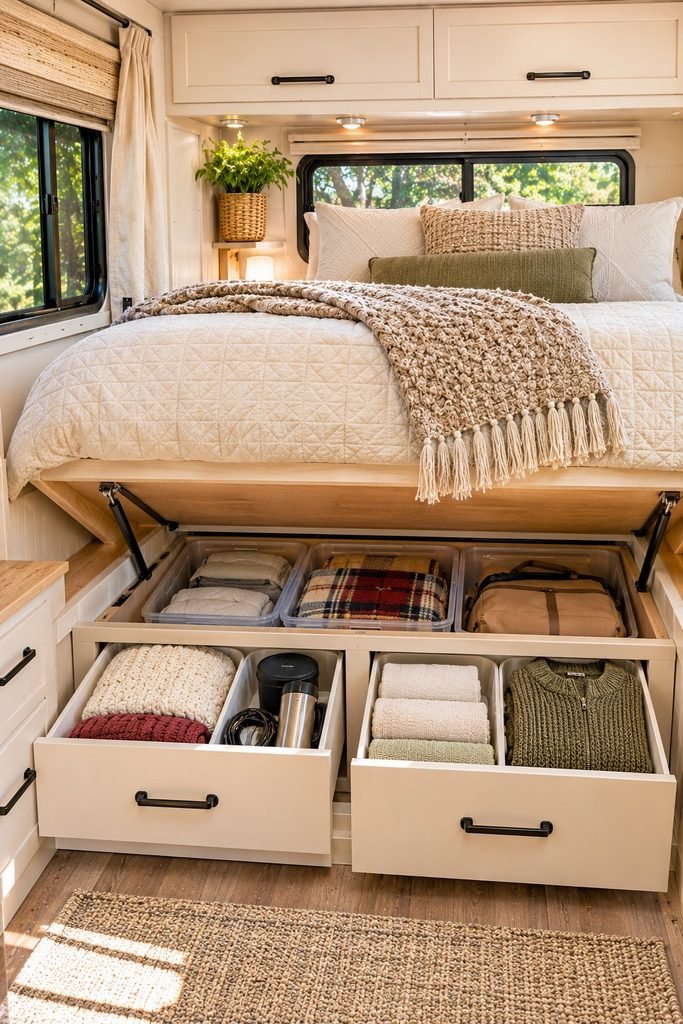
The space underneath your RV bed is one of the most valuable storage areas in a small camper.
Unfortunately, it’s also an area that can easily become disorganized. Without a proper system, clothing, extra bedding, shoes, and travel accessories can end up piled together.
Rather than treating this space as somewhere to throw things you don’t know where to put, turn it into a dedicated storage area.
How to organize under your RV bed
Start by measuring the available height, width, and depth. This helps you choose storage containers that fit without making it difficult to access your belongings.
I recommend dividing the space into categories.
For example:
- One container for extra bedding and blankets.
- Another for seasonal clothing.
- A separate section for shoes.
- A small container for travel accessories.
- A dedicated space for spare towels.
If your bed has a hinged platform, use the compartment underneath to store items you don’t need every day.
If the space is difficult to access, sliding storage bins can make retrieving belongings much easier.
A practical tip
Use containers with lids to keep belongings protected from dust. However, make sure fabrics are completely dry before storing them, particularly if you travel in humid conditions.
Avoid overloading the under-bed area because excessive weight can affect the bed structure and your RV’s overall cargo capacity.
3. Install Stackable Storage Bins Inside Cabinets
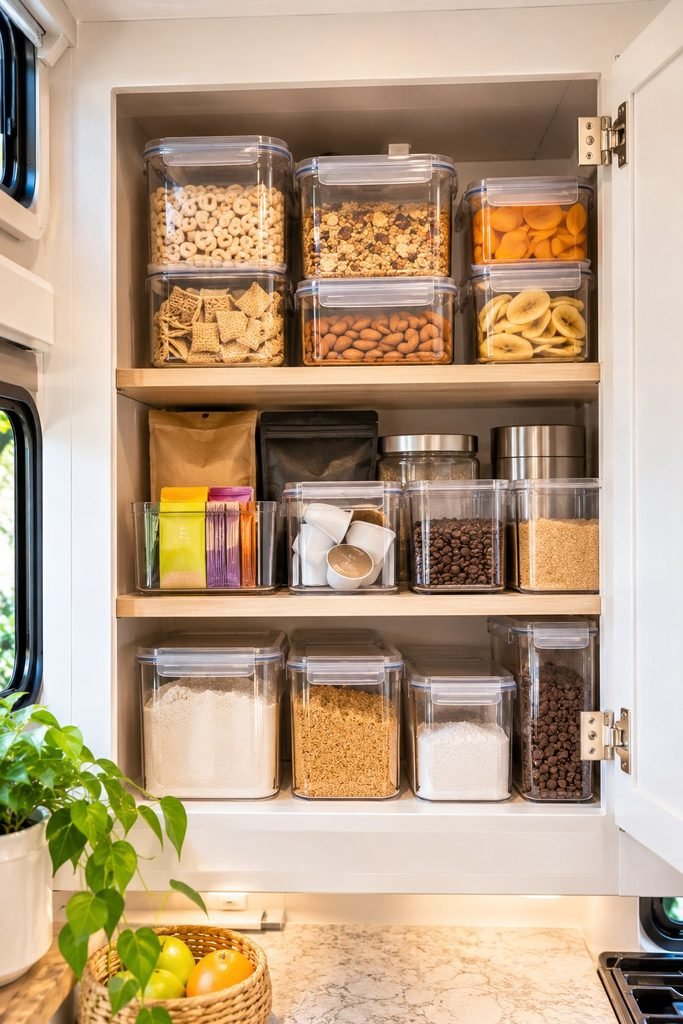
RV cabinets can look spacious when empty, but once you start filling them with food, kitchen supplies, cleaning products, and everyday essentials, they can quickly become difficult to manage.
One problem is that small items tend to disappear behind larger containers. You might end up moving several things just to reach something stored at the back.
Stackable storage bins can help solve this problem.
How to use them effectively
Instead of placing everything directly inside your cabinets, divide the available space into smaller sections using appropriately sized containers.
For example, your kitchen cabinet could have separate bins for:
- Breakfast ingredients.
- Snacks and packaged foods.
- Baking supplies.
- Tea, coffee, and drink mixes.
- Small kitchen accessories.
Transparent containers are particularly useful because you can see what’s inside without opening every box.
You can also use stackable containers to make better use of cabinet height, provided they remain easy to reach and are secure during travel.
Why I like this idea
It makes everyday organization much simpler. When everything has a designated container, putting groceries away and finding ingredients becomes less frustrating.
Just remember to measure your cabinets before purchasing storage bins. A container that fits perfectly in a regular kitchen cabinet might be too tall or wide for an RV.
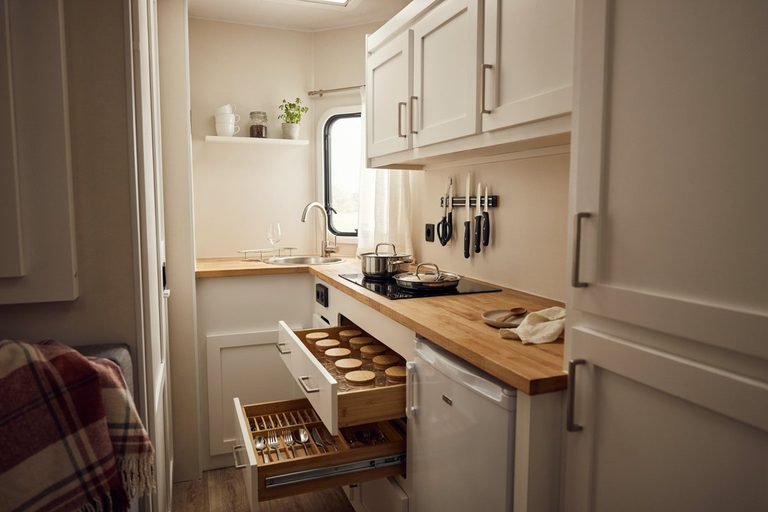
4. Use Magnetic Storage Solutions in the Kitchen
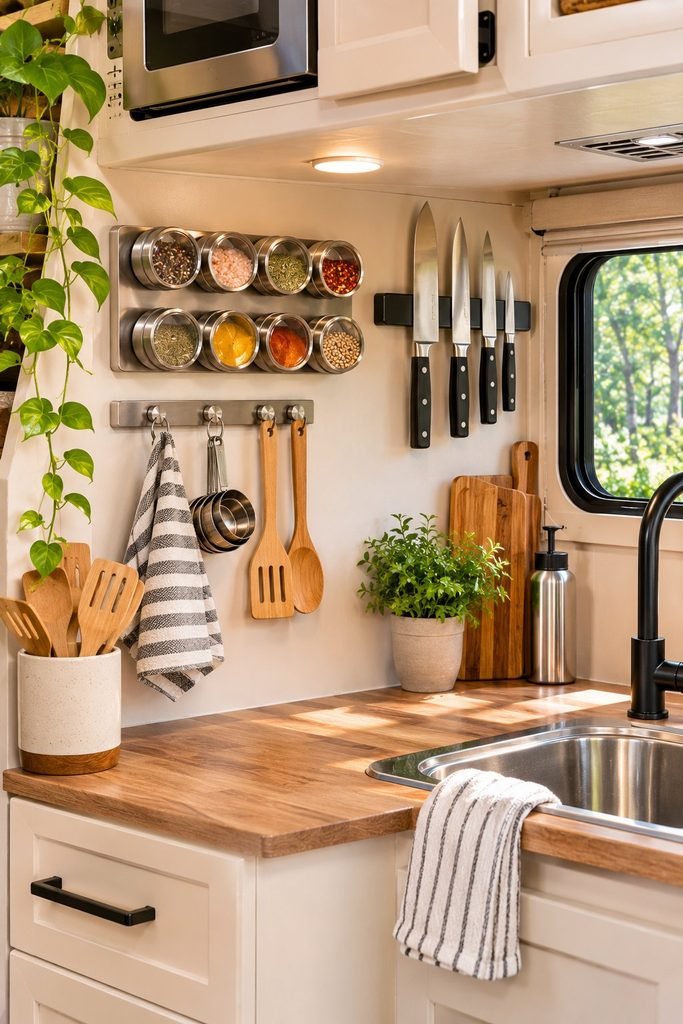
The kitchen is often one of the hardest areas to organize in a small RV. You need enough room for cooking essentials, food, utensils, and appliances, but you rarely have the countertop space available in a traditional home.
Magnetic storage can help you use certain vertical surfaces without adding bulky organizers.
How to make it work
Depending on your RV’s surfaces and layout, you can consider:
- Magnetic spice containers.
- Magnetic hooks for lightweight utensils.
- Magnetic knife holders designed for kitchen use.
- Magnetic clips for small notes or recipes.
- Magnetic organizers for suitable metal surfaces.
For example, magnetic spice containers can keep frequently used seasonings accessible while freeing up cabinet space.
A magnetic knife strip can also replace a bulky knife block, provided the knives are held securely and the installation is suitable for a moving vehicle.
Important installation tip
Not every RV wall or cabinet is magnetic. Check the surface before purchasing these accessories. Some products require a metal mounting plate or adhesive backing.
Always test the strength of the attachment and secure items for travel. Knives and other sharp kitchen tools need additional protection.
The objective is to free up useful space without creating another safety problem.
5. Create a Dedicated Shoe Storage Area Near the Entrance
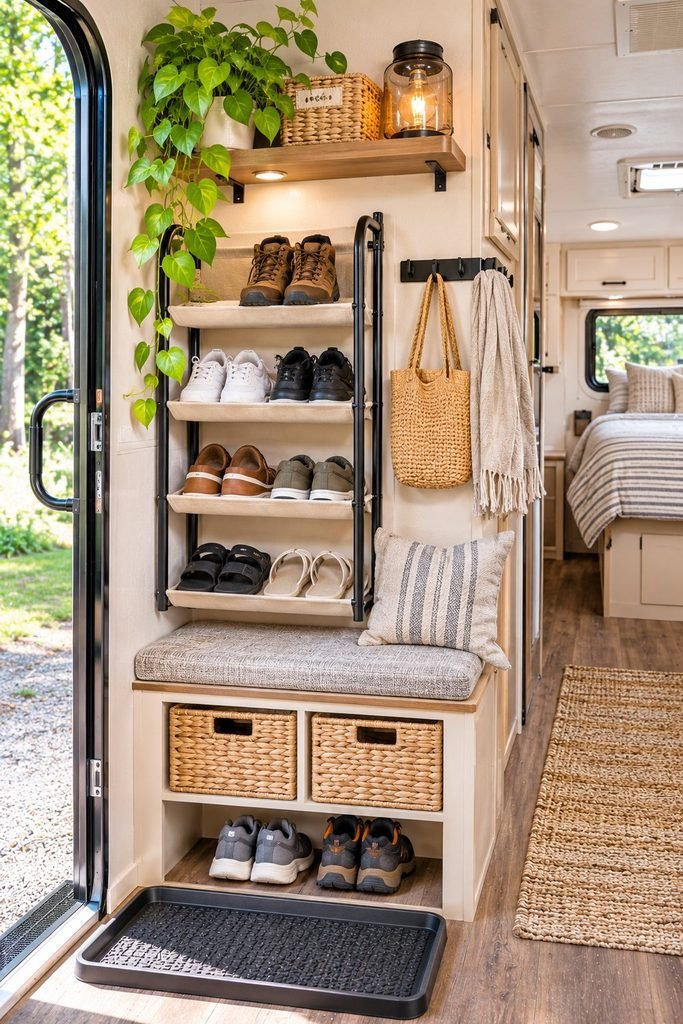
Shoes are easy to overlook when planning RV storage, but they can quickly become a problem in a small camper.
When several pairs are left near the entrance, they can obstruct the walkway and make the interior look untidy.
Creating a dedicated shoe storage area helps prevent this.
How to organize shoes in a tiny RV
Look for a compact storage solution that fits near the entrance without blocking access.
Some practical options include:
- A slim shoe rack.
- A small storage bench with compartments.
- A fabric shoe organizer.
- A designated basket for everyday footwear.
- Under-seat shoe storage.
If you travel with another person or family members, assigning each person a small section can help prevent shoes from becoming mixed together.
I would also avoid keeping every pair of shoes inside the RV. Store only the footwear you regularly use and rotate seasonal options when necessary.
Extra tip
Allow wet or muddy shoes to dry before placing them inside enclosed storage. A removable tray near the entrance can also help catch dirt and moisture before they spread across the floor.
This small change can make your RV feel noticeably cleaner and more organized.
6. Use the Back of Cabinet Doors for Extra Storage
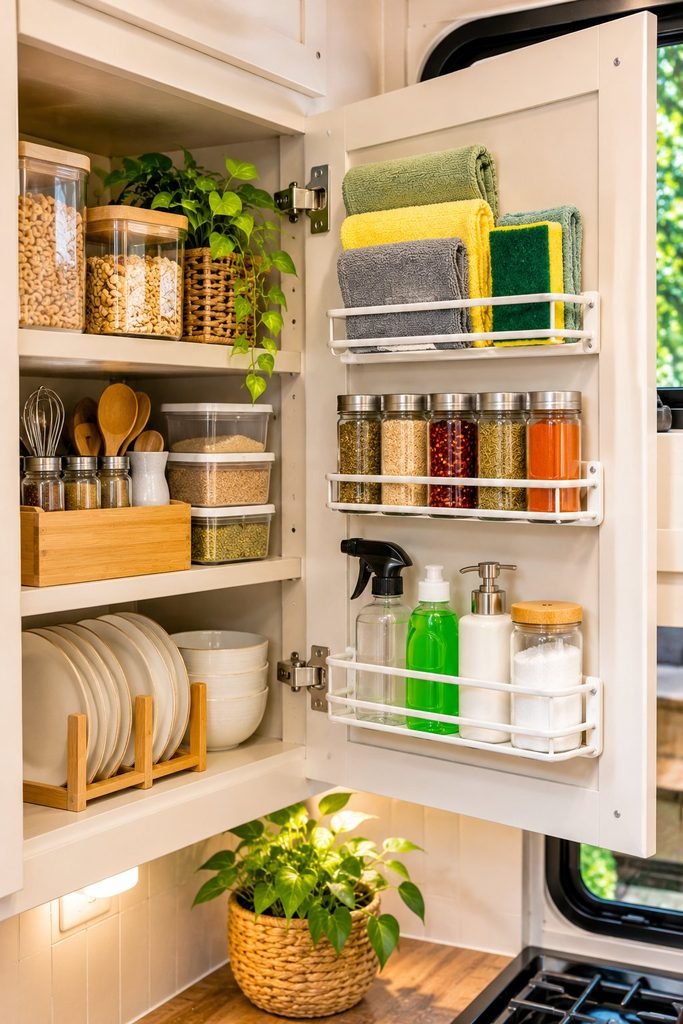
When storage space is limited, even the back of a cabinet door can become useful.
Most RV owners focus on the shelves inside their cabinets but forget that the doors themselves may offer additional storage opportunities.
This is particularly useful in the kitchen and bathroom, where smaller items can take up valuable drawer and countertop space.
What can you store here?
Depending on the available space, you can install suitable lightweight organizers for:
- Cleaning cloths.
- Small toiletries.
- Kitchen utensils.
- Lightweight spice containers.
- Hair accessories.
- Small personal care products.
For example, a narrow organizer attached to the inside of a bathroom cabinet door can keep everyday toiletries accessible without filling the sink area.
In the kitchen, a small door-mounted rack can hold lightweight supplies that would otherwise occupy a drawer.
Before installing anything
Measure the clearance between the cabinet door and its shelves. You don’t want an organizer that prevents the door from closing properly.
Use mounting hardware suitable for your cabinet material, and check that stored items cannot fall out when the RV is moving.
This is one of those small improvements that can make existing storage work much harder.
7. Organize Your RV Refrigerator With Small Containers
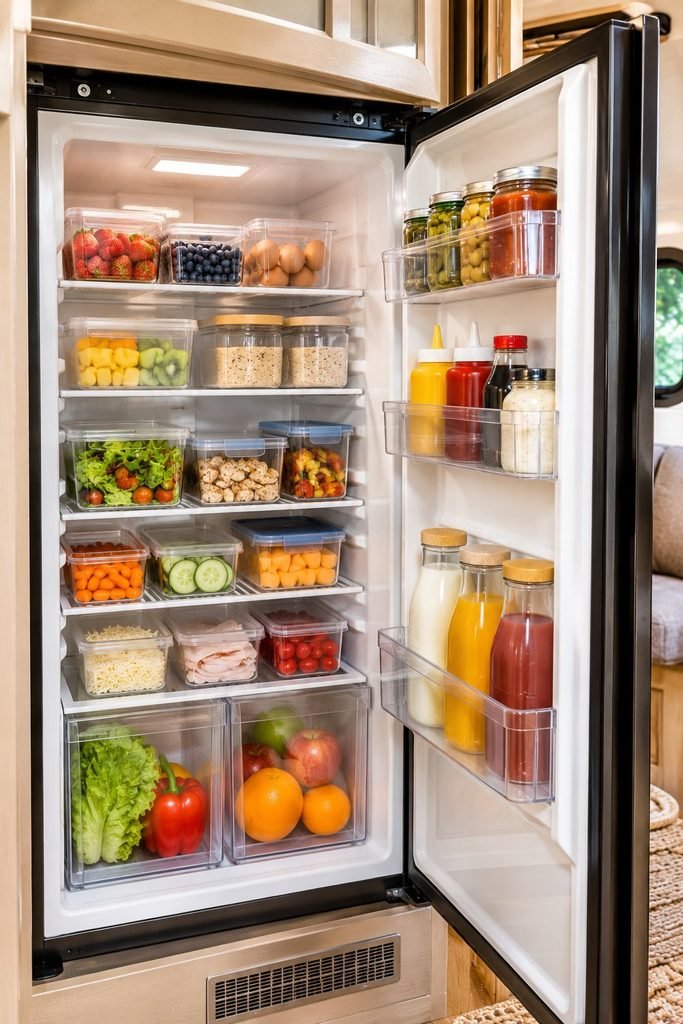
An RV refrigerator is usually smaller than a regular household refrigerator, which makes organization particularly important.
Without a system, food packages can end up stacked on top of one another, smaller ingredients can get pushed to the back, and you might forget what you already have.
Using appropriately sized refrigerator containers can help you keep everything visible and accessible.
How to organize your refrigerator
Start by grouping similar foods together.
For example:
- Keep breakfast items in one section.
- Store vegetables in their designated compartments.
- Group snacks together.
- Keep sauces and condiments organized.
- Use small containers for leftovers.
Clear containers make it easier to see what you have without moving everything around.
You can also use small refrigerator bins to prevent packaged foods from spreading across the shelves.
Make better use of limited space
Before grocery shopping, check your refrigerator and plan meals around the ingredients already available.
This prevents unnecessary purchases and reduces the risk of overcrowding the refrigerator.
Choose food-safe containers that fit the refrigerator’s dimensions, and leave enough room for proper air circulation. Don’t block vents or overload shelves.
A well-organized refrigerator makes preparing meals in a small RV much easier.
8. Use Collapsible Items to Save Storage Space
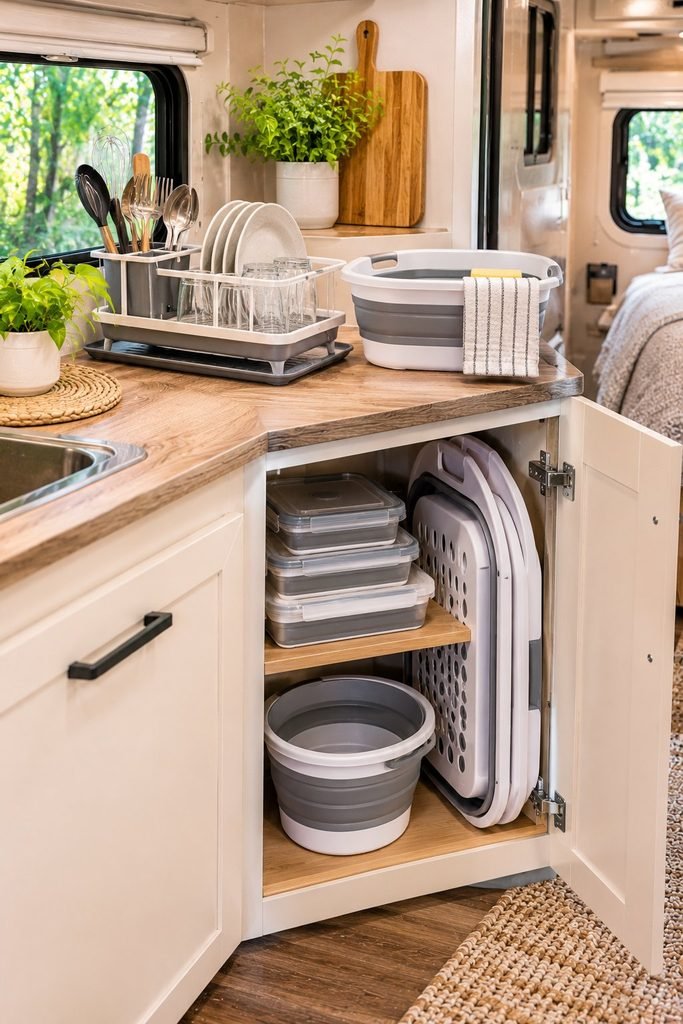
One of the biggest challenges of organizing a tiny RV is finding somewhere to store items when you’re not using them.
Traditional kitchen accessories, laundry baskets, buckets, and bulky containers can occupy valuable cabinet and floor space even when they’re empty.
This is where collapsible products become particularly useful.
How to use collapsible storage solutions
Look for everyday items that can fold down or collapse after use.
Some useful options include:
- Collapsible laundry baskets.
- Folding storage crates.
- Collapsible washing-up bowls.
- Foldable dish racks.
- Collapsible silicone food containers.
- Folding stools and compact tables.
For example, a traditional laundry basket can take up a surprising amount of room inside a small RV. A collapsible version can be folded flat and stored behind a cabinet or underneath a bed when empty.
The same principle applies to kitchen accessories. A collapsible washing-up bowl can provide enough space for cleaning dishes without permanently occupying your limited counter or sink area.
Why this idea makes a difference
You only need the full storage capacity when you’re actively using the item. Once you’re finished, you can fold it away and reclaim the space.
This is particularly helpful for people who travel frequently and need to keep their belongings compact.
My practical tip
Before buying collapsible products, check their dimensions when both expanded and folded. Some products are still surprisingly bulky when collapsed.
Choose durable materials that are easy to clean, and avoid purchasing multiple versions of the same item.
9. Turn Awkward Corners Into Useful Storage
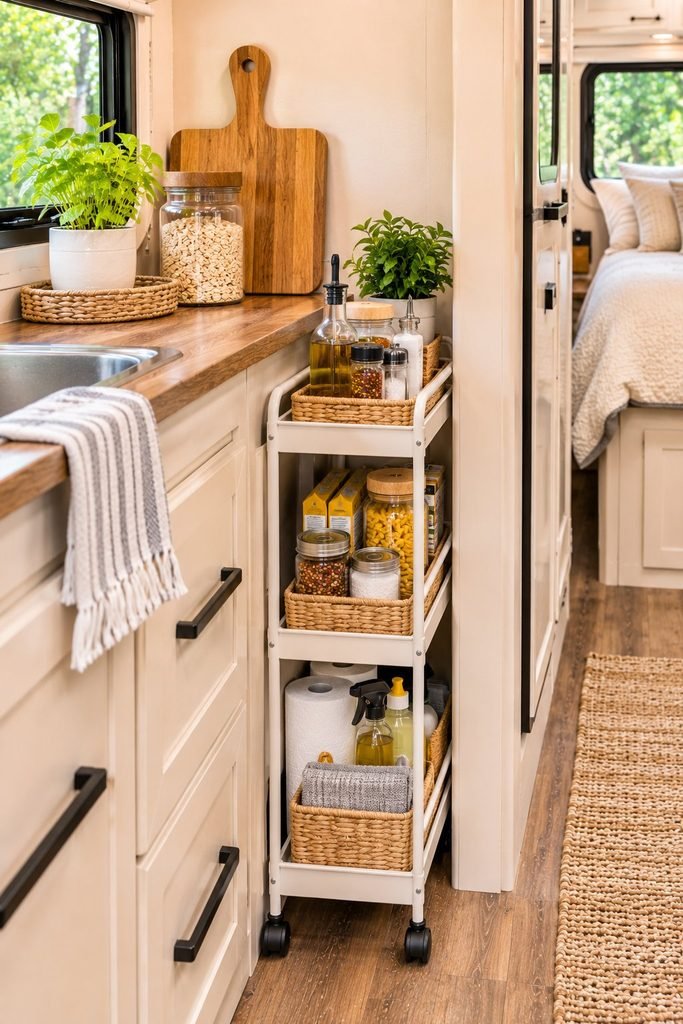
Small RVs often have awkward spaces that are difficult to use effectively.
You might have a narrow gap beside the refrigerator, an unused corner near the entrance, or a small area underneath a cabinet that doesn’t seem large enough for traditional storage.
Instead of ignoring these spaces, look for ways to make them useful.
How to organize awkward spaces
Start by examining the areas that currently serve no purpose.
Depending on your RV’s layout, you could use:
- Slim rolling storage carts.
- Narrow baskets.
- Small corner shelves.
- Compact hanging organizers.
- Under-seat storage containers.
- Custom-sized storage boxes.
For example, a narrow rolling cart could fit between suitable kitchen cabinets and provide additional room for spices, packaged foods, or lightweight kitchen supplies.
An unused corner near the bathroom might accommodate a small basket for toiletries or cleaning products.
You can also consider using the space beneath existing seating. Some RV dinettes have storage compartments underneath the seats, which can be useful for belongings you don’t need throughout the day.
Measure before purchasing
This is particularly important when working with awkward spaces.
Measure the available width, height, and depth before purchasing organizers. Also consider whether cabinet doors, drawers, and nearby walkways will still open properly.
Avoid forcing large storage containers into narrow spaces. The objective is to make the RV more functional, not to make every corner difficult to access.
10. Keep Bathroom Essentials Organized With Compact Storage
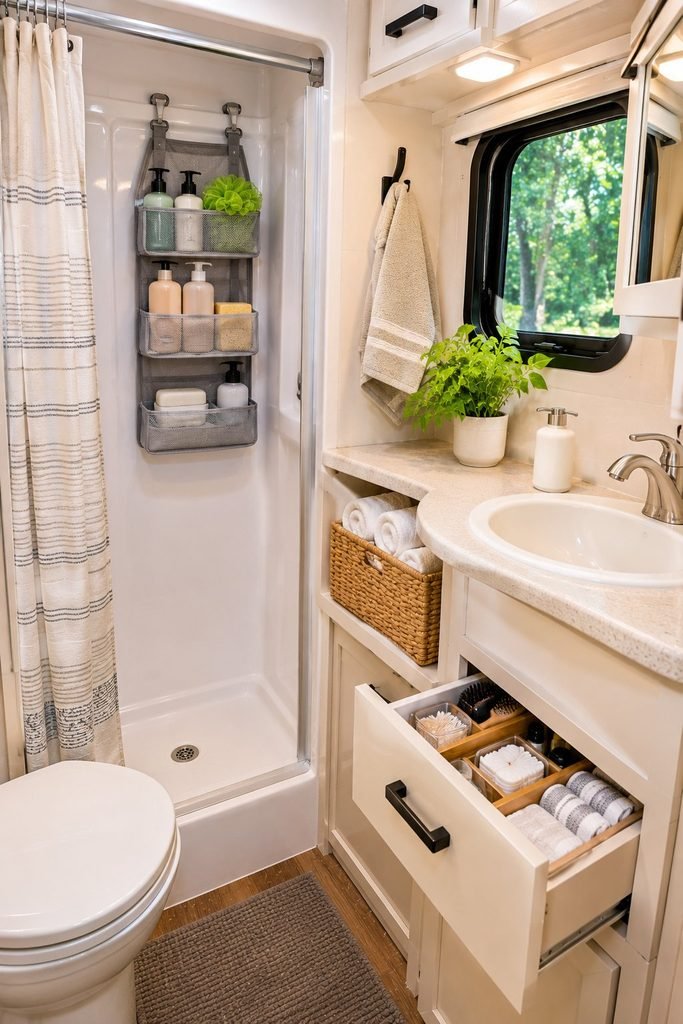
The bathroom is usually one of the smallest areas in an RV, yet it needs to accommodate several everyday essentials.
Toiletries, towels, cleaning supplies, personal care products, and other necessities can quickly overwhelm a small bathroom counter.
A little organization can make this area much easier to maintain.
How to organize your RV bathroom
Start by removing products you rarely use. Keeping too many toiletries inside a tiny bathroom can make the available space feel unnecessarily crowded.
Then introduce a few practical storage solutions.
Some options include:
- Small hanging shower organizers.
- Compact baskets beneath the sink.
- Wall-mounted toiletry holders.
- Drawer dividers.
- Over-the-door organizers.
- Small containers for personal care products.
For example, a hanging shower organizer can keep shampoo, conditioner, and soap together without taking up the limited counter space.
A small basket underneath the sink can hold cleaning supplies and spare toiletries, while drawer dividers can prevent smaller items from becoming mixed together.
Make the most of limited counter space
Try to keep only the products you use every day within easy reach.
Everything else can go into a designated container or cabinet.
You should also make sure bathroom products are stored securely. RV bathrooms experience movement during travel, and loose bottles can easily fall or spill.
Allow wet towels to dry properly before putting them away, and avoid storing damp products in enclosed containers.
Why I recommend this idea
A well-organized bathroom is much easier to clean. When countertops are clear and products have designated places, you spend less time moving things around whenever you need to use the sink.
11. Create a Simple Daily Reset Routine
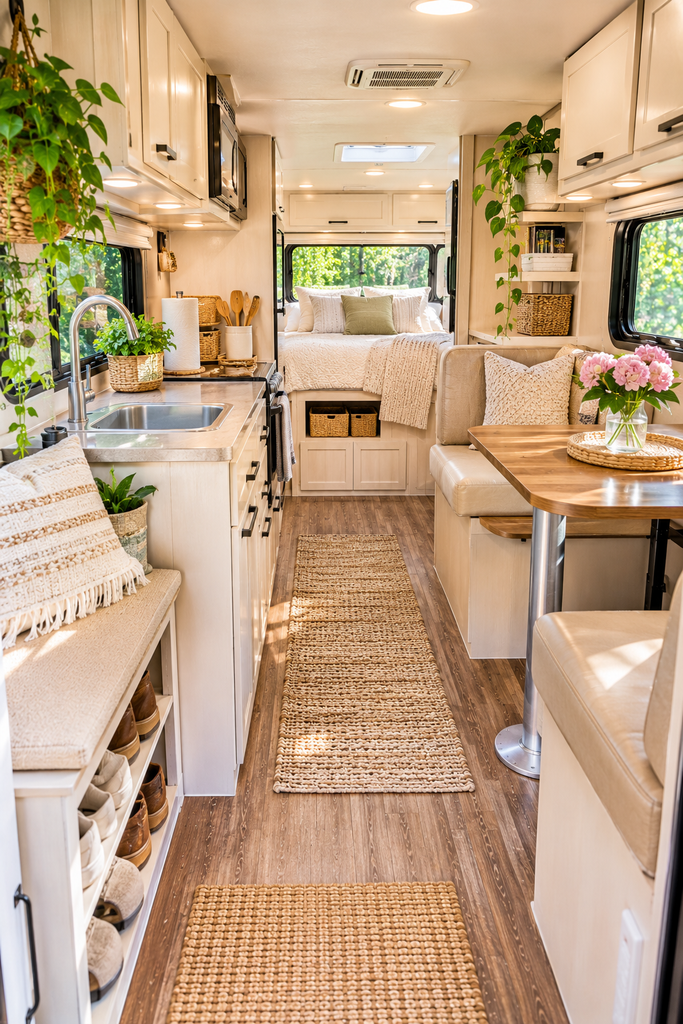
Even with the best RV storage accessories, clutter can gradually return if you don’t have a simple system for maintaining the space.
This is why I think having a daily organization routine is just as important as purchasing the right storage products.
You don’t need to spend an hour cleaning and rearranging your camper every day. A few small habits can prevent everyday belongings from taking over your limited space.
What to include in your daily routine
Try setting aside 10 to 15 minutes at the end of each day to reset the main areas of your RV.
Here are a few things worth doing:
Clear the kitchen countertops. Put away cooking utensils, food packages, and appliances that don’t need to remain outside.
Return belongings to their designated places. Shoes, clothing, toiletries, chargers, and other everyday items should go back into their assigned storage areas.
Check the dining area. Remove unnecessary items from the table so it’s ready for meals or other activities the following day.
Organize the bathroom. Put away toiletries, hang towels to dry, and wipe down surfaces where necessary.
Check the floor and walkways. Make sure there are no bags, shoes, or loose belongings obstructing the main walking areas.
Prepare for the next day. If you’re traveling, check that items are properly secured before departure.
Make organization a shared responsibility
If you’re traveling with a partner, children, or other family members, everyone should have responsibility for their own belongings.
Give each person a designated storage area so that one person’s clothing, shoes, and accessories don’t gradually spread throughout the RV.
This simple habit can make a significant difference, especially when several people share a very small living space.
Extra Tips for Keeping Your RV Organized Long Term
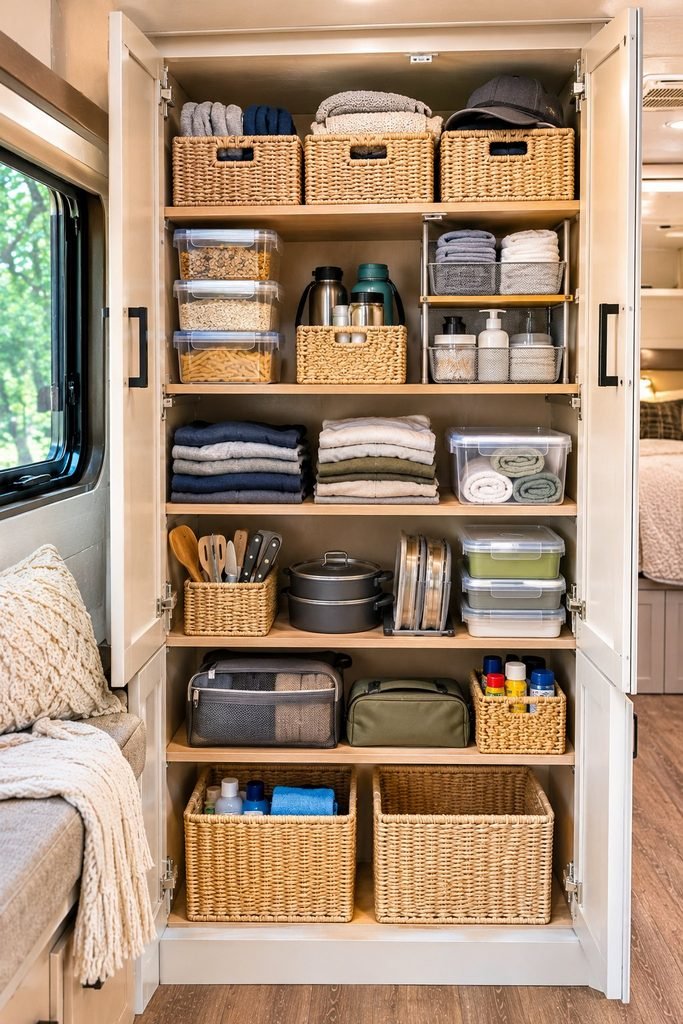
Once you’ve organized your RV, the next challenge is maintaining that system.
Here are a few additional habits that can help you avoid unnecessary clutter.
1. Avoid buying storage products before measuring.
Not every organizer will fit your RV. Measure cabinets, drawers, and available wall space before purchasing anything.
2. Keep frequently used items accessible.
Store everyday essentials where you can reach them easily. Items you rarely use can go into less accessible compartments.
3. Review your belongings regularly.
Every few weeks, check your cabinets and storage bins. Remove expired products, unused accessories, and belongings that no longer serve a purpose.
4. Choose lightweight storage accessories.
Heavy storage products can add unnecessary weight to your RV. Whenever possible, choose durable lightweight organizers that fit your available space.
5. Secure everything before traveling.
Containers, kitchen accessories, and personal belongings should be properly secured before driving. Organization should make traveling safer, not create additional hazards.
6. Don’t fill every available space.
Leaving some empty storage capacity makes it easier to put away groceries, laundry, and other belongings as your needs change.
Frequently Asked Questions
How do I organize a small RV with very little storage?
Start by removing belongings you rarely use, then divide your remaining items into categories. Use vertical organizers, under-bed compartments, stackable bins, and compact storage containers to make better use of existing space.
What are the best storage solutions for a tiny RV?
Some of the most useful options include hanging organizers, collapsible laundry baskets, stackable storage bins, under-bed containers, magnetic kitchen accessories, and slim rolling carts. The best choices depend on your RV’s layout and available storage areas.
How can I keep my RV kitchen organized?
Group similar food items together, use compact containers, organize refrigerator shelves, and keep countertops clear. Store frequently used kitchen supplies where they’re easy to reach.
How do I organize clothes in a small camper?
Use packing cubes, drawer dividers, hanging closet organizers, and under-bed storage containers. Separate everyday clothing from seasonal items and avoid bringing more clothing than you realistically need.
How can I create more storage without renovating my RV?
Make use of existing cabinets, unused wall space, cabinet doors, and areas underneath furniture. Collapsible accessories and compact organizers can also create additional usable storage without requiring permanent modifications.
How do I prevent clutter from returning in my RV?
Create a simple daily reset routine. Put belongings away after using them, clear countertops regularly, and review your storage areas every few weeks. Giving everything a designated place makes it easier to maintain an organized interior.
Are collapsible storage products worth buying for RV living?
Yes, particularly when you have limited cabinet and floor space. Collapsible laundry baskets, washing-up bowls, and storage crates can be folded away when they’re not needed. Just make sure they’re durable and compact enough to fit your available storage areas.
Final Thoughts
Organizing a tiny RV doesn’t have to be complicated or expensive. In many cases, the biggest improvements come from using the space you already have more effectively.
I would start with the areas that create the most everyday frustration. If your kitchen cabinets are constantly overcrowded, introduce stackable storage bins.
If shoes are taking over the entrance, create a dedicated shoe storage area. If clothing and bedding are difficult to manage, make better use of the space underneath your bed.
You don’t need to purchase every storage accessory mentioned in this guide. Start with a few solutions that address your actual storage problems and build your organization system gradually.
Most importantly, remember that the purpose of organizing an RV is to make everyday living easier. You should be able to find your belongings, prepare meals, relax, and move around without constantly rearranging things.
A small camper can still feel comfortable and functional when every inch is used thoughtfully.