How to Pack a Camper Without the Clutter: 15 Smart Tips for a Tidy Trip
Packing a camper for a road trip can feel like solving a puzzle. You want to bring enough clothing, cooking supplies, bedding, food, and outdoor gear to stay comfortable, but every cabinet and storage compartment has limited space.
Before long, countertops become crowded, drawers refuse to close, and the items you need most seem to disappear beneath everything else.
The good news is that you do not need a bigger camper to enjoy a more organized trip. You need a smarter packing system that gives every item a purpose and a place. With a little planning, you can keep your camper tidy, make daily routines easier, and spend less time searching for misplaced essentials.
When I plan a camper packing setup, I focus on three things: bringing only what I will actually use, choosing items that serve multiple purposes, and keeping frequently used essentials within easy reach. These small decisions can make a noticeable difference in a compact living space.
In this guide, you will discover practical ways to pack a camper without the clutter, organize small storage areas, reduce unnecessary gear, and keep everything secure while traveling. Whether you are preparing for a weekend getaway or a longer road trip, these tips will help you make better use of every inch.
Why Packing a Camper Without Clutter Matters
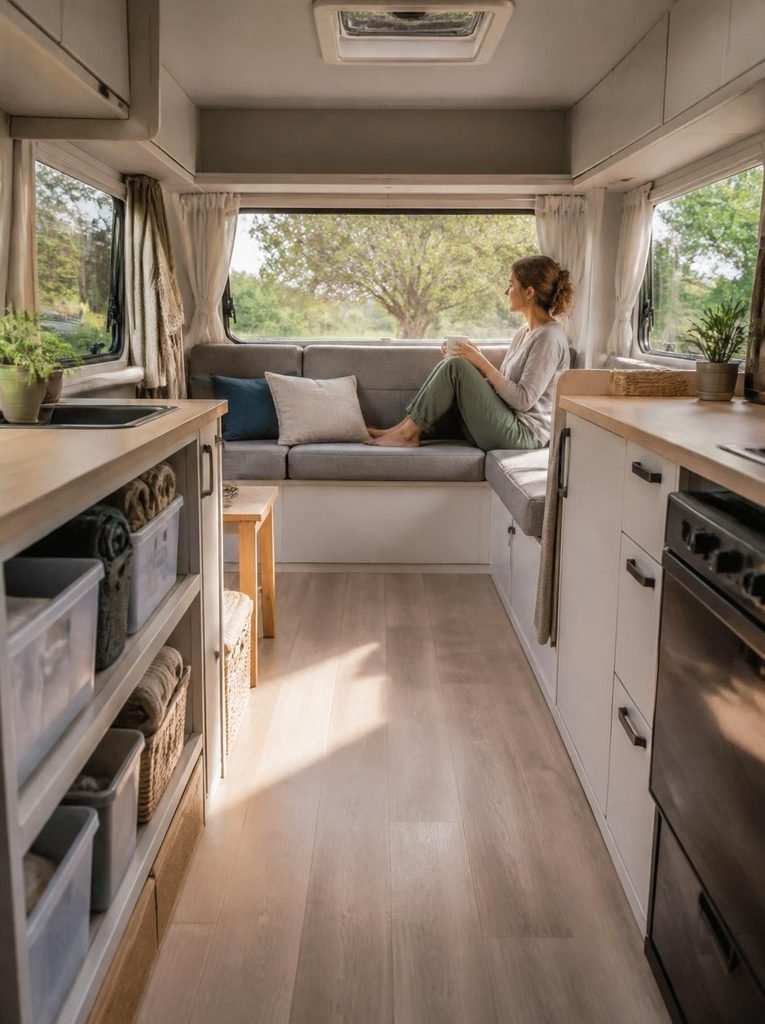
A cluttered camper is more than a visual problem. When bags, cookware, clothing, and outdoor equipment compete for the same space, everyday tasks become harder. Preparing breakfast, changing clothes, finding a phone charger, or getting ready for bed can take longer than necessary.
Keeping your camper organized helps you make better use of the available space while creating a more comfortable environment. It can also make it easier to notice loose items, blocked walkways, or storage problems before you travel.
Here are a few reasons to simplify your packing routine:
- More usable living space: Clear counters, seats, and walkways make a small camper feel less cramped.
- Less time searching: When essentials have designated storage locations, you can find what you need quickly.
- Easier cleaning: Fewer loose belongings mean fewer surfaces to clear before wiping down the interior.
- Better use of storage: Compact containers and thoughtful packing help prevent wasted cabinet and drawer space.
- Safer travel: Properly secured belongings are less likely to shift around while the camper is moving.
- Less unnecessary weight: Avoiding duplicate items and excess gear helps you stay within your camper’s weight limits.
The goal is not to make your camper look like a showroom. It is to create a practical space where everything you bring has a reason to be there.
1. Make a Packing List Before Loading Anything
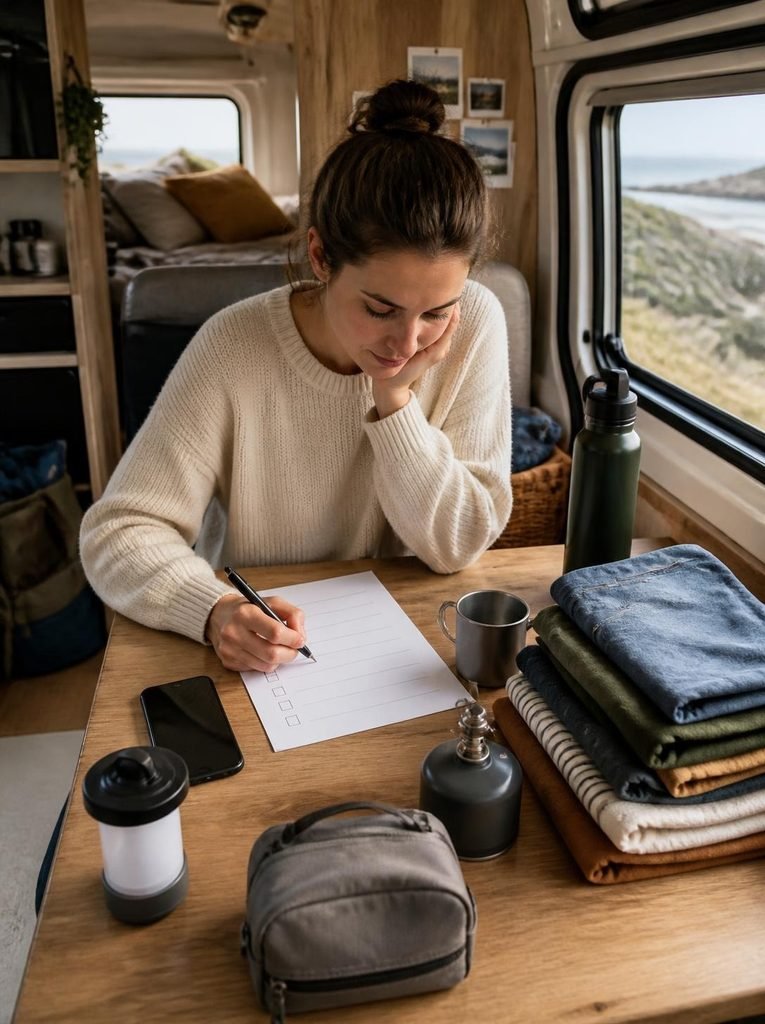
One of the easiest ways to prevent camper clutter is to plan what you need before putting items into storage. Without a list, it is tempting to pack extra clothes, duplicate kitchen tools, backup accessories, and other things that may never leave their compartments.
Start by dividing your packing list into simple categories. This makes it easier to see what you already have and identify anything you genuinely need to bring.
Useful camper packing categories include:
- Clothing and footwear
- Bedding and towels
- Cooking equipment and food
- Toiletries and personal care items
- Cleaning supplies
- Outdoor and camping equipment
- Electronics and chargers
- First aid and emergency supplies
- Documents and travel essentials
Next, consider the length of your trip, the weather, your planned activities, and whether you will have access to laundry facilities or shops. A weekend at a serviced campground may require very different supplies from a two-week trip through remote areas.
I also recommend checking what is already stored in your camper. You may have a first aid kit, basic cookware, cleaning cloths, or reusable utensils from a previous trip. Checking these items before shopping helps avoid unnecessary duplicates.
Helpful tip: Keep your packing list somewhere easy to update. After each trip, remove anything you did not need and add items you found yourself missing. Your list will become more useful as you learn what works for your travel style.
2. Pack Only What You Will Actually Use
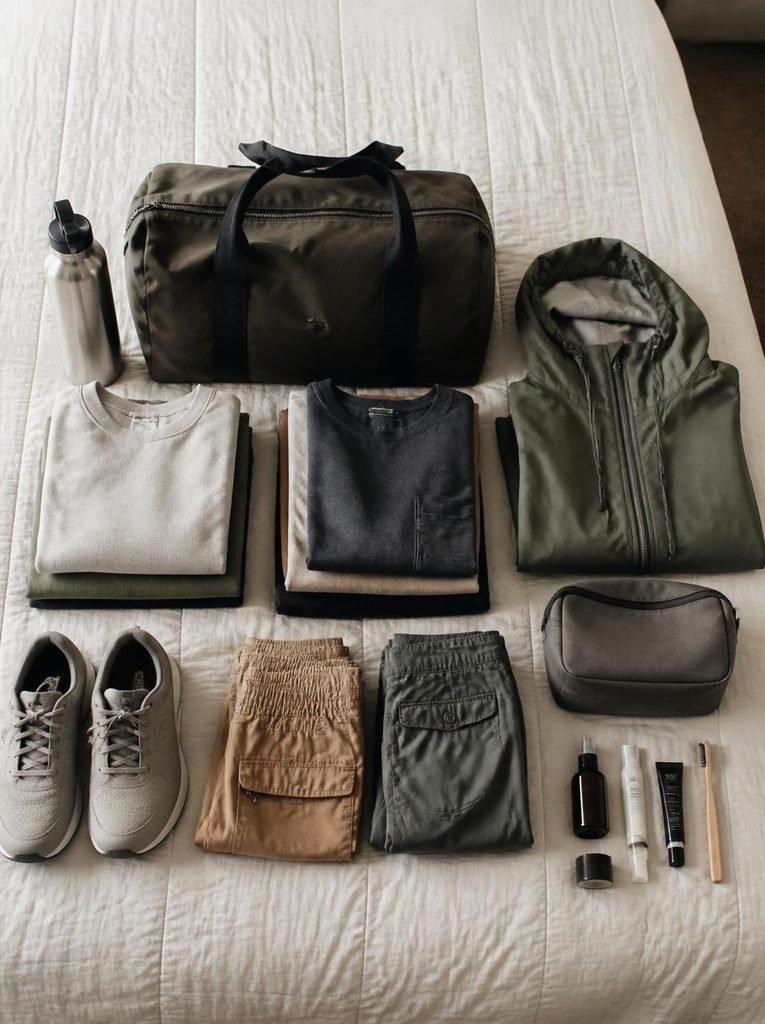
It is easy to overpack when preparing for a camper trip. You might bring several extra outfits, multiple pairs of shoes, backup kitchen equipment, and supplies for activities you have not even planned.
The problem is that every extra item occupies valuable space. In a small camper, a few unnecessary belongings can quickly fill an entire drawer or storage bin.
Before packing something, ask yourself three questions:
- Will I realistically use this during the trip?
- Do I already have another item that performs the same function?
- Is it worth the storage space and weight?
If an item does not serve a clear purpose, consider leaving it at home.
Use a Simple Clothing Plan
Instead of packing a separate outfit for every possible situation, choose clothing that can be mixed and matched. Neutral tops, comfortable bottoms, and a lightweight jacket can create several combinations without requiring a large wardrobe.
For a short trip, plan outfits around your activities and expected weather. Include a spare set of clothing where practical, especially if you will be hiking, swimming, or spending time outdoors.
Shoes deserve special attention because they can occupy a surprising amount of space. Bring footwear suited to your planned activities rather than packing several similar pairs.
Avoid Duplicate Kitchen Items
You probably do not need three different knives, several mugs for each person, or multiple tools that perform the same task.
Choose a compact selection of cookware, utensils, plates, and cups that suits the number of travelers. If you have a multifunctional tool that safely performs several jobs, it may replace separate items.
However, do not remove important safety equipment or essential supplies simply to save space.
Helpful tip: Lay everything out before loading the camper. Seeing your belongings together makes duplicate items and unnecessary extras much easier to identify.
3. Use Packing Cubes to Organize Clothing
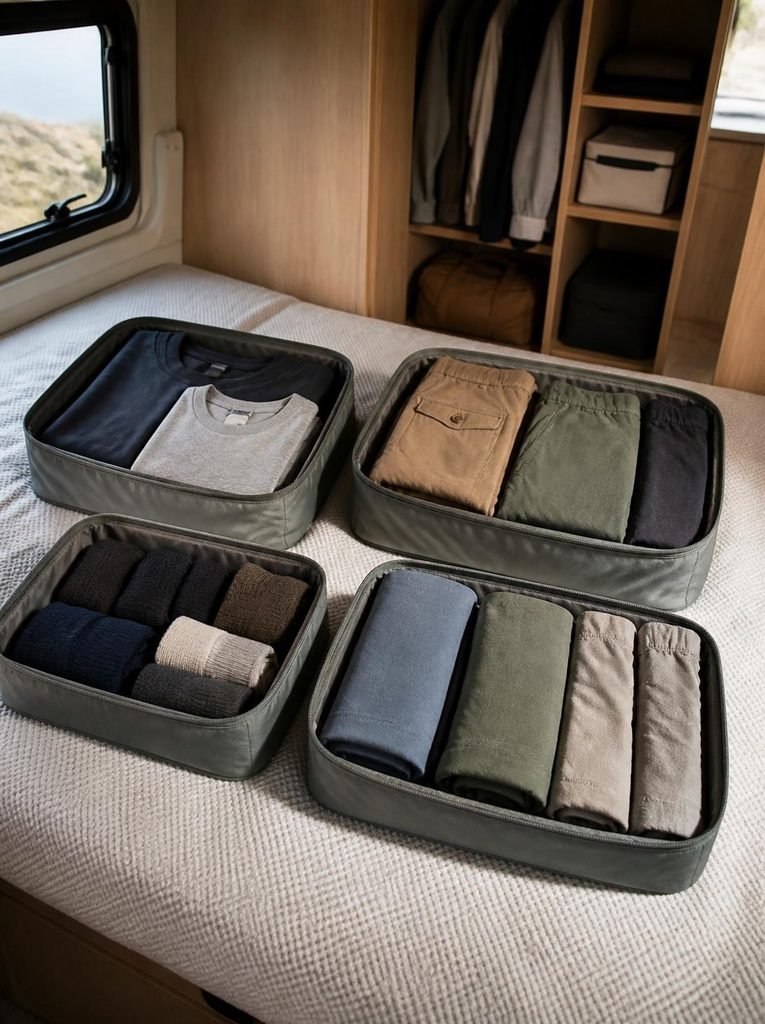
Packing cubes are useful for keeping clothing organized inside camper wardrobes, drawers, and storage compartments. Rather than allowing shirts, socks, underwear, and sleepwear to become one large pile, you can separate them into compact groups.
This approach is especially helpful when the camper has limited hanging space or shallow drawers.
Choose a small set of cubes in different sizes. Larger cubes can hold shirts and trousers, while smaller ones work well for socks, underwear, swimwear, and accessories.
How to Organize Packing Cubes
- Everyday clothing: Keep frequently worn items together in an accessible cube.
- Sleepwear: Store pajamas and comfortable evening clothes in a separate section.
- Underwear and socks: Use a small cube to prevent these items from getting mixed with larger garments.
- Outdoor clothing: Separate hiking clothes, swimwear, or rain gear from everyday outfits.
- Dirty laundry: Pack a lightweight laundry bag so used clothing does not mix with clean items.
You can also assign a cube to each traveler when sharing a camper. This reduces confusion and makes it easier for everyone to manage their belongings without spreading clothing across the living area.
Packing cubes do not necessarily reduce the total volume of clothing, but they help contain it and make storage more predictable.
Helpful tip: Choose soft-sided cubes that fit your actual drawers and compartments. Oversized organizers can waste space if they do not match the shape of your camper’s storage areas.
4. Choose Collapsible and Nesting Kitchen Essentials
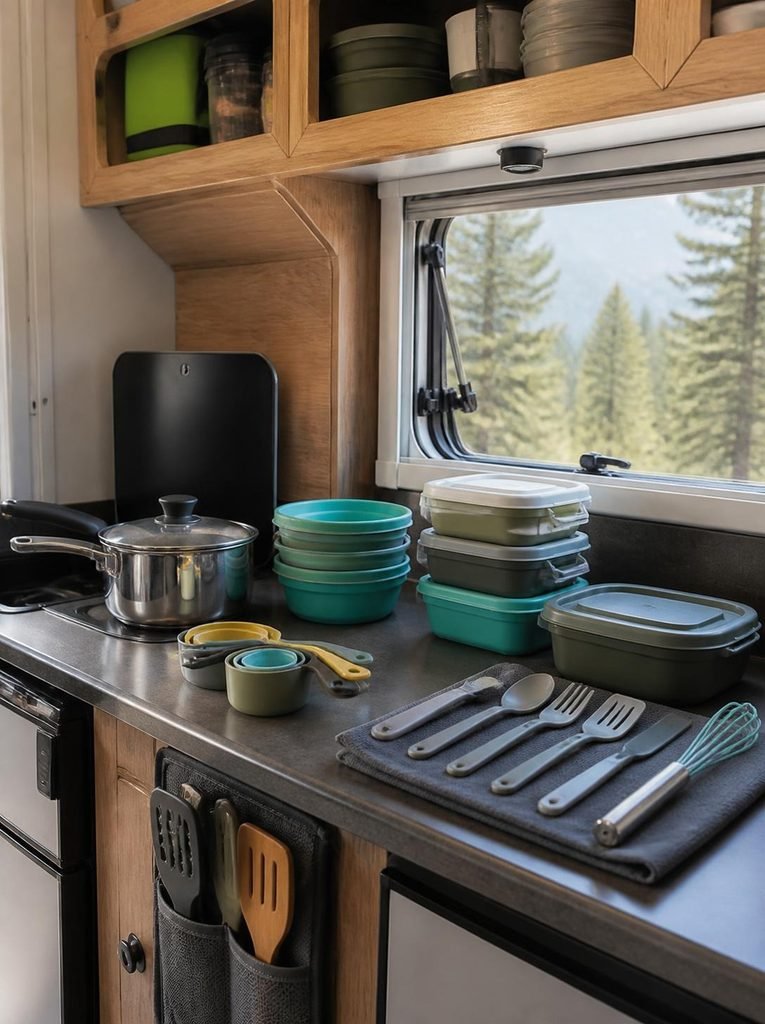
Kitchen equipment can take up a surprising amount of room in a camper. Pots, pans, bowls, food containers, cups, and utensils all compete for limited cabinet space, especially when several items have bulky handles or awkward shapes.
Choosing collapsible and nesting equipment can help you reduce that problem.
Nesting bowls fit inside one another, while stackable cups and containers create a more compact arrangement. Some collapsible colanders, washing basins, and measuring cups flatten when they are not in use.
Consider packing these space-saving kitchen items:
- Nesting mixing bowls
- Stackable food storage containers
- Collapsible colander
- Compact measuring cups
- A small set of multipurpose cooking utensils
- Reusable plates and cups that stack neatly
- A suitable cutting board that fits your countertop
Before buying new equipment, measure your existing cabinets. A product marketed as compact may still be too tall or wide for your camper’s shelves.
Also consider how often you cook. If you mainly prepare simple meals, a small cookware set may be enough. If you cook more elaborate meals, choose equipment that supports your normal routine rather than packing a full residential kitchen.
Helpful tip: Store lids with their matching containers and group similar items together. A well-organized cabinet makes it easier to retrieve one item without emptying the entire shelf.
5. Use Clear Storage Bins for Small Essentials
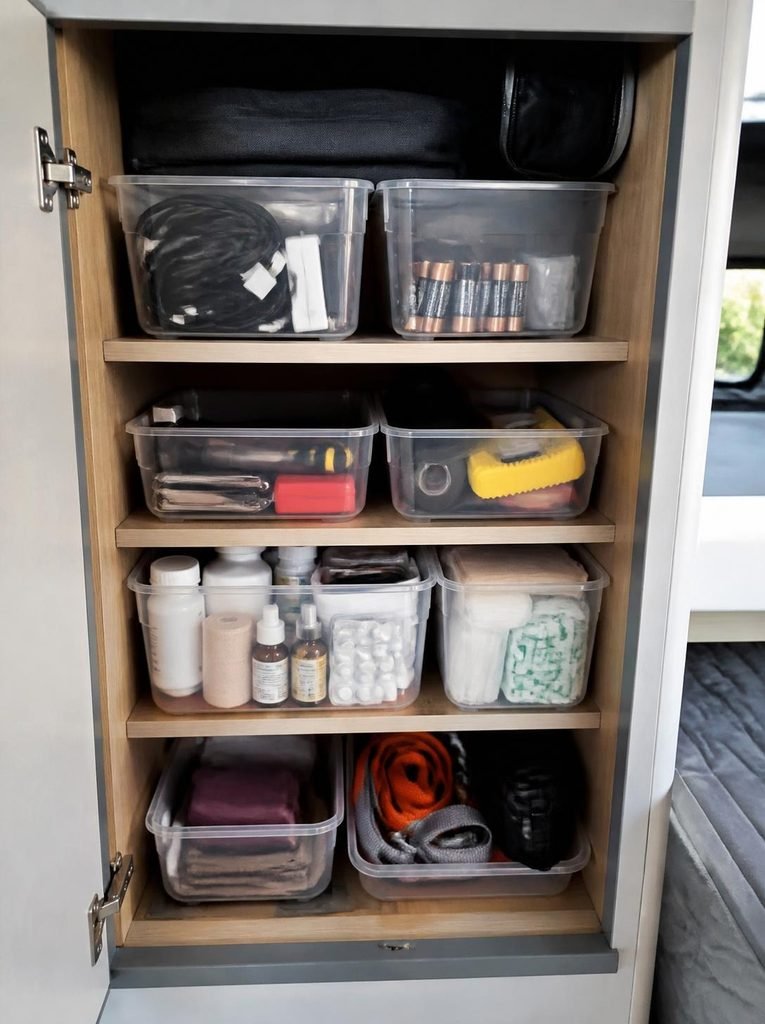
Small items are among the easiest things to lose in a camper. Batteries, charging cables, matches, clips, toiletries, and cleaning accessories can disappear into the back of drawers or become scattered across different compartments.
Clear storage bins help keep these items together while allowing you to see what is inside without opening every container.
Choose bins that fit your shelves and drawers, and use separate containers for different categories. You might have one for electronics, another for first aid supplies, and a third for small cleaning tools.
What to Store in Small Bins
- Charging cables and compatible adapters
- Spare batteries stored according to their safety instructions
- Toiletries and personal care products
- Small cleaning cloths and brushes
- Reusable clips and ties
- Compact repair supplies
- Travel documents and small accessories, where appropriate
Use lids when needed to prevent items from spilling, but avoid filling bins so tightly that you cannot remove individual items easily.
You can also use simple labels to identify the contents. Labels are particularly helpful when storage bins are kept inside deep cabinets or overhead compartments.
Keep important emergency equipment, first aid supplies, and essential documents accessible rather than burying them beneath less frequently used belongings.
Helpful tip: Choose a few bins that fit together neatly instead of buying many different shapes and sizes. Consistent containers are often easier to stack and rearrange.
6. Make the Most of Vertical Storage Space
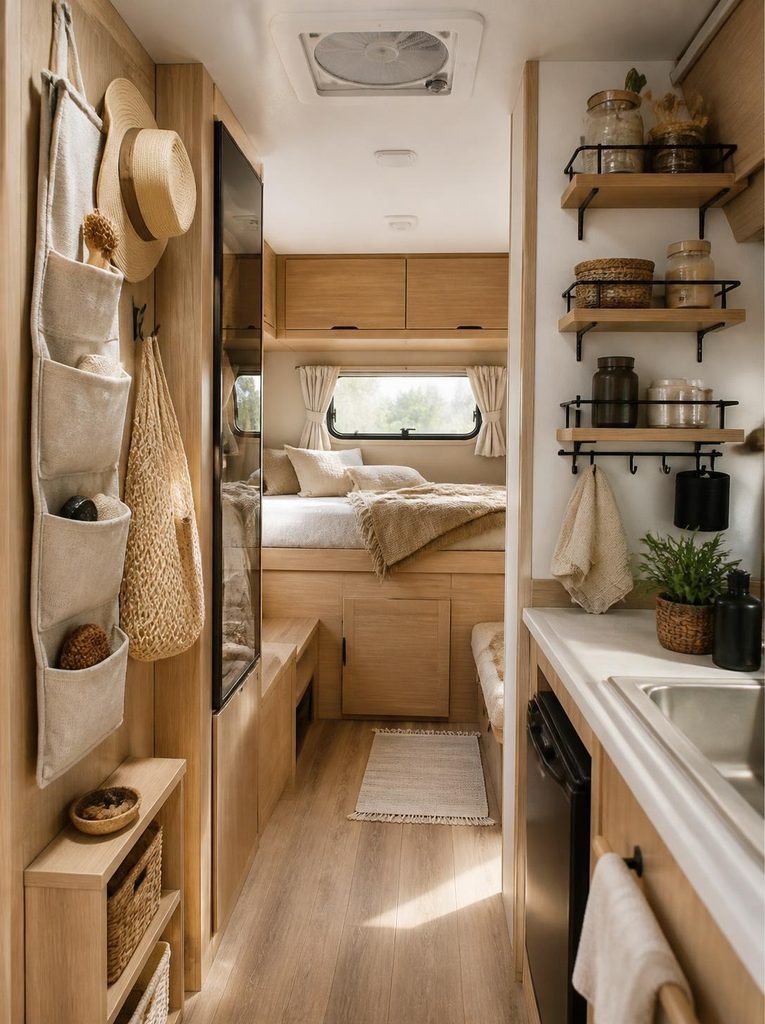
When packing a camper, it is easy to focus on drawers, cabinets, and floor space while overlooking the walls and other vertical areas. Using suitable vertical storage can help you keep everyday essentials organized without filling every available surface.
The key is to choose lightweight organizers that fit your camper and can be secured properly for travel. A few carefully placed storage solutions can make a small interior feel much more functional.
Here are some practical ways to use vertical space:
- Wall-mounted pockets: Use suitable fabric organizers for lightweight items such as charging cables, maps, sunglasses, and small accessories.
- Cabinet door organizers: Store compact items inside cabinet doors if there is enough clearance for the door to close safely.
- Hanging closet organizers: Use these for folded clothing, small towels, or other lightweight essentials.
- Magnetic holders: Where compatible surfaces and secure mounting are available, magnetic holders can keep suitable metal utensils or small tools organized.
- Hooks for lightweight belongings: Securely mounted hooks can hold jackets, hats, and small bags.
Before attaching anything to a wall, cabinet, or door, check what is behind the mounting surface. Camper walls may contain wiring, plumbing, insulation, or structural components that could be damaged by drilling.
Avoid placing heavy objects overhead or relying on weak adhesive attachments for items that could fall during travel. Follow the manufacturer’s installation instructions and secure everything before moving the camper.
Helpful tip: Keep vertical storage simple. Too many hanging organizers can make a compact interior feel crowded, so prioritize the items you use regularly.
7. Organize Food With Stackable Containers
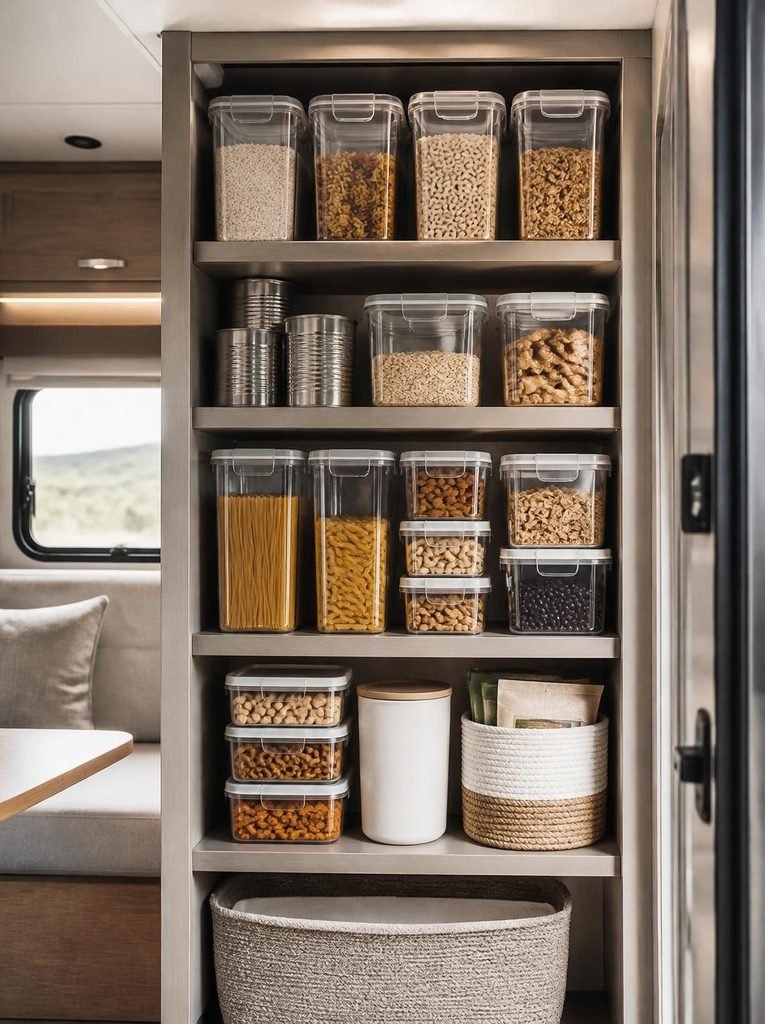
Food packaging can create unnecessary clutter in a camper kitchen. Open cereal boxes, half-empty snack bags, bulky packets, and mismatched containers can quickly fill pantry shelves.
Stackable food containers help you make better use of limited storage while keeping ingredients organized. They are particularly useful for dry foods such as oats, rice, pasta, crackers, and suitable snacks.
Choose containers that fit the height and depth of your pantry. Square or rectangular shapes often use shelf space more efficiently than containers with wide, rounded sides.
How to Keep Camper Food Storage Organized
- Group similar foods together: Keep breakfast items, snacks, and cooking ingredients in separate areas.
- Use appropriately sized containers: Avoid transferring a small amount of food into an unnecessarily large container.
- Label containers clearly: Include the food name and any relevant preparation or storage information.
- Keep heavy items low: Store heavier food containers in secure lower cabinets when practical.
- Check food dates: Use older suitable items first and remove expired products before they take up valuable space.
Not every food needs to be transferred into a container. Sealed packages may be easier to manage for a short trip, provided they are stored safely and protected from pests.
Remember that camper temperatures can fluctuate significantly. Refrigerated foods must remain at safe temperatures, and perishable ingredients should not be stored in ordinary cabinets.
Helpful tip: Plan a few meals before leaving home. Bringing ingredients for meals you intend to cook helps prevent overpacking food that may go unused.
8. Keep Toiletries and Cleaning Supplies Separate
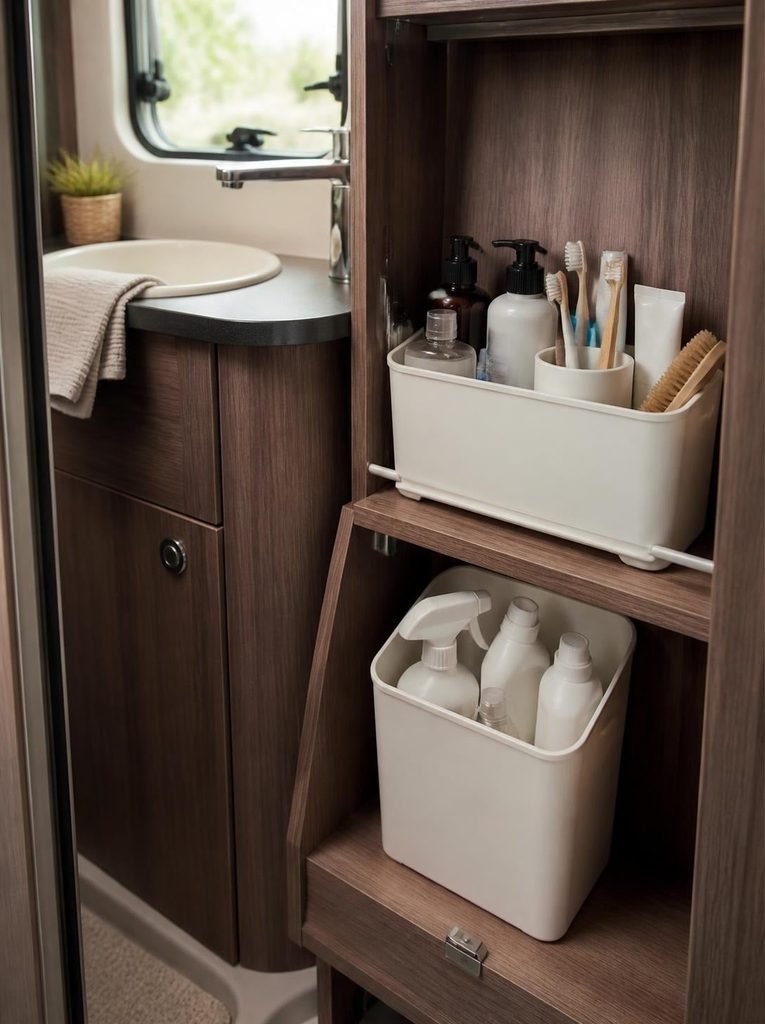
Toiletries and cleaning products are easy to mix together when storage is limited. Shampoo bottles may end up beside dish soap, while toothpaste, sunscreen, cleaning cloths, and personal care items compete for space.
Separate storage makes it easier to find what you need and reduces the chance of leaks spreading to other belongings.
I recommend using two compact organizers: one for personal care products and another for cleaning supplies.
Personal Care Organizer
Use a small waterproof pouch or washable container for items such as:
- Toothbrushes and toothpaste
- Shampoo and conditioner
- Soap or body wash
- Deodorant
- Sunscreen
- Basic grooming accessories
Travel-sized products can save space, but only bring what you need and make sure any refillable containers are suitable for their contents and close securely.
Cleaning Supplies Organizer
Keep cleaning cloths, a small brush, suitable surface cleaner, and other essential cleaning items together in a separate container.
Store chemical products according to their labels, away from food, and out of reach of children and pets. Never mix cleaning chemicals, and avoid transferring products into unmarked containers.
Make sure bottles remain upright and secured while traveling. A leakproof pouch or tray can provide an extra layer of protection against spills.
Helpful tip: Keep a small cleaning cloth and a suitable everyday cleaner accessible rather than burying all cleaning supplies at the back of a cabinet. Quick cleanups are easier when the essentials are easy to reach.
9. Create a Dedicated Place for Shoes
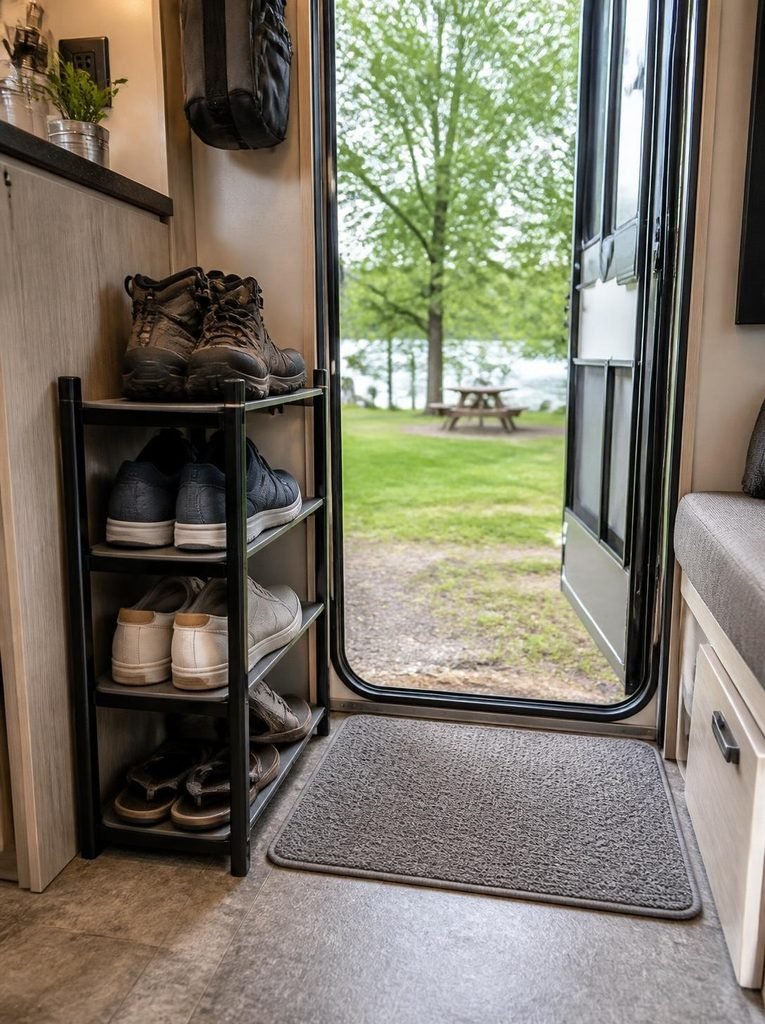
Shoes can quickly make a camper look cluttered, especially when everyone removes their footwear near the entrance. Hiking boots, sandals, slippers, and wet shoes may end up scattered around the floor or blocking the doorway.
A designated shoe area helps keep the entrance tidy and prevents dirt from spreading through the living space.
Depending on your camper’s layout, you could use a shallow shoe organizer, a compact basket, or a dedicated compartment near the entry.
Practical shoe storage ideas include:
- A small washable basket for everyday footwear
- A compact shoe rack that fits securely near the entrance
- A separate tray for muddy or wet shoes
- A breathable bag for spare sandals or lightweight footwear
- A dedicated compartment for hiking boots
Before choosing a shoe organizer, measure the available space and consider how many pairs you genuinely need for the trip. A large rack may take up more room than the shoes themselves.
Keep wet footwear separate from clothing and bedding, and allow it to dry properly when conditions permit. This helps reduce odors and prevents moisture from spreading into cabinets.
For travel, make sure the organizer and shoes cannot slide into the walkway or become loose when the camper moves.
Helpful tip: Limit each traveler to the footwear needed for planned activities. One comfortable everyday pair, suitable outdoor shoes, and optional lightweight sandals may be enough for many trips, depending on the weather and itinerary.
10. Pack Bedding That Compresses Easily
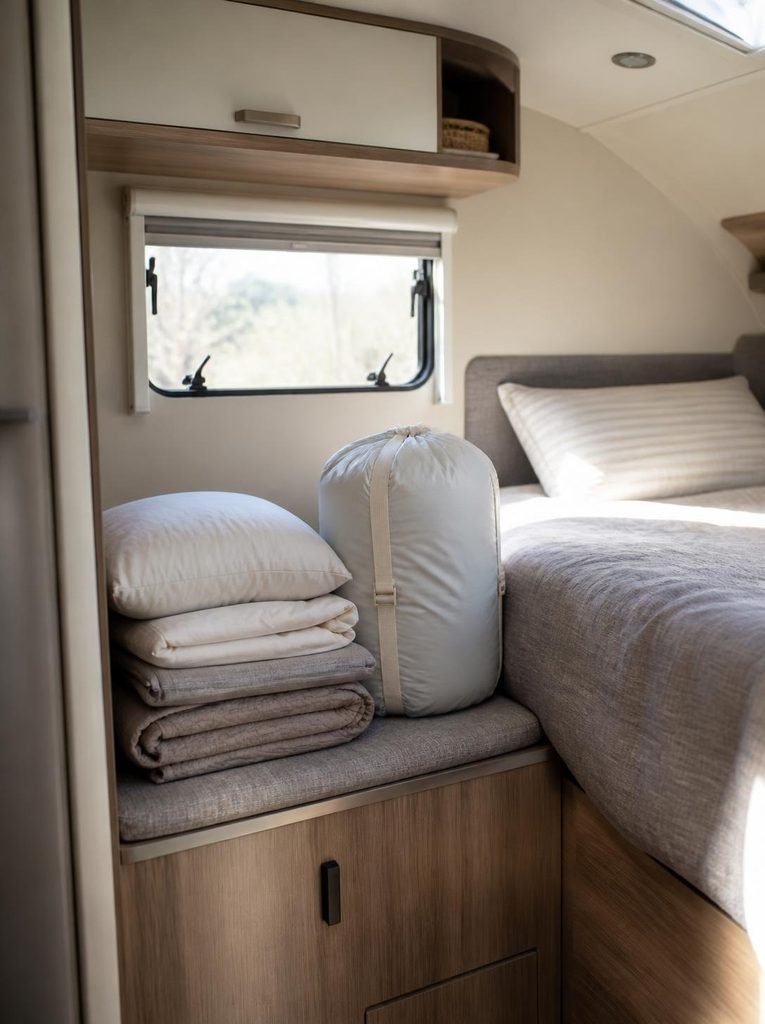
Bedding can occupy a surprising amount of storage space, particularly when you pack thick blankets, multiple pillows, spare sheets, and bulky towels.
Choosing lightweight bedding and compressible fabrics can help you keep wardrobes and storage compartments organized without sacrificing comfort.
Start by considering what your camper already provides. If the bed has a suitable mattress and you have enough bedding for the expected temperatures, there may be no need to bring several extra blankets.
Space-Saving Bedding Ideas
- Lightweight blankets: Choose options that provide suitable warmth without excessive bulk.
- Compact pillows: Select pillows that fit your storage space and sleeping preferences.
- Quick-drying towels: These often take up less room than thick traditional towels.
- Fitted sheets: These are easier to manage on compact mattresses than loose sheets that bunch up.
- Compression bags: These can reduce the volume of suitable soft items, although they do not reduce their weight.
Compression bags are useful for spare bedding and clothing, but avoid compressing items that need to retain their shape or loft. Also, remember that squeezing bedding into a smaller package does not make it lighter.
Store clean bedding in a dry, breathable location when practical. Avoid packing damp towels or sheets into sealed bags for extended periods, as trapped moisture can cause unpleasant odors and encourage mold growth.
Helpful tip: Keep the bedding you use every night accessible. Store spare blankets and extra sheets separately so you do not have to unpack an entire cabinet at bedtime.
11. Choose Multi-Purpose Camping Gear
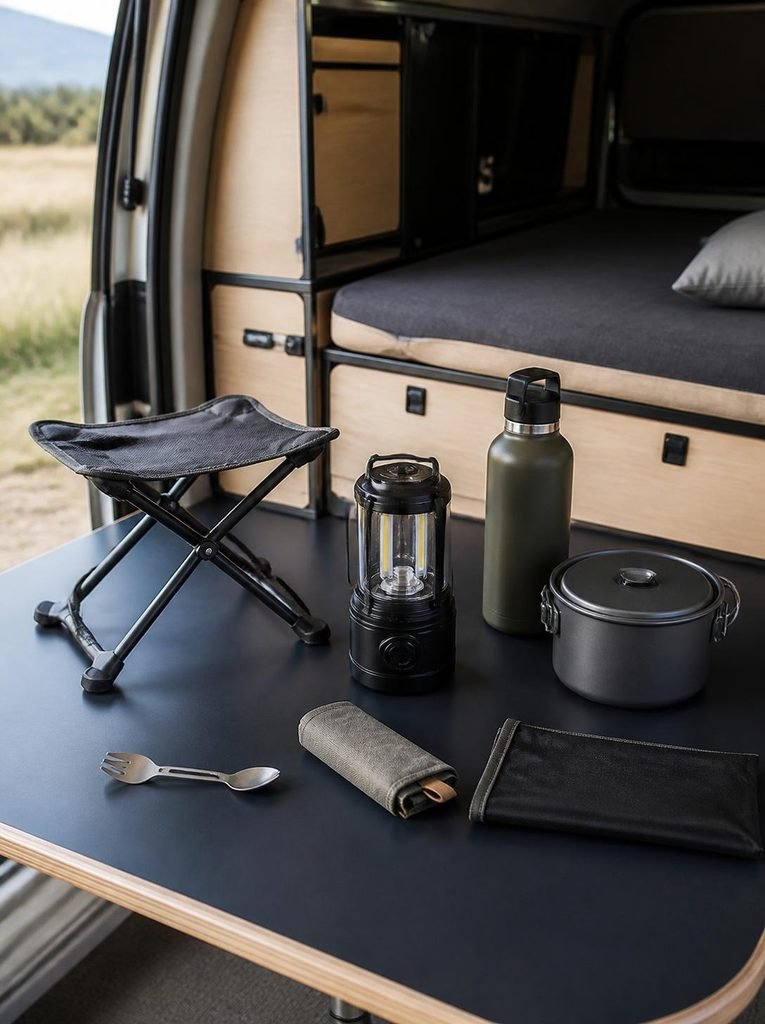
Every item you bring into a camper needs storage space, so choosing equipment that performs more than one useful function can help reduce clutter.
This does not mean replacing every specialized tool with a combination product. Instead, focus on items that genuinely fit your travel habits and can perform their intended tasks safely.
Consider these multi-purpose options:
- A folding table: It can provide a surface for meals, games, or outdoor activities when suitable for the intended use.
- A compact lantern: A suitable lantern can provide portable lighting around the campsite.
- Nesting cookware: Matching pots or bowls can fit together to save cabinet space.
- A convertible seating unit: Some camper furniture provides seating and storage in the same footprint.
- A multi-use tool: Choose one that safely covers the tasks you actually expect to encounter.
- Reusable food containers: Suitable containers can store leftovers, prepared ingredients, and snacks.
Before purchasing multi-purpose gear, check its dimensions, weight, durability, and compatibility with your camper. A bulky product that performs several functions may still be less practical than two small items.
Avoid sacrificing essential safety equipment simply to reduce the number of things you carry. Keep necessary first aid supplies, fire safety equipment, and other required emergency items accessible and in good condition.
Helpful tip: Evaluate your gear after each trip. If a particular item consistently goes unused, consider leaving it at home next time unless it serves an important emergency or safety purpose.
12. Use Under-Bed Storage Wisely
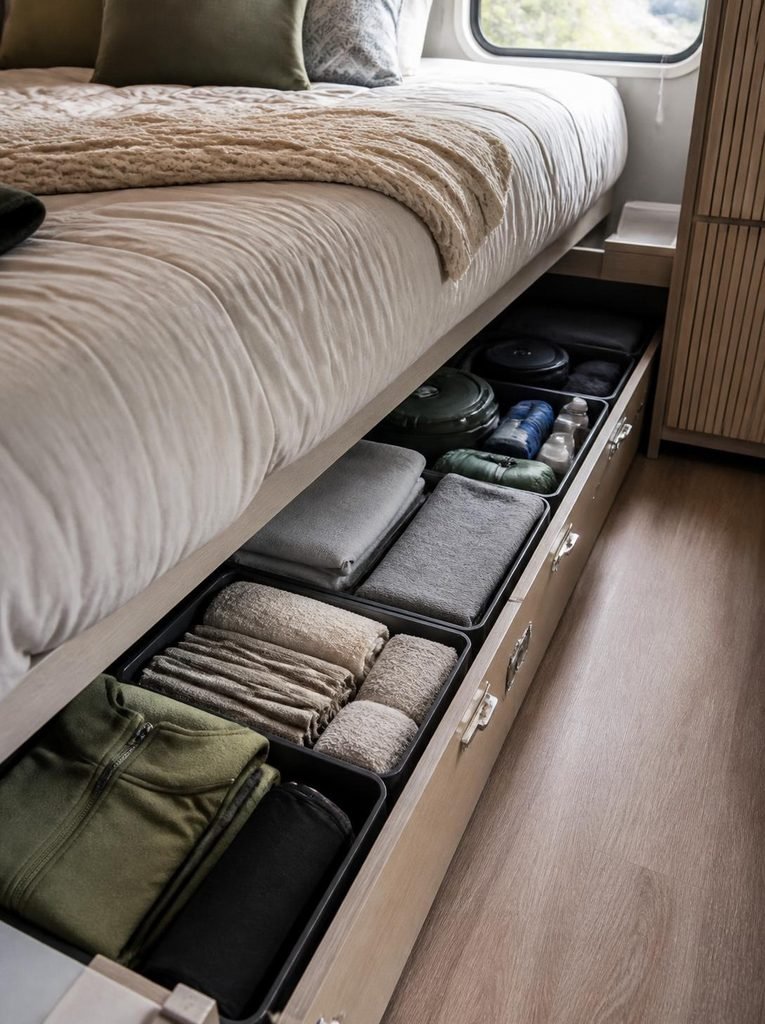
The space beneath a camper bed can be valuable, especially when the main living area has limited cupboards and drawers.
Depending on your layout, it may be suitable for storing spare bedding, seasonal clothing, compact outdoor equipment, or other items you do not need throughout the day.
However, under-bed storage should not become a place where everything you cannot fit elsewhere gets pushed out of sight.
What to Store Under the Bed
- Spare sheets and blankets
- Seasonal clothing
- Lightweight outdoor accessories
- Compact bags and organizers
- Other suitable items that are not needed frequently
Use containers that fit the available height and can be removed easily. Low-profile bins are often useful because they slide into shallow spaces without making it difficult to access the bed.
If the bed lifts to reveal storage, check the manufacturer’s guidance on weight limits and safe operation. Do not overload the compartment or interfere with ventilation, wiring, plumbing, or mechanical components.
Keep food, cleaning chemicals, and anything that could leak away from bedding and clothing.
Helpful tip: Reserve under-bed storage for items you use less frequently. Everyday essentials should remain in easier-to-reach cabinets or drawers.
13. Keep Frequently Used Items Within Reach
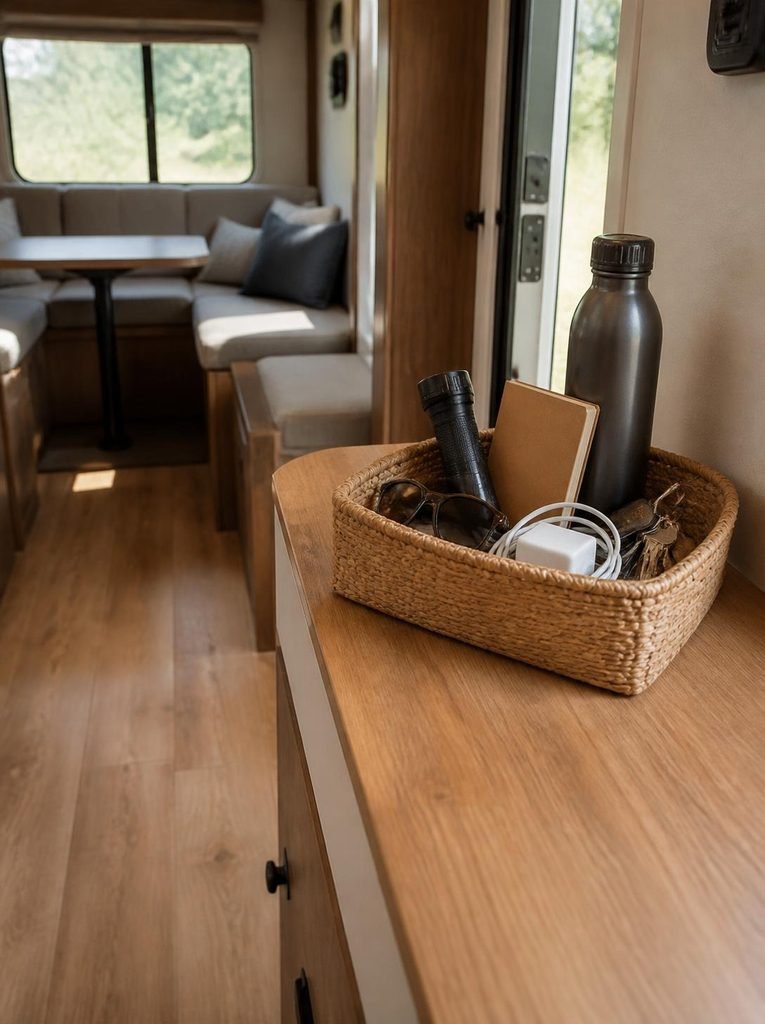
An organized camper is not just about fitting everything into storage. It is also about being able to retrieve what you need without unpacking several other items.
Think about your daily routine. Which items do you reach for first thing in the morning? What do you need when preparing a meal? Where do you put your phone, keys, flashlight, or water bottle?
Give these everyday items a convenient, consistent home.
For example, you could keep mugs near the kitchen area, toiletries close to the bathroom, and a small bag containing chargers and electronics in an accessible drawer.
Use shallow trays or small containers to keep loose items together, and avoid placing frequently used essentials behind bulky equipment.
Build a Simple Everyday Essentials Zone
Choose a small area for items you use regularly, such as:
- Phone and charging accessories
- Reusable water bottles
- Sunglasses and keys
- A small flashlight
- Everyday toiletries
- Basic kitchen utensils
Only include items that make sense for your layout. The aim is to reduce unnecessary movement and keep countertops clear, not create another crowded storage area.
During travel, secure these belongings in appropriate compartments rather than leaving them loose on tables or counters.
Helpful tip: If you repeatedly put an item in a different place because its designated spot is inconvenient, reconsider the location. The best organization system is one you can maintain without extra effort.
14. Secure Everything Before Driving
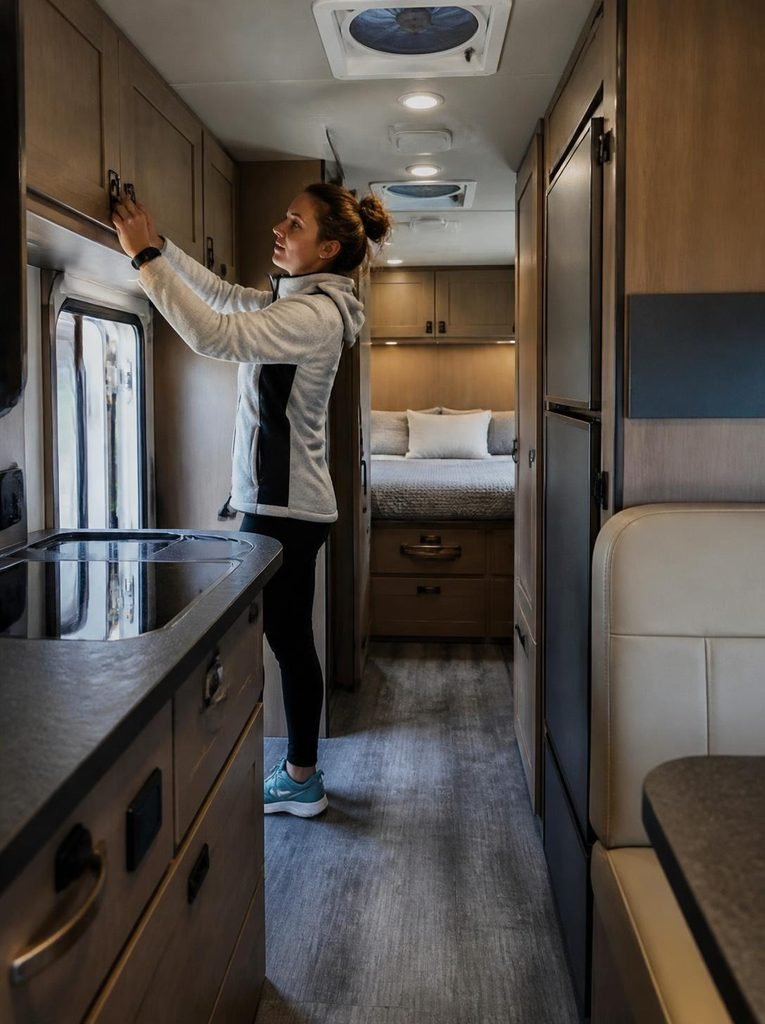
Packing a camper without clutter also means making sure belongings stay where they belong while traveling. Items that look neatly arranged when parked can slide, fall, or spill when the vehicle moves.
Before setting off, take a few minutes to inspect the interior.
Use this pre-departure checklist:
- Secure cabinet doors and drawers using their intended latches.
- Store loose cookware and utensils in suitable compartments.
- Close and secure food containers.
- Put toiletries and cleaning products in leak-resistant storage.
- Remove loose objects from countertops and seats.
- Secure bins, baskets, and organizers so they cannot slide.
- Keep walkways, exits, and access to essential equipment clear.
- Confirm that heavy items are stored and restrained according to the camper manufacturer’s guidance.
Do not rely on a loose basket to hold heavy equipment in place. Use suitable restraints and storage solutions designed for the load and the vehicle.
Also consider weight distribution. Keep the camper within its rated weight limits, and follow the manufacturer’s recommendations for loading. Heavy objects should not be placed overhead or allowed to shift during travel.
Helpful tip: Make the final storage check part of your departure routine. It is easier to catch a loose item before leaving the campsite than to deal with a spill or damaged belongings on the road.
15. Do a Quick Reset Every Evening
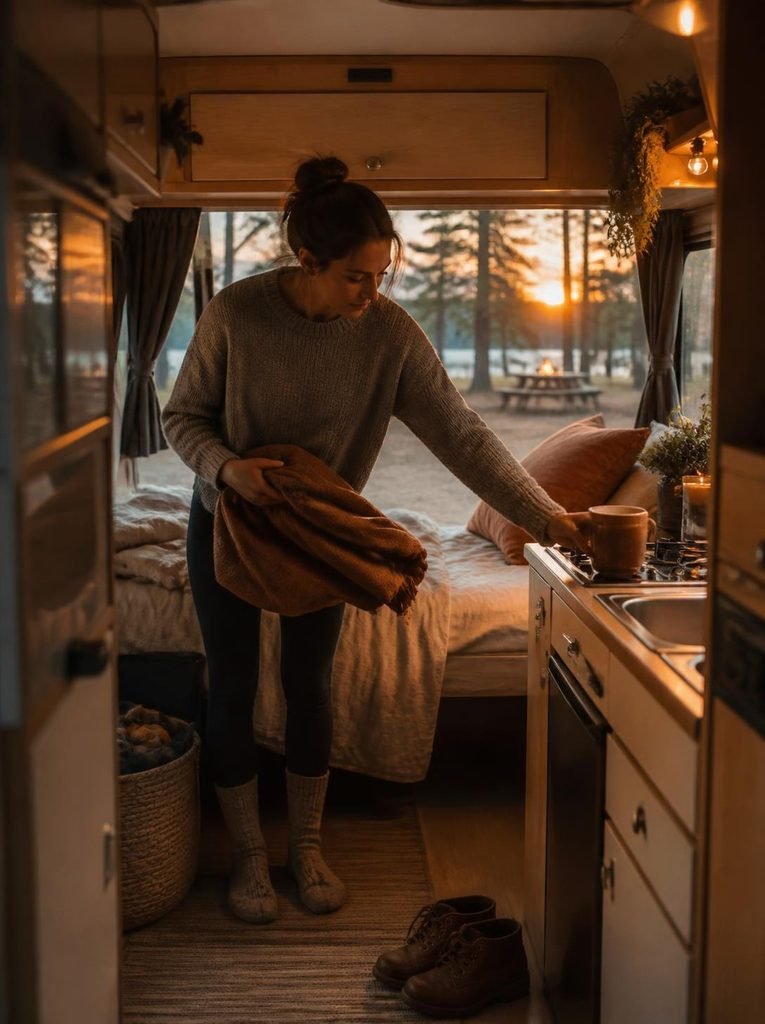
Even a well-organized camper can become cluttered after a day of cooking, hiking, sightseeing, and relaxing. The difference is how quickly you put things back in order.
A short evening reset can help prevent small messes from turning into a major cleanup the next morning.
You do not need to spend an hour cleaning. Focus on the tasks that make the biggest difference.
A Simple 10-Minute Camper Reset
- Clear the countertops: Put away food, cooking utensils, and loose accessories.
- Wash and dry dishes: Follow appropriate food hygiene practices and put clean items back in their designated places.
- Return clothing to storage: Separate dirty laundry from clean garments.
- Check the entrance: Remove loose shoes, bags, and outdoor gear from the walkway.
- Secure small items: Put chargers, toiletries, and other accessories back into their organizers.
- Check for damp belongings: Allow wet towels and clothing to dry appropriately rather than leaving them in closed storage.
- Prepare for the morning: Set aside any essentials you will need early the next day.
This routine helps keep the interior manageable without requiring a full reorganization after every outing.
Helpful tip: Encourage everyone traveling with you to return their belongings to the correct places. A simple shared system works better than expecting one person to tidy the entire camper every evening.
Final Thoughts
Packing a camper without the clutter starts with making thoughtful decisions about what you bring and where you store it. You do not need dozens of organizers or expensive storage upgrades to create a tidy interior. A clear packing list, a few well-chosen containers, and a consistent routine can make a real difference.
Start by removing unnecessary items, grouping similar belongings, and keeping everyday essentials easy to reach. Use vertical and under-bed storage where appropriate, choose compact kitchen equipment, and secure everything before driving.
Most importantly, adapt your system to the camper you have and the way you travel. What works for a weekend trip may need adjusting for a longer journey, changing weather, or additional travelers.
With these 15 practical tips, you can make better use of your available space, reduce everyday mess, and spend more time enjoying the road instead of searching for misplaced gear.