Tiny RV Living Must Haves That Save Space
Living in a tiny RV can be comfortable, organized, and surprisingly practical when every item has a purpose. The challenge is finding room for the things you need daily without making your camper feel crowded.
A small kitchen, limited closet space, narrow walkways, and a lack of storage can quickly become frustrating when you bring too many belongings or choose organizers that take up more room than they save. That is why choosing the right tiny RV living must haves matters so much.
I believe the smartest approach to small space living is to focus on practical items that serve multiple purposes, fit into awkward corners, and make everyday routines easier.
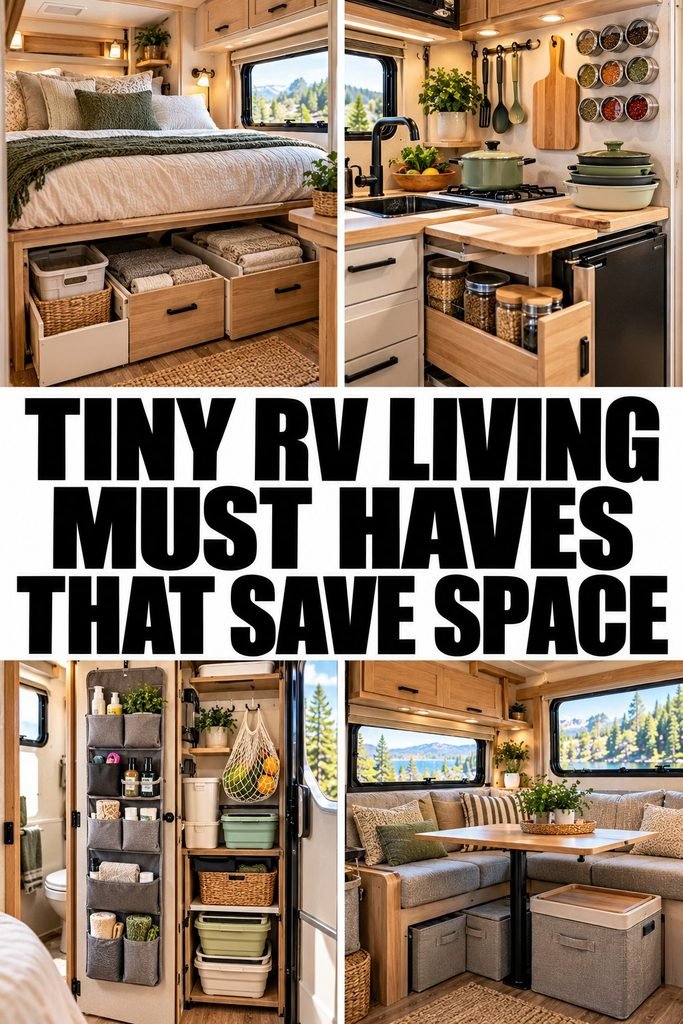
You do not need to fill your RV with expensive gadgets to make it functional. Sometimes, a simple collapsible container, a well placed storage organizer, or a multipurpose kitchen tool can make a noticeable difference.
In this guide, I will walk you through useful space saving essentials, explain where they work best, and share practical considerations for choosing items that suit your layout, travel style, and storage needs. The goal is to create a camper that feels tidy, comfortable, and easy to maintain.
How to Decide Which Tiny RV Essentials to Buy First
You do not need to purchase every space saving product at once. A more practical approach is to identify the areas that create the most difficulty in your RV and address them one at a time.
If your kitchen cabinets are crowded, start with nesting cookware or a collapsible colander. If clothing occupies too much room, review your wardrobe and consider slim hangers. If dirty laundry keeps collecting in the living area, a collapsible basket may be a better first purchase.
Before buying any product, consider its folded dimensions, weight, durability, cleaning requirements, and suitability for travel. Also remember that storage solutions should not block ventilation, access panels, emergency exits, or essential safety equipment.
The purpose of these essentials is not to squeeze more belongings into your RV. It is to make the belongings you genuinely need easier to store, find, and use.
1. Collapsible Storage Bins for Everyday Organization
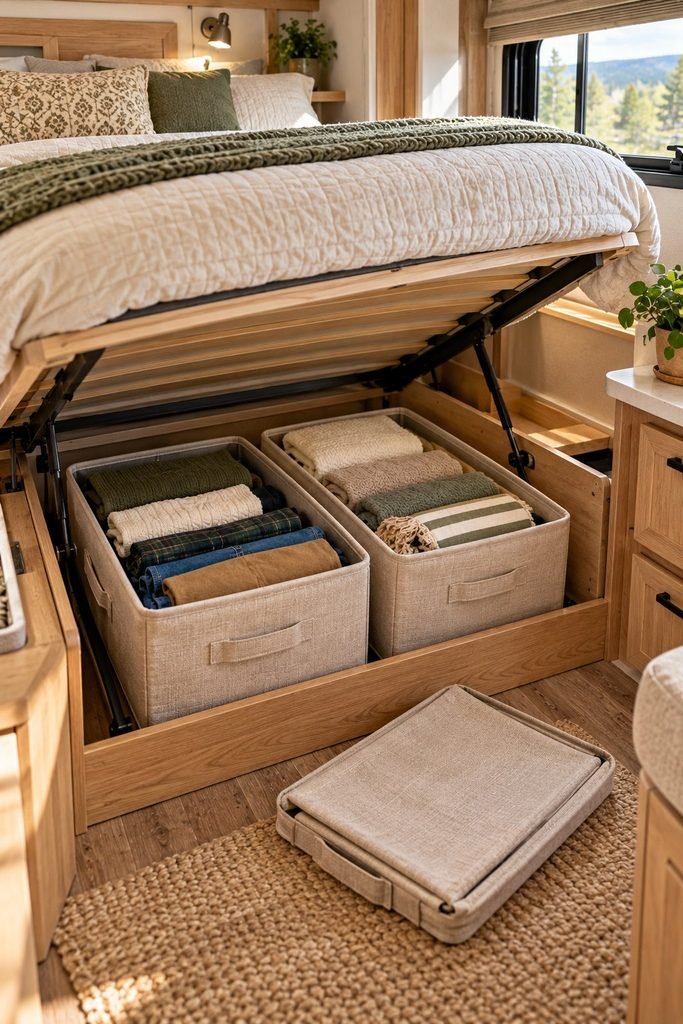
Storage bins are among the most useful essentials for tiny RV living, but traditional rigid containers can consume valuable space when they are empty. Collapsible storage bins offer a more flexible solution because they can be folded flat when they are not needed.
In a compact RV, even a small amount of unused space matters. Instead of allowing loose belongings to collect on countertops, seats, or the floor, you can use these bins to create designated storage areas for everyday items.
Where to use collapsible storage bins
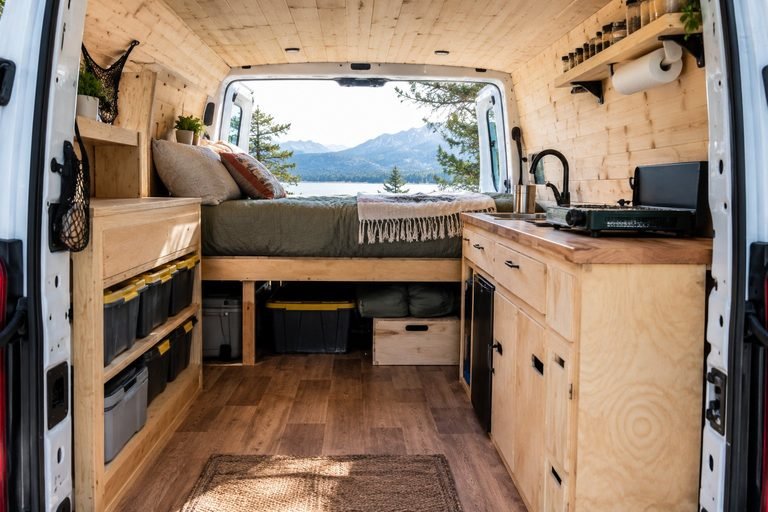
Under the bed: Store spare clothing, extra towels, bedding, and seasonal accessories in shallow bins that fit beneath the mattress platform.
Inside cabinets: Use smaller containers to group snacks, cleaning supplies, toiletries, or cooking accessories.
In closets: Separate everyday clothing from laundry, accessories, and items you only need occasionally.
Near the entryway: Keep outdoor accessories, reusable shopping bags, and other frequently used belongings together.
What to look for when buying them
Choose bins that collapse easily, have sturdy sides, and fit your available storage dimensions. Soft sided designs work well for clothing and linens, while stronger collapsible containers may be more suitable for heavier belongings.
Before buying anything, measure the cabinet, shelf, or under bed compartment where you intend to place it. A storage bin is only useful if it fits without blocking doors, drawers, or access to other belongings.
I also recommend choosing a few bins in compatible sizes rather than purchasing a large collection of different containers. Matching sizes can make storage easier to rearrange and help you avoid wasting awkward gaps.
Space saving tip: Give every bin a clear purpose. When you know where each item belongs, it becomes easier to put things away and keep your RV organized during travel.
2. Collapsible Kitchenware That Frees Up Cabinet Space
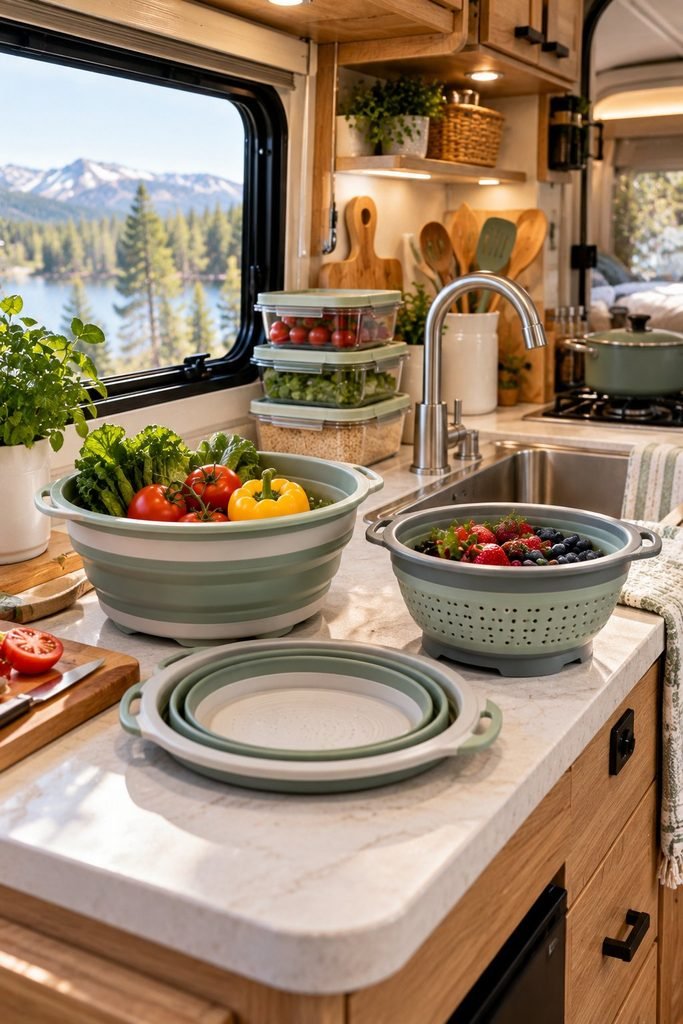
The kitchen is one of the most challenging areas to organize in a tiny RV. Pots, bowls, strainers, food containers, and cooking utensils can quickly fill the cabinets, leaving little room for groceries or everyday essentials.
Collapsible kitchenware helps reduce this problem by allowing certain items to fold down when they are not in use. Depending on the design, you can find collapsible mixing bowls, measuring cups, colanders, food containers, and washing basins.
These items are especially useful for anyone who enjoys preparing meals in their camper but does not have room for a full collection of conventional kitchen equipment.
The most useful collapsible kitchen items
Collapsible colander: Use it to rinse vegetables, drain pasta, and wash fruit. When you finish cooking, it folds down for easier storage.
Collapsible mixing bowls: These are useful for preparing ingredients, mixing simple recipes, and serving snacks without dedicating an entire cabinet to bulky bowls.
Collapsible food containers: These help store leftovers and prepared ingredients. Some designs fold down after the food has been used, reducing the amount of cabinet space they occupy.
Collapsible washing basin: If your RV kitchen has limited sink space, a suitable folding basin can provide extra room for washing dishes or produce.
How to choose kitchenware for a small RV
Do not buy every collapsible kitchen product you see. Start by considering the meals you prepare most often and the tools you regularly reach for.
For example, someone who cooks frequently may benefit from a collapsible colander and nesting bowls. Someone who mainly prepares quick meals might need only a few compact containers and a small set of multipurpose utensils.
Check the dimensions when each item is expanded and folded. It is also important to follow the manufacturer’s instructions for food contact, heat resistance, cleaning, and dishwasher use. Collapsible silicone products are not automatically suitable for direct heat or every cooking method.
Space saving tip: Combine collapsible items with nesting cookware. A small pot that fits inside a larger pot, together with folding bowls and utensils, can create a much more efficient kitchen storage system.
3. Over the Door Organizers for Hidden Storage
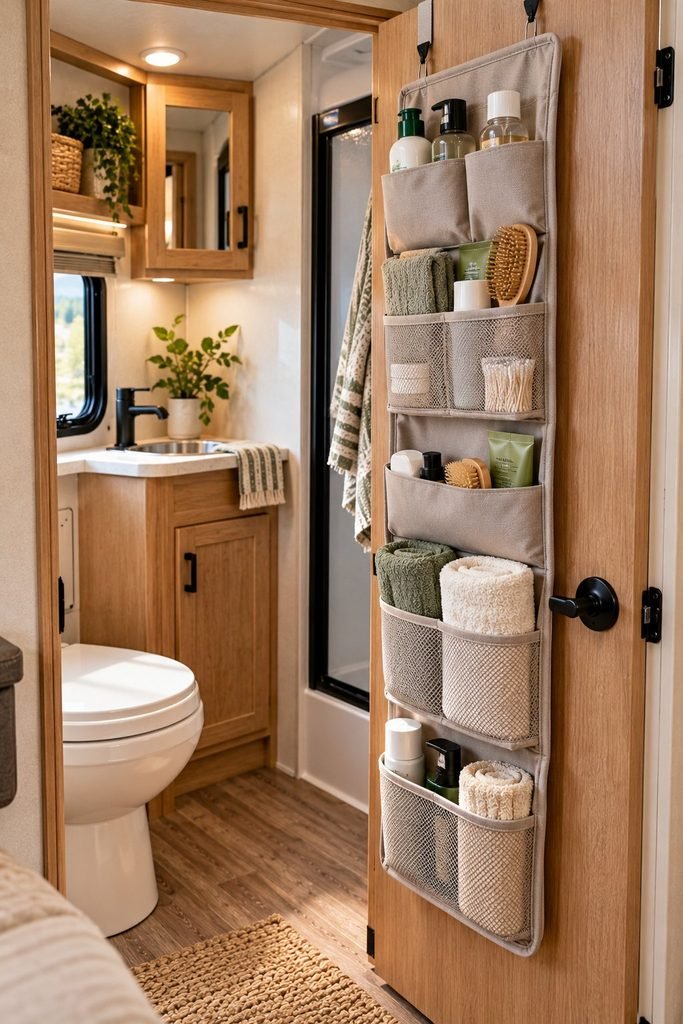
When floor space and cabinets are limited, the backs of doors can provide additional storage without requiring another piece of furniture.
Over the door organizers are useful in tiny RVs because they make use of vertical space that might otherwise remain empty. Depending on the design and the door available, they can hold toiletries, lightweight accessories, cleaning cloths, small pantry supplies, and other everyday belongings.
However, RV doors are not all the same. Before purchasing an organizer, check the door thickness, available clearance, and whether the door can still close properly with the organizer attached.
Smart places to use door organizers
Bathroom door: Store toiletries, hair accessories, washcloths, and small personal care products in individual pockets.
Closet door: Keep lightweight accessories, belts, small bags, or frequently used clothing items together.
Pantry cabinet door: Use a suitable organizer for lightweight packets, seasoning sachets, or small kitchen accessories, provided the shelves and hinges can safely support the added weight.
Interior storage door: If your RV has a suitable cupboard or utility door, a slim organizer can hold small items that are otherwise difficult to keep together.
How to avoid creating more clutter
The key is to choose an organizer with pockets that match the items you intend to store. Deep pockets can be useful for larger products, while shallow compartments make small belongings easier to see.
Avoid filling every pocket simply because space is available. An overloaded organizer can make a small room feel busier and may interfere with the door.
Weight is particularly important in a moving vehicle. Check the door manufacturer’s guidance and the organizer’s attachment requirements. Secure stored items appropriately before traveling, and never obstruct emergency exits or essential equipment.
Space saving tip: Use an over the door organizer for items you reach for frequently, not belongings you rarely use. Easy access makes the storage more practical and reduces the need to open several cabinets throughout the day.
4. Magnetic Hooks and Compact Hanging Storage
Magnetic hooks can be useful in an RV when you have suitable metal surfaces and need a place to hang lightweight everyday items. They provide storage without taking up floor space or requiring a permanent shelf.
Depending on the available surfaces, you might use them for keys, lightweight kitchen towels, reusable shopping bags, or small accessories. Some RV owners also use suitable hooks inside metal cabinets to keep frequently used items accessible.
The important thing is to understand that not every surface in an RV is magnetic. A painted cabinet, wooden panel, plastic wall, or decorative metal looking surface may not hold a magnetic hook. Check the material before buying a set.
Practical ways to use magnetic hooks
Near the entrance: Keep keys or a lightweight everyday bag in a designated place.
Inside a suitable cabinet: Hang lightweight accessories to free up shelf space.
In the kitchen: Store a dish towel or oven mitt on an appropriate metal surface away from flames, hot cooking surfaces, and other hazards.
In a wardrobe area: Hang lightweight accessories where they will not interfere with opening doors or moving through the camper.
What matters when choosing magnetic hooks
Look for hooks with a stated weight capacity that suits your intended use. Remember that a manufacturer’s static weight rating may not reflect how securely a hook will hold while a vehicle is moving.
Do not rely on ordinary magnetic hooks to secure heavy objects during travel. Remove or properly secure hanging belongings before driving, and avoid attaching hooks where they could interfere with electrical equipment, appliances, or safety systems.
If your RV has few suitable metal surfaces, removable adhesive hooks designed for the particular surface may be an alternative, provided the manufacturer permits their use in those conditions.
Space saving tip: Create a dedicated place for a handful of frequently used items. This reduces the tendency to leave belongings on counters, dining tables, or seats, keeping those surfaces available for their intended purpose.
A Simple Rule for Choosing Space Saving RV Essentials
Before moving on to more storage products, consider one important principle: every item you bring into a tiny RV should earn its place.
Ask yourself three questions before buying an organizer or gadget.
- Does it solve a problem I regularly experience?
- Can I store it without blocking something else?
- Will it make an everyday task easier, or will it simply give me another item to manage?
If a product does not solve a real problem, it may not be worth carrying. The best tiny RV setup is not necessarily the one with the most organizers. It is the one that makes daily life simpler while keeping the limited space comfortable and functional.
In Part 2, we will look at more practical essentials for small RV living, including under bed storage, multipurpose furniture, compact laundry solutions, and smart ways to organize clothing and personal belongings.
Smart Storage Solutions and Multipurpose Essentials for Tiny RV Living
5. Under Bed Storage Organizers
The space beneath an RV bed can be one of the most useful storage areas in a small camper, especially when there is limited room for a full closet or extra cabinets. Instead of letting this area become a place where random belongings collect, you can turn it into an organized storage zone for items you do not need to access constantly.
Under bed storage organizers are particularly useful for extra bedding, seasonal clothing, spare towels, shoes, and lightweight camping accessories. They help keep these belongings out of sight while leaving your main living area available for everyday activities.
Before choosing an organizer, check whether your RV bed has built in drawers, a lift up platform, or a fixed frame with an open compartment underneath. Each design offers different storage possibilities.
How to organize the space beneath your RV bed
Store seasonal clothing separately. Keep cold weather clothing, swimsuits, or other seasonal items in a designated container so they do not take up valuable closet space throughout the year.
Use shallow containers for bedding. Flat storage bags or low profile bins can be easier to slide beneath a bed than tall plastic containers.
Keep spare linens together. Store sheets, pillowcases, and extra blankets in one section so you can find them without unpacking everything.
Separate occasional use items. Belongings you need only during particular trips can be stored toward the back, while frequently used items should remain within easy reach.
What to consider before buying
Measure the available height, width, and depth. Pay attention to bed supports, ventilation openings, wiring, and any plumbing or mechanical components that might occupy the compartment.
Avoid packing the area so tightly that you cannot access essential equipment or inspect the space when needed. It is also sensible to keep damp clothing and wet equipment elsewhere until they are completely dry.
Space saving tip: Use soft sided organizers if you need flexibility around irregular corners. They can be easier to fit into unusual spaces than rigid boxes, especially when the bed frame does not provide a perfectly rectangular compartment.
6. Multipurpose Furniture for Small RV Interiors
Furniture can occupy a surprising amount of room in a tiny RV. A separate chair, table, storage cabinet, and footrest may each seem useful, but together they can restrict movement and make the interior feel crowded.
Multipurpose furniture helps solve this problem by allowing one item to serve more than one purpose. Instead of adding another piece of furniture whenever you need extra storage or seating, look for options that combine functions.
Useful multipurpose furniture ideas
Storage ottoman: A compact ottoman can provide a place to rest your feet, an extra seat when appropriate, and concealed storage for lightweight belongings.
Folding dining table: A wall mounted or folding table can provide a surface for meals, laptop work, or other activities before folding away when it is not needed.
Bench with storage: A storage bench can provide seating while holding shoes, small bags, or other suitable belongings.
Convertible sofa bed: In an RV layout designed for one, a convertible sofa can provide daytime seating and a sleeping area at night, reducing the need for separate furniture.
Folding chairs: Lightweight folding chairs can provide additional seating outside or inside when the layout allows, then be stored away when not required.
How to choose furniture that works in an RV
Start with your daily routine. If you regularly work on a laptop, a folding table might be more useful than a storage ottoman. If you need extra seating for meals, a compact bench with storage could offer better value.
Measure the furniture in both its open and folded positions. An item may look compact in a product photograph but require substantial clearance when unfolded.
Weight is another important consideration. RVs have limits on payload and weight distribution, so avoid adding heavy furniture without considering your vehicle’s specifications. Secure movable furniture appropriately for travel.
I would also prioritize pieces that are easy to clean, have practical storage access, and do not obstruct walkways. In a tiny camper, furniture should support your lifestyle rather than dictate how you use the room.
Space saving tip: Before purchasing a new piece of furniture, see whether an existing item can perform the same function. Removing one unnecessary item can sometimes improve the layout more than adding another organizer.
7. Nesting Cookware and Stackable Kitchen Essentials
A small RV kitchen benefits from cookware that fits together neatly. Traditional pots, pans, bowls, and food containers can occupy several cabinets because their handles and shapes prevent efficient stacking.
Nesting cookware is designed to reduce this problem. Smaller pieces fit inside larger ones, allowing you to keep several useful cooking items together without dedicating an entire cabinet to them.
This is particularly helpful for people who prepare regular meals in their RV and want a functional kitchen without carrying a full sized household cookware collection.
Kitchen items worth considering
Nesting pots and pans: Sets designed to stack together can reduce the amount of cabinet space used by cookware.
Stackable food containers: Containers with compatible shapes can be arranged neatly, especially when their lids have a designated storage solution.
Nested measuring cups: These keep measuring tools together rather than scattered through a drawer.
Compact cutting boards: A small cutting board that fits vertically beside other kitchen items can be more practical than a large board that occupies an entire cabinet.
Stackable dishes and bowls: Choose lightweight dishes that nest securely and suit your available shelf height.
How to organize a small RV kitchen cabinet
Place frequently used cookware near the front of the cabinet. Store occasional use items farther back, provided they remain easy to retrieve without moving everything else.
Keep lids together in a designated holder or storage compartment. Loose lids often consume more space than expected and can make an otherwise organized cabinet difficult to manage.
Choose cookware based on the appliances in your RV. A set that works with your cooktop and cooking habits is more useful than a large collection of pots you rarely need.
Before purchasing nesting cookware, check the dimensions of the complete set, including handles and lids. Some sets require more room than their product photographs suggest.
Space saving tip: Keep only the pots and pans that match the meals you regularly prepare. A small collection of versatile cookware is often more useful than a large set that leaves little room for groceries and kitchen supplies.
8. Hanging Closet Organizers and Slim Hangers
Closet space is often limited in a tiny RV, and bulky hangers can make a small wardrobe feel even smaller. Clothing may become difficult to reach when the rail is crowded, while accessories and folded items can quickly occupy the remaining shelf space.
Hanging closet organizers and slim hangers help make better use of the space you already have.
Slim hangers reduce the horizontal space used by each garment, while hanging shelves can create additional compartments for folded clothing, accessories, and lightweight personal belongings.
Practical ways to organize an RV closet
Replace bulky hangers. Use slim, durable hangers that can support the weight of your clothing without bending or slipping.
Add a hanging shelf organizer. Choose one that fits the closet height and does not prevent the door from closing.
Group similar clothing together. Keep shirts, trousers, jackets, and other garments in designated sections so you can find them easily.
Use small pouches for accessories. Store belts, scarves, and similar items in compact organizers instead of letting them occupy the bottom of the closet.
Reduce unnecessary duplicates. Keeping a smaller collection of clothing that suits your activities can make the entire closet easier to manage.
Choosing the right organizer
Measure the closet’s width, depth, and height before buying a hanging shelf. A deep organizer may reduce the space available for hanging garments, while a long one could interfere with the closet floor or drawers.
Consider the weight of the items you intend to store. Heavy belongings can strain a hanging organizer and its support system, particularly when the RV is moving.
For clothing that wrinkles easily, slim hangers may be more appropriate than folding everything into shelves. For lightweight casual clothing, hanging compartments may offer a better use of the available space.
Space saving tip: Review your wardrobe before buying additional storage. Organizers can make existing space more efficient, but they cannot compensate for carrying more clothing than your RV can comfortably accommodate.
9. Compact Laundry Solutions for Small Campers
Laundry can become an inconvenient part of tiny RV living when there is no dedicated washing machine, laundry room, or large space for drying clothes.
A compact laundry setup helps you manage dirty clothing without allowing it to spread across the bathroom, bedroom, or living area. You do not necessarily need a complicated system. A few well chosen essentials can make laundry easier to handle.
Useful laundry essentials for RV living
Collapsible laundry basket: A folding basket can hold dirty clothing during the week and collapse when it is empty.
Small laundry bags: Separate delicate clothing, socks, or damp items when appropriate. Keep wet clothing isolated until it can be washed and dried properly.
Compact drying rack: A folding rack can provide a temporary drying area when conditions and available space permit.
Travel clothesline: A suitable portable clothesline may help dry lightweight garments outdoors or in an appropriate ventilated location.
Laundry detergent container: A compact, securely closed container can hold the amount of detergent you need without requiring a large bottle.
How to create a practical laundry routine
Choose one designated location for dirty laundry rather than allowing it to accumulate in several places. A collapsible basket can fit inside a closet, beneath a suitable bench, or in another available compartment.
If you use campground laundry facilities, a small laundry bag can make it easier to carry clothing without bringing a bulky basket. If you wash clothing by hand, a suitable basin can help, provided your RV’s water supply and wastewater arrangements allow it.
Drying deserves particular attention. Avoid hanging wet clothing where it blocks ventilation, creates a tripping hazard, or increases moisture in a poorly ventilated interior. Damp conditions can encourage mold and mildew, which are especially troublesome in compact spaces.
Space saving tip: Choose laundry products that can serve more than one purpose where practical. A collapsible basket that doubles as a carrying basket can be more useful than keeping separate containers for each task.
10. Stackable and Clear Storage Containers for Pantry Essentials
A small RV pantry can become disorganized quickly when packets, cans, jars, and snack bags are stored without a clear system. Items get pushed toward the back, duplicate groceries are purchased, and useful cabinet space becomes difficult to access.
Stackable storage containers can help you arrange pantry essentials in a more efficient way. Clear containers also make it easier to see what you have available without opening every cupboard.
What to store in compact pantry containers
Dry snacks: Keep suitable packaged snacks together in a designated container or basket.
Baking ingredients: If you regularly bake, use appropriately sized containers for ingredients such as flour or sugar.
Small packets: Group seasoning packets, tea bags, and other small items so they do not disappear behind larger groceries.
Lightweight pantry staples: Use secure, food safe containers for suitable dry goods that you purchase in quantities you can reasonably store.
How to prevent pantry clutter
Measure the pantry shelves before buying containers. Stackable designs are helpful only when their dimensions match the cabinet and leave enough room to remove each container safely.
Avoid transferring food into containers unless they are suitable for food storage and can be kept clean and dry. Label containers with the contents and, where useful, the opening date or expiry information.
Consider the weight of filled containers. Large containers of flour, grains, or canned goods can become heavy, so distribute weight appropriately and avoid placing heavy items in overhead cupboards.
It is also important to secure pantry contents before traveling. Containers that slide or fall can create messes, damage other belongings, or become hazards during sudden braking.
Space saving tip: Shop with your pantry dimensions in mind. Buying smaller quantities of bulky ingredients can be more practical than trying to find room for large packages that you may not finish before they become stale.
11. Foldable Step Stools and Compact Utility Items
Some RV storage compartments are positioned high enough that reaching them comfortably can be difficult. A compact step stool can help you access these areas without requiring a permanent ladder or bulky piece of furniture.
Foldable step stools are also useful for certain everyday tasks, such as reaching a high shelf or helping an adult access a designated storage compartment. However, they should be used only on a stable surface and within the manufacturer’s weight limit.
What makes a good compact step stool?
A secure locking mechanism: The stool should lock into its intended position and remain stable when used according to its instructions.
A suitable weight rating: Check the manufacturer’s stated maximum load.
A non slip surface: The steps and feet should provide suitable traction on the surfaces where the stool will be used.
A compact folded size: Measure the storage compartment before buying it.
A manageable weight: A lightweight stool is easier to move and store, provided it remains sturdy enough for its intended use.
Other compact utility items worth considering
A small dustpan and brush, a compact cleaning caddy, and a foldable reusable shopping bag can also make everyday RV living easier. These items take up little space but help you handle common tasks without carrying oversized household equipment.
Choose cleaning tools based on the surfaces in your camper. A small brush may be enough for daily crumbs, while a compact vacuum could be more useful if you regularly travel with pets or spend time outdoors.
Space saving tip: Store utility items together in one designated compartment. Keeping cleaning supplies organized prevents them from spreading into the kitchen, bathroom, and living area.
Bathroom Essentials, Smart Organization, and Tips for Making a Tiny RV Feel Bigger
12. Wall Mounted Bathroom Organizers
The bathroom is one of the smallest areas in an RV, which makes organization especially important. Toiletries, skincare products, towels, and cleaning supplies can quickly crowd a tiny countertop or take up the limited space inside a bathroom cabinet.
Wall mounted bathroom organizers can help keep these items accessible without using valuable counter space. Depending on your bathroom layout, you might use a compact shower caddy, a suitable wall mounted holder, or a small organizer designed for toiletries.
The goal is to keep everyday essentials within reach while leaving enough room to move comfortably.
Bathroom storage ideas that work in small RVs
Compact shower caddy: Keep shampoo, conditioner, and body wash together instead of allowing bottles to collect around the shower floor.
Toothbrush holder: A small holder can keep toothbrushes organized and off the counter, provided it allows them to dry properly.
Toiletry organizer: Use a compact organizer for skincare products, razors, and other personal care items.
Small towel hooks: Suitable hooks can provide a convenient place for hand towels without requiring a bulky towel rack.
Under sink organizers: If your RV bathroom has a cabinet beneath the sink, a small shelf or removable bin can help separate toiletries from cleaning products.
How to choose the right bathroom storage
Measure your available wall and cabinet space before purchasing an organizer. A product that works in a large residential bathroom may be too deep for an RV shower or interfere with a cabinet door.
Pay attention to moisture resistance, cleaning requirements, and the way the organizer attaches to the surface. Removable adhesive products may be useful on compatible surfaces, but their performance depends on the material, humidity, preparation, and manufacturer’s instructions.
Avoid drilling into RV walls without checking what is behind the panel. Wiring, plumbing, and other components may be concealed inside.
It is also important to secure bottles and removable accessories before driving. A bathroom organizer should make your routine easier without allowing belongings to fall during travel.
Space saving tip: Keep only the toiletries you use regularly in the bathroom. Store backup products elsewhere in a suitable compartment rather than filling the limited bathroom shelves with duplicates.
13. Compact Cleaning Tools for Everyday Maintenance
Keeping a tiny RV clean can be easier when your cleaning supplies are compact and easy to access. However, a large collection of cleaning products can take up the same space you are trying to save.
Instead of bringing every household cleaning tool into your camper, focus on a small selection that handles your most common tasks.
Useful cleaning essentials for tiny RV living
Compact handheld vacuum: This can help remove crumbs, dust, and dirt from seating areas, floors, and other suitable surfaces. Consider its storage dimensions, charging requirements, and battery life before buying.
Small dustpan and brush: These are useful for quick cleanups after cooking, outdoor activities, or meals.
Microfiber cloths: Reusable cloths can help clean suitable surfaces without requiring a large supply of disposable wipes.
Compact cleaning caddy: A small caddy keeps your cleaning supplies together and makes them easier to move between areas.
Foldable broom: If you prefer sweeping, a compact or folding broom can take up less storage space than a full sized household broom.
How to organize cleaning supplies
Choose a designated compartment for your cleaning tools and keep products upright in a secure container. Store chemicals according to their labels and away from food, children, and pets. Never mix cleaning chemicals, and ensure the products you use are suitable for your RV’s surfaces.
If you have limited cabinet space, prioritize tools that you can use in several areas. A microfiber cloth, for example, may be suitable for different surfaces when used and washed appropriately.
Do not overlook the importance of ventilation. Follow product instructions, especially when cleaning bathrooms, kitchens, and enclosed spaces.
Space saving tip: Keep a small daily cleaning kit in an accessible compartment. Having the essentials ready makes it easier to deal with small messes before they become larger cleaning jobs.
14. Multipurpose Kitchen Tools That Replace Bulky Gadgets
A small RV kitchen does not need every appliance and gadget found in a traditional home. In many cases, a few versatile tools can handle several cooking tasks without filling your drawers.
This is especially useful if you enjoy preparing meals but have limited countertop space and only a few cabinets for kitchen equipment.
Kitchen tools worth considering
Multipurpose kitchen scissors: Suitable kitchen scissors can help open food packaging, trim herbs, and perform other tasks when designed for those uses.
Compact measuring tools: A nested measuring cup and spoon set can handle common measuring tasks without requiring several separate utensils.
Heat resistant silicone spatula: A suitable spatula can help mix ingredients, scrape bowls, and serve certain foods. Check its temperature rating and compatibility with your cookware.
Manual can opener: If you regularly use canned ingredients, a compact can opener can be more practical than a bulky electric model.
Small cutting board: A board that fits your available countertop and storage area can handle most everyday chopping tasks if its dimensions suit your cooking habits.
Compact electric kettle: If you regularly prepare tea, coffee, or instant meals, a kettle may be useful. Check your RV’s electrical capacity and the appliance’s power requirements before using it.
How to avoid unnecessary kitchen gadgets
Before buying a tool, consider how often you will use it and whether another item already performs the same function.
A gadget designed for one occasional task may not deserve a permanent place in a tiny kitchen. By contrast, a versatile tool that you use every day may be worth keeping even if it occupies slightly more room.
Think about how you actually cook. Someone who prepares simple breakfasts and quick dinners will need a different collection of tools from someone who cooks elaborate meals regularly.
Space saving tip: Organize your kitchen around the meals you prepare most often. Keep frequently used tools in an accessible drawer and move occasional use items into a less accessible compartment.
15. Foldable Outdoor Furniture for Extra Living Space
One of the advantages of RV travel is the ability to enjoy the outdoors. A compact outdoor setup can give you more room to relax, eat, read, or work without crowding the interior of your camper.
Foldable outdoor furniture is particularly useful because it can be packed away when it is not needed.
Outdoor essentials worth considering
Folding camping chairs: These provide a place to sit outside and can be stored in a suitable exterior compartment when folded.
Compact folding table: A small table can provide a surface for meals, drinks, or outdoor activities without taking up permanent space inside the RV.
Foldable side table: This can be useful when you need somewhere to place a book, phone, or drink beside your chair.
Lightweight outdoor mat: A suitable mat can help create a defined sitting area and reduce the amount of dirt tracked inside.
Compact outdoor storage bag: This can keep lightweight outdoor accessories together when they are not being used.
How to store outdoor furniture efficiently
Measure your RV’s storage compartments before choosing chairs or tables. Some folding furniture becomes surprisingly long or bulky when collapsed, even if it looks compact when displayed.
Choose durable materials that suit the weather conditions in which you travel. If your furniture gets wet, allow it to dry properly before storing it to reduce the risk of mildew and unpleasant odors.
Always secure outdoor furniture and other loose belongings before driving. Follow campground rules about outdoor setups, and pack away items when weather conditions make them unsafe.
Space saving tip: Choose outdoor furniture that folds into a shape that fits your existing storage area. The smallest chair is not necessarily the best choice if its folded dimensions make it difficult to store.
16. Reusable Bags and Compact Shopping Organizers
Shopping can introduce unexpected clutter into a tiny RV. Groceries, toiletries, souvenirs, and other purchases all need somewhere to go, and carrying several bulky shopping bags can quickly occupy valuable space.
Reusable bags that fold into small pouches offer a practical way to manage shopping without storing a large collection of empty bags.
Useful bags for tiny RV living
Foldable grocery bags: Keep a few in a designated compartment so they are ready whenever you need them.
Insulated shopping bags: These can help transport chilled or frozen groceries for the period specified by the manufacturer. Use suitable temperature control when food safety requires it.
Small laundry bags: A separate bag can make it easier to carry laundry to campground facilities.
Compact day bags: A lightweight bag can hold everyday essentials during hikes, sightseeing, or short outings.
Storage pouches: These can keep small accessories, charging cables, or travel documents organized.
How to keep bags from creating clutter
Choose bags that fold neatly and are easy to clean. Store them together in a small compartment rather than distributing them throughout the RV.
It also helps to establish a simple routine after shopping. Put groceries away, fold reusable bags, and return them to their designated storage area. This prevents bags from accumulating on the floor or in the kitchen.
Space saving tip: Keep only as many reusable bags as you realistically need for your shopping habits. A few dependable bags are often more useful than a large collection of different sizes.
17. Cable Organizers and Compact Charging Stations
Phones, tablets, cameras, and other electronic devices can introduce another source of clutter into a tiny RV. Charging cables may end up on countertops, beside the bed, or across the dining area.
A compact charging setup helps keep electronics organized and reduces the number of loose cables taking up space.
Electronics organization essentials
Cable clips: Suitable clips can keep frequently used charging cables in place on compatible surfaces.
Small cable pouch: Store spare charging cables, adapters, and other lightweight accessories together.
Compact charging station: A suitable station can provide one designated location for charging multiple devices, provided it meets your electrical requirements.
Travel power bank: A power bank may be useful when you need to charge a compatible device away from your main power source. Choose one with suitable capacity and charging specifications.
Cable ties: Reusable cable ties can keep longer cables organized when they are not being used.
How to create a tidy charging area
Choose one location for everyday charging, such as a suitable shelf or bedside area. Make sure it does not obstruct movement, cooking, or access to important controls.
Check the power requirements of your appliances and charging equipment. Avoid overloading outlets, using damaged cables, or running cords where they could be crushed or create tripping hazards.
If your RV uses an inverter or a limited battery system, consider the power demands of your devices before adding more equipment.
Space saving tip: Label similar cables and store spare accessories together. You will spend less time searching through drawers and be less likely to buy duplicates because you cannot find the ones you already own.
18. Compact Water Bottles and Reusable Drinkware
Drinkware can take up more cabinet space than expected, especially if everyone in the RV has several cups, bottles, and travel mugs.
A compact collection of reusable drinkware can help reduce clutter while supporting your everyday routines.
What to consider for RV drinkware
Stackable cups: These can fit together and use less cupboard space than cups with bulky handles.
Reusable water bottles: Choose bottles that fit your available storage area and are easy to clean.
Insulated travel mugs: If you regularly enjoy hot or cold drinks, a suitable insulated mug can serve your needs without requiring several different containers.
Collapsible cups: These may be useful for occasional use or outdoor activities when storage space is limited.
How to organize your drinkware
Start by deciding how many cups and bottles you actually need for your household and travel routine. Avoid keeping several duplicates if they rarely get used.
Store bottles upright when practical, and allow reusable drinkware to dry thoroughly before putting it away. Check that lids and seals are clean and stored with their corresponding containers.
For collapsible products, follow the manufacturer’s cleaning and storage instructions to prevent trapped moisture or odors.
Space saving tip: Choose a few versatile pieces that work for different occasions. A dependable reusable bottle and a stackable set of cups may be more useful than filling a cabinet with separate drinkware for every activity.
19. Removable Storage Solutions for Flexible RV Layouts
Not every RV has the same cabinet arrangement, wall materials, or available storage space. That is why removable storage solutions can be useful when you want to improve organization without making permanent changes to your camper.
Depending on the surface and the product, removable organizers may include adhesive hooks, adjustable dividers, small baskets, and freestanding containers.
These options can be particularly helpful for renters, travelers who change their layouts frequently, or anyone who wants to test a storage arrangement before committing to it.
Removable storage ideas to try
Drawer dividers: Separate utensils, accessories, and small household items without requiring a new cabinet.
Small freestanding baskets: Group toiletries, snacks, or cleaning cloths on existing shelves.
Removable hooks: Hang suitable lightweight items on compatible surfaces when the attachment system is appropriate.
Adjustable shelf dividers: Keep clothing, linens, and other stored belongings from becoming mixed together.
Compact compartment organizers: Separate small accessories in drawers or cabinets so they are easier to find.
What to check before installing anything
Read the installation instructions carefully. Some adhesives are unsuitable for textured surfaces, high temperatures, moisture, or repeated movement. Test products according to the manufacturer’s guidance and avoid placing them where failure could damage equipment or cause injury.
Do not assume that a removable organizer will stay attached while the RV is moving. Secure loose belongings for travel, and avoid mounting heavy objects above sleeping areas or seating.
Space saving tip: Try an organizer temporarily before buying several of the same type. Living with one for a short period can help you determine whether it genuinely improves access and organization.
How to Make a Tiny RV Feel Bigger Without Buying More Storage
Space saving products can help, but the way you arrange your belongings often matters just as much as the products themselves.
If your RV feels crowded, start by reviewing what you already own. Removing unnecessary belongings, clearing countertops, and assigning a designated place to frequently used items can make the interior feel more open without requiring additional purchases.
Here are some practical habits worth adopting.
Keep countertops clear
Store kitchen tools, toiletries, and other belongings when you finish using them. Clear surfaces make small rooms feel less cluttered and give you more room for everyday tasks.
Use vertical space carefully
Shelves, suitable hooks, and hanging organizers can help make use of unused wall or door space. However, keep walkways clear and avoid adding storage that interferes with windows, ventilation, or safety equipment.
Create a place for everyday essentials
Choose a designated location for keys, chargers, shoes, and other belongings that you use frequently. This reduces the number of items left on seats and tables.
Review your belongings regularly
Travel habits change, and some items may become unnecessary. Every so often, check your cabinets and storage compartments to identify belongings you no longer use.
Avoid buying organizers before measuring
A storage solution that does not fit properly can create more clutter instead of solving the problem. Measure first, then compare the product’s dimensions with your available space.
Leave room for movement
Do not fill every shelf, cabinet, or compartment to its maximum capacity. A little unused space can make it easier to access belongings, pack for trips, and keep the RV comfortable.
Common Tiny RV Storage Mistakes to Avoid
Even useful storage products can cause problems when they are chosen or arranged without considering the RV’s layout.
Buying too many organizers. Every basket, bin, and divider takes up some space. Choose solutions that address specific problems rather than purchasing organizers simply because they look useful.
Ignoring weight limits. Heavy containers and furniture can affect your RV’s payload and weight distribution. Follow your vehicle manufacturer’s guidance and secure stored items appropriately.
Blocking access panels. Avoid placing storage containers where they prevent access to electrical systems, plumbing, ventilation, or other equipment that may need inspection or maintenance.
Leaving belongings unsecured. Objects that seem stable when parked may move when the vehicle is traveling. Secure loose items before driving, especially in overhead cupboards and open shelving.
Storing damp items in enclosed spaces. Wet towels, clothing, and equipment can increase moisture and encourage mildew. Dry items properly before putting them away.
Choosing products without measuring. Check the available dimensions and account for hinges, handles, door openings, and clearance before buying.
Keeping items you never use. An item that remains untouched for months may be taking up space that could serve a more useful purpose.
Final Thoughts on Tiny RV Living Must Haves That Save Space
Living comfortably in a tiny RV is not about finding a place for every possible possession. It is about creating a practical environment where the belongings you need are easy to reach, simple to store, and suitable for the space you have available.
Collapsible kitchenware, under bed organizers, slim hangers, multipurpose furniture, compact cleaning tools, and carefully selected bathroom accessories can all help make a small camper more functional. However, the best choices depend on your particular layout, daily routines, storage dimensions, and travel needs.
I recommend starting with the area that causes you the most frustration. If your kitchen is crowded, focus on nesting cookware and collapsible tools.
If your clothing takes over the bedroom, review your wardrobe and improve your closet organization. If small belongings keep spreading across the living area, create designated storage locations for them.
You do not have to purchase everything on this list to create a comfortable tiny RV. Choose a few useful essentials, see how they work in your space, and make adjustments as needed.
The most successful small space setup is one that makes everyday life easier without adding unnecessary clutter. With thoughtful organization and a little planning, even a compact RV can feel welcoming, functional, and ready for your next adventure.