RV Living Full Time: 100+ Tips to Make It Work
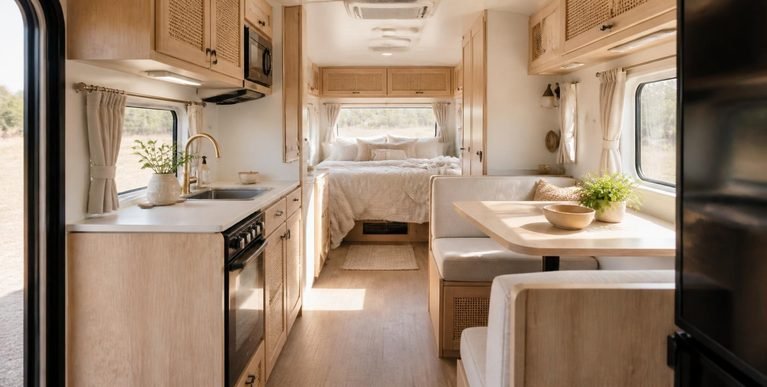
Full time RV living can give you a completely different way to experience travel, work, and everyday life. Instead of coming back to the same house every night, your home can move with you from one campground, town, or scenic destination to another.
But living in an RV full time also means learning how to use a small space wisely, manage your money carefully, keep up with maintenance, and handle everyday tasks that are easy to overlook when you live in a traditional home.
I have found that the biggest difference between simply traveling in an RV and actually living in one comes down to preparation and routine. Small habits make a huge difference when you are using limited storage, managing water and electricity, dealing with weather, and spending more time on the road.
These full time RV living tips cover the practical things that can make life easier, more comfortable, and less stressful. From choosing the right RV and organizing your belongings to saving money, staying connected, cooking, cleaning, and handling campground life, these are the lessons worth knowing before making RV living your everyday lifestyle.
What Full Time RV Living Is Really Like
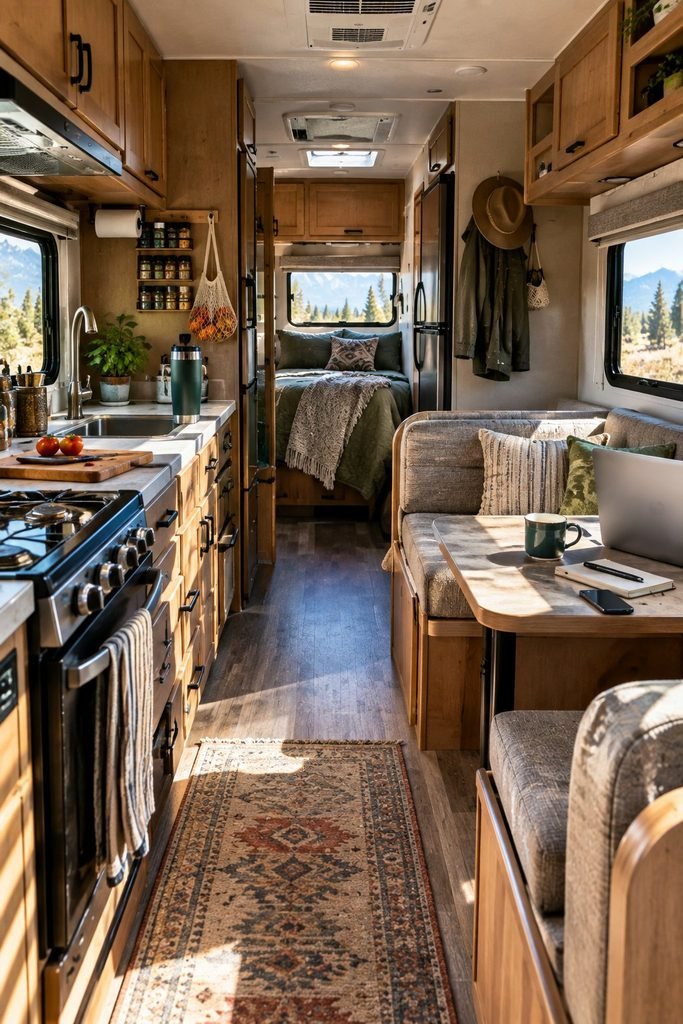
Full time RV living sounds simple when you picture waking up somewhere beautiful, making coffee outside, and deciding where you want to go next.
The reality has a lot more moving parts.
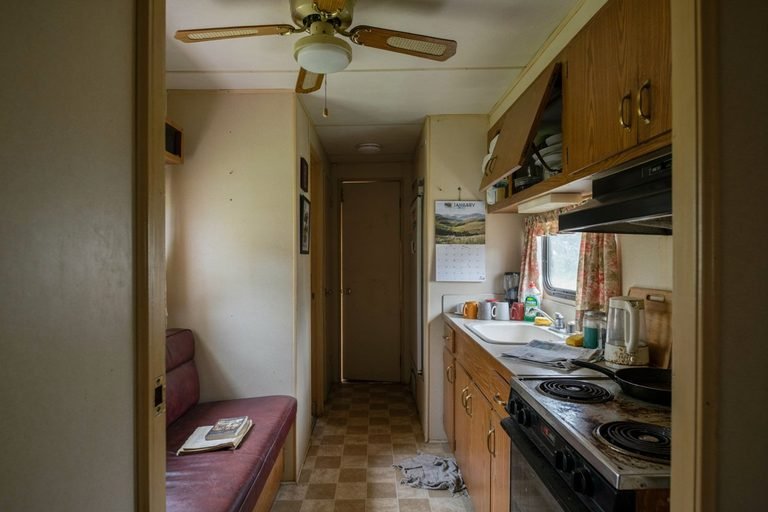
Your RV becomes your kitchen, bedroom, bathroom, storage room, workspace, and living room all at once. Every item you bring needs to earn its space because storage fills up surprisingly quickly.
I also learned that successful RV living is less about having a perfect setup and more about creating routines that work for you.
You need a system for keeping things organized, checking the RV before driving, managing your water and power, grocery shopping, doing laundry, cleaning, and keeping track of maintenance.
Once those routines become normal, RV life becomes much easier.
1. Choose an RV That Fits Your Actual Lifestyle
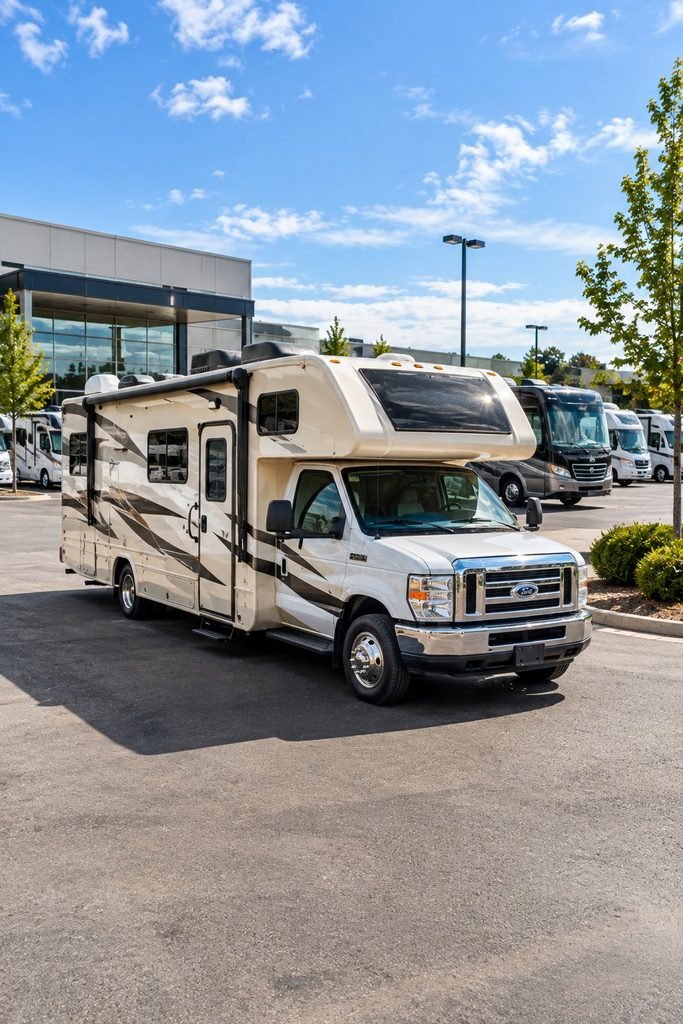
Do not choose an RV based only on how beautiful the interior looks during a walkthrough.
Think about how you actually plan to live.
If you work remotely, you may need a comfortable workspace and dependable internet. If you cook regularly, kitchen counter space matters. If you plan to stay in colder areas, insulation and heating become much more important.
Think about how much storage you need, how often you plan to move, whether you want to stay in established campgrounds or spend more time boondocking, and how comfortable you are driving a larger vehicle.
The right RV is the one that fits your everyday habits.
2. Spend Time Inside the RV Before Buying

One thing I recommend is spending as much time as possible inside an RV before committing to it.
Sit on the couch.
Stand in the kitchen.
Use the bathroom.
Open the cabinets.
Check the refrigerator.
Try the bed.
You might discover that a floor plan that looks great online feels completely different once you are actually moving around inside it.
Pay attention to little things too. Can you reach the storage cabinets easily? Is there enough counter space? Can two people move around the kitchen without getting in each other’s way?
Those details become much more important when the RV is your full time home.
3. Do Not Fill Every Storage Space Immediately
One of the easiest mistakes in RV living is assuming that every empty cabinet needs to be filled.
It does not.
Leaving some storage space available gives you room for groceries, replacements, seasonal items, and things you pick up along the way.
I prefer having a little empty space rather than having every cabinet packed so tightly that finding one item becomes a chore.
4. Downsize Before You Move In
RV living forces you to think differently about possessions.
Instead of asking whether you like something, ask yourself whether you actually use it.
Clothing is a good place to start. Kitchen equipment is another.
You probably do not need six different ways to prepare the same type of meal when you have limited cabinet space.
Keep the things you use regularly and be realistic about everything else.
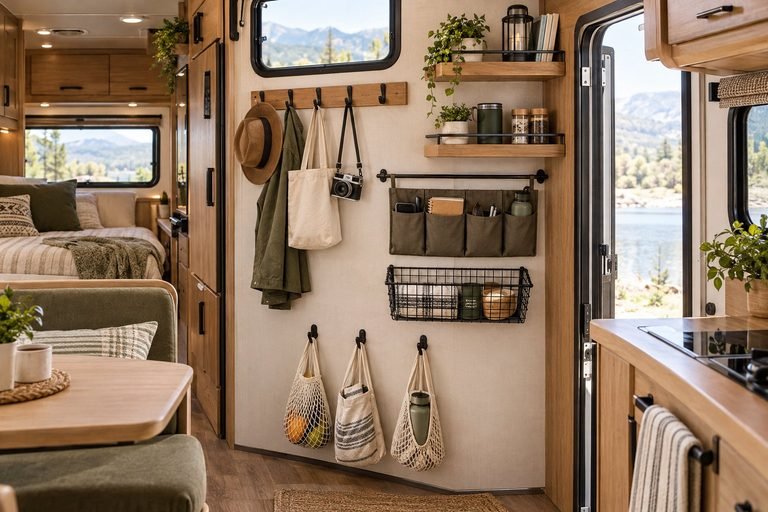
5. Give Everything a Home
This is one of the most useful habits you can develop.
Every item should have a specific place.
When something does not have a home, it eventually ends up on the counter, table, bed, or floor.
That creates clutter very quickly inside a small RV.
I like organizing things according to how often I use them. Everyday items stay easy to reach, while things I rarely need can go into harder to access storage.
6. Use Storage Containers That Actually Fit
Do not buy storage containers simply because they look useful.
Measure your cabinets first.
RV cabinets can have unusual dimensions, and a container that works perfectly in a regular kitchen might waste valuable space inside an RV.
Before buying organizers, measure the width, depth, and height of the storage area.
A few minutes with a measuring tape can prevent a lot of wasted money.
7. Keep the Countertops Clear
A clear countertop makes a small RV feel much bigger.
I try not to leave appliances and random items sitting out permanently.
If you use something every day, keep it accessible. If you only use it occasionally, put it away.
This also makes cleaning much faster.
8. Create a Daily Reset Routine
A five or ten minute reset at the end of the day can make a huge difference.
Put dishes away.
Return items to their storage spaces.
Wipe the kitchen.
Check that nothing has been left where it could fall during travel.
Straighten the bed and living area.
Small cleanup sessions are much easier than letting everything pile up until the RV needs a major cleaning.
9. Learn Your RV Systems
You do not need to become an RV mechanic, but you should understand the basic systems in your RV.
Know how your water system works.
Know where your electrical connections are.
Know how your propane system works.
Know how to check your tires.
Know where the breakers and important shutoffs are located.
Knowing these basics can save you from unnecessary stress when something stops working.
10. Learn How Much Water You Actually Use
Water management becomes much more important when you live in an RV full time.
Start paying attention to how quickly your fresh water tank empties and how quickly your gray and black tanks fill.
You will eventually develop a better sense of how long your supplies last.
Simple habits can also reduce water usage. Turn off the faucet while brushing your teeth. Take shorter showers. Avoid letting water run while washing dishes.
These little changes add up.
11. Do Not Ignore Your Tires
Tires deserve regular attention because your RV spends so much time on the road.
Check tire pressure before longer drives and inspect the tires for visible problems.
It is also worth learning the correct tire pressure for your particular setup rather than simply guessing.
I would make tire checks part of your regular pre travel routine.
12. Make a Pre Drive Checklist
Never rely entirely on memory when preparing to move your RV.
A checklist makes the process much easier.
Your checklist can include:
Locking cabinets
Securing loose items
Checking awnings
Disconnecting utilities
Checking the tires
Checking exterior compartments
Closing windows
Checking lights
Making sure steps are secured
Checking that everything inside is ready for travel
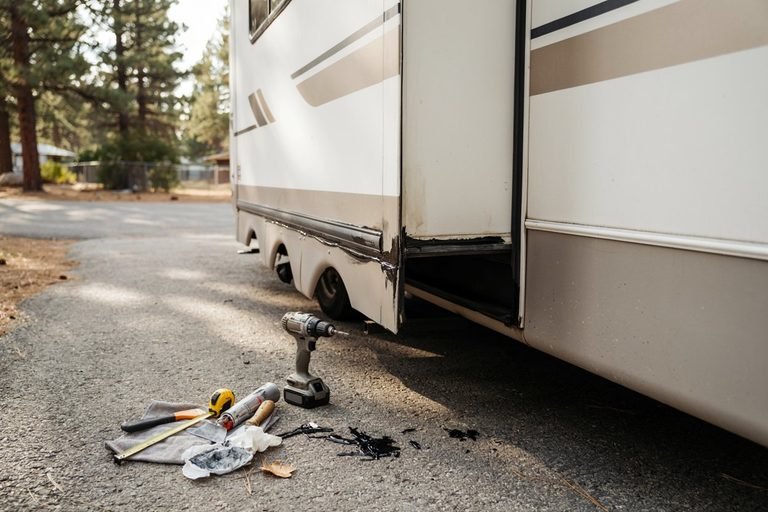
A checklist takes very little time and can prevent expensive mistakes.
13. Secure Everything Before Driving
Anything that can move will eventually find a way to move when the RV is traveling.
That includes kitchen items, toiletries, decorations, electronics, and loose objects.
I learned that it is much easier to spend a few minutes securing things before leaving than to arrive at the next destination and discover that half the RV has shifted around.
14. Keep a Small Emergency Kit
Your emergency supplies should be easy to reach.
I recommend keeping basic tools, flashlights, batteries, first aid supplies, roadside equipment, gloves, and other useful essentials together rather than scattered throughout the RV.
You do not want to search through several cabinets when you need something quickly.
15. Keep Important RV Information Together
Create one place for important information about your RV.
Keep your insurance details, registration information, maintenance records, appliance manuals, warranty information, and important contact numbers organized.
A physical folder can work, but keeping digital copies is useful too.
Having everything together saves time when you need to troubleshoot a problem or contact a service provider.
16. Create an RV Maintenance Calendar
Full time RV living means maintenance cannot be treated as an occasional task.
Create a simple calendar for regular inspections and maintenance.
Keep track of things such as tires, oil changes when applicable, batteries, roof inspections, filters, plumbing, appliances, and other manufacturer recommended maintenance.
Writing these tasks down makes it much harder to forget them.
17. Give Yourself More Travel Time
One of the biggest changes when you move from ordinary road trips to full time RV travel is learning not to rush.
An RV takes more planning than a regular car.
Fuel stops can take longer. Parking can be more complicated. Weather can change your route. Traffic can slow you down.
I would rather arrive earlier with plenty of time than spend the entire drive worrying about whether I will reach the campground before dark.
18. Avoid Arriving at a New Campground Too Late
Whenever possible, arrive while there is still daylight.
Setting up your RV is much easier when you can clearly see your campsite, hookups, surroundings, and parking area.
Arriving late can turn a simple setup into a frustrating experience, especially if you are unfamiliar with the campground.
19. Keep a Simple Campground Setup Routine
Once you find a routine, setting up becomes much easier.
I like having a consistent order for connecting utilities, leveling the RV, checking the surroundings, and getting the inside organized.
Doing things in the same order reduces the chance of forgetting something.
20. Do Not Bring Your Entire House With You
This sounds obvious, but it is one of the most important lessons in full time RV living.
You do not need every possession you own.
The more you bring, the harder it becomes to organize, clean, maintain, and move everything.
RV living becomes much more comfortable when you learn to appreciate having fewer things instead of constantly trying to find more storage.
21. Build a Realistic Monthly RV Budget
Your RV payment, if you have one, is only part of the cost.
Your budget may also include:
Fuel
Campground fees
Propane
Insurance
Maintenance
Repairs
Groceries
Laundry
Internet
Phone service
Entertainment
Tolls
Emergency expenses
I recommend tracking these expenses for a few months because your actual spending can be very different from what you expected before moving into the RV.
22. Keep an Emergency Fund
Unexpected repairs are part of RV ownership.
A water pump can fail. A tire can develop a problem. An appliance can stop working. A campground reservation can change.
Having money set aside for unexpected expenses can make these situations much easier to handle.
23. Do Not Choose Every Campground Based on Price
The cheapest campground is not automatically the best value.
Look at what you are actually getting.
Consider location, hookups, cleanliness, internet availability, laundry facilities, road access, noise, safety, and how long you plan to stay.
Sometimes paying a little more can save you money in fuel or make your stay considerably easier.
24. Stay Longer When You Can
Moving constantly can become expensive and exhausting.
When possible, staying in one location for several days or weeks can reduce fuel costs and give you more time to actually enjoy the area.
It also means less packing, less driving, and fewer campground setups.
That slower pace is one of the things I appreciate most about full time RV living.
25. Learn to Cook in a Small Kitchen
You do not need complicated meals to eat well in an RV.
I have found that simple meals are often easier to manage.
Choose ingredients that can be used in multiple meals and avoid buying large quantities of foods that take up valuable refrigerator or pantry space.
A small kitchen works surprisingly well once you understand how much food you realistically need.
26. Plan Groceries Around Your Storage
Grocery shopping changes when you live in an RV.
Instead of buying a week’s worth of everything simply because it is on sale, think about what you have room to store.
Fresh foods should also be planned around your travel schedule.
There is little benefit to filling the refrigerator before a long travel day if you know you will be stopping somewhere with a grocery store.
27. Keep a Few Easy Meals Available
Travel days are not always the best days for complicated cooking.
Keep a few simple meals available for days when you arrive tired or have limited time.
Having easy food on hand can prevent unnecessary restaurant spending and make busy travel days much easier.
28. Keep Cleaning Supplies Minimal
You do not need a huge collection of cleaning products.
A few versatile supplies can handle most everyday cleaning.
The key is keeping them organized and easy to reach.
A small cleaning caddy can make it easier to move everything around the RV without creating another storage problem.
29. Learn How to Handle Laundry
Laundry can become one of those small tasks that feels surprisingly complicated when you live on the road.
Before staying somewhere, check whether the campground has laundry facilities or whether there is a laundromat nearby.
I prefer doing smaller loads regularly rather than allowing laundry to pile up.
It takes less space and makes laundry day much easier.
30. Make Your RV Feel Like Home
This is something I think people sometimes overlook.
An RV can be practical without feeling cold or temporary.
A comfortable blanket, a few personal decorations, familiar bedding, good lighting, and a couple of things that make the space feel like yours can completely change the atmosphere.
You do not need to fill the RV with decorations.
A few thoughtful touches are enough.
Everyday RV Living Tips That Make Life Easier
Full time RV living becomes much easier once you stop treating every day like a vacation and start creating routines that make ordinary life work well in a small space. Travel days are exciting, but most of your time will still involve cooking, working, cleaning, shopping, doing laundry, managing internet, dealing with weather, and keeping the RV comfortable.
These are the areas where I have found that small practical changes can make a noticeable difference.
31. Have a Reliable Internet Setup
If you work remotely or rely on the internet for everyday life, do not depend entirely on campground WiFi.
Campground internet can be unpredictable, especially when many people are connected at the same time.
Having your own mobile hotspot, cellular plan, or another backup option gives you more flexibility.
I like having a primary connection and a backup because losing internet while working or trying to make an important call can quickly become stressful.
32. Check Cell Service Before Choosing a Campsite
A beautiful campsite is not as useful when you cannot get the cell service you need.
Before booking longer stays, check coverage in the area and consider how important connectivity will be for your particular situation.
This matters even more if you work online, run a website, handle business tasks, or need reliable communication.
33. Create a Dedicated Workspace
If you work from your RV, give yourself a designated workspace.
It does not need to be large.
A small table, comfortable chair, good lighting, and enough room for your laptop can be enough.
Having a consistent work area also helps separate work time from relaxation time when your entire home is only a few steps away.
34. Do Not Work From Bed Every Day
Working from bed sounds comfortable, but it can make it harder to create a clear boundary between work and personal time.
Even if your RV is small, try to establish a regular work position.
Once you finish working, pack away your equipment or clear the space.
That small routine helps the RV feel like a home again rather than an office that happens to have wheels.
35. Have a Backup Plan for Work
Internet problems, weather, campground noise, and unexpected travel changes can interfere with remote work.
Know where you can go if you need a quiet place with reliable internet.
A nearby library, coffee shop, coworking space, or another suitable location can become a useful backup.
36. Download Important Things Before Traveling
Do not assume you will always have reliable internet.
Before traveling, download maps, entertainment, important documents, directions, reservations, and anything else you may need.
This is particularly useful when traveling through areas with limited cell service.
37. Keep Your Electronics Organized
Cords can quickly turn into a tangled mess in an RV.
Use simple organizers to keep charging cables, adapters, power banks, and other electronics together.
I prefer having one dedicated place for these items so I am not searching through several drawers whenever I need a charger.
38. Carry Portable Power Banks
A portable power bank is useful when you are away from electrical hookups or simply need to keep a phone charged while traveling.
It is one of those small items that takes up very little space but can be extremely convenient.
39. Learn the Difference Between Hookups
Before staying at a campground, understand what hookups are available.
Full hookups generally provide electricity, water, and sewer connections, while other sites may offer only electricity or no hookups at all.
Knowing what you are booking helps you prepare properly and avoid unpleasant surprises.
40. Learn How to Camp Without Full Hookups
Even if you normally stay at full hookup campgrounds, learning the basics of camping without hookups gives you more freedom.
You become more comfortable managing water, electricity, battery power, waste, and food storage.
You do not have to boondock constantly to benefit from knowing how it works.
41. Be Careful With Your RV Battery
Your battery can become very important when you are not connected to shore power.
Pay attention to your power usage and learn which appliances consume the most electricity.
Simple habits such as turning off unnecessary lights and electronics can help conserve power.
42. Understand What Your Generator Can Handle
If your RV has a generator, learn its capacity before depending on it.
Not every appliance can necessarily run at the same time.
Understanding your generator before you need it is much better than trying to figure everything out during a power problem.
43. Keep Propane Safety in Mind
Propane is useful for many RV systems, but it should always be treated carefully.
Know where your propane tanks and shutoff valves are located.
Have your system inspected when necessary and follow the manufacturer’s instructions for safe use.
44. Prepare for Bad Weather
Weather can change your plans quickly when you live on the road.
Keep an eye on forecasts and learn what conditions are common in the area you are visiting.
Strong winds, heavy rain, extreme heat, snow, and storms can all affect RV travel and campsite safety.
I have learned that changing plans early is usually easier than trying to deal with dangerous weather after it arrives.
45. Have a Heat Plan
Hot weather can make an RV uncomfortable surprisingly quickly.
Use your air conditioning wisely, keep shades closed during the hottest part of the day, and take advantage of natural airflow when conditions allow.
Parking in a shaded location can also make a noticeable difference.
46. Have a Cold Weather Plan
Cold weather requires a different approach.
Protect your water system from freezing conditions and understand how your RV’s heating system works.
Keep appropriate cold weather supplies available rather than waiting until temperatures suddenly drop.
47. Pay Attention to Wind
Wind can be particularly important when driving or parking an RV.
Strong crosswinds can affect handling, especially with larger vehicles.
Check the forecast before leaving and give yourself permission to delay travel when conditions are unsafe.
48. Keep an Eye on Weather Along Your Route
Do not only check the weather where you are currently parked.
If you are traveling several hours, check the conditions along the entire route.
The weather at your destination may look perfect while the roads between you and the destination are dealing with storms or strong winds.
49. Respect Campground Quiet Hours
Campground etiquette makes a huge difference when you are living close to other people.
Keep music, conversations, generators, and other noise within the campground’s rules.
Remember that people around you may be trying to sleep, work, relax, or enjoy a peaceful evening.
50. Keep Your Campsite Clean
Keep your campsite organized and free of unnecessary clutter.
Dispose of trash properly and follow campground rules regarding food and waste.
A clean campsite is more pleasant for you and helps keep the area enjoyable for everyone.
51. Get to Know Your Neighbors Without Feeling Obligated
One of the nice things about RV life is meeting people from different places.
A simple conversation can lead to useful recommendations about campgrounds, local restaurants, attractions, and road conditions.
At the same time, you do not have to socialize constantly.
RV living can be social or quiet depending on what you need.
52. Give People Their Space
Friendly campground interactions are great, but personal space still matters.
Avoid walking through another person’s campsite unless invited and keep pets, children, and belongings within your own area.
Small acts of consideration make campground life much more enjoyable.
53. Learn Campground Rules Before Arriving
Every campground can have different rules.
Check quiet hours, pet policies, fire restrictions, vehicle rules, visitor policies, waste disposal instructions, and check in requirements before arrival.
Knowing the rules ahead of time prevents unnecessary problems.
54. Keep Outdoor Equipment Simple
Outdoor living can become another storage problem if you collect too much gear.
You do not need an enormous collection of chairs, tables, cooking equipment, decorations, and outdoor accessories.
Choose versatile items that you actually use.
55. Create an Outdoor Living Area
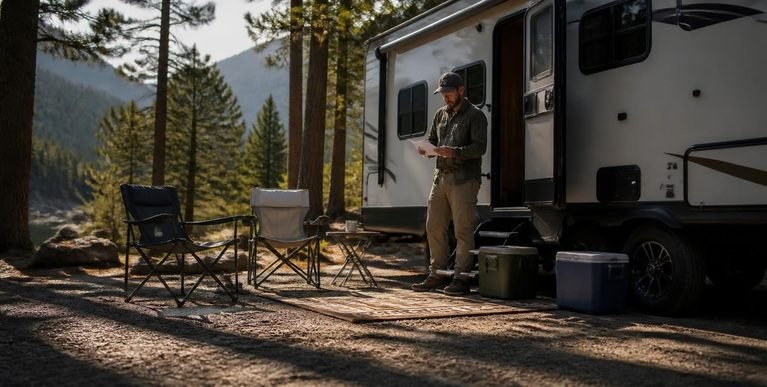
When the weather is pleasant, spending time outside can make your RV feel much larger.
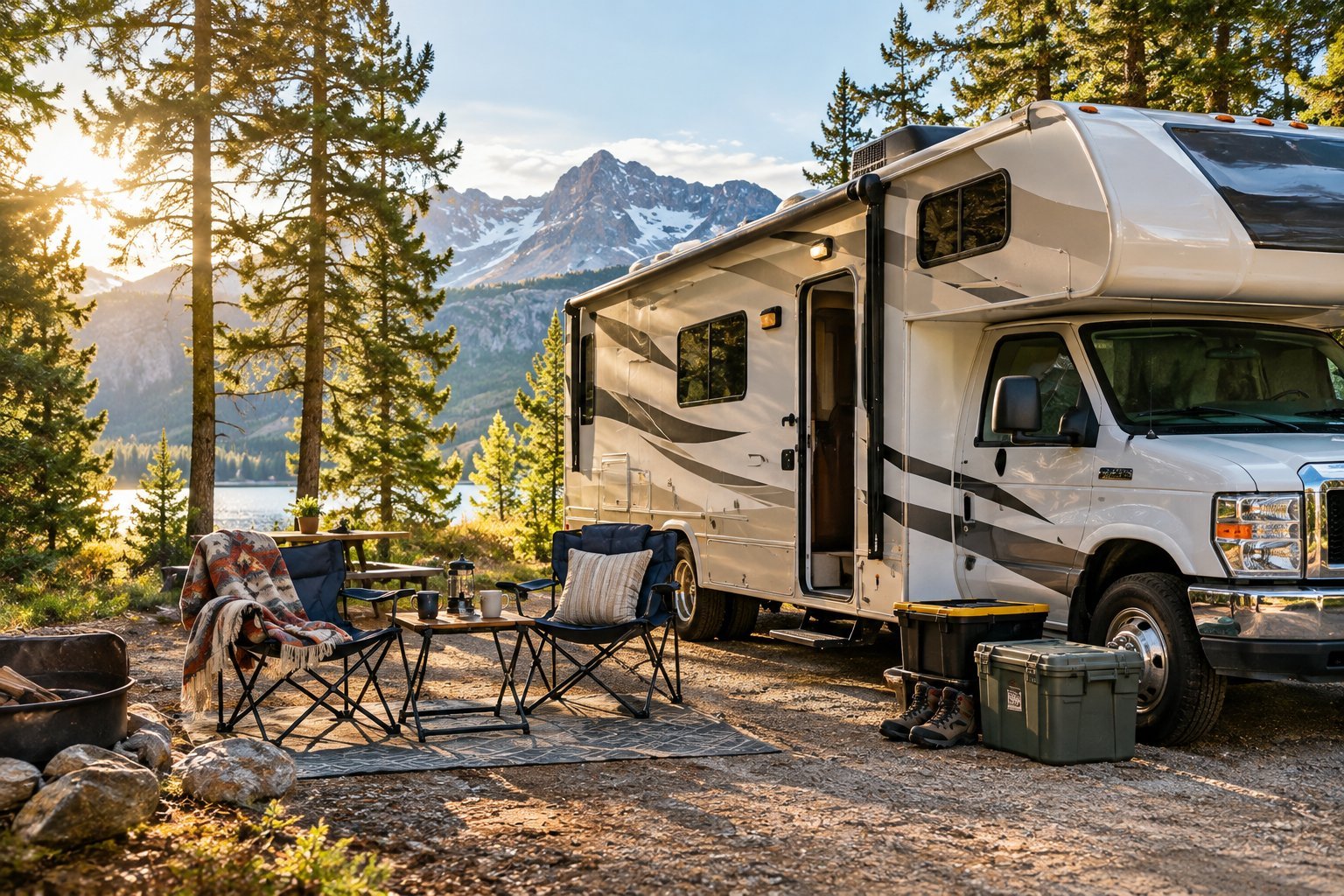
A comfortable chair, small outdoor table, shade, and simple lighting can turn the campsite into an additional living space.
This is one of my favorite ways to avoid feeling cramped inside the RV.
56. Keep Outdoor Items Easy to Store
Outdoor equipment should have a designated storage area.
Before buying something new, think about where it will go when you are traveling.
An item that is wonderful at the campsite can become frustrating when you have nowhere to store it during travel.
57. Keep Food Secure
Do not leave food sitting around outside unnecessarily.
Depending on where you are camping, wildlife can become a concern.
Follow campground rules for food storage and dispose of food waste properly.
58. Keep Your RV Secure When You Leave
Before leaving the RV, lock doors, windows, storage compartments, and other accessible areas.
Avoid leaving valuable items visible from outside.
Basic security habits become especially important when your home is regularly moving between unfamiliar locations.
59. Keep Important Documents Secure
Store passports, identification, insurance information, financial documents, and other important paperwork somewhere secure and organized.
I prefer knowing exactly where important documents are instead of searching for them when they are needed.
60. Do Not Share Too Much About Your Location
If you post your travels online, think carefully about how much information you share publicly.
You do not necessarily need to announce exactly where your RV is parked or how long you will be away.
A little privacy can add another layer of security.
61. Have a Basic First Aid Kit
Keep a properly stocked first aid kit in an easy to reach location.
Make sure everyone in the RV knows where it is.
It is also useful to keep basic personal medications and essential health supplies organized rather than scattered through different storage areas.
62. Know Where Nearby Medical Services Are
When staying somewhere new for an extended period, it can be useful to know where the nearest pharmacy, urgent care facility, hospital, or other necessary services are located.
You may never need them, but having the information available can save time when you do.
63. Keep Moving Days Simple
I try not to schedule too many complicated tasks on a travel day.
Moving the RV already requires attention.
If possible, finish laundry, grocery shopping, cleaning, and other major chores before the morning you plan to drive.
64. Give Yourself Time to Settle In
After arriving at a new destination, you do not have to immediately start sightseeing.
Get the RV leveled, connect your utilities, organize your space, and take a few minutes to settle down.
I find that enjoying a destination is much easier when the RV itself is comfortable.
65. Keep a Small Travel Day Bag
Having a separate bag for travel days can be convenient.
Keep things such as snacks, water, chargers, medications, documents, sunglasses, and other essentials together.
This means you do not have to repeatedly open storage compartments while traveling.
66. Keep Snacks Available
Long drives are easier when you have food available.
Simple snacks can also save money by reducing unnecessary stops.
Choose foods that store easily and do not create a huge mess inside the RV.
67. Use Rest Stops Wisely
Plan regular breaks during longer drives.
An RV can make quick stops more complicated, so knowing where you can safely pull over helps.
Take the opportunity to stretch, use the restroom, check your surroundings, and make sure everything inside the RV remains secure.
68. Keep Track of Fuel Costs
Fuel can become one of the biggest expenses of full time RV travel.
Track how much you are spending so you can see how your travel habits affect your monthly budget.
Sometimes staying an extra few days in one place can be much cheaper than constantly driving to the next destination.
69. Plan Routes Around Your RV
Do not automatically follow the same route you would take in a regular car.
Think about bridge restrictions, road grades, narrow roads, low clearances, fuel stops, parking, and areas where maneuvering could be difficult.
A route that looks convenient on a map may not be suitable for a larger RV.
70. Check Clearance Heights
Know the height of your RV and pay attention to clearance signs.
This is one measurement you should never forget.
Keep the exact height somewhere easy to see inside the RV so you can quickly reference it when necessary.
71. Keep Your RV Weight in Mind
Storage space can make it tempting to keep adding things.
But your RV has weight limits.
Pay attention to how much you are carrying and distribute heavier items appropriately.
A smaller collection of useful belongings is much easier to manage than an overloaded RV.
72. Make Grocery Shopping Part of Your Travel Planning
Instead of waiting until you are completely out of food, check grocery options before moving to a new area.
Knowing where you can shop along the route makes travel days much easier.
It also helps you avoid paying significantly more simply because you waited until you had no other option.
73. Keep a Running Grocery List
A running list prevents you from forgetting basic items.
I like adding things to the list as soon as I notice they are running low rather than trying to remember everything before going shopping.
74. Avoid Food Waste
Food waste is especially frustrating in an RV because refrigerator and pantry space is limited.
Plan meals around ingredients you already have.
Before buying groceries, check what needs to be used soon.
75. Keep Your Refrigerator Organized
An organized refrigerator makes a small RV kitchen much easier to use.
Group similar foods together and avoid overfilling it.
When everything has a place, you can quickly see what you have instead of buying duplicates.
76. Keep Your Pantry Simple
Use baskets or containers where they genuinely help.
Labeling can also be useful when several items look similar.
The goal is not to make the pantry look perfect. The goal is to make it easy to find what you need.
77. Create a Weekly Cleaning Routine
Instead of waiting until the RV feels dirty, divide cleaning into manageable tasks.
One day might focus on the bathroom, another on the kitchen, while quick daily cleaning handles dishes and surfaces.
A regular routine keeps the small space feeling fresh.
78. Clean as You Cook
This habit becomes especially useful in a tiny kitchen.
Put ingredients away as you use them and wash or rinse dishes while food is cooking.
By the time the meal is ready, there is much less cleanup waiting afterward.
79. Be Realistic About How Much Stuff You Need
Living in an RV has a way of revealing which possessions actually matter.
If you have not used something in months and it takes up valuable space, ask whether it still deserves a place in your RV.
Keeping fewer things makes cleaning, organizing, and traveling easier.
80. Keep a Donation Box
Instead of waiting for clutter to become overwhelming, keep a small box or bag for things you no longer need.
When it is full, donate the items.
This gives you a simple system for keeping possessions under control while traveling.
81. Keep a Separate Place for Things That Need Repair
Broken items have a habit of getting shoved into random cabinets.
Create one small place for things that need repair or replacement.
That way, you can deal with them during your next maintenance stop instead of forgetting about them.
82. Learn to Live With Less
One of the biggest adjustments in full time RV living is accepting that you simply cannot have the same amount of stuff as you might have in a traditional home.
Once you stop fighting that reality, the lifestyle becomes easier.
Having fewer possessions can make the RV feel more spacious and give you more freedom to move around.
83. Make Time for Normal Life
Not every day needs to be an adventure.
Some days can simply be grocery shopping, doing laundry, answering emails, cleaning the RV, and watching a movie.
I think this is important because trying to make every day exciting can become exhausting.
Full time RV living works better when ordinary days are enjoyable too.
84. Create a Comfortable Evening Routine
A familiar evening routine can make constantly changing locations feel more stable.
Cook dinner, clean the kitchen, organize the RV, relax outside, read, watch something, or simply enjoy a quiet evening.
Having familiar routines can make the RV feel like home regardless of where you parked that night.
85. Do Not Compare Your RV Life to Social Media
RV social media often shows beautiful campsites, scenic roads, renovated interiors, and perfect sunsets.
That is only one part of the experience.
There will also be rainy days, repairs, crowded campgrounds, difficult drives, dirty tanks, laundry, grocery runs, and unexpected expenses.
Those ordinary parts are still part of the lifestyle.
86. Give Yourself Permission to Change Your Plans
One of the biggest benefits of RV living is flexibility.
If a place does not feel right, you can eventually move.
If the weather changes, you can adjust your route.
If you need rest, you can slow down.
You do not have to follow a rigid itinerary simply because you originally planned it that way.
87. Do Not Overplan Every Stop
Planning is important, but leave some room for spontaneity.
Some of my favorite travel experiences come from recommendations, unexpected attractions, quiet towns, and places that were not originally on the itinerary.
Having a basic plan while leaving room for changes creates a better balance.
88. Keep a List of Places You Want to Visit
I like keeping a running travel list instead of trying to decide where to go every time.
When you are ready for your next move, you already have ideas available.
You can then choose based on weather, budget, campground availability, and how far you feel like traveling.
89. Stay Flexible With Your Route
You may discover that the route you planned months ago no longer makes sense.
Gas prices can change, weather can move in, campground availability can disappear, and you may simply discover somewhere you want to stay longer.
Flexibility is one of the biggest advantages of full time RV life.
90. Find a Balance Between Travel and Rest
Constant movement can become tiring.
Give yourself permission to stay somewhere longer and enjoy a slower pace.
You do not need to collect destinations just to say you have been there.
Sometimes the best RV days are the ones where you do almost nothing.
91. Make Time for Exercise
It is easy to become less active when driving for long periods or working inside the RV.
Walking around the campground, hiking, stretching, cycling, or doing a short workout can help break up the day.
You do not need a large collection of exercise equipment to stay active.
92. Get Outside Regularly
One reason many people choose RV living is the opportunity to spend more time outdoors.
Take advantage of it.
Sit outside with your morning coffee, take a walk, explore the surrounding area, or simply enjoy the scenery.
The RV is your home, but the world outside it is part of the experience too.
93. Keep Your Sleeping Area Comfortable
Good sleep matters even more when your RV doubles as your home and travel vehicle.
A comfortable mattress, suitable bedding, blackout shades, and a consistent bedtime routine can make a noticeable difference.
Do not treat your sleeping area as an afterthought.
94. Reduce Unnecessary Noise
RV walls are not always as soundproof as those in a traditional house.
Fans, appliances, generators, campground activity, and traffic can all affect your sleep.
Use simple solutions such as earplugs, fans, or white noise when appropriate.
95. Keep Your Bathroom Organized
The RV bathroom is usually one of the smallest spaces, so clutter becomes noticeable quickly.
Keep only the toiletries you actually use and use compact organizers where needed.
A simple bathroom is much easier to keep clean.
96. Learn Your RV Toilet System
Do not treat your RV toilet like a regular household toilet.
Learn how your specific system works, what can safely go into it, how to manage the tank, and how to maintain it properly.
Understanding the system prevents many avoidable problems.
97. Keep Extra Basic Supplies
Running out of toilet paper, paper towels, cleaning supplies, or basic toiletries at a remote campground is inconvenient.
You do not need to stockpile everything, but keeping a reasonable backup supply can save unnecessary trips.
98. Keep a Small Tool Collection
You do not need a full workshop.
A practical selection of basic tools can handle many small tasks.
A good screwdriver set, pliers, adjustable wrench, tape measure, flashlight, and other useful basics can be valuable when something needs a quick adjustment.
99. Learn What You Can Fix Yourself
Knowing how to handle small problems can save time and money.
Simple tasks such as replacing a fuse, tightening a loose fitting, changing a filter, or making a minor adjustment can be useful skills.
For anything outside your knowledge or comfort level, use a qualified professional rather than guessing.
100. Keep Track of Repairs
Write down repairs and maintenance as they happen.
Include the date, problem, work completed, and any parts that were replaced.
This creates a useful maintenance history and can help you identify recurring problems.
101. Build Relationships With Reliable RV Services
When you find a trustworthy mechanic, campground, mobile RV technician, or other service provider, keep their information.
Reliable contacts become extremely valuable when you are traveling and suddenly need help.
102. Keep Your RV Documents Updated
Check that your registration, insurance, roadside assistance information, and other important documents are current.
It is much easier to deal with paperwork when everything is organized before you need it.
103. Have a Backup Plan for Where You Will Stay
Do not assume your preferred campground will always have space.
During busy travel periods, popular locations can fill quickly.
Keep a few alternative campgrounds or overnight options in mind when traveling through an area.
104. Check the Site Before Pulling In
If possible, look carefully at your campsite before driving into it.
Check for low branches, tight turns, soft ground, obstacles, and anything that could make parking difficult.
When available, having someone outside the RV guide you can also make positioning easier.
105. Take Your Time When Parking
There is no prize for parking quickly.
Take your time.
If you need to reposition the RV, do it.
If you are unsure, stop and check.
A few extra minutes are much better than damaging the RV or another vehicle.
106. Keep Your Setup Practical
The goal of full time RV living is not to create a perfect miniature house.
It is to create a space that works.
Choose organization systems that make everyday tasks easier rather than constantly rearranging the RV to make it look perfect.
107. Remember Why You Chose RV Life
When RV life gets complicated, it helps to remember what attracted you to it in the first place.
Maybe it was the freedom to travel, the ability to explore more places, spending more time outdoors, simplifying your belongings, or simply wanting a different lifestyle.
Keeping that bigger picture in mind can make the occasional frustrating day feel much easier to put into perspective.
Long Term RV Living, Saving Money, and Making It Sustainable
Living in an RV full time is much easier when you stop thinking only about the next destination and start thinking about what makes the lifestyle sustainable for months or even years.
The little decisions matter. Where you stay, how often you move, what you buy, how you maintain the RV, how you handle your money, and how you spend your free time can all affect how enjoyable full time RV living becomes.
These final tips focus on making RV life comfortable and realistic for the long term.
108. Create a Routine That Works Anywhere
One of the best things about having a routine is that it can travel with you.
Your surroundings might change every few days, but simple habits can stay the same.
Wake up, make coffee, check the weather, handle your work, exercise, prepare meals, clean up, and relax.
Having familiar routines gives everyday life some structure even when your address keeps changing.
109. Give Yourself a Weekly Planning Day
Set aside a little time each week to look at what is coming up.
Check your campground reservations, travel plans, weather, groceries, work commitments, fuel needs, and maintenance tasks.
I find that a short planning session can prevent several small problems from becoming bigger ones.
110. Keep Track of Your Spending
It is easy to underestimate how quickly small travel expenses add up.
A campground here, a fuel stop there, a restaurant meal, laundry, attractions, and unexpected purchases can make a noticeable difference by the end of the month.
Tracking your spending gives you a much clearer picture of what full time RV living actually costs you.
111. Look for Long Stay Campground Rates
If you already know you want to stay somewhere for an extended period, check whether the campground offers weekly or monthly rates.
Longer stays can sometimes reduce your average nightly cost.
Always compare the total price and included utilities rather than looking only at the advertised nightly rate.
112. Travel During Less Busy Periods
Popular destinations can become much more expensive during peak travel periods.
If your schedule allows, traveling during quieter periods can sometimes give you more campground choices and a slower experience.
It can also make popular attractions less crowded.
113. Be Careful With Frequent RV Upgrades
There is always another gadget, organizer, appliance, outdoor accessory, or RV product that promises to make life easier.
Some purchases genuinely help.
Others simply create another storage problem.
Before buying something, ask yourself whether it solves a real problem you have already experienced.
114. Use What You Already Own
You do not need to replace everything just because you moved into an RV.
Some household items can work perfectly well in your new setup.
Before purchasing an RV specific version of something, check whether the item you already own can do the job.
115. Buy Multipurpose Items
Space becomes much easier to manage when one item can perform several jobs.
A versatile kitchen tool, compact storage container, folding table, or multipurpose cleaning product can be more useful than several specialized items.
116. Keep Your Purchases Small
Before buying something, think about how it will affect your storage.
An inexpensive item can become surprisingly expensive if you eventually have to buy another storage solution just to accommodate it.
I prefer buying fewer useful things rather than constantly trying to squeeze new purchases into the RV.
117. Plan Your Fuel Stops
Fuel stations are not always equally convenient for larger RVs.
Before you get too low on fuel, think about where you will stop and whether the station has enough room for your vehicle.
Planning ahead is much less stressful than trying to find a suitable station when the tank is nearly empty.
118. Learn Your RV’s Fuel Economy
Pay attention to how much fuel you use during different types of travel.
Driving through mountains, strong winds, heavy traffic, and city areas can affect fuel consumption.
Knowing your approximate fuel economy helps you create a more realistic travel budget.
119. Avoid Unnecessary Backtracking
When planning your route, look for ways to group nearby destinations together.
Driving several hours in one direction and then returning the same way can add unnecessary fuel costs and travel time.
A little route planning can make a big difference over a long period.
120. Keep Your Travel Pace Comfortable
There is no requirement to move every few days.
If you enjoy a location, stay longer.
If you are tired, slow down.
If you have work to finish, stay put.
One of the advantages of full time RV living is having the ability to create a pace that suits your lifestyle.
121. Have a Bad Weather Backup Plan
If severe weather is expected, know where you can safely go and what you should do with the RV.
Do not wait until the weather is already dangerous to make decisions.
Keeping an eye on forecasts gives you more time to change your plans.
122. Know When Not to Drive
Sometimes the safest travel decision is simply waiting.
Strong winds, severe storms, icy roads, flooding, or other dangerous conditions can make RV travel difficult.
There is no reason to rush into unsafe conditions just to stay on schedule.
123. Keep Emergency Contacts Accessible
Have important contact information stored in your phone and somewhere else that can be accessed if your phone is unavailable.
This can include roadside assistance, insurance, campground contacts, trusted repair services, and emergency services.
124. Know Your Roadside Assistance Coverage
Do not assume your regular vehicle coverage provides everything you need for an RV.
Read your roadside assistance policy carefully and understand what it covers.
Pay attention to towing limitations, service areas, vehicle size restrictions, and other conditions.
125. Have a Plan for Vehicle Breakdowns
If your RV becomes undrivable, you need to think about more than simply fixing the vehicle.
You may also need somewhere to stay, food, transportation, internet access, and a way to protect your belongings.
Having an emergency plan can make an unexpected breakdown much easier to manage.
126. Keep Your Important Information Backed Up
Save copies of important documents, reservations, insurance information, maintenance records, and other essential files.
Cloud storage can be useful, but keeping important information available offline is also helpful when internet service is limited.
127. Protect Your Personal Information
Full time travel often means using public WiFi, shared campground networks, and unfamiliar internet connections.
Use sensible online security practices and avoid handling sensitive information on unsecured networks when possible.
128. Keep Your Mail Situation Organized
Living on the road means you need a reliable way to receive important mail.
Choose a mailing arrangement that fits your situation and make sure financial, insurance, government, and other important correspondence can reach you reliably.
129. Keep Your Address Information Consistent
When dealing with banks, insurance providers, subscriptions, government services, and other accounts, make sure your information is accurate and up to date.
Keeping a simple record of which organizations need your current information can make administration much easier.
130. Do Not Let Work Take Over Your RV Life
Remote work can make full time RV living possible, but it can also make it easy to work constantly.
Create a clear stopping point.
When work is finished, close the laptop and enjoy the place you traveled to see.
131. Schedule Days Without Driving
You do not need to travel every day.
Having several days without moving the RV can give you time to explore locally, catch up on work, clean, rest, and simply enjoy your surroundings.
132. Explore Beyond the Campground
A campground can become your entire world if you are not careful.
Get out and explore the surrounding area.
Visit local markets, parks, trails, restaurants, small towns, museums, beaches, or other attractions that interest you.
The RV is the base, not the entire destination.
133. Shop Locally When Practical
Buying from local stores can be a nice way to experience an area while also supporting local businesses.
You may find regional foods, handmade products, and other things you would not normally see at home.
134. Keep a Travel Journal
You do not need to write pages every day.
Even a few notes about where you stayed, what you enjoyed, what went wrong, and what you learned can become useful later.
I also find that keeping track of campground experiences helps when deciding whether I would return to a particular area.
135. Take Photos of Your Campsites
Photos are not only useful for memories.
They can help you remember campsite layouts, hookups, parking situations, nearby facilities, and places you would consider visiting again.
136. Learn From Every Bad Experience
Not every campground will be perfect.
Not every route will go smoothly.
Not every purchase will be useful.
Instead of allowing one frustrating experience to ruin the entire trip, look at what you can change next time.
RV living becomes easier because you learn from these experiences.
137. Keep a List of Things That Work
When you find a particular storage system, campground, route, product, or routine that works well, write it down.
Over time, you will create your own personal RV reference guide.
That can become much more useful than constantly searching for generic advice.
138. Keep a List of Things That Do Not Work
This can be just as valuable.
If a particular campground was difficult to access, a product broke quickly, or a certain packing method created problems, make a note.
You will be less likely to repeat the same mistake.
139. Do Not Expect RV Life to Be Perfect
Living in an RV full time comes with freedom, but it also comes with inconvenience.
You will probably deal with repairs, cramped storage, weather problems, campground issues, travel delays, and days when you simply want more space.
That does not necessarily mean the lifestyle is not working.
It means you are living in a home that moves.
140. Make Your RV Comfortable for Rainy Days
Rainy days are much easier when you have things you enjoy doing inside.
Keep books, movies, games, hobbies, work projects, or other activities available.
A comfortable indoor routine can make several days of bad weather much less frustrating.
141. Create a Hobby That Travels With You
Choose something you can enjoy without needing a lot of equipment.
Reading, photography, writing, drawing, crafting, cooking, hiking, fishing, or another portable hobby can give you something enjoyable to do wherever you stay.
142. Keep Some Personal Space
If you travel with another person, remember that living in a small space means you are physically close much of the time.
Having separate activities or spending a little time apart can be healthy.
Even sitting outside while the other person stays inside can provide a little breathing room.
143. Talk About Money Regularly
If you share RV expenses with someone else, discuss the budget regularly.
Talk about campground costs, fuel, repairs, groceries, entertainment, and unexpected expenses.
Clear communication can prevent small financial frustrations from becoming bigger issues.
144. Decide How Much Socializing You Want
Some RV travelers enjoy meeting new people constantly.
Others prefer a quiet campsite.
Neither approach is necessary for everyone.
Create the type of social life that feels comfortable for you rather than assuming you need to participate in every campground activity.
145. Keep Your Routine Flexible
A routine should make life easier, not become another source of stress.
If you miss your normal cleaning day because you spent the afternoon exploring somewhere beautiful, that is okay.
The benefit of RV living is having some flexibility.
146. Give Yourself a Realistic Travel Budget
Do not budget only for the ideal month.
Include room for unexpected repairs, higher fuel costs, extra campground nights, attractions, food, and other surprises.
A little breathing room makes long term travel much less stressful.
147. Review Your Budget Every Few Months
Your spending patterns can change as your travel style changes.
You may spend less on campgrounds but more on fuel.
You may stay longer in one place.
You may discover that certain expenses were much higher or lower than expected.
Reviewing your budget helps you adjust before problems develop.
148. Know When to Slow Down
If full time RV life starts feeling like a constant race from one destination to another, slow down.
Stay somewhere longer.
Take a rest day.
Do fewer activities.
There is no reason to turn a flexible lifestyle into another schedule that leaves you exhausted.
149. Keep Your RV Ready for the Next Move
You do not want every departure to require a massive cleanup.
Keeping belongings organized and developing a regular reset routine makes moving much easier.
When everything already has a home, preparing for travel becomes a simple checklist instead of an all day project.
150. Keep Improving Your Setup
Your RV does not need to be perfect when you begin.
After living in it for a while, you will discover what actually bothers you.
Maybe you need better kitchen storage.
Maybe you need a different workspace.
Maybe you need better lighting.
Maybe you brought too many clothes.
Make small improvements based on real experience rather than trying to create the perfect RV before you have actually lived in it.
151. Do Not Buy Everything at Once
This is one of the biggest pieces of advice I would give anyone preparing for full time RV living.
Start with the essentials.
Live in the RV.
Then buy the things that solve problems you actually encounter.
It is much easier to make smart purchases once you understand how you use your space.
152. Keep Your Setup Simple Enough to Maintain
Every additional appliance, gadget, decoration, and storage system adds something else that eventually needs cleaning, charging, repairing, storing, or moving.
Simple does not mean uncomfortable.
It means choosing things intentionally.
153. Make Your RV Work for Your Lifestyle
There is no single correct way to live in an RV.
Some people travel constantly.
Others stay in one location for months.
Some work remotely.
Others are retired.
Some cook almost every meal.
Others enjoy eating locally.
Your RV setup should support the way you actually live.
154. Give Yourself Time to Adjust
Even when you love the idea of RV living, adjusting to a smaller space and a different routine takes time.
You will discover better ways to organize things.
You will learn how much water and electricity you use.
You will figure out which belongings are worth keeping.
You will develop your own travel rhythm.
The learning process is part of the lifestyle.
155. Remember That Comfort Matters
You do not need to make yourself uncomfortable just to prove that you can live simply.
If a better mattress improves your sleep, invest in it.
If a good chair makes working easier, make room for it.
If better storage makes your kitchen easier to use, improve it.
Full time RV living should still feel like living, not like constantly sacrificing basic comfort.
156. Enjoy the Freedom You Created
After all the planning, organizing, budgeting, maintenance, and preparation, remember to actually enjoy the lifestyle.
Wake up somewhere beautiful.
Take the scenic route.
Sit outside with your coffee.
Explore a town you have never visited.
Stay an extra day when you find somewhere you love.
The practical side of RV living matters, but so does enjoying the freedom that made you choose this lifestyle.
Final Thoughts
Full time RV living works best when you treat it as a lifestyle rather than an endless vacation.
The freedom is a huge part of the appeal, but the everyday routines are what make that freedom sustainable. Keeping the RV organized, watching your spending, maintaining your vehicle, planning your routes, managing your supplies, and learning how your RV works can save you a lot of unnecessary stress.
I have also found that you do not need a perfect RV setup to enjoy the experience. Your needs will become clearer once you actually live on the road. You will discover which belongings matter, which routines make your days easier, and which habits are worth keeping.
The biggest lesson is to give yourself room to adjust. Stay longer when you need rest, change your route when circumstances change, learn from mistakes, and avoid filling your RV with things you rarely use.
Full time RV living can be simple, comfortable, and rewarding when you build it around the way you actually want to live. The goal is not to create a perfect life on wheels. It is to create a practical home that gives you the freedom to enjoy the places you travel to.