How to Park Overnight Free Anywhere in the USA: Rules of the Road
For this topic, I’d make the post practical rather than a list of random “free overnight parking” spots.
The biggest value is teaching readers how to tell the difference between legal dispersed camping, overnight parking, private property, and places where local rules prohibit sleeping in a vehicle. That also makes the article more trustworthy and evergreen.
I’ll keep your personal working experience throughout, avoid emojis and dashes, and build it in three parts. I’ll also make the rules clear because “park anywhere for free” is not actually legal everywhere.
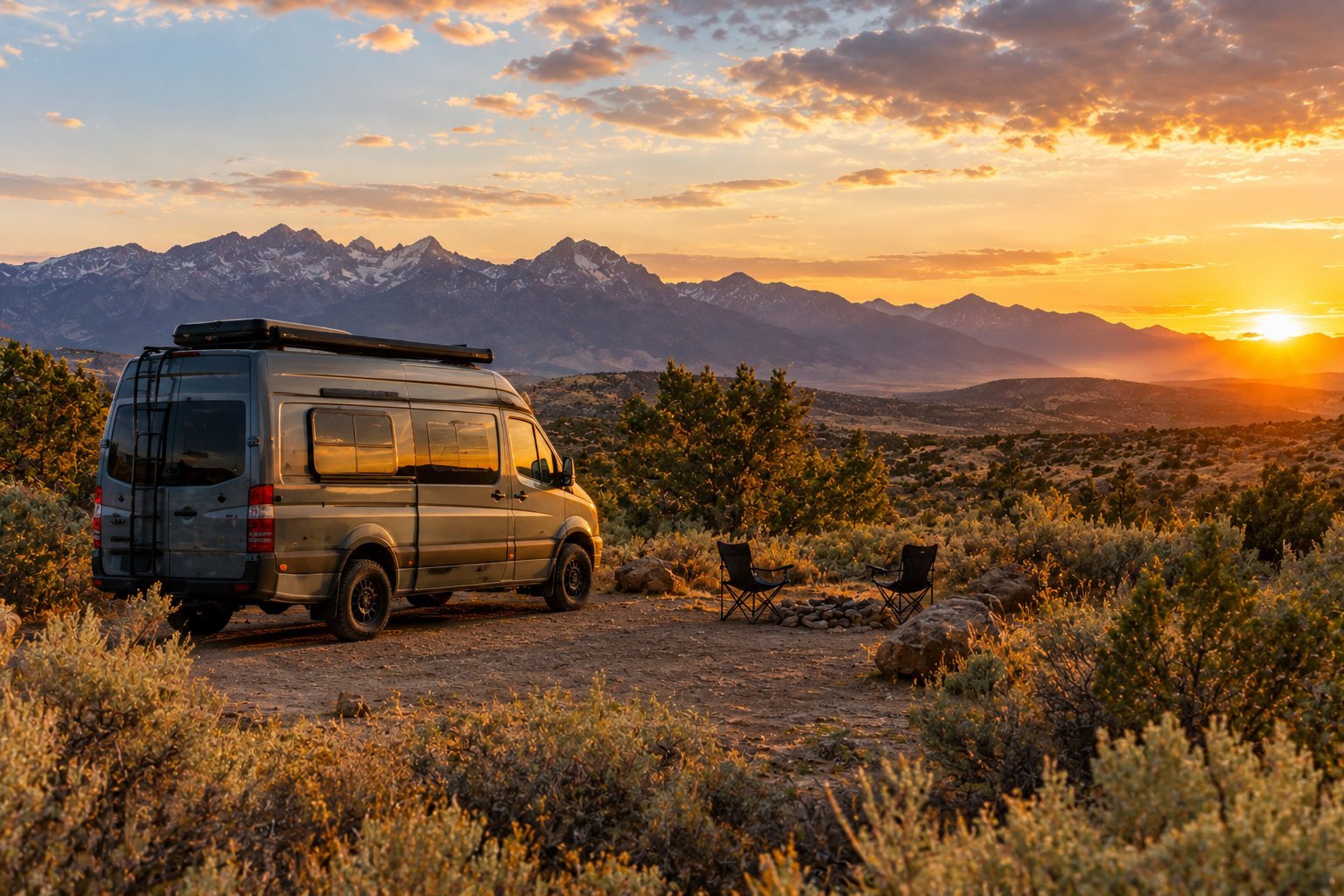
For example, BLM land commonly allows dispersed camping, but local restrictions and stay limits apply, while Walmart says RV parking is decided by individual store managers and local laws.
What Does Free Overnight Parking Actually Mean?
Free overnight parking can mean several different things, and understanding that difference is one of the most important parts of planning a budget road trip.
Sometimes you are simply parking your vehicle for a few hours and sleeping inside it. Other times you are actually camping on public land. Those two situations can have completely different rules.
When I am looking for an overnight stop, I think about four things before I even consider getting comfortable.
Is overnight parking permitted?
Is sleeping inside the vehicle permitted?
Is camping permitted in that particular location?
Are there any local restrictions that override the general rule?
A parking lot can be perfectly legal for daytime parking but prohibit overnight parking. A public forest can allow dispersed camping but restrict where vehicles can travel. A business may allow RV parking at one location while another location prohibits it.
That is why I never treat an online list of free overnight parking locations as permission to stay. The actual signs and current local rules matter more.
The Golden Rule: Free Does Not Mean Anywhere
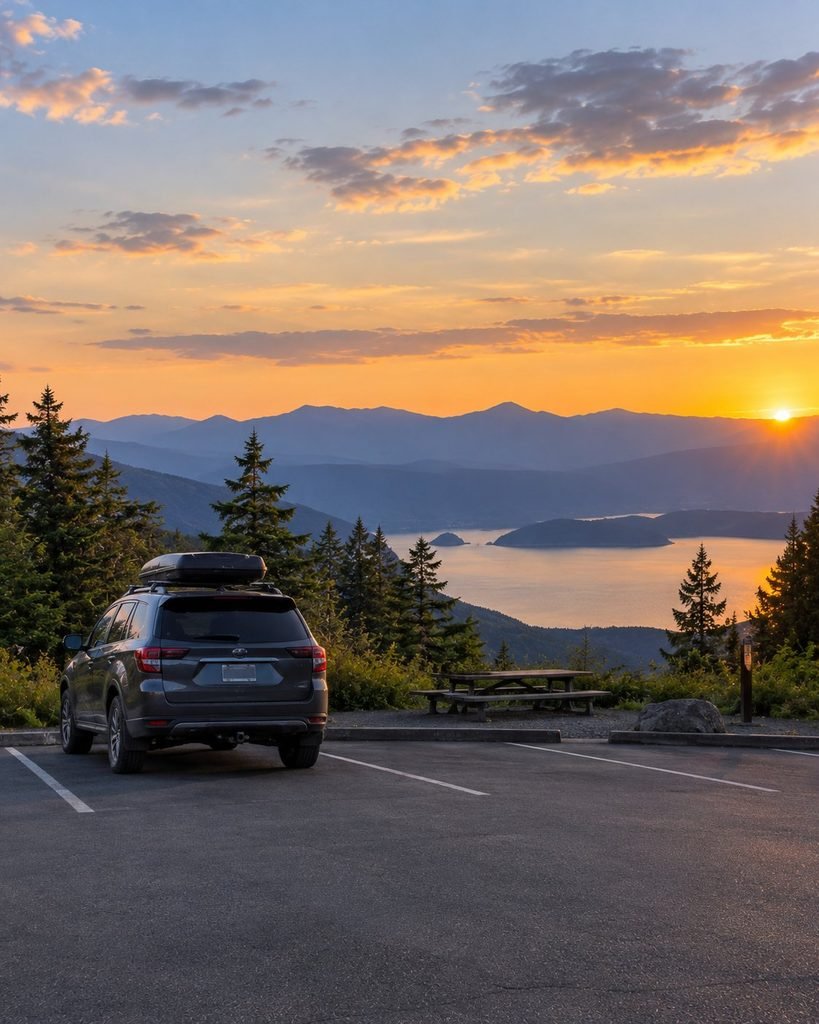
This is probably the biggest lesson I have learned with budget road trips.
You cannot simply pull over anywhere that looks quiet and decide to spend the night there.
The USA has an enormous amount of public land, but public land is managed by different agencies, and individual areas can have their own restrictions. Even within the same state, the rules can change from one location to another.
BLM land is one of the most useful options for free dispersed camping. The Bureau of Land Management says most BLM land allows dispersed camping unless the area is closed to camping or has specific restrictions. The agency also notes that stay limits vary by location, with 14 days within a 28 day period being a general rule in many areas.
That does not mean every BLM parking area is automatically available for overnight use.
Some recreation sites specifically prohibit camping or overnight parking in developed parking lots, picnic areas, and trailheads.
That distinction is easy to miss when you are tired after a long day of driving.
My rule is simple: I look for permission before I look for convenience.
A beautiful empty parking area is not automatically an overnight campsite.
1. Start With BLM Dispersed Camping
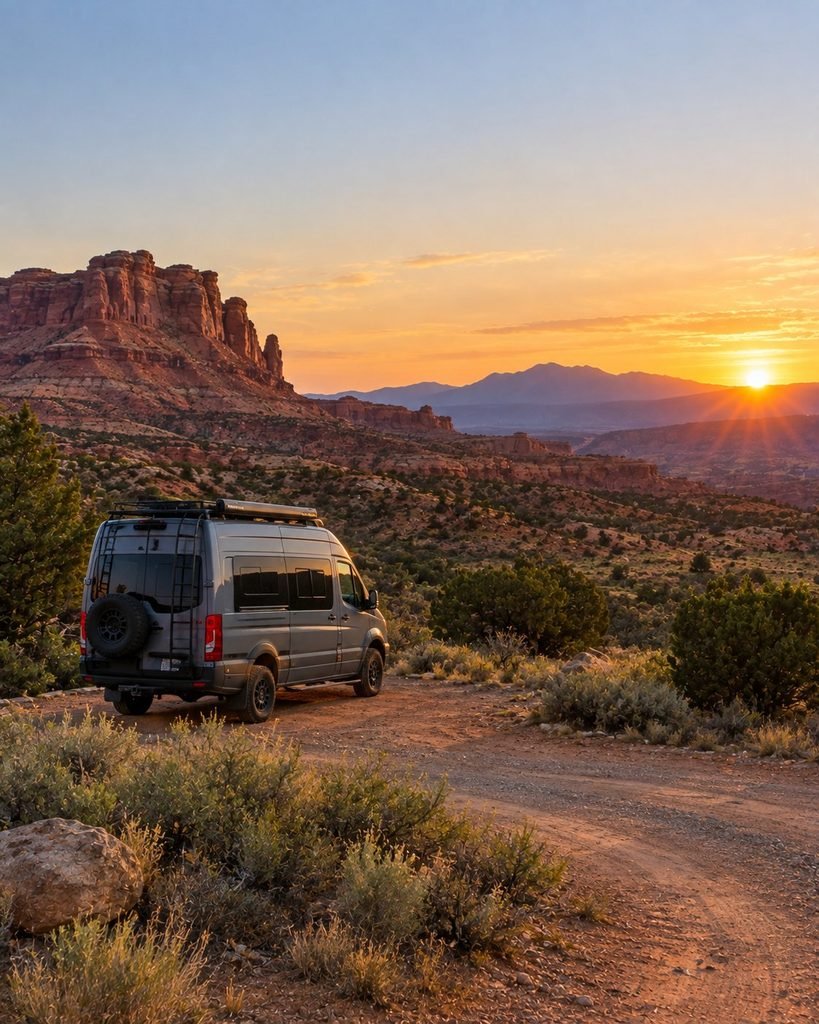
When I want a genuinely free overnight camping option, BLM land is one of the first places I investigate.
Dispersed camping means camping outside a developed campground. There usually are not hookups, bathrooms, trash collection, picnic tables, or other campground conveniences. In return, many locations do not charge a camping fee.
This is particularly useful for road trips through the western United States, where large areas of public land can provide plenty of opportunities for overnight stays.
The Bureau of Land Management explains that dispersed camping is generally permitted on many BLM lands, provided the area is not closed to camping and the use does not conflict with other restrictions or resource protections.
Before driving onto public land, I check the specific field office or recreation area rather than assuming the entire region follows one rule.
That extra few minutes can save a lot of trouble.
How I Look for BLM Camping
I start by searching for BLM land along my route rather than waiting until I am already exhausted.
I look for terms such as:
BLM dispersed camping
free camping near [destination]
BLM camping near [highway]
dispersed camping near [town]
free overnight camping on BLM land
Then I open the official BLM information rather than relying entirely on a random camping website.
I pay attention to the words camping, overnight parking, closed, designated camping, stay limit, and permit.
Those words tell me much more than a photograph of an empty campsite ever could.
2. Understand Dispersed Camping Before You Use It
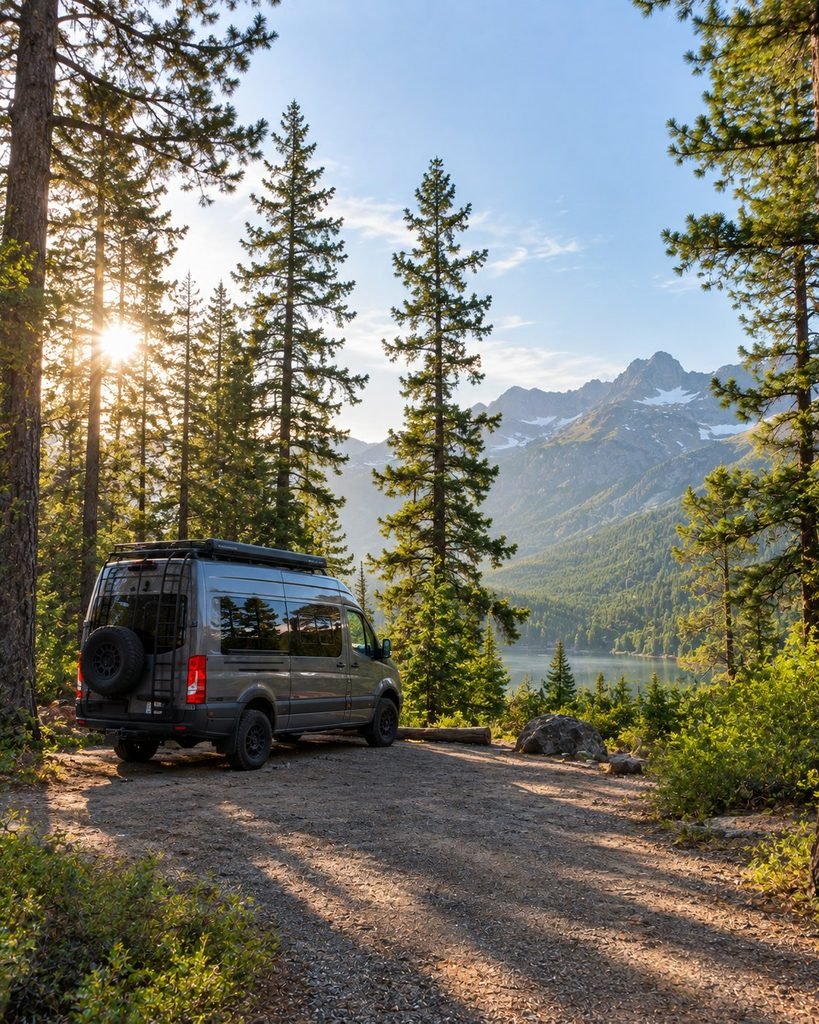
Dispersed camping sounds simple, but it comes with more responsibility because there may be very few facilities available.
The U.S. Forest Service explains that dispersed camping is generally camping outside developed campgrounds, and many of these areas are free because there are few or no services. However, motor vehicle rules can vary from one National Forest to another.
That last part is important.
I never assume that because I can see a dirt road on a map, I am allowed to drive down it and camp wherever I want.
Some forest roads have specific vehicle restrictions. Some roads are seasonal. Some areas require vehicles to stay on designated routes. Some dispersed camping zones have designated sites rather than unlimited roadside camping.
When I arrive, I look for an established campsite whenever possible instead of creating a new one.
That keeps the experience easier and reduces the impact on the land.
3. Check the Signs Before You Park
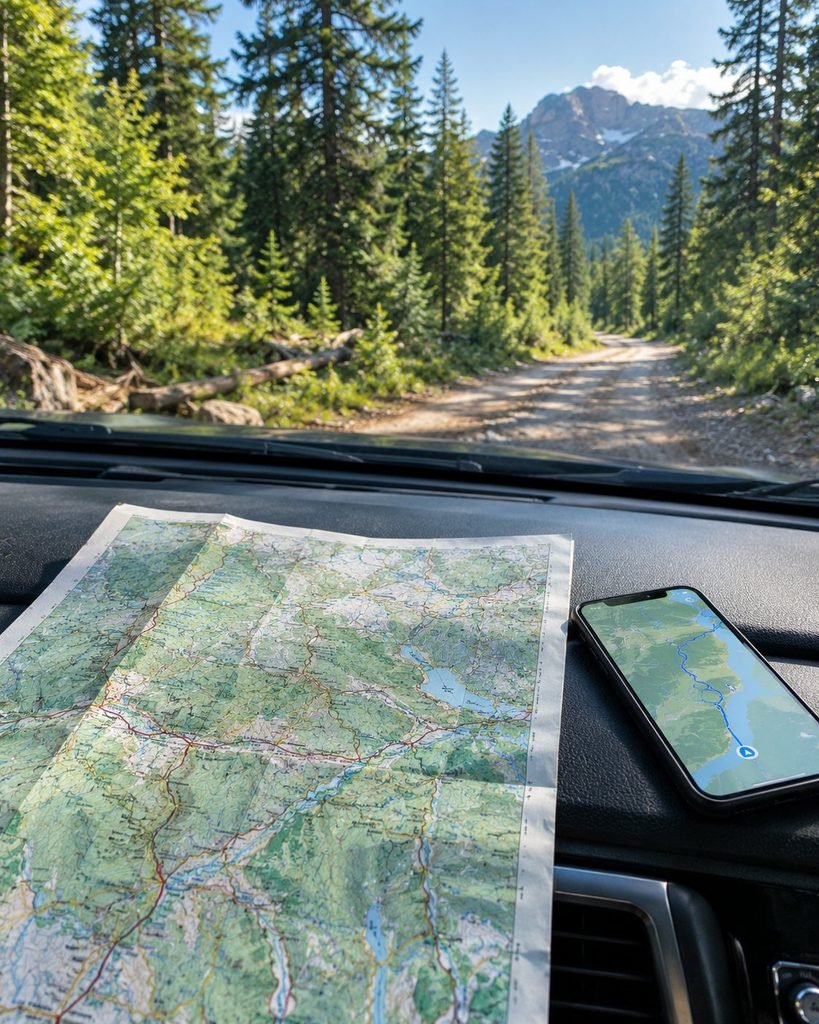
This sounds obvious, but tired road trippers can easily overlook a small sign after driving for several hours.
I make a point of slowing down and actually reading every relevant sign before deciding to stay.
Look for wording such as:
No overnight parking
No camping
Day use only
Camping prohibited
Permit required
Maximum stay
No parking between certain hours
Tow away zone
Vehicles must remain on designated roads
If a sign says no overnight parking, I do not try to interpret it creatively.
I move on.
One of the easiest ways to ruin the savings from free camping is to receive a citation or have your vehicle towed.
4. National Forests Can Be Excellent Free Camping Options
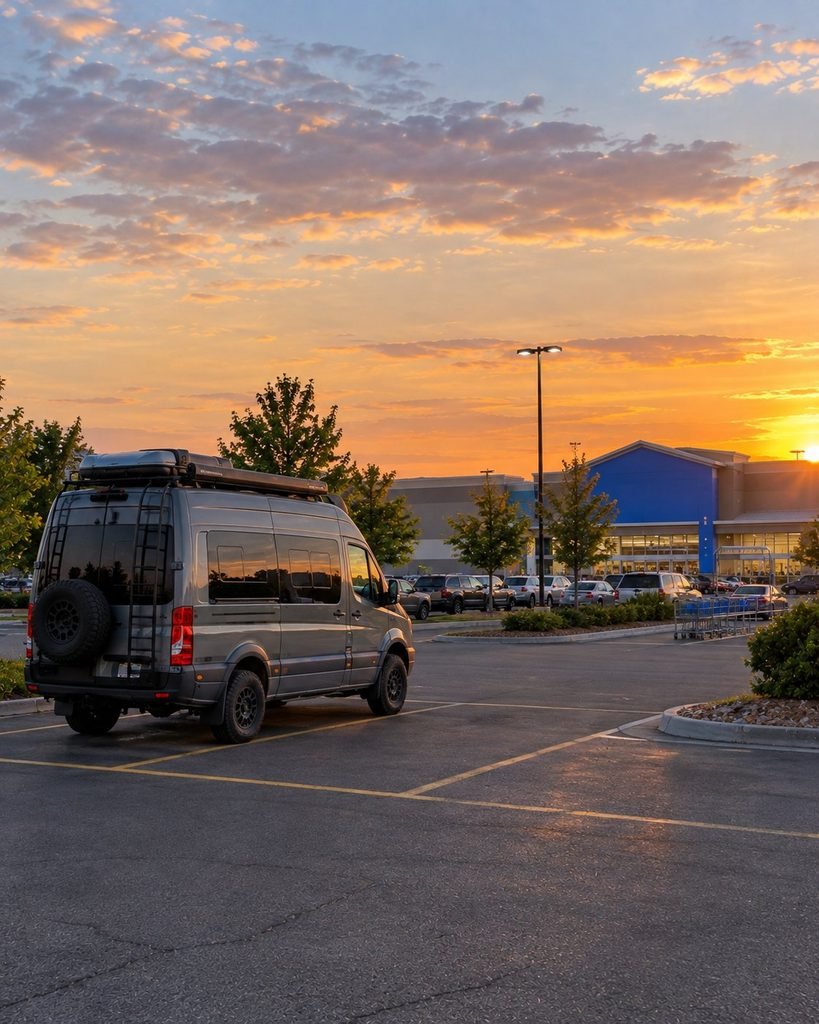
National Forest land is another option I consider when planning road trips.
The U.S. Forest Service recognizes dispersed camping as camping outside developed campgrounds, and many dispersed sites do not charge a fee. However, the exact rules depend on the individual forest and district.
This is where planning ahead makes a major difference.
Before heading into a National Forest, I check the forest’s official website and look for information from the local ranger district.
I also look at the Motor Vehicle Use Map when one is available.
The map can help determine which roads are open to motor vehicles and where dispersed camping may be permitted.
I do not rely on Google Maps alone for this.
A road appearing on a navigation app does not automatically mean that the road is legal or suitable for an overnight camping trip.
5. Do Not Confuse a Trailhead With a Campsite
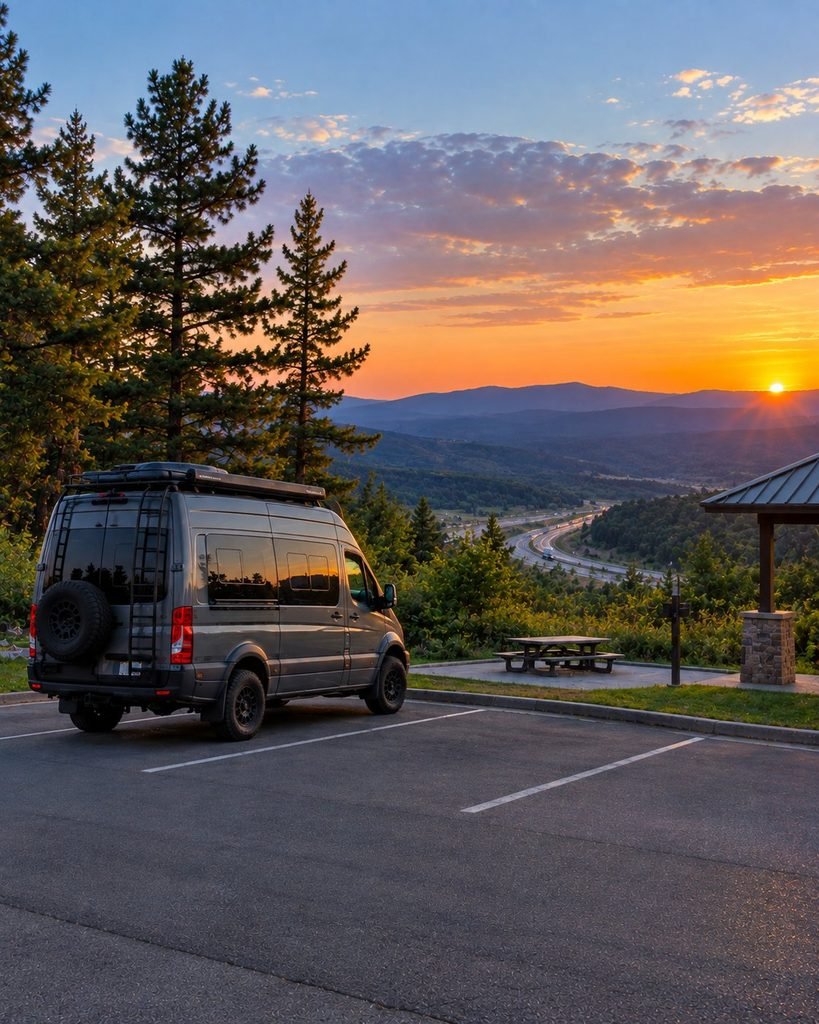
Trailheads are tempting because they can have large parking areas, easy road access, and very few people around late at night.
That does not mean overnight camping is allowed.
Some public recreation areas specifically prohibit camping or overnight parking at trailheads and other developed sites. For example, BLM’s Fishtrap Recreation Area states that overnight parking and camping are not permitted within developed sites such as parking lots, picnic areas, or trailheads.
This is one of those rules I always check before settling in.
If I want to hike the next morning, I would rather find a designated dispersed campsite nearby than assume the trailhead parking lot is fair game.
6. Walmart Can Work, But Always Ask First
Walmart is one of the most commonly discussed options for overnight RV parking, but I never treat it as an automatic nationwide permission.
Walmart’s current official guidance says RV parking may be permitted at its stores where the individual store can accommodate it, but permission is determined by store management and is also subject to local laws. Walmart recommends contacting management at the specific store before parking.
That means the approach is simple.
Find the Walmart.
Go inside.
Ask management.
Confirm that overnight RV parking is permitted.
Then follow any instructions they give you.
I also keep the stay low key. If a location allows overnight parking, I treat it as a parking stop rather than turning the parking lot into a campground.
I am not putting out chairs, awnings, outdoor kitchens, laundry, or anything else that makes a simple overnight stop look like a permanent campsite.
That small difference matters.
7. Rest Areas Can Be Useful, But Rules Vary
Rest areas are another option road trippers often consider when they need somewhere to stop for the night.
The important thing is to check the rules for the state and the individual rest area.
Some locations allow overnight parking or extended rest periods, while others have posted time limits or prohibit sleeping overnight.
I look for official signs when I arrive and check the state’s transportation or highway department information when I am planning ahead.
Rest areas can be especially useful when I need a short sleep break rather than a full camping experience.
The goal is to rest safely and continue driving when I am alert, not to turn every rest area into a campsite.
8. Think Like a Road Tripper, Not a Camperground Owner
One of the biggest mistakes I see with free overnight parking is trying to recreate a full campground experience.
Free overnight parking is usually about keeping things simple.
Park.
Rest.
Keep your surroundings clean.
Follow the rules.
Leave when you are supposed to.
That is it.
When I am making a quick overnight stop, I keep everything inside the vehicle whenever possible. I do not spread belongings across a parking lot, create unnecessary noise, or take up extra spaces.
The less impact I have on the location, the easier it is to leave without attracting unwanted attention.
Free camping works best when travelers respect the places that make it possible.
9. Leave No Trace Even When Nobody Is Watching
Free camping comes with responsibility.
The U.S. Forest Service recommends packing out trash, properly disposing of human waste, protecting vegetation, and leaving campsites better than you found them.
I take that seriously because a beautiful free camping area can disappear as an option when visitors repeatedly leave garbage, create unauthorized fire rings, damage vegetation, or ignore local restrictions.
I carry trash bags specifically for overnight stops.
I also avoid creating new fire rings unless the area specifically allows fires and provides an appropriate place for them.
A free campsite should not become a place where the next traveler has to clean up after me.
That is one of the easiest road trip habits to get right.
10. Keep a Backup Location Ready
I never depend on one free overnight location.
A place can be closed.
A sign can change.
The parking area can be full.
A road can become inaccessible because of weather.
Local restrictions can also change.
So when I plan an overnight stop, I usually have a second and sometimes third option nearby.
That gives me flexibility without the pressure of trying to force a questionable location to work.
It also means I can leave when a place does not feel right.
That is much better than staying somewhere simply because I already drove there.
The Rule I Keep Coming Back To
Free overnight parking is not about finding a loophole.
It is about understanding where you are allowed to be.
When I am planning a road trip, I check the land manager, read the local rules, look for signs, confirm whether overnight parking or camping is permitted, and keep a backup location ready.
That process has made free overnight stops much less stressful for me.
And once you get into the habit of checking those details, finding legal low cost places to sleep becomes much easier.
Where I Look for Free Overnight Parking
The biggest mistake with free overnight parking is waiting until it gets dark before deciding where to stay. I have found that the process becomes much easier when I already know what types of places are worth checking and what questions I need answered before I pull in.
There is no single list of free overnight parking locations that works across the entire USA. Rules can change by state, city, property owner, land manager, and even individual parking lot. That is why I focus on finding the type of place that may allow overnight stays, then checking the rules for that specific location.
These are the options I keep in mind when planning a long road trip.
11. BLM Land Is One of My Go To Options
When my route takes me through an area with Bureau of Land Management property, I check it before looking for paid campgrounds.
BLM land can provide excellent opportunities for dispersed camping. Dispersed camping means staying outside a developed campground without the usual campground facilities such as hookups, picnic tables, showers, or designated services.
What I like about this type of camping is the freedom and simplicity. I am not looking for a fancy campsite. I want somewhere legal where I can park, rest, enjoy the surroundings, and continue my trip the following morning.
I always check the specific BLM area before arriving because different locations can have different restrictions.
Some places have designated camping areas. Others allow dispersed camping. Certain areas can have temporary closures, fire restrictions, permits, or maximum stay limits.
I also prefer using an established camping area rather than creating a new campsite.
That makes the experience easier and helps protect the surrounding land.
12. Look for Existing Dispersed Campsites
One thing I learned quickly is that an empty patch of land does not automatically mean it is a campsite.
When I am searching for dispersed camping, I look for an area that has already been used for camping and can be reached without damaging the surrounding landscape.
I avoid driving across vegetation simply because I see a flat area that looks comfortable.
Existing campsites are usually much easier to use because there is already an established place to park and set up.
This is especially important in desert environments where vehicle tracks can remain visible for years.
I would rather spend a few extra minutes finding an established site than create unnecessary damage just to get a slightly better view.
13. National Forest Land Can Be Another Great Option
National Forest land is another option I consider when planning road trips.
Dispersed camping is available in many National Forest areas, but the rules are not identical everywhere.
This is where I do a little research before driving into the forest.
I check the particular National Forest and the local ranger district to find out where dispersed camping is allowed.
I also look for restrictions involving roads, seasons, fires, permits, and maximum stays.
I never assume that every dirt road through a National Forest leads to a legal campsite.
Some roads are closed to vehicles. Others may be seasonal or unsuitable for larger RVs.
A little planning before leaving the main highway can prevent a lot of frustration later.
14. Use Motor Vehicle Use Maps
When I am considering National Forest dispersed camping, I look for the area’s Motor Vehicle Use Map.
These maps can help show which roads are open to motor vehicles and can be extremely useful when trying to determine where I can legally travel.
I do not rely on a regular navigation app alone.
A road appearing on a map does not necessarily mean it is open, legal, or suitable for my vehicle.
I like knowing what roads I am supposed to use before I arrive.
This becomes even more important with an RV or larger vehicle because a road that looks perfectly manageable on a phone screen can become a completely different situation in real life.
15. Walmart Can Sometimes Work
Walmart is one of the most talked about options for overnight RV parking, but I never assume that every Walmart allows it.
Policies can vary by location, local laws, and store management.
My approach is simple.
I find the Walmart I am considering.
I ask management whether overnight RV parking is permitted.
If they say yes, I follow their instructions.
If they say no, I move on.
I also keep the stop looking like parking rather than camping.
I do not spread chairs across the parking lot, extend an awning into another space, or set up an outdoor kitchen.
If I am allowed to park overnight, I treat the location with respect and keep everything contained inside the vehicle.
That makes the stop much less disruptive for everyone around me.
16. Do Not Assume Every Big Box Store Allows Overnight Parking
This is one of the easiest mistakes to make.
Someone might tell you that a certain store allows overnight parking, but that does not mean every location follows the same policy.
Local rules and property policies can be completely different from one city to another.
I treat each location individually.
If the property owner has not given permission, I do not assume I have permission.
This is especially important when an online camping app shows older reviews saying that overnight parking was allowed.
A review from two years ago is not proof that the same location allows it today.
17. Rest Areas Can Be Useful
Rest areas are another option I consider when I need somewhere to stop during a long drive.
I think about rest areas differently from dispersed camping.
The purpose is mainly to give travelers a safe place to take a break, use the facilities, stretch, and recover before continuing.
Some rest areas permit overnight stays or extended rest periods, while others have specific time limits.
I always check the posted signs before settling in.
If overnight parking is allowed, I keep my stop simple.
I am there to rest, not create a campsite.
This can be particularly helpful when I realize I am too tired to continue driving safely.
Getting a few hours of rest is much better than trying to force myself to drive another couple of hours.
18. Truck Stops Can Be Worth Checking
Truck stops can be convenient during long road trips because they are designed around travelers who need fuel, food, bathrooms, showers, parking, and rest.
Some locations have large parking areas where overnight parking may be permitted.
I still check the signs and parking rules before staying.
I also pay attention to where I park.
Commercial truck drivers need their designated spaces, so I avoid taking areas that are clearly intended for trucks when I am traveling in a smaller vehicle.
A little consideration goes a long way at busy travel stops.
19. Ask Before Using Private Property
A quiet piece of land beside a highway might look like the perfect overnight spot.
That does not mean it is public.
I never assume that an empty field or unused parking area is available.
If the land belongs to a private owner, I need permission.
This is especially important in rural areas where public and private land can be located directly beside each other.
A map may make everything look like one large open area, but the property boundaries can be completely different.
If I am unsure who owns the property or whether overnight parking is allowed, I find another option.
There are too many legitimate possibilities to gamble on private property.
20. Be Careful Around National Parks
National Parks are incredible places for road trips, but I never assume that I can sleep in my vehicle anywhere inside one.
Each park can have its own camping regulations.
Some areas require reservations or permits. Others limit overnight camping to designated campgrounds or backcountry locations.
A parking lot near a beautiful trail may be open during the day but completely off limits for overnight stays.
When I visit a National Park, I check the current park rules before deciding where I will spend the night.
I would rather know the rules before arriving than discover them after parking and getting comfortable.
21. State Lands Require Extra Research
State forests, wildlife areas, recreation areas, and other state managed lands can sometimes provide camping opportunities.
The important part is understanding that the rules vary from state to state.
When I am traveling through a new state, I search specifically for information from the agency responsible for the land.
I look for terms such as state forest camping, state wildlife area camping, dispersed camping, primitive camping, and overnight parking.
Then I check whether the location allows the type of overnight stay I need.
I do not assume that a rule from one state applies to another.
That is one of the easiest ways to make a mistake when traveling across the country.
22. Boondocking Does Not Always Mean Completely Free
The word boondocking can be confusing because people use it in different ways.
Many travelers use it to describe camping without hookups.
That does not always mean the campsite costs nothing.
A primitive campsite can still have a camping fee.
A recreation area can require an entrance fee.
A public land location can require a permit.
A popular camping area can have a reservation system.
So when I specifically want a free overnight stop, I check the actual fee information instead of assuming that primitive means free.
This small detail can save an unpleasant surprise when arriving late in the day.
23. Check Everything Before Losing Cell Service
This is one of my favorite road trip habits.
If I am heading toward remote public land, I research the area while I still have a reliable internet connection.
I save the location.
I download maps when possible.
I screenshot important directions.
I save information about the nearest town.
If I think I may need help, I also save the contact information for the relevant ranger district or land management office.
Remote camping can mean limited or nonexistent cell service.
I would much rather spend ten minutes preparing while I have a signal than discover that I cannot load a map when I am already deep into an unfamiliar area.
24. Weather Can Change Everything
A free campsite is not automatically a good campsite.
Weather is one of the things I check before deciding whether I am actually going to stay somewhere.
Rain can turn a dirt road into mud.
Strong winds can make exposed campsites uncomfortable.
Snow can make roads inaccessible.
Extreme heat can make sleeping inside a vehicle miserable.
Flooding can also make certain low lying areas dangerous.
If the weather looks questionable, I am willing to change my plan.
Saving the cost of a campground is not worth putting myself or my vehicle in a dangerous situation.
25. Always Have a Paid Backup
This may sound strange in an article about free overnight parking, but having a paid backup has made my road trips much easier.
I like knowing where the nearest campground or established overnight option is before I commit to a remote free site.
I may never need it.
But having that option takes away the pressure to make a questionable location work.
If the free campsite is full, closed, muddy, inaccessible, or simply does not feel right, I can leave.
I do not have to convince myself to stay just because I wanted to save money.
That flexibility is especially valuable when traveling alone or driving late into the evening.
How I Decide Between Free Overnight Options
When I am choosing between several possibilities, I look at much more than the price.
I ask myself whether the location is legal, whether I can safely reach it, whether my vehicle can handle the road, whether I have enough fuel and water, whether the weather is suitable, and how easy it will be to leave in the morning.
A completely free campsite that requires hours of difficult driving may not make sense for my particular road trip.
Sometimes the best option is a quiet dispersed campsite.
Sometimes it is a permitted parking area.
Sometimes it is a rest area where I can get a few hours of sleep.
And sometimes paying for a campground is the better decision.
The goal is not to make every single night free.
The goal is to have enough options that I can keep my road trip affordable without taking unnecessary risks.
My Simple Free Camping Search Routine
When I am planning an overnight stop, I usually follow the same routine.
Step 1: I figure out approximately where I will be near the end of my driving day.
Step 2: I search for BLM land, National Forest land, dispersed camping, rest areas, and other potential overnight options.
Step 3: I check the rules for the specific location.
Step 4: I look for closures, permits, fees, fire restrictions, and stay limits.
Step 5: I check the road conditions and accessibility.
Step 6: I save a primary location and at least one backup.
Step 7: When I arrive, I read the signs again.
Step 8: I keep my setup simple and leave the area clean.
This routine saves me from driving around late at night hoping to find somewhere that looks safe.
I already have a plan before I get there.
The Biggest Thing I Would Not Do
I would never choose a free overnight location simply because another traveler said they stayed there.
That information can be useful for finding possibilities, but it is not permission.
Rules change.
Businesses change their policies.
Cities introduce new restrictions.
Public lands close temporarily.
Fire restrictions appear.
Roads become inaccessible.
A location that worked for another traveler several months ago may not be available today.
I use recommendations as a starting point, then verify the current rules before staying.
That distinction has made my overnight planning much more reliable.
Free Does Not Have to Mean Complicated
Once I understood the different categories of free overnight parking, the process became much less intimidating.
I stopped looking for one magical list of places where I could sleep anywhere in America.
Instead, I started looking at the land around my route and asking better questions.
Who manages this land?
Is camping allowed?
Is vehicle camping allowed?
Is overnight parking allowed?
Do I need a permit?
Is there a stay limit?
Are there current closures?
Can my vehicle safely reach the location?
Those questions tell me much more than a pin on a camping app.
Finding free overnight parking becomes much easier when I stop thinking about it as finding a secret spot and start thinking about it as understanding the rules of the road.
Safety, Etiquette, Mistakes to Avoid, and My Overnight Checklist
Finding a legal place to sleep for free is only part of the process. The other part is knowing how to make the overnight stop comfortable, respectful, and safe.
I have learned that a good overnight spot is not necessarily the most beautiful place or the most isolated place. I want somewhere where I understand the rules, can leave easily in the morning, and feel comfortable spending the night.
That mindset has changed how I approach free camping.
I no longer judge an overnight location only by whether it costs $0. I think about access, weather, surroundings, privacy, road conditions, nearby services, and how easy it will be to leave.
These are the rules I follow whenever I am planning a free overnight stop.
26. Arrive Before It Gets Too Late
One of the best habits I developed was avoiding the search for an overnight spot at the last possible minute.
Trying to find a free location in complete darkness makes everything harder.
Roads are more difficult to see.
Signs are easier to miss.
You may not notice rough terrain.
You may not recognize private property boundaries.
And a location that looks fine during daylight can feel completely different at night.
When possible, I like arriving while there is still enough daylight to look around.
I can check the entrance, inspect the ground, read the signs, and decide whether the area actually works for me.
If I do not like what I see, I still have time to find another option.
27. Do Not Follow Someone Down a Road You Cannot Handle
This is especially important for RVs, trailers, vans, and larger vehicles.
A camping app might show a beautiful dispersed campsite several miles down a dirt road.
That does not mean my vehicle can safely reach it.
I look at the road conditions before committing.
I consider clearance, width, steep sections, loose gravel, mud, snow, and turning space.
I have learned that getting to a campsite is just as important as finding one.
A free campsite is not a bargain if I damage the vehicle trying to reach it.
28. Know When to Turn Around
This is a rule I take seriously.
If the road becomes questionable, I turn around.
There is no prize for reaching the campsite at all costs.
Sometimes the road becomes narrower than expected.
Sometimes the surface changes after rain.
Sometimes there is a steep section that I do not feel comfortable driving.
Sometimes the vehicle ahead of me made it through, but my vehicle is not suited for the same conditions.
I would rather lose a little time finding another location than spend the night dealing with a stuck vehicle.
Knowing when to abandon a campsite search is part of successful road tripping.
29. Park So You Can Leave Easily
When I settle in for the night, I think about the morning before I go to sleep.
I try to park in a position where I can leave without having to perform a complicated maneuver.
If possible, I avoid blocking roads, narrow entrances, gates, or other vehicles.
I also avoid parking somewhere where I could become boxed in.
This is especially useful when camping in remote areas.
If I wake up early and want to leave, I want to be able to get moving without disturbing anyone else.
30. Keep Your Vehicle Ready for the Morning
I like to keep the things I will need in the morning somewhere accessible.
Water.
Shoes.
Jacket.
Phone.
Keys.
Flashlight.
Basic toiletries.
I do not want to unpack the entire vehicle just to find one item.
A simple overnight setup makes the morning much easier.
This is another reason I prefer keeping free overnight stops simple rather than turning them into a full campsite.
31. Keep Your Valuables Out of Sight
I am careful about what can be seen from outside the vehicle.
Electronics, wallets, cameras, bags, and other valuables are kept out of sight.
I also avoid leaving anything valuable sitting near windows.
This is not about being paranoid.
It is simply a sensible habit when traveling.
The same rule applies whether I am staying in a remote camping area, a parking lot, or a busy travel stop.
I want the vehicle to look like a normal parked vehicle rather than an easy target.
32. Do Not Make Yourself the Center of Attention
One of my biggest rules for overnight parking is to keep things low key.
I park.
I settle in.
I sleep.
I leave.
I do not make unnecessary noise or create a large outdoor setup.
This matters even when overnight parking is allowed.
A location can accommodate overnight travelers without wanting people to behave as though they have rented the entire parking lot.
Keeping things quiet and respectful makes the experience better for everyone.
33. Respect Other Travelers
You are rarely the only person using a public space.
There may be truck drivers trying to sleep.
Families traveling across the country.
Other RVers.
People working overnight shifts.
Local residents.
Other campers.
I try to remember that everyone has their own reason for being there.
That means keeping music low, avoiding unnecessary engine idling, and giving people plenty of space.
If someone else arrives later, I do not spread out into multiple parking spaces.
Simple courtesy goes a long way.
34. Do Not Dump Anything
Free camping does not mean free disposal.
I never dump wastewater, food, trash, or other materials where they do not belong.
If I have trash, I keep it contained until I find an appropriate place to dispose of it.
This is especially important in remote areas.
There may not be anyone around to clean up after you.
That does not make it acceptable to leave anything behind.
35. Be Careful With Food
Food can attract animals, insects, and unwanted attention.
When I am camping in remote areas, I keep food properly contained.
I avoid leaving leftovers outside.
I clean up cooking areas promptly.
I also avoid leaving food scraps around the campsite.
A campsite can feel peaceful until wildlife decides that your dinner smells interesting.
Keeping food secured is one of those small habits that makes remote camping much more enjoyable.
36. Be Smart About Campfires
I never assume that because I am camping outdoors, I can build a fire.
Fire restrictions can change depending on the season, weather conditions, and location.
Some places prohibit fires completely.
Others allow them only in designated fire rings.
If fires are permitted, I follow the local requirements and make sure the fire is completely extinguished before leaving.
A campfire should never become an afterthought.
Dry conditions can turn a small mistake into a serious problem.
37. Do Not Block Gates
This is an easy mistake to make when arriving after dark.
A gate may look like an ordinary entrance, especially when you cannot clearly see the surrounding area.
I avoid parking directly in front of gates or access roads.
Ranchers, land managers, emergency vehicles, maintenance workers, and other authorized users may need access.
Even if the area appears completely empty, I leave gates and access routes clear.
38. Pay Attention to Private Property Signs
When traveling through rural areas, I pay close attention to signs such as:
Private Property
No Trespassing
No Camping
No Overnight Parking
Authorized Vehicles Only
Closed Area
Restricted Access
I do not try to interpret these signs in my favor.
If the area is restricted, I move on.
There are enough legitimate places to stay that I do not need to turn a road trip into a property dispute.
39. Do Not Assume You Can Stay Multiple Nights
A place allowing one overnight stay does not necessarily mean you can remain there for a week.
Public lands can have maximum stay limits.
Businesses can have individual parking policies.
Rest areas can have time restrictions.
Local ordinances can limit overnight parking.
When I arrive somewhere, I make sure I understand how long I am actually permitted to remain.
This becomes particularly important during long road trips when it can be tempting to stay in one beautiful location for several days.
40. Keep an Eye on Your Fuel and Water
Remote free camping can put you farther away from basic services.
I do not like arriving at a remote campsite with an almost empty fuel tank.
The same applies to drinking water.
Before heading into an isolated area, I check how far I am from the nearest fuel station, grocery store, and water source.
I would rather stop in town first than realize later that I have to drive a long distance just to find fuel.
Planning these basics makes remote camping much more comfortable.
41. Do Not Rely Entirely on Cell Service
Some of the best free camping areas are also the places where cell service can disappear.
I prepare for that possibility.
Before leaving a connected area, I download maps and make sure I know the general route.
I also let someone know where I am heading when I am traveling into a particularly remote area.
That simple habit gives me an extra layer of security.
I do not want my entire plan to depend on being able to make a phone call from the campsite.
42. Trust Your Instincts About a Location
Even when a place appears to be legal, it may not feel right to you.
That is enough reason to leave.
Maybe the surroundings are unusually busy.
Maybe the road feels unsafe.
Maybe the area is isolated in a way that makes you uncomfortable.
Maybe another vehicle has been circling the area.
I do not force myself to stay somewhere just because I already drove there.
There is no rule saying that a free campsite has to be used.
If I do not feel comfortable, I move to my backup location.
43. Keep Your Overnight Routine Simple
My ideal overnight routine is uncomplicated.
I arrive.
I check the rules.
I look around.
I park appropriately.
I secure the vehicle.
I organize what I need.
I eat if necessary.
I settle down.
I sleep.
I leave without creating a mess.
The simpler the routine, the fewer opportunities there are for something to go wrong.
This is especially helpful when I am tired after driving for hours.
44. Do Not Let Free Parking Make You Drive Too Long
This is probably one of the most important lessons I would give another road tripper.
Do not keep driving for hours just because you are determined to find a free place to sleep.
Fuel costs money.
Time costs money.
Your safety matters more than the price of a campground.
If I am exhausted and the free camping options are becoming increasingly difficult to reach, I would rather pay for a safe place than continue driving while tired.
The purpose of finding free overnight parking is to make the trip more affordable.
It should not make the trip more dangerous.
45. Know the Difference Between Parking and Camping
This distinction can prevent a lot of confusion.
Parking generally means leaving your vehicle in an authorized parking space.
Camping can involve much more than simply having the vehicle there.
Opening an awning, putting out chairs, using outdoor equipment, cooking outside, setting up tents, or otherwise occupying the surrounding area can change how your activity is viewed under local rules.
That is why I always check the exact regulations.
If I am permitted to park overnight but camping is prohibited, I keep everything inside the vehicle.
46. My Overnight Parking Checklist
Before settling in, I like to run through a quick checklist.
Location
Is this the correct property?
Do I know who manages it?
Am I actually allowed to be here?
Parking
Is overnight parking allowed?
Am I parked in an appropriate space?
Am I blocking anything?
Safety
Can I leave easily?
Is the vehicle secure?
Are my valuables out of sight?
Do I have my keys and phone nearby?
Environment
Is there a weather concern?
Is the ground stable?
Are there signs of flooding?
Is there anything around me that could create a problem overnight?
Supplies
Do I have enough fuel?
Do I have drinking water?
Do I have food?
Do I have a flashlight?
Do I have the basic items I need until morning?
Morning
Can I leave without disturbing anyone?
Do I need to be gone by a particular time?
Do I need to pack anything before going to sleep?
Going through this list takes very little time, but it gives me much more confidence before settling down.
47. My Free Overnight Parking Rules of Thumb
After enough road trips, I have reduced my approach to a few simple rules.
Never assume.
Always check the signs.
Verify the current rules.
Have a backup.
Arrive with enough daylight to inspect the area when possible.
Do not block access.
Keep valuables hidden.
Keep the vehicle and surroundings clean.
Respect other travelers.
Leave no trace.
Do not stay somewhere that makes you uncomfortable.
And never let the desire to save money override basic safety.
These rules have helped me approach free overnight parking with a much clearer mindset.
48. What I Pack for a Free Overnight Stop
I keep my overnight essentials easy to reach.
A flashlight is one of the first things I want nearby.
I also keep drinking water, basic food, a phone charger, weather appropriate clothing, toiletries, and anything I might need if I have to leave unexpectedly.
For remote camping, I also make sure the vehicle has enough fuel and that I have the navigation information I need before leaving an area with reliable service.
I do not want to unpack half the vehicle just to find a flashlight at midnight.
A little organization makes a surprisingly big difference.
49. The Morning Matters Too
The overnight stop is not finished when I wake up.
Before leaving, I look around the area.
I collect trash.
I make sure nothing has been left behind.
I check that I have all of my belongings.
I make sure I am not blocking anyone.
Then I leave the area as clean as I found it.
If I have been staying on public land, I want the next traveler to be able to enjoy the same experience.
That is one of the biggest responsibilities that comes with free camping.
50. The Best Free Overnight Spot Is the One You Can Legally Leave
This is the final rule I keep in mind.
A free overnight location is only useful if I can arrive legally, stay legally, and leave without causing a problem.
I do not need the most secluded location.
I do not need the most beautiful view.
I do not need a secret location that nobody knows about.
I need a place that fits my route, follows the rules, works for my vehicle, and lets me get a good night’s rest.
That is what makes free overnight parking useful for a road trip.
Final Thoughts
Free overnight parking can make a huge difference to the cost of traveling across the USA, but I have learned that the smartest approach is not simply finding the cheapest place to sleep.
It is learning how to recognize legitimate opportunities and knowing when to move on.
BLM land, National Forests, permitted business parking, rest areas, truck stops, and other locations can all play a role depending on the route and local rules. The important part is checking the specific location instead of assuming a general rule applies everywhere.
I also keep one thing in mind whenever I am planning a free overnight stop: free should never mean careless.
Read the signs.
Check the rules.
Plan ahead.
Keep your setup simple.
Respect the land and the people around you.
Have a backup.
And if a location does not feel right, leave.
That approach has made overnight road trips much more relaxed for me because I am not simply searching for somewhere to park. I am making an informed choice about where I can safely spend the night and continue the journey in the morning.