
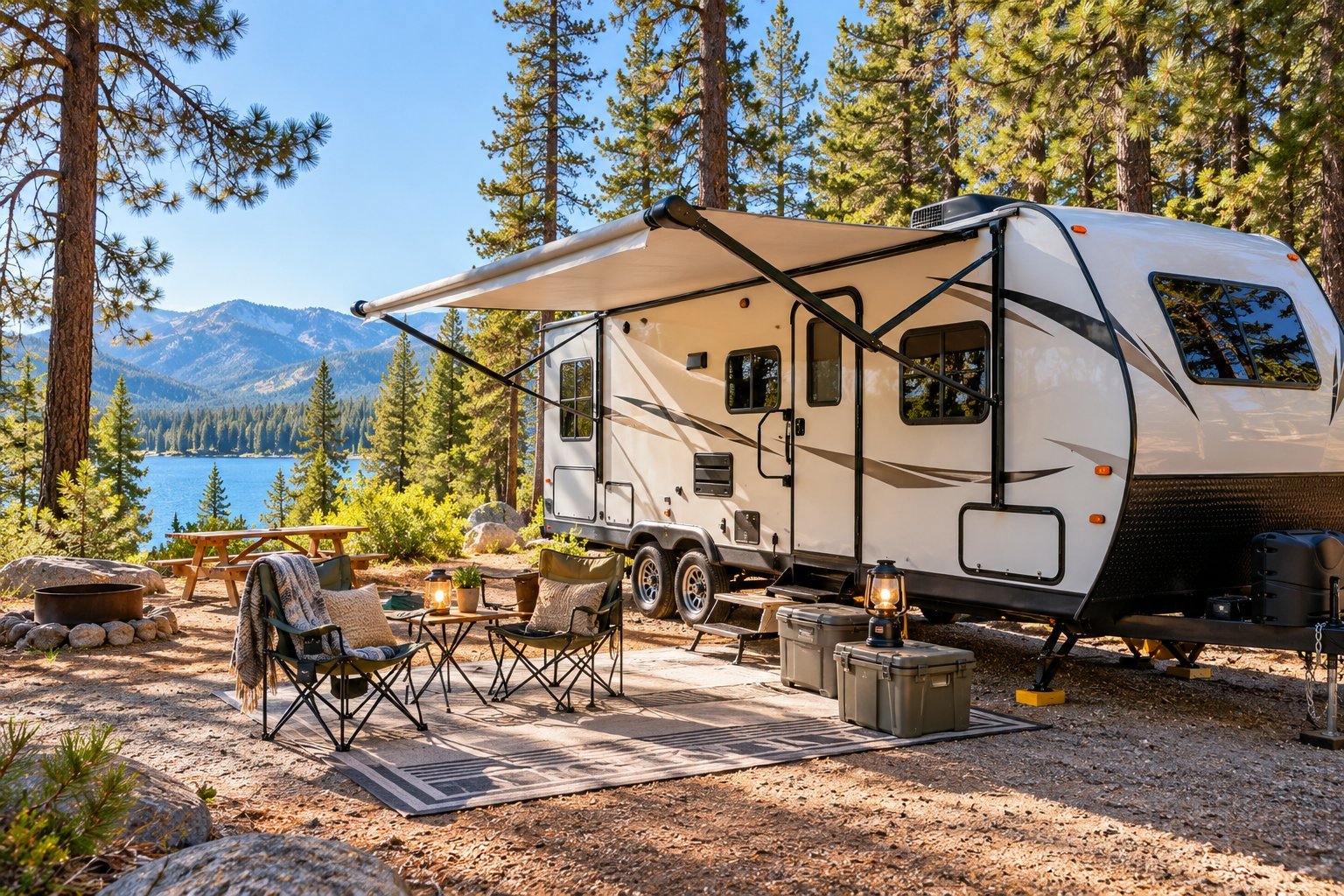
5 Must-Have Items for Your RV
RV travel gives you the freedom to explore new places while bringing many of the comforts of home along for the ride.
However, a comfortable trip depends on more than choosing a beautiful campsite and packing enough clothes.
The right RV essentials can make everyday tasks easier, help you avoid common camping problems, and keep your limited living space organized.
I like to focus on items that serve a clear purpose rather than filling a camper with gadgets that rarely get used.

Practical equipment for electrical safety, water hookups, storage, and everyday maintenance can make a noticeable difference when you spend several days or weeks on the road.
Small conveniences matter, too, especially when you are cooking in a compact kitchen or getting ready for a rainy day.
Whether you own a travel trailer, motorhome, fifth wheel, or compact camper, these must-have RV items are worth considering before your next trip.
I’ll explain what each one does, why it matters, and what to look for when choosing the right option for your setup.
What Makes an RV Essential Worth Packing?

Not every camping gadget deserves a place in your RV. With limited cabinet space, storage compartments, and weight capacity, I prefer to focus on items that solve everyday problems and make traveling easier. A good RV essential should be practical, reliable, and simple to store when it is not in use.
Before buying anything new, consider how you use your camper. Weekend travelers who stay at full hookup campgrounds may need different equipment from those who spend several nights off-grid.
Safety equipment, water connections, and suitable leveling gear should take priority, followed by the storage solutions and comfort accessories that fit your routine.
I also recommend checking what already comes with your RV. You may discover that you only need a few additional items rather than an entirely new collection of camping gear.
The goal is to pack smarter, keep essential supplies within reach, and make room for the things that genuinely improve your trips.
1. RV Surge Protector
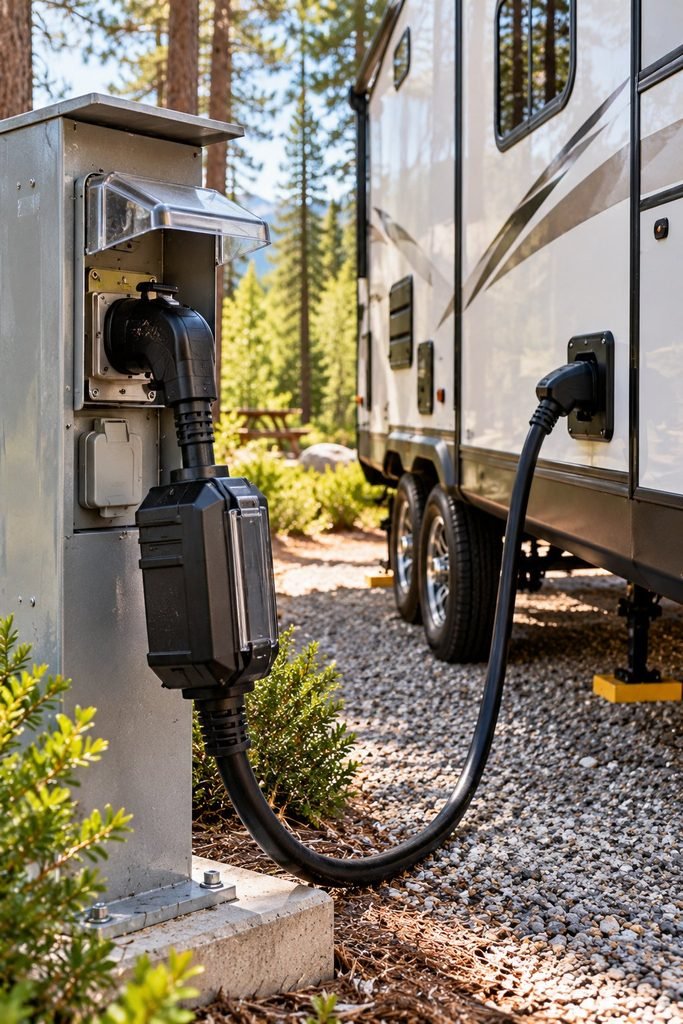
An RV surge protector is one of the most important pieces of equipment to consider before plugging into campground power.
Electrical hookups can vary in condition, and problems such as voltage fluctuations, wiring faults, and power surges can put your RV’s electrical system at risk.
A good surge protector helps guard against certain electrical hazards, depending on the model. More advanced electrical management systems can also detect problems such as an open ground, reversed polarity, or dangerously high or low voltage before allowing power through.
When choosing one, check whether your RV uses a 30 amp or 50 amp connection. The protector must match your electrical service, and it should offer the specific protection features you need.
I would prioritize this purchase over decorative RV accessories because electrical problems can become expensive quickly. It is also worth learning how to connect and use the device correctly before arriving at a campsite.
What to look for: A properly rated surge protector or electrical management system with clear fault indicators, weather resistant construction, and protection suited to your RV’s electrical setup.
2. Drinking Water Hose and Pressure Regulator
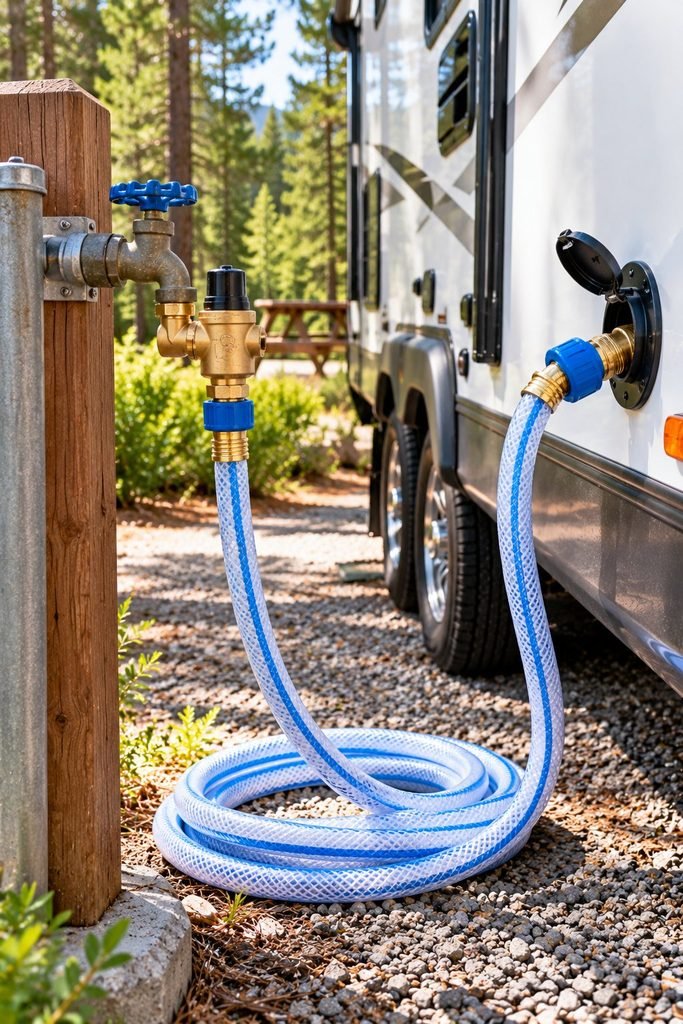
Fresh water is essential for cooking, washing dishes, brushing your teeth, and showering during an RV trip. A dedicated drinking water safe hose makes it easier to connect your RV to a campground water supply without using an ordinary garden hose that may not be intended for potable water.
I recommend keeping the fresh water hose separate from hoses used for other campsite tasks. Store it in a clean, dedicated container so it does not pick up dirt or come into contact with sewer equipment.
A water pressure regulator is equally important. Some campground connections can deliver more pressure than your RV plumbing is designed to handle. A suitable regulator helps control incoming pressure and reduces the risk of damaging hoses, fittings, and plumbing components.
Check your RV manufacturer’s recommended water pressure before choosing a regulator. An adjustable model with a pressure gauge can make it easier to monitor the supply.
What to look for: A drinking water safe hose of suitable length, durable fittings, and a regulator compatible with your RV’s plumbing requirements.
3. RV Sewer Hose Kit
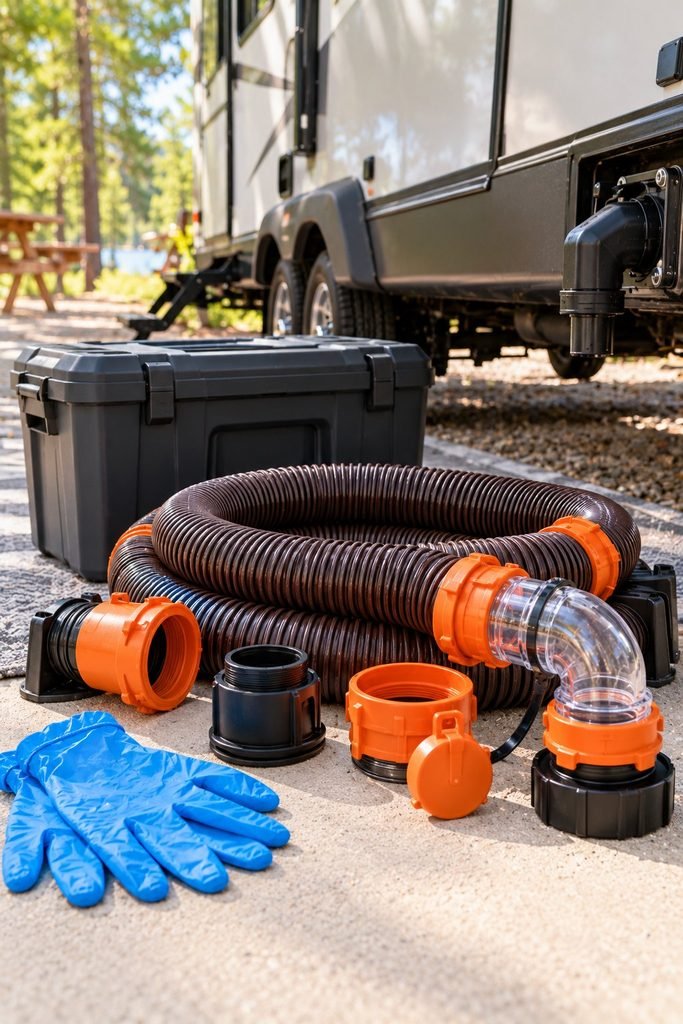
Emptying the holding tanks is not the most enjoyable part of RV ownership, but having the right equipment makes the process more manageable. A dependable sewer hose kit helps you empty your wastewater tanks while reducing the risk of spills and unpleasant odors.
Look for a hose that is compatible with your RV’s outlet and the campground sewer connection. A secure bayonet fitting, suitable adapters, and a transparent elbow can make it easier to confirm when the tank has finished draining.
Hose length matters as well. A short hose may not reach a distant sewer inlet, while an unnecessarily long one can be awkward to handle and store. A hose support can help maintain the appropriate slope when the campsite setup requires it.
I would also keep disposable gloves and a dedicated storage container with the kit. These small additions make handling and packing away the equipment more hygienic.
Always follow the instructions for your RV’s holding tanks and the campground’s disposal rules. Never discharge wastewater onto the ground or into storm drains.
What to look for: A durable, leak resistant hose with compatible fittings, useful adapters, and a practical storage solution.
4. RV Leveling Blocks

An uneven campsite can make sleeping uncomfortable, cause doors and drawers to behave awkwardly, and make everyday activities inside the RV less pleasant. Leveling blocks help you raise the appropriate wheels when parking on uneven ground.
They are particularly useful at campsites where the parking pad slopes slightly or has an uneven surface. Instead of trying to make the interior comfortable on an incline, you can use the blocks according to your RV manufacturer’s leveling instructions.
Before buying a set, consider your RV’s weight, tire size, and leveling system. Not every set of blocks is suitable for every vehicle. Check the manufacturer’s load rating and use the blocks only as directed.
I also recommend practicing your leveling routine at home or in a quiet campsite before attempting it in a busy campground. You will have a better idea of how many blocks you need and where to position them.
Remember that leveling blocks are not a replacement for wheel chocks. Chocks help prevent unwanted movement, while leveling blocks provide support under designated tires.
What to look for: Heavy duty blocks with a suitable load rating, a stable surface, and a design that fits your RV’s leveling requirements.
5. Tire Pressure Monitoring System
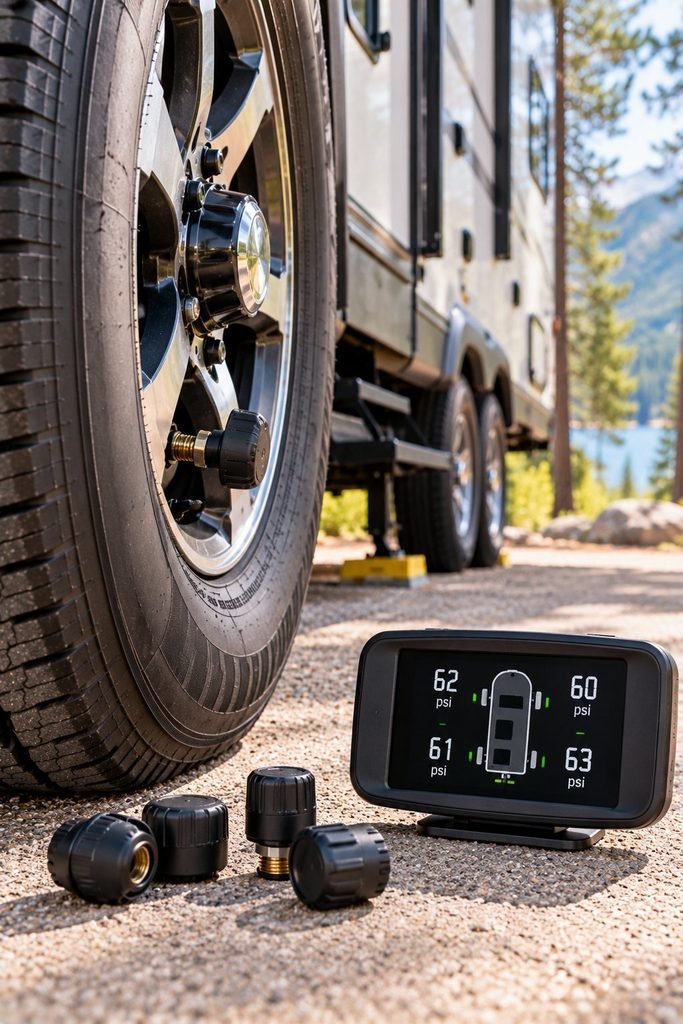
Tires deserve more attention than they often receive during RV preparation. An RV can carry substantial weight, and incorrect tire pressure or overheating can create serious safety concerns while traveling.
A tire pressure monitoring system, often called a TPMS, tracks tire pressure and, depending on the model, tire temperature. Many systems provide alerts when readings move outside configured limits, giving you an opportunity to stop safely and investigate.
This equipment can be particularly helpful on long road trips, where changing weather, road conditions, and extended driving can affect your travel routine. It does not replace checking your tires before departure, inspecting them for damage, or following the manufacturer’s recommended pressure specifications.
When shopping, confirm that the system supports your RV and any additional tires on a towed vehicle if applicable. Consider sensor compatibility, alert visibility, battery life, and whether the display is easy to read from the driver’s seat.
What to look for: A reliable monitoring system with suitable sensor coverage, clear alerts, and compatibility with your RV’s tires and wheels.
How to Choose the Right RV Essentials for Your Setup
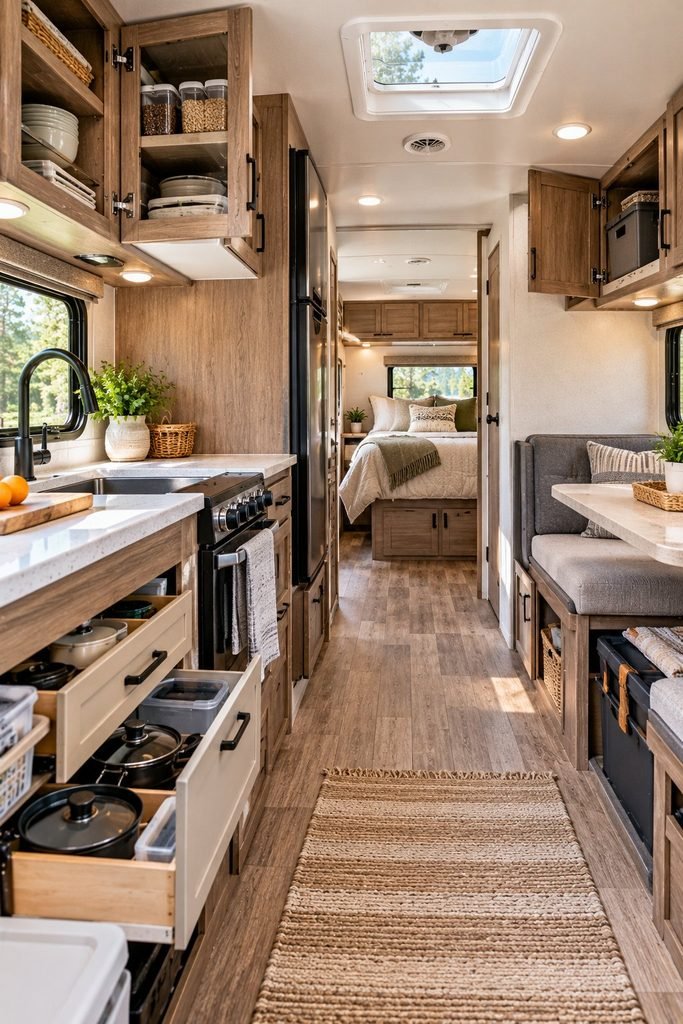
Buying useful RV equipment does not mean purchasing every item on a camping checklist. The best choices depend on your vehicle, the type of trips you take, and the space available for storage.
Start by identifying the equipment your RV requires. Electrical protection, suitable water connections, and safe leveling equipment deserve attention because they support important parts of your setup. Confirm that each item matches your vehicle’s specifications before buying it.
Next, think about where you camp. Travelers who regularly stay at full hookup campgrounds may need different equipment from those who prefer remote campsites without electricity or water connections.
A portable power solution may be a priority for one traveler, while another may get more use from compact kitchenware and storage organizers.
Storage should also influence your decisions. Measure cabinets and exterior compartments before ordering bulky products. Consider the weight of each item, how often you will use it, and whether you already own something that performs the same job.
Finally, compare durability, safety features, warranty coverage, and replacement costs rather than choosing products based on price alone. An inexpensive item that breaks quickly may not provide good value over several trips.
RV Must Haves You Should Buy First
If you are building your RV equipment collection from scratch, prioritize items that support safe operation and essential campsite connections. Your first purchases should depend on the equipment already supplied with your RV and the manufacturer’s recommendations.
A practical starting order is:
- Electrical protection suited to your RV.
- A drinking water safe hose and appropriate pressure regulator.
- A compatible sewer hose kit if you need one.
- Leveling blocks and wheel chocks as required for your setup.
- A tire pressure monitoring system or other suitable tire monitoring equipment.
- A first aid kit and compact tool kit.
- Storage organizers, lighting, and comfort accessories.
You do not necessarily need to buy all 15 items before your first trip. Check what came with your RV, test the equipment you already own, and purchase missing essentials first. You can add the remaining conveniences as you discover what makes your particular setup easier to use.
Frequently Asked Questions
1. What are the most important must have items for an RV?
The most important RV essentials include an electrical surge protector, drinking water hose, water pressure regulator, sewer hose kit, leveling blocks, tire pressure monitoring system, and first aid kit.
The exact equipment you need depends on your RV type, existing equipment, and camping style.
2. What should I buy first for my new RV?
Start with essential safety and hookup equipment that your RV does not already include. Check the electrical requirements, water connections, leveling equipment, and tire specifications before purchasing anything. A basic tool kit and first aid kit are also useful early purchases.
3. What RV accessories make camping more comfortable?
Folding camping chairs, an outdoor RV mat, a rechargeable lantern, collapsible kitchenware, and compact storage organizers can make campsite life more comfortable.
Choose accessories that fit your available storage space and suit the activities you enjoy.
4. What should I keep in my RV at all times?
Keep the essential equipment required for your RV’s safe operation, along with a first aid kit, basic tools, a flashlight, and suitable emergency supplies.
Check your RV manufacturer’s recommendations and adjust your supplies for the season, destination, and length of each trip.
5. Do I need a surge protector for my RV?
An appropriately rated RV surge protector or electrical management system is strongly recommended when connecting to campground power.
Depending on the model, it can help protect against electrical surges and detect certain wiring or voltage problems. Choose one that matches your RV’s 30 amp or 50 amp electrical service.
6. How can I save space when packing RV essentials?
Use lightweight storage bins, collapsible kitchenware, drawer dividers, and compact tools. Measure your cabinets before purchasing organizers, secure loose equipment before traveling, and avoid packing duplicate items. Keeping frequently used supplies accessible also makes a small RV easier to manage.
7. What should I pack for an RV trip without hookups?
For a trip without electrical, water, or sewer hookups, consider your fresh water capacity, wastewater tank capacity, battery needs, lighting, and food storage requirements.
A suitable portable power solution, extra drinking water where appropriate, and efficient water conservation equipment may be helpful. Always follow your RV manufacturer’s operating limits.
8. How do I keep my RV organized during a road trip?
Give everyday items designated storage spaces, use containers that fit your cabinets, and secure equipment before driving.
Keep cleaning supplies near the entrance, separate fresh water equipment from sewer equipment, and return items to their assigned locations after use.
9. Are expensive RV accessories worth buying?
Not always. Spend more when durability, safety features, compatibility, or reliable performance justify the cost.
For decorative accessories and simple storage products, affordable options may work just as well. Compare specifications and reviews, and avoid buying equipment you are unlikely to use.
10. What tools should every RV owner carry?
A practical RV tool kit can include screwdrivers, pliers, an adjustable wrench, a tape measure, a flashlight, utility scissors, and suitable replacement fasteners.
Add tools specific to your RV when recommended by the manufacturer. Leave unfamiliar electrical, plumbing, and mechanical repairs to qualified professionals.
Final Thoughts
The best RV must haves are the items that solve everyday problems without creating more clutter.
Electrical protection, reliable water connections, appropriate leveling equipment, and tire monitoring support a safer and more manageable trip.
Compact kitchenware, outdoor seating, lighting, and storage containers make life at the campsite more comfortable.
I would rather carry a smaller collection of dependable, useful equipment than fill every cabinet with accessories that rarely leave their packaging.
Start with the essentials that suit your RV, consider the places you plan to visit, and add other items as your needs become clearer.
With a thoughtful selection of RV accessories, you can spend less time dealing with disorganized gear and more time enjoying the freedom, scenery, and flexibility that make RV travel worthwhile.


