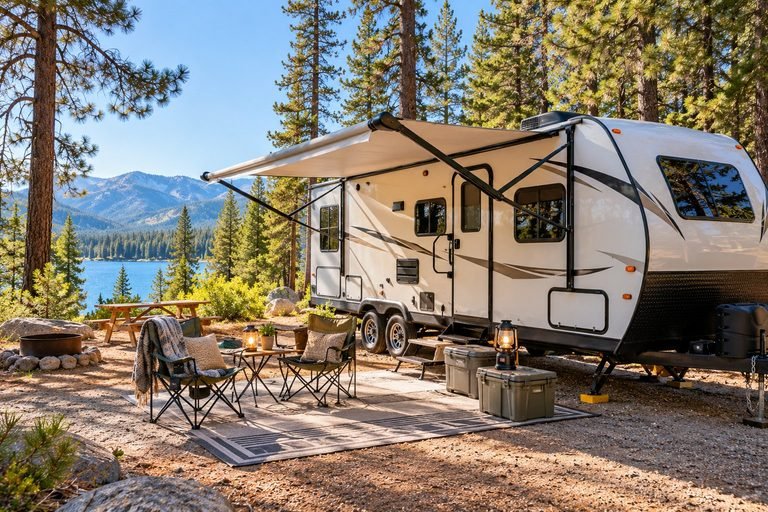
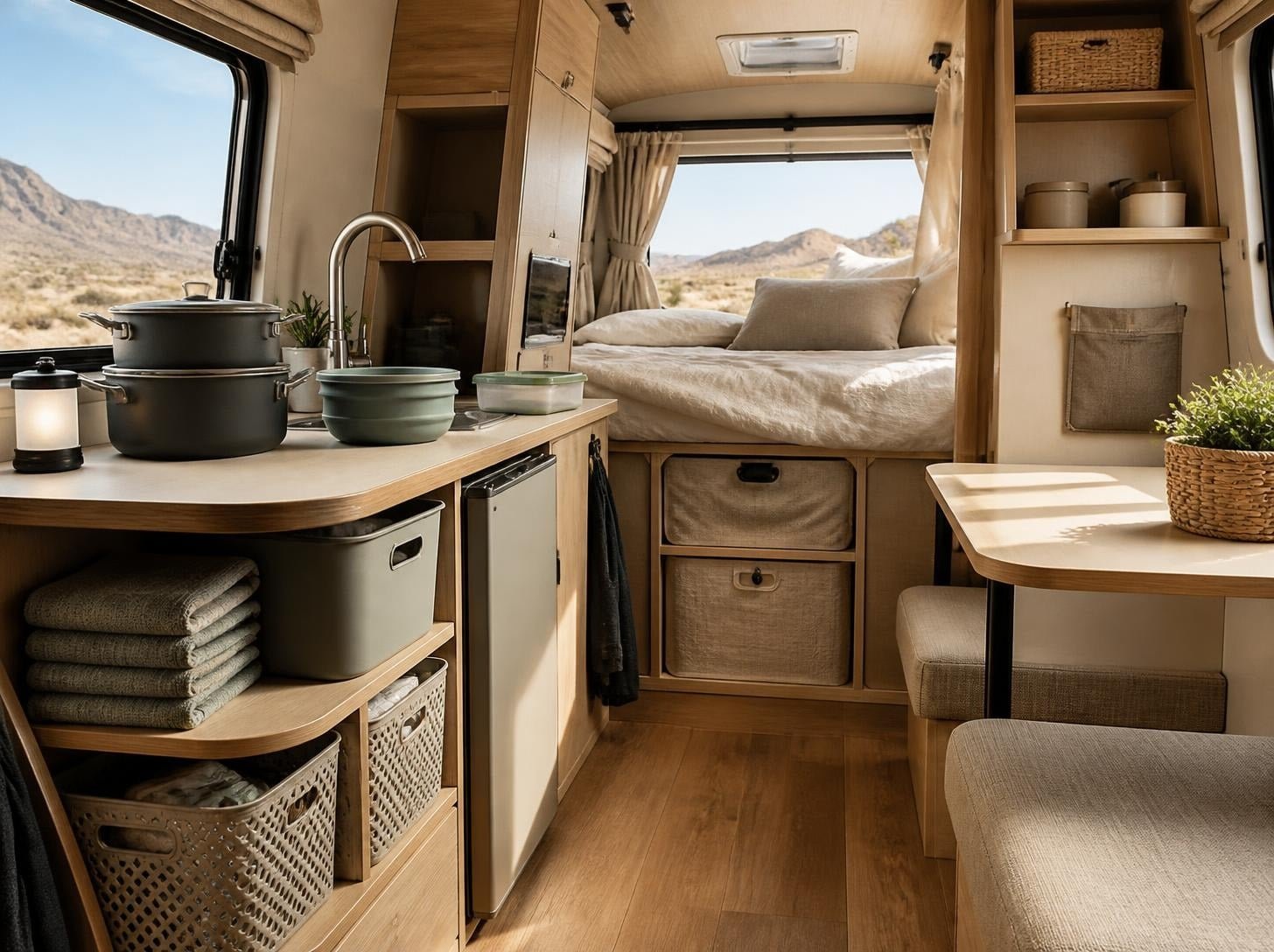
35 Budget Friendly Tiny Camper Essentials Worth Buying
Living or traveling in a tiny camper can be surprisingly comfortable without spending a fortune on expensive gear.
The trick is knowing which essentials are genuinely useful, which products can serve more than one purpose, and where a cheaper option works just as well as a premium alternative. When every inch of your camper matters, even a small purchase should make daily life easier.
From compact cooking equipment and space-saving organizers to affordable lighting, bedding, and cleaning supplies, the right essentials can help you enjoy your trips without stretching your budget.
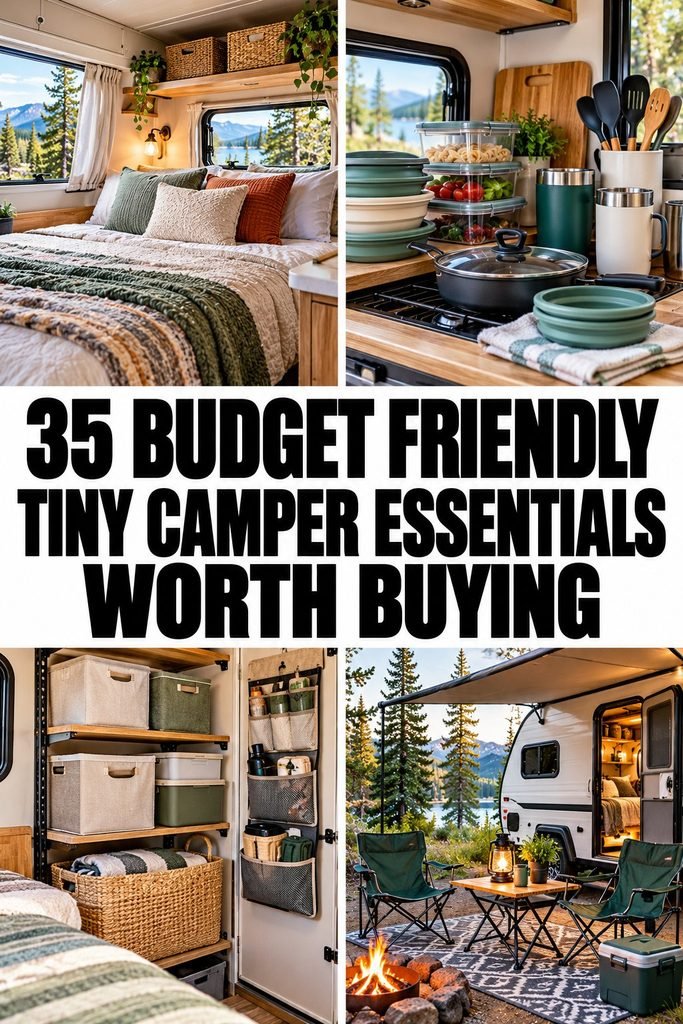
You do not need a camper packed with fancy gadgets to have a comfortable setup. A few carefully chosen items can make cooking, sleeping, staying organized, and spending rainy evenings inside much more enjoyable.
In this guide, we will look at budget-friendly tiny camper essentials worth buying, with practical ideas for choosing affordable products that fit small spaces.
Whether you are outfitting your first mini camper, upgrading an older setup, or preparing for weekend road trips, these items can help you make the most of your space and money.
1. Collapsible Kitchenware

Kitchen supplies can take up more room than expected in a tiny camper. Full-size bowls, colanders, and food containers quickly crowd small cabinets, leaving little space for groceries or cooking equipment. Collapsible kitchenware offers a practical way to keep useful cooking items without dedicating an entire cupboard to them.
Look for collapsible silicone bowls, measuring cups, colanders, and washing basins that flatten or fold when they are not in use. Many options are lightweight and easy to tuck into narrow drawers or stack beside other kitchen essentials.
Before buying, check the product’s dimensions in both its expanded and collapsed forms. Some collapsible items still take up considerable space when folded, so measurements matter more than attractive product photos.
Budget-friendly buying tip: Start with two or three pieces you will use regularly instead of purchasing a large kitchen set. A collapsible colander and a compact washing basin may be more valuable than a dozen specialty gadgets.
Choose food-safe materials and check the manufacturer’s temperature instructions before placing silicone items in a microwave, oven, or dishwasher.
2. Stackable Food Storage Containers

Food storage becomes easier when containers stack neatly and fit together without wasting cabinet space. In a tiny camper, mismatched tubs and half-open packages can quickly turn a small pantry into a frustrating mess.
Affordable stackable containers can hold pasta, rice, cereal, snacks, tea bags, and other dry ingredients. Transparent containers are particularly useful because you can see what remains without opening every lid. For food that comes in flexible packaging, a few reusable airtight containers can also help keep ingredients fresh after opening.
You do not need to replace every package in your pantry. Start with the foods you carry most often and choose containers that fit your existing shelves.
Budget-friendly buying tip: Measure your cabinets before ordering a container set. A smaller collection of matching containers that fits your shelves is often more useful than a large set with awkward dimensions.
Secure containers before driving, especially if they contain liquids or fragile ingredients. Even a well-organized cabinet can become messy when items slide around on the road.
3. Battery-Powered LED Lights

Good lighting makes a small camper feel more welcoming, especially when you arrive at a campsite after sunset. However, installing additional hardwired lights can cost more than you want to spend on a budget setup.
Battery-powered LED lanterns, rechargeable lights, and adhesive puck lights can provide extra illumination without requiring a complicated installation. They are useful inside storage cabinets, near the cooking area, or beside the bed when the built-in lighting does not reach every corner.
Look for adjustable brightness, a dependable battery, and a charging method that suits your setup. Rechargeable models may cost more initially but can save money on disposable batteries over time.
Budget-friendly buying tip: Choose one versatile lantern for general lighting and one smaller light for a dark cabinet or bedside area. You can add more after you discover where you actually need them.
Use lights according to the manufacturer’s instructions, keep charging equipment away from moisture, and avoid leaving lights or batteries in places where they could overheat.
4. Compact Cleaning Supplies

A tiny camper gets dirty quickly because cooking, sleeping, and relaxing often happen within the same small area. Crumbs can spread across the floor, muddy shoes leave marks near the entrance, and cooking splashes are harder to ignore when the kitchen occupies only a short countertop.
A compact cleaning kit helps you handle small messes before they become bigger jobs. Useful items include microfiber cloths, a small dustpan and brush, a compact sponge, a reusable spray bottle, and a small supply of suitable cleaning products.
You rarely need several large bottles of cleaner. Carrying a few carefully selected products in smaller containers can reduce clutter and leave more room for other essentials. Make sure any product transferred to a different container is labeled clearly and stored safely away from food.
Budget-friendly buying tip: Use washable microfiber cloths rather than relying entirely on disposable wipes. A small set can handle counters, tables, and other surfaces while reducing repeat purchases.
Choose cleaning products that are suitable for your camper’s surfaces, and never mix household chemicals. Store liquids upright in a secure container before traveling.
5. A Folding Camping Table

A small folding table gives you extra workspace without permanently taking up valuable room inside your camper. It can serve as an outdoor cooking station, a place to prepare snacks, or a convenient surface for eating when the weather is pleasant.
This is especially useful if your camper has a tiny countertop that barely accommodates a cutting board and a plate. Setting up a table outside can keep cooking messes out of the sleeping area and make meal preparation more comfortable.
Choose a table that folds flat and is light enough to carry without difficulty. Pay attention to the height, surface size, weight capacity, and stability. A very small table may be inexpensive, but it will not be much help if it cannot hold your stove or meal supplies safely.
Budget-friendly buying tip: Consider a basic folding table rather than a specialty camper table with extra features you may never use. If you already own a sturdy portable table, test whether it meets your needs before buying another.
Use cooking equipment only on surfaces approved for that purpose, and follow the stove manufacturer’s clearance and ventilation requirements. Keep open flames away from the camper, awnings, and flammable materials.
6. Magnetic Hooks and Utility Clips

Small items can create surprising amounts of clutter in a camper. Keys end up on the counter, dish towels have nowhere convenient to hang, and lightweight accessories often get moved from one surface to another.
Magnetic hooks and utility clips offer an inexpensive way to keep frequently used items accessible. Depending on your camper’s interior, they may work on suitable metal surfaces such as a refrigerator or magnetic panel. Clips can also be useful for securing lightweight bags or keeping snack packets closed.
Before buying magnetic products, check whether the surface is actually magnetic. Many cabinets and wall panels look metallic but will not hold a magnet securely. For nonmagnetic surfaces, removable hooks designed for the material may be a better choice.
Budget-friendly buying tip: Buy a small multipack of hooks and test them in the places where you need extra hanging space. Check their stated weight limits rather than assuming all magnetic hooks are equally strong.
Use them for lightweight items, and remove or secure anything that could fall while the camper is moving.
7. A Compact Water Container

Having an extra water container can be useful when you need water for washing hands, rinsing equipment, or preparing drinks away from your main water supply. It can also provide flexibility when you are camping at a site with limited access to convenient water facilities.
A collapsible container can be a sensible choice for tiny campers because it takes up less storage space when empty. Rigid containers may be more durable for frequent use, so the best option depends on how you camp and how often you refill it.
Check the capacity, handle strength, cap design, and ease of cleaning before purchasing. A container with a tap can be convenient, but the tap should close securely to prevent leaks during transport.
Budget-friendly buying tip: Choose a capacity that you can comfortably lift when full. A very large container may appear economical, but it can be difficult to handle in a cramped campsite.
Use a food-grade container for drinking water, keep it clean, and follow local guidance for safe water storage. Do not assume water collected from an unfamiliar source is safe to drink.
8. Microfiber Camping Towels
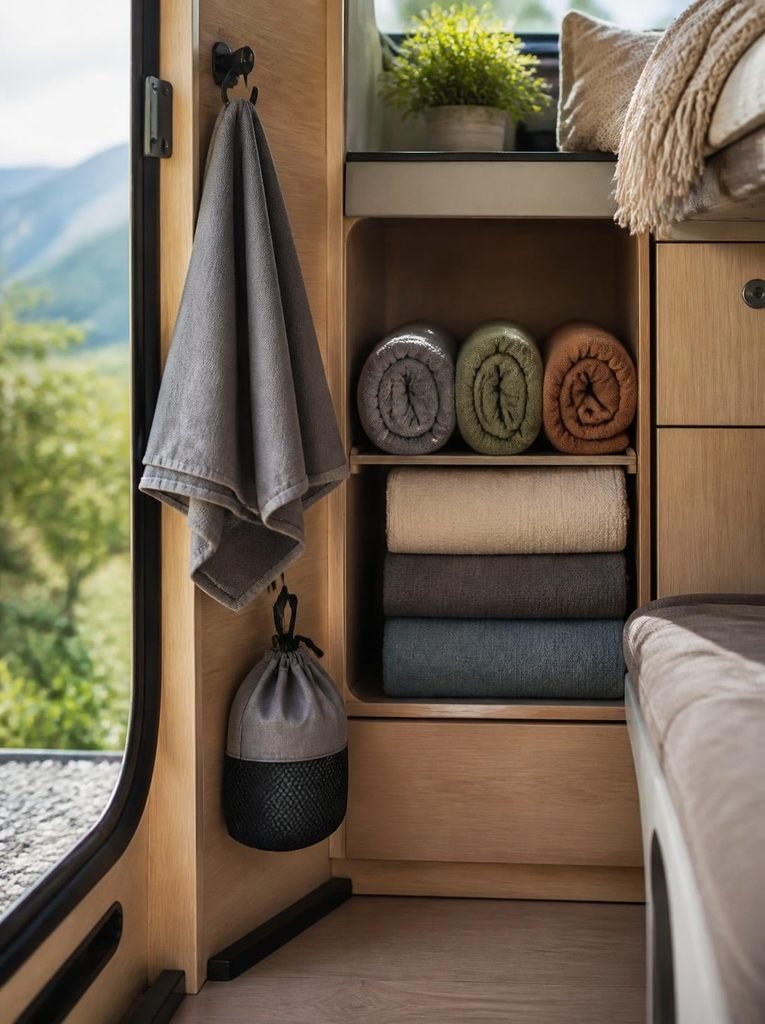
Regular bath towels can occupy a surprising amount of cabinet space in a tiny camper. They also take longer to dry in humid weather or when you cannot hang them somewhere with good airflow.
Microfiber camping towels are lightweight, pack down small, and can be convenient for showers, swimming, washing up, or drying off after a rainy walk. Many come with a small storage pouch, making them easy to keep in a drawer or travel bag.
Check the towel’s dimensions before purchasing. An inexpensive hand towel may not be large enough for showering, while an oversized travel towel may not fit the compact storage space you have available.
Budget-friendly buying tip: Start with one medium or large towel for each regular camper occupant, plus a smaller towel for quick cleanups. Wash and dry them according to the manufacturer’s instructions so they remain fresh between trips.
Allow used towels to dry fully before packing them away. Storing damp fabric in a closed camper can encourage unpleasant odors and mildew.
9. Reusable Shopping Bags

Reusable shopping bags are inexpensive, lightweight, and useful for much more than grocery shopping. In a tiny camper, they can carry supplies from the store, separate dirty laundry, hold snacks for a day trip, or organize loose items during travel.
Choose bags that fold into a small pouch or flatten easily into a drawer. A few washable bags in different sizes can replace several bulky storage baskets for temporary use.
The most useful bags are the ones you can find quickly when you need them. Store them in one designated spot near the camper door or inside a kitchen cabinet instead of scattering them around the vehicle.
Budget-friendly buying tip: Reuse sturdy shopping bags you already own before purchasing a matching set. If you do buy new ones, prioritize strong handles, washable material, and a compact folded size.
Keep food bags clean and dry, and avoid using ordinary shopping bags to carry heavy or sharp equipment that could tear through the fabric.
10. A Compact First-Aid Kit
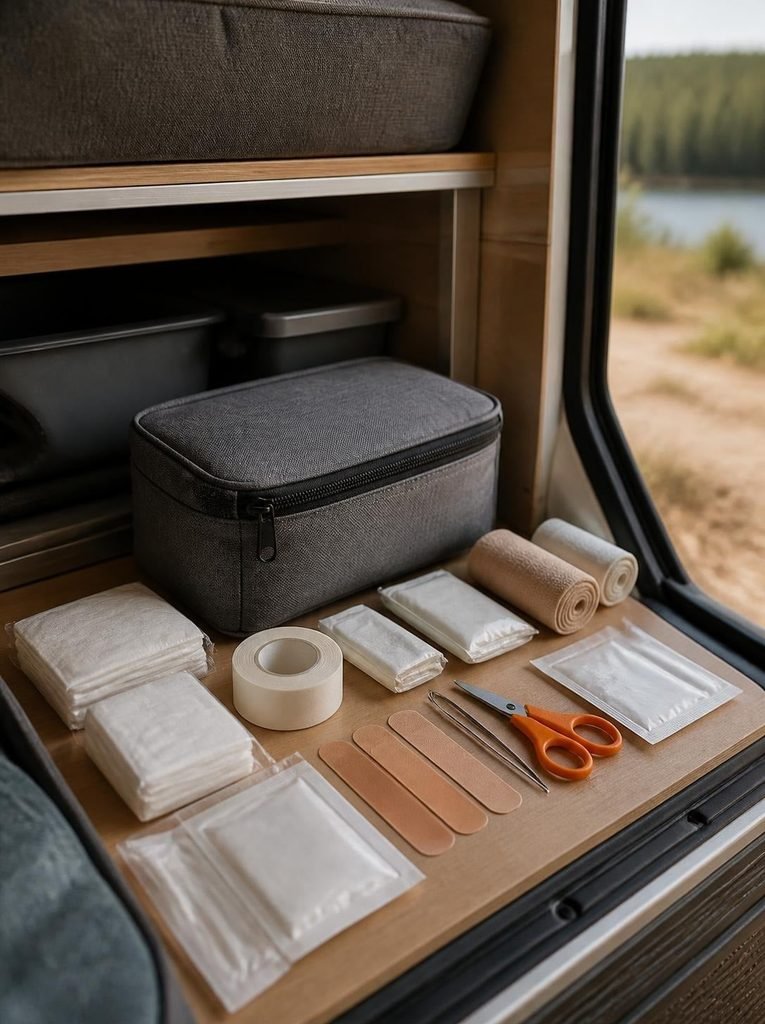
A first-aid kit is one of the essentials worth prioritizing even when you are trying to keep camper purchases inexpensive. Small cuts, blisters, and minor scrapes can happen while setting up camp, preparing meals, or walking along uneven trails.
A compact kit can contain adhesive bandages, sterile gauze, medical tape, disposable gloves, and other appropriate basic supplies. Check the contents carefully before buying because some inexpensive kits contain many small items but lack the essentials you may need.
Choose a pouch or case that stays organized and can be reached quickly. Keep it in a known location rather than burying it beneath clothing or camping equipment.
Budget-friendly buying tip: Compare the actual contents of different kits instead of choosing solely by price or item count. If you already have suitable supplies at home, you may be able to assemble a compact kit and purchase only what is missing.
Check expiration dates and replace used or damaged supplies. Your kit should complement, not replace, professional medical care when an injury or illness requires it.
11. Blackout Curtains or Thermal Window Covers
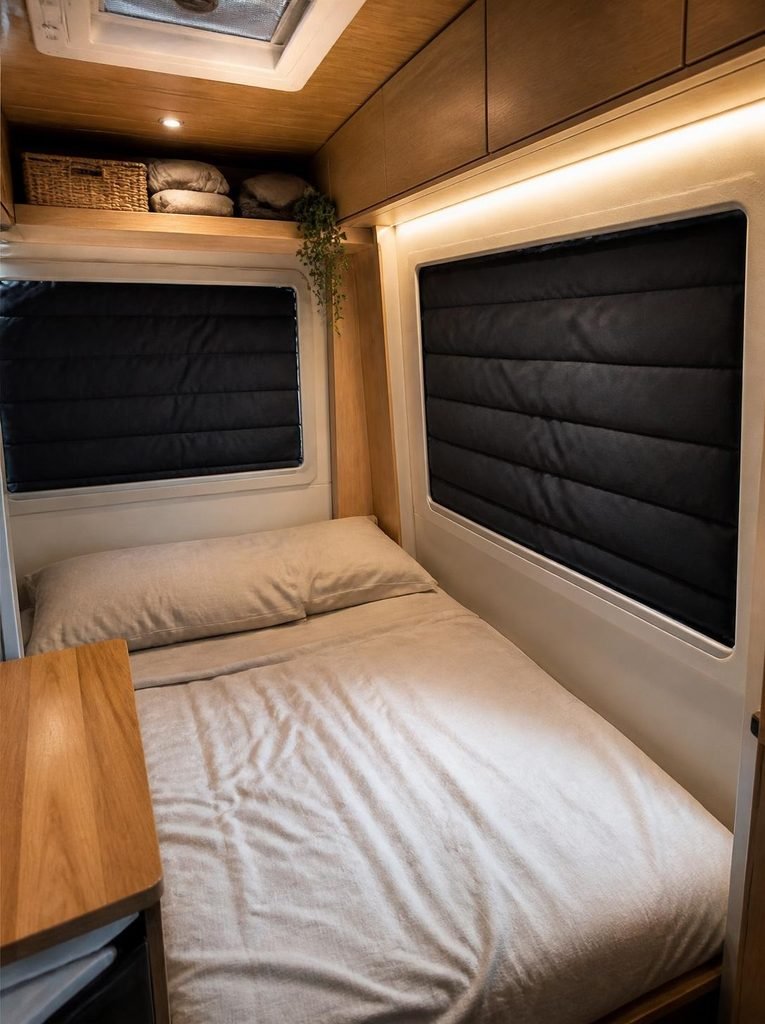
Blackout curtains or thermal window covers can make a tiny camper more comfortable without requiring a major investment. They help block outside light, provide privacy, and reduce the amount of heat entering through the windows during sunny weather. In cooler conditions, insulated covers can also help limit heat loss.
For a budget-friendly option, measure each window carefully before buying. Universal thermal panels or DIY window covers made from suitable insulating material can cost less than custom-made products. Choose a design that fits securely without interfering with ventilation, emergency exits, or the driver’s visibility when the camper is moving.
These covers are especially useful for campers parked in bright locations, busy campgrounds, or areas where nighttime temperatures change considerably.
12. Compact Bedding or a Sleeping Bag

Comfortable bedding makes a noticeable difference in a small camper, but bulky blankets and oversized pillows can quickly consume valuable storage space.
Choose bedding that fits your sleeping area and folds or compresses easily during the day. A compact sleeping bag may work well for occasional trips, while lightweight sheets, a thin comforter, and a compressible pillow can provide a more familiar sleeping arrangement.
Look for washable materials that dry relatively quickly. If your camper experiences condensation, allow bedding to air out whenever possible instead of leaving it packed away while damp.
You do not need expensive specialist camping bedding for every trip. Start with comfortable items you already own, then replace them with compact alternatives only if storage becomes a problem.
13. Nesting Pots and Pans

Nesting pots and pans are practical purchases for tiny camper kitchens because several pieces can fit together inside one cabinet. This reduces clutter and leaves more room for food, utensils, and other cooking supplies.
Choose a small set that matches the meals you regularly prepare. A saucepan, frying pan, and appropriately sized lid may be sufficient for simple breakfasts, pasta, soups, and one-pan dinners.
Before buying a set, check the dimensions of your camper’s cabinets and cooking surface. Lightweight cookware can be easier to handle in a confined kitchen, while removable handles may help with storage.
Avoid purchasing a large cookware collection simply because it comes as a bundle. In a tiny camper, a few frequently used pieces are usually more useful than a dozen pans competing for limited space.
14. Portable Rechargeable Fan
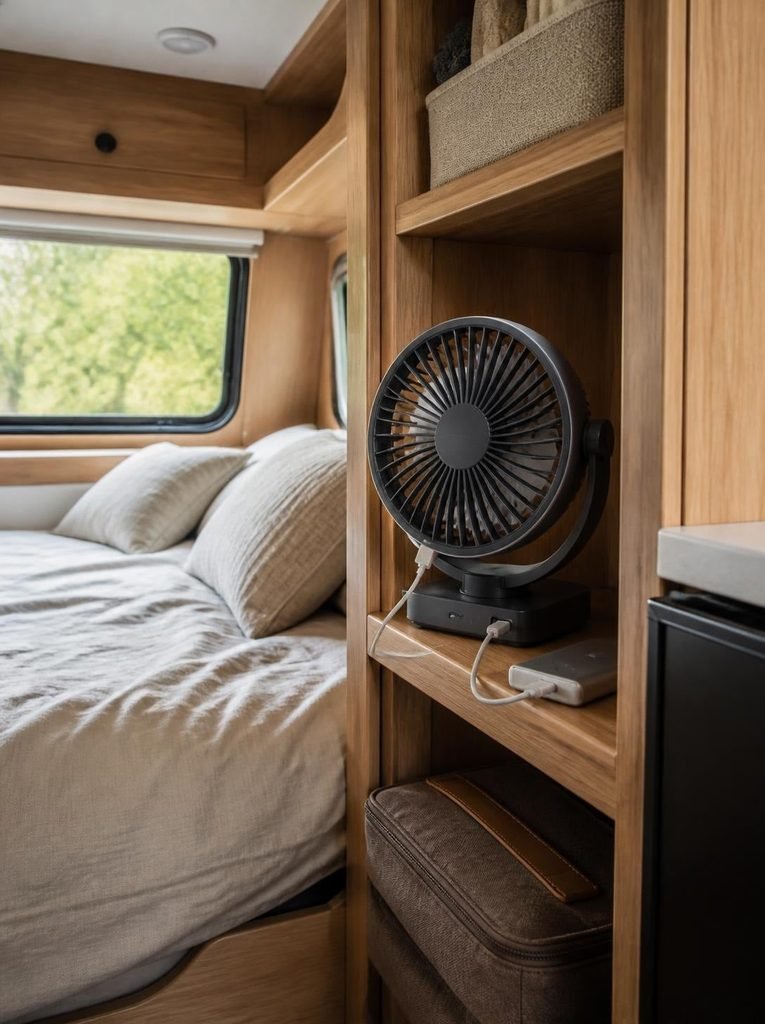
A portable rechargeable fan provides extra airflow during warm afternoons and humid nights. Because many compact campers have limited space for permanent appliances, a small fan that can sit on a shelf, clip onto a suitable surface, or hang securely is a convenient option.
Compare battery life, charging time, noise level, and fan speed before choosing one. A model with a stable base and adjustable angle can be particularly useful when the sleeping area doubles as a living space.
To save money, look for a fan that charges through USB and works with a power bank you already own. You may not need a premium model with a large battery if you mainly use it for short periods.
Remember that a fan circulates air but does not replace proper ventilation. During hot weather, park in shade when possible, open appropriate vents, and never rely on a small fan to make dangerously hot conditions safe.
15. Foldable Storage Baskets

Foldable storage baskets help organize clothing, snacks, toiletries, cleaning supplies, and miscellaneous camping gear. When empty, they collapse flat, making them useful for campers where permanent storage bins would take up too much room.
Choose baskets that fit your existing shelves or cabinets. Soft-sided versions are often lightweight, while firmer collapsible containers can make it easier to stack items neatly.
You can also repurpose baskets you already have at home before purchasing new ones. Assigning one basket to each category makes it easier to find belongings and return them to their proper place after use.
For travel days, avoid filling baskets so heavily that they become difficult to lift or shift around. Secure stored items before driving, especially when the camper has open shelves.
16. Compact Electric Kettle

A compact electric kettle can make mornings easier by providing hot water for tea, coffee, instant oatmeal, or other simple meals. It can also reduce the need to use your main cooking area for every small task.
Before buying one, confirm that your camper’s electrical system can support its wattage. High-powered kettles can draw more electricity than a small inverter or campsite power setup can safely provide.
A smaller-capacity model may be sufficient for one or two people and usually takes up less counter space. Choose a design with automatic shutoff and boil-dry protection, and store it securely when traveling.
If electricity is limited or you frequently camp without hookups, a kettle may not be worth purchasing. A small pot used on your existing cooking setup can serve the same purpose without adding another appliance.
17. Compact Portable Power Bank
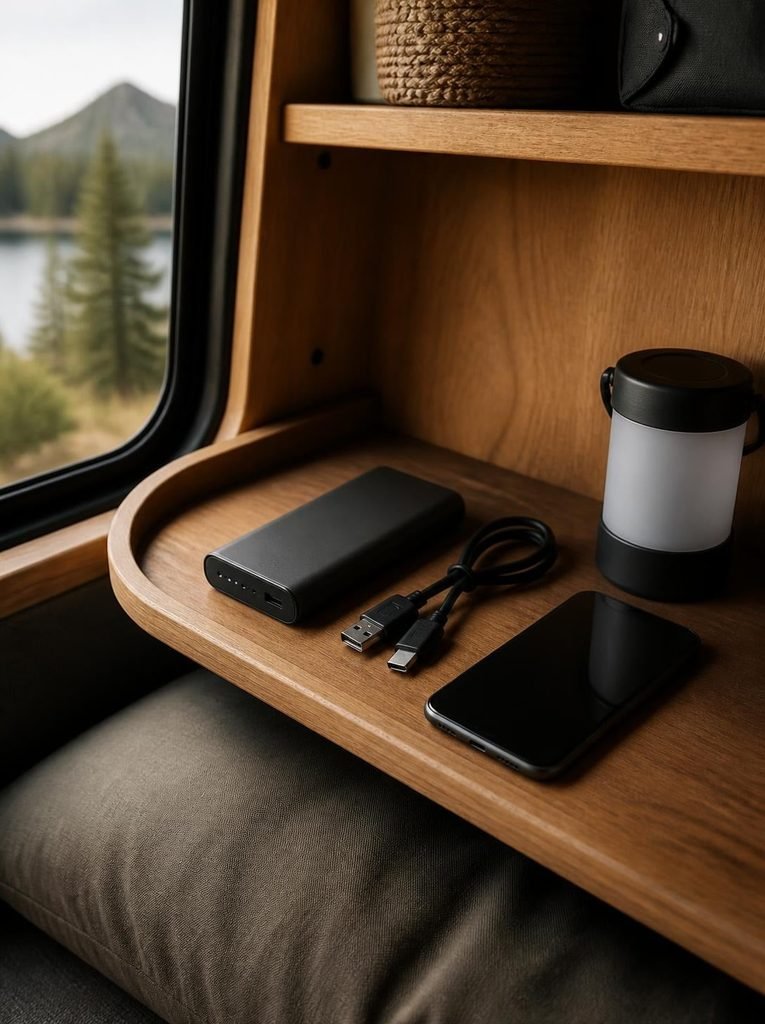
A portable power bank is useful for charging phones, headlamps, earbuds, and other small USB-powered devices. It provides backup power when you are away from electrical hookups or spending the day exploring outside your camper.
For a budget-friendly purchase, consider how many devices you charge and how often you use them. A modest-capacity power bank may be enough for occasional weekend trips, while longer journeys may justify a higher-capacity model.
Check the available ports, charging speed, battery capacity, and compatibility with your devices. If you already own a reliable power bank, test it before buying another.
Keep it in a dry, protected location and follow the manufacturer’s storage and charging instructions. Never leave a damaged or unusually hot battery unattended.
18. Reusable Silicone Food Bags
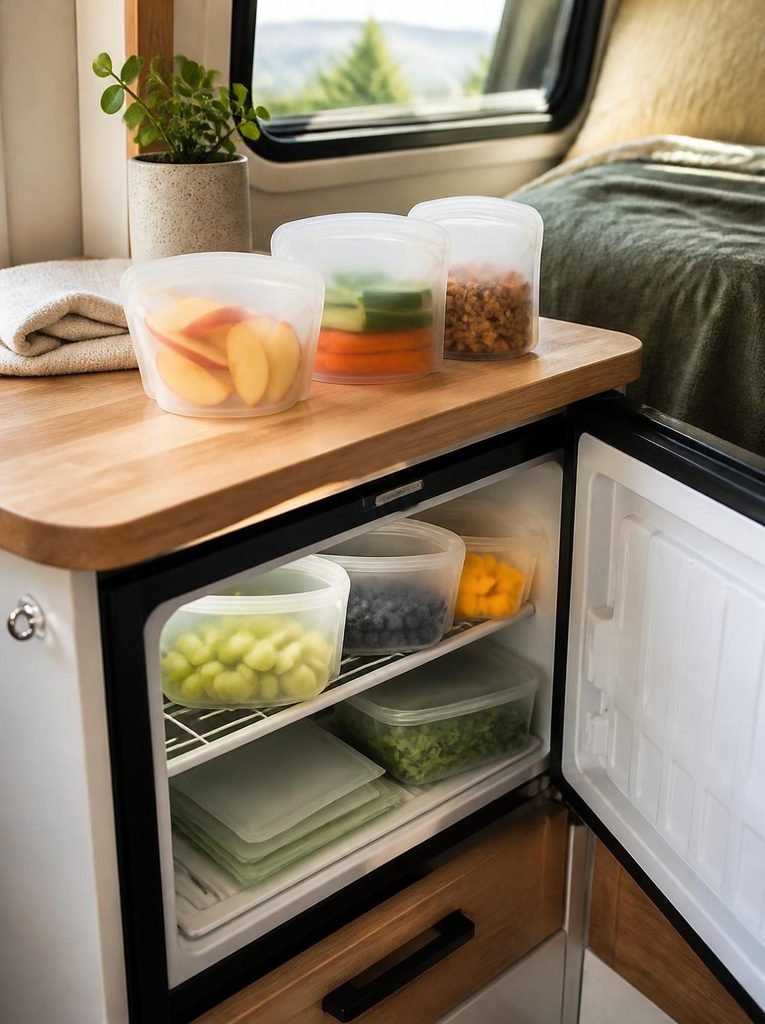
Reusable silicone food bags can help reduce disposable storage bags while keeping snacks, chopped vegetables, leftovers, and small ingredients organized.
Their flexible shape makes them easier to fit into crowded camper refrigerators and cabinets than rigid containers. Some designs also stand upright when filled, helping prevent food from spilling during preparation.
Choose a small assortment of sizes rather than purchasing a large set immediately. Check whether the bags are dishwasher-safe and suitable for the temperatures at which you intend to use them.
Clean them thoroughly after storing oily foods or ingredients with strong odors, and allow them to dry completely before putting them away. This helps prevent lingering smells and moisture buildup in your limited storage space.
19. Compact Clothesline and Clips

A compact clothesline is a simple way to dry swimsuits, dish towels, lightweight clothing, and damp camping accessories. It can be particularly helpful on longer trips when laundry facilities are unavailable or expensive.
Look for a lightweight line that packs into a small pouch. Some versions include clips or adjustable tensioners, reducing the number of separate accessories you need to carry.
Before setting it up, check campground rules and choose a suitable location that does not obstruct walkways or damage trees. Use designated attachment points where available.
Avoid hanging heavy, waterlogged clothing from a weak line or an unsuitable camper fixture. For a budget-friendly alternative, a short length of suitable cord and a few sturdy clips may be enough for occasional use.
20. Compact Trash Can With a Lid

A small trash can helps keep food wrappers, packaging, and everyday waste under control in a tiny camper. A lid is especially useful for containing odors and keeping rubbish out of sight.
Measure the space beneath your sink, beside your cabinet, or near the cooking area before choosing a container. A slim rectangular design may fit better than a round bin, while a collapsible model can save room when not in use.
Use appropriately sized liners and empty the bin regularly, especially when it contains food scraps. Keep waste secured during travel so it cannot spill into the living area.
You can also reuse a clean container with a suitable lid instead of buying a specialized camping trash can. The important features are a practical size, easy cleaning, and a secure place to store it.
21. Compact Cutting Board
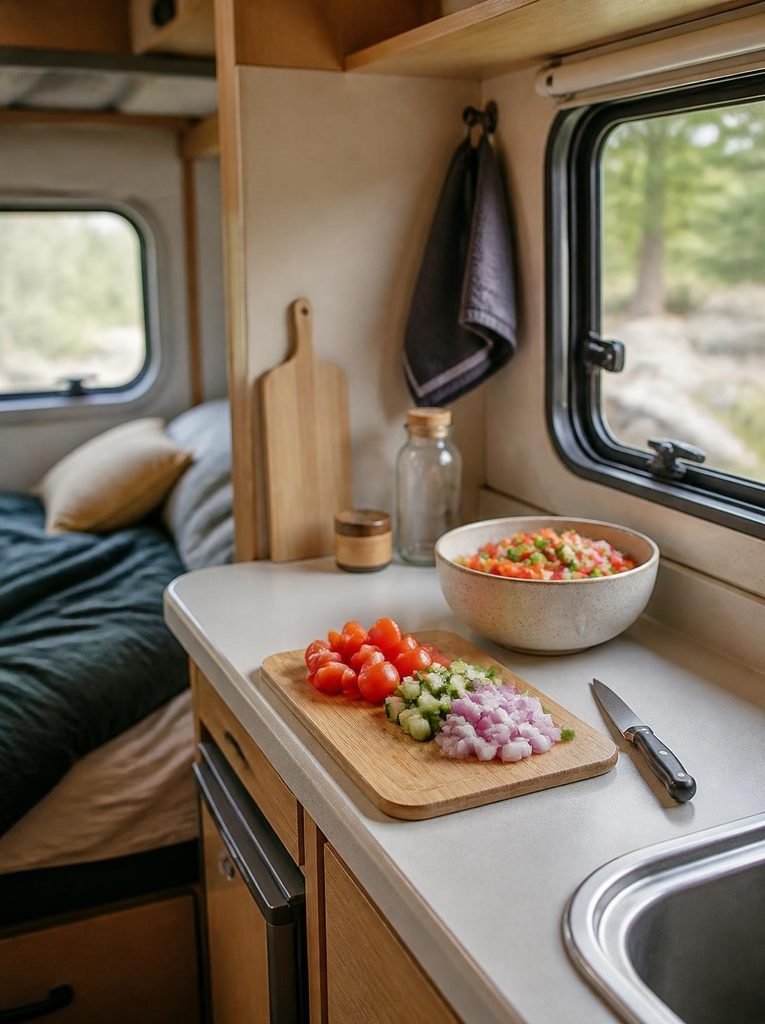
A compact cutting board gives you a convenient surface for preparing vegetables, fruit, sandwiches, and other simple camper meals. A large kitchen board can be awkward in a small cooking area, so a smaller version may be more practical.
Choose a board that provides enough room for your usual ingredients without covering the entire counter. Flexible boards can be easy to store, while rigid boards may offer a more stable cutting surface.
Wash the board after preparing food and keep raw meat separate from ready-to-eat ingredients. If you prepare raw meat in your camper, proper cleaning is especially important because the limited sink space can make food preparation more challenging.
Before buying a new board, consider whether a suitable board from your home kitchen will fit. Reusing existing kitchen equipment is one of the easiest ways to keep camper setup costs down.
22. Compact Dish-Drying Rack

A compact dish-drying rack helps manage plates, cups, and utensils without leaving the camper counter covered in wet dishes. This is particularly useful when the sink and food preparation area share the same small surface.
Look for a foldable rack or a design that fits directly inside your sink. A removable drip tray can help protect countertops from standing water.
Choose a size based on the number of dishes you normally wash at one time. Solo campers may only need a small rack, while couples may benefit from a slightly larger model.
If your counter space is extremely limited, a clean drying mat may be a cheaper alternative. Whichever option you choose, empty collected water and allow the rack or mat to dry fully between uses.
23. Compact Fire Extinguisher

A suitable fire extinguisher is an important safety item for any camper. Cooking equipment, electrical systems, fuel-powered appliances, and confined living spaces make it essential to plan for emergencies.
Choose an extinguisher appropriate for the potential fire risks in your camper and follow the manufacturer’s guidance. Check local regulations and your camper’s manual for specific requirements.
Keep the extinguisher accessible, securely mounted, and easy to identify. Do not bury it beneath bedding or pack it inside a storage box that would be difficult to open quickly.
Check its condition and expiration or service requirements regularly. Although it may not feel like an exciting camper purchase, reliable safety equipment deserves priority over decorative accessories.
24. Basic Tool Kit

A compact tool kit can help with small repairs and routine adjustments during a trip. Loose screws, minor hardware problems, and simple equipment issues are easier to address when you have the appropriate tools available.
A practical starter kit might include a screwdriver with interchangeable bits, pliers, an adjustable wrench, a tape measure, and a small flashlight. Add tools based on the specific equipment installed in your camper rather than purchasing a large set you rarely use.
Store the tools in a secure case so loose pieces do not slide around during travel. Keep the kit in an accessible location, but avoid placing heavy tools where they could become dangerous projectiles in a sudden stop.
For budget-conscious campers, a small household tool kit may already contain everything needed for basic tasks.
25. Compact Outdoor Mat
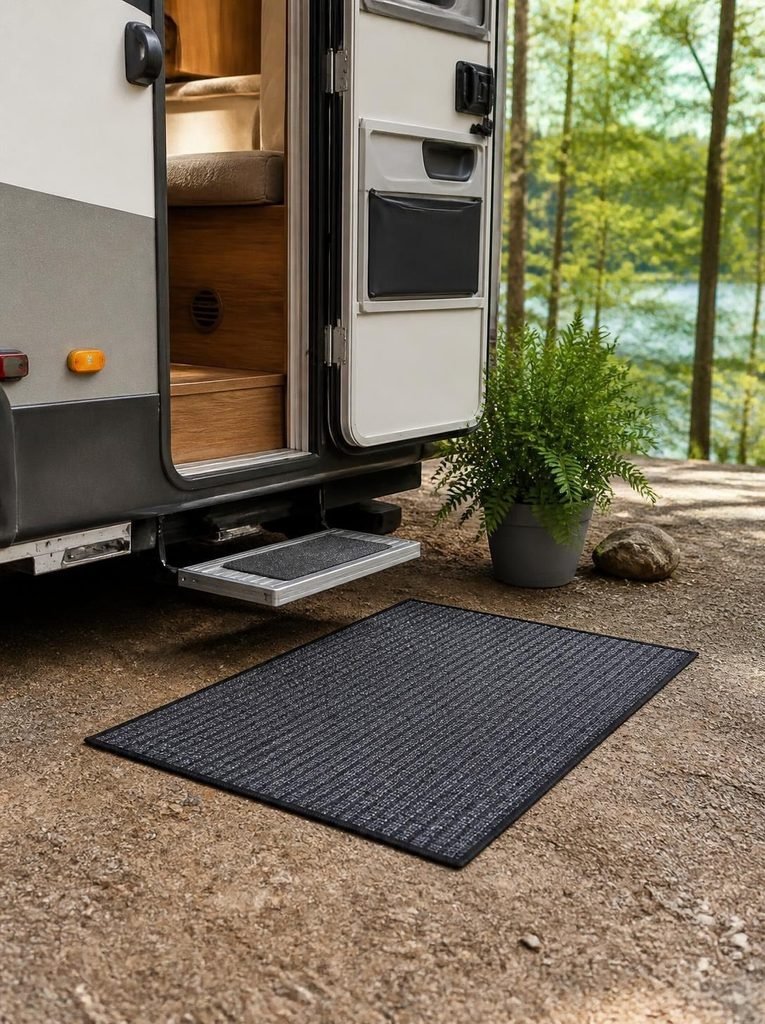
An outdoor mat helps reduce the amount of dirt, grass, and debris carried into your camper. Placing one near the entrance creates a convenient spot to wipe shoes before stepping inside.
Choose a mat that fits your doorway and folds or rolls easily for storage. A lightweight, quick-drying design is generally easier to manage than a thick mat that holds moisture.
Shake it out regularly and allow it to dry before storing it. Putting away a wet mat can introduce unnecessary moisture into your storage area.
You do not need an expensive RV-specific model. A durable outdoor mat from a home goods store may work just as well if it is the right size and suitable for outdoor conditions.
26. Portable Privacy Screen or Changing Shelter
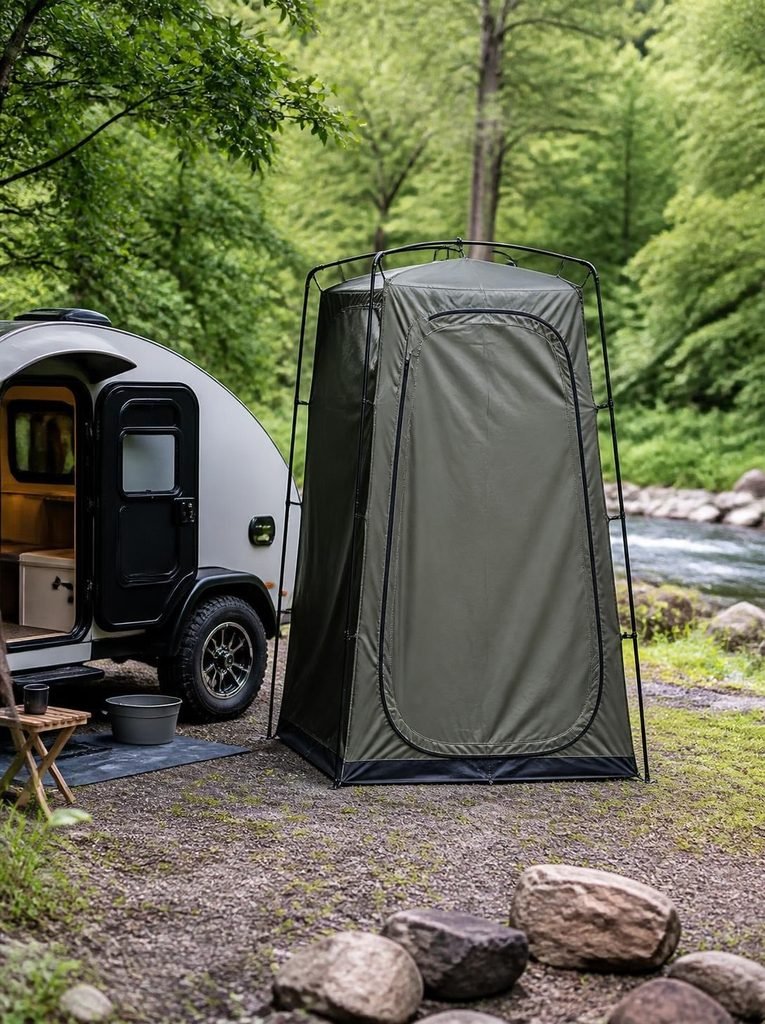
A portable privacy screen or changing shelter can be useful when camping at sites with shared facilities or limited privacy. It may provide a convenient changing area or, when designed and positioned appropriately, shelter for certain outdoor activities.
Before purchasing one, consider how frequently you will use it and how much storage space it requires. A basic pop-up shelter may be affordable, but it still needs room to dry and a secure place to travel.
Check campsite rules before setting it up, particularly if you intend to use it near shared facilities. Secure the shelter properly and avoid using it in strong winds or severe weather.
If you usually camp at sites with clean shower and changing facilities, you may be able to skip this purchase entirely and save your money for more frequently used essentials.
27. Compact Camp Stove and Suitable Cookware
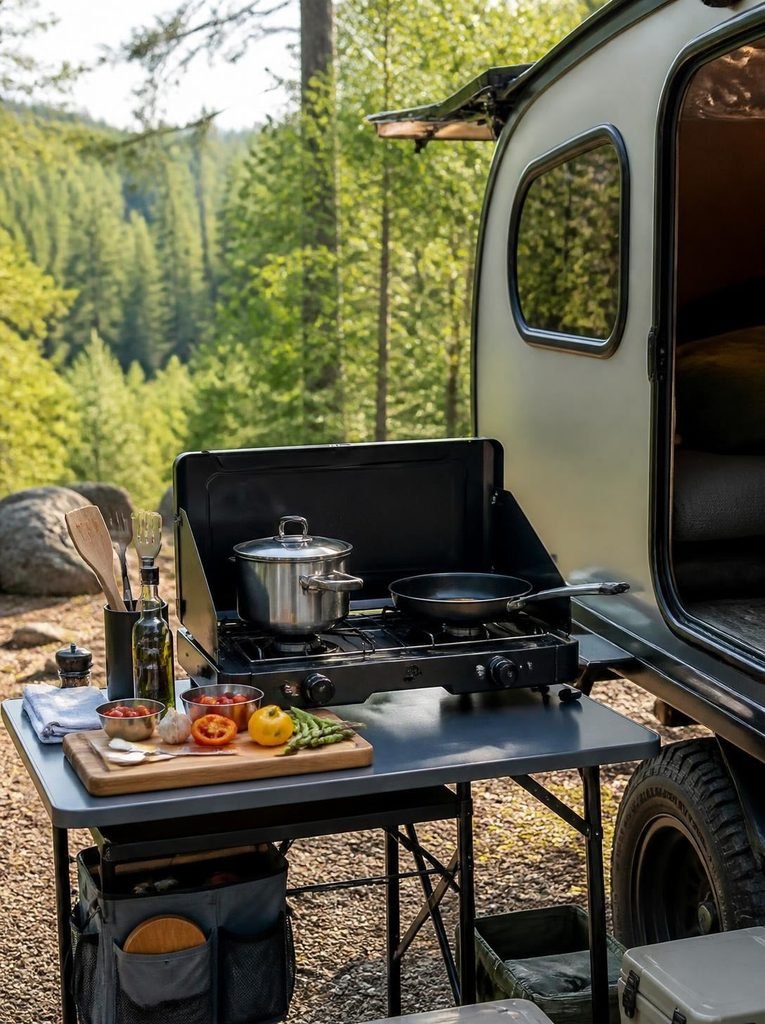
A compact camp stove can provide a useful cooking option when your camper’s kitchen is limited or you want to prepare meals outdoors. However, the right choice depends on your existing equipment, camping style, and access to electricity.
If your camper already has a reliable cooking appliance, you may not need another stove. For occasional outdoor cooking, a simple model compatible with the appropriate fuel may be sufficient.
Always use fuel-powered stoves outdoors in accordance with the manufacturer’s instructions. Never operate a camp stove inside an enclosed camper, tent, or other poorly ventilated space because of carbon monoxide and fire risks.
Before buying, compare fuel availability, replacement costs, stability, cleaning requirements, and storage dimensions. A low purchase price may not represent the best value if the fuel is expensive or difficult to find.
28. Reusable Food Wraps and Clips

Reusable food wraps and clips can help keep opened packages, sandwiches, and leftover ingredients organized. They are particularly handy when your camper refrigerator has limited shelf space and food needs to be packed into smaller portions.
Choose products that are easy to clean and suitable for the foods you commonly carry. A few dependable clips may be enough if you already use reusable containers.
Keep raw foods separated from ready-to-eat ingredients, and refrigerate perishable food promptly. Reusable wraps are useful for covering food, but they should not replace appropriate food-safe containers when secure storage is necessary.
To avoid unnecessary spending, assess your existing kitchen supplies first. A combination of reusable containers and a handful of clips may provide all the organization you need.
29. Compact Portable Vacuum or Handheld Sweeper

Sand, crumbs, leaves, and dirt can accumulate quickly in a small camper. A compact cleaning tool helps keep the floor manageable without requiring a full-sized household vacuum.
A rechargeable handheld vacuum may be useful if your camper’s electrical setup supports convenient charging. For a cheaper option, a small broom and dustpan can handle everyday messes without consuming battery power.
Consider the floor covering, available storage space, and amount of cleaning you expect to do. A lightweight tool that is easy to reach is more likely to be used regularly than a bulky appliance stored behind other equipment.
Empty the vacuum or dustpan frequently, and clean filters according to the manufacturer’s instructions. Regular quick cleanups can prevent dirt from spreading throughout the camper.
30. Small Folding Step Stool

A folding step stool can make it easier to reach overhead cabinets, access storage areas, or complete simple cleaning tasks in a compact camper.
Choose a stable model with a weight capacity suitable for the intended user. Check its dimensions when folded, along with the locking mechanism and the surface grip.
Avoid using a stool on uneven ground or slippery flooring. Keep it folded and secured during travel so it cannot shift unexpectedly.
Before buying one, consider whether your camper’s storage is arranged efficiently enough to eliminate the need for frequent reaching. Moving everyday items to accessible shelves may be an even cheaper solution.
31. Compact Toiletry Organizer
A compact toiletry organizer keeps toothbrushes, toothpaste, soap, skincare products, and other personal-care supplies together. It can prevent small items from spreading across the bathroom shelf or kitchen counter.
Choose a bag or container with compartments that suit your routine. Water-resistant materials can be helpful in humid areas, while a hanging organizer may work if your camper has a suitable hook.
Use travel-sized bottles for products you need only in small quantities, but label them clearly to avoid confusion. Keep liquids securely closed and stored where leaks will not damage clothing or bedding.
You can also repurpose a small toiletry bag you already own. A dedicated organizer is helpful, but an expensive one is rarely necessary for a simple camper setup.
32. Compact Cooler or Insulated Food Bag
A compact cooler or insulated food bag can help carry drinks, snacks, and chilled ingredients for day trips away from your camper. It is particularly useful when you want to spend several hours outdoors without repeatedly returning to your main refrigerator.
Choose a size that matches your typical outings. A small insulated bag may be enough for drinks and lunch, while a hard-sided cooler may provide more structure for longer trips.
Remember that insulation alone does not keep food safely cold indefinitely. Use sufficient ice or frozen packs, keep the cooler closed as much as possible, and follow food-safety recommendations for perishable ingredients.
If your camper already has a dependable refrigerator and you rarely eat away from it, this purchase may be optional. Borrowing a cooler or using an insulated bag you own can help you decide whether a dedicated model is worth the expense.
33. Compact Travel Laundry Bag
A travel laundry bag provides a designated place for dirty clothes and helps separate them from clean bedding and clothing. In a tiny camper, this simple arrangement can prevent laundry from spreading across the sleeping area.
Choose a lightweight bag that folds flat when empty. Breathable fabric can be helpful for ordinary clothing, although damp towels and swimsuits should be dried separately rather than left inside a closed bag.
A washable bag is generally more practical for repeated trips. If you have limited storage space, a hanging laundry bag may work well when attached to an appropriate hook.
You do not need a specialized camping product. A pillowcase, reusable fabric bag, or small laundry sack can serve the same purpose at little or no additional cost.
34. Compact Outdoor Lantern
A compact outdoor lantern provides useful lighting around the campsite after sunset. It can illuminate a picnic table, outdoor cooking area, or space near the camper entrance.
Rechargeable lanterns can be convenient if you already have a compatible charging setup. Battery-powered versions may suit campers who want a straightforward backup option.
Compare brightness levels, battery life, charging options, and weather resistance. Adjustable brightness can help conserve power when you only need enough light to find your belongings.
Keep the lantern securely stored during travel, and carry a separate flashlight or headlamp for situations where directional light is more useful. Avoid spending extra on features you are unlikely to use.
35. Small Door Mat and Shoe Organizer
A small door mat paired with a simple shoe organizer can help keep the entrance area tidy. Shoes often collect dirt and moisture, and a designated storage spot reduces the chance of tracking debris across the camper floor.
Choose a narrow organizer that fits your available space without blocking the door or creating a tripping hazard. A small tray, low basket, or existing shoe rack may work just as well as a purpose-built camper accessory.
Limit the number of shoes you keep near the entrance to those you regularly use. Store extra footwear elsewhere to prevent the area from becoming crowded.
This is a relatively inexpensive improvement that can make a small living space feel cleaner and easier to maintain.
How to Save Money When Buying Tiny Camper Essentials
Buying affordable camper essentials is easier when you prioritize what solves an actual problem instead of purchasing every item marketed for RV living.
Measure before shopping. Check cabinet dimensions, shelf heights, counter space, and storage compartments. An inexpensive product that does not fit is still wasted money.
Use what you already own. Kitchen utensils, towels, storage baskets, cleaning tools, and toiletry bags from home may work perfectly well in a tiny camper.
Prioritize daily-use items. Bedding, lighting, basic kitchen supplies, cleaning equipment, and safety gear usually deserve attention before decorative accessories or specialized gadgets.
Choose items with more than one purpose. A storage basket can hold groceries during the trip and organize clothing at the campsite. A rechargeable light may serve as both an indoor backup and an outdoor lantern.
Buy gradually. Take a few trips with your current setup and note what you genuinely miss. This gives you a practical shopping list based on real needs rather than assumptions.
Compare the full cost. Consider replacement batteries, fuel, accessories, cleaning requirements, and durability, not just the price on the product label.
Avoid unnecessary duplicates. Tiny campers have limited storage, so owning three versions of the same tool can create more problems than it solves.
Final Thoughts
Creating a comfortable tiny camper does not require an expensive shopping spree. A few thoughtfully chosen essentials can improve storage, simplify meal preparation, make cleaning easier, and help you enjoy your time outdoors.
Start with the items that address your biggest challenges. For one camper, that might mean better bedding and window covers. For another, it could be compact cookware, a rechargeable fan, or a more organized entrance.
Use what you already own, measure your available space, and add new purchases gradually. With a practical approach, you can create a functional tiny camper setup that fits both your travel style and your budget.