Over 10 Camping Food Ideas That Need No Refrigeration | Take The Truck
Camping food does not have to mean living on chips, dry crackers, or expensive freeze dried meals.
When I am planning a camping trip, especially when we are taking the truck and trying to keep things simple, I pay much more attention to foods that can handle being packed for hours, do not need refrigeration, are easy to prepare, and will actually keep everyone full.
That is why shelf stable camping food has become such an important part of my camping checklist.
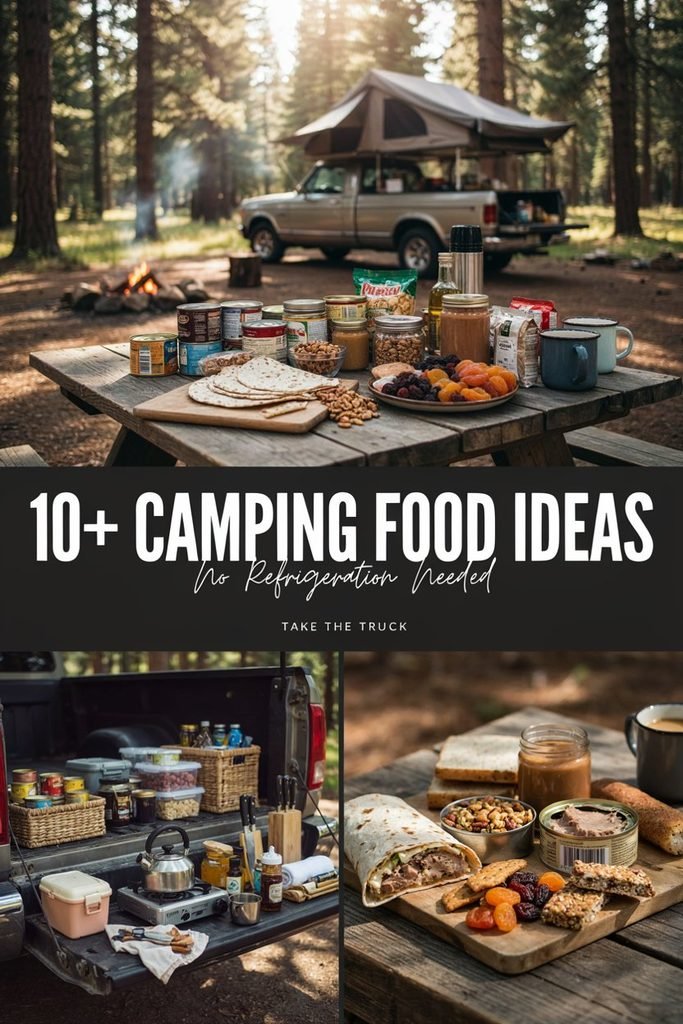
From peanut butter sandwiches and tortillas to canned tuna, trail mix, instant oatmeal, dried fruit, jerky, crackers, canned beans, shelf stable milk, and easy no cook camping meals, there are plenty of options for building a satisfying camping menu without relying on a refrigerator.
In this guide, I am sharing the camping foods I would genuinely consider packing for a truck camping trip, along with practical tips for storage, meal planning, cooking, portion sizes, and keeping food organized at camp.
Disclaimer
This post may contain affiliate links. As an Amazon Associate, I earn from qualifying purchases at no additional cost to you. I only recommend camping food and outdoor cooking products that I genuinely find useful. Food storage needs can vary by weather and trip length, so always follow package directions and use safe food handling practices.
Amazon Shopping List You Need
- Stainless Steel Camping Cookware Set – I use this for preparing simple meals without needing a full camp kitchen.
- Portable Camping Stove – I always pack one when I want a reliable way to cook at the campsite.
- Collapsible Camping Kettle – I love using this for hot drinks, oatmeal, and quick meals.
- Reusable Food Storage Bags – I use these to portion dry ingredients and keep my camping food organized.
- Insulated Lunch Bag – I keep one handy for foods that need short term temperature protection during the day.
- Camping Utensil Set – I always pack a compact set so I have everything I need for eating and cooking.
- Lightweight Camping Mess Kit – I use this for serving meals without bringing bulky plates and bowls.
Why I Prefer Camping Food That Does Not Need Refrigeration
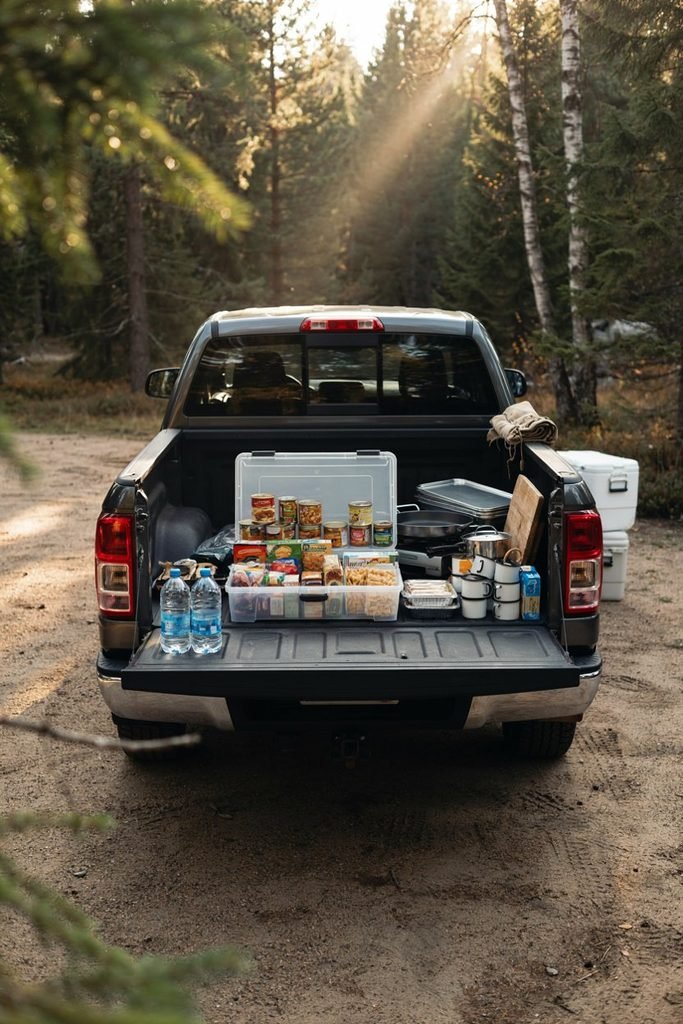
There is something incredibly convenient about opening the truck and knowing that most of the food you need is already packed and ready to go.
When I am organizing camping supplies, I would rather spend my time thinking about where we are going to set up camp, getting the sleeping area comfortable, and making sure we have enough water than worrying about whether a cooler is still cold enough.
That does not mean I avoid fresh food completely. If we have a short trip and room for a cooler, I may bring a few fresh ingredients. But for longer drives, remote campsites, or simple overnight trips, shelf stable foods make everything much easier.
The biggest advantage is flexibility.
You can leave early in the morning, drive for several hours, arrive at camp late, and still have something filling to eat without needing to find a store or restaurant.
I have also learned that camping food needs to be practical. Something might sound perfect at home but become annoying when you are standing outside trying to prepare it with limited counter space.
For me, the best camping food is food that is easy to carry, easy to open, reasonably nutritious, filling, and simple enough that nobody complains when it appears on the menu.
What I Look For When Choosing No Refrigeration Camping Food
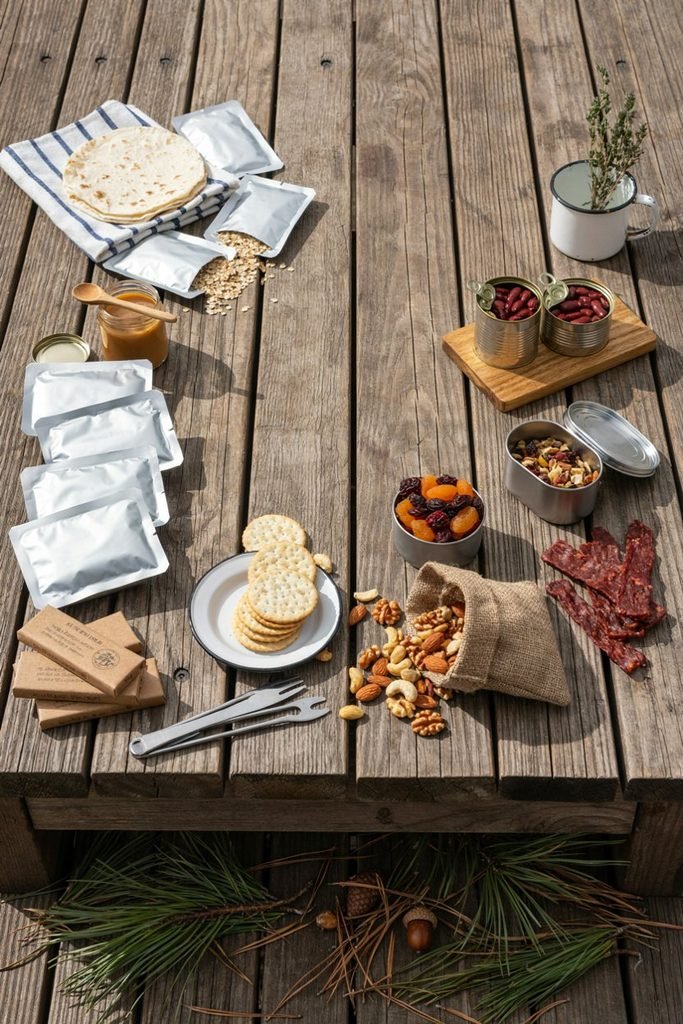
Before putting food into the truck, I usually think about a few basic things.
It needs to travel well
Camping food gets moved around.
It can sit in a packed truck, travel over rough roads, or spend hours in a backpack. I prefer foods that do not require delicate packaging or careful handling.
It needs to be filling
Snacks are useful, but I do not want every meal to feel like a snack.
I try to combine protein, carbohydrates, healthy fats, and fiber whenever possible. That gives us meals that are much more satisfying after hiking, setting up camp, carrying gear, or spending the day outdoors.
It should require very little preparation
When I am camping, I do not want to wash a mountain of dishes.
Foods that can be eaten straight from the package or prepared with hot water are especially useful when I am trying to keep the cooking setup simple.
It should have a useful shelf life
Shelf stable food is only helpful if it can safely remain at room temperature.
Always check the packaging and storage instructions, particularly after opening. Foods that require refrigeration after opening should be treated accordingly.
It should work for different meals
I like ingredients that can serve more than one purpose.
For example, tortillas can become breakfast wraps, lunch wraps, or quick dinner bases. Peanut butter can work with bread, crackers, oatmeal, or fruit.
That makes packing much easier.
1. Peanut Butter and Tortillas
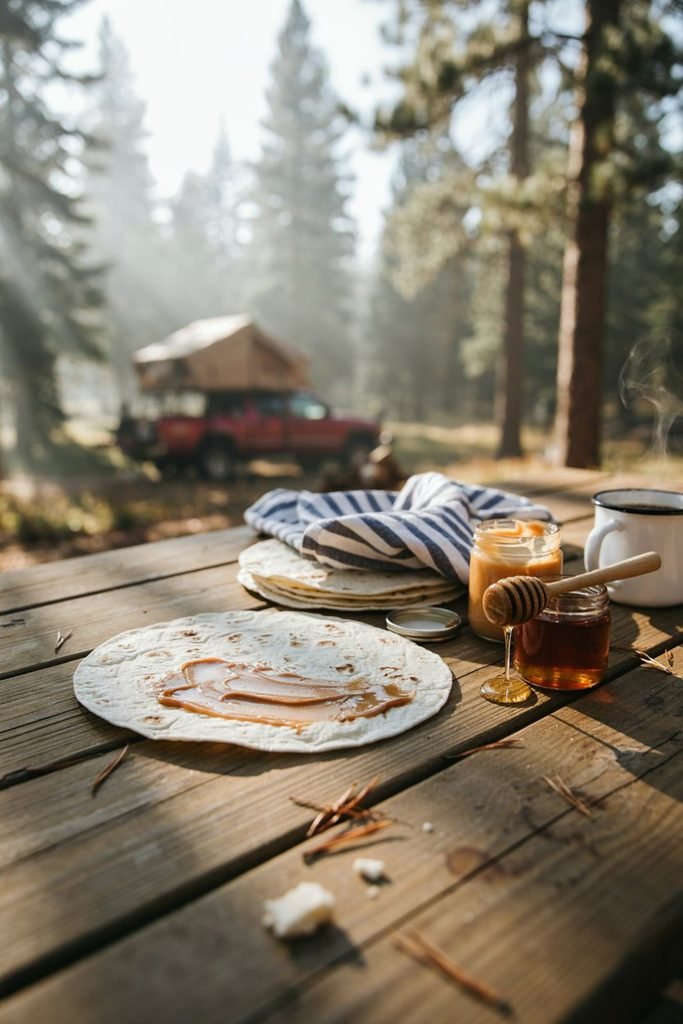
One of my favorite simple camping combinations is peanut butter with tortillas.
It sounds basic, but that is exactly why it works.
There is no complicated preparation, and you can make one whenever hunger appears. I like tortillas because they take up less space than a loaf of bread and usually hold together well when packed carefully.
For a quick breakfast, I spread peanut butter over a tortilla and add a little honey or sliced banana if I have fresh fruit available.
For a longer trip, I would keep the peanut butter and tortillas separate until they are needed.
Why I pack it
Peanut butter provides protein and fat, while tortillas give you carbohydrates for energy. Together they make a much more substantial camping meal than grabbing a handful of crackers.
Easy camping variations
Peanut butter and honey tortilla
Peanut butter and banana tortilla
Peanut butter and raisins tortilla
Peanut butter with cinnamon and a little sugar
You can also cut the tortilla into smaller portions for an easy trail snack.
2. Instant Oatmeal
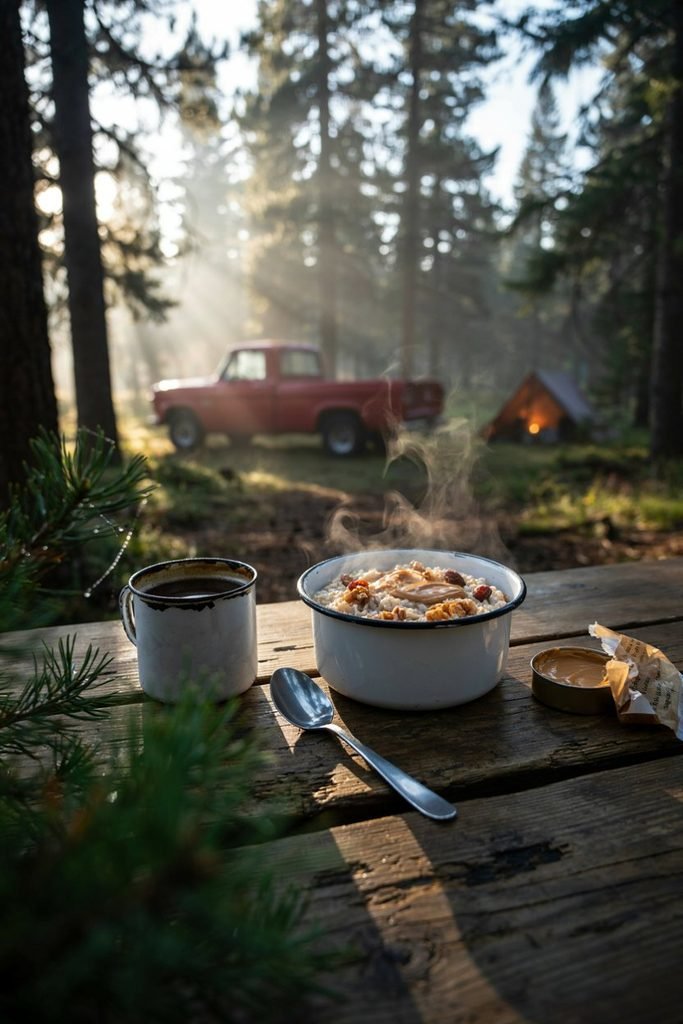
Instant oatmeal is one of those foods I always consider when I need an easy camping breakfast.
It takes very little room in the truck, comes in individual portions, and can be prepared with hot water.
On a cold morning, there is something especially nice about sitting outside with a warm bowl of oatmeal while the campsite is still quiet.
I usually bring plain or lightly flavored oatmeal packets and customize them with shelf stable ingredients.
What I add
Peanut butter
Honey
Cinnamon
Raisins
Dried cranberries
Chopped nuts
Seeds
Dried banana
The nice thing about oatmeal is that everyone can make their own combination.
If the kids want something sweeter and I want something more filling, we do not need to prepare two completely different breakfasts.
For camping, I would pack the oatmeal in an easy to reach food container rather than burying it underneath the rest of the gear.
That small detail makes breakfast much easier when everyone is hungry.
3. Trail Mix
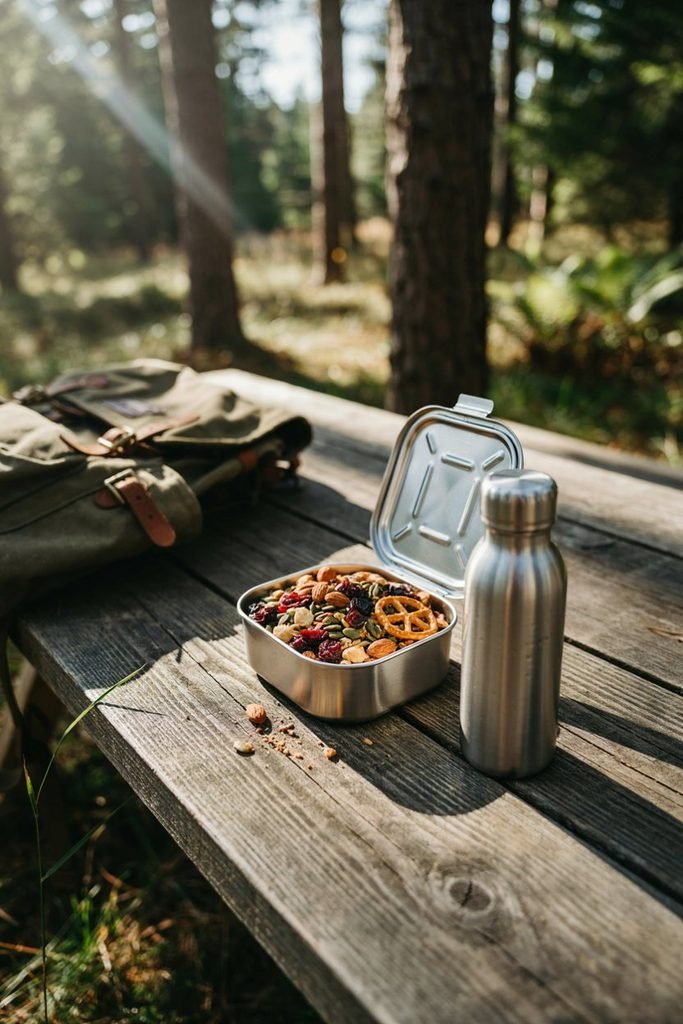
Trail mix is one of the easiest foods to keep in the truck, and it is particularly useful when you know you will be walking, hiking, or exploring during the day.
I do not rely on trail mix as a complete meal, but I like having it available between meals.
Instead of buying only one type, I often prefer making a simple combination based on what we actually enjoy eating.
My basic combination
Nuts
Pumpkin seeds
Raisins
Dried cranberries
Pretzels
Dark chocolate pieces
Coconut flakes
A little granola
You can adjust the ingredients depending on whether you want something sweet, salty, or more protein focused.
One thing I have learned is to portion trail mix before leaving home.
It is very easy to sit beside the campfire with the entire bag and keep reaching into it without realizing how much you have eaten.
Small reusable containers or bags make it much easier to grab a portion before heading out.
4. Beef Jerky
Jerky is another practical option when refrigeration is not available.
It is lightweight, easy to pack, and convenient when you need something with protein between meals.
I particularly like it for days when we are away from camp for several hours.
Instead of stopping everything to prepare food, I can pack a small portion along with crackers, nuts, or dried fruit.
When buying jerky, I pay attention to the packaging and storage instructions. Different products can have different requirements, so I do not assume that every type of jerky can be stored the same way.
I also prefer having several different foods available rather than relying on jerky alone.
It works much better as part of a larger camping food plan.
5. Crackers and Nut Butter
Crackers are one of those camping staples that can quietly save a meal.
They take up little space and can be combined with several shelf stable foods.
One of my favorite combinations is whole grain crackers with peanut butter or another shelf stable nut butter.
If you want something savory, crackers can also be paired with unopened canned or packaged foods that are safe to store at room temperature.
For a family camping trip, I usually prefer larger boxes or multipacks rather than individually packaged portions because they can be easier to organize.
The important thing is keeping them dry.
There is nothing worse than opening the food container after a damp night at camp and discovering that the crackers have lost their crunch.
I keep dry foods in sealed containers or bags inside the main food storage bin.
6. Canned Tuna or Chicken
Canned tuna and canned chicken can turn simple camping ingredients into a surprisingly satisfying meal.
They are especially useful when you want more protein without needing fresh meat.
You can eat them with crackers, mix them with shelf stable ingredients, or use them inside tortillas.
For a very simple camping lunch, I like the combination of tuna, crackers, and a few pieces of dried fruit.
If you have access to hot water or a camp stove, you can also build a warmer meal around canned chicken.
Just remember that once a can is opened, you need to follow safe food handling practices and avoid treating an opened can like an unopened shelf stable product.
For convenience, single serving cans or pouches can be useful when camping because they reduce leftovers.
7. Canned Beans
Canned beans are one of the most versatile foods I would pack for a longer camping trip.
Black beans, chickpeas, kidney beans, and other varieties can be used in several different ways.
You can eat them with tortillas, combine them with rice, add them to a simple camp skillet, or use them as the base of a quick meal.
Beans are also useful because they are filling.
After a long day outside, a tiny snack does not always feel like enough. A simple meal built around beans and another carbohydrate can be much more satisfying.
When I am packing canned foods for the truck, I keep them together in one sturdy container so I am not searching through bags every time I need something.
It also helps distribute the weight instead of putting several heavy cans in one small bag.
8. Rice Cups and Instant Rice
Instant rice can make camping meals much easier.
Some varieties can be prepared with hot water, while others may need heating, so I always check the package instructions before packing them.
The reason I like rice is that it gives you a simple base for building meals.
You can combine it with beans, canned chicken, tuna, vegetables that are suitable for room temperature storage, or seasonings.
A plain rice meal can become much more interesting with a few ingredients from your camping food box.
I usually bring small seasoning containers because salt, black pepper, garlic powder, paprika, chili powder, and similar seasonings take very little space but can completely change a basic meal.
How I Organize Food in the Truck
The food itself is only half the job.
Organization makes a huge difference when you are camping from a truck.
I like separating food into categories rather than putting everything into one large container.
One container can hold breakfast foods.
Another can hold snacks.
A separate container can hold canned foods and heavier ingredients.
I keep utensils, plates, cups, and cooking equipment somewhere easy to reach rather than buried under sleeping bags and outdoor gear.
This saves a surprising amount of time.
It also helps me see what we have before deciding what to prepare.
One of the biggest mistakes I try to avoid is packing too much food without a plan. It is tempting to throw every possible snack into the truck because shelf stable food lasts longer, but that can quickly turn into a disorganized pile.
Instead, I think through breakfast, lunch, dinner, and snacks for each day and then add a little extra for unexpected hunger or changes in plans.
That gives us enough food without filling the truck with unnecessary supplies.
More Camping Food Ideas That Need No Refrigeration
One thing I have found with camping food is that having plenty of ingredients does not necessarily mean you have good meals. I can pack crackers, nuts, canned food, tortillas, oatmeal, and snacks and still end up standing beside the truck wondering what everyone is actually going to eat.
That is why I like planning a few complete meal combinations before we leave.
When we are camping, I want food that feels like a proper meal without creating a huge cooking project. There is usually enough to do already, from setting up camp and organizing sleeping gear to getting firewood and making sure everyone has enough water.
These next ideas are some of the combinations I would actually consider for a camping trip where refrigeration is limited or unavailable.
9. Tortilla Bean Wraps
Tortillas are one of the most useful camping foods because they can turn several simple ingredients into a proper meal.
For an easy lunch or dinner, I like combining canned beans with tortillas and a few seasonings.
Black beans work particularly well, but chickpeas or other canned beans can also work.
If you have a camp stove, you can warm the beans before assembling the wraps. If you are trying to keep things extremely simple, you can use ingredients that are suitable for eating without cooking.
What I would use
Tortillas
Canned black beans
Canned corn
Shelf stable salsa
Chili powder
Garlic powder
Salt and pepper
You can add other shelf stable ingredients depending on what you have packed.
I like this idea because everyone can build their own wrap.
It also means I do not have to prepare a complicated meal while trying to keep an eye on everything else happening around camp.
If I am making these for the family, I usually keep the seasonings mild and put extra hot sauce or chili seasoning on the side for anyone who wants more flavor.
10. Tuna Cracker Lunch
There are days when I do not want to cook at all.
That is when a tuna and cracker meal becomes especially useful.
I can open a single serving tuna pouch or can, put out some crackers, add a few shelf stable sides, and have lunch ready within minutes.
For a more complete meal, I like adding dried fruit, nuts, or a piece of fruit that does not require refrigeration.
This is particularly convenient when we are spending most of the day away from the campsite.
I would rather pack a small lunch that can be eaten whenever we stop than have everyone waiting until we return to camp.
For longer outings, I portion everything before leaving the truck.
That way I am not carrying an entire box of crackers and several cans around with me.
11. Oatmeal With Peanut Butter and Dried Fruit
I mentioned oatmeal earlier, but it deserves another place in the meal planning section because it can become much more substantial with the right additions.
Plain oatmeal by itself may not keep everyone satisfied for very long.
Adding peanut butter gives it more staying power, while dried fruit provides sweetness and texture.
A simple bowl can include:
Instant oatmeal
Peanut butter
Raisins
Cinnamon
Honey
Chopped nuts
Dried banana
You do not need all of these.
Even oatmeal, peanut butter, and raisins can make a very practical camping breakfast.
This is one of those meals I especially appreciate on cool mornings. There is very little cleanup, and hot oatmeal is much more appealing than trying to force yourself to eat a cold snack before a long day outdoors.
12. Canned Chicken Rice Bowls
When I want something that feels more like dinner, I like the idea of creating a simple rice bowl.
Instant rice provides the base, while canned chicken provides protein.
You can then add shelf stable vegetables, beans, seasonings, or sauce depending on what you have available.
A simple combination
Instant rice
Canned chicken
Canned corn
Canned beans
Garlic powder
Black pepper
Paprika
Shelf stable hot sauce
If you have a camp stove, heat everything together in a pan.
The result is much more satisfying than eating the ingredients separately.
This is also a good example of why I do not like packing only individual snacks for camping. A few basic ingredients can be combined into a warm meal that feels much more substantial after a busy day.
13. Instant Noodles With Shelf Stable Add Ins
Instant noodles are another easy option when you have access to boiling water.
I would not make them the foundation of every camping meal, but they are useful when you need something quick and warm.
The trick is adding ingredients that make them more filling.
Canned chicken can add protein.
Canned beans can add substance.
Dried mushrooms can add texture.
Shelf stable vegetables can add variety.
Peanuts or other nuts can add crunch.
A little chili powder, garlic powder, or hot sauce can make the flavor much better.
When I am camping, I often find that simple meals taste better when I am hungry and sitting outside anyway. I do not need every dinner to resemble something I would cook in my kitchen at home.
14. Peanut Butter Oatmeal Energy Bites
If you want something that can be prepared before leaving home, no bake oatmeal bites are worth considering.
These are particularly useful for hiking days because they can be portioned into small containers and eaten without utensils.
A simple combination can include rolled oats, peanut butter, honey, cinnamon, and dried fruit.
Mix the ingredients at home, shape them into small bites, and store them according to the ingredients and food safety requirements.
I like preparing these before a trip because it means there is already something ready to grab when someone gets hungry.
They are also easier to portion than a large bag of snacks.
15. Shelf Stable Breakfast Bars
Breakfast bars and granola bars are not the most exciting camping food, but I have learned that practical foods have their place.
They are especially useful when everyone wakes up at different times.
Instead of preparing breakfast immediately, someone can grab a bar while getting dressed or organizing their gear.
I would look for options with a reasonable amount of protein and fiber rather than choosing entirely based on sweetness.
You can also pair a bar with nuts, dried fruit, or shelf stable milk to make breakfast more satisfying.
For a family trip, I like having several different varieties available because it prevents the inevitable situation where someone decides they suddenly do not like the flavor I bought in bulk.
16. Canned Soup
Canned soup can be an excellent cold weather camping meal.
It requires very little preparation and can be heated over a camp stove or other appropriate cooking setup.
Bean soup, lentil soup, chicken soup, and vegetable soup are all options worth considering.
I particularly like soup for evenings when the temperature drops and everyone wants something warm.
Serve it with crackers or tortillas and you have a simple meal without needing several different cooking pots.
The main thing I pay attention to is the can itself.
For camping, pull tab cans can be much easier if you are trying to minimize equipment. If the can requires a manual opener, make sure the can opener is packed with the cooking supplies rather than left at home.
That sounds obvious, but camping has a way of making small forgotten items suddenly feel very important.
17. Couscous With Canned Chickpeas
Couscous is another food I like for camping because it can be prepared quickly with hot water.
You can combine it with chickpeas, seasonings, dried vegetables, nuts, and other shelf stable ingredients.
For a simple version, I would use:
Couscous
Canned chickpeas
Dried cranberries
Pumpkin seeds
Cumin
Paprika
Salt and pepper
A little olive oil
The combination gives you different textures and flavors without requiring a complicated recipe.
It is also easy to prepare in a single container, which means less washing afterward.
That is a major consideration for me when planning camping meals.
The fewer dishes I have to clean, the better.
How Much Food Should You Pack?
This is one of the areas where I think camping meal planning can easily go wrong.
It is tempting to pack enough food for every possible situation.
Then you get home and realize you brought far more than you needed.
I prefer estimating the number of meals first.
For example, if we are going away for two nights, I think about:
Two breakfasts
Two lunches
Two dinners
Several snacks
One or two emergency meals
I then add a little extra food because plans can change.
Maybe we spend longer hiking than expected.
Maybe someone is much hungrier than usual.
Maybe the weather changes and we stay at camp instead of going into town.
Having a small emergency food supply is worth the extra space.
I would rather bring home an unopened package of shelf stable food than discover that everyone is hungry and there is nothing left to prepare.
Keep Your Camping Food Organized
When you are using a truck for camping, organization matters even more because food can quickly become mixed in with camping equipment.
I prefer having one dedicated food area.
Breakfast items stay together.
Snacks stay together.
Canned goods stay together.
Cooking supplies have their own container.
This means I do not need to unload half the truck just to find the oatmeal.
I also keep foods that are likely to be needed during the drive somewhere accessible.
Things like trail mix, crackers, water, and unopened shelf stable snacks should not be buried underneath camping equipment.
It makes the journey much easier when everyone can reach what they need without disrupting the entire setup.
Protect Food From Heat, Moisture, and Animals
No refrigeration does not mean food can simply be left anywhere.
The storage instructions on the packaging still matter.
I keep dry foods protected from moisture and direct sunlight and make sure food is stored securely around camp.
This is particularly important when camping in areas where wildlife may be present.
I do not leave food scattered around the campsite, and I make sure food waste and packaging are dealt with properly.
A sturdy food storage container can also help keep everything organized and protected.
For truck camping, I find sealed containers especially useful because they prevent loose packages from getting crushed or scattered throughout the vehicle.
Do Not Forget Water
Food gets most of the attention when people plan camping meals, but water is just as important.
You need water for drinking, cooking, hot drinks, oatmeal, instant rice, noodles, and cleaning.
Before leaving, I think about how much water we are likely to need for drinking and food preparation rather than assuming there will always be a convenient source nearby.
If you are camping somewhere remote, check the local conditions and plan accordingly.
I would rather have extra drinking water available than discover that I underestimated how much the family would use during a warm day outdoors.
A Simple No Refrigeration Camping Meal Plan
If I wanted to keep the entire food setup uncomplicated, I could build a short camping menu like this.
Breakfast
Instant oatmeal with peanut butter, cinnamon, and dried fruit
Lunch
Tuna with whole grain crackers, nuts, and dried fruit
Dinner
Chicken, beans, and instant rice with seasonings
Hiking snack
Trail mix and jerky
Emergency meal
Instant noodles with canned chicken
This type of plan gives me variety without requiring a refrigerator, complicated cooking equipment, or a huge grocery list.
It also leaves room to change things depending on what everyone feels like eating.
That flexibility is important because camping plans rarely go exactly as expected.
More Easy Camping Food Ideas Without Refrigeration
The more camping trips I take, the more I appreciate foods that give me options instead of creating extra work. I do not need a complicated menu when I am outside. I need ingredients that can sit in the truck safely according to their package instructions, foods that are easy to portion, and meals that can be prepared even when I am tired after a long day outdoors.
These final ideas are especially useful when you want more variety without bringing a cooler.
18. Canned Chili
Canned chili is one of the easiest dinner options for a camping trip.
It is filling on its own and even better when served with crackers, tortillas, or instant rice.
When the weather is cool, a hot bowl of chili can feel like exactly what you need after spending hours outside.
I usually look for cans that are easy to open and simple to heat. If I know we will be cooking with a small camping stove, I prefer meals that can be heated in one pot rather than requiring several separate ingredients.
You can also turn canned chili into a quick tortilla filling.
Heat the chili, spoon it onto a tortilla, and add whatever suitable shelf stable toppings you have available.
It is simple, warm, and much more satisfying than another handful of snacks.
19. Dried Fruit and Nuts
Dried fruit and nuts are two foods I like keeping available throughout a camping trip.
They are easy to pack and can be eaten without preparation.
I usually combine a sweet option such as raisins, dried mango, dried cranberries, or apricots with almonds, peanuts, cashews, or pumpkin seeds.
This makes a convenient snack for driving, hiking, or those moments when everyone suddenly realizes they are hungry.
I would portion these before the trip instead of carrying one enormous bag around.
Small portions are easier to grab and help keep the food container organized.
20. Shelf Stable Milk and Cereal
If breakfast needs to be extremely simple, cereal and unopened shelf stable milk can work well.
This is particularly useful when you have children who want something familiar in the morning.
I like having a couple of cereal options available rather than bringing only one type.
Small individual cereal portions can also make sense for short trips because they reduce the amount of food that needs to be stored after opening.
Once shelf stable milk has been opened, follow the storage instructions on the package. Shelf stable does not mean it can remain unrefrigerated indefinitely after opening.
21. Canned Fruit With Oatmeal
Canned fruit can add variety to a basic camping breakfast.
Peaches, pears, pineapple, or other canned fruit can be paired with oatmeal when you want something sweeter and more interesting than plain oats.
I like this idea because it gives me another way to change breakfast without bringing fresh fruit that can bruise or spoil quickly.
Just remember that an opened can is different from an unopened shelf stable can. Any leftovers should be handled according to safe food storage guidance.
My Simple Truck Camping Food Packing List
If I were preparing the truck for a weekend camping trip, I would keep my food list relatively simple.
Breakfast foods
Instant oatmeal
Cereal
Shelf stable milk
Peanut butter
Honey
Cinnamon
Dried fruit
Granola
Lunch foods
Tortillas
Tuna
Canned chicken
Crackers
Canned beans
Canned vegetables
Shelf stable salsa
Dinner foods
Instant rice
Couscous
Canned chili
Canned soup
Canned beans
Canned chicken
Instant noodles
Seasonings
Snacks
Trail mix
Nuts
Jerky
Granola bars
Dried fruit
Peanut butter crackers
This gives me enough variety to create different combinations instead of eating exactly the same meal every day.
How I Pack Food for a Truck Camping Trip
I have found that packing food by meal category is much easier than throwing everything into the truck and hoping I can find it later.
I use separate containers for different types of food.
One container is for breakfast.
Another is for snacks.
Canned foods go into a stronger container because they are heavier.
Dry foods such as crackers, oatmeal, cereal, tortillas, and granola need protection from moisture.
I also keep a small cooking container with the items I know I will need regularly.
That includes utensils, a can opener if required, bowls, cups, a cutting board, and basic cooking equipment.
The goal is to make the food system easy enough that I can prepare something without unpacking half the truck.
Keep Frequently Used Foods Accessible
This is especially important when traveling.
I keep snacks and foods we are likely to want during the drive somewhere accessible.
There is no reason to pack the trail mix underneath sleeping bags, chairs, and camping equipment.
I also like having one small food bag for the day.
It can contain snacks, crackers, nuts, dried fruit, and anything else we are likely to eat while exploring.
That way, we are not constantly opening and closing the main food storage container.
Bring the Right Cooking Equipment
No refrigeration camping food does not necessarily mean no cooking.
If I am bringing a camp stove, I want to make sure I have everything required to actually use it.
A basic setup might include:
A camping stove
Fuel appropriate for the stove
One cooking pot
One frying pan if needed
Long handled cooking utensils
Bowls
Plates
Cups
Forks and spoons
Can opener
Knife
Cutting board
Dish soap
Cleaning cloths
Trash bags
The exact setup depends on the type of camping trip.
For a simple overnight truck camping trip, I would rather bring one good pot and a small collection of useful utensils than pack an entire kitchen.
Easy Ways to Make Camping Food Taste Better
Shelf stable food does not have to taste boring.
Seasonings take almost no space and can make a huge difference.
I usually consider bringing a small selection of basic seasonings.
Salt
Black pepper
Garlic powder
Paprika
Cinnamon
Chili powder
Italian seasoning
These can turn plain rice, beans, noodles, oatmeal, and canned foods into completely different meals.
Sauces can also help, but I prefer small containers rather than bringing large bottles.
A little hot sauce, barbecue sauce, soy sauce, or another favorite condiment can add plenty of flavor without taking up much room.
How to Save Money on Camping Food
Camping food can become surprisingly expensive if you buy everything specifically marketed as camping food.
You do not always need specialty camping meals.
Many ordinary grocery store foods work perfectly well for camping as long as they are shelf stable and stored according to their instructions.
Before a trip, I check what I already have at home.
There may already be oatmeal, peanut butter, rice, pasta, canned beans, tuna, crackers, nuts, or dried fruit sitting in the pantry.
Using those foods first can save money and prevent unnecessary shopping.
I also like planning meals before going to the grocery store.
Without a plan, it is easy to buy too many snacks and not enough actual meal ingredients.
A simple menu helps me shop for what we need instead of filling the cart with random camping foods.
Do Not Forget Emergency Food
I always think it is worth having a few extra meals available.
Camping can be unpredictable.
A road may take longer than expected.
Bad weather can change your plans.
You might arrive at camp later than planned.
Someone might simply be much hungrier than expected.
That is why I like keeping a few foods separate as backup meals.
Instant oatmeal
Tuna pouches
Instant noodles
Granola bars
Peanut butter
Crackers
Canned soup
These foods can give you something to eat when your original plan no longer works.
I would rather carry a little extra shelf stable food home than be stuck somewhere without an easy meal.
Food Safety Still Matters Without a Refrigerator
One thing I never want readers to take from this list is that food without refrigeration can simply be ignored.
Shelf stable food still needs to be stored properly.
Check the package instructions before your trip.
Keep food away from excessive heat and moisture when the manufacturer recommends doing so.
Pay attention to expiration and best before dates.
Do not use cans that are leaking, badly damaged, bulging, or otherwise showing signs that the food may not be safe.
Once a shelf stable food has been opened, check the package instructions for storage.
Some foods need refrigeration after opening even though they were safe to keep at room temperature while unopened.
I also keep food away from areas where animals can access it.
When camping, food storage is not just about keeping your meals fresh. It is also about keeping the campsite clean and reducing the chance of attracting wildlife.
What I Would Pack for a Two Night Truck Camping Trip
If I wanted to keep things simple for two nights, my food plan would look something like this.
Morning 1
Instant oatmeal with peanut butter, cinnamon, and dried fruit.
Lunch 1
Tuna with crackers, nuts, and dried fruit.
Dinner 1
Canned chili with tortillas or instant rice.
Morning 2
Cereal with shelf stable milk and dried fruit.
Lunch 2
Chicken and bean tortillas.
Dinner 2
Instant noodles with canned chicken and shelf stable vegetables.
Snacks
Trail mix
Jerky
Granola bars
Peanut butter crackers
Dried fruit
This is more than enough variety for a short trip without needing a refrigerator or a complicated cooking setup.
If I know we will be hiking for several hours, I would also prepare separate snack portions so nobody has to return to the truck every time they get hungry.
The Camping Food I Would Always Keep in the Truck
If I had to narrow everything down to a handful of foods, I would choose ingredients that can be used in several different ways.
Peanut butter is near the top of my list.
Tortillas are another.
Instant oatmeal, rice, canned beans, canned chicken, tuna, crackers, nuts, dried fruit, and a few simple seasonings can cover a surprising number of meals.
That is what I like most about this approach.
You are not depending on one specific recipe.
You are building a small collection of ingredients that can be combined according to what you feel like eating.
That makes camping meals much less stressful.
Final Thoughts
Good camping food is not necessarily complicated food.
For me, the best meals are the ones that fit naturally into the trip. When we are taking the truck, I want to have enough food for everyone without filling every available space with coolers and complicated ingredients.
Shelf stable foods give me that flexibility.
A tortilla can become breakfast with peanut butter, lunch with beans and chicken, or a quick dinner with chili. Oatmeal can be changed with dried fruit, nuts, cinnamon, or peanut butter. Canned beans can become part of a rice bowl, wrap, or simple camp meal.
Once you start thinking about food this way, it becomes much easier to plan.
You do not need an elaborate camping kitchen to eat well outdoors. A thoughtful selection of shelf stable foods, a little meal planning, basic cooking equipment, and good food storage habits can give you plenty of options.
And honestly, that is what I look for when packing the truck.
I want the food to be easy enough that it does not become another chore.
After a long drive, a day of hiking, or several hours spent setting up camp, the last thing I want is a complicated dinner that leaves me with a pile of dishes.
Give me a warm bowl of chili, a simple rice and chicken meal, a peanut butter tortilla, or a hot bowl of oatmeal, and I am perfectly happy sitting outside and enjoying the evening.