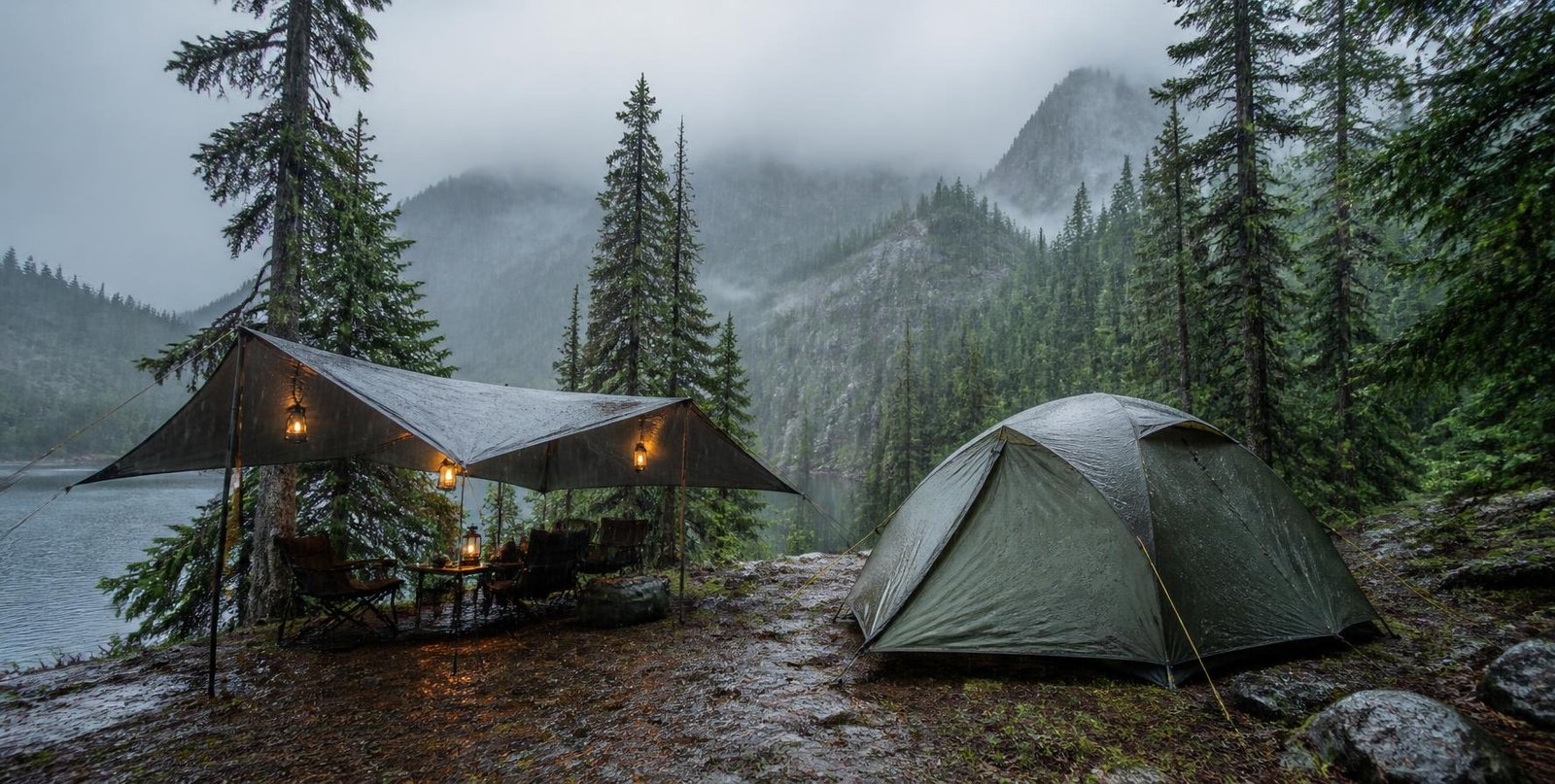
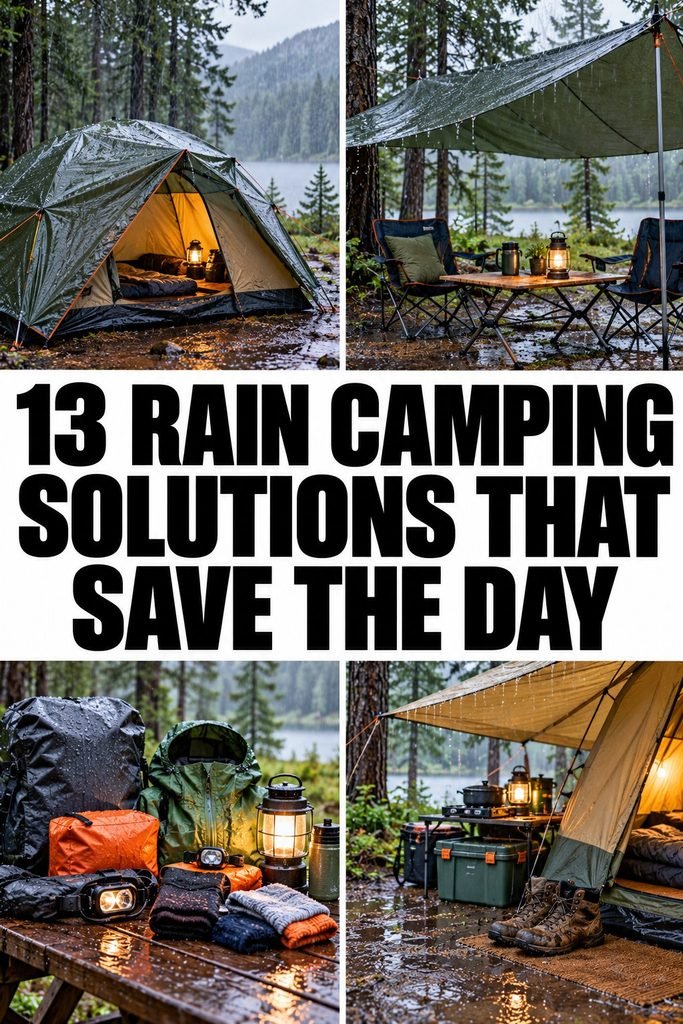
13 Rain Camping Solutions That Save the Day
Rain can turn a perfectly planned camping trip into a frustrating experience, especially when water starts collecting around your tent, your clothes refuse to dry, and everything inside your campsite feels damp.
But I believe a rainy camping trip does not have to become a miserable one. With a few practical adjustments and the right preparation, you can stay comfortable, protect your gear, and still enjoy being outdoors.
One thing I always emphasize when planning outdoor activities is that small details often make the biggest difference.
Where you pitch your tent, how you organize your belongings, and what you keep within reach can determine how well you handle unexpected rain.
In this guide, I am sharing 13 practical rain camping solutions that can help you manage wet weather without spending unnecessarily on expensive equipment.
Whether you are camping in a tent, traveling with family, or preparing for a weekend in the woods, these ideas will help you keep your campsite drier, more organized, and much more comfortable throughout your trip.
What to Do When It Starts Raining at Your Campsite
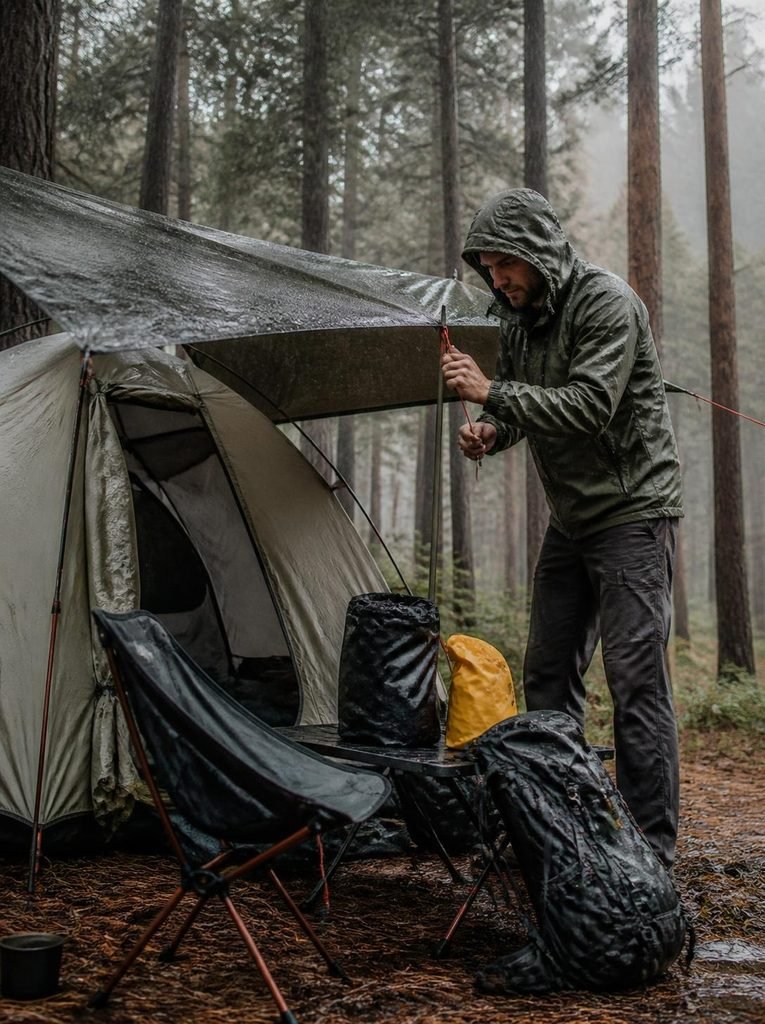
Before getting into the individual solutions, I want to address something important. When rain begins, the temptation is to rush around trying to protect everything at once.
Unfortunately, that often means leaving essential items exposed while focusing on less important things.
I recommend dealing with the most urgent problems first. Make sure everyone has suitable shelter, move electronics and sleeping gear away from water, and check whether your tent is positioned somewhere that could flood.
If you hear thunder, move to a substantial building or a fully enclosed hard topped vehicle. A tent or camping tarp does not provide protection from lightning.
Once everyone is safe, you can focus on keeping your campsite comfortable.
The following solutions are particularly helpful when camping in unpredictable weather.
1. Set Up a Waterproof Tarp Above Your Tent
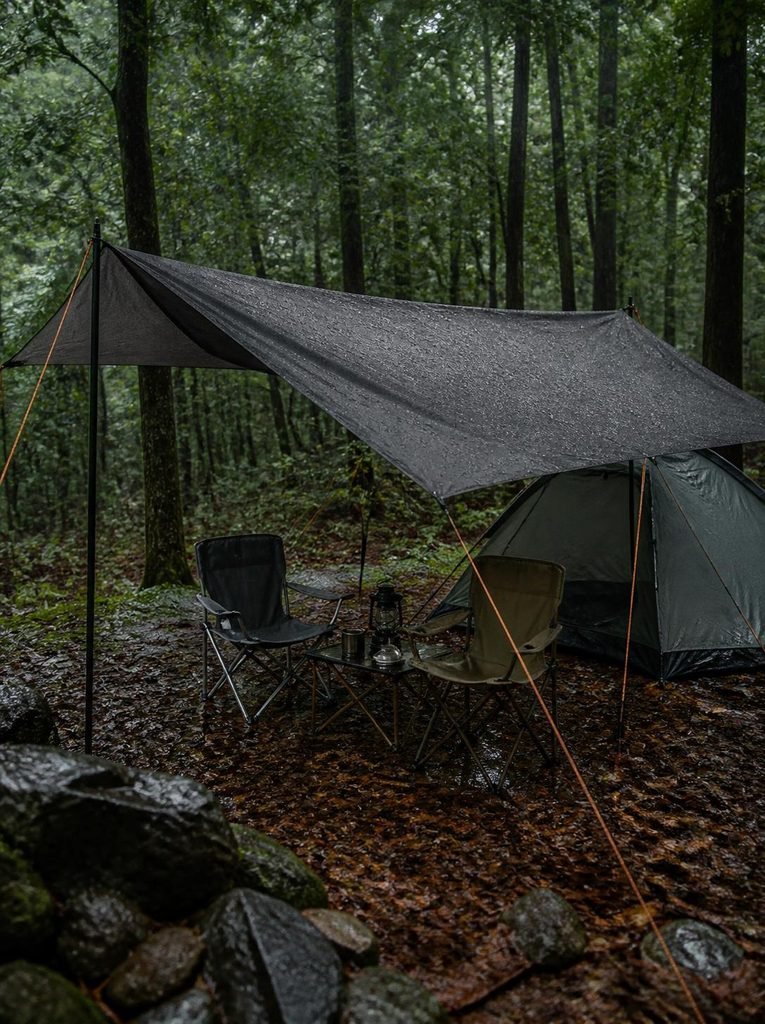
A waterproof tarp is one of the most versatile pieces of camping equipment I recommend keeping in your gear collection.
Even when your tent comes with a rainfly, having an additional overhead shelter can make a noticeable difference during prolonged rainfall. It creates a protected area where you can remove wet shoes, organize supplies, or sit outside without getting soaked.
What makes this solution especially useful is that you do not need an expensive camping canopy to create a functional shelter.
A durable waterproof tarp, properly rated ropes, and suitable anchor points can provide an effective rain barrier.
How to Set It Up Properly
I recommend positioning the tarp above your tent entrance or over a separate sitting area rather than allowing it to rest directly against the tent fabric.
The goal is to create enough clearance for rainwater to run off without transferring moisture to the tent.
Here are a few things worth paying attention to:
- Angle the tarp so rainwater flows away from your tent and walking areas.
- Keep the material tight enough to prevent large pools of water from forming.
- Use sturdy anchor points and secure the ropes properly.
- Avoid attaching ropes to weak or damaged tree branches.
- Keep the tarp away from campfires, heaters, and cooking equipment.
One mistake worth avoiding is setting up a tarp completely flat. Rainwater can accumulate in the center, putting unnecessary pressure on the material and its supports.
I prefer recommending a sloped configuration because it encourages water to drain naturally.
My practical tip: Set up your tarp before the rain begins whenever possible. Trying to secure a large sheet of waterproof material during heavy rain and strong wind can be difficult and unsafe.
2. Choose Higher Ground to Prevent Water From Entering Your Tent
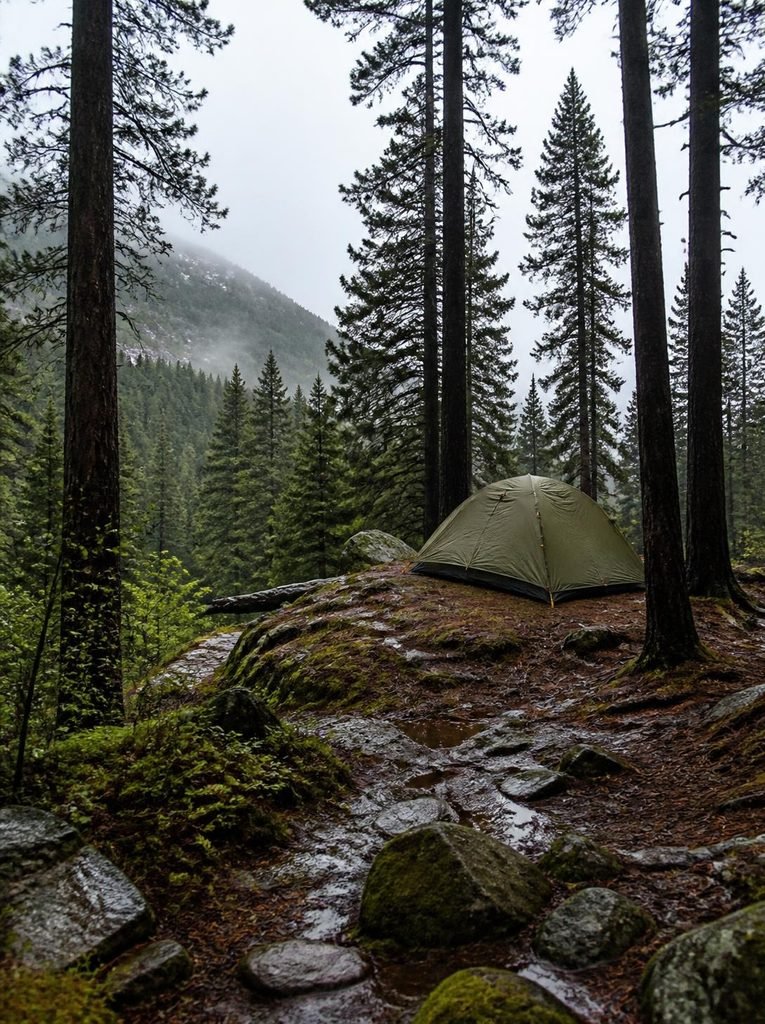
Where you pitch your tent matters just as much as the quality of the tent itself.
A waterproof tent can still become uncomfortable if it is positioned in a low area where rainwater naturally collects.
One of the most useful habits I recommend is inspecting the ground before unpacking your camping equipment.
Look for a reasonably level, well drained surface that sits away from obvious runoff channels.
How to Identify a Better Tent Location
Before choosing a spot, pay attention to the surrounding landscape.
Avoid shallow depressions, dry streambeds, drainage channels, and areas showing signs of previous flooding.
I also recommend checking the ground texture. If the soil already feels extremely soft or saturated, additional rainfall may create muddy conditions around your tent.
A slightly elevated, designated campsite with good drainage is usually a better choice than a low area surrounded by higher ground.
However, avoid exposed hilltops during thunderstorms and never camp beneath unstable trees or branches.
What If Your Tent Is Already Set Up?
If rainwater begins flowing toward your tent, assess the situation early.
When conditions are safe, moving the tent to a better location may be more effective than repeatedly trying to block incoming water.
Do not dig drainage trenches around your tent. This can damage the campsite, may violate campground rules, and can redirect water toward neighboring campers.
My practical tip: Before laying out your tent, spend a few minutes imagining where water will travel during heavy rainfall. This simple check can prevent hours of discomfort later.
3. Use a Tent Footprint to Keep Ground Moisture Under Control
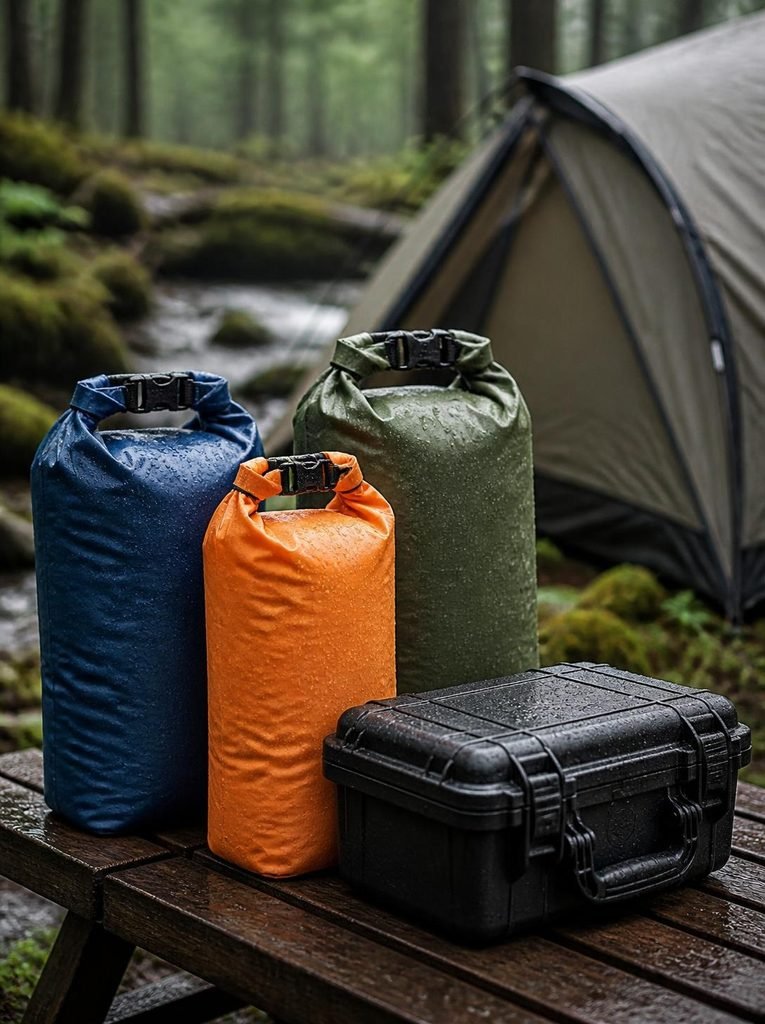
A tent footprint is a protective sheet designed to sit underneath your tent floor.
I consider it a particularly useful addition when camping on damp ground because it helps protect the tent material from abrasion, sharp objects, and prolonged contact with wet surfaces.
It is important to understand that a footprint does not automatically make a leaking tent waterproof.
Instead, it works alongside the tent’s existing floor construction to provide additional protection.
How to Use a Tent Footprint Correctly
The most important detail is making sure the footprint does not extend beyond the edges of your tent.
If the material sticks out, rainwater can collect on the exposed sections and flow underneath your shelter.
This is a surprisingly easy mistake to make.
I recommend using a footprint specifically designed for your tent or trimming a suitable groundsheet to fit slightly inside the tent’s floor dimensions.
If you are using a basic tarp as a footprint, fold any exposed edges underneath rather than leaving them sticking out.
What About Putting a Tarp Inside the Tent?
An additional waterproof layer inside the tent can sometimes help protect belongings from a damp floor, but it should not be treated as a permanent solution for damaged tent fabric.
If your tent floor has holes, worn waterproof coatings, or failing seams, those problems need proper repairs.
My practical tip: Always inspect the underside of your tent before packing it away. Small punctures are easier to repair before they become a serious problem during your next rainy camping trip.
4. Create a Separate Dry Area for Wet Shoes and Clothing
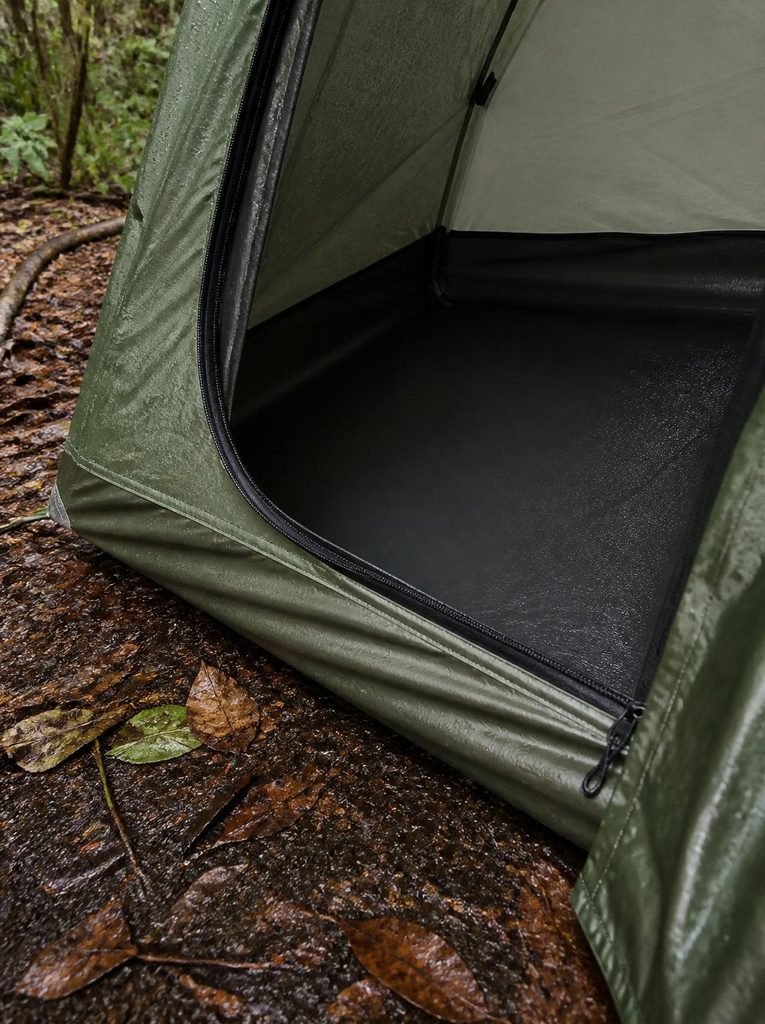
One of the biggest challenges during rainy camping trips is keeping moisture from spreading throughout your sleeping area.
Wet boots, muddy jackets, damp socks, and rain covered backpacks can quickly turn a comfortable tent into a messy space.
I recommend creating a dedicated wet gear area from the beginning of your trip.
This does not require a complicated setup.
A covered tent vestibule, a small waterproof mat, or a sheltered storage area can help keep wet items separated from your bedding and clean clothes.
Organize Your Campsite Into Two Areas
Think of your tent as having a dry zone and a wet zone.
The dry zone should contain your sleeping bags, pillows, clean clothing, electronics, and other items that need protection from moisture.
The wet zone is where you remove muddy footwear, hang damp jackets, and temporarily store rain gear.
I find this approach useful because it prevents you from constantly moving wet items around the campsite.
A few inexpensive supplies can make the arrangement easier:
- A waterproof mat for removing shoes.
- A small container for muddy footwear.
- A mesh bag for damp clothing.
- A microfiber towel for wiping wet equipment.
- A waterproof bag for separating dirty clothes from clean ones.
Make sure any wet gear stored in a vestibule does not block your exit or press against the tent walls.
Keep Moisture From Building Up Inside
It can be tempting to close every tent opening when rain starts falling.
However, completely restricting ventilation may increase condensation inside the tent.
I recommend using the tent’s protected ventilation openings whenever conditions allow.
My practical tip: Keep a small absorbent towel near the tent entrance. Wiping down wet bags and equipment before bringing them inside helps prevent moisture from spreading onto your sleeping gear.
5. Pack Your Clothes and Sleeping Gear in Waterproof Dry Bags
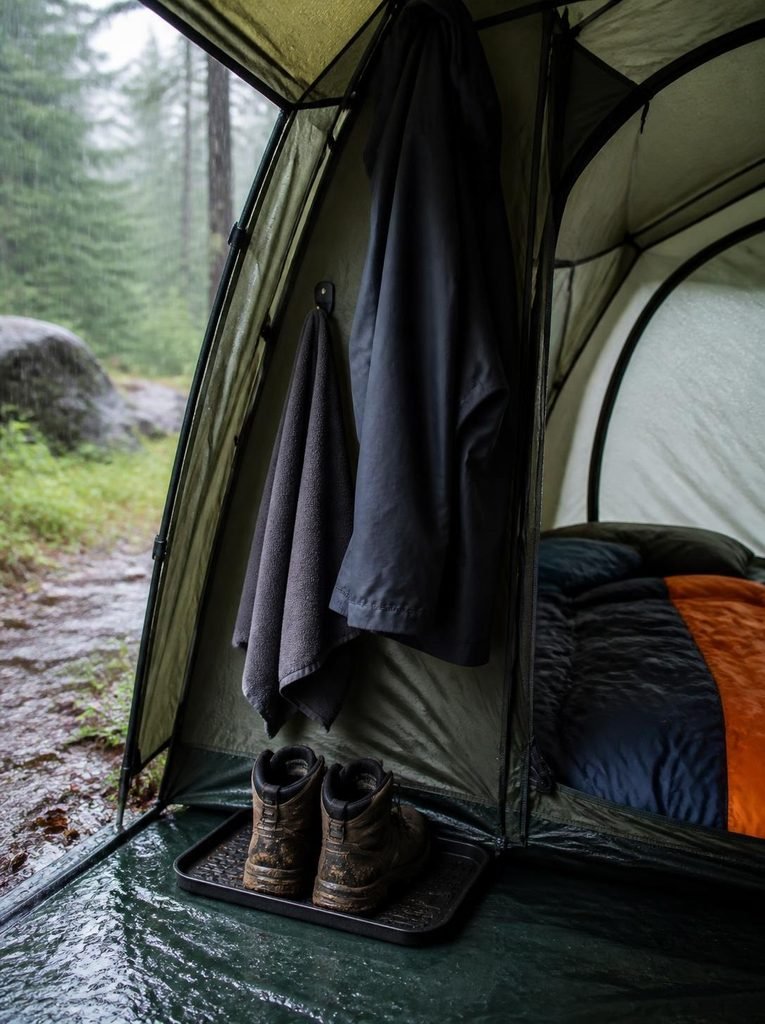
Few things make a rainy camping trip more uncomfortable than discovering that your spare clothes or sleeping bag have become wet.
This is why I consider waterproof storage one of the most worthwhile camping preparations.
A backpack rain cover can protect against some rainfall, but water may still enter through openings, seams, or prolonged exposure.
Dry bags provide another layer of protection for the belongings you cannot afford to get wet.
What Should Go Inside Waterproof Bags?
I recommend prioritizing the items that are difficult to dry while camping.
Your sleeping bag, spare socks, thermal clothing, underwear, and electronics should be among the first things you protect.
For better organization, separate items into smaller bags rather than placing everything inside one large container.
For example, you could use one bag for sleeping clothes, another for daytime clothing, and a separate waterproof pouch for electronics.
This arrangement makes it easier to find what you need without exposing every item to rain.
An Affordable Alternative
If you are camping on a tight budget, sturdy waterproof pack liners can provide useful protection inside your backpack.
Heavy duty plastic bags can also serve as an inexpensive backup, although they are generally less durable and may tear or leak.
For critical sleeping equipment, I would still prioritize a reliable waterproof storage system.
My practical tip: Keep one complete set of dry clothes reserved for sleeping. Even if your daytime clothing becomes wet, changing into dry clothes before bed can make a significant difference in comfort and warmth.
6. Build a Rainproof Cooking and Eating Area
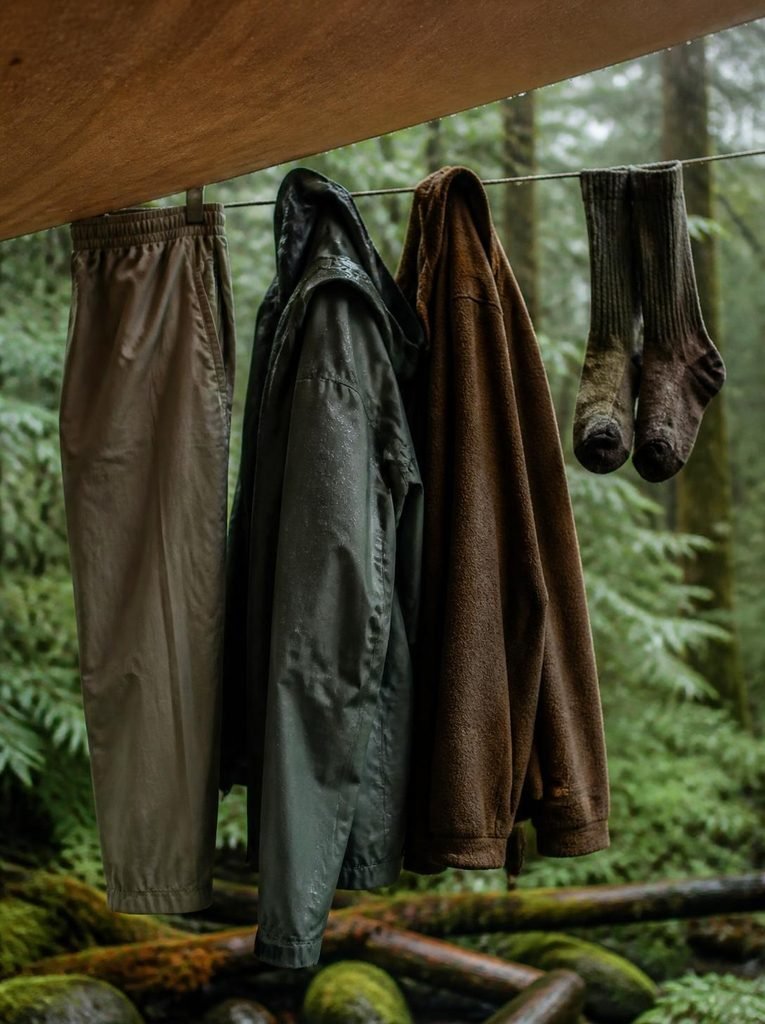
Preparing meals in the rain can become frustrating when your cooking equipment, ingredients, and seating area are constantly exposed to water.
A separate sheltered eating area can make rainy camping trips much easier to manage.
However, cooking during wet weather requires careful attention to ventilation and fire safety.
I never recommend using a camping stove inside a tent or enclosed shelter.
Camping stoves can produce carbon monoxide, and open flames can ignite nearby materials.
How to Organize a Safer Rainy Day Cooking Space
Choose a designated outdoor cooking area with good airflow and adequate protection from rain.
If your campground provides a covered cooking shelter, that is often the most convenient option.
Otherwise, use a cooking shelter only when it is specifically designed and approved for that purpose, following the manufacturer’s clearance and ventilation requirements.
Keep fuel containers away from heat sources and position your cooking equipment on a stable surface.
For rainy weather, I recommend planning meals that require minimal preparation.
Simple foods such as sandwiches, wraps, prepared salads, and ready to eat snacks can reduce the need to cook during heavy rainfall.
If conditions become too windy or stormy for safe outdoor cooking, use prepared food instead.
Keep Your Food Organized
Waterproof food containers are especially useful for protecting dry ingredients from moisture.
I recommend grouping ingredients according to the meals you plan to prepare.
This prevents you from repeatedly opening multiple containers while rain is falling.
My practical tip: Prepare ingredients before leaving home whenever possible. Washing vegetables, portioning ingredients, and organizing snacks in advance can save considerable effort when the weather turns unpleasant.
7. Keep Your Sleeping Area Warm and Dry With the Right Bedding Setup
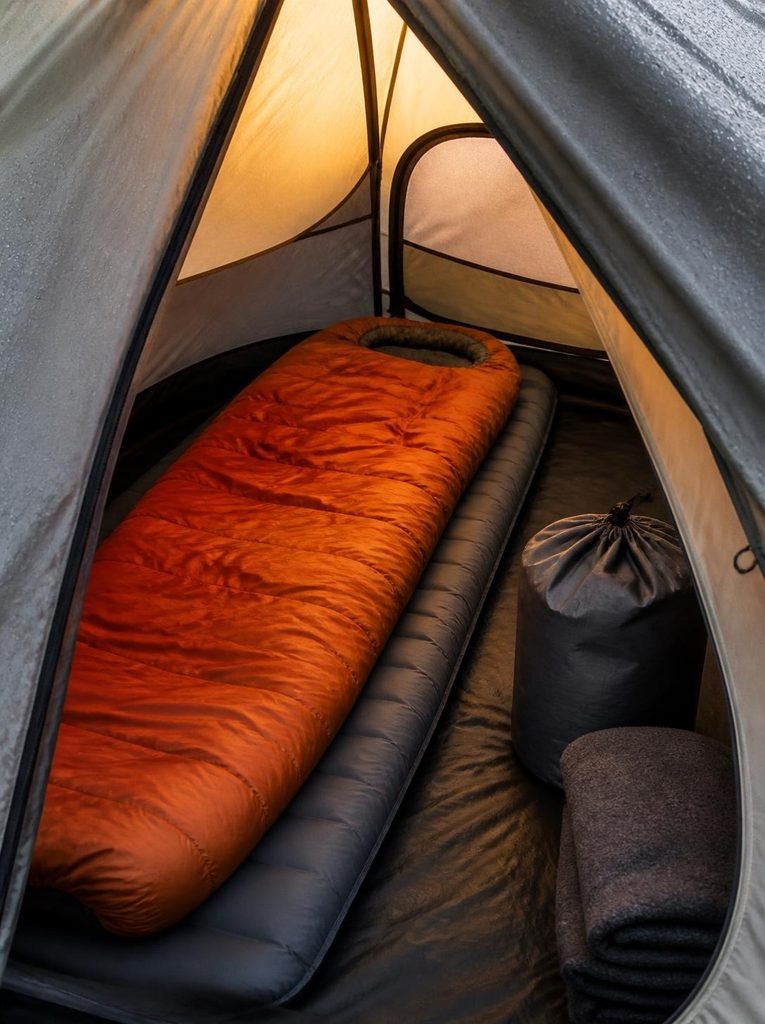
A comfortable sleeping area can make the difference between enjoying a rainy camping trip and spending the entire night feeling cold and miserable.
Even when rain does not enter your tent, damp conditions and condensation can affect your comfort.
One mistake I recommend avoiding is placing a sleeping bag directly on the tent floor without adequate insulation.
The ground can draw heat away from your body, particularly during cold and wet weather.
Start With an Insulated Sleeping Pad
A good sleeping pad does more than provide cushioning.
It creates an insulating barrier between your body and the cold ground.
When choosing a sleeping pad, pay attention to its R value, which indicates its resistance to heat transfer.
Higher R values generally provide more insulation, although the appropriate level depends on the weather conditions.
For colder camping conditions, a properly insulated sleeping pad is an important part of your sleep system.
Protect Your Sleeping Bag From Moisture
I recommend keeping sleeping bags away from tent walls where condensation may accumulate.
If your sleeping bag repeatedly touches damp tent fabric, moisture can transfer onto the insulation.
Make sure your tent has enough space for your bedding without forcing it against the sides.
Choose a sleeping bag with a suitable temperature rating for the conditions you expect, and keep it inside waterproof storage until you are ready to use it.
Change Into Dry Clothes Before Sleeping
This is one of the simplest ways to improve comfort during rainy camping trips.
Even slightly damp clothing can leave you feeling cold when temperatures drop overnight.
I recommend changing into clean, dry socks and sleepwear before getting into your sleeping bag.
Avoid wearing wet clothing to bed, and do not use fuel burning heaters inside your tent.
My practical tip: Before settling down for the night, check the tent floor, sleeping pad, and edges of your sleeping bag for moisture. Addressing a small damp patch early is much easier than dealing with soaked bedding in the middle of the night.
8. Set Up a Safe Cooking Area for Rainy Weather
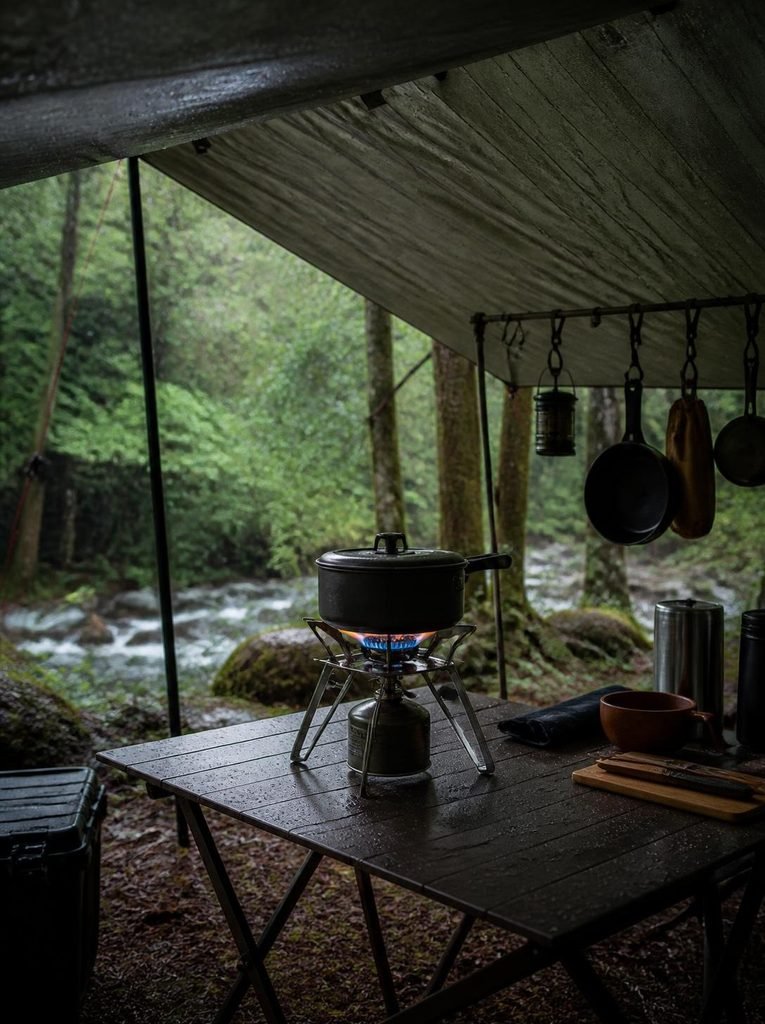
Preparing meals becomes more challenging when rain makes everything wet. Your matches, cooking utensils, food packaging, and preparation surfaces can all become difficult to manage, especially when you are trying to cook while keeping your belongings dry.
That is why I recommend planning your cooking area before the weather changes.
A suitable covered outdoor space can make meal preparation easier without forcing you to work in the rain. A sturdy tarp or purpose built shelter may provide protection, provided it is positioned safely and has adequate clearance and ventilation.
How to Make Rainy Camping Cooking Easier
Choose a stable, level surface away from puddles and flowing water.
Keep your cooking utensils in a waterproof storage container.
Pack simple meals that require minimal preparation when wet weather is expected.
Store matches and fire starters in a suitable waterproof container.
Use a stable table or designated food preparation surface rather than preparing meals on muddy ground.
Keep your cooking area separate from your sleeping area.
My practical tip: When planning a rainy camping menu, I would prioritize meals that require fewer ingredients and less preparation.
Instant oatmeal, suitable ready to eat foods, and simple one pot meals can reduce the amount of equipment you need to handle in wet conditions.
Always follow the stove manufacturer’s instructions. Never operate a camping stove, lantern, charcoal grill, or other fuel burning appliance inside a tent, enclosed vestibule, or poorly ventilated shelter because of carbon monoxide poisoning and fire risks.
Keep cooking equipment away from flammable tent fabric, and avoid cooking during lightning or dangerous winds.
A little preparation can make mealtimes much less stressful without compromising safety.
9. Protect Your Food and Cooking Supplies From Rain
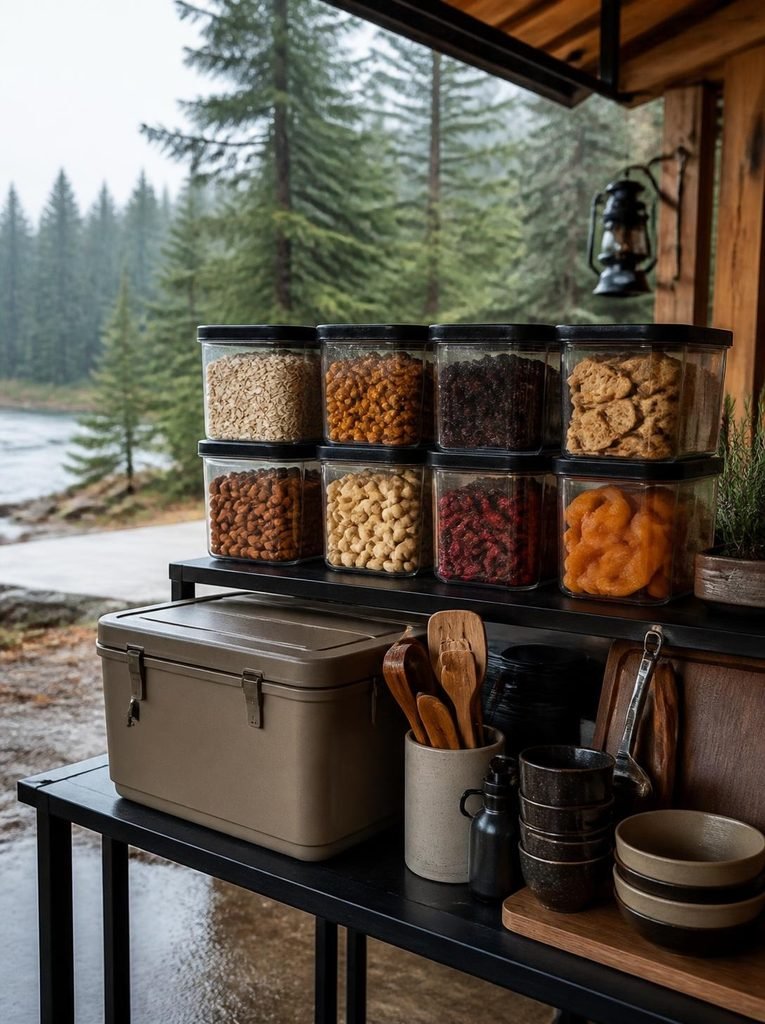
Food storage deserves special attention when camping in wet weather.
Rain can damage cardboard packaging, soak paper labels, and make dry ingredients difficult to handle. Moisture can also contaminate food preparation surfaces and create an uncomfortable mess around your campsite.
I recommend organizing your food before leaving home instead of bringing everything in its original packaging.
Simple Ways to Keep Camping Food Dry
Use waterproof containers: Store dry ingredients, snacks, bread, and other suitable foods in sealed containers.
Separate food by meal: Group breakfast items, lunch supplies, and dinner ingredients into different containers or bags.
Protect cooking utensils: Keep plates, cups, cutlery, and preparation tools in a dedicated container with a secure lid.
Keep food off the ground: Use a stable table or suitable storage system rather than leaving food containers in puddles or mud.
Store food safely: Follow campsite rules for food storage and wildlife protection. In bear country, use approved bear resistant storage or designated food lockers.
My practical tip: I like the idea of preparing small meal kits before a trip. For example, keeping the ingredients for breakfast together makes it easier to find what you need without unpacking your entire food supply in the rain.
Remember that waterproof packaging does not replace proper food safety. Keep perishable food at safe temperatures in a suitable cooler or refrigerator, and do not leave cooked food sitting out for extended periods.
If you are camping for several days, check your food supplies regularly and discard anything that has become unsafe to eat.
10. Create a Simple System for Drying Wet Camping Gear
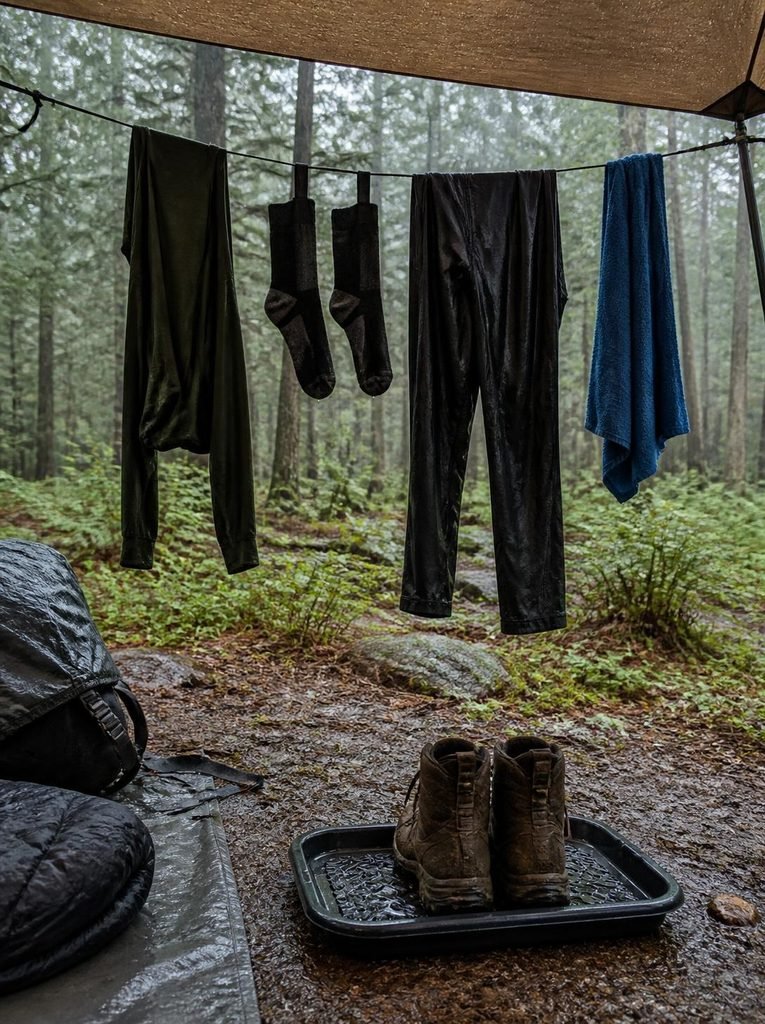
Wet gear is almost unavoidable when camping in persistent rain. Your rain jacket, shoes, towels, and other equipment may remain damp even after you have found shelter.
The problem becomes more noticeable when you pack everything together without separating wet items from dry ones.
I recommend creating a small drying and storage area as soon as you arrive at the campsite. This gives wet equipment somewhere to go and helps prevent moisture from spreading throughout your tent.
How to Manage Wet Gear at Camp
Separate wet and dry items: Use waterproof bags or dedicated containers to prevent damp clothing from soaking clean clothes.
Hang suitable clothing: Use a clothesline under an appropriate covered area to allow air to circulate around damp garments.
Use microfiber towels: These are lightweight and convenient for wiping down equipment and absorbing small amounts of moisture.
Remove mud early: Clean muddy shoes and equipment before the dirt dries and becomes harder to remove.
Allow airflow: Ventilate your tent according to its design to reduce moisture buildup.
Protect your sleeping equipment: Keep sleeping bags and spare bedding away from wet clothing and footwear.
One mistake I would avoid is sealing damp clothing in a bag and forgetting about it for several days. That can encourage unpleasant odors and may contribute to mildew.
My practical tip: Before bedtime, organize your wet belongings in one designated area and make sure the clothes you plan to wear the following morning remain dry.
Do not rely on an open fire or a camping stove to dry clothing. Keep wet equipment away from flames, heaters, and hot stove surfaces because synthetic fabrics can melt and clothing can ignite.
If the weather remains humid, some items may not dry completely overnight. Carrying enough spare clothing is often more reliable than assuming everything will dry at the campsite.
11. Prevent Rainwater From Entering Your Tent
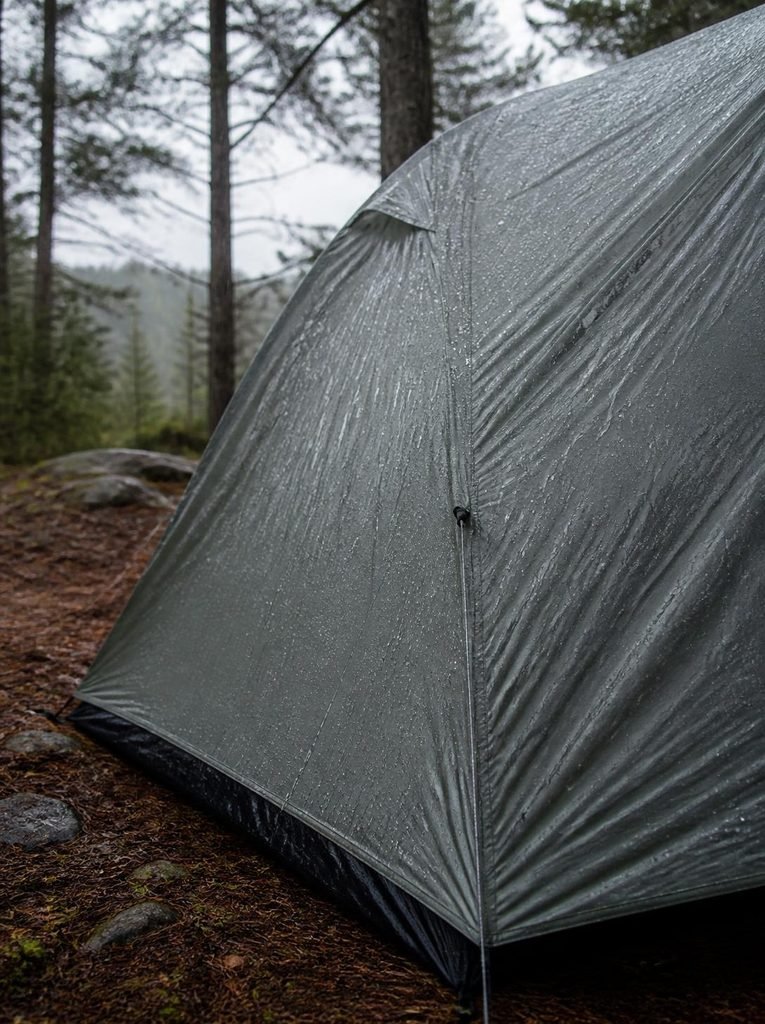
Even a good tent can develop water problems when it is poorly pitched, damaged, or exposed to conditions beyond its design limits.
Water may enter through damaged seams, worn fabric, an incorrectly fitted rainfly, or a groundsheet that collects runoff. Sometimes, what looks like a leak is actually condensation forming on the inside of the tent.
Understanding the difference can help you solve the problem more effectively.
Check These Areas When Your Tent Gets Wet
The rainfly: Make sure it is installed correctly and provides the coverage intended by the manufacturer.
The seams: Inspect for damaged stitching, deteriorated seam sealing, or other signs of wear.
The tent floor: Look for holes, damaged corners, and worn sections that could allow water through.
The groundsheet: Check that it does not extend beyond the tent floor and collect rainwater underneath the tent.
The tent location: If water is collecting around the campsite, move to a safer, higher location if conditions allow.
Ventilation: If the tent walls are damp without obvious leaks, condensation may be contributing to the problem.
What Should You Do if Water Starts Coming In?
First, protect your sleeping bags, electronics, clothing, and other essential items by moving them away from the wet area.
If conditions are safe, identify the likely source of the water and use a repair product designed for your tent material when appropriate.
Avoid digging trenches around your tent unless the campsite explicitly permits it. Trenching can damage the environment and may violate campground rules.
If water is rising around the tent, flooding is possible, or the ground is becoming unstable, do not waste time trying to repair the shelter. Move to safer ground or an appropriate building.
My practical tip: Test your tent at home before a camping trip. Inspect the seams, rainfly, floor, and waterproofing, and follow the manufacturer’s instructions for any maintenance.
It is much easier to identify a damaged seam in your backyard than during a rainy night in the wilderness.
12. Plan Fun Rainy Day Camping Activities
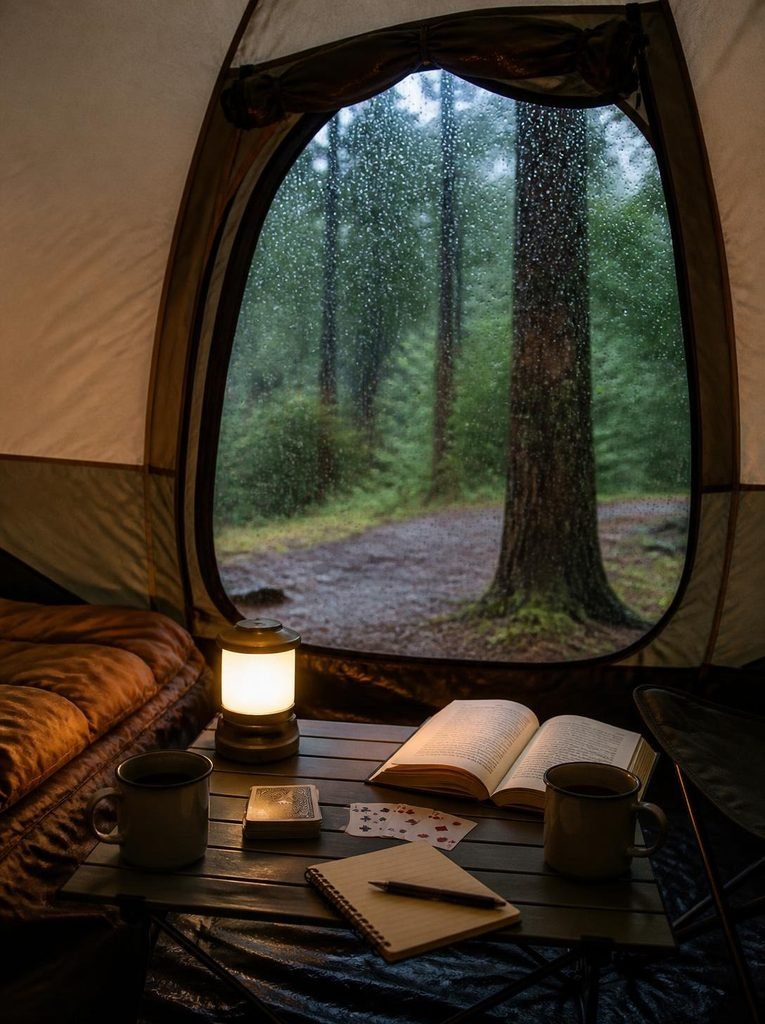
One of the easiest ways to make a rainy camping trip more enjoyable is to plan activities that do not depend on sunshine.
When the weather keeps everyone inside the tent or under a suitable shelter, boredom can quickly become another problem. This is especially true when camping with children or a group of friends.
I recommend bringing a few lightweight activities that are easy to pack and can be enjoyed without electricity or complicated equipment.
Rainy Day Camping Activities Worth Trying
Play card games: A small deck of cards takes up very little space and can keep everyone entertained.
Bring travel board games: Compact games are useful for families and groups who enjoy friendly competition.
Read a book: A paperback or waterproof e reader case can provide a relaxing way to spend a quiet afternoon.
Plan a camping food challenge: If conditions are safe and you have a suitable outdoor cooking setup, try preparing a simple meal using ingredients you already packed.
Take nature notes: When it is safe to do so, observe the surrounding landscape and record changes in the weather, plants, or wildlife from a sheltered location.
Tell stories: Share travel memories, funny experiences, or plans for future adventures.
Organize your camping gear: Rainy periods can provide an opportunity to sort supplies, check batteries, and prepare for the following day.
For families, I would also consider bringing a small activity bag containing coloring materials, notebooks, puzzles, or other lightweight entertainment.
My practical tip: Keep your activities in a waterproof pouch so you can reach for them when the weather changes. It is much easier to keep everyone occupied when you do not have to unpack several bags to find a simple game.
However, entertainment should never take priority over safety. Do not go hiking, swimming, or exploring exposed areas simply because you are bored at camp. Avoid going outside during thunderstorms, and follow local weather alerts and campsite instructions.
A rainy afternoon can still become a memorable part of the trip when everyone has something enjoyable to do.
13. Know When to Pack Up and Leave for Safety
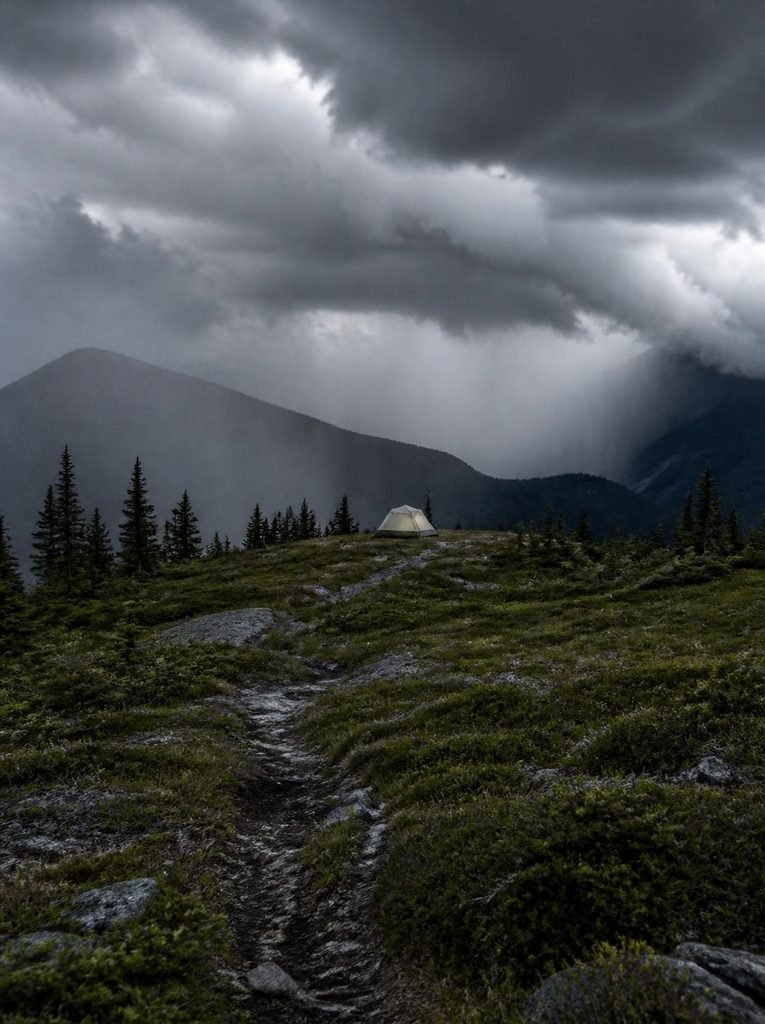
The final solution is also the most important one.
Camping equipment can help you manage ordinary rain, but it cannot make every weather condition safe. Heavy rainfall, flash flooding, thunderstorms, high winds, and falling branches can turn a campsite into a dangerous place.
I believe every camper should have a clear idea of when to stop trying to save the trip and prioritize getting to safety.
Warning Signs You Should Never Ignore
Rising water: If water is moving toward your campsite or collecting rapidly around your tent, move away from the area immediately.
Thunder and lightning: Seek substantial enclosed shelter, such as a suitable building, when available. A tent and a tarp do not protect you from lightning.
Strong winds: If trees are falling, branches are breaking, or your shelter is becoming unstable, leave the exposed area when it is safe to do so.
Unstable ground: Mudslides, eroding banks, and saturated slopes can create serious hazards.
Dangerously cold, wet conditions: Persistent wetness, shivering, confusion, unusual tiredness, or loss of coordination may indicate hypothermia. Seek warmth and emergency assistance.
Official warnings: Follow evacuation instructions from park authorities, emergency services, and campsite staff.
How to Prepare for an Emergency
Check weather alerts before leaving and continue monitoring them during your trip when possible.
Know the nearest safe shelter and have a route away from flood prone areas.
Keep your phone, power bank, identification, essential medication, and emergency supplies protected from water.
Tell someone your camping location and expected return time.
If you are camping in a remote area, consider carrying a suitable emergency communication device.
If flooding is possible, do not attempt to walk, drive, or cycle through floodwater. Water can be deeper and faster moving than it appears.
My practical tip: Decide in advance what conditions would make you leave. Having that decision in mind before bad weather arrives can help you act quickly instead of spending valuable time trying to protect your equipment.
Your tent, sleeping bag, and camping accessories can be replaced. Your safety comes first.
Rain Camping Checklist: What to Pack Before You Leave
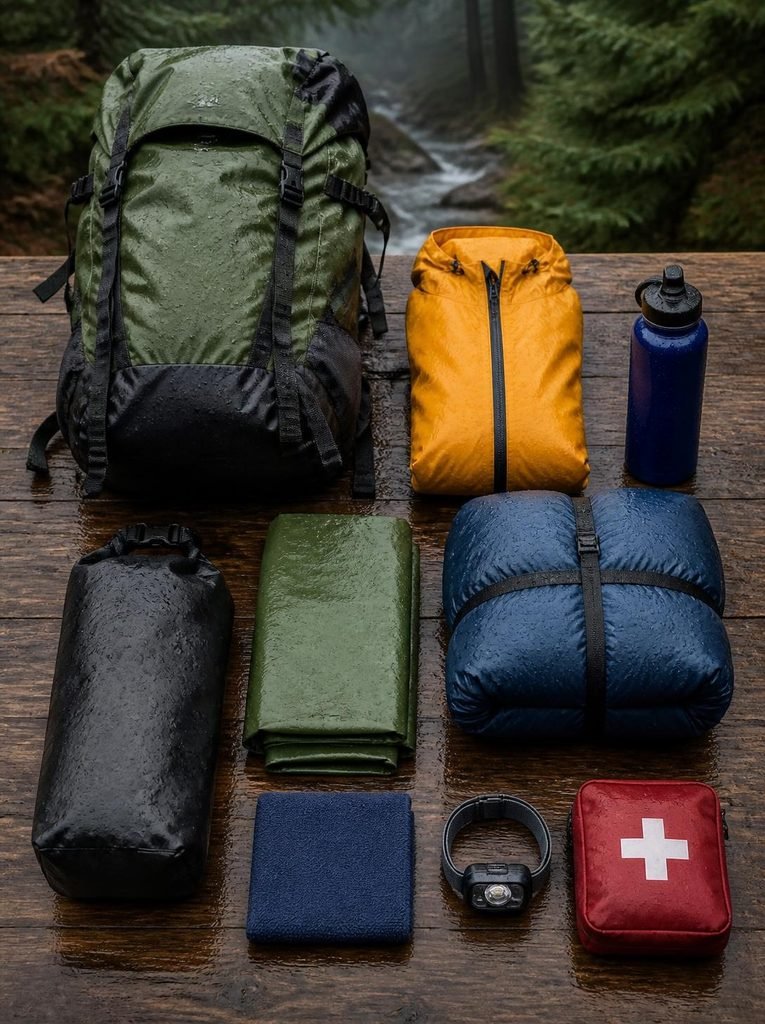
A checklist makes it easier to prepare for changing weather without forgetting important supplies. I recommend using this list when organizing your camping equipment.
Shelter and Protection
- Waterproof tent with a suitable rainfly
- Properly fitted groundsheet or tent footprint
- Waterproof tarp and suitable attachment equipment
- Tent repair kit and appropriate seam sealer
- Waterproof dry bags or storage containers
Clothing and Bedding
- Waterproof rain jacket
- Suitable rain pants or poncho
- Quick drying clothing
- Extra socks and underwear
- Dry sleeping clothes
- Sleeping bag suitable for the expected temperatures
- Insulated sleeping pad
Cooking and Food
- Waterproof food storage containers
- Simple meal ingredients
- Camping stove suitable for outdoor use
- Cooking utensils and plates
- Drinking water and a suitable water treatment method when needed
- Cooler for perishable food
Comfort and Safety
- Microfiber towels
- Waterproof footwear
- First aid kit
- Flashlight or headlamp with spare batteries
- Fully charged phone and power bank
- Emergency communication equipment where appropriate
- Weather forecast and emergency plan
Entertainment and Organization
- Playing cards or compact board games
- Book or notebook
- Waterproof pouch for small items
- Trash bags for waste and muddy equipment
You do not need to buy everything on this list. Start with the essentials that suit your destination, expected weather, camping style, and available equipment.
Common Rain Camping Mistakes to Avoid
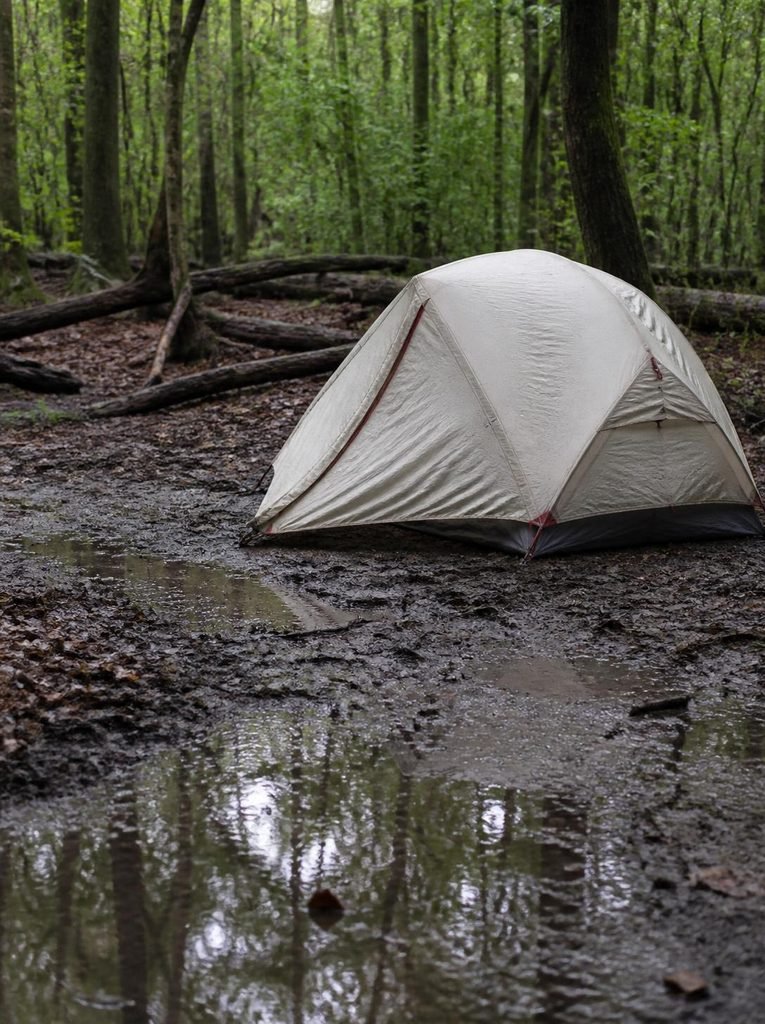
Even experienced campers can make mistakes when dealing with wet weather. Avoiding a few common problems can help you stay more comfortable and prevent unnecessary damage to your equipment.
1. Pitching Your Tent in a Low Area
A low spot may look sheltered, but it can become a collection point for rainwater. Choose suitable elevated, well drained ground instead.
2. Forgetting to Protect Spare Clothing
A single waterproof jacket will not help much if every clean shirt and pair of socks becomes wet. Store essential dry clothing separately.
3. Ignoring Tent Ventilation
Closing every opening can increase condensation. Follow the tent manufacturer’s ventilation instructions while keeping rain out.
4. Leaving Wet Shoes Inside the Sleeping Area
Wet footwear can spread mud and moisture. Keep shoes in a suitable vestibule or designated covered storage area whenever possible.
5. Assuming a Tarp Makes Any Weather Safe
A tarp can provide useful shelter from ordinary rain, but it does not make thunderstorms, dangerous winds, or flooding safe.
6. Trying to Dry Clothing Over a Flame
This can cause burns, fabric damage, or a fire. Use appropriate drying methods and keep clothing away from flames and hot equipment.
7. Waiting Too Long to Leave
Do not risk your safety to protect camping equipment. If the campsite becomes dangerous, leave for safer ground or suitable shelter as soon as possible.
Frequently Asked Questions About Rain Camping
Is it safe to camp in the rain?
Camping in ordinary rain can be manageable with suitable equipment, a well chosen campsite, and appropriate preparation. However, thunderstorms, flash flooding, dangerous winds, and cold conditions can make camping unsafe. Always follow official weather warnings and evacuation instructions.
How do I keep my tent dry when it rains all night?
Start with a waterproof tent that is in good condition and a properly fitted rainfly. Pitch it on well drained ground, use a correctly sized footprint, keep belongings away from damp tent walls, and maintain appropriate ventilation to reduce condensation.
No tent setup can guarantee a completely dry interior in every condition, so keep essential bedding and spare clothing protected in waterproof bags.
What is the most important item for rainy camping?
There is no single item that solves every problem, but a reliable waterproof shelter is a high priority. A suitable tent, rainfly, and properly fitted groundsheet help protect your sleeping area. Waterproof storage bags, appropriate clothing, and an emergency plan are also important.
Can I use a tarp instead of a rainfly?
A tarp can provide additional shelter, but it should not automatically be treated as a replacement for a properly designed tent rainfly. The right choice depends on your shelter design, weather conditions, and experience. Follow the manufacturer’s instructions and make sure the setup can safely handle the expected weather.
How do I keep warm when camping in wet weather?
Wear suitable layers, protect yourself from wind and rain, and use a sleeping bag and insulated sleeping pad rated for the expected temperatures. Change out of wet clothing when possible and keep spare clothes dry.
If you develop persistent shivering, confusion, or poor coordination, seek immediate help because these can be signs of hypothermia.
Should I cancel a camping trip if rain is forecast?
Not necessarily. Light or moderate rain may be manageable if you have appropriate equipment and the campsite remains safe. However, severe weather warnings, flash flood risks, dangerous winds, and conditions beyond your equipment or experience are good reasons to postpone or leave.
Check the forecast for the entire trip rather than relying only on the conditions when you depart.
Final Thoughts
Rain can make camping more challenging, but it does not automatically mean your plans are ruined. With a reliable shelter, dry clothing, organized storage, and a little preparation, you can make many wet weather camping trips more comfortable.
I recommend concentrating on the essentials first. Choose a safe campsite, protect your sleeping equipment, keep wet gear separate from dry belongings, and plan simple meals that are easy to prepare in poor weather.
It also helps to have a few activities ready for those afternoons when going outside is not practical. These small details can make the experience feel less stressful and give everyone more time to enjoy the trip.
Most importantly, learn to recognize when the weather has become dangerous. No piece of camping equipment is worth risking your safety.
The best rain camping solution is not simply staying dry. It is knowing how to prepare, how to adapt, and when to put safety first.