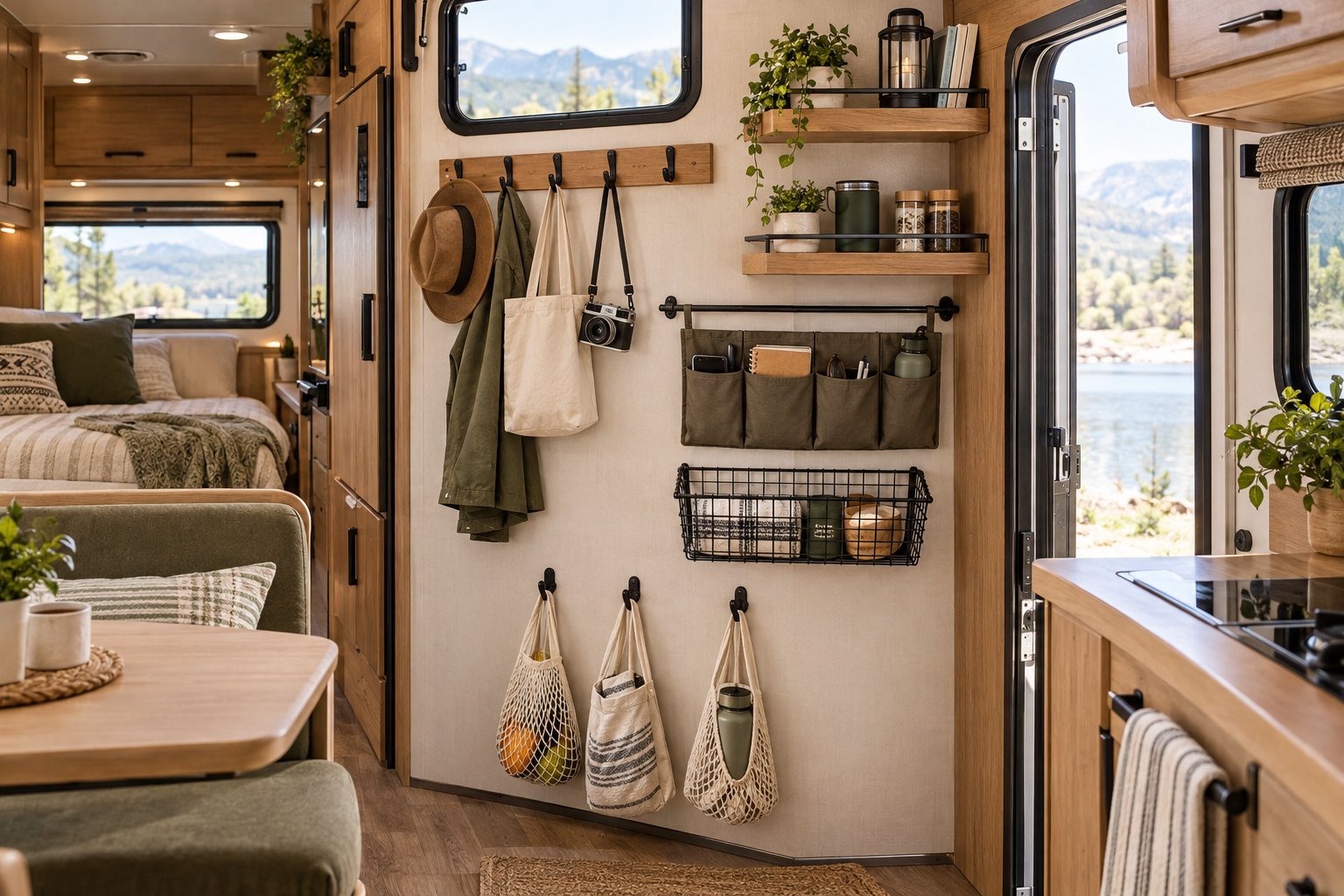
The 11 Best Ways to Hang Things on Your RV Walls Now
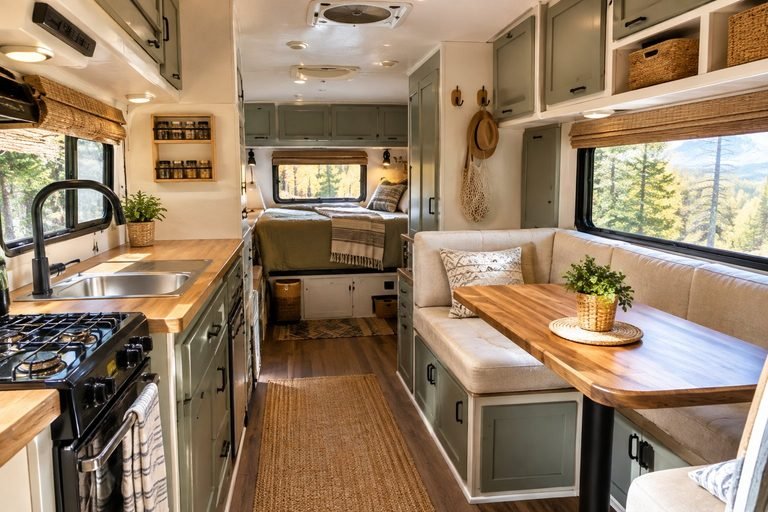
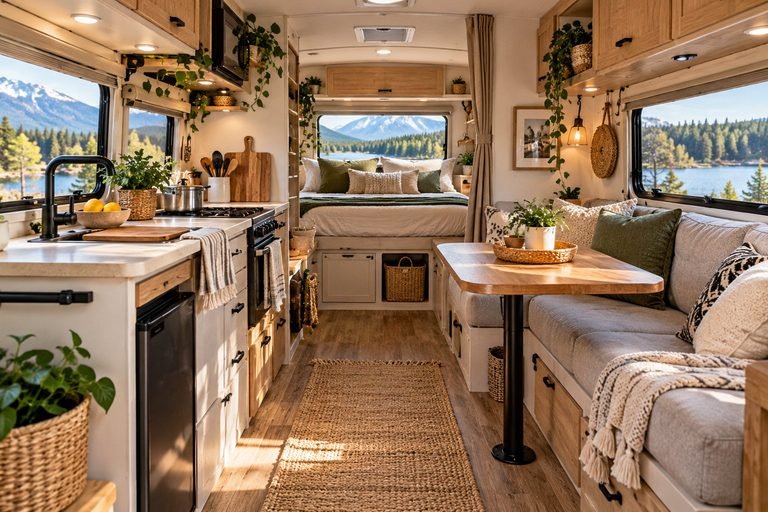
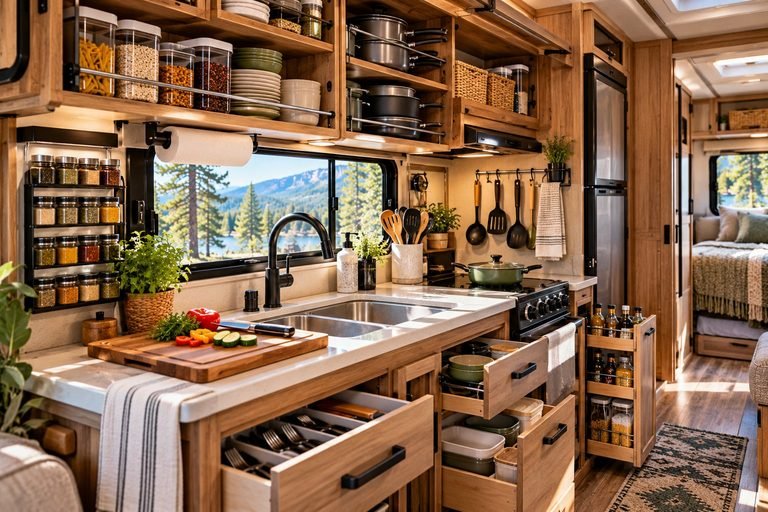
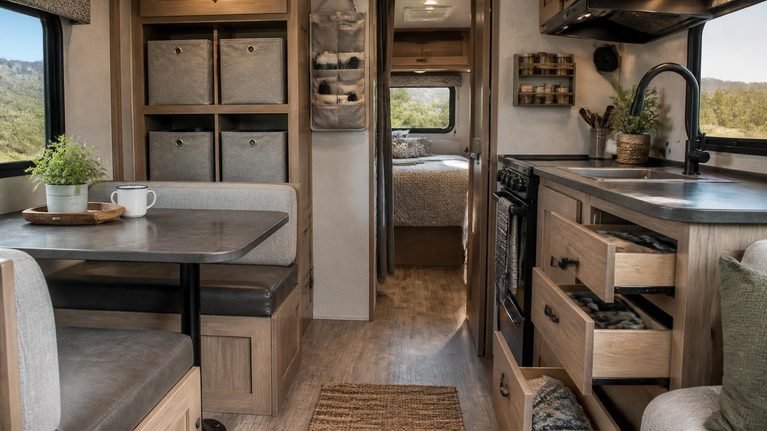
RV walls can be surprisingly useful once you stop looking at them as empty walls and start thinking about them as extra storage space.
I have found that a few well placed hooks, shelves, and organizers can make a noticeable difference in a small camper, especially when counter space and cabinets are already limited.
The challenge is finding ways to hang things securely without making permanent changes or damaging the thin walls that are common in RVs.
I have tried different approaches depending on what I wanted to hang, how much weight it needed to hold, and whether I wanted the solution to stay in place while traveling.
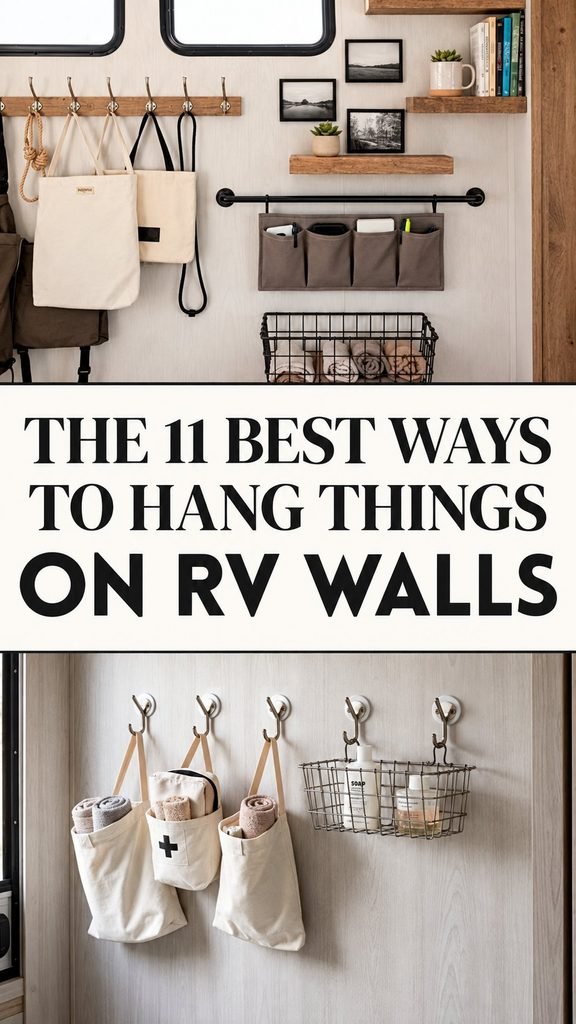
Lightweight items are much easier, but heavier organizers need more thought because an RV moves, shakes, and vibrates on the road. I also like solutions that can be removed or repositioned when I change the layout.
These are the wall hanging methods I find most useful for keeping an RV organized while still making the space feel comfortable and lived in.
1. Adhesive Hooks
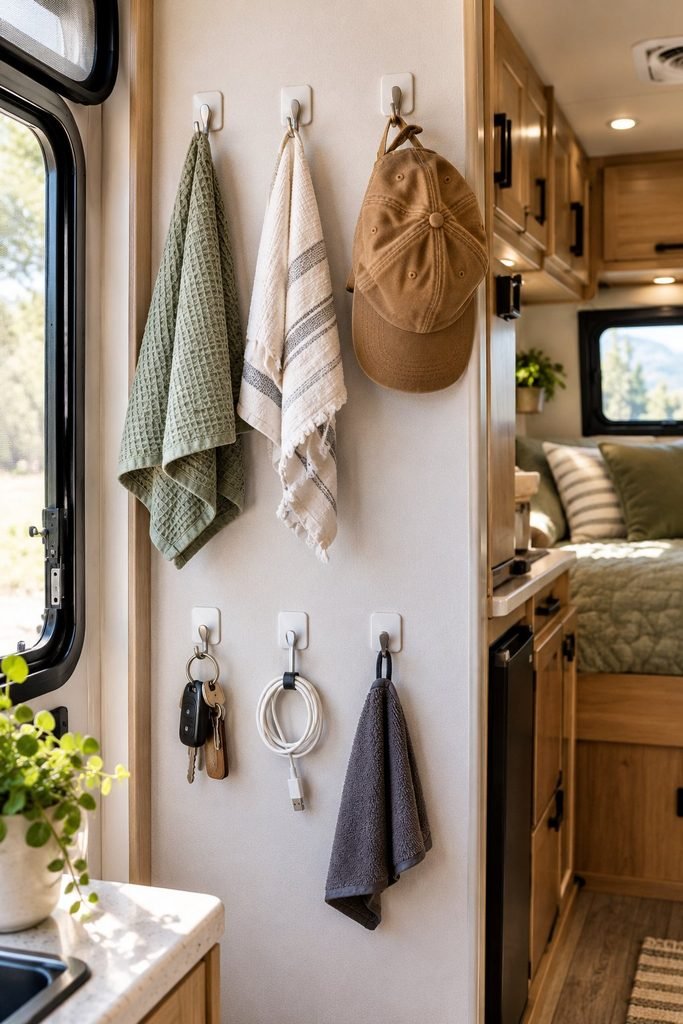
Adhesive hooks are one of the easiest ways I have found to add useful storage without drilling into an RV wall. They work especially well for lightweight everyday items that I want within easy reach.
I use this type of hook for things like keys, small towels, lightweight kitchen utensils, hats, charging cables, and other items that tend to end up scattered around the camper.
The biggest advantage is how simple they are to install. I can choose a spot, clean the surface properly, attach the hook, and have a storage point without pulling out any tools.
They are especially useful around the entry area. Having a dedicated place for keys or a small bag means fewer little items end up on the counter or inside a cabinet.
Before using an adhesive hook, I always check the weight rating and think about the surface underneath it. A hook that works perfectly for a lightweight towel may not be suitable for a heavier organizer.
I also avoid treating adhesive hooks as a solution for everything. RV travel creates movement that a stationary home does not, so I prefer to keep heavier items on stronger mounting systems.
2. Command Style Picture Hanging Strips
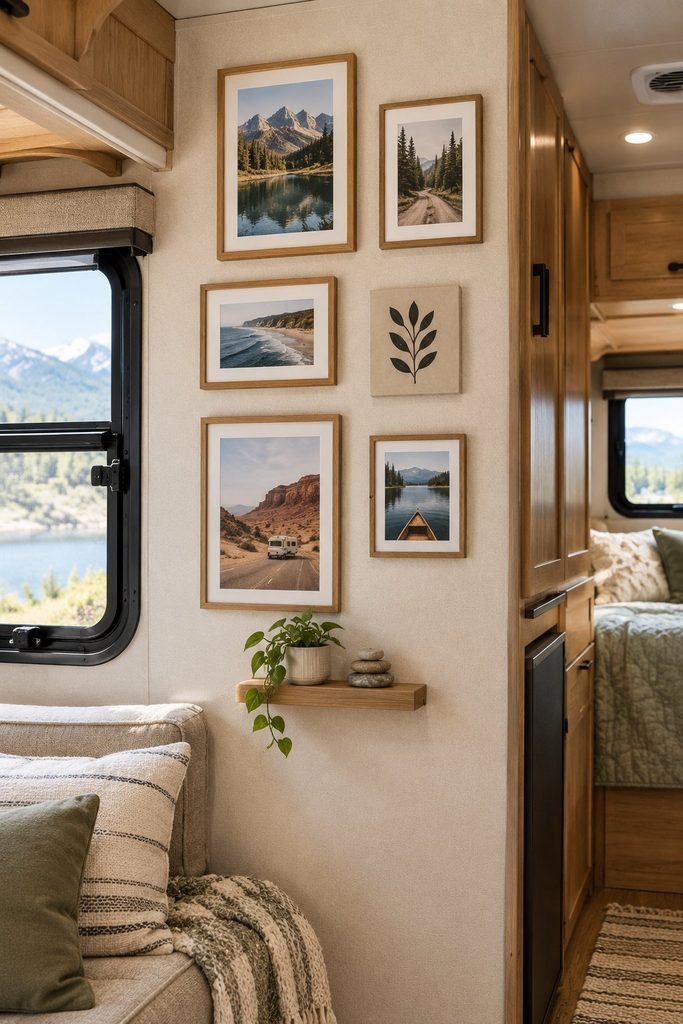
Picture hanging strips are another useful option when I want to put something decorative on an RV wall without drilling holes.
I like these for lightweight artwork, small signs, photographs, and other decorative pieces that help make the camper feel more personal.
One benefit is that they can make it easier to change the decor later. RV interiors can feel very different after you move a few things around, so I like having the flexibility to rearrange without leaving a collection of unnecessary holes behind.
They can also be useful for securing lightweight decorative pieces that might otherwise move around while driving.
The important thing is to pay attention to the weight limit and prepare the wall surface properly. Dust, grease, moisture, or an uneven surface can affect how well the adhesive holds.
I would also avoid assuming that anything attached with adhesive is automatically travel proof. For anything that could fall and break, I prefer an additional level of security or remove it before driving.
3. Over The Door Hooks
Over the door hooks are one of my favorite options when I want extra storage without using the wall itself.
They make use of a space that is often completely overlooked. Depending on the door, I can use them for jackets, towels, hats, small bags, cleaning cloths, or other lightweight items.
This works particularly well in compact RVs because doors already take up valuable wall space when they open. Using the top of the door gives that unused area another purpose.
I like keeping frequently used items on these hooks because I do not have to open a cabinet every time I need something.
Before buying one, I always check the thickness and clearance of the door. An overly thick hook can interfere with the door closing properly, and a poorly fitting design can create unnecessary pressure on the door.
I also avoid putting too much weight on one hook. The goal is to gain useful storage without making the door difficult to operate.
4. Magnetic Hooks
Magnetic hooks can be incredibly useful in an RV when you have a suitable metal surface.
I especially like them because they can be moved whenever I need to change the setup. That flexibility is helpful in a small space where storage needs can change depending on the trip.
I can use magnetic hooks for lightweight kitchen items, small towels, keys, utensils, or other items when there is a secure metal surface available.
They are also handy because installation takes virtually no effort. There is no drilling, adhesive, or permanent modification involved.
The main limitation is that not every RV wall is magnetic. Some surfaces may look like metal but have a different material underneath, so I always test the surface before planning an entire storage system around magnetic hooks.
The strength of the magnet also matters. A hook that holds well while parked may not be suitable for an item that experiences movement while the RV is traveling.
For that reason, I think of magnetic hooks as a flexible storage option rather than something I would automatically trust with heavy objects.
5. Lightweight Floating Shelves
Floating shelves can turn an otherwise unused section of an RV wall into practical storage. I like them when I need a place for small items that I use regularly but do not want taking up valuable counter space.
In my RV, I would use a small shelf for things like toiletries, small baskets, lightweight decor, spices, or everyday items that are easier to grab when they are visible.
The key is choosing a shelf that is actually suitable for an RV. A large, heavy wooden shelf may look beautiful, but adding its own weight to the wall before you even put anything on it is not always practical.
I prefer compact shelves with a lightweight construction and a secure mounting system. I also think about what happens when the RV is moving. Anything sitting on an open shelf can slide or fall, so I like shelves with a small lip or use containers that keep the contents from moving around.
Placement matters too. I would not install a shelf somewhere that could interfere with a cabinet door, window, or walkway.
A small shelf in the right location can provide much more value than a large shelf that gets in the way.
6. Wall Mounted Baskets
Wall mounted baskets are one of the easiest ways to create organized storage for small RV essentials.
I like baskets because they hide some of the visual clutter while keeping frequently used items easy to reach. They can work in a bathroom, bedroom, kitchen, or near the entrance depending on the size and design.
A small basket can hold toiletries, cleaning supplies, charging cables, snacks, mail, or other loose items that normally end up scattered around the RV.
For an RV, I would choose baskets carefully rather than simply buying the largest option available. A large basket can become surprisingly heavy once it is filled, and that extra weight matters when it is attached to a wall that is moving down the road.
I also like using smaller containers inside a larger basket. This keeps everything from shifting around while making it easier to find individual items.
When mounting one, I make sure the attachment method matches both the basket and the items going inside it. Lightweight adhesive solutions can work for small baskets, while heavier baskets may need a more secure mounting method.
The goal is not simply to add storage. It is to create storage that stays organized when the RV is parked and remains secure when it is moving.
7. Pegboards
A pegboard can be a great solution when you want flexible wall storage that can change as your needs change.
What I like most about a pegboard is that I am not locked into one arrangement. Hooks, small shelves, baskets, and holders can be moved around whenever I want to change the setup.
This makes it particularly useful for an RV workspace, craft area, kitchen, or small utility section.
I would keep the setup relatively simple in a camper. A compact pegboard can provide plenty of organization without taking over an entire wall.
For example, I could use hooks for scissors, small tools, cables, or kitchen utensils and add a couple of small baskets for loose items.
One thing I pay attention to is the mounting system. A pegboard itself can become heavy depending on its material and size, and the weight of everything attached to it adds up quickly.
I also prefer keeping heavier items low and closer to stronger mounting points. Lightweight items are better suited to the upper sections.
The biggest advantage is that the storage can evolve. If I change how I use the RV, I can move the accessories around instead of installing a completely new storage system.
8. Tension Rods With Hanging Organizers
Tension rods are another clever way to create storage without putting holes in the wall.
I especially like this idea for spaces such as cabinets, closets, showers, or other areas where the rod can sit securely between two solid surfaces.
A tension rod can hold small hanging baskets, cleaning cloths, lightweight organizers, or other items that would otherwise take up shelf or floor space.
This method works particularly well when I want temporary storage or when I am renting an RV and do not want to make permanent modifications.
The important part is making sure the rod is firmly positioned before adding anything to it. I always test the tension and give it a little movement before trusting it with my belongings.
I would also keep the weight relatively light. A tension rod is convenient, but it should not be treated like a permanent structural support.
One of the things I like about this method is that it gives me another way to organize awkward spaces. Instead of looking at an empty cabinet or narrow storage area as wasted space, I can sometimes turn it into a useful hanging zone with a simple rod and organizer.
What I Look For Before Hanging Anything on an RV Wall
Before installing anything, I consider three things: the weight of the item, the condition of the wall, and what will happen to it while the RV is moving.
A storage solution can work perfectly inside a stationary house and still be a poor choice for an RV. Road vibration, sudden braking, turns, and bumps can put extra stress on hooks and mounting points.
I also try to avoid adding unnecessary weight high up on the walls. Keeping heavier belongings lower can make the overall storage setup easier to manage.
Most importantly, I do not automatically assume that an adhesive product or lightweight hook can support something just because it feels secure when I install it. I give the mounting method some thought before trusting it with anything valuable or breakable.
9. Wall Mounted Rail Systems
A wall mounted rail system can be a practical choice when I want several hanging points in one area instead of attaching individual hooks all over the wall.
These systems are particularly useful in kitchens, entry areas, bathrooms, and small workspaces. I can add hooks, baskets, or other accessories to the rail and move them around when I need to change the setup.
I like this approach because it gives me more flexibility than installing a separate hook for every item. It also keeps the storage area looking more organized.
For an RV, I would keep the rail relatively compact and avoid loading it with heavy items. The mounting points need to be strong enough to handle both the weight of the rail and everything hanging from it.
A rail near the kitchen could hold lightweight utensils, towels, or small organizers. Near the entrance, it could provide a convenient place for keys, hats, or lightweight bags.
The main advantage is that the storage can grow with your needs without requiring a completely different system every time.
10. Wall Mounted Hook Rails
A hook rail is one of the simplest ways to turn a small section of wall into useful storage.
Instead of attaching several individual hooks, I can install one compact rail with multiple hooks. This creates a dedicated spot for items that would otherwise end up on a chair, countertop, or inside a cabinet.
I particularly like hook rails for jackets, towels, hats, lightweight bags, and other everyday items.
In a small RV, placement makes a big difference. I would put a hook rail somewhere that is easy to reach but does not interfere with walking space, cabinet doors, or other storage.
I also think about what will be hanging from each hook. A rail filled with heavy bags is very different from one holding a few lightweight towels.
For everyday organization, though, a simple hook rail can make the RV feel much less cluttered.
It also gives each item a designated home, which makes it easier to keep the space tidy during longer trips.
11. Removable Adhesive Wall Organizers
Removable adhesive organizers are useful when I want a dedicated storage compartment without permanently modifying the RV.
These can include small pockets, mail holders, toothbrush organizers, cable holders, and other compact storage pieces designed to attach directly to a smooth surface.
I like them for the little things that tend to disappear in an RV. Charging cables, receipts, small toiletries, remote controls, and other everyday items can quickly create clutter when they do not have a specific place.
The main benefit is convenience. I can create storage exactly where I need it without sacrificing an entire cabinet or drawer.
I am careful about where I put them, though. Smooth, clean surfaces generally give adhesive products a better chance of staying attached, while textured or dusty surfaces can make them less reliable.
I also keep the weight inside the organizer reasonable. A small pocket that is intended for lightweight items should not become a catchall for heavy objects.
Common Mistakes to Avoid When Hanging Things in an RV
One mistake I see with RV wall storage is trying to use the same mounting method for everything. A lightweight towel and a full storage basket should not be treated the same way.
I also avoid putting too many things on one wall. It is easy to get excited about adding storage and suddenly end up with hooks, shelves, baskets, and organizers covering every available surface.
Another mistake is forgetting about travel day.
Something can look perfectly secure while the RV is parked but become loose after hours of vibration and movement. Before driving, I like to check hanging items and remove anything fragile that could fall.
I also pay attention to doors and walkways. A hook might seem like a perfect idea until a jacket hanging from it blocks a cabinet or catches on someone walking past.
How I Decide Which RV Wall Hanging Method to Use
I usually start with the item rather than the storage product.
If I am hanging something very lightweight, an adhesive hook or removable organizer may be enough. If I need several storage points, a hook rail or rail system makes more sense. For flexible storage, I like pegboards and magnetic hooks where the RV surface allows them.
For anything heavier, I focus much more on the mounting method and the structure behind the wall.
I also consider how often I use the item. Things I reach for every day deserve an accessible location, while seasonal or rarely used items can stay in cabinets or other storage areas.
This simple approach prevents me from adding storage just for the sake of having more storage.
Making RV Wall Storage Work Better
The best RV wall storage is not necessarily the biggest or most complicated setup. I have found that a few carefully chosen storage points can make a small camper feel much more organized.
I like keeping frequently used items visible and easy to reach while keeping less frequently used belongings tucked away. That balance helps the RV stay practical without making the walls look crowded.
I also prefer storage that serves more than one purpose. A hook near the door can hold a hat, towel, or bag depending on the day. A small basket can change from bathroom storage to travel essentials without needing to be replaced.
Before adding anything new, I look around the RV and ask what is currently causing the most clutter. That usually tells me exactly where another hanging solution will make the biggest difference.
Final Thoughts
RV walls can provide much more useful storage than they initially seem to offer. Adhesive hooks, hanging baskets, pegboards, rails, shelves, magnetic hooks, and removable organizers can all help make better use of limited space.
The important part is matching the hanging method to the weight and purpose of the item. I also think about how everything will behave when the RV is moving rather than only considering how it looks while parked.
For me, the best storage solutions are the ones that make everyday life easier without making the RV feel crowded. A few well placed additions can keep counters clearer, make frequently used items easier to find, and give small belongings a proper home.
When planning your own setup, start with the areas that cause the most frustration and add storage gradually. That way, every hook, shelf, or organizer has a purpose and your RV stays comfortable as well as organized.