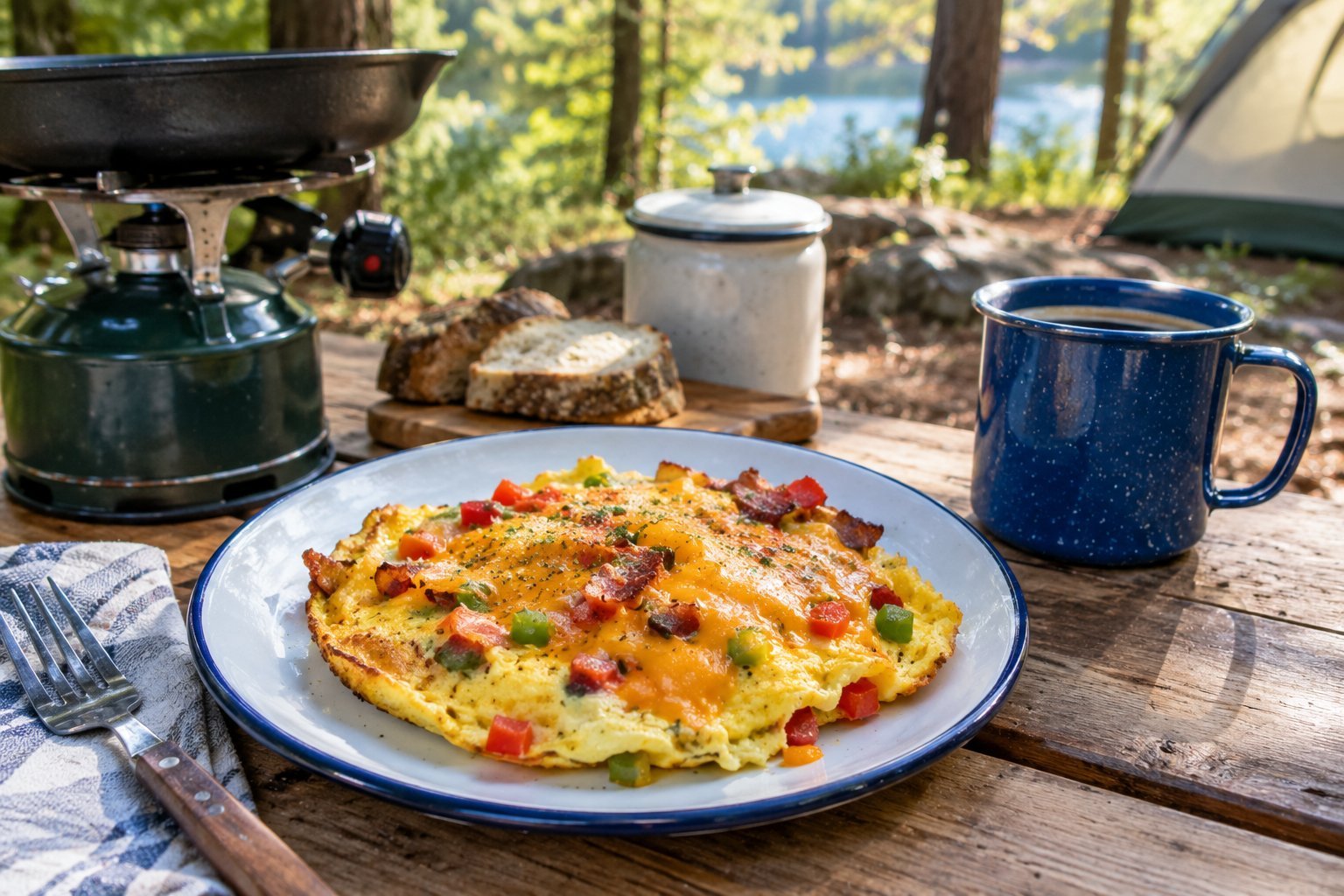
Omelet in a Bag Recipe for Camping
Making breakfast at a campsite does not have to mean standing over a skillet while trying to keep everything organized around the fire.
An omelet in a bag is one of those camping breakfast ideas that makes the whole process much easier. I like it because I can prepare the ingredients ahead of time, keep cleanup to a minimum, and still have a hot, filling breakfast without bringing a lot of cookware.
The basic idea is simple. Eggs, cheese, vegetables, and your favorite omelet fillings go into a sturdy food safe bag, then the sealed bag is cooked in hot water until the eggs are set.

It works especially well for busy camping mornings when everyone wants breakfast at a different time.
I have also found that the little details make a big difference with this method. Choosing the right bag, keeping the filling portions reasonable, and making sure the eggs cook completely can turn a messy camping experiment into a breakfast I would happily make again.
Why I Like Making Omelets This Way While Camping
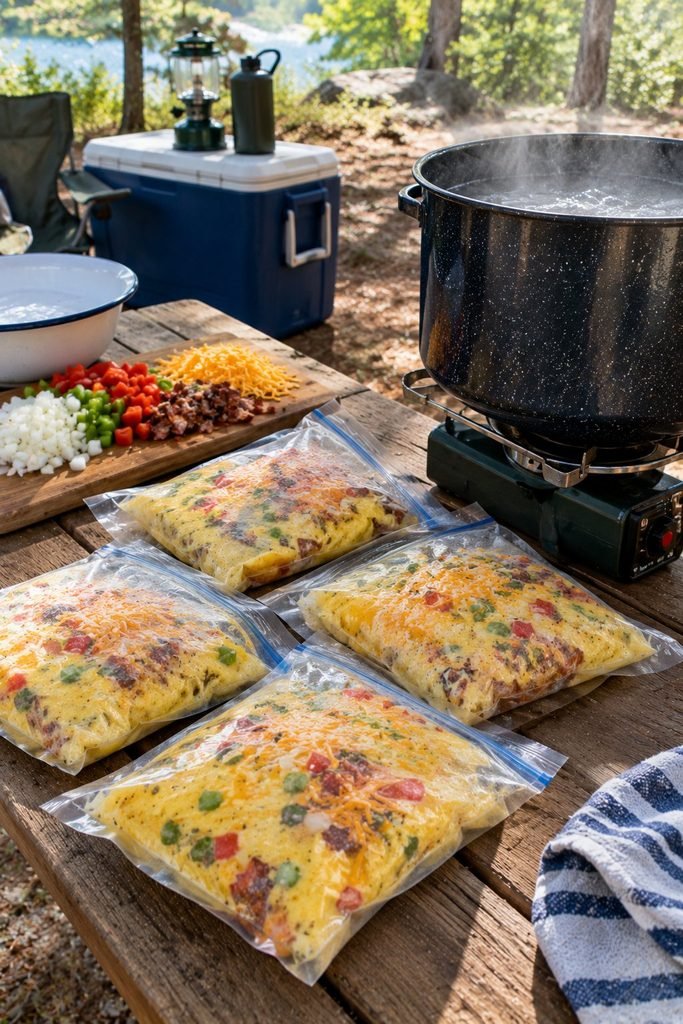
Camping breakfasts can get complicated quickly when there are several people to feed. A traditional omelet means a pan, cooking oil or butter, utensils, a cooking surface, and enough attention to keep the eggs from sticking or burning.
The bag method cuts down on much of that.
I can prepare individual portions so everyone gets the fillings they actually want. One person can have cheese and peppers while another can have mushrooms, onions, and ham. That makes this especially useful for families or groups with different tastes.
Another advantage is the preparation. I can chop the vegetables and other fillings before leaving home and store everything in separate containers in the cooler. When breakfast time comes, I only need to assemble the bags and cook them.
Cleanup is another reason this recipe works well for camping. There is no egg covered skillet sitting beside the fire waiting to be scrubbed. I still keep my normal camping cleanup supplies nearby, but there is considerably less cookware involved.
Ingredients You Need
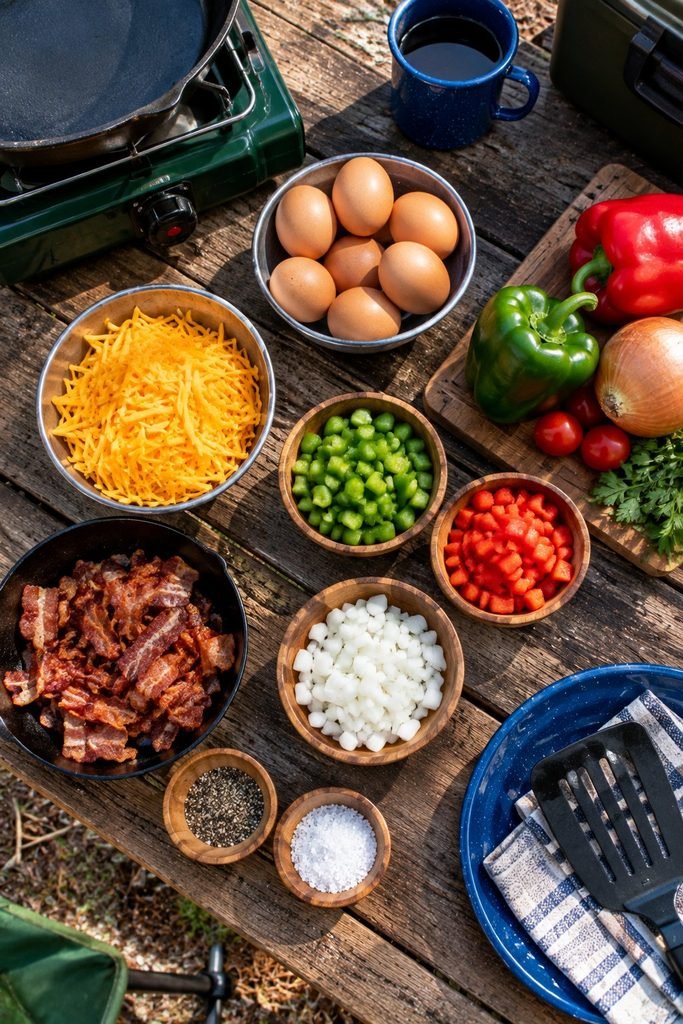
You do not need a long ingredient list for a good camping omelet. I prefer keeping the base simple and then adding a few fillings that pack and store well.
Eggs
Use fresh eggs and keep them properly chilled in your camping cooler until you are ready to prepare breakfast.
For one generous omelet, I usually use 2 to 3 large eggs. Two eggs make a lighter breakfast, while three give you a more substantial portion.
Shredded Cheese
Cheese adds flavor and helps make the omelet feel more filling. Cheddar is one of my favorites, but Monterey Jack, mozzarella, Colby, or a Mexican cheese blend can also work well.
Shredded cheese is especially convenient at camp because it is easy to portion and does not require any extra preparation.
Bell Peppers
Diced bell peppers add color, texture, and a little sweetness. I like preparing them at home because chopping vegetables at the campsite can make breakfast take longer than necessary.
Red, yellow, orange, and green peppers all work.
Onion
A small amount of finely diced onion adds plenty of flavor. I recommend cutting it fairly small so it has time to soften while the omelet cooks.
Cooked Bacon or Ham
If I want a heartier omelet, cooked bacon or diced ham is an easy addition. Cooking the bacon at home saves time at the campsite and means you are not trying to fry bacon while preparing everything else.
Make sure any meat added to the bag is already fully cooked.
Salt and Black Pepper
Keep the seasoning simple. Eggs already have a mild flavor, so a little salt and freshly ground black pepper can make a noticeable difference.
You can also add a small amount of garlic powder, smoked paprika, dried herbs, or your favorite seasoning blend.
Choosing the Right Bag
This is one part of the recipe I would not overlook.
Use a sturdy food safe cooking bag that is specifically suitable for the cooking method you are using. I do not recommend grabbing an ordinary thin storage bag and assuming it will hold up to cooking.
The bag needs to seal properly and withstand the cooking conditions without opening or falling apart.
I also like using individual bags instead of putting everyone’s eggs into one large bag. Individual portions are easier to handle and make it much easier to customize breakfast.
Before heading to camp, check the manufacturer’s instructions for the bag you plan to use and make sure it is intended for the cooking conditions involved.
Prepare the Ingredients Before Leaving Home
This is where I save the most time.
Before a camping trip, I wash and chop my vegetables, cook any bacon or other meat, shred the cheese if needed, and portion everything into small containers.
I keep the prepared ingredients refrigerated until they are packed into the cooler.
Having everything ready means breakfast becomes more of an assembly job than a cooking project. I can take out what I need, prepare each omelet, and get the water heating while everyone chooses their fillings.
For a camping breakfast, that small amount of preparation makes a surprisingly big difference.
How to Make an Omelet in a Bag
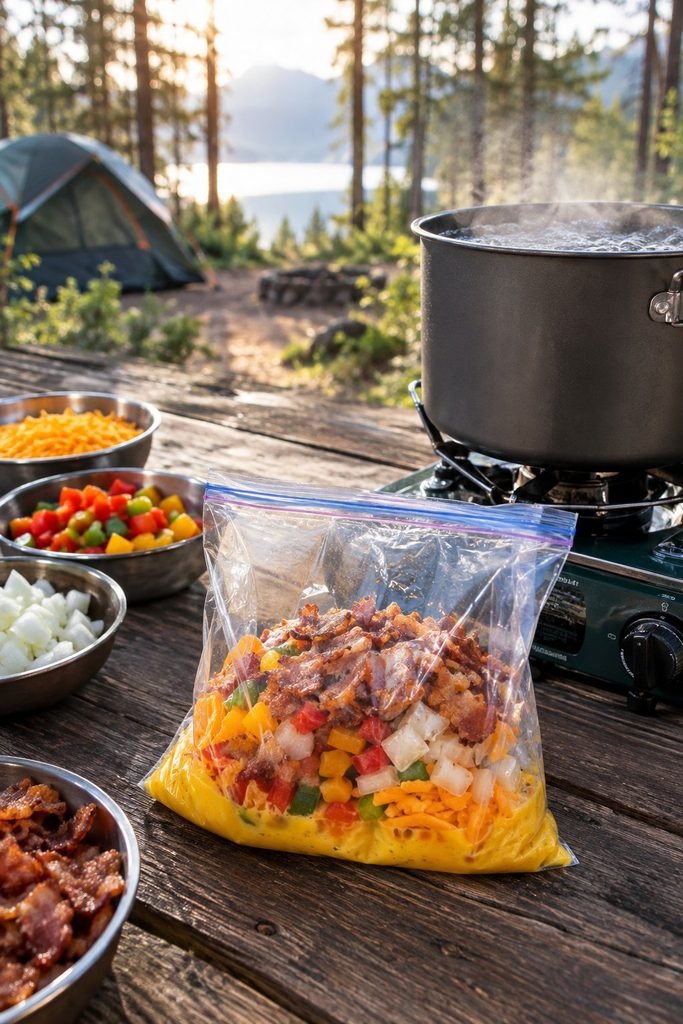
Step 1: Heat Your Water
Fill a large pot with enough water to comfortably submerge the sealed bags without allowing them to rest directly against the bottom of the pot if your cooking setup calls for a barrier.
Bring the water to the appropriate cooking temperature according to the bag manufacturer’s instructions and the egg cooking method you are following.
The goal is to cook the eggs gently and evenly rather than expose the bag to excessive heat.
Step 2: Add the Eggs to the Bag
Crack 2 to 3 eggs into the cooking bag.
Seal the bag securely and gently mix the eggs until the yolks and whites are combined.
Do not overfill the bag. Leaving enough room makes it easier to mix the eggs with the other ingredients and helps the omelet cook more evenly.
Step 3: Add Your Fillings
Add your cheese, vegetables, cooked meat, and seasonings.
I like keeping the filling portions moderate. It can be tempting to load the bag with everything in the cooler, but too many vegetables or large pieces of meat can make the omelet difficult to cook evenly.
Give the bag another gentle mix so the ingredients are distributed throughout the eggs.
Step 4: Seal the Bag Carefully
Press out excess air without squeezing the mixture out of the bag, then seal it according to the bag’s instructions.
Before putting it into the water, check the seal.
This is a small step that saves a lot of frustration later. A poorly sealed bag can allow water to get into the omelet and leave you with a watery breakfast.
Step 5: Cook Until the Eggs Are Completely Set
Place the sealed bag into the prepared hot water.
Cooking time can vary depending on the amount of egg, the size of the bag, the water temperature, and the cooking setup, so I pay more attention to the eggs being fully cooked than relying on a single exact minute.
The omelet should be firm throughout rather than liquid in the center.
Use appropriate food safety practices and make sure the eggs reach a safe internal temperature before eating.
Once cooked, carefully remove the bag from the water because it will be hot.
The omelet can then be transferred onto a plate or eaten directly from a camping bowl.
My Best Tip for Better Texture
The biggest mistake I would avoid with an omelet in a bag is adding too many wet ingredients.
Fresh tomatoes, watery vegetables, or a large amount of moisture can release liquid while the eggs cook. That can leave the omelet softer and wetter than expected.
For a better texture, I prefer finely chopped vegetables in moderate amounts. I also like using cooked ingredients that have already had excess moisture removed.
That simple adjustment makes the finished omelet much more enjoyable.
Keep Your Camping Breakfast Simple
The beauty of this recipe is that you can make it as basic or as loaded as you want.
For a quick breakfast, eggs, cheddar cheese, salt, and pepper are enough.
For a bigger camping breakfast, add cooked bacon, peppers, onions, mushrooms, and cheese.
I would still resist adding too many ingredients at once. The best camping recipes are usually the ones that give you plenty of flavor without creating another complicated job at the campsite.
Easy Omelet Combinations for Camping

One of the things I enjoy about this camping breakfast is how easy it is to change the ingredients without changing the basic cooking method. I can use whatever I already have packed in the cooler instead of buying a long list of ingredients specifically for breakfast.
Here are a few combinations that work particularly well.
Bacon and Cheddar Omelet
Cooked bacon and cheddar make a simple combination that is hard to beat. I chop the bacon into small pieces before adding it to the eggs so every bite gets a little bit of that smoky flavor.
Add a small amount of diced green onion or bell pepper if you want a little extra freshness.
Ham and Cheese Omelet
Diced cooked ham with shredded cheddar or Monterey Jack makes an easy, filling option.
This is particularly convenient when I already have leftover cooked ham from another camping meal. Cutting it into small pieces helps distribute it evenly through the eggs.
Vegetable Omelet
For a lighter option, I like using bell peppers, mushrooms, onions, and cheese.
I keep the vegetables finely chopped and use moderate portions. Large chunks can make the omelet harder to cook evenly, while too many vegetables can release excess moisture.
Southwest Style Omelet
For a little more flavor, add cooked sausage, bell peppers, a small amount of onion, shredded cheese, and a little taco seasoning.
You can serve the finished omelet with salsa after cooking rather than adding a lot of wet ingredients to the bag.
Mushroom and Cheese Omelet
Mushrooms and cheese are another simple combination.
I recommend cooking the mushrooms before adding them to the bag if you have the opportunity. This removes some of their moisture and gives them a better texture.
Can You Prepare the Omelet Bags Ahead of Time?
You can prepare much of the recipe ahead, but I prefer keeping the raw egg mixture separate from the prepared fillings until I am ready to cook.
I chop the vegetables, cook the meat, shred the cheese, and portion the ingredients before leaving home. Everything stays properly refrigerated in the cooler.
When breakfast time arrives, I assemble each omelet and cook it.
This approach gives me the convenience of meal prep without leaving raw eggs sitting in prepared bags longer than necessary.
If you are preparing food ahead for a camping trip, keep perishable ingredients cold and follow standard food safety practices for refrigerated foods.
How I Pack the Ingredients for a Camping Trip
Organization makes this recipe much easier.
I usually keep the ingredients grouped together in the cooler rather than spreading them throughout different containers. Cheese goes into one sealed container, vegetables into another, and cooked meats into another.
I also bring a small container of seasonings so I am not searching through the camping kitchen for individual spice jars.
If several people are eating breakfast, I find it useful to portion the fillings before leaving home. That way, everyone can choose a combination without creating a pile of half opened packages around the campsite.
This is especially helpful when the weather is cold or windy and I want to get breakfast prepared quickly.
How to Make Omelet Bags for a Group
This method can work well when camping with several people because each person can customize their own breakfast.
Set out the prepared ingredients and let everyone choose what they want.
I recommend keeping the bags clearly separated if everyone is using different combinations. A simple marker can be used on the outside of an appropriate cooking bag to identify each person’s omelet, provided the marking method is compatible with the bag and cooking process.
The cooking process is easier when all the bags are similar in size and are not overcrowded.
If you are feeding a large group, work in batches rather than trying to squeeze too many bags into one pot. The water needs enough room to circulate around the bags so they can cook evenly.
What Vegetables Work Best?
Not every vegetable is equally convenient for this recipe.
I tend to choose vegetables that are easy to chop, travel well, and do not release excessive moisture.
Good options include:
Bell peppers
Green onions
Finely diced onions
Cooked mushrooms
Spinach
Cooked broccoli in small pieces
For vegetables such as mushrooms or spinach that contain a lot of moisture, cooking them ahead of time can improve the final texture.
I am more cautious with large amounts of fresh tomato because it can make the eggs watery. If I want tomato flavor, I prefer adding a small amount after cooking or using a well drained preparation.
What Meat Can You Add?
Cooked bacon, ham, sausage, and leftover cooked chicken can all work in an omelet.
The important part is that the meat is already fully cooked before it goes into the egg mixture.
I would not use the omelet bag as a way to cook raw meat and eggs together. Raw meat can require different cooking conditions and creates unnecessary food safety concerns.
Cooking the meat at home also makes the camping breakfast considerably easier.
Common Mistakes to Avoid
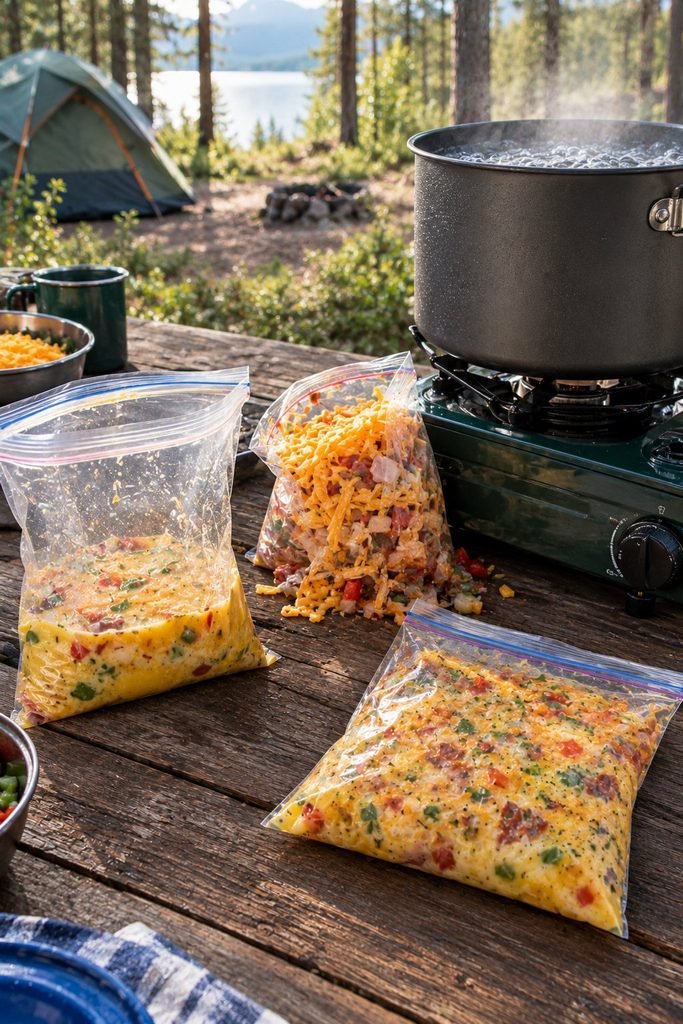
Overfilling the Bag
It is easy to get carried away with the fillings.
A bag packed with eggs, cheese, vegetables, meat, and several other ingredients can become difficult to mix and cook evenly.
I get better results when I keep the filling portions reasonable.
Using Too Much Liquid
Milk, cream, watery vegetables, and other liquids can change the texture of the omelet.
You do not need a lot of liquid to make this recipe work. Eggs, cheese, and properly prepared fillings are enough to create a satisfying omelet.
Adding Raw Meat
Raw meat is not something I would add to the bag.
Use cooked bacon, sausage, ham, or other fully cooked meats instead.
Using a Bag Not Intended for Cooking
A regular storage bag is not automatically suitable for cooking.
Always check that the product is appropriate for the cooking method you plan to use. The bag should be food safe and suitable for the temperatures involved.
Leaving Too Much Air in the Bag
Excess air can make the bag awkward to handle and may affect how easily it stays submerged.
I gently press out excess air before sealing without squeezing the egg mixture out.
Cooking Without Checking the Eggs
Timing can vary depending on your camping stove, fire, pot, water temperature, and amount of food in each bag.
Instead of assuming the eggs are done because a certain number of minutes has passed, check that they are completely set and cooked through.
What I Serve With a Camping Omelet
The omelet itself can be a complete breakfast, but a few simple sides can turn it into a bigger camping meal.
Fresh fruit is one of the easiest options. Apples, oranges, berries, bananas, or grapes require very little preparation.
Toast or English muffins can also work if you have a camp stove or another way to heat them.
For a more filling breakfast, I like serving the omelet with cooked breakfast potatoes. If I have leftovers from dinner, reheating them alongside breakfast can save preparation time.
Hot coffee or tea completes the meal without adding much extra work.
Add Toppings After Cooking
One of my favorite ways to customize this recipe is to keep the wetter toppings out of the bag.
Salsa, hot sauce, avocado, fresh tomatoes, and green onions can be added after the omelet is cooked.
This gives you more control over the texture and keeps the egg mixture from becoming unnecessarily wet.
It also means people can customize their breakfast after cooking without needing separate recipes.
A Simple Camping Breakfast Routine
When I make this recipe at camp, I like getting the water heating before assembling the bags.
While the water heats, I prepare the eggs and fillings. By the time the bags are ready, the cooking setup is already prepared.
Once the bags go into the water, I can start putting away the ingredients and getting plates, utensils, and drinks ready.
That small routine keeps breakfast organized and gives me less to clean up afterward.
For camping, that is exactly what I want from a recipe. It should taste good, but it should also fit naturally into the way I actually cook outdoors.
When This Recipe Works Best
An omelet in a bag is particularly useful for campground mornings when you want individual portions without carrying a skillet for every person.
It is also handy when cooking space is limited or when several people want different fillings.
I would especially consider it for family camping trips, group camping weekends, road trips, and mornings when everyone needs breakfast without spending a long time around the cooking area.
The biggest advantage for me is the combination of preparation and flexibility. Most of the work can be handled before breakfast, leaving the campsite cooking portion simple and manageable.
Tips for Making the Best Camping Omelet
After making this type of breakfast a few times, I have found that keeping the process simple gives me the best results. The recipe does not need complicated ingredients or a lot of equipment. Good preparation matters much more.
Keep the Ingredients Small
Finely chopped vegetables and small pieces of cooked meat distribute much better throughout the eggs.
Large chunks can make the omelet uneven and make the bag harder to handle.
Do Not Pack the Bag Too Full
Give the eggs and fillings enough room to move around when you mix everything together.
An overcrowded bag is harder to cook evenly and can take longer to set.
Prepare Perishables Properly
Eggs, cheese, cooked meat, and other perishable ingredients need to stay cold until you are ready to cook.
I keep my cooler well organized and avoid leaving ingredients sitting outside in warm weather while I work on other parts of breakfast.
Have Your Serving Plates Ready
Once the omelet is cooked, you want somewhere to put it immediately.
I set out plates, utensils, toppings, and any breakfast sides before the eggs finish cooking. This keeps the hot food moving from the cooking setup to the table without unnecessary delays.
How to Tell When the Omelet Is Done
The eggs should be completely set rather than loose or liquid in the center.
Because camping cooking conditions can vary, I would not rely only on a specific cooking time. The amount of egg, number of bags in the pot, water temperature, altitude, and cooking equipment can all affect the process.
If you use a food thermometer, follow the egg safety guidance applicable to your location and cooking setup.
When in doubt, continue cooking until the eggs are fully cooked.
What to Do If the Omelet Is Watery
A watery omelet usually comes down to excess moisture.
The most common causes are too many vegetables, watery ingredients, or adding liquids that are not needed.
If your omelet comes out wetter than expected, reduce the amount of high moisture vegetables next time. Cooking mushrooms or other moisture rich vegetables before adding them can also help.
Draining ingredients well is another simple improvement.
I also prefer adding salsa, tomatoes, avocado, and other wet toppings after the omelet has finished cooking.
Can You Use Frozen Vegetables?
Yes, but I recommend thawing and draining them before adding them to the eggs.
Frozen vegetables can release quite a bit of water during cooking. That extra moisture can affect the texture of the omelet.
If I am using frozen spinach, for example, I would thaw it and squeeze out excess water before adding it.
Can You Make These Omelets Without Meat?
Absolutely.
Eggs, cheese, peppers, onions, mushrooms, and spinach make a satisfying vegetarian combination.
You can also add herbs or your favorite seasoning blend for extra flavor.
This is one of the reasons I like the recipe for groups. Everyone can create a slightly different version without requiring separate cooking methods.
Can You Make a Dairy Free Omelet?
Yes. Simply leave out the cheese or use a dairy free cheese that works for your preferences.
Eggs, vegetables, herbs, and cooked meat can provide plenty of flavor without cheese.
How to Store Leftover Omelet
I prefer making only the amount that will be eaten because egg dishes are best enjoyed fresh.
If you do have leftovers, transfer them to a clean food safe container and refrigerate them promptly. Keep your cooler at a safe temperature throughout the camping trip.
Do not leave cooked eggs sitting at the campsite for an extended period, particularly in warm weather.
When camping without reliable refrigeration, I would make portions based on what will be eaten rather than planning to keep leftovers.
Easy Toppings for Camping Omelets
Toppings are an easy way to change the flavor without changing the basic recipe.
Try:
Salsa
Hot sauce
Chopped green onions
Fresh herbs
Diced avocado
Extra shredded cheese
Sour cream
Diced tomatoes
I usually keep toppings separate until serving. That way, everyone can add exactly what they like.
Why This Recipe Is Great for Camping
An omelet in a bag solves several problems that come with cooking breakfast outdoors.
It allows individual portions, requires very little cookware, can be prepared with ingredients you already have, and gives everyone the freedom to choose their own fillings.
It also makes a good option for campers who do not want to spend the entire morning cooking.
For me, the biggest benefit is the organization. Once the ingredients are prepared, breakfast becomes straightforward. There is less chopping at the campsite, less cookware to wash, and less juggling between different ingredients.
That makes this one of those recipes I would keep in my camping breakfast rotation.
Frequently Asked Questions
Can I put raw vegetables in an omelet bag?
Yes, provided the vegetables are appropriate for the cooking method and cut into small pieces. However, vegetables with a lot of moisture can make the finished omelet watery. Cooking or draining them first can improve the texture.
How many eggs should I use per camping omelet?
I generally use 2 to 3 large eggs per person. Two eggs make a lighter portion, while three eggs create a more substantial breakfast.
Can I use bacon in an omelet bag?
Yes. Use fully cooked bacon and chop it into small pieces before adding it to the eggs.
Can I make the omelet ahead of time?
The fillings can be prepared ahead and kept properly refrigerated. I prefer combining the eggs and fillings shortly before cooking rather than leaving prepared raw egg mixtures packed for a long period.
What is the best cheese for a camping omelet?
Cheddar is an easy choice, but Monterey Jack, Colby, mozzarella, and other shredded cheeses can work well.
Can I make several omelets at once?
Yes, as long as your cooking pot is large enough to accommodate the bags without overcrowding them. Adequate space allows the hot water to circulate around the bags more effectively.
Why did my omelet turn out watery?
Too much moisture is usually the problem. Reduce watery vegetables, drain ingredients well, and avoid adding unnecessary liquids to the egg mixture.
Can I add milk to the eggs?
You can, but it is not necessary. I prefer keeping the mixture simple because extra liquid can make the finished omelet softer and more difficult to manage.
Can I use an ordinary sandwich bag?
I would not assume that a regular storage or sandwich bag is suitable for cooking. Use a food safe bag specifically designed and approved for the cooking conditions you intend to use.
My Favorite Camping Omelet Combination
When I want something simple and filling, I keep coming back to eggs, cheddar cheese, cooked bacon, bell pepper, and a little onion.
The combination has enough flavor without requiring a long ingredient list.
I prepare the bacon and vegetables before the camping trip, pack them in the cooler, and assemble the omelet when breakfast starts.
A little salsa added at the end gives it even more flavor without making the egg mixture watery.
Camping Omelet in a Bag Recipe Card
Ingredients
2 to 3 large eggs per person
1/4 cup shredded cheddar cheese
2 tablespoons finely diced bell pepper
1 tablespoon finely diced onion
2 tablespoons cooked and chopped bacon or ham
Salt to taste
Black pepper to taste
Optional toppings such as salsa, green onions, hot sauce, avocado, or extra cheese
Instructions
- Prepare the vegetables and cook any meat before assembling the omelets.
- Keep the eggs, cheese, vegetables, and cooked meat properly refrigerated until ready to use.
- Prepare a food safe cooking bag that is specifically suitable for the cooking method you are using.
- Crack the eggs into the bag.
- Gently mix the eggs until the yolks and whites are combined.
- Add the cheese, vegetables, cooked meat, salt, and black pepper.
- Gently mix again so the ingredients are distributed throughout the eggs.
- Press out excess air and seal the bag securely according to the bag manufacturer’s instructions.
- Place the sealed bag into the prepared hot water.
- Cook until the eggs are completely set and cooked through.
- Carefully remove the hot bag from the water.
- Transfer the omelet to a plate or camping bowl.
- Add your preferred toppings and serve immediately.
Final Thoughts
A good camping breakfast does not need to involve a complicated recipe or a pile of dirty cookware. This omelet in a bag is simple enough for a relaxed weekend camping trip but flexible enough to work when I am feeding several people with different tastes.
The preparation is what makes the biggest difference. Chopping the vegetables, cooking the meat, and organizing the ingredients before breakfast means I can spend less time working around the campsite and more time enjoying the morning.
I also like that everyone can make their own combination. Once the basic method is understood, there are plenty of ways to change the cheese, vegetables, meat, and toppings.
For me, that flexibility is what makes this recipe worth keeping in my camping meal plans. It is easy to customize, easy to organize, and gives me a warm, filling breakfast without turning the campsite into a full kitchen.