16 Camping Hacks You’ll Wish You Knew Earlier
Camping gets much easier when you know a few simple tricks before you leave home. I have learned that the little things often make the biggest difference once you are actually at the campsite.
A messy tent, wet gear, uncomfortable sleeping setup, poorly planned meals, or forgetting where an important item is can turn an otherwise relaxing trip into a lot of unnecessary work.
Over time, I have picked up several camping hacks that help me stay organized, save space, keep things cleaner, and make camp life much more comfortable. The best part is that most of these ideas do not require expensive camping equipment.
Many use things already sitting around the house or inexpensive items that are easy to pack. These are the practical tricks I wish I had known earlier because they make setting up camp, cooking, sleeping, and packing away much less stressful.
1. Pack Your Camping Gear in Clear Storage Bins
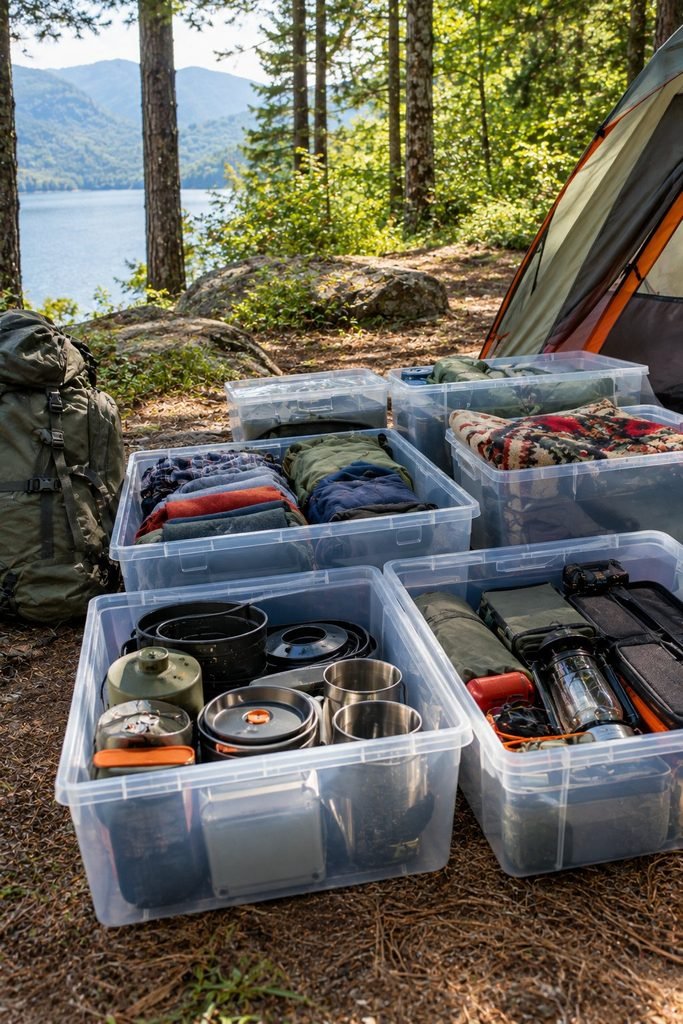
One of the easiest ways I have found to make camping less chaotic is to stop throwing everything into one large bag.
Clear plastic storage bins work incredibly well for organizing camping equipment because I can see what is inside without opening every container. I usually separate items by purpose rather than putting everything together.
One bin can hold cooking equipment, another can hold lighting and small campsite accessories, and another can contain toiletries and personal items.
This also makes packing the car much easier because each bin has a purpose. When I arrive at camp, I already know which container I need instead of digging through several bags.
Why this hack helps
A good camping organization system saves time at both ends of the trip. It also makes it much easier to notice when something needs replacing before the next camping trip.
I recommend using containers with secure lids, especially if you will be camping somewhere that could get wet. Labeling the outside can make things even easier when you are dealing with several identical bins.
2. Keep a Dedicated Camping Kitchen Box
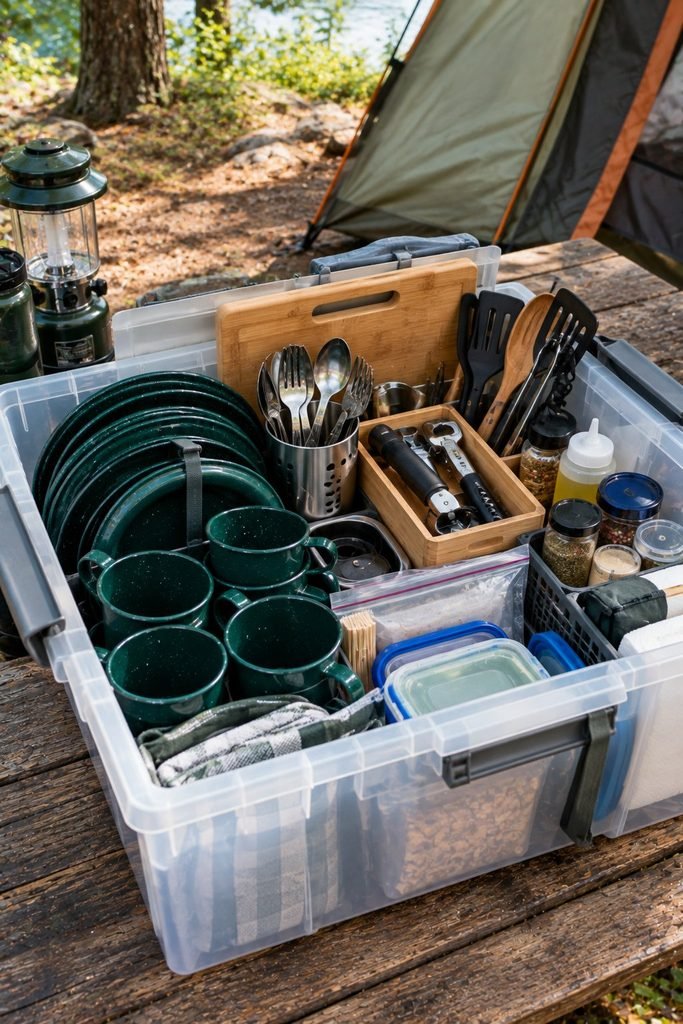
I learned pretty quickly that constantly moving kitchen supplies between the house and campsite creates unnecessary work.
A dedicated camping kitchen box solves that problem.
I keep the basic items I regularly need for outdoor cooking together so they are ready to grab before a trip. Depending on the type of camping, this can include cooking utensils, a cutting board, reusable plates, cups, napkins, aluminum foil, food storage bags, can openers, and other small essentials.
The advantage is not just organization. It also reduces the chance of forgetting something important.
There is nothing worse than getting ready to prepare dinner and realizing the one small kitchen tool you need is sitting at home.
I still check the box before every trip, but having a permanent setup makes packing much faster.
3. Use a Hanging Organizer Inside Your Tent
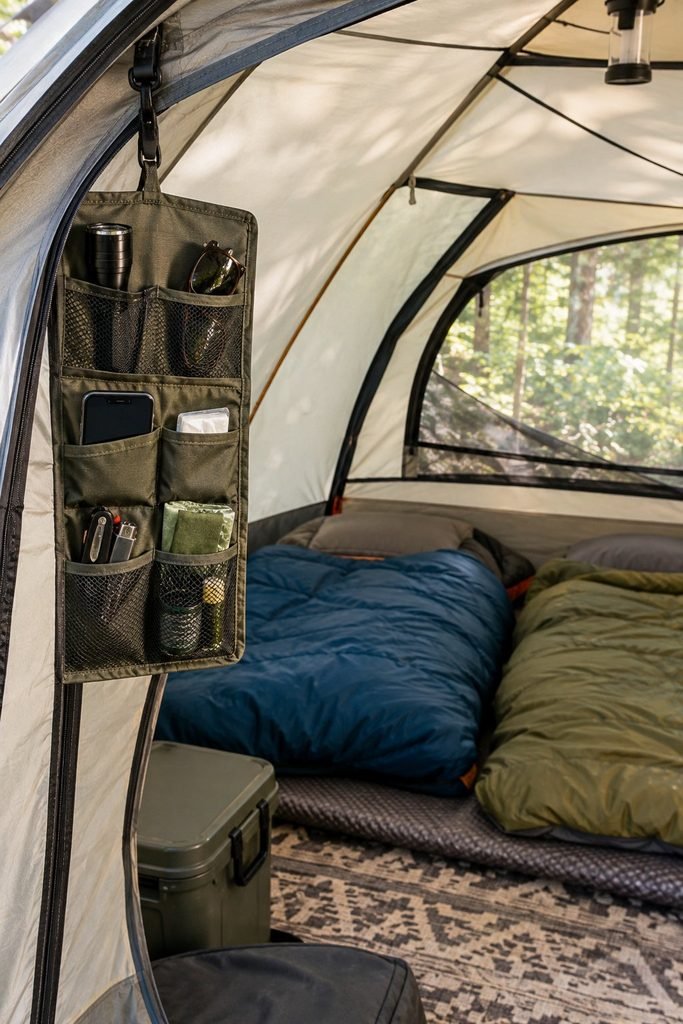
Small camping items have a habit of disappearing at exactly the wrong moment.
A hanging organizer can help keep things like flashlights, glasses, phones, tissues, keys, and other nighttime essentials within easy reach.
I like this idea because it keeps small items off the tent floor. Once several people are moving around inside a tent, anything left on the ground can easily get stepped on or kicked underneath a sleeping bag.
Choose a lightweight organizer that can be secured safely without putting unnecessary stress on your tent.
For a simple setup, even a small fabric organizer with several pockets can make a noticeable difference.
4. Put Your Clothes in Packing Cubes
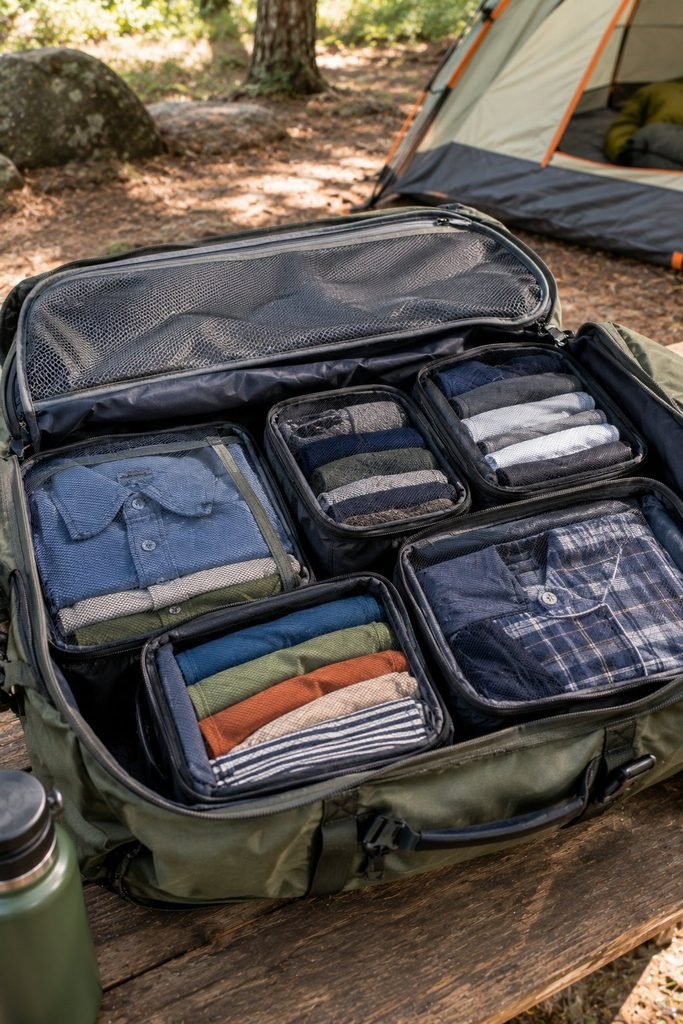
Packing cubes are useful at home, but I find them especially helpful when camping.
Instead of putting all my clothing into one large duffel bag, I separate things according to use. Shirts can go into one cube, underwear and socks into another, and sleepwear into another.
This makes it much easier to find what I need without emptying the entire bag.
I also like keeping one cube specifically for clothing that has already been worn. That helps keep clean clothes separate from damp or dirty items.
If you are camping for several days, this small organizational step can make your sleeping area feel much less cluttered.
5. Bring a Small Tarp for More Than Just Rain
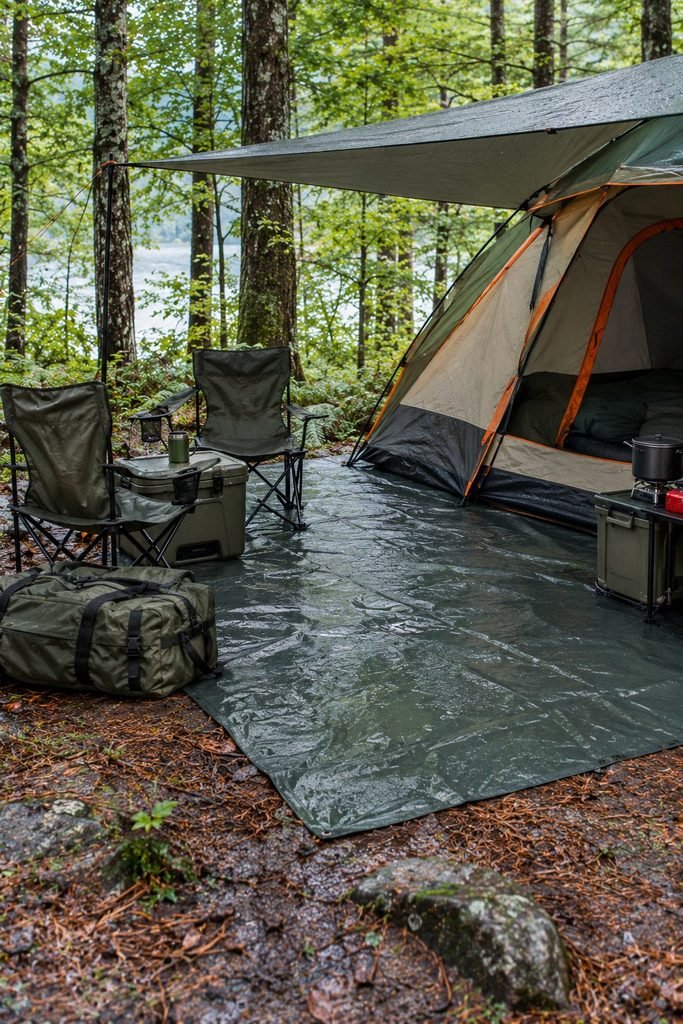
A tarp is one of those camping items that can solve several problems at once.
I like having one available even when the weather forecast looks clear because it can be useful as extra ground protection, a small covered area, or a barrier underneath gear.
For example, placing a tarp underneath a tent can help protect the tent floor from rough or damp ground. Just make sure the tarp does not extend beyond the edges of the tent where rainwater could collect underneath.
A second tarp can also create a simple sheltered area for cooking or sitting if conditions change.
The key is to think of a tarp as a versatile piece of camping equipment rather than something that only comes out when it rains.
6. Freeze Water Bottles Before Your Trip
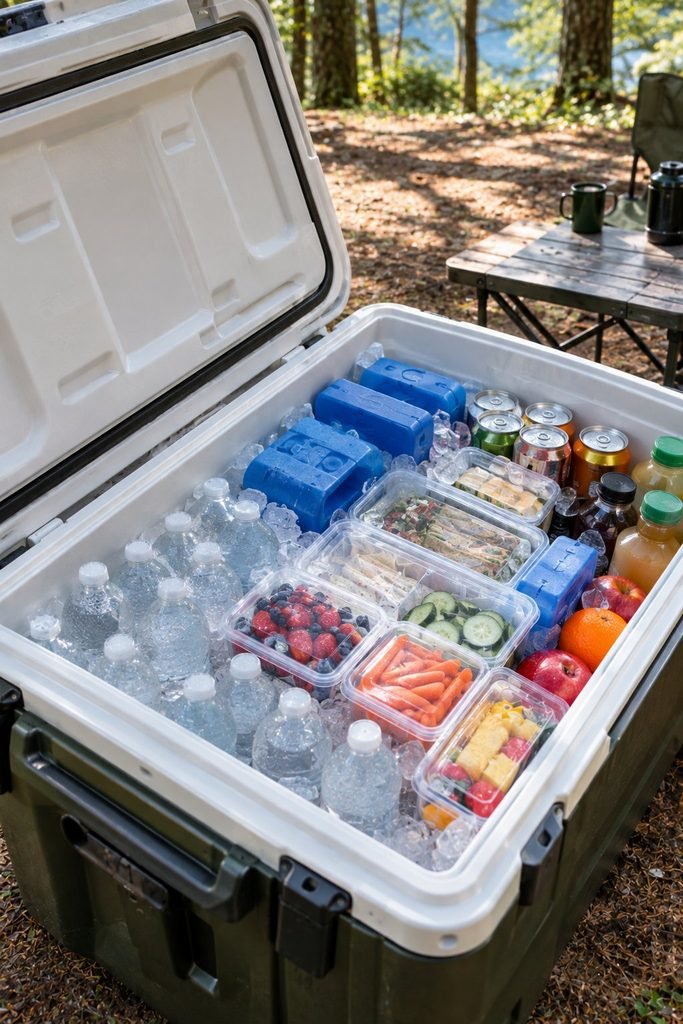
This is one of my favorite simple camping tricks for keeping a cooler cold.
Instead of filling the cooler with loose ice alone, freeze several water bottles before leaving home. They work as cold packs while frozen, and once they melt, you have drinking water.
I prefer this approach because it creates less watery mess inside the cooler.
It also gives me an easy way to make use of the melting ice instead of dealing with a cooler full of loose water.
Make sure you leave enough room in the bottle for the water to expand as it freezes. A bottle filled completely to the top can split when frozen.
7. Keep a Small Campground Cleaning Kit
Cleaning equipment is easy to overlook when packing for a camping trip.
I like keeping a small cleaning kit with basic supplies such as trash bags, paper towels, biodegradable soap where appropriate, a sponge, disinfecting wipes, and a small brush.
Having everything together means I do not have to search through the kitchen box every time something needs cleaning.
This is especially useful after meals. Outdoor cooking can create more mess than expected, and dealing with it immediately is much easier than leaving everything until later.
A clean campsite is also more pleasant to live in, especially when you are staying for several nights.
8. Use a Shoe Tray at the Tent Entrance
Mud and dirt can quickly become a problem inside a tent.
A simple plastic shoe tray placed near the entrance gives muddy or wet footwear a designated place to go.
I like this because it creates a clear boundary between the outdoor ground and the inside of the tent.
It also gives wet shoes somewhere to sit while they dry instead of leaving them directly on the tent floor.
If space is limited, choose a shallow tray that can slide underneath a camping table or sit just outside the entrance.
Small details like this can make the whole campsite feel cleaner and more organized.
9. Make a Simple Fire Starter Kit
Getting a campfire going can be frustrating when the wood is slightly damp or the conditions are not ideal.
I like keeping a small container of reliable fire starters with my camping equipment rather than depending entirely on whatever materials happen to be available at the campsite.
Dry cotton balls coated lightly with petroleum jelly can work as a simple homemade fire starter. Store them in a sealed plastic bag or small waterproof container until you need them.
The important thing is to keep your fire starting materials dry. A little moisture can make an otherwise useful fire starter much less effective.
Always follow the campground’s current fire rules and use designated fire areas where fires are permitted.
10. Put Your Morning Clothes Inside Your Sleeping Bag
Cold mornings can make getting dressed outside your sleeping bag much harder than it needs to be.
One trick I like is putting the clothes I plan to wear the next morning inside my sleeping bag before going to sleep.
The clothes warm up overnight, so getting dressed in the morning is much more comfortable.
I also keep the clothing I will need together instead of leaving individual pieces around the tent. That way I can get dressed without completely unpacking my gear.
This works particularly well when temperatures drop overnight and you are not excited about leaving a warm sleeping bag.
11. Store Your Toilet Paper in a Waterproof Container
Toilet paper is one of those camping essentials that becomes surprisingly important when conditions are wet.
I keep a roll inside a waterproof container or sealed bag so it stays protected from rain, condensation, and accidental spills.
A small plastic container with a lid works well, provided the roll fits comfortably inside.
I also like carrying a backup roll separately instead of keeping every supply in the same place.
It is a tiny change, but having dry toilet paper when you actually need it is one of those camping conveniences that you appreciate immediately.
12. Prep Your Meals Before You Leave Home
Food preparation at the campsite can take much longer than expected, especially after a long drive.
I have found that doing as much preparation as possible at home makes meals much easier.
Vegetables can be washed and chopped ahead of time. Ingredients can be portioned into containers or bags, and marinades can be prepared before leaving.
I also like planning exactly which meal each ingredient belongs to instead of bringing a collection of random food and deciding what to cook later.
This reduces preparation time, saves space, and usually means fewer dishes to wash.
The less complicated dinner is after a long day outdoors, the better.
13. Use a Small Cutting Board as a Prep Station
A compact cutting board can do more work at a campsite than you might expect.
I use one as a dedicated food preparation surface when the picnic table or camping table needs to stay clean for other things.
A board with a handle or compact design is particularly convenient because it does not take up much room in a camping box.
It can also serve as a stable surface for slicing fruit, vegetables, bread, or other ingredients.
For longer trips, I prefer having one board specifically for camping rather than bringing a large kitchen cutting board from home.
14. Keep a Separate Bag for Wet Gear
Wet towels, swimsuits, damp clothing, and muddy items should not go back into the same bag as everything else.
I keep a separate waterproof or water resistant bag specifically for wet gear.
This is particularly useful when camping near a lake, river, beach, or swimming area.
Instead of worrying about where to put wet clothing after swimming or getting caught in rain, everything has a designated place.
Once I get home, I can empty that bag directly into the laundry area and deal with everything at once.
It is a simple system, but it prevents moisture from spreading through the rest of the camping gear.
15. Use Headlamps Instead of Relying Only on Flashlights
A regular flashlight is useful, but a headlamp is one of those camping items that I appreciate more every time I use one.
Having both hands free makes nighttime tasks much easier.
I can walk around camp, prepare something, organize gear, or handle a zipper without trying to hold a flashlight at the same time.
I recommend keeping one headlamp where it is easy to reach inside the tent and another available for backup if you are camping with multiple people.
Before leaving home, check the batteries or charge the headlamp and pack spare batteries if the model uses them.
You do not want to discover that your main light is dead after dark.
16. Put Small Essentials on a Carabiner
Small items can disappear surprisingly quickly around a campsite.
Keys, small bags, water bottles, and other lightweight gear can be attached to a carabiner or kept together in one designated location.
I especially like this for keys because I do not have to worry about accidentally leaving them inside a jacket pocket, tent, or camping chair.
A carabiner can also help keep small accessories together inside a larger camping bag.
Just remember that a carabiner is not automatically suitable for climbing or supporting a person’s weight. For ordinary campsite organization, use one designed for general utility purposes.
17. Create a Camp Bathroom Kit
A small personal bathroom kit can save a lot of time when you are camping.
Instead of carrying toiletries separately, I keep the things I use together in one waterproof bag. Depending on the trip, that might include a toothbrush, toothpaste, soap, towel, toilet paper, sanitizer, and other personal essentials.
This makes morning and nighttime routines much simpler.
I can grab one bag and head to the campground bathroom without carrying half of my camping supplies.
A waterproof toiletry bag is particularly useful because bathrooms and outdoor washing areas can get wet.
18. Keep a Small Emergency Repair Kit
Camping equipment can fail at inconvenient times.
A zipper can break, a tent cord can loosen, a strap can tear, or a small piece of gear can need a quick fix.
I keep a compact repair kit with basic supplies such as strong tape, zip ties, cord, a small sewing kit, spare buckles where appropriate, and a small multitool.
The goal is not to repair everything permanently at the campsite. It is to have enough basic supplies to make a temporary repair so the problem does not ruin the rest of the trip.
I have found that a tiny repair kit takes up very little space but can be extremely useful when something unexpected happens.
19. Keep a Dedicated Trash Bag at the Cooking Area
Trash becomes much easier to manage when there is a designated place for it from the beginning.
I like keeping a sturdy trash bag near the cooking area rather than waiting until the end of the meal to figure out where everything goes.
Food scraps, packaging, napkins, and other waste can go directly into the bag as they are used.
When camping in areas with wildlife, follow the campground’s food and trash storage rules carefully. Some places require food and garbage to be secured in specific ways.
Keeping the cooking area organized also makes cleanup much faster.
20. Pack a Small Comfort Kit
Some camping items are not essential for survival, but they can make a surprisingly big difference in how comfortable the trip feels.
My personal comfort kit might include things such as an extra pair of socks, a warm layer, lip balm, insect protection, a small towel, earplugs, and a comfortable pair of camp shoes.
These are easy things to overlook when packing because they do not seem particularly important at home.
Once you are sitting outside after sunset or waking up on a cool morning, though, having those little comforts available can make the experience much more enjoyable.
I have learned that good camping preparation is not about bringing everything. It is about bringing the right things and knowing where they are when you need them.
21. Take a Photo of Your Campsite Before You Pack Up
Taking a quick photo of your campsite before you start packing is a simple habit that can save time on future trips.
I like doing this when I have found a setup that works particularly well. The photo gives me a visual reference for where I placed the tent, cooking area, chairs, storage bins, and other equipment.
It also makes it easier to remember how everything was arranged when I return to a similar campsite.
Another benefit is that a final photo can help you notice items that are easy to overlook during cleanup. A water bottle behind a chair or a small piece of equipment underneath a table is much easier to spot when you take a moment to look around.
Before leaving, I always do one slow walk around the entire campsite.
22. Keep a Camping Checklist on Your Phone
A reusable camping checklist has saved me from relying on memory when packing.
I keep a basic list divided into categories such as shelter, sleeping gear, cooking, food, clothing, toiletries, lighting, safety equipment, and campsite cleanup.
After each trip, I update it based on what I actually used.
This is important because camping checklists can become unnecessarily long when they are based entirely on what you think you might need.
After a few trips, you start noticing which items are genuinely useful and which ones consistently come home untouched.
A personalized checklist becomes much more valuable than a generic packing list because it reflects your own camping style.
23. Pack an Extra Set of Everything You Cannot Afford to Lose
Certain camping items are worth having a backup for.
I am not talking about bringing two of everything. That would quickly defeat the purpose of packing efficiently.
Instead, think about the small items that could cause a major inconvenience if they stopped working or disappeared.
Extra batteries, a backup lighter or fire starter, spare charging equipment, an additional flashlight, and extra tent cord can all be useful depending on your trip.
The trick is to identify your personal weak points before you leave.
If one missing item could turn a minor problem into a major one, having a lightweight backup can be worthwhile.
24. Use the Last Day for a Proper Gear Check
Packing everything into the car does not mean the camping trip is finished.
Before heading home, I like to check my equipment for dirt, moisture, damage, and anything that needs attention.
Wet tents and tarps are especially important. If they are packed away damp and left that way, they can develop unpleasant odors and potentially mildew.
When conditions allow, I prefer drying wet equipment before storing it properly. If something cannot be dried completely at the campsite, I make it a priority as soon as I get home.
I also check tent poles, cords, zippers, cooking equipment, and storage containers so I know what needs cleaning or replacing before the next trip.
25. Bring One More Warm Layer Than You Think You Need
Weather can change quickly outdoors.
Even when daytime temperatures are comfortable, evenings and early mornings can feel considerably colder.
I have found that having one extra warm layer is usually worth the small amount of space it takes in my bag.
A lightweight fleece, sweatshirt, insulated jacket, or similar layer can make sitting around camp after sunset much more comfortable.
The same idea applies to socks. A dry pair can feel like a luxury after a long day outside.
Rather than packing according to the warmest part of the forecast, I prefer preparing for the cooler conditions I might actually experience.
26. Make Your Camp Kitchen Easier to Clean
Cooking at camp does not have to mean creating a mountain of dishes.
I try to choose meals that use fewer pots, pans, and utensils, particularly on shorter trips.
Foil packets, one pan meals, pre chopped ingredients, and simple grilled foods can reduce the amount of cleanup required.
I also keep a small washing station ready so dishes do not pile up around the campsite.
Cleaning cookware soon after eating is much easier than allowing food to dry onto the surface.
The goal is not to make camping feel like another version of cooking at home. A simpler meal can leave more time for relaxing and enjoying the campsite.
27. Give Everything a Place at Camp
One of the biggest camping organization improvements I have made is giving frequently used items a permanent place.
Keys stay in one location. Flashlights go in the same pocket. Cooking equipment stays together. Shoes remain near the entrance. Food and trash have designated storage areas.
This sounds basic, but it eliminates a surprising amount of unnecessary searching.
When everything has a place, packing up is easier too because you know where each item belongs.
I especially recommend this approach when camping with several people. A shared system means everyone knows where to find commonly used equipment.
28. Leave a Little Empty Space in Your Storage Bins
It is tempting to pack every container as tightly as possible when trying to save room.
I have learned that leaving a little empty space can actually make camping easier.
Once you start using your gear, items rarely return to their original arrangement. Food packaging gets opened, clothing gets worn, towels become damp, and small pieces of equipment end up in different places.
A completely full storage bin becomes difficult to close and frustrating to repack.
Leaving some breathing room makes it easier to put things away throughout the trip instead of creating a pile of loose equipment.
29. Keep a Small “Grab It Quickly” Bag
Some items are needed constantly throughout a camping trip, so I prefer keeping them together rather than searching through several storage containers.
My quick access bag can include sunscreen, insect repellent, sanitizer, tissues, a flashlight, lip balm, and other small items I expect to reach for frequently.
I keep it somewhere accessible rather than buried underneath larger camping gear.
This is particularly useful during setup and breakdown because I can grab the bag without opening every container.
It also helps keep the rest of the campsite more organized.
30. Keep a Camping Notes List After Every Trip
One of the most useful camping hacks is not really a piece of equipment at all.
After a trip, I make a few notes about what worked, what I forgot, what I used constantly, and what I could have left at home.
Those notes become incredibly useful before the next camping trip.
Maybe I needed an extra tarp. Maybe I brought too much food. Maybe a particular storage bin was awkward to access. Maybe I wished I had packed warmer clothes.
Writing these things down while the experience is still fresh means I do not have to rely on memory several months later.
Final Thoughts
The best camping hacks are not necessarily complicated. The ones I keep coming back to are the simple ideas that make everyday camp life easier.
Organizing equipment into useful categories, preparing meals before leaving home, keeping wet gear separate, having reliable lighting, protecting important supplies from moisture, and giving everything a designated place can remove a lot of unnecessary frustration.
I have also learned that good camping preparation is about finding the balance between being prepared and overpacking. Bringing every possible item can make the trip harder because you end up managing more gear than you actually need.
After each camping trip, pay attention to what genuinely helped and what stayed untouched. Those observations will gradually create a camping system that works specifically for you.
That is where these hacks become most valuable. You are not simply copying a list of camping tips. You are building a setup that makes your own trips easier, more organized, and much more enjoyable.