10 Easy and Cheap Camping Meals
Camping meals do not need to be complicated or expensive to taste good. When I am planning meals for a camping trip, I look for recipes that use simple ingredients, do not create a pile of dirty dishes, and can be prepared without spending too much time standing around the campfire.
Cheap camping meals are especially useful when you are feeding several people because a few inexpensive ingredients can stretch much further than you might expect.
I have found that the best camping food is usually simple, filling, and easy to customize. A good meal can be prepared ahead of time, cooked in one skillet or pot, and enjoyed without needing a fully equipped kitchen.
These easy camping meals are the kind of recipes I like to keep in my camping meal plan because they make breakfast, lunch, and dinner much easier while keeping the grocery bill under control.
What Makes a Good Cheap Camping Meal?
When I put together a camping menu, I think about more than just the price of the ingredients. The recipe also needs to make sense for the campsite.
I look for meals that use ingredients I can find easily at a regular grocery store. Pantry staples such as pasta, rice, beans, tortillas, potatoes, oats, canned vegetables, and eggs are excellent because they can be used in several different meals.
I also try to avoid recipes that require lots of separate ingredients or specialized cooking equipment. One skillet, one pot, a grill grate, or a camp stove can handle many of the meals below.
Another thing I consider is cleanup. After a long day of hiking, swimming, exploring, or simply relaxing around camp, washing several pots and pans is not how I want to spend the evening. Simple one pot and one skillet meals make a huge difference.
How I Plan Cheap Camping Meals
Before heading to the campground, I make a rough meal plan rather than buying random ingredients and hoping they come together later.
I usually start by deciding how many breakfasts, lunches, and dinners I need. Then I choose ingredients that can work across multiple meals. For example, tortillas can become breakfast wraps, lunch quesadillas, or simple campfire pizzas. Potatoes can be used for breakfast, skillet dinners, or served alongside grilled food.
Prepping a few ingredients at home can save even more time at camp. I like chopping vegetables, portioning ingredients, mixing sauces, and preparing anything that can safely be made ahead of time before leaving home.
This also helps me avoid buying too much food. Camping can make it tempting to pack everything, but a simple meal plan usually means less waste, less cooler space, and less money spent.
1. One Pot Camping Pasta
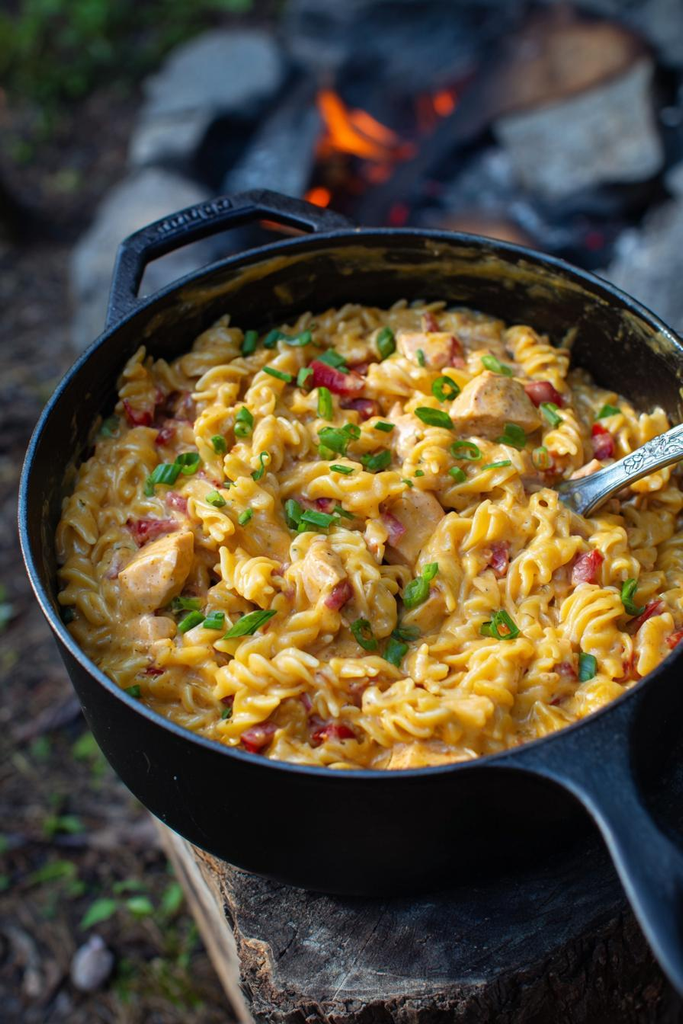
One pot pasta is one of the easiest meals to make when I want something warm, filling, and inexpensive after a busy day outdoors.
You only need a handful of basic ingredients to make a satisfying pasta dinner. Pasta, canned tomatoes or pasta sauce, vegetables, seasoning, and a little cheese can create a complete meal without requiring much work.
For a heartier version, I like adding cooked sausage, ground beef, beans, or leftover grilled chicken. You can also keep it vegetarian by adding mushrooms, bell peppers, zucchini, spinach, or canned vegetables.
Simple Ingredients
- Pasta
- Pasta sauce or canned tomatoes
- Chopped vegetables
- Italian seasoning or your favorite herbs
- Shredded cheese
- Optional cooked meat or beans
How I Make It
I start by cooking the pasta in a large pot according to the package directions. Once it is nearly tender, I drain most of the water and add the sauce and vegetables.
Everything goes back over the heat until the vegetables are tender and the sauce is hot. I finish it with cheese and seasoning.
If I am using a cast iron skillet instead of a pot, I can turn this into an easy skillet pasta and serve it straight from the pan. That makes cleanup much easier.
Camping tip: Cook the vegetables or meat at home before the trip and store them properly in the cooler. Dinner comes together much faster at camp.
2. Campfire Foil Packet Potatoes
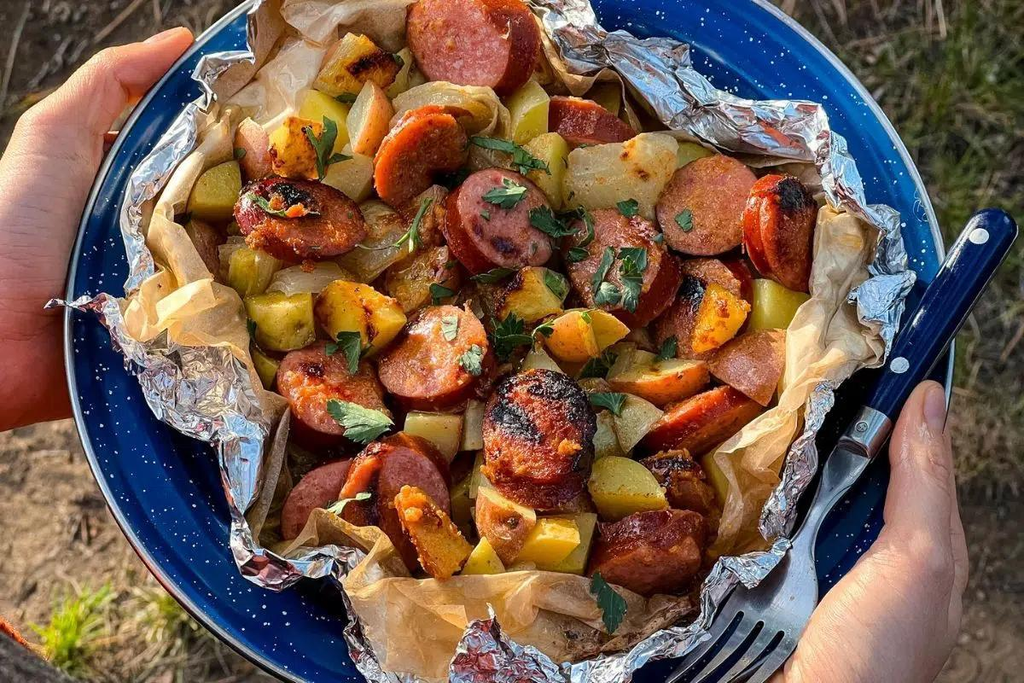
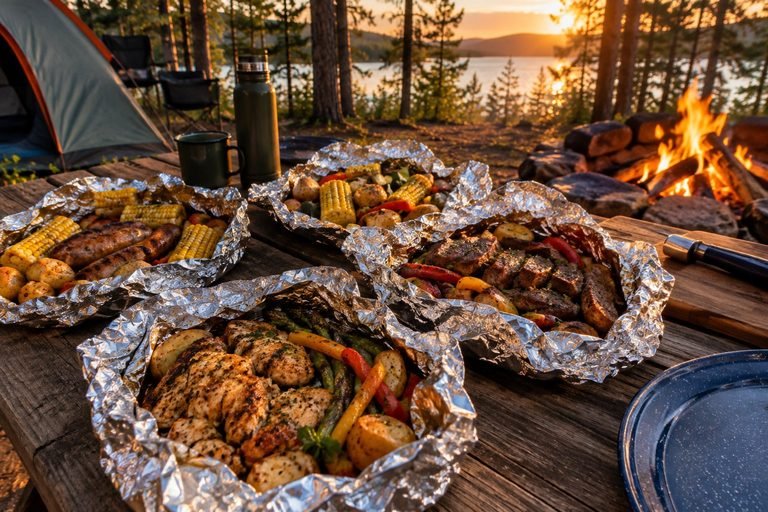
Foil packet meals are perfect when I want dinner to cook while I am doing other things around camp. Potatoes are inexpensive, filling, and easy to combine with whatever vegetables or protein I already have available.
I usually cut potatoes into small pieces so they cook more quickly. Then I add sliced onions, bell peppers, seasoning, and either sausage, chicken, or another protein.
Everything gets wrapped tightly in heavy duty aluminum foil and placed over hot coals or on a grill grate.
The exact cooking time depends on the size of the potato pieces and the heat of your fire, so I check the packet before serving. The potatoes should be tender and any meat used should reach its safe internal temperature.
One thing I really like about foil packet dinners is how flexible they are. You can make several packets with different combinations so everyone at the campsite gets something they enjoy.
3. Easy Camping Quesadillas
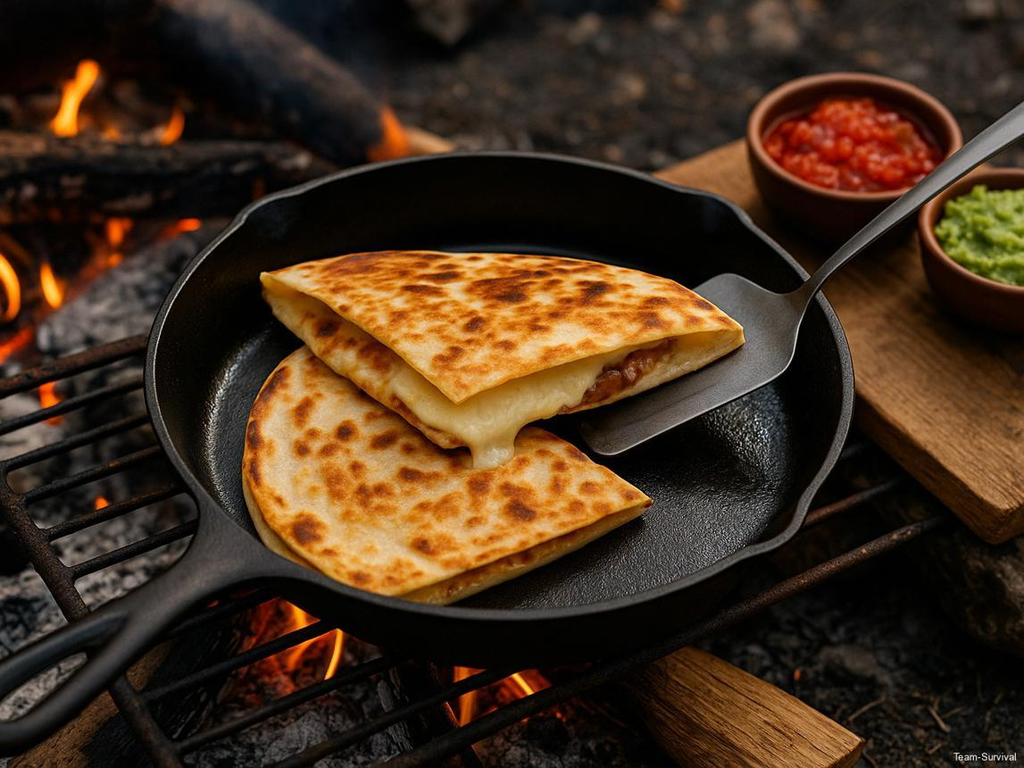
Quesadillas are one of my favorite choices when I need something quick for lunch. They are inexpensive, filling, and require very little cooking equipment.
Flour tortillas, shredded cheese, and a few inexpensive fillings are all you really need. I like using leftover chicken, canned beans, corn, peppers, or cooked vegetables when I have them available.
I place the filling between two tortillas and cook the quesadilla in a lightly greased skillet over medium heat. Once the bottom is golden and the cheese begins melting, I flip it carefully and cook the other side.
Cutting the quesadilla into wedges makes it easy to serve around camp.
Easy Filling Combinations
Cheese and beans: Great when you want an inexpensive meat free meal.
Chicken and cheese: A good way to use leftover grilled chicken.
Corn, peppers, and cheese: Simple, colorful, and inexpensive.
Potato and cheese: A surprisingly filling option when you have leftover cooked potatoes.
I also like quesadillas because they can use up small amounts of leftover ingredients instead of letting them go to waste.
4. Campfire Breakfast Burritos
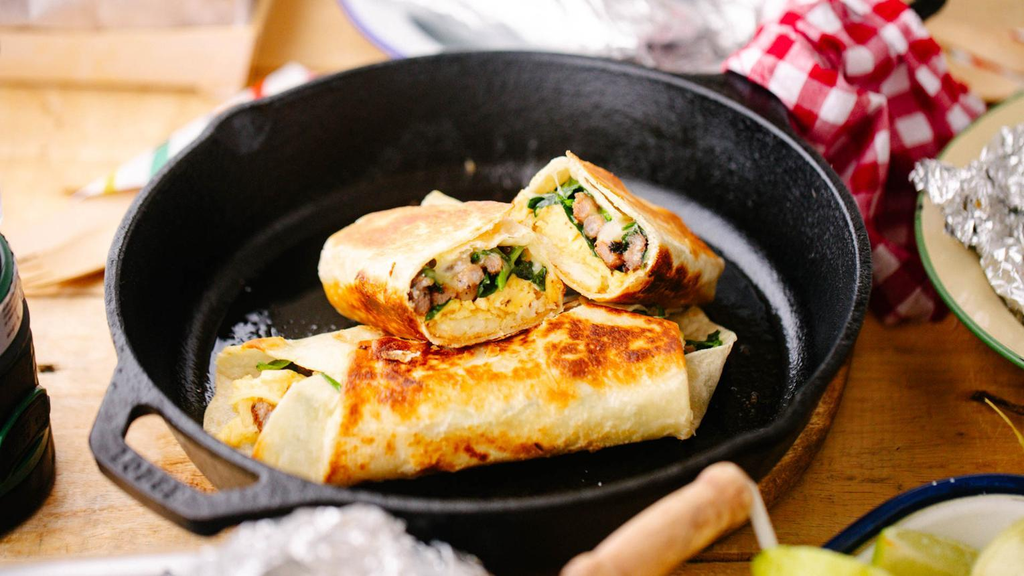
A breakfast burrito can take care of several hungry campers without requiring an expensive grocery list. Eggs, potatoes, tortillas, and cheese form the base, while leftover bacon, sausage, vegetables, or beans can be added depending on what I have available.
I like cooking the potatoes first because they take the longest. Once they are browned and tender, I add the eggs and any vegetables or cooked meat.
The mixture goes into warm tortillas with cheese, and I fold everything into a burrito.
These can also be prepared at home before leaving. Wrapped breakfast burritos can be refrigerated and then reheated at camp, which makes mornings much easier when everyone wants breakfast before heading out for the day.
My camping tip: Do not overfill the tortillas. A smaller filling makes the burritos much easier to fold, heat, and eat without making a mess.
5. Loaded Campfire Nachos
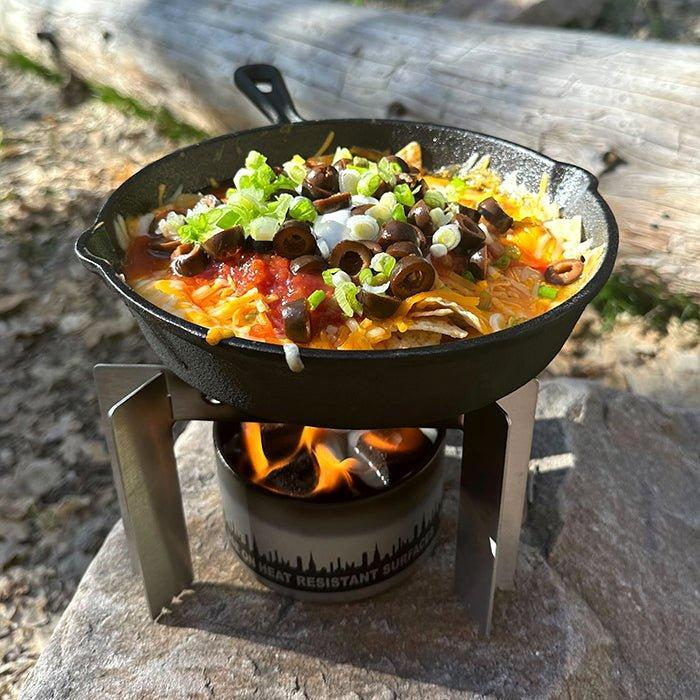
Nachos are an easy way to turn a few inexpensive ingredients into a meal that feels much more substantial.
I start with tortilla chips and layer them in a cast iron skillet with shredded cheese, beans, corn, cooked meat, and chopped peppers. The skillet goes over the grill grate or another controlled heat source until the cheese melts.
You can keep the toppings simple or use leftovers from previous meals. This is especially useful toward the end of a camping trip when I am trying to use up ingredients instead of bringing everything home.
Fresh toppings such as tomatoes, avocado, salsa, or green onions can be added after cooking.
For a larger group, I make several smaller layers instead of putting everything into one very deep pile. That way, more of the chips get toppings and melted cheese.
6. Campfire Chili
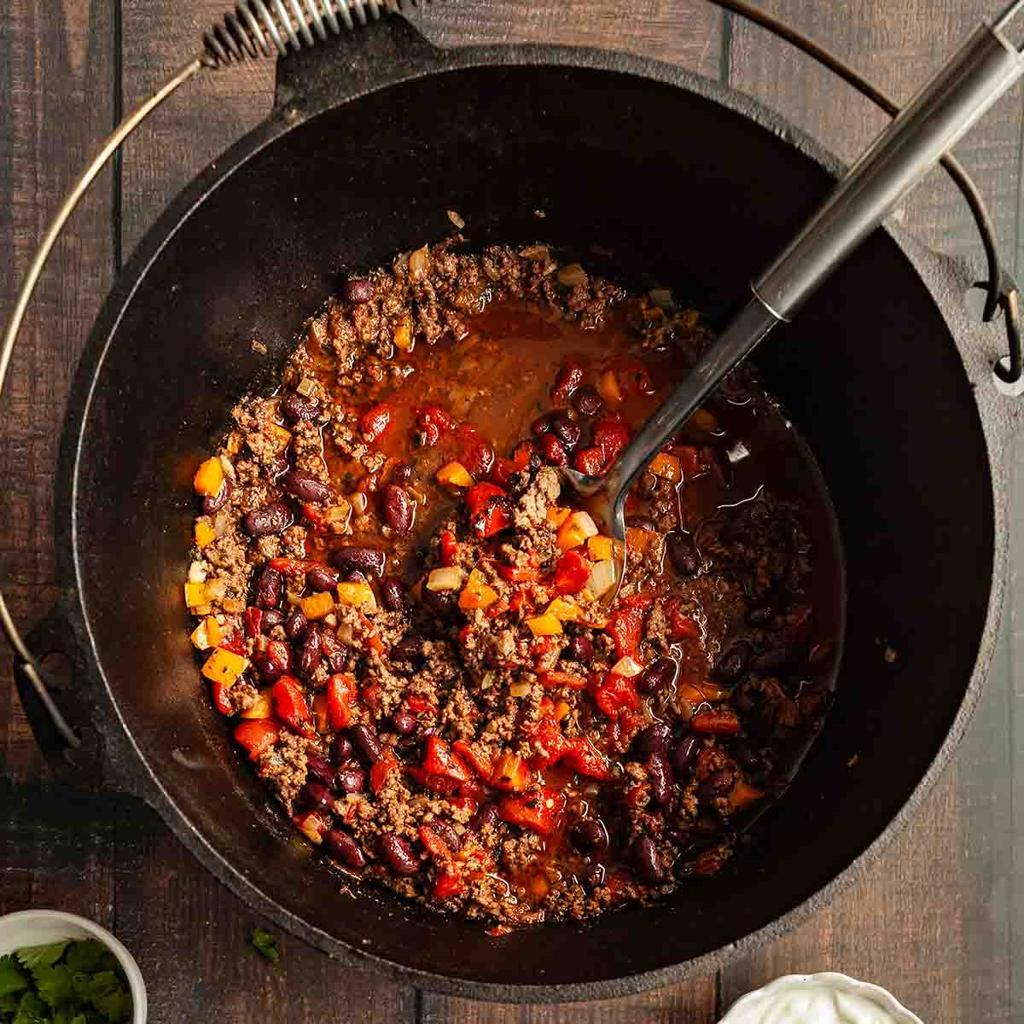
Campfire chili is one of those meals I keep coming back to because it is inexpensive, filling, and easy to adjust depending on what I have in the cooler or pantry. Beans do most of the work here, which makes it possible to feed several people without buying a lot of meat.
I usually start with ground beef, but you can easily leave it out and use extra beans for a cheaper vegetarian version. Canned beans, tomatoes, corn, onion, and chili seasoning create plenty of flavor without requiring a long ingredient list.
Simple Ingredients
- Ground beef or extra beans
- Canned kidney or black beans
- Canned diced tomatoes
- Corn
- Onion
- Chili seasoning
- Shredded cheese for serving
How I Make It
If I am using ground beef, I brown it in a large pot over the camp stove or fire. I drain any excess grease, then add the beans, tomatoes, corn, onion, and seasoning.
I let everything simmer until hot and thickened. Since most of the ingredients are already cooked, this is more about allowing the flavors to come together than cooking for hours.
I like serving chili with shredded cheese and tortilla chips. You can also spoon it over baked potatoes, rice, or leftover pasta if you want to stretch the meal even further.
My camping tip: Make the chili at home before the trip if you know you will have a busy camping day. Store it properly in the refrigerator or cooler and reheat it thoroughly at camp. It saves both cooking time and cleanup.
7. Easy Camping Breakfast Hash
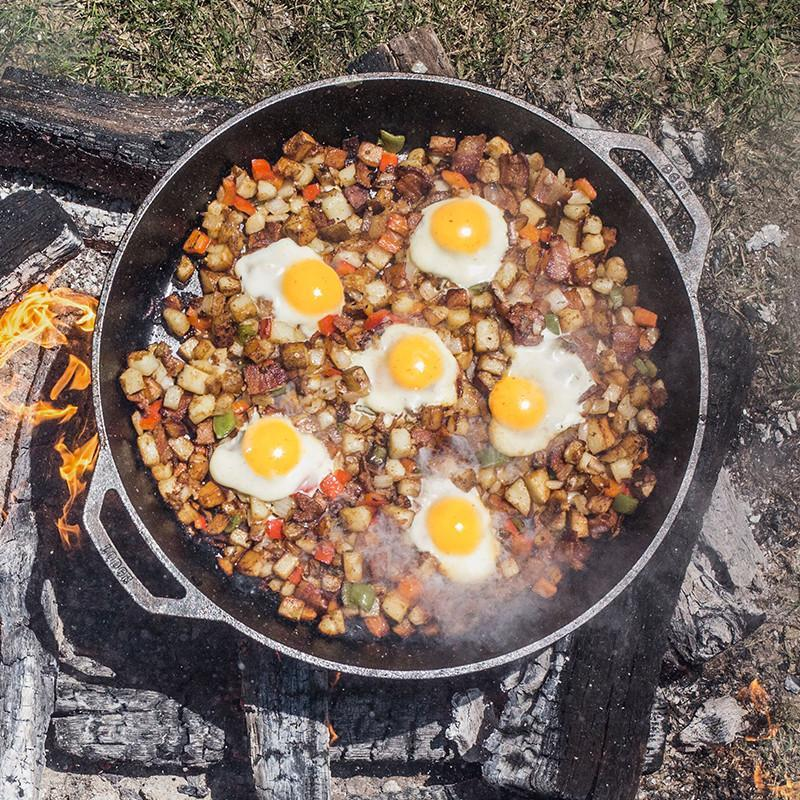
A breakfast hash is another great way to use inexpensive ingredients and leftovers. Potatoes provide the base, while eggs, onions, vegetables, and leftover meat turn it into a filling breakfast.
I particularly like this meal toward the end of a camping trip because it gives me an easy way to use small amounts of food that are still sitting in the cooler.
Cooked sausage, bacon, ham, chicken, peppers, mushrooms, and leftover vegetables can all work.
How I Make It
I heat a little oil in a cast iron skillet and add diced potatoes. I cook them until they develop a golden crust and become tender inside.
Next, I add onions and any other vegetables I am using. Once those are tender, I stir in cooked meat.
I make a few spaces in the mixture and crack eggs directly into the skillet. I cover the pan briefly so the eggs cook through.
A little shredded cheese on top finishes the meal.
This is one of those recipes where exact measurements are not especially important. I simply use what I have available and adjust the seasoning as I cook.
Camping tip: Dice the potatoes at home and keep them refrigerated in an airtight container. Having them ready to cook makes breakfast much quicker.
8. Campfire Grilled Cheese and Tomato Soup
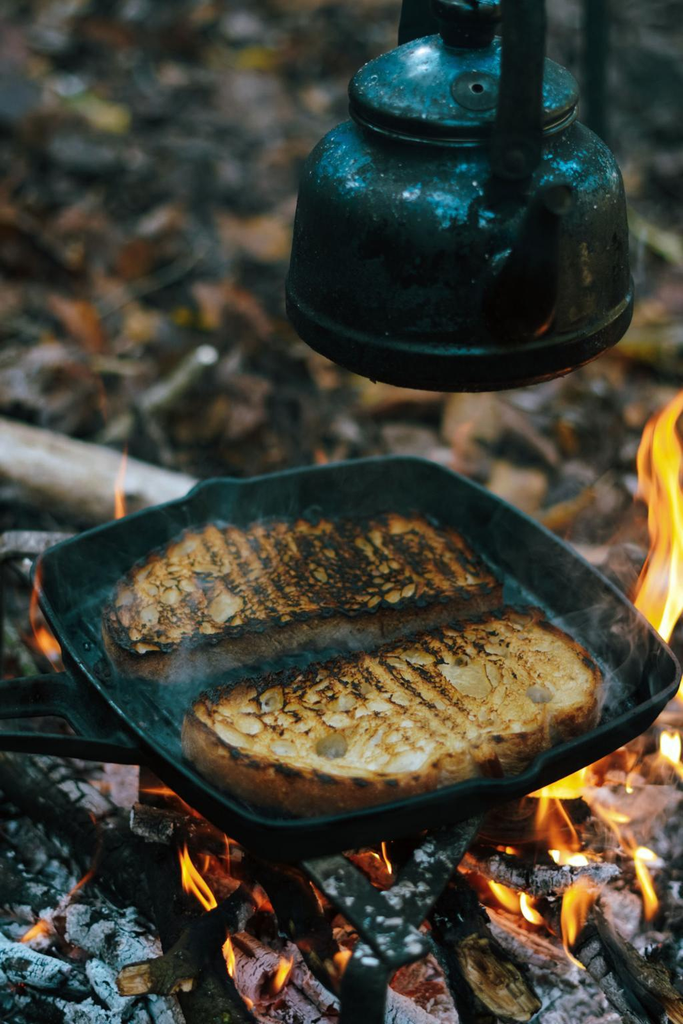
Grilled cheese and tomato soup is inexpensive comfort food that works surprisingly well for camping. It is especially useful on a cool evening or a rainy afternoon when I want something warm without spending much time cooking.
The ingredients are simple: bread, butter, cheese, and tomato soup. That makes it easy to pack and easy to prepare.
I heat the tomato soup in a small pot while making the sandwiches in a skillet.
For the grilled cheese, I butter the outside of two slices of bread, add plenty of cheese between them, and cook over medium heat. I turn the sandwich once the first side is golden brown and continue cooking until the cheese has melted.
I have found that keeping the heat moderate makes a big difference. A very hot skillet can brown the bread before the cheese has enough time to melt.
Easy Ways to Change It
Add sliced tomato for extra freshness.
Use leftover cooked bacon for a more substantial sandwich.
Add thinly sliced onion or peppers.
Use different cheeses depending on what you already have.
Serve the soup in mugs if you want an easy meal that does not require extra bowls.
9. Easy Campfire Tacos
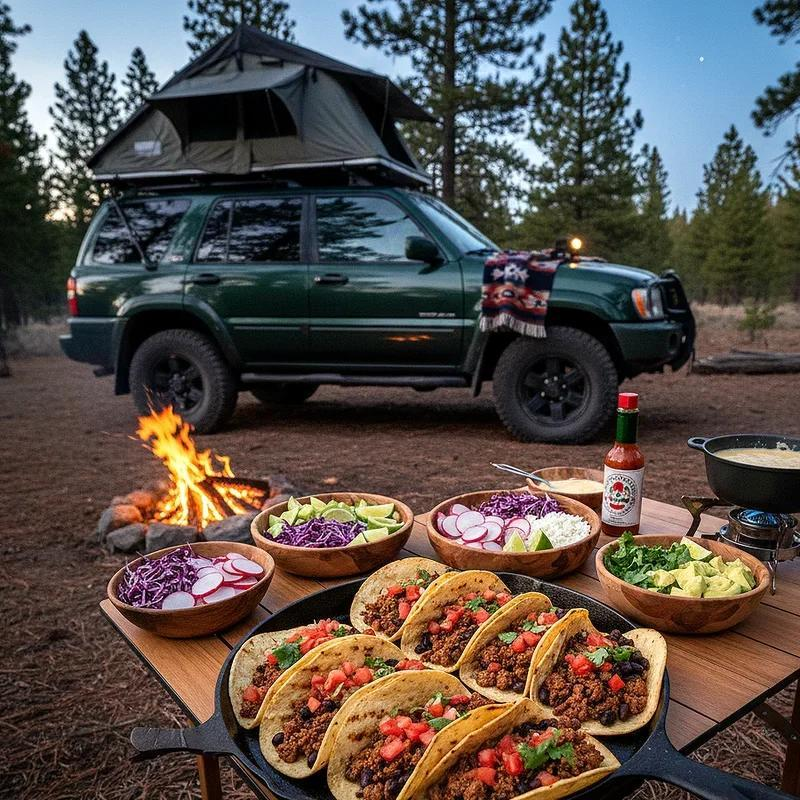
Tacos are another inexpensive camping meal that can feed a group without requiring complicated preparation. They are also one of the easiest meals to customize because everyone can build their own.
I usually prepare the taco meat in a skillet with taco seasoning, then set out tortillas and a few simple toppings.
Ground beef is an easy choice, but beans, shredded chicken, leftover steak, or cooked vegetables can work just as well.
Simple Taco Toppings
Shredded lettuce
Chopped tomatoes
Shredded cheese
Salsa
Canned or cooked beans
Corn
Sour cream
Avocado
You do not need every topping. In fact, I prefer keeping the selection small when camping because fewer ingredients mean less cooler space and less food waste.
For a particularly cheap version, I use seasoned beans with a little cheese and salsa. The tortillas make the meal filling without needing a large amount of filling.
My camping tip: Put toppings into small containers before leaving home. It makes serving easier and keeps the campsite organized.
10. One Pot Camping Rice and Beans
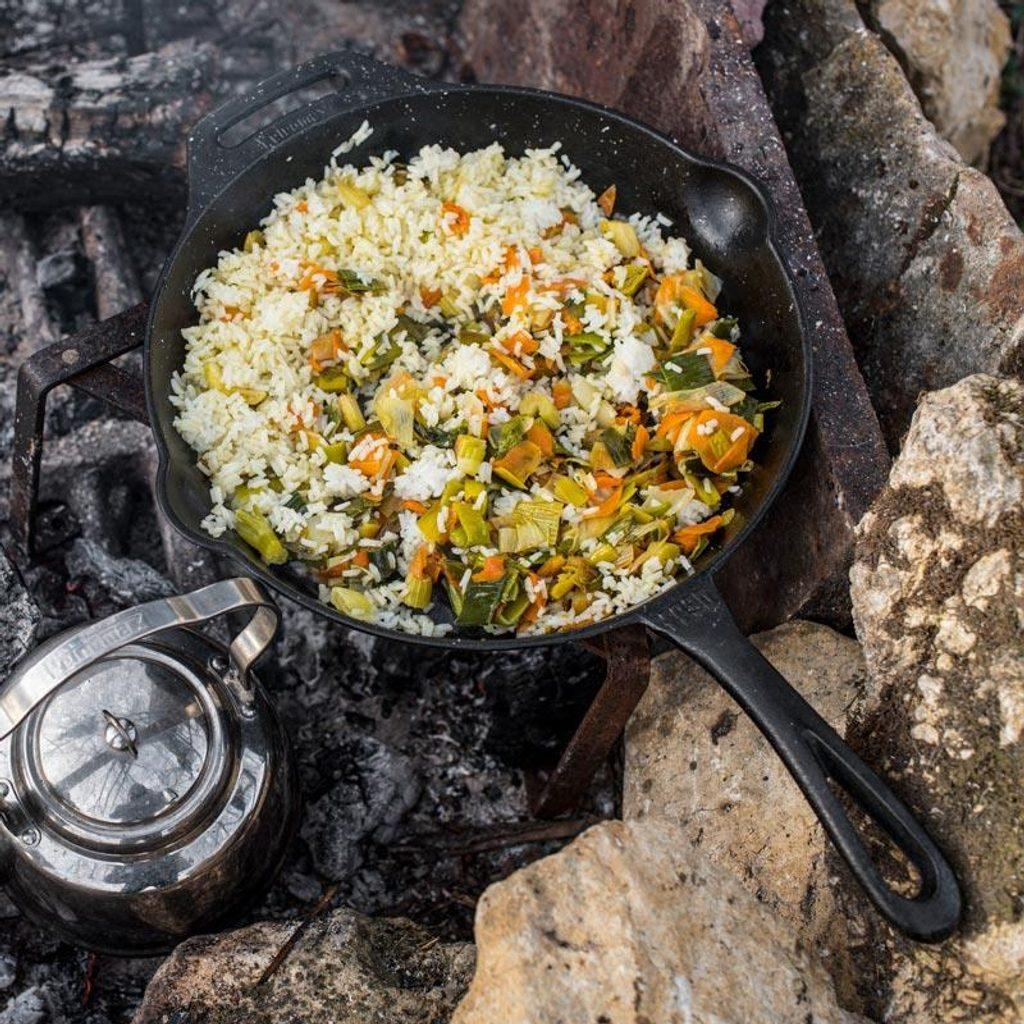
Rice and beans are one of the most budget friendly combinations for camping, and they can be turned into a complete meal with just a few additional ingredients.
I like adding canned tomatoes, corn, onions, peppers, and spices to give the dish more flavor. If I have leftover cooked chicken or sausage, I can add that too.
How I Make It
I start by sautéing onions and peppers in a pot with a little oil. Once they soften, I add the rice, beans, tomatoes, seasoning, and the appropriate amount of cooking liquid.
I cover the pot and let everything cook until the rice is tender. I check the pot occasionally and add a little more liquid if necessary.
Once the rice is cooked, I let the meal sit for a few minutes before serving. This gives the remaining moisture a chance to settle into the rice.
The result is a warm, filling meal that costs very little to make.
How to Make These Meals Even Cheaper
One of the easiest ways to lower the cost of camping food is to plan ingredients around multiple meals.
For example, a package of tortillas can be used for breakfast burritos, quesadillas, and tacos. A bag of potatoes can become breakfast hash, foil packets, or a side dish. Beans can be added to tacos, nachos, chili, or rice.
I also like buying ingredients in the form that makes sense for the trip. Canned vegetables can be convenient when refrigeration is limited, while fresh vegetables are excellent when I have enough cooler space.
Another useful trick is preparing ingredients at home. Chopping onions and peppers, cooking ground meat, washing vegetables, and portioning spices before leaving can make camp cooking much less stressful.
Most importantly, I avoid planning a completely different set of ingredients for every meal. A flexible camping menu usually saves more money than trying to recreate a full kitchen at the campsite.
How to Make Camping Meals Easier
Good camping food does not have to mean spending the whole evening cooking. A little preparation at home can make a huge difference once you arrive at the campsite.
Before I leave, I like to portion ingredients into containers or bags so I am not measuring everything beside the fire. I also chop vegetables ahead of time and prepare any meat that can safely be cooked before the trip.
I keep seasonings together in one small container instead of bringing several large spice jars. This saves space and makes cooking much simpler.
Another thing I pay attention to is the order of the meals. Ingredients that need refrigeration should be used earlier in the trip, while shelf stable foods can be saved for later. This helps reduce waste and makes the cooler easier to manage.
What Camping Cooking Equipment Do You Really Need?
You do not need a huge collection of camping cookware to make good meals.
For most of these recipes, I can get by with a few basic pieces of equipment.
A cast iron skillet is particularly useful because it can handle breakfast, quesadillas, tacos, grilled cheese, nachos, and several different skillet meals.
I also recommend having a medium or large pot for pasta, chili, soup, and rice dishes. A sharp knife, cutting board, spatula, tongs, aluminum foil, plates, bowls, cups, and eating utensils will cover most basic camping meals.
If you are using a camp stove, make sure your cookware is suitable for the type of stove you have. If you are cooking over a campfire, use a stable grill grate or another setup designed for cooking.
The goal is to bring equipment that you will actually use rather than filling the car with cookware for recipes that require one specific pan.
How to Keep Camping Food Cold and Safe
Keeping food at a safe temperature is just as important as choosing inexpensive recipes.
I pack perishable foods in a well insulated cooler with plenty of ice or frozen cold packs and try to keep the cooler closed as much as possible. I also separate raw meat from foods that are ready to eat to reduce the chance of cross contamination.
Raw meat should stay sealed in leakproof containers or bags, preferably toward the bottom of the cooler. I use separate utensils and cutting surfaces for raw meat and cooked food whenever possible.
Cooked leftovers should be refrigerated promptly rather than sitting beside the campfire for hours. When reheating leftovers, I make sure they are heated thoroughly before serving.
For longer camping trips, I rely more heavily on shelf stable ingredients such as canned beans, canned vegetables, pasta, rice, tortillas, oats, and other foods that do not require refrigeration until opened.
Common Camping Meal Mistakes to Avoid
One mistake I see with camping meal planning is bringing too many ingredients.
It sounds helpful to have plenty of choices, but too many ingredients can quickly turn into wasted food, a crowded cooler, and a complicated cooking routine.
Another mistake is choosing meals that require too much preparation at the campsite. Chopping several vegetables while trying to manage a fire and feed hungry campers is much harder than doing that work at home.
I also avoid planning every meal around the campfire. Some meals are much easier to prepare on a camp stove, while others can be assembled without cooking at all.
Finally, I always think about cleanup before choosing a recipe. A meal that takes twenty minutes to cook but leaves five dirty pans may not be worth it after a long day outside.
Easy Camping Meal Prep Checklist
Before leaving home, I like to run through a quick checklist.
Plan the meals: Decide what you will eat for each breakfast, lunch, and dinner.
Check your ingredients: Look through the pantry before shopping so you do not buy duplicates.
Prep vegetables: Chop onions, peppers, potatoes, and other vegetables ahead of time.
Prepare meat: Cook anything that can safely be prepared before the trip.
Portion seasonings: Combine commonly used spices in small containers.
Pack the cooler: Put perishable ingredients into a properly chilled cooler.
Pack cooking equipment: Make sure you have the skillet, pot, utensils, foil, cutting board, and cooking fuel you need.
Plan leftovers: Think about how leftover ingredients can become another meal instead of going to waste.
Final Thoughts
Cheap camping meals can still be satisfying, filling, and enjoyable. The key is choosing recipes that use affordable ingredients and can be prepared with the equipment you already have.
These meals are also flexible, which is one of the things I appreciate most about camping cooking. A recipe does not need to be followed perfectly. I can swap ingredients based on what I have, use leftovers from another meal, or leave out ingredients that nobody in the group enjoys.
My biggest camping food tip is to keep things simple. Plan ahead, prepare what you can at home, choose ingredients that work across multiple meals, and do not underestimate the value of one pot or one skillet recipes.
With a little preparation, meals like pasta, chili, quesadillas, tacos, foil packet potatoes, breakfast hash, and rice and beans can keep everyone well fed without making the camping trip feel like a cooking project.