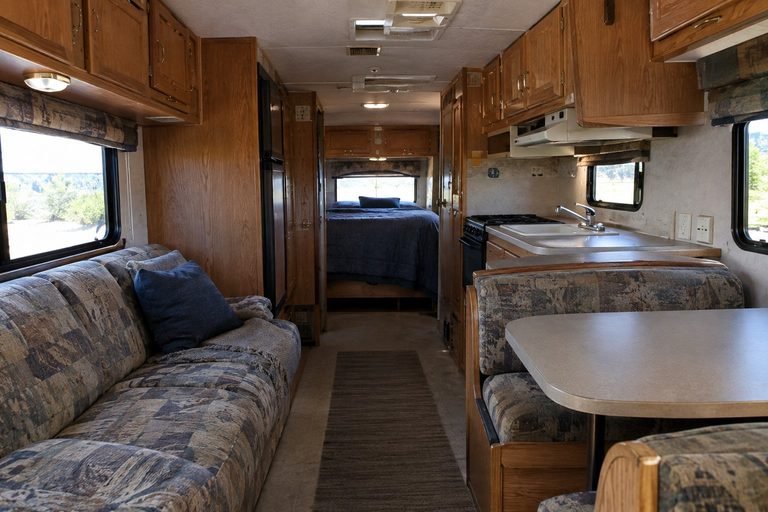
11 Ingenious Campervan Bed Ideas for Cozy Sleeping
Creating a comfortable bed is one of the most important parts of converting a campervan. When you are living or traveling in a small van, your sleeping area needs to do more than provide somewhere to rest.
It should fit your available space, leave enough room for storage, and make the interior feel comfortable without making everything else difficult to use.
One thing I always consider when planning a campervan sleeping area is how the bed will work during the day.
A permanent bed might be perfect if you have enough room, but a convertible design can make much more sense when you need space for cooking, relaxing, working, or storing outdoor equipment.

The good news is that there are several clever ways to create a cozy sleeping area, even inside a compact van.
Some designs use simple wooden platforms, while others transform seating areas into comfortable beds or make use of otherwise wasted space.
In this guide, I am sharing 11 ingenious campervan bed ideas that combine comfort, practical storage, and attractive design.
Whether you are building a van from scratch or upgrading an existing conversion, these ideas can help you create a sleeping setup that makes better use of every inch.
What to Consider Before Choosing a Campervan Bed Design

Before choosing a bed style, think about how you plan to use your van. A layout that works for a weekend camper may not be suitable for someone living in a van full-time.
The best design is not necessarily the biggest or most expensive one. It is the one that fits your daily routine while giving you enough room to sleep comfortably.
Here are a few things I would consider before building or buying a campervan bed.
1. Available Floor Space
Measure the interior of your van before deciding where the bed will go. Pay attention to the wheel arches, sliding doors, kitchen units, cabinets, and any other features that could affect the layout.
A bed that looks beautiful in an inspiration photograph may not leave enough room to move around in your actual van.
Consider whether you want to sleep lengthwise or widthwise. A lengthwise bed usually takes up more floor space, while a widthwise arrangement can create additional room for the kitchen or living area if your van is wide enough for your height.
2. Storage Requirements
Storage is especially important in a campervan because you do not have the luxury of spare rooms or large closets.
A raised bed can create valuable storage underneath for clothing, camping equipment, water containers, and other supplies.
However, remember that storage should remain accessible. A design that requires you to remove the mattress every time you need something can become frustrating.
3. Mattress Comfort
Do not treat the mattress as an afterthought. You may have a beautiful van conversion, but poor sleeping support can make traveling uncomfortable.
Consider the mattress thickness, firmness, material, and ventilation. Measure the available space carefully before purchasing one, especially if you need a custom size.
4. Ease of Conversion
If you choose a bed that changes into seating during the day, think about how long it takes to convert.
A complicated setup might seem clever initially, but you may get tired of rearranging cushions and moving furniture every morning and evening.
Look for a mechanism that is simple, secure, and easy to operate.
5. Ventilation and Moisture Control
Mattresses can trap moisture underneath, particularly in small vans where condensation is common.
Allowing air to circulate beneath the mattress can help reduce moisture buildup. Slatted bed bases, ventilated support systems, and suitable moisture-control solutions can all help.
Make sure the design also allows you to inspect and clean the area underneath.
11 Ingenious Campervan Bed Ideas for Cozy Sleeping
Here are some practical and attractive campervan bed designs worth considering. Each option offers a different balance of comfort, storage, and living space.
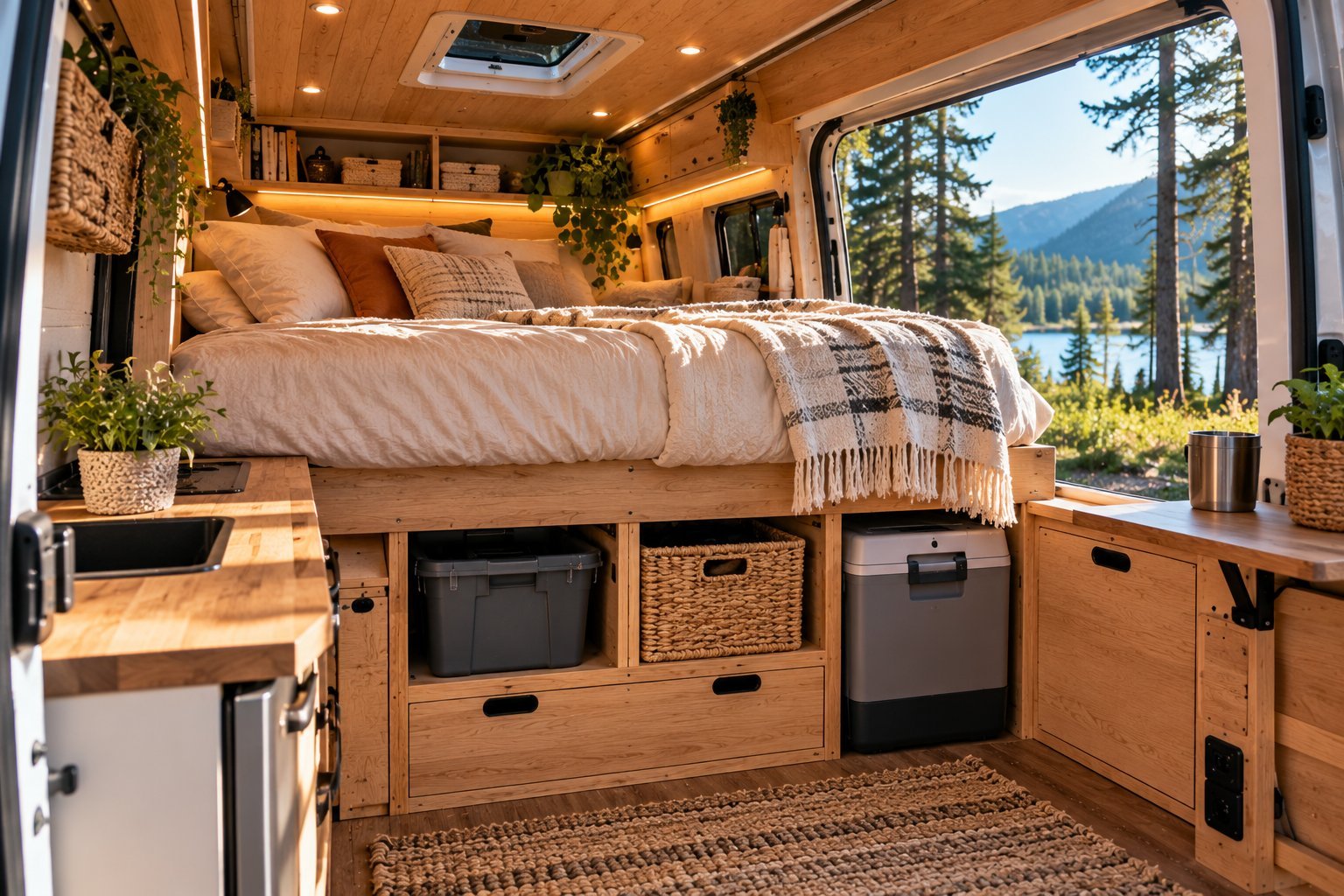
1. Fixed Raised Platform Bed With Storage

A raised platform bed is one of the most practical designs for a campervan, especially if you plan to use your van regularly or live in it full-time.
The concept is simple. You build a sturdy platform across the rear section of the van and place your mattress on top. The space underneath becomes a large storage area for luggage, camping equipment, clothing, and other essentials.
I particularly like this design because it creates a permanent sleeping area without requiring you to rearrange furniture every night.
You can customize the platform to fit your van’s dimensions and choose how you want to access the storage underneath.
How to Make It Work
- Build a sturdy frame using suitable structural timber or metal supports.
- Measure around the wheel arches before deciding the platform width.
- Add drawers, storage boxes, or accessible compartments underneath.
- Use a slatted or ventilated mattress base.
- Include a small access panel for items you need regularly.
One important detail is the height of the platform. Raising it too much can make the bed uncomfortable to climb into and reduce headroom. Find a balance between storage capacity and sleeping comfort.
Best for: Full-time van lifers, couples, and people who prefer a permanent sleeping area.
2. Convertible Sofa Bed
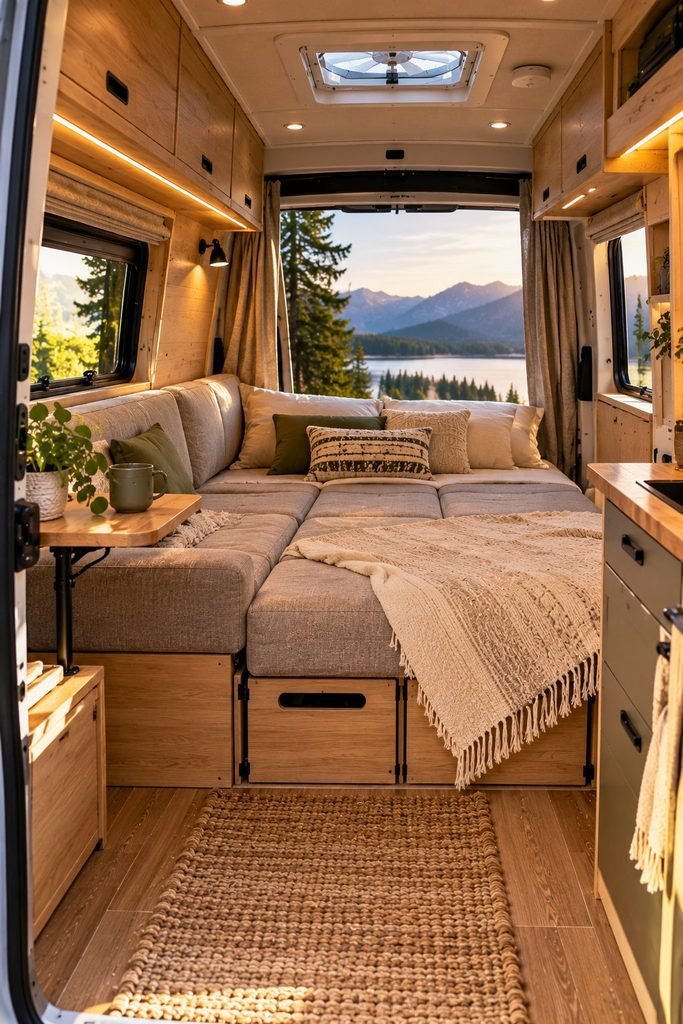
A convertible sofa bed is an excellent option if you want your campervan to feel like a living room during the day and a bedroom at night.
During the daytime, the setup works as a sofa where you can sit, read, eat, or relax. When it is time to sleep, the seating sections move or unfold to create a larger sleeping surface.
This design is particularly useful in smaller vans where installing a permanent bed would take up too much space.
You can build a simple version using a wooden frame and removable cushions or invest in a more advanced folding mechanism.
Design Tips
- Choose cushions that are thick enough for comfortable sleeping.
- Make sure the sections fit together without large gaps.
- Use a secure frame that does not move when someone sits or sleeps on it.
- Add storage compartments beneath the sofa.
- Keep the conversion process simple enough for everyday use.
Pay attention to cushion thickness and support. A sofa that feels comfortable for sitting may not automatically provide a good night’s sleep.
Best for: Solo travelers, couples with compact vans, and weekend campers who want a flexible living space.
3. Pull-Out Slide Bed
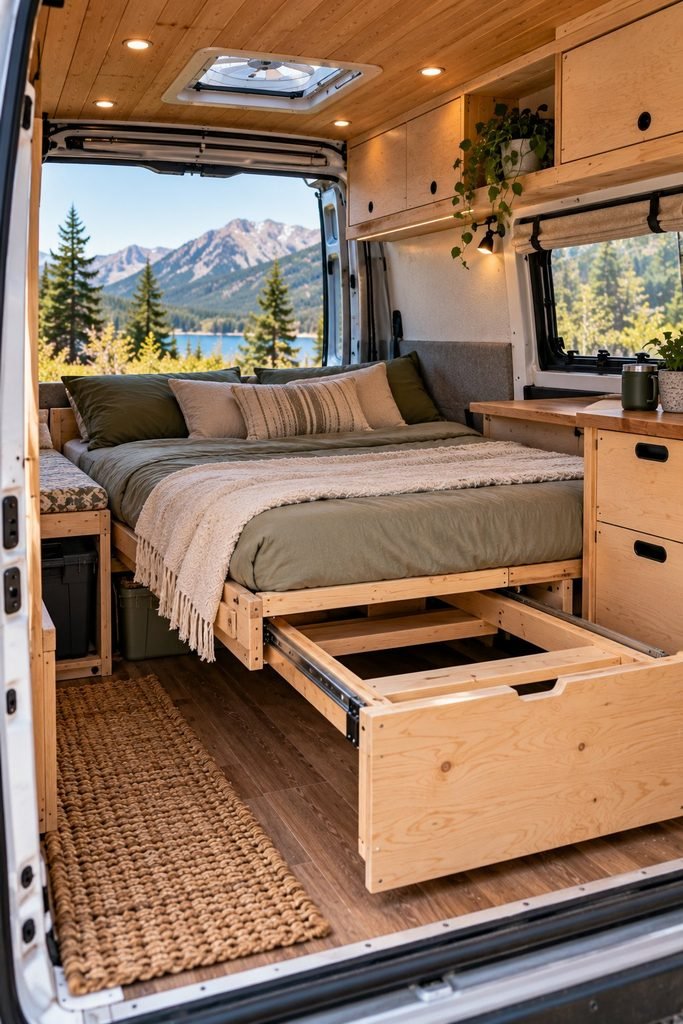
A pull-out bed is another smart way to save space in a campervan.
Instead of keeping the full bed extended throughout the day, the platform slides inward or folds into a compact seating arrangement. At night, you pull out the additional section to create a longer sleeping surface.
This arrangement gives you more usable floor space during the day while still providing a proper bed at night.
A pull-out design can be made using wooden panels, sturdy sliding supports, or a purpose-built extension mechanism.
Why This Design Works
The main advantage is flexibility. You do not need to sacrifice the entire living area just to have a comfortable place to sleep.
It can also be customized to fit different van sizes and sleeping requirements.
Before building one, make sure the extended section has proper support. The moving platform should lock securely into position so it does not slide unexpectedly during use.
Best for: Small campervans, DIY conversions, and people who need extra daytime floor space.
4. Overhead Loft Bed

If you have a high-roof campervan, an overhead loft bed can be an interesting way to use vertical space.
Instead of placing the mattress at floor level, you create a raised sleeping platform above part of the living area. This leaves the floor underneath available for seating, storage, or other activities.
The design can make a small van feel more organized because sleeping and living areas are separated vertically.
A loft bed may work particularly well in high-roof vans where there is enough interior height for both the sleeping platform and the space below it.
Things to Consider
- Measure the available headroom carefully.
- Use a properly engineered and securely anchored frame.
- Include safe access using a suitable ladder or steps.
- Add protective sides where necessary to reduce the risk of falling.
- Make sure the mattress has enough ventilation.
- Avoid placing the bed where it blocks emergency exits or essential access.
This style requires more careful planning than a basic platform bed. Weight distribution and secure mounting are especially important when the vehicle is moving.
Best for: High-roof vans, compact living layouts, and conversions where vertical space can be used safely.
5. Murphy-Style Folding Bed
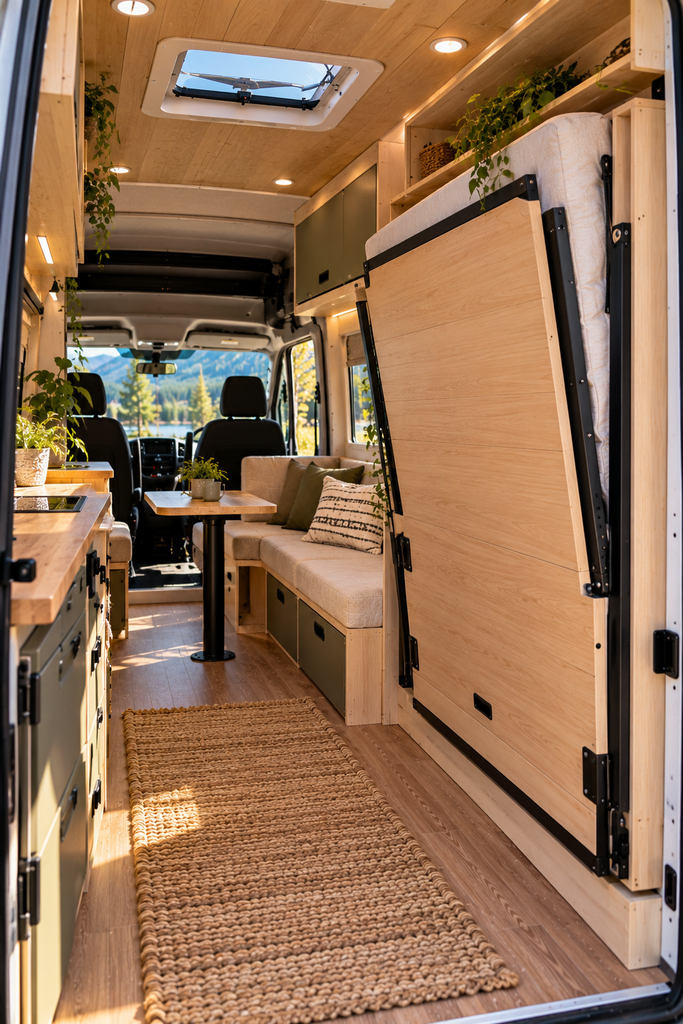
A Murphy-style bed folds vertically against a wall or into a cabinet when it is not being used.
This is a clever solution if you want a larger sleeping surface without permanently giving up your living area.
During the day, the bed folds away to create more open floor space. At night, you lower it into position and prepare the sleeping area.
Although this design is more complicated to build than a simple platform, it can create a very flexible interior.
How to Make It Practical
- Choose a reliable folding mechanism designed for the intended load.
- Make sure the wall and mounting points can safely support the bed.
- Use a mattress that works with the folding system.
- Add a secure locking mechanism for travel.
- Keep the surrounding area clear when opening and closing the bed.
Do not attach a heavy folding bed to thin decorative wall panels. The structure needs properly engineered supports and secure attachment points.
Best for: Larger campervans with enough wall space and people who want a flexible living area.
6. Dinette Conversion Bed
A dinette conversion bed is a practical option if you want your campervan to have a proper dining and seating area without dedicating permanent floor space to a mattress.
During the day, the setup works as a small dining area with two benches and a table in the middle. At night, the table lowers or moves out of the way, and the seating cushions are rearranged to create a sleeping surface.
I like this arrangement because one area serves two purposes. It also gives you somewhere comfortable to eat, work on a laptop, or relax when you are not sleeping.
How to Make It Comfortable
- Choose a table with a secure lowering mechanism.
- Make sure the cushions fit together without large gaps.
- Use supportive foam rather than thin decorative cushions.
- Include storage beneath the benches.
- Keep the conversion process simple.
The biggest challenge is getting the cushion arrangement right. If the sections are different heights or leave uncomfortable gaps, the bed may not provide the support you need.
Best for: Small campervans, couples, and people who want a dedicated dining area without installing a permanent bed.
7. Bunk Beds for Family Campervans

If you are converting a campervan for family travel, bunk beds can help you create separate sleeping spaces without using the entire floor area.
Instead of arranging several mattresses side by side, you place one sleeping platform above another. This makes use of vertical space and can leave more room for a kitchen, storage units, and seating.
Bunk beds can be particularly useful for children because they create a separate sleeping area while keeping the main living space relatively open.
Ideas for a Practical Bunk Setup
- Use a strong frame with properly supported platforms.
- Include secure guardrails on elevated sleeping areas.
- Provide a safe and easy way to climb into the upper bunk.
- Use lightweight mattresses that fit the available space.
- Add individual reading lights where practical.
- Keep windows, ventilation, and emergency exits accessible.
Safety is especially important with elevated beds. The structure must be designed for the intended occupants and secured properly to the vehicle. Avoid placing young children on upper bunks unless the design and safety arrangements are appropriate for their age.
Best for: Family campervans and conversions that need multiple sleeping spaces.
8. Widthwise Rear Bed
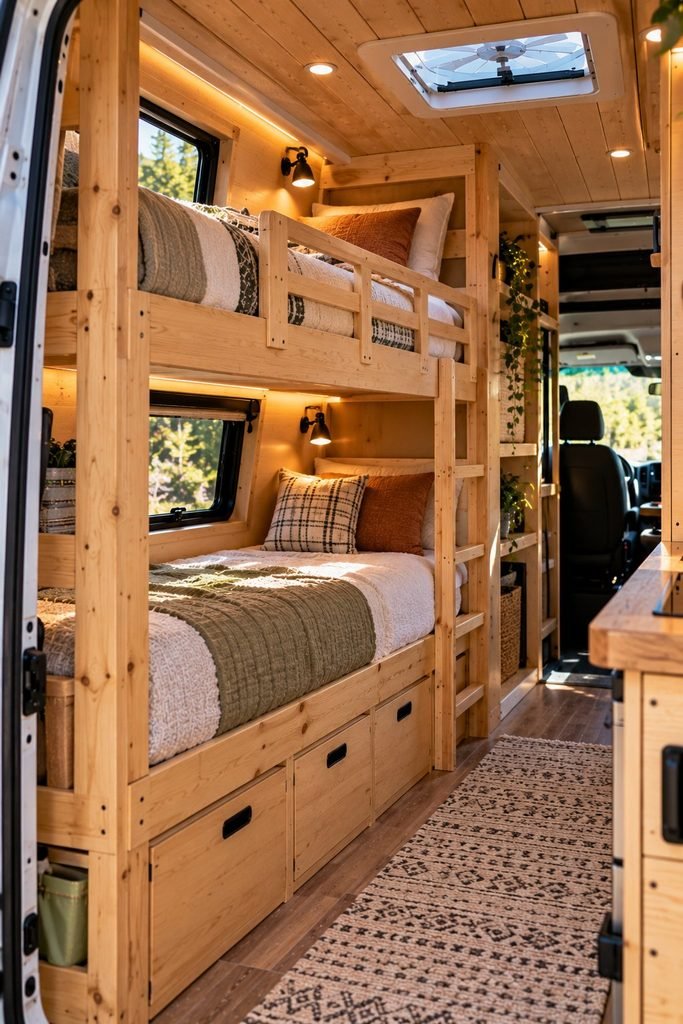
A widthwise bed sits across the back of the campervan rather than running from front to back.
This arrangement can save a considerable amount of floor space because it uses the van’s width instead of its length. The extra room can be useful for installing a kitchen, seating area, or larger storage units.
It also works well with a raised platform because you can use the space underneath for equipment and luggage.
Is a Widthwise Bed Right for You?
The most important consideration is your height.
Measure the actual usable interior width at mattress level before choosing this design. Interior dimensions vary between van models, and wall insulation, paneling, and furniture can reduce the available space.
If you are too tall for the available width, sleeping diagonally or using carefully planned bed extensions may help, but these solutions need to be tested before building the final platform.
Best for: Shorter travelers, couples who fit the available dimensions, and campervan layouts where maximizing floor space is important.
9. Lengthwise Bed With Rear Storage
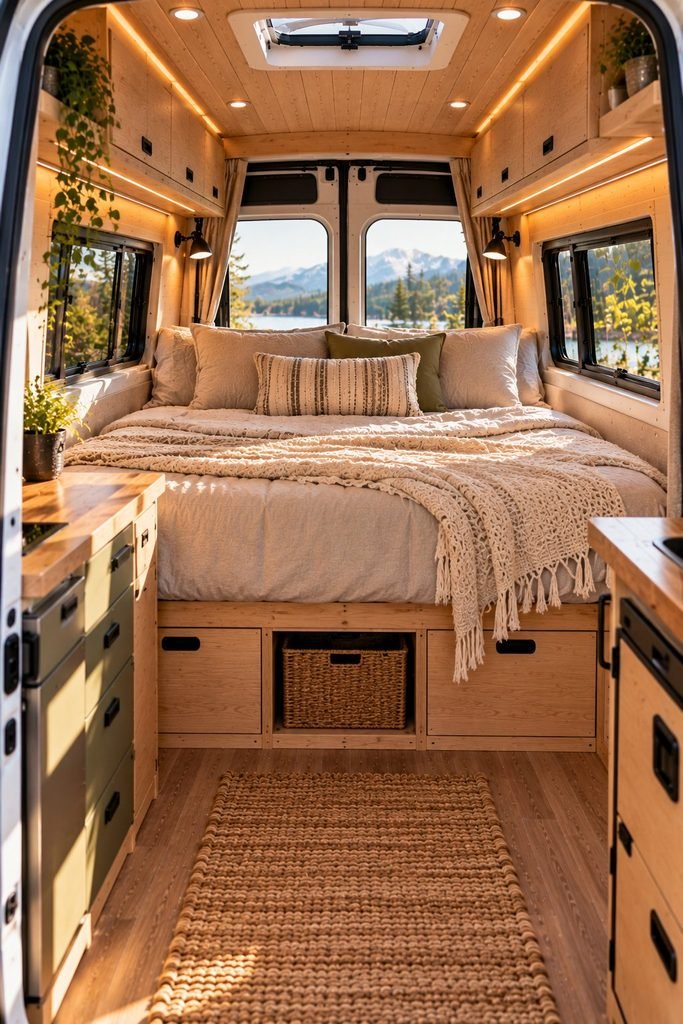
A lengthwise bed runs from the rear toward the front of the campervan. It is a popular arrangement because it can provide a comfortable sleeping length without requiring you to fit across the vehicle’s width.
This layout often works well for taller travelers who may not have enough room for a widthwise mattress.
You can raise the sleeping platform to create a storage garage underneath. This space can hold camping chairs, outdoor equipment, luggage, folding tables, and other larger items.
Ways to Improve the Layout
- Use drawers or pull-out storage where access allows.
- Include side access panels for frequently used items.
- Keep heavy equipment secured while driving.
- Add ventilation beneath the mattress.
- Leave enough room to get in and out comfortably.
One thing I would plan carefully is access to the storage garage. A large compartment is useful, but it should not become a space where everything gets piled together and difficult to find.
Best for: Taller travelers, full-time van lifers, and people who carry bulky outdoor equipment.
10. Removable Modular Bed
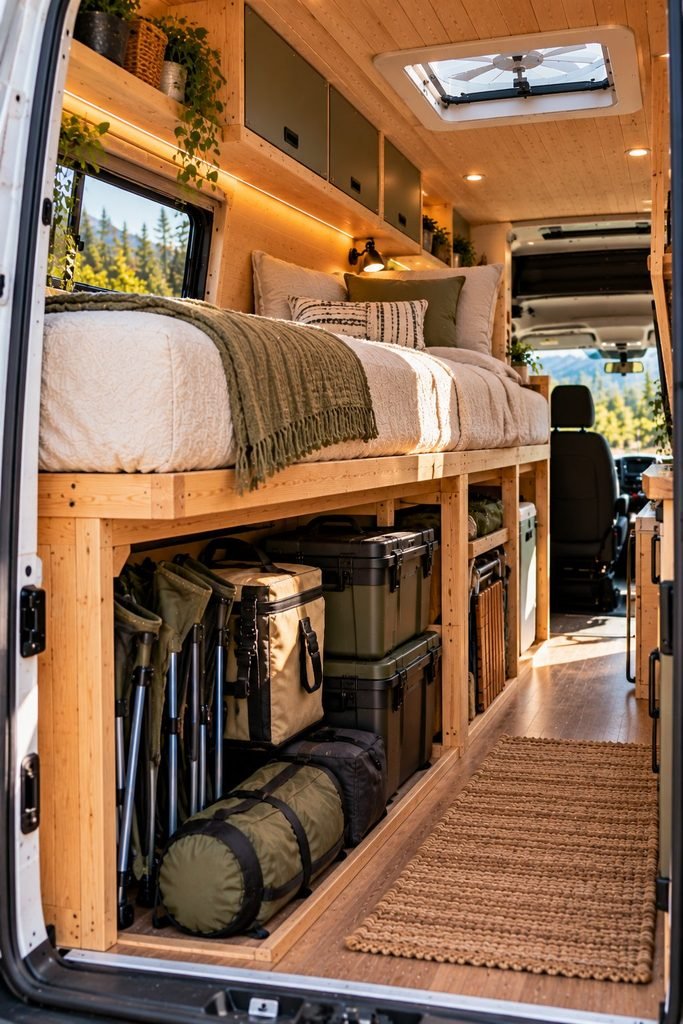
A removable modular bed is a flexible option for people who use their van for different activities.
Instead of building a permanent platform, you create several sections that fit together to form a bed when needed. During the day, some or all of the sections can be removed or rearranged to open up the floor.
This can be especially useful if you want to use your campervan for weekend trips, transporting equipment, or everyday driving.
How to Build a Modular Setup
- Measure the available sleeping area.
- Divide the platform into manageable sections.
- Use strong, stable supports.
- Make sure the pieces lock or fit securely together.
- Store unused sections safely while traveling.
- Choose a mattress or folding pad that fits the assembled platform.
The main advantage is flexibility, but the design needs to be stable. Loose panels can shift during travel or while someone is sleeping, so proper securing and support are essential.
Best for: Weekend campers, multipurpose vans, and people who do not want a permanent bed installation.
11. Foldable Slatted Bed With a Roll-Up Mattress
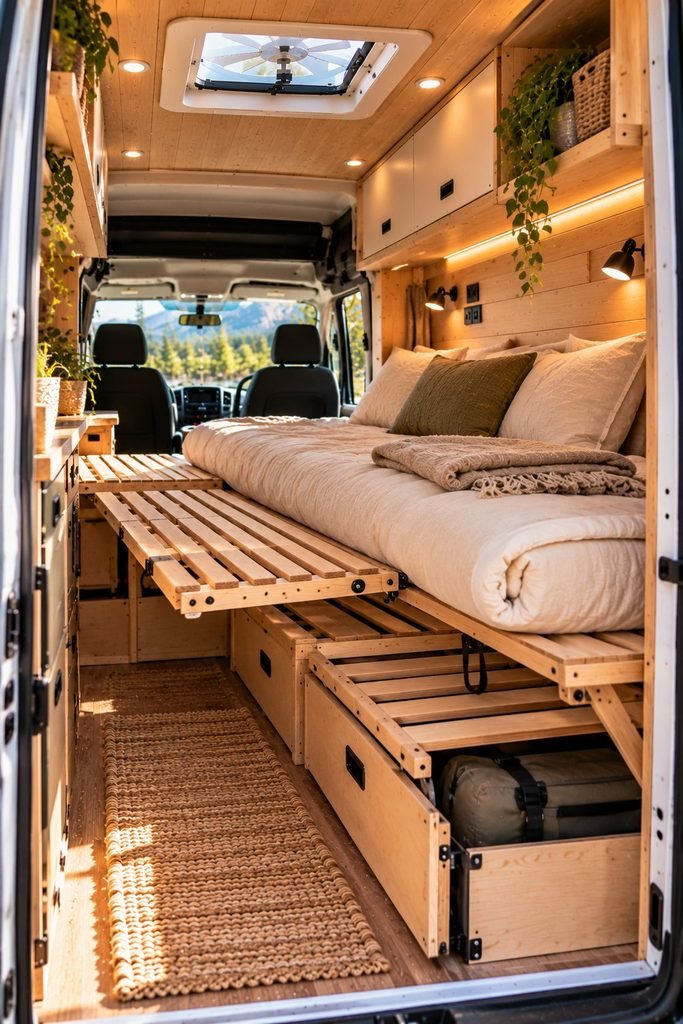
A foldable slatted bed is a simple space-saving idea that can work particularly well in smaller campervans.
The wooden slats provide a supportive base for a mattress, while the folding design allows the structure to be stored or rearranged when it is not needed.
Pairing it with a roll-up or folding mattress makes the setup even more flexible.
This arrangement is worth considering if you do not want to build a complicated bed frame or permanently occupy the rear of your van.
Why It Is Worth Considering
- It can be easier to remove than a fixed platform.
- It leaves room for other activities during the day.
- The slatted base can allow air to circulate beneath the mattress.
- It can be customized to different van dimensions.
- A folding mattress can be stored separately.
Make sure the slats are strong enough for the intended weight and have suitable spacing to support the mattress. The frame should also be secured while driving.
Best for: Compact campervans, occasional travelers, and simple DIY conversions.
How to Make a Campervan Bed More Comfortable
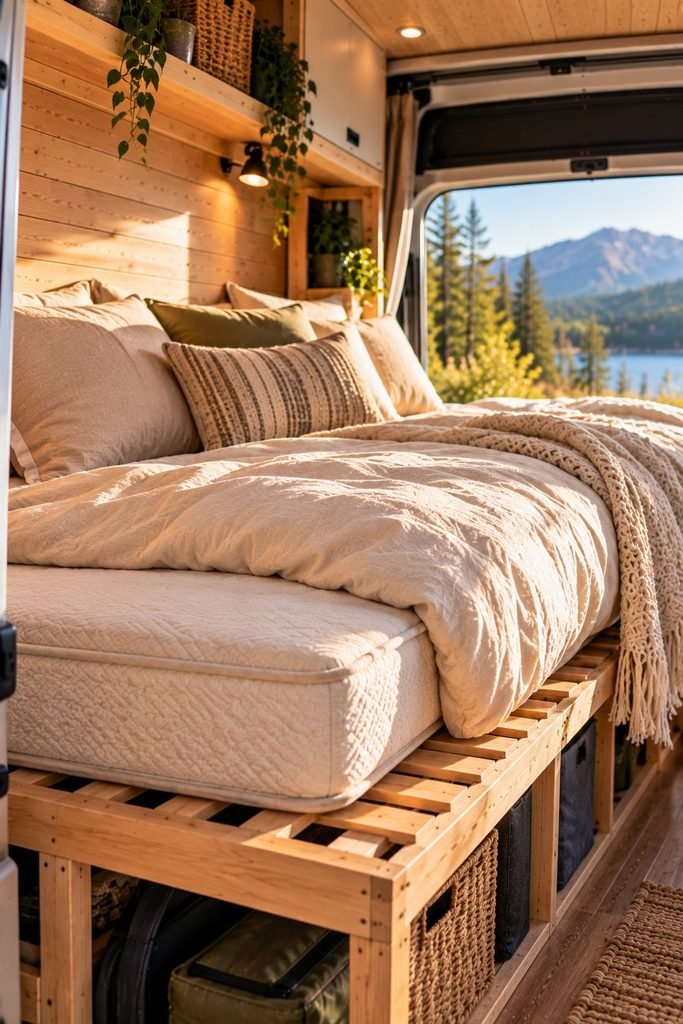
Choosing the right bed structure is only half the job. The mattress, bedding, ventilation, and surrounding layout all affect how comfortable your sleeping area feels.
Here are a few improvements worth considering.
1. Invest in a Good Mattress
A mattress that is too thin or too soft can make sleeping uncomfortable, particularly if you use your campervan regularly.
Choose a mattress that provides suitable support for your body and fits the available space.
Memory foam, high-density foam, and hybrid mattresses can all work depending on the bed design, available height, and personal preference.
If your van requires a custom mattress, measure carefully before ordering.
2. Use a Mattress Ventilation System
Moisture can collect beneath mattresses in campervans, especially when temperatures change and condensation develops.
A ventilated mattress underlay or slatted bed base can help improve airflow.
You should also lift the mattress periodically to inspect the surface underneath and allow trapped moisture to escape.
3. Choose Bedding That Fits the Space
Oversized duvets and bulky pillows can make a compact campervan feel cluttered.
I would choose bedding that is comfortable but easy to fold and store.
Consider:
- Compact pillows.
- Lightweight duvets.
- Fitted sheets that stay in place.
- Washable bedding.
- Storage bags for spare blankets.
Neutral colors can also make the sleeping area feel calmer and more coordinated.
4. Add Reading Lights
Small reading lights can make a campervan bed feel much more comfortable.
Install suitable low-voltage lighting or battery-powered lights near the sleeping area. This gives you enough light to read, find belongings, or get ready for bed without illuminating the entire van.
Make sure any installed electrical fittings are appropriate for the vehicle’s electrical system and are professionally installed where necessary.
5. Create Privacy Around the Bed
Window coverings and curtains can make a big difference when sleeping in a campervan.
Blackout blinds or suitable window covers help reduce outside light and provide privacy. They can also improve comfort when temperatures change.
If your bed is near the rear doors, consider a curtain or divider to separate the sleeping area from the rest of the van.
Common Mistakes to Avoid When Building a Campervan Bed
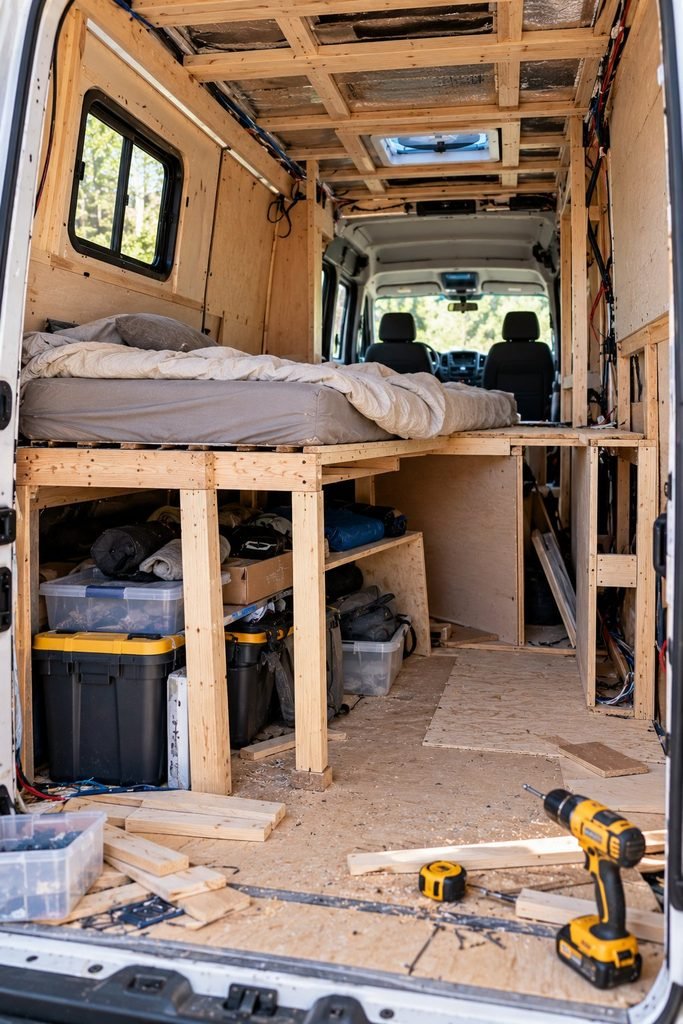
A bed can look impressive in a finished conversion photograph but still be uncomfortable or impractical in everyday use.
Here are some mistakes I would avoid.
Choosing a Bed Before Measuring the Van
Never assume a bed will fit because it looks suitable in another campervan.
Measure the usable dimensions after accounting for insulation, wall panels, wheel arches, and planned furniture.
Forgetting About Headroom
A raised bed can provide useful storage, but it also reduces the space available above the mattress.
Make sure you can sit up comfortably if that is important to your sleeping routine.
Ignoring Mattress Ventilation
Placing a mattress directly against an unventilated surface can encourage moisture buildup.
Plan for airflow underneath the mattress and check the area regularly.
Using Weak Bed Supports
The bed frame must support the mattress and the people sleeping on it. A platform that moves, bends, or makes noises can become uncomfortable and unsafe.
Use suitable structural materials, secure fixings, and proper supports. Consider the additional loads created when the vehicle is moving.
Making Storage Difficult to Reach
A raised bed is useful because of the space underneath, but poorly designed storage can become frustrating.
Think about whether you need drawers, rear access, lift-up panels, or removable storage boxes before building the frame.
Forgetting to Secure Furniture for Travel
Beds, drawers, folding platforms, and removable panels should remain secure while the vehicle is moving.
Use appropriate latches, anchors, and restraints. Do not assume that a heavy piece of furniture will stay in place simply because it fits tightly.
Which Campervan Bed Design Is Best?
The best choice depends on how much space you have and how you plan to use your van.
| Bed Style | Main Advantage | Best For |
|---|---|---|
| Raised platform bed | Large storage underneath | Full-time van life |
| Convertible sofa bed | Flexible living space | Small campervans |
| Pull-out bed | Expands when needed | Compact layouts |
| Overhead loft bed | Uses vertical space | High-roof vans |
| Murphy-style bed | Folds away | Larger flexible interiors |
| Dinette conversion | Combines dining and sleeping | Small RV layouts |
| Bunk beds | Multiple sleeping spaces | Families |
| Widthwise bed | Saves floor length | Shorter travelers |
| Lengthwise bed | More sleeping length | Taller travelers |
| Modular bed | Removable and flexible | Multipurpose vans |
| Foldable slatted bed | Simple storage and setup | Weekend campers |
If you travel frequently and want a permanent sleeping space, I would consider a raised platform bed. If you have a small van and need more daytime room, a convertible sofa or pull-out bed may be a better choice.
For families, bunk beds can make the layout more practical, while a removable modular design is useful when the van needs to serve several purposes.
Frequently Asked Questions
What is the most comfortable bed for a campervan?
A properly sized mattress on a stable, well-supported platform is usually a good starting point. A raised platform bed with a quality foam mattress can be comfortable for regular use, provided it fits the van and has suitable ventilation.
Can I fit a double bed in a campervan?
Yes, depending on the van’s interior dimensions and layout. Measure the usable sleeping area carefully and consider whether a lengthwise or widthwise arrangement will work better.
How thick should a campervan mattress be?
There is no single ideal thickness. It depends on the mattress material, support structure, available headroom, and personal comfort. Test the mattress if possible and make sure it provides enough support.
Is a raised campervan bed worth it?
A raised bed can be worth it if you need extra storage underneath. However, you should balance storage space with headroom, access, and ease of getting into bed.
How do I stop moisture under my campervan mattress?
Use a ventilated base or suitable mattress underlay, keep the van properly ventilated, and lift the mattress regularly to inspect the surface underneath. Address condensation and leaks rather than simply covering damp areas.
What is the easiest campervan bed to build?
A basic raised wooden platform or a simple removable modular bed can be relatively straightforward for someone with basic DIY skills. The design still needs to be properly supported, secured, and measured for the specific van.
Final Thoughts
A comfortable campervan bed can make a huge difference to your travel experience. Whether you prefer a permanent raised platform, a convertible sofa, or a removable sleeping setup, the important thing is choosing a design that works with your space and daily routine.
I would start by measuring the van, deciding how much storage you need, and thinking about whether you want a permanent or convertible sleeping area. Once those decisions are clear, it becomes much easier to choose a design that feels practical rather than cramped.
You do not need an expensive custom conversion to create a cozy place to sleep. With thoughtful planning, suitable materials, and a little creativity, even a compact campervan can become a comfortable place to rest after a long day on the road.