21 Foil Wrapped Camping Recipes
Camping meals do not have to mean carrying a full kitchen into the woods or spending half the evening washing dishes.
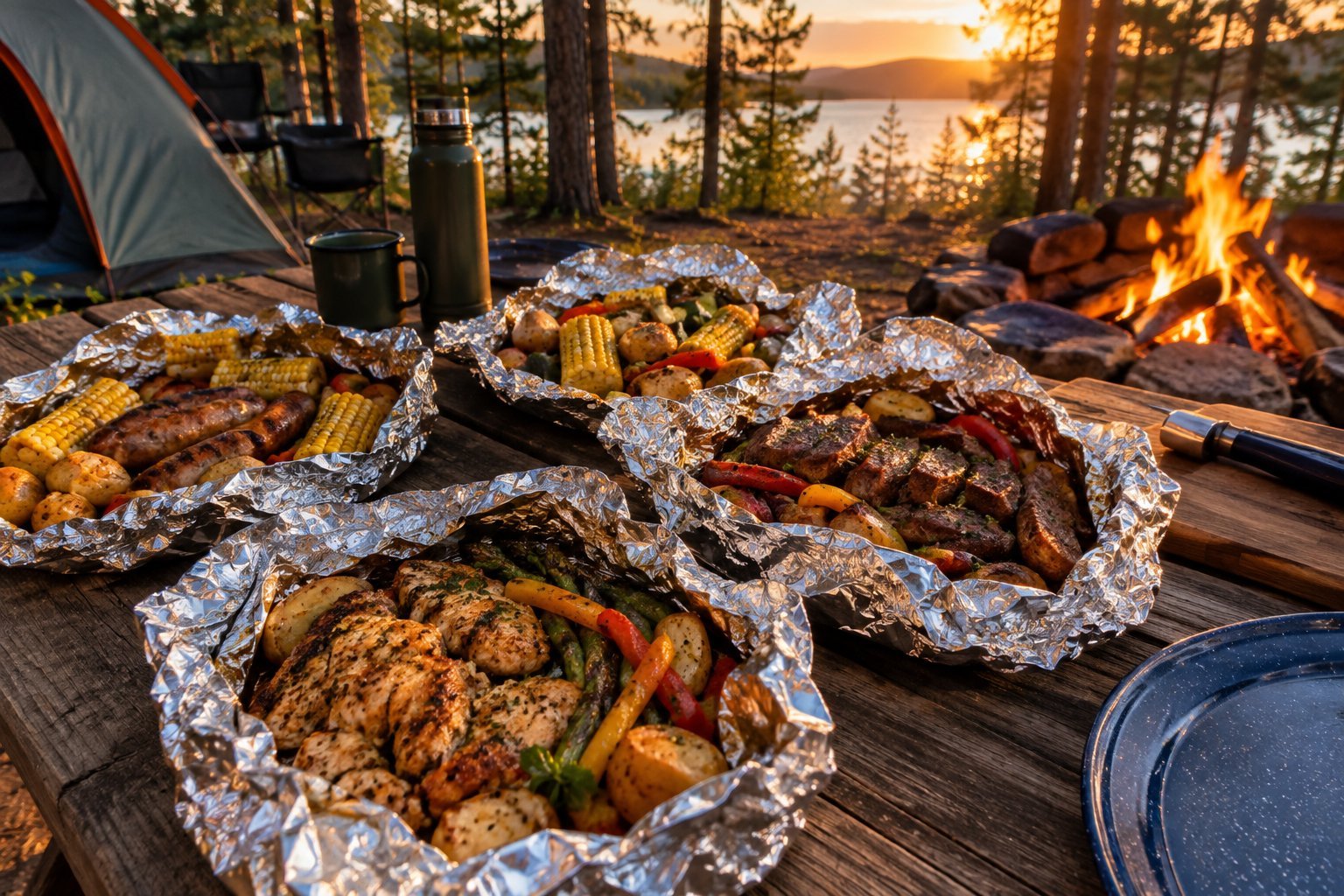
Foil wrapped camping recipes have become one of my favorite ways to make a satisfying meal outdoors because everything can be prepared ahead, wrapped tightly in heavy duty aluminum foil, and cooked right over a campfire or on a camping grill.
I especially like foil packet meals when I am trying to keep camp cooking simple without sacrificing flavor.
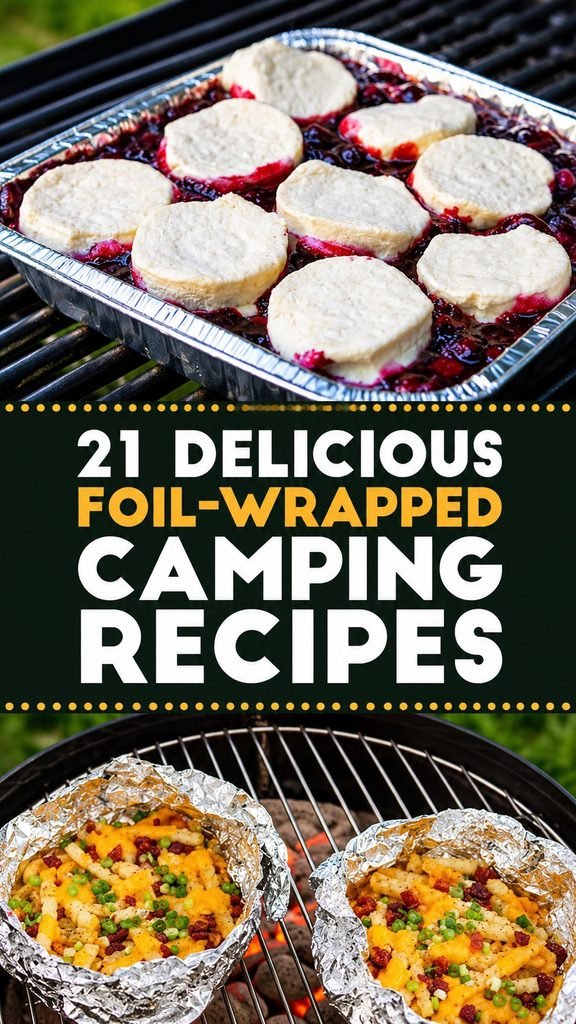
They are easy to customize with vegetables, potatoes, meat, seasoning, cheese, or whatever I already have packed in the cooler. Cleanup is also incredibly simple because the foil keeps most of the food contained while it cooks.
In this guide, I am sharing 21 easy foil wrapped camping meals that work well for breakfast, lunch, dinner, and even dessert. I have also included practical cooking tips so your packets cook evenly without burning underneath.
Why Foil Packet Meals Work So Well for Camping
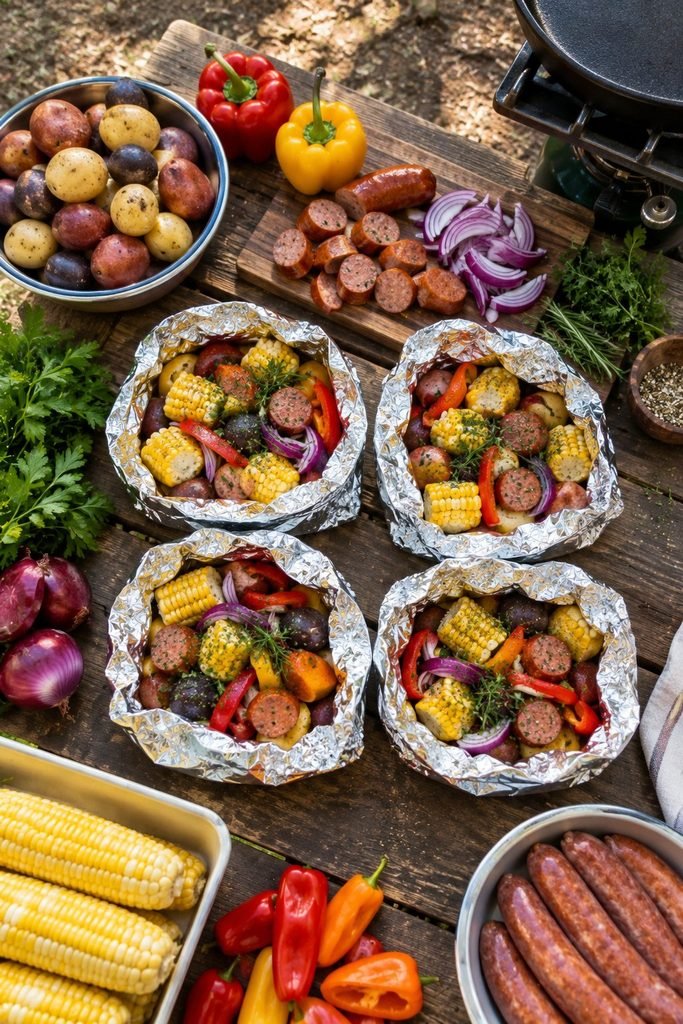
There is a reason foil packet meals are such a camping staple. They require very little equipment, can be assembled before leaving home, and make it easy to cook individual portions for everyone around the fire.
I like preparing the ingredients before heading out because it means less chopping and measuring once I am at the campsite. I can portion everything into containers, keep the ingredients chilled, and assemble the packets when I am ready to cook.
Foil also helps trap moisture as the ingredients cook. This is especially useful for potatoes, chicken, vegetables, and other ingredients that can dry out over an open flame.
Another benefit is customization. One person can have extra vegetables while another can have more potatoes or cheese. You can also season individual packets differently instead of trying to make one large meal that everyone enjoys.
How to Make Foil Packet Meals for Camping
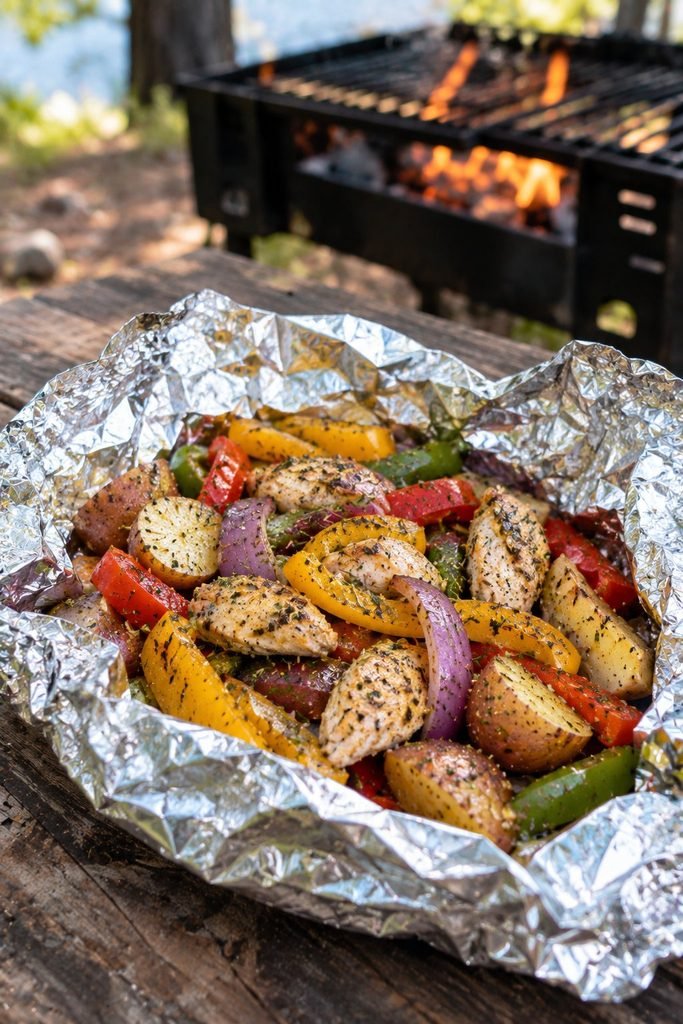
The basic method is simple, but a few details make a noticeable difference.
Use heavy duty aluminum foil rather than thin foil whenever possible. I usually use two layers when cooking directly over hot coals because it gives the packet extra protection from tearing and helps reduce the chance of food burning against the bottom.
Place the ingredients in the center of the foil and leave enough space around the edges to fold everything securely.
Bring the long sides together over the food and fold them several times. Then fold the ends inward so the packet is sealed but still has a little room for steam to circulate.
Do not pack the ingredients into one tight, thick pile. Spreading them into a relatively even layer helps everything cook at a similar rate.
If you are cooking meat and vegetables together, cut the ingredients into similar sized pieces where practical. Dense vegetables such as potatoes and carrots take longer to cook than softer vegetables, so smaller pieces can make the cooking process much easier.
1. Campfire Chicken and Potato Foil Packets
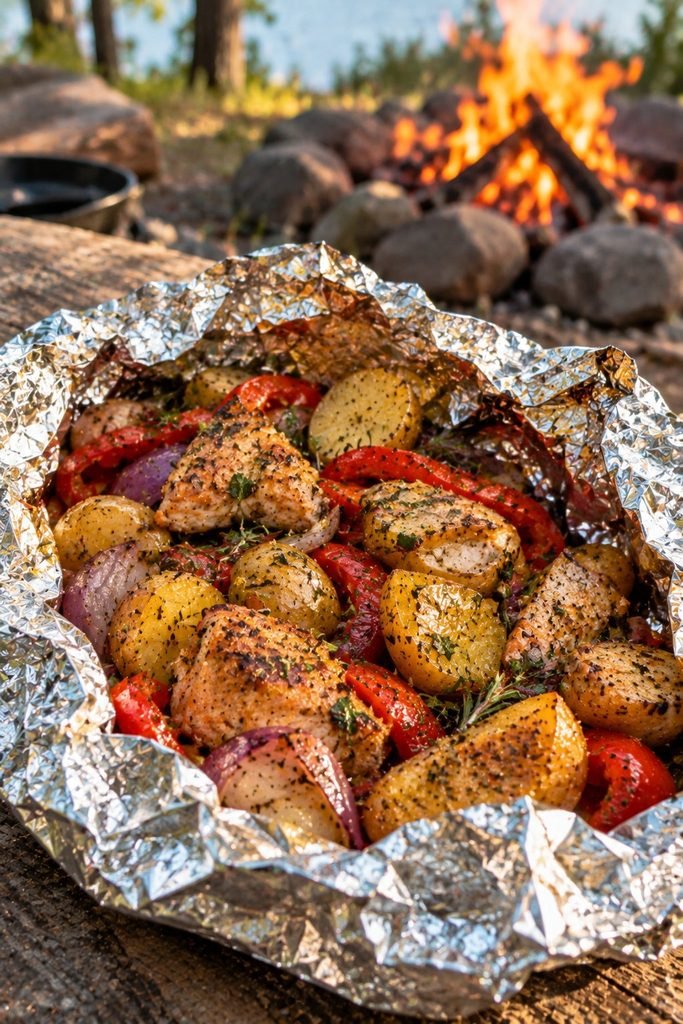
Chicken and potatoes are one of my favorite combinations for an easy camping dinner because the ingredients are filling, familiar, and easy to season.
Ingredients
Chicken breast or boneless chicken thighs
Baby potatoes
Bell pepper
Yellow onion
Olive oil
Garlic powder
Paprika
Salt
Black pepper
Dried Italian seasoning
How to Make It
Cut the chicken into bite sized pieces and halve the baby potatoes. Slice the bell pepper and onion into relatively thin pieces.
Place a large sheet of heavy duty foil on your work surface and add the potatoes, chicken, pepper, and onion.
Drizzle with olive oil and season everything with garlic powder, paprika, salt, black pepper, and Italian seasoning.
Fold the foil tightly around the ingredients and create a sealed packet.
Place the packet over hot campfire coals rather than directly in tall flames. Cook until the potatoes are tender and the chicken reaches a safe internal temperature of 165°F.
Carefully open the packet because the steam inside will be very hot.
My Camping Tip
I like cutting the potatoes smaller than the chicken. Potatoes are usually the ingredient that determines how long this meal needs to cook, so smaller pieces help everything finish closer together.
2. Sausage, Potato and Vegetable Foil Packets
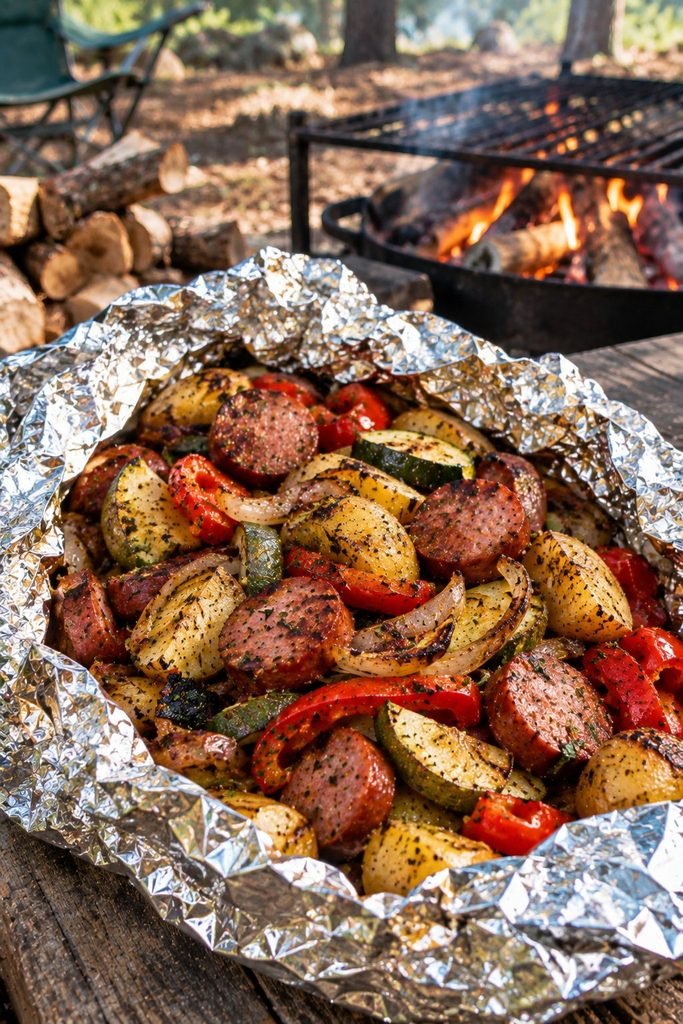
This is one of the easiest foil packet dinners to prepare because smoked sausage is already cooked and does not require the same cooking time as raw meat.
Ingredients
Smoked sausage
Baby potatoes
Zucchini
Bell pepper
Onion
Olive oil
Garlic powder
Paprika
Salt
Black pepper
How to Make It
Slice the sausage into rounds and cut the potatoes into small pieces. Chop the zucchini, bell pepper, and onion.
Divide everything between sheets of heavy duty foil.
Add a small drizzle of olive oil and season with garlic powder, paprika, salt, and black pepper.
Fold each packet tightly and place it over hot coals.
Cook until the potatoes are tender and the vegetables have softened. Turn the packets occasionally if your cooking area has particularly hot spots.
Why I Like This One
This is the kind of camping meal I make when I want something hearty without doing much preparation at the campsite. The sausage adds plenty of flavor to the vegetables as everything cooks together.
3. Garlic Butter Shrimp Foil Packets
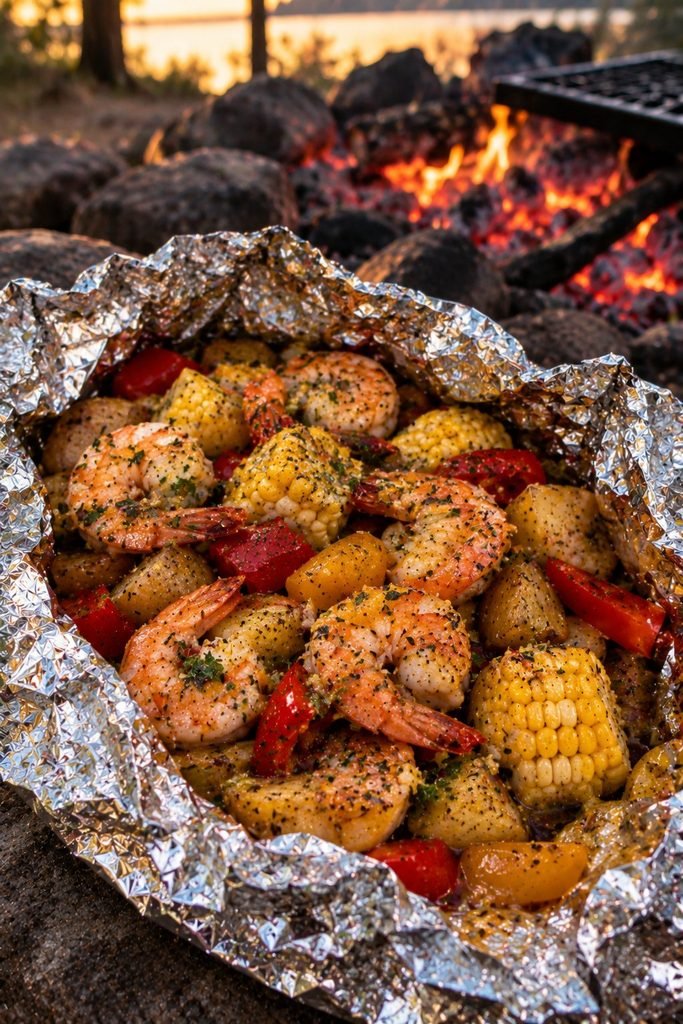
Shrimp cooks quickly, making it a great option when you do not want to spend a long time waiting around the campfire.
Ingredients
Raw peeled shrimp
Baby potatoes
Corn on the cob
Bell pepper
Butter
Minced garlic
Lemon juice
Paprika
Salt
Black pepper
Fresh parsley
How to Make It
Cut the potatoes into small pieces and slice the corn into smaller rounds. Add the potatoes to the foil first because they require more cooking time.
Add the shrimp, corn, and bell pepper.
Melt butter and mix it with garlic, lemon juice, paprika, salt, and black pepper. Spoon the mixture over the ingredients.
Seal the foil packets and cook over hot coals.
Once the potatoes are tender and the shrimp are opaque and cooked through, carefully open the packets and finish with fresh parsley.
My Camping Tip
I prefer cooking the potatoes for a little while before adding the shrimp when I have the option. Shrimp cooks much faster than potatoes, so this helps prevent overcooked seafood.
4. Cheesy Campfire Potato Foil Packets
These cheesy potatoes work beautifully as a side dish alongside grilled chicken, burgers, steak, or sausages.
Ingredients
Baby potatoes
Shredded cheddar cheese
Onion
Bell pepper
Butter
Garlic powder
Paprika
Salt
Black pepper
Green onions
How to Make It
Slice the potatoes into thin pieces and chop the onion and bell pepper.
Place them onto a large piece of foil and add butter, garlic powder, paprika, salt, and black pepper.
Seal the packet and cook over hot coals until the potatoes are tender.
Carefully open the foil and sprinkle shredded cheddar over the top.
Fold the packet loosely back together and return it to the heat for a few minutes until the cheese melts.
Finish with sliced green onions.
My Camping Tip
I like adding the cheese near the end rather than from the beginning. It melts beautifully without spending the entire cooking time against the hot foil.
5. Campfire Beef and Vegetable Foil Packets
Ground beef works particularly well in foil packets because it cooks alongside the vegetables and creates a flavorful, filling meal without requiring a skillet.
Ingredients
Ground beef
Potatoes
Carrots
Onion
Bell pepper
Worcestershire sauce
Olive oil
Garlic powder
Paprika
Salt
Black pepper
How to Make It
Break the ground beef into small pieces rather than leaving it in one large mound.
Cut the potatoes and carrots into small pieces and slice the onion and bell pepper.
Place the vegetables and beef onto heavy duty foil.
Drizzle with a small amount of olive oil and add Worcestershire sauce, garlic powder, paprika, salt, and black pepper.
Seal the packet tightly.
Cook over hot coals, turning the packet carefully during cooking. Continue until the vegetables are tender and the beef is completely cooked through.
A Small Detail That Makes a Difference
Do not make one thick layer of ground beef inside the packet. Smaller pieces distributed throughout the vegetables allow the heat to reach the meat more evenly.
6. BBQ Chicken Foil Packets
BBQ chicken is an easy way to bring familiar backyard grilling flavors to a campsite.
Ingredients
Boneless chicken breast or thighs
Baby potatoes
Red onion
Bell pepper
BBQ sauce
Olive oil
Garlic powder
Paprika
Salt
Black pepper
How to Make It
Cut the chicken and potatoes into manageable pieces. Slice the onion and bell pepper.
Place everything except the BBQ sauce into the center of a large foil sheet.
Add olive oil and season with garlic powder, paprika, salt, and black pepper.
Seal the packet and cook over hot coals until the chicken is safely cooked and the potatoes are tender.
Open the packet carefully and brush the chicken and vegetables with BBQ sauce.
Return the packet to the heat for a few minutes to allow the sauce to warm and caramelize slightly.
My Camping Tip
Adding the BBQ sauce toward the end helps prevent it from burning against the foil. This is especially helpful when cooking directly over a campfire.
7. Campfire Breakfast Foil Packets
Foil packets are not only for dinner. A breakfast packet with potatoes, eggs, sausage, and cheese can make an easy morning meal when you are camping.
Ingredients
Breakfast sausage
Baby potatoes
Eggs
Bell pepper
Onion
Shredded cheddar cheese
Butter
Salt
Black pepper
How to Make It
Cook the sausage in a skillet before your camping trip or at the campsite if you have the equipment available.
Cut the potatoes into small pieces and combine them with chopped bell pepper and onion.
Place the mixture onto foil and add butter, salt, and black pepper.
Cook until the potatoes are tender.
Create a small opening in the center and add a cracked egg. Carefully return the packet to the heat and cook until the egg reaches your preferred doneness.
Add cooked sausage and shredded cheese toward the end.
My Camping Tip
Breakfast packets are easiest when the potatoes and sausage are prepared ahead of time. That leaves only the final cooking and egg step for the campsite.
8. Lemon Herb Chicken Foil Packets
For a lighter camping dinner, lemon and herbs give chicken and vegetables plenty of flavor without requiring a complicated sauce.
Ingredients
Chicken breast
Zucchini
Cherry tomatoes
Red onion
Bell pepper
Olive oil
Fresh lemon juice
Garlic
Dried oregano
Salt
Black pepper
How to Make It
Cut the chicken into smaller pieces and slice the vegetables.
Place everything onto heavy duty foil.
Drizzle with olive oil and lemon juice. Add garlic, oregano, salt, and black pepper.
Seal the packets tightly and place them over hot coals.
Cook until the chicken reaches 165°F and the vegetables are tender.
Open carefully and add another small squeeze of lemon before serving.
Why It Works for Camping
This recipe has enough flavor to feel like a proper dinner while keeping the ingredient list manageable. I also like that the vegetables release moisture as they cook, helping keep the chicken tender.
9. Campfire Corn and Potato Foil Packets
When I already have meat planned for the campsite, I like having a simple vegetable and potato packet ready to cook alongside it.
Ingredients
Baby potatoes
Corn
Bell pepper
Onion
Butter
Garlic powder
Paprika
Salt
Black pepper
How to Make It
Cut the potatoes into small pieces and slice the corn into manageable rounds.
Add the potatoes, corn, bell pepper, and onion to foil.
Top with butter and season with garlic powder, paprika, salt, and black pepper.
Seal the packet and cook over hot coals until the potatoes are completely tender.
Open carefully and serve immediately.
10. Teriyaki Chicken Foil Packets
A little teriyaki sauce can completely change the flavor of a basic chicken and vegetable packet.
Ingredients
Chicken breast
Pineapple chunks
Bell pepper
Zucchini
Red onion
Teriyaki sauce
Olive oil
Garlic powder
Black pepper
How to Make It
Cut the chicken and vegetables into bite sized pieces.
Place the chicken, pineapple, bell pepper, zucchini, and onion onto foil.
Add a small amount of olive oil and season with garlic powder and black pepper.
Drizzle with teriyaki sauce and seal the packet.
Cook over hot coals until the chicken reaches a safe internal temperature and the vegetables are tender.
Open carefully and spoon some of the juices over the chicken before serving.
My Camping Tip
Do not add too much teriyaki sauce at the beginning. A little goes a long way, and using too much can make the packet watery and increase the chance of the sauce scorching against the foil.
How to Keep Foil Packet Meals From Burning
The biggest mistake with campfire foil packets is putting them directly into aggressive flames and walking away.
Hot coals are much easier to work with because they provide more consistent heat. I prefer creating a bed of glowing coals and placing the packets over that area.
You can also turn the packets periodically to help distribute the heat.
Keep a pair of long handled tongs nearby and handle the packets carefully. The foil becomes extremely hot during cooking, and steam can escape quickly when you open the packet.
Most importantly, use a food thermometer for meat. The foil packet method is convenient, but safe internal temperatures still matter when cooking chicken, beef, pork, seafood, or other perishable foods.
11. Campfire Steak and Potato Foil Packets
Steak and potatoes are hard to beat when you want a camping dinner that feels hearty and satisfying. I like using smaller pieces of steak for foil packets because they cook quickly and pick up plenty of flavor from the butter, garlic, and seasonings.
Ingredients
Steak, cut into bite sized pieces
Baby potatoes
Bell pepper
Onion
Butter
Garlic powder
Paprika
Salt
Black pepper
Dried rosemary
How to Make It
Cut the steak into similar sized pieces and cut the potatoes into small chunks. Slice the bell pepper and onion.
Place the potatoes onto heavy duty foil and add the steak, bell pepper, and onion.
Add a small piece of butter and season everything with garlic powder, paprika, salt, black pepper, and rosemary.
Seal the foil packet securely and place it over hot campfire coals.
Turn the packet carefully during cooking and continue until the potatoes are tender and the steak has reached your preferred level of doneness.
Open the packet carefully and let the steam escape before serving.
My Camping Tip
Potatoes need more time than steak, so I cut them fairly small. If I am preparing these at home, I sometimes partially cook the potatoes before packing them in the cooler. This makes dinner much faster once I am at camp.
12. Foil Wrapped Campfire Fajitas
Fajitas are an easy way to make a flavorful camping meal without bringing a pile of cookware. The chicken, peppers, and onions cook together while the seasoning gives everything a smoky, savory flavor.
Ingredients
Chicken breast
Bell peppers
Onion
Olive oil
Chili powder
Cumin
Paprika
Garlic powder
Salt
Black pepper
Flour tortillas
Shredded cheese
How to Make It
Slice the chicken, peppers, and onion into thin strips.
Add everything to a large piece of heavy duty foil.
Drizzle with olive oil and season with chili powder, cumin, paprika, garlic powder, salt, and black pepper.
Seal the packet and place it over hot coals.
Turn the packet occasionally and cook until the chicken reaches 165°F and the vegetables are tender.
Serve the filling inside warm tortillas with shredded cheese.
My Camping Tip
I like packing the tortillas separately and warming them briefly over the grill or in foil. Keeping them separate prevents them from becoming soggy from the juices inside the packet.
13. Honey Garlic Chicken Foil Packets
Honey and garlic create a simple sweet and savory sauce that works especially well with chicken and vegetables.
Ingredients
Boneless chicken
Baby potatoes
Carrots
Broccoli
Honey
Garlic
Soy sauce
Olive oil
Black pepper
How to Make It
Cut the chicken and potatoes into small pieces. Slice the carrots thinly so they cook at approximately the same rate as the other ingredients.
Place the chicken, potatoes, carrots, and broccoli onto heavy duty foil.
Mix honey, minced garlic, soy sauce, olive oil, and black pepper in a small container.
Drizzle the mixture over the ingredients.
Seal the packet and cook over hot coals.
Turn the packet during cooking and continue until the chicken reaches a safe internal temperature and the vegetables are tender.
My Camping Tip
I keep the sauce in a small sealed container in the cooler instead of mixing it with the ingredients at home. Adding it immediately before cooking gives me more control over the texture.
14. Campfire Sausage and Corn Foil Packets
Sausage and corn make an easy combination for camping because both ingredients work beautifully with butter and simple seasonings.
Ingredients
Smoked sausage
Corn on the cob
Baby potatoes
Bell pepper
Onion
Butter
Garlic powder
Paprika
Salt
Black pepper
How to Make It
Slice the sausage and cut the corn into smaller sections.
Cut the potatoes into small chunks and slice the bell pepper and onion.
Arrange everything on heavy duty foil.
Add butter and season with garlic powder, paprika, salt, and black pepper.
Seal the packet tightly and cook over hot coals.
Turn the packet occasionally until the potatoes are completely tender.
Why I Like This Recipe
This is one of those meals that works particularly well when I want to use ingredients I already have in the cooler. It is filling without requiring a complicated recipe, and the sausage gives the potatoes and vegetables plenty of flavor.
15. Campfire Garlic Butter Salmon Foil Packets
Salmon is another great choice for foil packet cooking because the sealed environment helps retain moisture.
Ingredients
Salmon fillets
Zucchini
Cherry tomatoes
Lemon
Butter
Garlic
Dried dill
Salt
Black pepper
How to Make It
Place each salmon fillet in the center of a large sheet of foil.
Add sliced zucchini and cherry tomatoes around the salmon.
Top the fish with butter, minced garlic, dill, salt, and black pepper.
Add a few lemon slices over the top.
Fold the foil securely around the salmon and place the packet over hot coals.
Cook until the salmon flakes easily and reaches a safe internal temperature.
Open the packet carefully and squeeze fresh lemon juice over the top.
My Camping Tip
I keep salmon packets slightly away from the hottest part of the fire. Fish cooks quickly, and intense direct heat can dry out the outside before the center is ready.
16. Campfire Pizza Foil Packets
Pizza does not have to disappear from the menu when you go camping. This foil version gives you the familiar combination of sauce, cheese, and toppings without needing a pizza oven.
Ingredients
Pizza dough or naan bread
Pizza sauce
Shredded mozzarella
Pepperoni
Bell pepper
Onion
Italian seasoning
Olive oil
How to Make It
Place a piece of naan or prepared pizza dough onto foil.
Spread a thin layer of pizza sauce over the top.
Add mozzarella, pepperoni, bell pepper, onion, and Italian seasoning.
Drizzle the edges lightly with olive oil.
Fold the foil over the pizza, leaving enough room inside for the cheese to melt without sticking directly to the top of the packet.
Place over moderate heat and cook until the cheese has melted and the base is heated through.
My Camping Tip
I prefer using naan or another flatbread when camping because it is easier to handle than raw pizza dough. It also reduces preparation time when I am trying to get dinner on the table around the fire.
17. BBQ Sausage and Vegetable Foil Packets
This recipe is especially useful when I want something simple that can be assembled quickly. The BBQ sauce adds plenty of flavor without needing a long list of seasonings.
Ingredients
Smoked sausage
Zucchini
Bell pepper
Red onion
Baby potatoes
BBQ sauce
Olive oil
Garlic powder
Black pepper
How to Make It
Slice the sausage and vegetables.
Cut the potatoes into small pieces so they cook more quickly.
Place everything except the BBQ sauce onto heavy duty foil.
Add olive oil, garlic powder, and black pepper.
Seal the packet and cook over hot coals until the potatoes are tender.
Open the packet carefully and add BBQ sauce.
Return the packet to the heat for a few minutes so the sauce can warm and coat the ingredients.
My Camping Tip
I keep the sauce separate until the food is nearly cooked. This keeps the BBQ sauce from burning while the potatoes are still softening.
18. Italian Chicken and Vegetable Foil Packets
When I want a lighter camping dinner, this Italian inspired combination is one of the recipes I come back to. The vegetables release enough moisture during cooking to help keep the chicken tender.
Ingredients
Chicken breast
Zucchini
Cherry tomatoes
Bell pepper
Red onion
Olive oil
Italian seasoning
Garlic powder
Salt
Black pepper
Parmesan cheese
How to Make It
Cut the chicken into bite sized pieces and chop the vegetables.
Place everything except the Parmesan cheese onto foil.
Add olive oil, Italian seasoning, garlic powder, salt, and black pepper.
Seal the packets and place them over hot coals.
Cook until the chicken reaches 165°F and the vegetables are tender.
Open the packets carefully and sprinkle Parmesan cheese over the top.
My Camping Tip
I like adding Parmesan after cooking rather than before. It stays fresh tasting and melts gently from the heat of the finished vegetables and chicken.
19. Campfire Taco Foil Packets
Taco flavors work surprisingly well in a foil packet. This recipe is also easy to adjust depending on what I have packed for the trip.
Ingredients
Ground beef
Baby potatoes
Bell pepper
Onion
Taco seasoning
Shredded cheddar cheese
Olive oil
Salt
Black pepper
How to Make It
Cut the potatoes into small pieces and chop the bell pepper and onion.
Break the ground beef into small pieces.
Place everything except the cheese onto heavy duty foil.
Add taco seasoning, a small drizzle of olive oil, salt, and black pepper.
Seal the packet and cook over hot coals.
Turn the packet carefully during cooking and continue until the potatoes are tender and the beef is completely cooked.
Open the packet and add shredded cheddar cheese.
Return it to the heat briefly until the cheese melts.
Serve with tortillas, salsa, avocado, or your favorite taco toppings.
My Camping Tip
I pack toppings separately. This keeps fresh ingredients such as avocado, lettuce, and salsa cold and lets everyone customize their own meal.
20. Garlic Parmesan Vegetable Foil Packets
A vegetable packet is useful when you want a simple side dish or when you are trying to include more vegetables in your camping meals.
Ingredients
Broccoli
Zucchini
Bell pepper
Cherry tomatoes
Red onion
Butter
Garlic
Parmesan cheese
Italian seasoning
Salt
Black pepper
How to Make It
Cut the vegetables into similar sized pieces.
Place them onto heavy duty foil.
Add butter, minced garlic, Italian seasoning, salt, and black pepper.
Seal the packet and cook over hot coals until the vegetables are tender but still have some texture.
Carefully open the packet and sprinkle Parmesan cheese over the vegetables.
Allow the residual heat to melt the cheese before serving.
My Camping Tip
Do not cut the vegetables too small. Larger pieces hold their texture better during foil packet cooking and are less likely to become mushy.
21. Campfire Apple Cinnamon Foil Packets
A foil packet can even handle dessert. Apples, cinnamon, butter, and a little brown sugar turn into a warm camping dessert that requires very little preparation.
Ingredients
Apples
Brown sugar
Butter
Ground cinnamon
Nutmeg
Granola
Optional chopped pecans
How to Make It
Core the apples and cut them into bite sized pieces.
Place the apples onto a sheet of heavy duty foil.
Add butter, brown sugar, cinnamon, and a small pinch of nutmeg.
Seal the packet and place it over warm coals.
Cook until the apples become tender and the juices have created a syrupy mixture.
Open the packet carefully and add granola and chopped pecans if desired.
Serve warm.
My Camping Tip
I like using apples that hold their shape during cooking rather than apples that become extremely soft. This gives the dessert a better texture after sitting over the coals.
How to Prepare Foil Packet Meals Before a Camping Trip
One of the biggest advantages of these recipes is that much of the work can happen at home.
I usually start by washing and chopping the vegetables before packing them. Meat can also be portioned ahead of time so I am not trying to prepare raw ingredients around the campfire.
For meals that use sauces, I prefer storing the sauce separately in small sealed containers. This gives me better control over the final texture and helps prevent sugary sauces from burning.
Labeling individual packets or ingredient containers is also useful when preparing several meals for a longer camping trip.
Keep raw meat, seafood, dairy products, and other perishable ingredients properly chilled in an insulated cooler with plenty of ice or frozen cold packs.
How Much Foil Do You Need?
Use enough foil to completely surround the food with room for folding.
For most individual servings, I prefer a generous sheet of heavy duty foil rather than trying to save a small amount of foil and struggling to seal the packet.
If the ingredients are particularly heavy, juicy, or contain sharp edges, double wrapping is a good idea.
A second layer can also make the packet easier to handle with tongs.
Campfire Coals vs. Open Flames
For foil packet cooking, hot coals are generally easier to control than large flames.
Open flames can create intense hot spots that burn the bottom of the packet before the ingredients in the center are fully cooked.
Once the fire has produced a good bed of glowing coals, spread them into an even layer and place the packets over the heat.
Rotate the packets carefully during cooking when necessary.
The exact cooking time will vary depending on the size of the ingredients, the amount of food in each packet, the heat of the fire, and whether you are cooking over a grill grate or directly over coals.
For meat and seafood, always check the internal temperature rather than relying only on cooking time.
The Best Way to Open a Hot Foil Packet
This is a small detail, but it is worth mentioning because foil packets trap a surprising amount of steam.
Move the packet away from your face before opening it.
Use tongs to hold one edge steady and carefully unfold the foil.
Let the steam escape gradually before opening the packet completely.
I also avoid putting my hands directly underneath a freshly opened packet because the juices inside can be extremely hot.
Easy Ways to Make These Camping Recipes Ahead
For a weekend camping trip, I find it much easier to prepare the ingredients at home.
Wash and chop vegetables.
Cut meat into portions.
Mix dry seasonings in small containers.
Prepare sauces separately.
Measure cheese into sealed bags.
Pre portion ingredients for individual meals.
Label everything according to the meal you plan to make.
This preparation means the campsite cooking process becomes much simpler. Instead of bringing out a cutting board, knives, measuring spoons, and several ingredients, I can focus on assembling the packet and getting it onto the fire.
Practical Tips for Making Foil Wrapped Camping Recipes
The recipes are the fun part, but the little details around preparation and cooking are what make foil packet meals work well at a campsite. I have found that a few simple habits can make the difference between a packet that cooks evenly and one that ends up burned underneath with undercooked potatoes in the middle.
The good thing about foil wrapped camping meals is that they are forgiving when you prepare them properly. Once the ingredients are portioned, the packets sealed, and the cooking area ready, there is very little equipment involved.
Use Heavy Duty Foil
Regular aluminum foil can work for some recipes, but I prefer heavy duty foil when cooking over a campfire.
It is stronger, easier to fold securely, and less likely to tear when you are moving the packet around with tongs.
For meals containing bones, sharp vegetables, or heavier ingredients, I recommend using two layers of foil.
Double wrapping is also useful when the packets will be placed directly over hot coals.
Do Not Overfill the Packets
It can be tempting to pack as much food as possible into each foil packet, especially when cooking for a hungry group.
I have learned that smaller, evenly distributed portions cook much more reliably.
A very thick packet takes longer for heat to reach the center. By the time the middle is cooked, the ingredients touching the bottom may already be overdone.
Leave enough space around the ingredients so the packet can close properly and steam can circulate inside.
For larger groups, I would rather make several smaller packets than one enormous packet.
Cut Ingredients According to Their Cooking Time
This is one of the most useful tricks for foil packet meals.
Potatoes, carrots, and other dense vegetables need more time than ingredients such as zucchini, tomatoes, shrimp, or thinly sliced peppers.
Instead of cutting everything into the same size, think about how quickly each ingredient cooks.
Cut dense vegetables smaller.
Keep quick cooking vegetables slightly larger.
Use smaller pieces of meat when appropriate.
Add delicate ingredients toward the end when necessary.
This simple approach helps everything finish at approximately the same time.
Keep Sauces Under Control
Sauces can add a huge amount of flavor to foil packet meals, but too much liquid can turn the packet into a steaming puddle.
I prefer starting with a modest amount of sauce and adding more after cooking if needed.
Sweet sauces such as BBQ sauce and honey based sauces also deserve extra attention because they can caramelize and burn against very hot foil.
For those recipes, adding the sauce closer to the end of cooking often gives better results.
Should You Poke Holes in Foil Packets?
For most of these recipes, I would not poke holes in the foil.
The sealed environment is part of what makes foil packet cooking work. Steam helps cook the vegetables and keeps ingredients moist.
If you deliberately create several holes, steam escapes and the cooking environment changes.
The only reason I would make an opening is when a specific recipe calls for it or when I am finishing the food and want excess moisture to escape.
How to Tell When a Foil Packet Is Done
Cooking time can vary considerably depending on your fire, the size of your ingredients, the number of packets on the grill, and how close the packets are to the heat.
That means I do not recommend treating the cooking times as an exact rule.
For chicken, use a food thermometer and make sure the thickest portion reaches 165°F.
Ground beef should also be cooked thoroughly.
Fish should be cooked until it reaches a safe internal temperature and flakes easily.
Shrimp should become opaque and firm.
Vegetables should be tender enough to pierce easily with a fork.
Potatoes are usually the ingredient I check most often because they can take significantly longer than everything else in the packet.
The Best Place to Cook Foil Packets
A grill grate positioned above hot coals gives you excellent control.
It is easier to move the packets around, and you can create different heat zones if some ingredients are cooking faster than others.
Cooking directly on hot coals also works, but I am more careful with this method because the temperature can be much more intense.
If I am using direct coals, I make sure the packets are properly double wrapped and turn them carefully during cooking.
Give the Packets a Little Attention
Foil packets are convenient, but they are not completely hands off.
I like checking them periodically and rotating them if one side is getting more heat.
You do not need to open the packet repeatedly because that releases steam and heat.
Instead, move the packet with tongs and rely on a thermometer or a small opening near the end of cooking to check the food.
Common Mistakes to Avoid
Using Thin Foil Over Very Hot Coals
Thin foil can tear when you move it or when the food becomes heavy.
Heavy duty foil is a much safer choice for direct campfire cooking.
Putting Packets Directly Into Large Flames
Large flames can create extreme hot spots and burn the outside before the food is cooked properly.
Hot glowing coals are generally easier to manage.
Making the Potato Pieces Too Large
Potatoes are often the slowest ingredient in these recipes.
Large chunks can leave you waiting much longer than expected.
Smaller pieces cook more evenly.
Adding Too Much Liquid
Excess sauce or oil can make vegetables soggy and leave you with a packet full of liquid.
Start with a moderate amount and add more after cooking if necessary.
Forgetting About Steam
A sealed packet can become extremely hot inside.
Always open it away from your face and hands.
Guessing When Meat Is Done
Color alone is not a reliable way to determine whether meat has reached a safe temperature.
A small instant read thermometer takes up very little space in a camping kitchen and is one of the most useful pieces of equipment I pack.
Food Safety Tips for Foil Wrapped Camping Meals
Food safety matters even more when cooking outdoors because you are often dealing with warm weather, coolers, raw meat, and limited kitchen space.
Keep raw chicken, beef, pork, seafood, eggs, and other perishable ingredients cold until you are ready to cook them.
Use separate utensils for raw meat and cooked food.
Wash your hands before preparing meals and after handling raw meat.
Keep the cooler closed as much as possible so the temperature stays cold.
Do not leave perishable ingredients sitting at the campsite for extended periods.
Cook meat to a safe internal temperature and use a food thermometer when possible.
Any leftovers should be refrigerated promptly rather than left sitting beside the campfire.
How to Pack Foil Packet Ingredients in a Cooler
I like organizing the cooler according to when I expect to use each meal.
Ingredients for the first dinner can be placed near the top so I do not have to dig through everything.
Meals planned for later in the trip can stay lower in the cooler where they are surrounded by more cold items.
Keep raw meat sealed in leakproof containers or bags so juices cannot come into contact with vegetables, cheese, fruit, or ready to eat foods.
This makes the cooler easier to manage and keeps the rest of your food protected.
What to Serve With Foil Packet Meals
Foil packets can easily become a complete meal, but a few simple extras can make them feel more substantial.
For chicken packets, I like serving warm bread, tortillas, or a simple salad.
Steak and potato packets work well with grilled vegetables or a fresh green salad.
Taco packets can be served with salsa, avocado, sour cream, or tortilla chips.
Seafood packets pair nicely with lemon wedges and a simple vegetable side.
Breakfast packets can be served with fresh fruit and coffee.
For dessert packets, I like keeping whipped cream, yogurt, or vanilla ice cream in the cooler if the camping setup allows it.
How to Adapt These Recipes for Different Camping Trips
The biggest advantage of foil packet cooking is how easy it is to change the recipes.
For a short weekend trip, I might prepare individual packets at home and keep them chilled until dinner.
For a longer trip, I prefer choosing ingredients that can handle several days of cooler storage and preparing only what I need for the next meal.
For a family camping trip, larger packets can work, but individual packets are easier when everyone wants different ingredients.
For a camping trip with limited cooking equipment, foil packets are particularly useful because you can cook the entire meal with little more than a fire, grill grate, tongs, and a thermometer.
Easy Ingredient Swaps
You do not have to follow every recipe exactly.
Chicken can often be swapped for boneless chicken thighs.
Smoked sausage can replace other fully cooked sausages.
Sweet potatoes can replace regular potatoes.
Zucchini can be replaced with yellow squash.
Different bell pepper colors can be used interchangeably.
Cheddar, mozzarella, Monterey Jack, and Parmesan can all work depending on the recipe.
You can also adjust the seasonings based on what you already have in your camping pantry.
That flexibility is one of the reasons I like foil packet meals so much. They make it easy to use what is already available instead of buying a completely separate set of ingredients for every camping dinner.
How to Make Foil Packet Meals More Filling
If I know I will be spending a long day hiking, swimming, exploring, or doing outdoor activities, I want dinner to be substantial.
Adding potatoes, rice that has already been cooked, beans, corn, or another carbohydrate can make a packet much more filling.
Protein is also important, especially for meals after an active day.
Chicken, steak, sausage, fish, shrimp, and ground beef all work well depending on the recipe.
Vegetables add flavor, color, texture, and variety.
The easiest formula to remember is protein plus a filling carbohydrate plus vegetables plus seasoning or sauce.
Can You Prepare Foil Packets at Home?
Yes. In fact, preparing the ingredients at home is one of my favorite ways to make camping cooking easier.
Chop vegetables.
Cut meat into portions.
Prepare sauces.
Measure seasonings.
Portion cheese.
Wrap or containerize ingredients appropriately.
Label the meals.
Then keep everything properly chilled until you are ready to cook.
I find this especially useful when camping with several people because dinner can go from cooler to campfire with very little work.
Can You Freeze Foil Packet Ingredients?
Some ingredients can be frozen ahead of time, but the suitability depends on what is inside the packet.
Meat can generally be frozen safely when handled and stored properly.
Some vegetables freeze and cook well, while vegetables with high water content can change texture after freezing.
If you plan to freeze ingredients for a camping trip, consider how the texture will change after thawing.
I generally prefer using fresh vegetables for foil packets when practical because they hold their texture nicely during cooking.
Can You Cook Foil Packets on a Grill?
Absolutely.
A camping grill can be easier to control than an open campfire, especially if you are new to foil packet cooking.
Place the packets over medium to medium high heat and turn them as needed.
The same principle applies whether you are using a campfire, charcoal grill, or gas grill.
Keep an eye on the food and use internal temperatures for meat rather than relying entirely on a timer.
Can You Make Vegetarian Foil Packets?
Yes, and some of the best combinations are completely meat free.
Try potatoes with corn, bell peppers, zucchini, onions, mushrooms, and cheese.
You can also add beans for extra protein and make a taco inspired vegetarian packet.
A little butter, olive oil, garlic, herbs, or seasoning blend can make vegetables much more satisfying.
Can You Make Foil Packet Desserts?
Yes.
Apples with cinnamon and brown sugar are one of the easiest options, but you can experiment with other fruit combinations.
Peaches, pineapple, berries, bananas, and pears can all work with different toppings and seasonings.
The key is to watch the heat carefully because fruit and sugar can become sticky and caramelize quickly.
My Favorite Way to Organize a Foil Packet Camping Menu
When I am planning several days of camping meals, I do not make every dinner completely different.
I usually choose a mixture of chicken, sausage, beef, seafood, vegetables, and one easy dessert.
That gives the trip enough variety without creating a huge shopping list.
For example, one night might be chicken and potatoes, another could be sausage and vegetables, and another could be salmon with vegetables.
Breakfast can be handled with breakfast packets, while leftovers can sometimes become lunch the following day.
This approach keeps the cooler manageable and makes meal planning much less stressful.
Final Thoughts
Foil wrapped camping recipes are one of the easiest ways to make good food outdoors without bringing an entire kitchen with you. Once the ingredients are prepared, the cooking process is straightforward, cleanup is minimal, and there are endless ways to change the flavors.
My biggest recommendation is to prepare as much as possible before leaving home. Portion the ingredients, organize the cooler, mix your seasonings, and keep sauces separate when necessary.
At the campsite, use heavy duty foil, avoid aggressive flames, cook over hot coals when possible, and turn the packets when needed. Give dense vegetables enough time to become tender and always check meat with a food thermometer.
Whether you are planning a weekend campground stay, a long RV trip, a family camping adventure, or a simple night around the fire, these foil packet meals give you plenty of options without making outdoor cooking complicated.
The best camping recipes are the ones that let you spend less time worrying about dinner and more time enjoying the campsite, and foil packet meals make that especially easy.