RV Kitchen Storage Hacks That Work
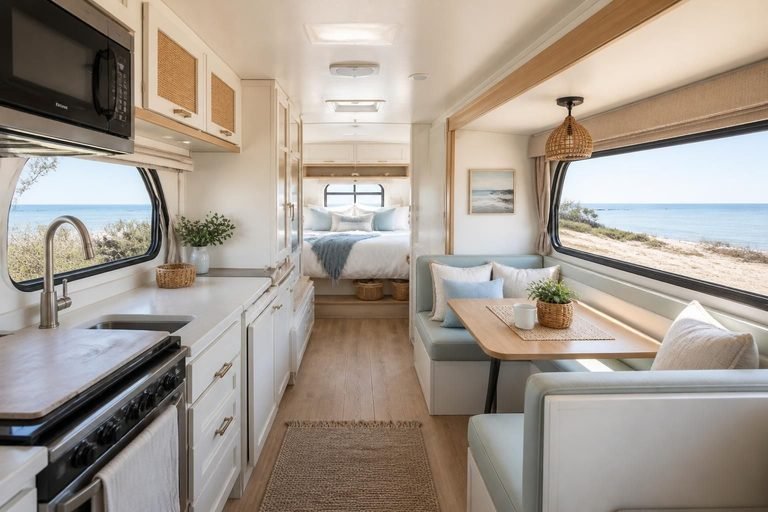
RV kitchens can look surprisingly spacious until you start filling the cabinets with plates, cookware, food, coffee supplies, and all the little things you use every day.
I have found that the challenge is not simply finding more storage. It is making the storage you already have work harder without making the kitchen feel crowded.
After spending time organizing an RV kitchen, I learned that the best storage solutions are the ones that make everyday items easy to reach while keeping everything secure when the RV is moving.
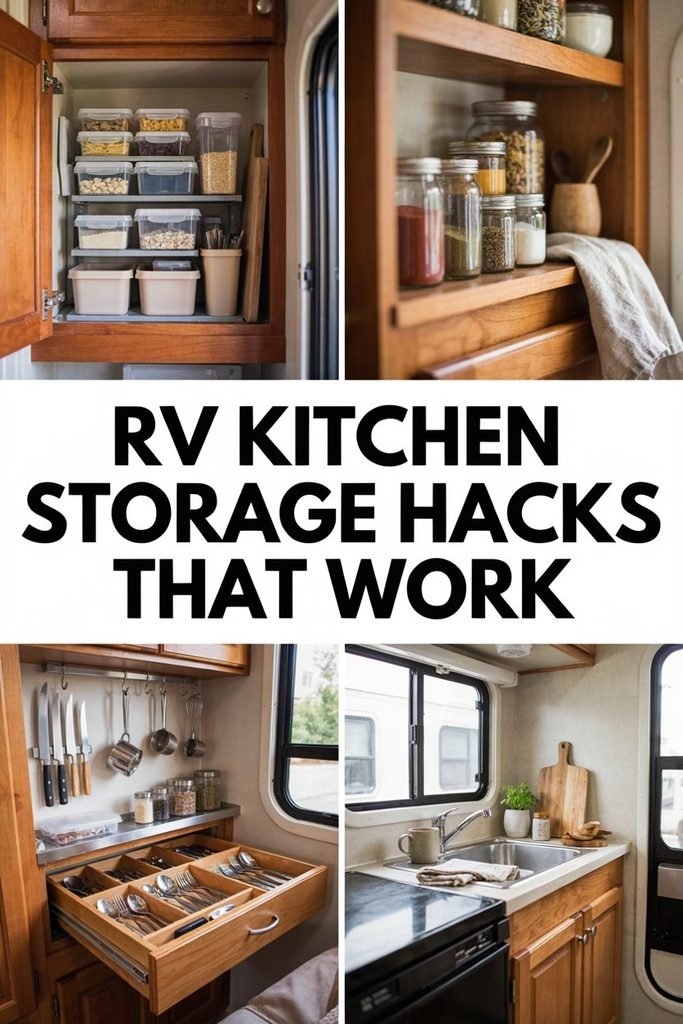
A cabinet that looks organized but requires you to move five things to reach one mug is not really working.
The good news is that a few simple changes can make a noticeable difference. These are the RV kitchen storage hacks I would actually use when trying to create a more functional kitchen without giving up valuable living space.
Why RV Kitchen Storage Requires a Different Approach
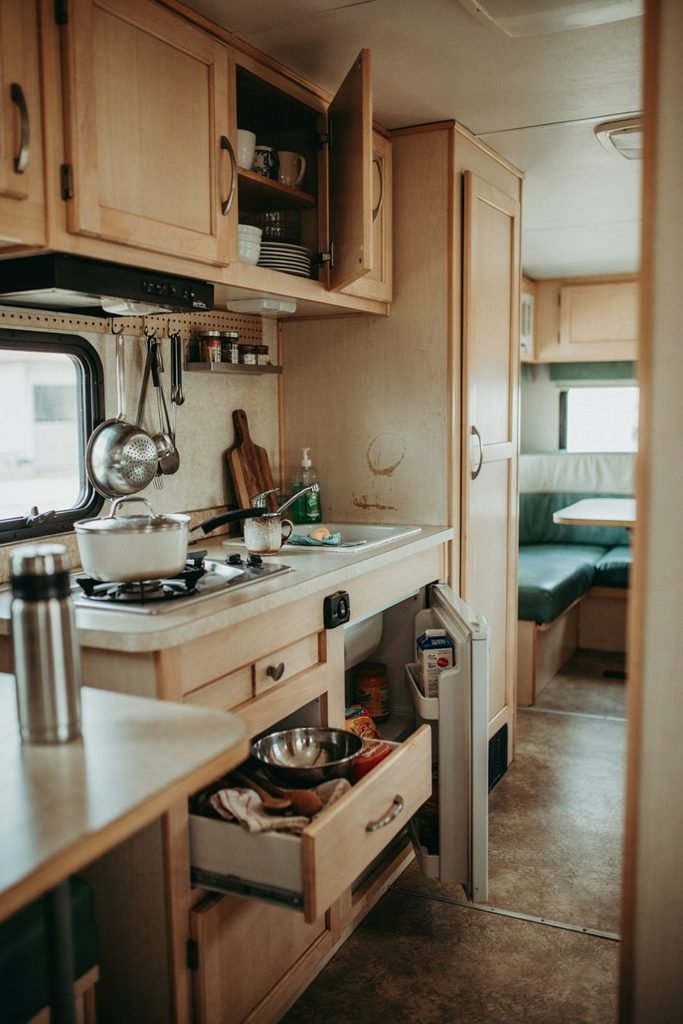
Storage in an RV is different from storage in a traditional kitchen. You have less cabinet depth, smaller drawers, limited counter space, and fewer places to hide appliances and cookware. Every inch matters.
I also learned that it is easy to waste storage space by organizing an RV kitchen the same way you would organize a house. Large containers, oversized appliances, and bulky cookware can quickly take over the available cabinets.
The goal should be to give everything a practical home.
I like to think about the kitchen in terms of frequency of use. Items I reach for several times a day should be easy to grab. Things I use occasionally can go into less convenient cabinets or higher shelves.
That small change makes the kitchen much easier to live with.
1. Use Cabinet Door Space
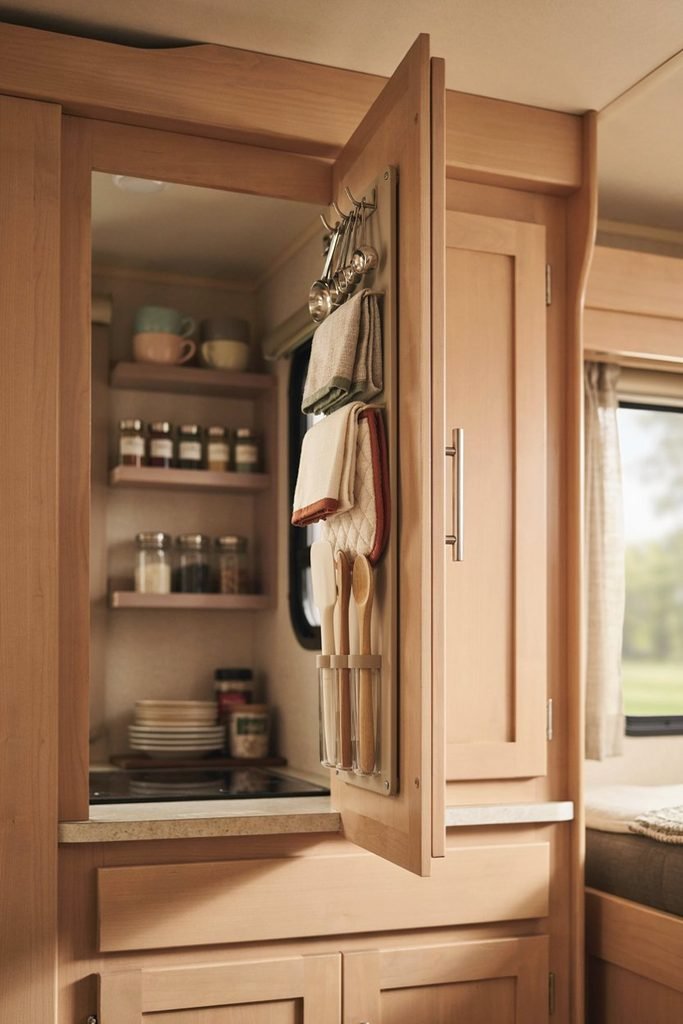
One of the easiest places to create additional RV kitchen storage is the inside of your cabinet doors.
That space is often completely unused, even though it can hold several small items. A slim organizer can be useful for things such as measuring spoons, kitchen towels, pot holders, wraps, or small cleaning supplies.
I prefer keeping lightweight items on cabinet doors because they do not add much weight and they are easy to access. I also avoid putting anything bulky there because it can interfere with the shelves inside the cabinet.
Before installing anything, check how much clearance you have when the door closes. RV cabinets can be surprisingly tight, and an organizer that looks perfect when the door is open may prevent it from closing properly.
2. Add Shelf Risers to Tall Cabinets
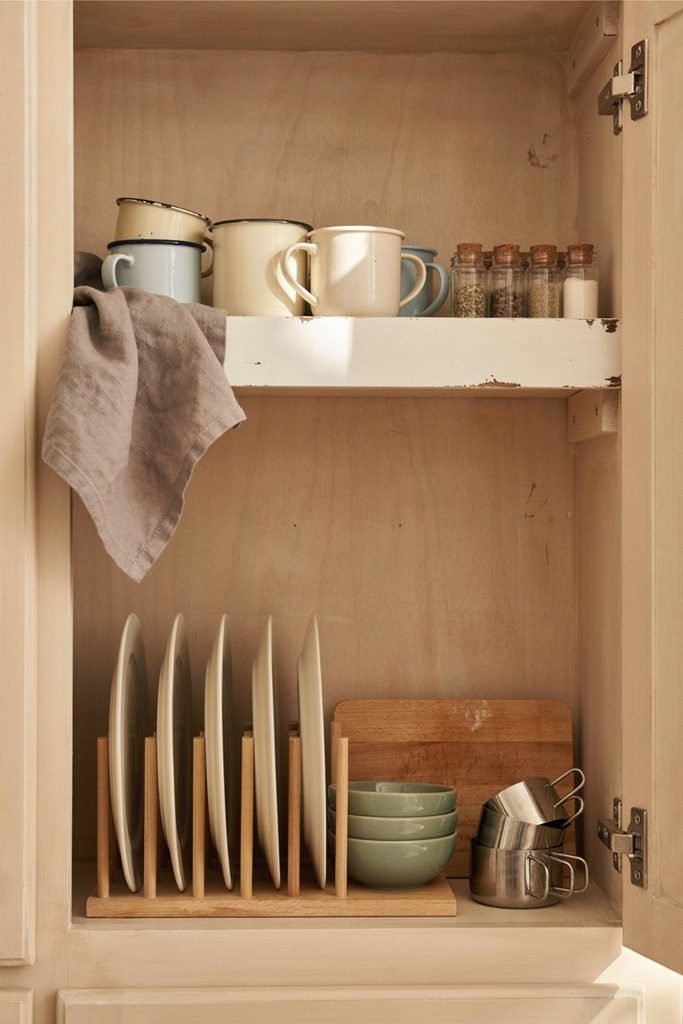
Tall RV cabinets can create a frustrating amount of wasted space.
You might have enough room to stack several cans or dishes, but without a second level, the upper portion of the cabinet becomes difficult to use. Shelf risers solve this problem by turning one large vertical space into two more manageable areas.
I find these especially useful for plates, bowls, mugs, canned food, and smaller kitchen supplies.
Instead of stacking everything into one tall pile, I can create separate levels and see what is actually inside the cabinet.
That makes a bigger difference than simply adding more containers.
When choosing a shelf riser, measure the cabinet carefully. You want enough clearance above and below the riser to remove items comfortably. In a small RV kitchen, even an inch or two can determine whether an organizer is genuinely useful.
3. Store Food in Stackable Containers
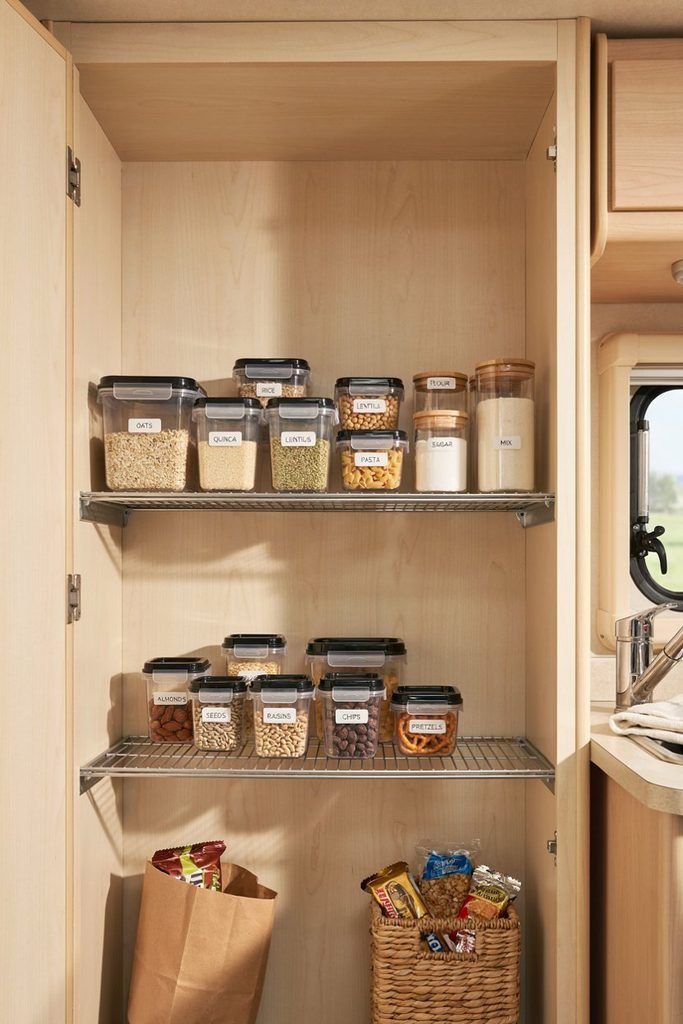
Food packaging can make an RV pantry look messy very quickly.
Boxes and bags come in different shapes and sizes, which means they rarely use cabinet space efficiently. Stackable containers create a much more predictable storage system.
I like using containers for foods that I regularly open and close, especially dry ingredients and snacks. They make it easier to see what I have and help prevent half opened packages from taking over the pantry.
Clear containers are particularly useful because I can see the contents without having to open everything.
The important thing is not to transfer every single food item into a container just because it looks organized. That can create unnecessary work. I would focus on foods that are awkwardly packaged, frequently used, or difficult to stack.
4. Use a Narrow Pull Out Organizer
Deep RV cabinets can become black holes for kitchen supplies.
I have had situations where something I needed was technically in the cabinet, but reaching it meant moving several other items out of the way. A narrow pull out organizer can make that type of cabinet much easier to use.
These organizers work particularly well for bottles, spices, sauces, cleaning supplies, and other narrow items.
The biggest advantage is visibility. Instead of reaching toward the back of the cabinet and hoping you find what you need, you can pull the organizer forward and see everything at once.
Measure before buying one because RV cabinets can have unusual dimensions. Pay attention to both the width and the depth, as well as the space needed for the organizer to move.
5. Keep Everyday Items Within Easy Reach
One of the simplest storage changes is also one of the most useful.
I keep the things I use every day in the easiest places to reach. Coffee supplies, frequently used cooking utensils, plates, glasses, and basic seasonings should not require digging through a packed cabinet.
Less frequently used items can go farther back or into higher storage areas.
This approach also helps keep the counters clear. When everyday items have an obvious home, it becomes much easier to put them away after cooking.
I have found that RV organization works best when the system matches your actual routine. If you make coffee every morning, your coffee supplies should be easy to reach. If you rarely bake, baking equipment does not need prime cabinet space.
6. Create a Dedicated Spice Storage Area
Spices can take up more space than expected because small containers tend to scatter across shelves and drawers.
A dedicated spice area keeps them together and makes cooking much easier.
Depending on the layout of your RV kitchen, you could use a shallow drawer, a small shelf riser, a narrow rack, or a compact organizer inside a cabinet.
I prefer keeping frequently used spices together rather than spreading them across different cabinets. It saves time when cooking and makes it easier to notice when something needs replacing.
If you have limited space, keep only the spices you actually use regularly in the main kitchen area. Specialty spices can be stored elsewhere.
7. Use the Space Above the Sink
The area around the sink can become valuable storage space when the kitchen is small.
A removable sink cover is one option because it can turn part of the sink into additional counter space when you are not using it. This gives you somewhere to place prepared ingredients, dishes, or other kitchen items without permanently taking up counter space.
I like this type of solution because it serves more than one purpose.
When the sink is needed, the cover can be moved away. When it is not needed, the surface becomes useful workspace.
For an RV kitchen, that flexibility is often more valuable than having another permanent organizer.
8. Make Use of Vertical Wall Space
When cabinets and drawers are limited, look upward.
A small section of unused wall can sometimes hold useful kitchen items without taking away from your counter or cabinet storage.
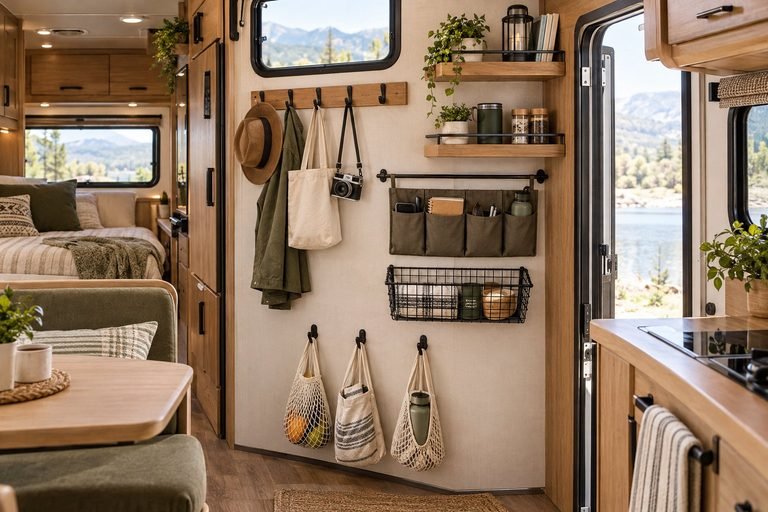
A compact rail or wall mounted organizer can work for lightweight utensils, towels, or frequently used tools.
I would keep this area simple rather than covering every available wall with storage. Too many items hanging around the kitchen can make a small RV feel even smaller.
The goal is to use vertical space strategically while keeping the kitchen visually calm.
9. Use a Magnetic Strip for Small Metal Tools
A magnetic storage strip can be useful when drawer space is limited.
Small metal kitchen tools can be kept together instead of being scattered across different drawers. Depending on the setup, this can work for items such as measuring spoons or other lightweight metal utensils.
I like this idea because it keeps frequently used tools visible and easy to grab.
However, I would be careful about where the strip is installed. Anything mounted inside an RV needs to remain secure while traveling. The location should also keep the tools away from areas where they could fall or become a hazard while the RV is moving.
10. Add Bins to Deep Cabinets
Deep cabinets are much easier to manage when you divide them into smaller sections.
Instead of placing loose items directly on the shelf, I like using lightweight bins to group similar things together.
One bin might hold baking supplies, another might hold snacks, and another could contain coffee or breakfast items.
The real benefit is that you can remove the entire bin instead of reaching into the back of the cabinet.
This is particularly helpful in RV kitchens because cabinet access can be limited. A simple bin system can turn a frustrating storage area into something much easier to use.
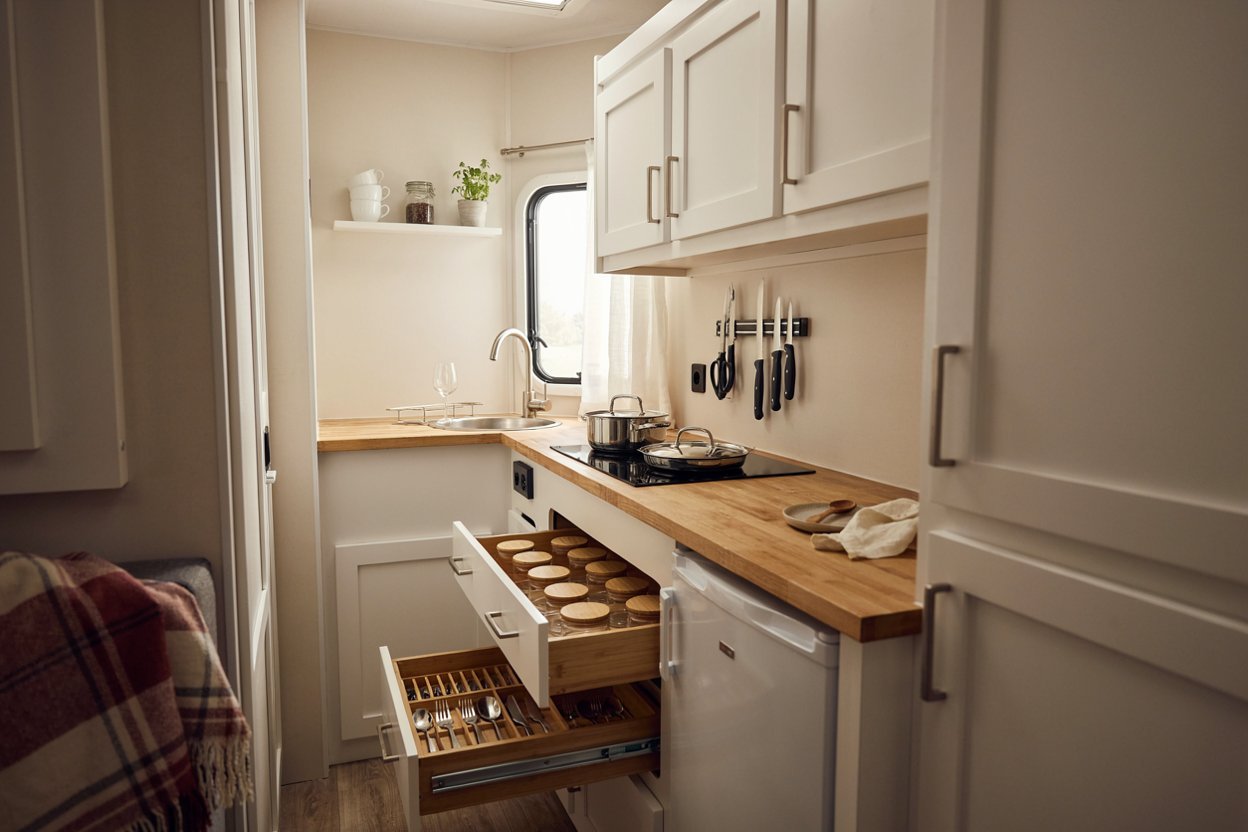
11. Divide Deep Kitchen Drawers
Deep drawers can hold a surprising amount of kitchen equipment, but without some type of divider, everything tends to move around.
I like using adjustable dividers to separate cooking utensils, measuring tools, kitchen towels, and smaller supplies. This keeps everything from becoming one large pile.
The key is not to fill every inch of the drawer. Leave enough room around each group of items so you can grab what you need without pulling everything out.
I also recommend measuring the drawer before buying organizers. RV drawers can be much shallower than standard kitchen drawers, so an organizer designed for a regular home kitchen may not fit.
12. Store Pots and Pans Vertically
Pots and pans can consume a huge amount of cabinet space when they are stacked inside one another.
A vertical organizer can make this space much easier to manage. Instead of lifting several pans to reach the one underneath, each pan has its own section.
This is one of the storage changes I find especially useful in a small RV because cookware tends to be some of the bulkiest equipment in the kitchen.
If you do stack pans, place a soft separator between them to reduce scratching and rattling while traveling.
For an RV, I would also avoid keeping more cookware than you realistically use. A few versatile pieces are usually much easier to manage than a large collection.
13. Use the Space Under the Sink
The cabinet underneath the sink is easy to overlook because plumbing takes up part of the available space.
Instead of treating the entire cabinet as unusable, work around the plumbing with smaller bins or narrow organizers.
I like using this area for dishwashing supplies, cleaning cloths, sponges, trash bags, and other items that are connected to the sink.
Small containers work better here than one large storage bin because they can be positioned around the pipes.
Before adding anything, check for leaks and make sure your storage does not interfere with the plumbing. I also avoid packing this cabinet too tightly because I want to be able to inspect the area easily.
14. Put Frequently Used Utensils in One Easy to Reach Spot
Kitchen utensils can quickly take over an RV drawer.
Instead of throwing everything into one drawer, group the tools according to how often you use them.
The utensils I reach for constantly stay together in one convenient location. Less frequently used tools can go somewhere else.
This makes cooking much smoother because I know exactly where to reach for the spatula, wooden spoon, tongs, or measuring tools I need.
It also makes cleaning up easier because there is a clear place for everything.
15. Use a Folding Dish Rack
A traditional dish rack can take up valuable counter space in an RV kitchen.
A folding or collapsible dish rack gives you the same basic function without permanently occupying the counter.
I prefer storage solutions that can disappear when they are not needed. After the dishes are dry, the rack can be folded and stored in a cabinet.
This is especially helpful when counter space is limited and you need the kitchen surface for food preparation.
The same idea can work with collapsible colanders and other kitchen tools. Items that perform a useful job without taking up much storage space are worth prioritizing in an RV.
16. Make Your Refrigerator Easier to Organize
RV refrigerator shelves can become cluttered quickly because small containers and food packages tend to shift around.
I like using a few compact refrigerator bins to group similar foods together. This can make it much easier to pull out an entire group instead of searching through every shelf.
For example, breakfast items can stay together while snacks, condiments, and cooking ingredients have their own areas.
I would not fill the refrigerator with too many organizers, though. You still need enough room for larger containers and leftovers.
The best setup gives you structure without making the refrigerator harder to use.
17. Use Small Bins for Pantry Categories
A pantry becomes much easier to maintain when similar foods have a designated area.
Instead of organizing everything according to package size, I prefer organizing by purpose.
Snacks can have one bin. Baking supplies can have another. Breakfast foods can have their own section, while frequently used cooking ingredients stay within easy reach.
This system makes it much easier to see what you have before going grocery shopping.
It also helps prevent buying duplicates simply because something was hidden behind another package.
18. Install a Small Trash Can in an Unused Area
Trash cans can be surprisingly difficult to place in an RV kitchen.
A full size kitchen trash can can take up valuable floor space, while putting a tiny bin directly on the counter is not always practical.
A compact trash can tucked into an unused cabinet area or narrow space can solve the problem.
I prefer keeping the trash container close enough to the food preparation area that I do not have to walk across the RV while cooking.
If you use a cabinet mounted option, make sure it does not interfere with the cabinet door or other plumbing and storage underneath.
19. Keep Appliances to a Minimum
One of the easiest ways to create more RV kitchen storage is to reduce the number of appliances taking up space.
It is tempting to bring every small appliance you enjoy using at home, but an RV kitchen usually cannot accommodate that much equipment comfortably.
I like choosing appliances that serve more than one purpose.
Before bringing an appliance into the RV, I ask myself how often I will realistically use it and whether I already have another tool that can perform a similar job.
That simple test can prevent cabinets and counters from becoming overloaded.
An appliance that gets used regularly deserves valuable storage space. Something used once every few months may be better left at home.
20. Use Corner Space Wisely
Corners are some of the most awkward areas in a small RV kitchen.
A rotating organizer can make a deep corner cabinet easier to access because you can bring items toward you instead of reaching into the back.
I find these particularly useful for bottles, jars, sauces, and other smaller items.
You can also use a narrow corner shelf for lightweight items that you reach for regularly.
The important thing is to avoid turning an awkward corner into a place where unused items accumulate. Every storage area should have a clear purpose.
21. Add a Tension Rod Inside a Cabinet
A small tension rod can create another level of organization inside certain cabinets.
It can be useful for hanging lightweight cleaning cloths, towels, or spray bottles, depending on the cabinet design.
I like this approach because it does not require permanent drilling.
However, make sure the rod is secure before traveling. RV movement can cause poorly secured items to shift or fall, so anything inside a cabinet needs to stay firmly in place.
22. Use Stackable Mugs and Glasses
Cups and mugs can take up more cabinet space than expected.
If your cabinet allows it, stackable drinkware can make much better use of vertical space.
I also prefer choosing lightweight pieces that are designed for compact living rather than filling the cabinets with bulky ceramic mugs.
This is another area where having fewer items can make a noticeable difference.
Keeping only the cups and glasses you actually use means the remaining cabinet space can be dedicated to things that are harder to store.
23. Secure Items Before Driving
A storage system is only useful if it can handle movement on the road.
Before driving, I make sure cabinet doors are properly closed and anything that could slide or tip is secured.
For loose items, shelf liners can provide additional grip and help reduce movement. Lightweight bins can also keep small objects from shifting around inside cabinets.
I especially pay attention to glass containers, bottles, cans, and anything heavy enough to cause damage if it moves.
Taking a few minutes to check the kitchen before pulling away can save you from opening a cabinet at the next stop and finding everything scattered across the shelves.
24. Use Shelf Liners to Prevent Sliding
Shelf liners are inexpensive but extremely useful in an RV kitchen.
They can help keep plates, bowls, containers, and bottles from sliding around when the RV is moving.
I prefer liners that can be removed and cleaned easily. That matters because kitchen shelves eventually collect crumbs, spills, and dust.
Another advantage is that liners can help protect the shelves from scratches and small spills.
You do not need to cover every surface. I usually focus on shelves where items are most likely to move.
25. Create a Coffee and Breakfast Station
If you use your coffee supplies every morning, keeping them together can make a small kitchen feel much more organized.
A compact bin can hold coffee, filters, sweeteners, and other breakfast essentials.
I like this approach because I can pull out one container instead of searching through several cabinets.
The same idea can work for tea or quick breakfast foods.
The station does not need to occupy the counter permanently. A small bin stored inside a cabinet can work just as well and keeps everything together when you are ready to use it.
26. Give Every Item a Permanent Home
The most effective RV kitchen organization trick is surprisingly simple.
Everything needs a home.
When an item does not have a designated place, it usually ends up on the counter, inside the wrong cabinet, or wherever there happens to be room.
I found that assigning permanent locations to kitchen essentials makes it much easier to keep the space organized.
It also makes packing up after cooking faster.
If something repeatedly ends up in a different location, that is usually a sign that its current storage spot is inconvenient. Instead of forcing yourself to maintain a system that does not work, move the item closer to where you actually use it.
27. Do Not Fill Every Storage Space
It can be tempting to use every available cabinet and drawer simply because you have the space.
I try not to do that.
Leaving a little breathing room makes the kitchen easier to use and gives you somewhere to put groceries, leftovers, or something you pick up during a trip.
A completely packed RV kitchen may look organized when everything is in its place, but it becomes difficult to maintain.
A little empty space is useful storage too.
28. Reorganize Based on How You Actually Cook
Your kitchen organization should change as you use the RV.
If you notice that you constantly reach across the kitchen for one particular item, move it closer.
If a cabinet stays full of things you rarely touch, consider moving those items into less convenient storage.
I do not think there is one perfect RV kitchen organization system that works for everyone. The best system is the one that matches your cooking habits, your RV layout, and the amount of equipment you actually carry.
That is why I prefer making small adjustments instead of buying a completely new collection of organizers.
What Makes an RV Kitchen Storage Hack Worth Using?
Before adding another organizer, I like to consider three things.
Does it save space?
Does it make something easier to reach?
Will it stay secure while the RV is moving?
If the answer is no to all three, I probably do not need it.
The best RV kitchen storage ideas are not necessarily the most expensive ones. A shelf riser, small bin, shelf liner, or folding kitchen tool can sometimes make a bigger difference than a complicated organization system.
The goal is to create a kitchen that works naturally while you are traveling, cooking, cleaning, and packing up.
How I Keep an RV Kitchen Organized on Longer Trips
After trying different ways to organize a small RV kitchen, I have found that the biggest improvement usually comes from changing how the space is used rather than adding more storage products.
A kitchen can have plenty of cabinets and still feel cramped if the items inside are difficult to reach or constantly shifting around.
My goal is always to make cooking feel simple. I want to open a cabinet and immediately know where something is. I want enough counter space to prepare a meal. I also want everything to stay where I put it when the RV is traveling.
That is why I prefer simple storage systems that are easy to maintain.
Organize the Kitchen According to Your Routine
One of the best things you can do is pay attention to how you actually use your kitchen.
If you make coffee every morning, keep your coffee supplies together and somewhere convenient.
If you cook most meals on the stovetop, keep your pans, utensils, oils, and seasonings close to the cooking area.
If you prepare quick meals more often than elaborate recipes, give those everyday ingredients the easiest storage locations.
I have found that organizing according to your routine makes a much bigger difference than simply trying to make every cabinet look perfect.
Your RV kitchen should work for you.
Keep Heavy Items Low
Weight matters in an RV, so I prefer keeping heavier kitchen items in lower cabinets whenever possible.
Pots, pans, appliances, large food containers, and heavier canned goods do not need to be stored in high cabinets.
Lighter items such as towels, plastic containers, lightweight cups, and smaller kitchen tools are better suited to higher storage areas.
This also makes the kitchen more comfortable to use because you are not repeatedly lifting heavy objects from overhead cabinets.
Create a Small Grocery Storage System
When I bring groceries into the RV, I do not simply put everything wherever there happens to be space.
I try to group foods immediately.
Breakfast foods go together. Snacks stay together. Cooking ingredients have their own area. Frequently used items are kept where they can be reached without moving everything else.
This makes grocery shopping easier too.
Before buying more food, I can quickly look through each section and see what I already have.
That is especially helpful during longer trips when you may be working with limited refrigerator and pantry space.
Use Containers That Match Your Cabinets
Storage containers are useful, but choosing the wrong size can actually make an RV kitchen less efficient.
I prefer containers that fit the cabinets closely without wasting a lot of vertical or horizontal space.
Before buying several containers, I measure the cabinet shelves and drawers.
I also consider whether I can easily remove the container when I need something from the back.
A container that technically fits but leaves a large amount of unused space around it is not always the best option.
In a small kitchen, the shape of the container matters almost as much as its capacity.
Keep the Countertops Clear
Counter space is extremely valuable in an RV.
I try not to use the countertop as permanent storage unless the item is something I use constantly.
Small appliances, food packages, dishes, and random kitchen supplies can quickly turn a usable workspace into a cluttered surface.
When I finish cooking, I put everything back into its designated storage area.
This makes the kitchen feel larger and gives me a clean surface for the next meal.
A clear counter also makes the RV feel less crowded overall.
Make Cleanup Part of the Organization System
A good storage system should make cleaning easier rather than creating more work.
I keep cleaning supplies close to the sink and make sure frequently used items can be removed without emptying an entire cabinet.
I also avoid overcrowding storage areas because crumbs and spills are much harder to clean when cabinets are packed tightly.
Every so often, I take everything out of a cabinet, wipe the shelf, check expiration dates, and put everything back.
This does not need to be a major project. A few minutes of maintenance can prevent a small RV kitchen from becoming difficult to manage.
Review Your Kitchen After Every Trip
Travel is a good way to discover which kitchen items are actually useful.
After a trip, I pay attention to what I used constantly, what I barely touched, and what was difficult to store.
If something stayed in the same cabinet for an entire trip without being used, I question whether it needs to take up valuable space on the next one.
The same goes for storage products.
If an organizer constantly gets in the way or makes something harder to reach, I would rather remove it than keep it simply because it looks organized.
RV organization should make life easier, not become another chore.
A Simple RV Kitchen Storage Setup
If you are starting from scratch, you do not need to buy dozens of organization products.
I would start with a few basic things.
Use shelf liners to reduce movement.
Add shelf risers to make better use of vertical cabinet space.
Use lightweight bins to group similar foods and kitchen supplies.
Add drawer dividers where utensils tend to become mixed together.
Use stackable containers for awkward food packaging.
Keep heavy items in lower cabinets.
Store everyday items in the easiest locations to reach.
Use folding or collapsible kitchen equipment when possible.
Secure loose items before driving.
Leave some empty space so the kitchen can handle new groceries and unexpected storage needs.
These changes are enough to make a noticeable difference without turning the RV into an organization project.
RV Kitchen Storage Mistakes I Would Avoid
One mistake I would avoid is buying storage products before measuring the space.
It is easy to see a clever organizer online and assume it will solve a problem, only to discover that it is too large, too deep, or awkward to use inside an RV cabinet.
I would also avoid storing too many items just because there is technically room for them.
Another mistake is organizing the kitchen based on appearance instead of convenience.
A perfectly arranged cabinet is not helpful if the items you use every day are buried behind things you rarely touch.
I also would not rely on unsecured containers when traveling. RV movement can turn a neatly organized cabinet into a mess surprisingly quickly.
Final Thoughts
The best RV kitchen storage hacks are the ones that make everyday life easier.
You do not need a huge kitchen or an expensive collection of organizers to create a functional space. A few thoughtful changes can give you more usable storage, clearer countertops, easier access to cooking supplies, and a kitchen that feels much less crowded.
I have found that the most important step is paying attention to what actually causes frustration in your kitchen. If you constantly lose utensils, organize the drawers.
If food packages are taking over the pantry, use bins or stackable containers. If cookware is difficult to reach, change how it is stored. If everything moves while driving, focus on shelf liners and secure storage.
Small improvements add up.
Once every item has a practical home and the storage system matches the way you actually cook, an RV kitchen becomes much easier to live with. The goal is not to make the kitchen look perfect.
It is to create a space where you can prepare meals, clean up, and get back to enjoying the trip without fighting the limited space.