10 Newbie RV Mistakes to Avoid
RV travel can look incredibly simple from the outside. You pack your things, hook up the trailer or climb into the motorhome, pick a destination, and start driving.
Once you are actually responsible for an RV, though, there are quite a few details that can turn an easy trip into a stressful one.
I learned pretty quickly that enjoying RV travel has just as much to do with preparation as it does with choosing beautiful places to visit.
Small oversights can become expensive problems when you are several miles from the nearest town, and some mistakes are much easier to prevent than they are to fix later.
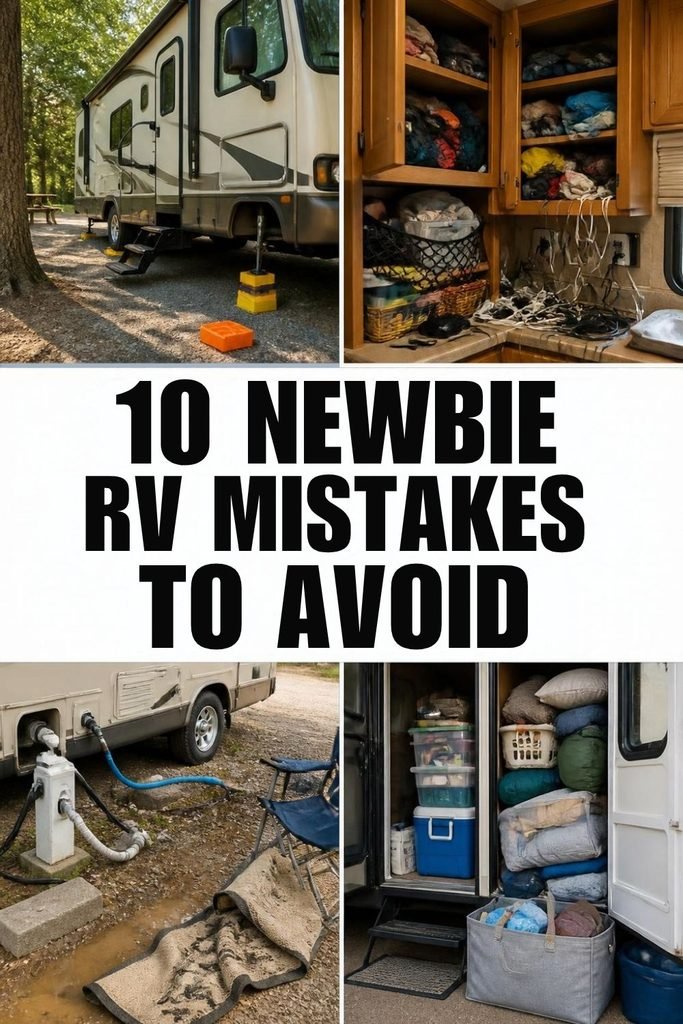
The good news is that most beginner RV mistakes are completely avoidable. You do not need years of experience to travel comfortably.
You just need to understand how your RV works, pay attention to the details that matter, and give yourself enough time to learn your own routine.
I put together this list based on the practical lessons that have made my RV trips easier and less stressful. If you are new to RVing, these are the mistakes I would pay attention to before heading out on your next trip.
1. Not Learning How Your RV Actually Works
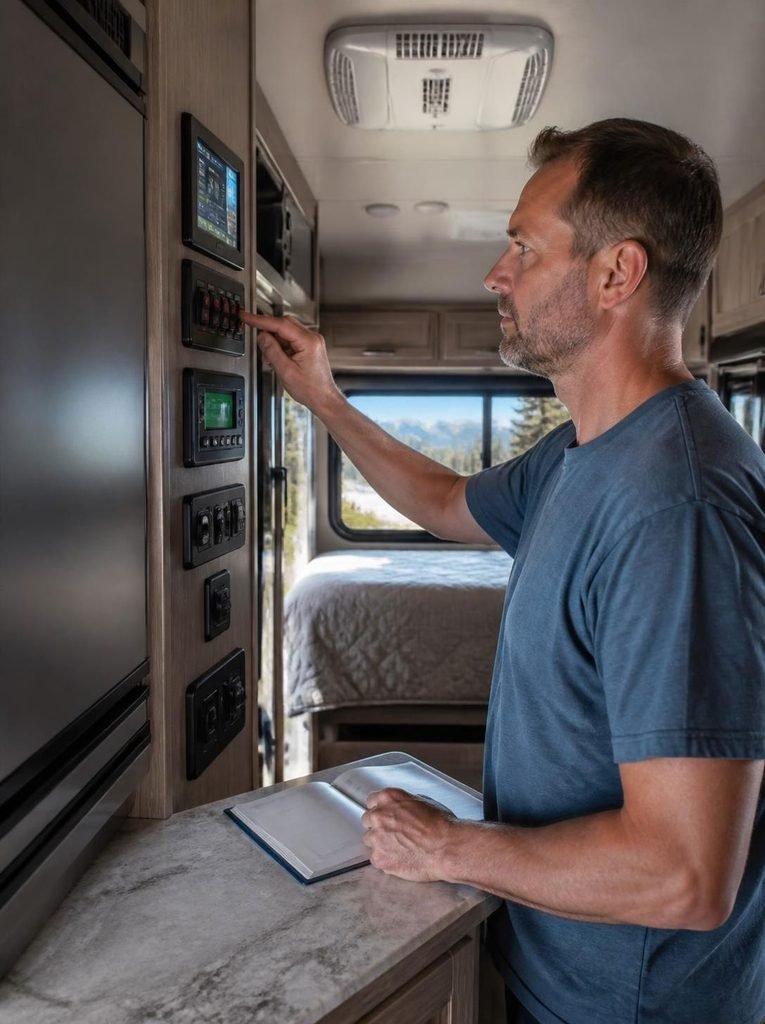
One of the biggest mistakes new RV owners can make is treating the RV like a regular vehicle with extra living space.
An RV has several systems working together, including water, electricity, propane, waste tanks, appliances, batteries, and sometimes a generator. Understanding the basics of those systems makes a huge difference when something does not work exactly as expected.
I found that spending time learning the RV while it was sitting at home was much easier than trying to figure something out at a campsite.
Before taking a longer trip, I recommend going through the RV slowly and learning where everything is located. Find the water pump, freshwater tank, gray tank, black tank, electrical hookups, breakers, propane controls, battery disconnect, generator controls, and emergency equipment.
I also recommend turning appliances on and off yourself instead of assuming you will figure them out later. Test the refrigerator, water heater, air conditioning, furnace, lights, and other equipment you expect to use.
Keep the owner’s manual somewhere accessible too. It is one of those things that seems unnecessary until you suddenly need it.
You do not need to become an RV technician. You simply want enough knowledge to recognize what is normal, troubleshoot basic problems, and know when something needs professional attention.
2. Overpacking the RV
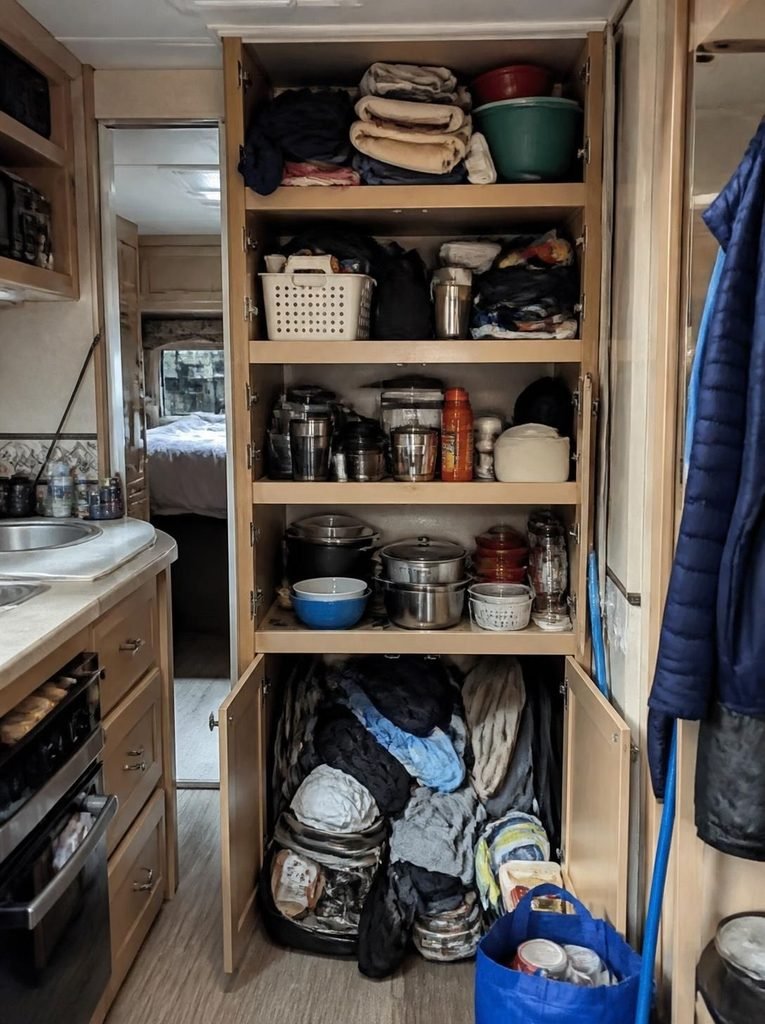
It is incredibly easy to overpack an RV because there is more storage space than you might expect.
The problem is that every item you bring adds weight, takes up storage space, or makes the RV harder to organize. I learned that having fewer useful items is much better than filling every cabinet simply because there is room.
When you are preparing for an RV trip, think about what you will genuinely use rather than what you might possibly need.
Kitchen equipment is one area where this becomes especially noticeable. You probably do not need several sets of dishes, every cooking utensil you own, or bulky appliances that you rarely use at home.
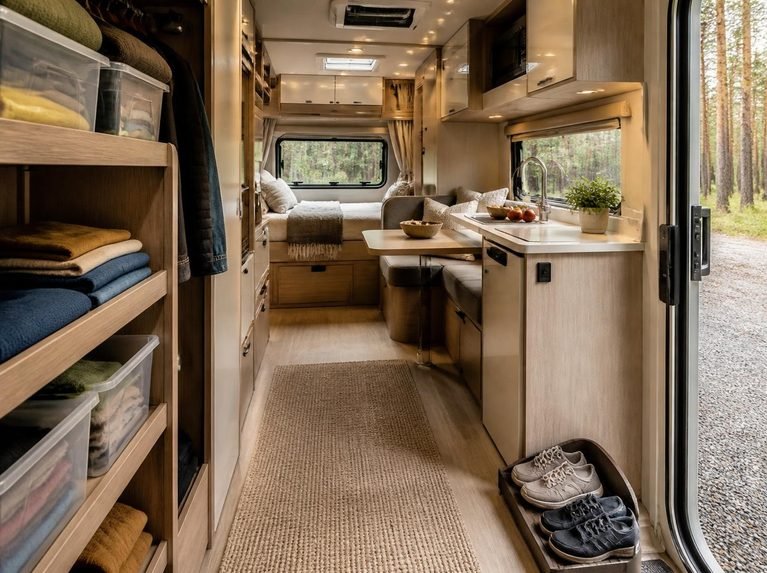
The same applies to clothing. RV trips usually do not require an enormous wardrobe. A few comfortable outfits, weather appropriate layers, shoes you will actually wear, and something suitable for unexpected changes in weather are usually more useful than an overflowing closet.
Weight matters too, especially with travel trailers and motorhomes. Every RV has weight limits, and those limits should not be treated as suggestions.
Before loading everything into the RV, check the manufacturer’s weight ratings and understand how much cargo your RV can safely carry. Pay attention to where heavy items are placed as well because proper weight distribution matters.
One of the best habits I developed was leaving some empty storage space. It makes the RV easier to organize, gives you room for groceries and supplies, and prevents every trip from becoming a packing puzzle.
3. Skipping the Pre Trip Inspection
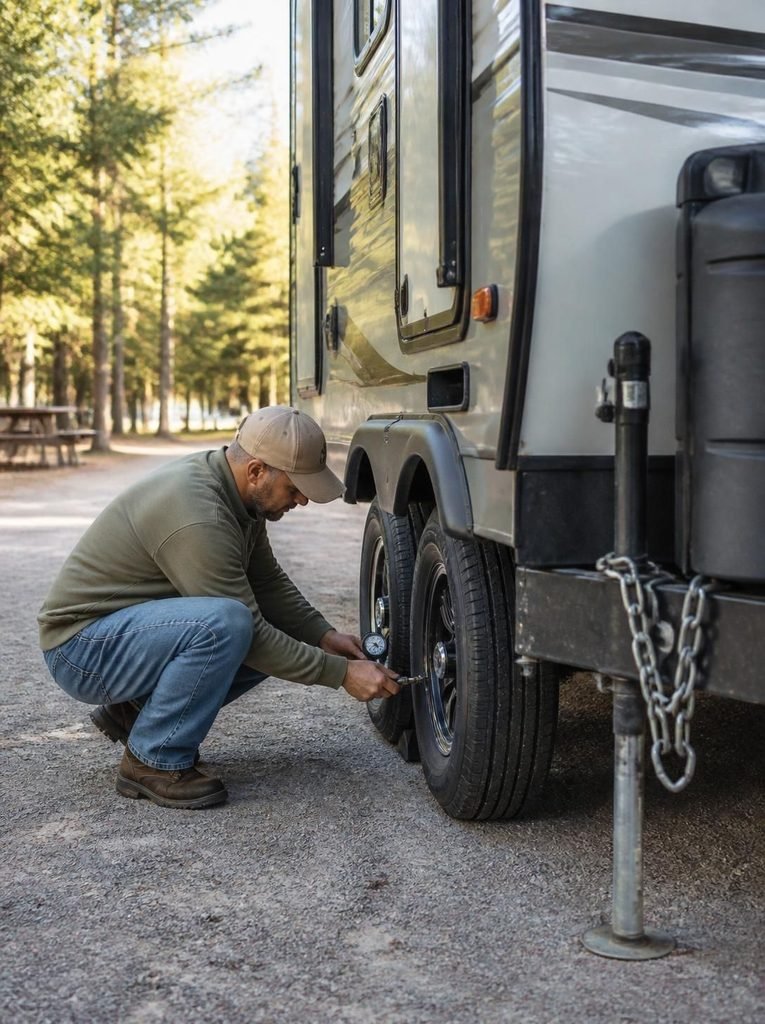
A quick inspection before leaving can save you from a major headache later.
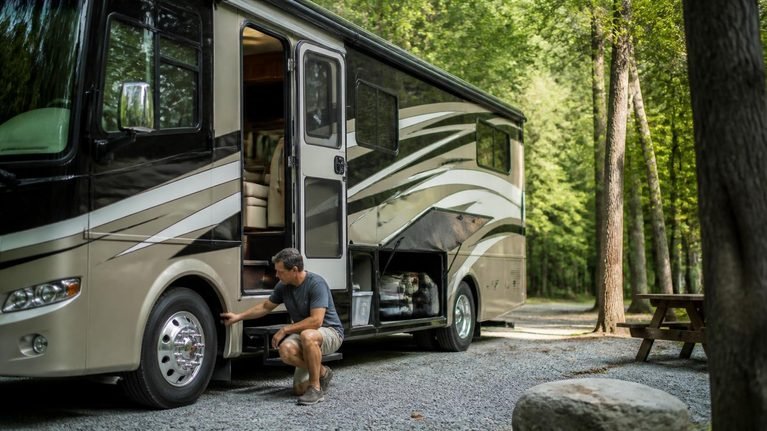
This is one of those habits that becomes much easier once you make it part of your normal departure routine. Instead of jumping into the driver’s seat and immediately heading down the road, walk around the RV and check the important areas first.
For a motorhome, check the tires, lights, mirrors, fluids, doors, compartments, and anything that could have changed since the previous trip.
For a travel trailer, the inspection becomes even more important because you have the additional connection between the tow vehicle and trailer.
Check the hitch connection, safety chains, electrical connection, trailer lights, tires, tire pressure, stabilizers, steps, storage compartments, and anything else that needs to be secured before moving.
Inside the RV, make sure cabinets and refrigerator doors are closed, loose items are secured, windows are shut, appliances are turned off when necessary, and anything that could move around during travel has been put away.
I also like doing a final walk around immediately before pulling away from a campsite. This catches things that are surprisingly easy to overlook when you are distracted by packing.
A simple checklist makes this even easier. You do not have to rely on memory when you are tired, excited to leave, or trying to get on the road early.
The few extra minutes spent inspecting your RV are worth it. Finding a problem while you are still parked is much easier than discovering it several miles down the highway.
4. Arriving at a Campsite Without Knowing What You Need
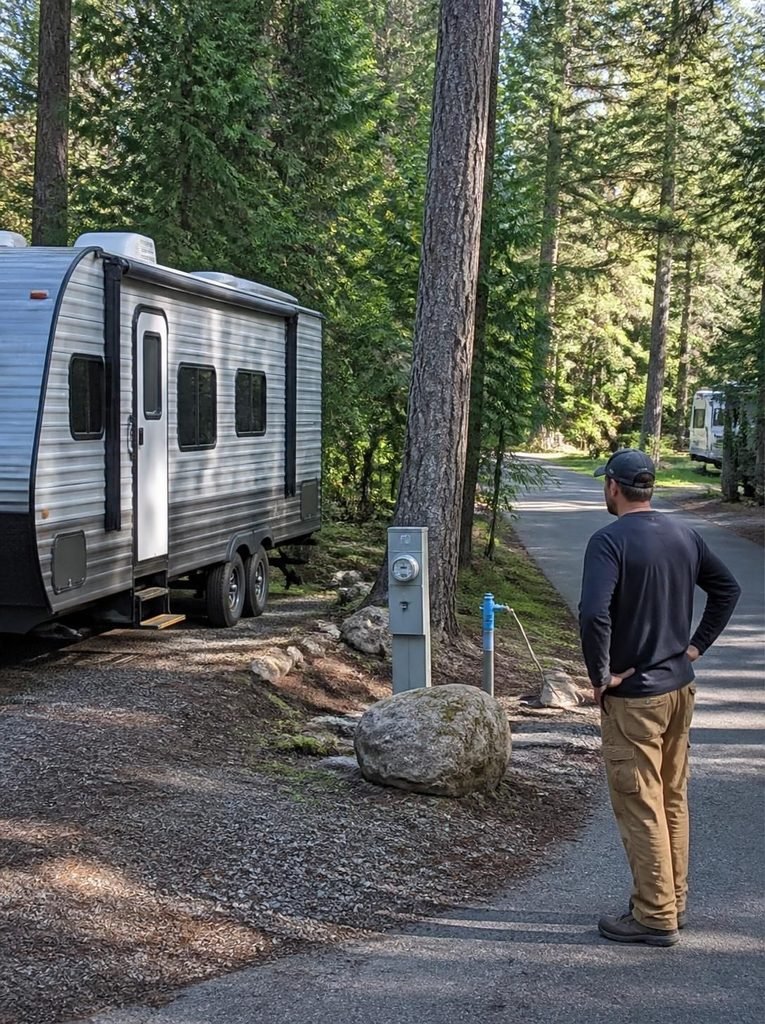
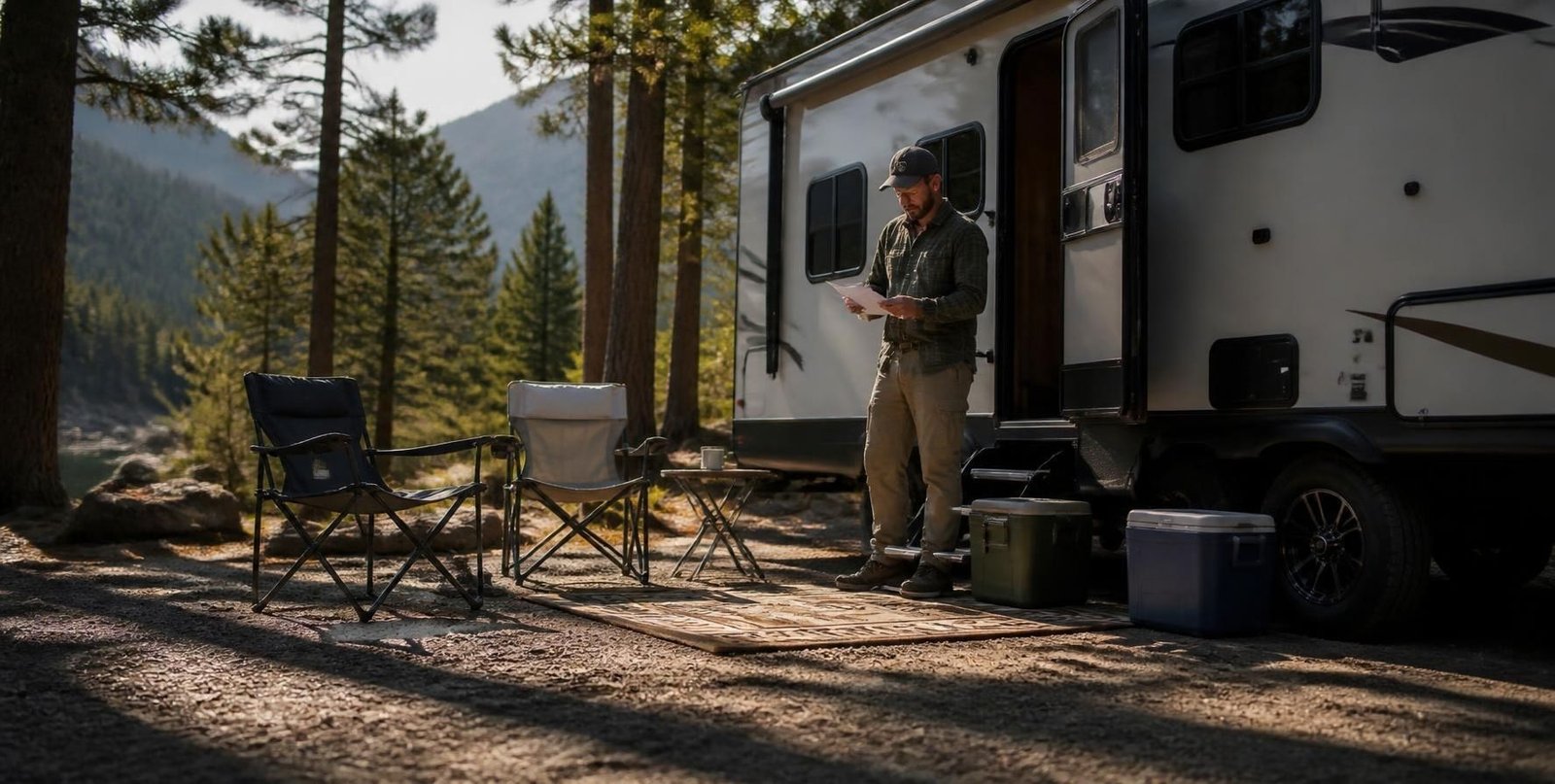
One mistake that can make an RV trip unnecessarily difficult is booking a campsite without checking what is actually included.
A beautiful campground is not automatically the right campground for your RV. Before making a reservation, I like to look at the site length, road access, hookups, dump station availability, campground rules, and the type of site being offered.
Electric hookups are especially important to understand. A campsite may have electricity available, but you still need to know whether it offers the connection your RV requires. The same applies to water and sewer hookups.
I also pay attention to the site itself. Is it level? Is there enough room to open the slide outs? Can you comfortably maneuver into the space? Are there low tree branches or narrow roads that could create problems?
Reading recent campground reviews can help too. Photos on a booking website do not always tell you what the site feels like when you arrive.
For beginners, I recommend choosing a campsite that gives you a little extra room to work with rather than trying to squeeze into the smallest site available just to save a few dollars.
A few minutes of research before booking can make the arrival process much easier.
5. Forgetting to Practice Driving and Parking
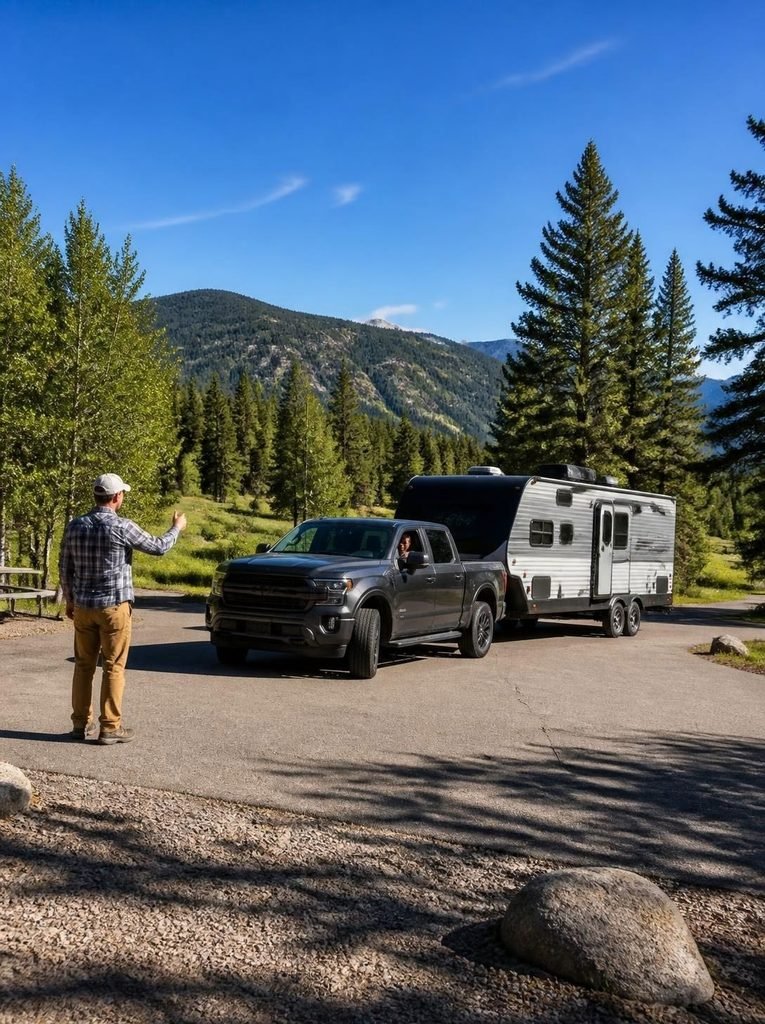
Driving an RV takes a different approach from driving a regular car.
The extra length, height, width, and weight can change how you approach turns, narrow roads, parking areas, fuel stations, and campsites. If you are towing a trailer, backing up adds another skill that takes practice.
I would not recommend making your first serious parking attempt at a busy campground with other RVers waiting behind you.
Find an open parking lot or another safe area where you have plenty of space. Practice turning, stopping, reversing, judging the corners, and using your mirrors.
If you are towing, spend time learning how the trailer responds when you turn the steering wheel. Practice backing up slowly and get comfortable making small corrections instead of large ones.
Having a second person outside the RV can also make parking much easier. Agree on simple signals before you start so you both know what each movement means.
One thing that helped me was slowing everything down. There is no prize for parking quickly.
Take your time, get out and look when you are unsure, and do not feel pressured because another vehicle is waiting.
A few practice sessions can make a huge difference in your confidence.
6. Not Understanding RV Water and Waste Tanks
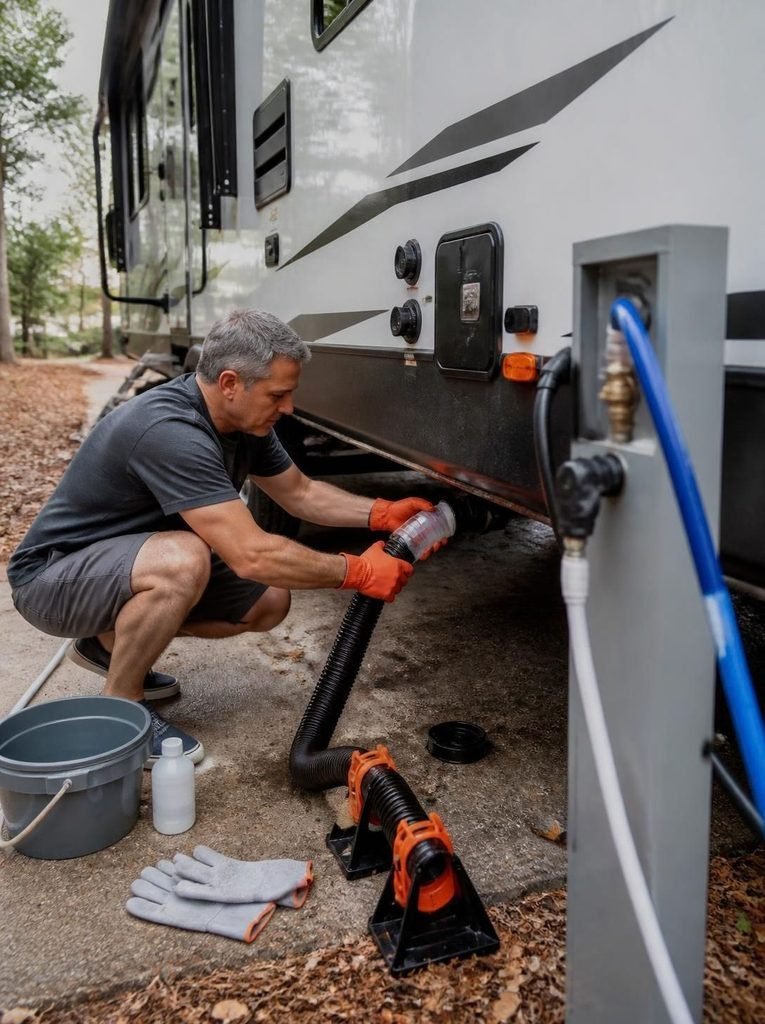
The water and waste systems are some of the biggest differences between RV travel and staying in a traditional home or hotel.
New RVers sometimes assume they can use water exactly as they would at home. Your RV has limited freshwater capacity, and the gray and black tanks also have limited capacity.
Learning how those tanks work before your trip makes RV life much easier.
Freshwater is what you use for your RV’s water supply when you are not connected directly to a campground water source. Gray water generally comes from sinks and the shower, while the black tank holds waste from the toilet.
Knowing the capacity of your tanks gives you a better idea of how long you can comfortably stay without a full hookup.
I also learned that it helps to pay attention to how quickly the tanks are filling rather than waiting until there is an obvious problem.
Water conservation can make a big difference. Shorter showers, turning off the water while brushing your teeth, and being mindful of how much water you are using in the kitchen can extend your time between dump stations.
Waste tank care is equally important. Follow the manufacturer’s instructions for your RV and use products that are specifically designed for RV waste systems.
One habit I strongly recommend is knowing where the nearest dump station is before you actually need one. When a tank is getting full, you do not want to start searching for a suitable location at the last minute.
Once you understand your RV’s water and waste system, it becomes much less intimidating.
7. Planning an RV Trip Like a Regular Road Trip
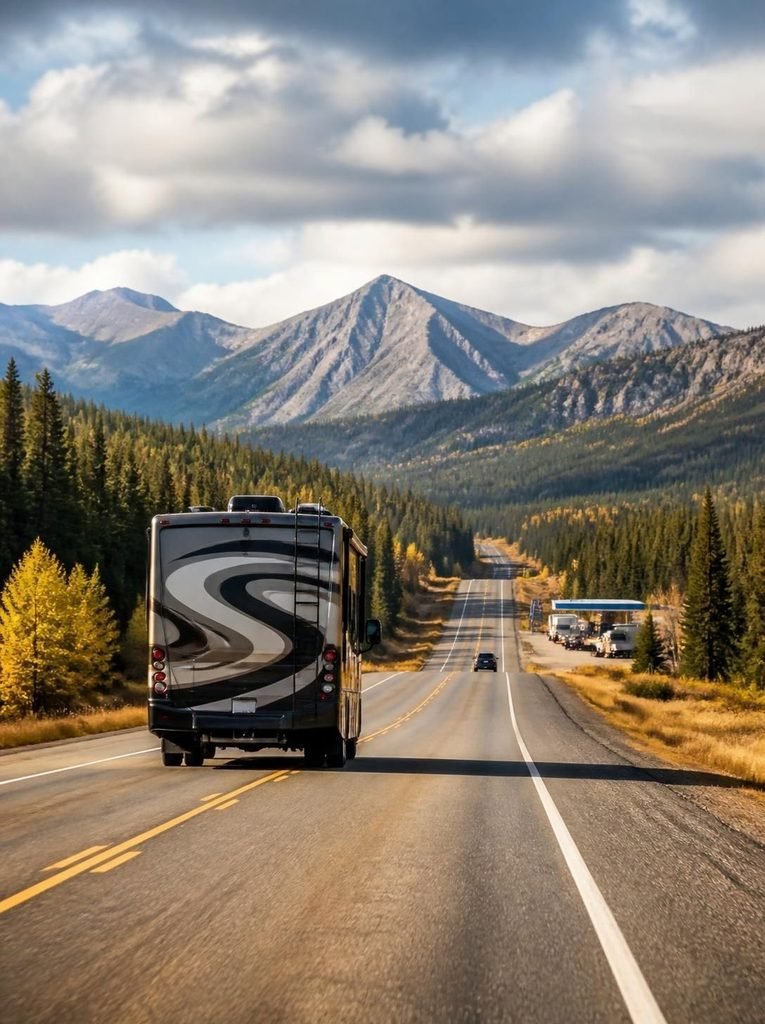
A regular road trip and an RV road trip can look similar on a map, but they do not always work the same way in practice.
An RV generally takes longer to maneuver, fuel, park, and settle into a campsite. Depending on the size of your rig, certain roads, bridges, tunnels, parking lots, and fuel stations may also be difficult or unsuitable.
I learned to stop planning my RV trips around distance alone.
Instead of thinking, “I only have 300 miles to drive,” I consider how many hours I realistically want to spend behind the wheel, where I can stop, where I can refuel, and whether I have enough time to arrive at the campground before dark.
Fuel stops deserve more thought too. I prefer checking ahead for stations that are easy to enter and exit rather than waiting until the fuel gauge is almost empty.
Navigation is another area where extra attention helps. A standard navigation app may give you a route that works perfectly for a car but is not appropriate for a large RV or a vehicle towing a trailer.
Check your route before leaving and pay attention to restrictions that could affect your particular setup.
I also try not to pack every travel day with activities. Arriving at a campsite, leveling the RV, connecting the hookups, organizing the inside, and preparing dinner can take more time than expected.
Leaving some breathing room in the itinerary makes RV travel much more enjoyable.
You do not need to reach every destination as quickly as possible. One of the best parts of RV travel is having enough time to enjoy the journey instead of turning every driving day into a race.
8. Ignoring the Weather and Road Conditions
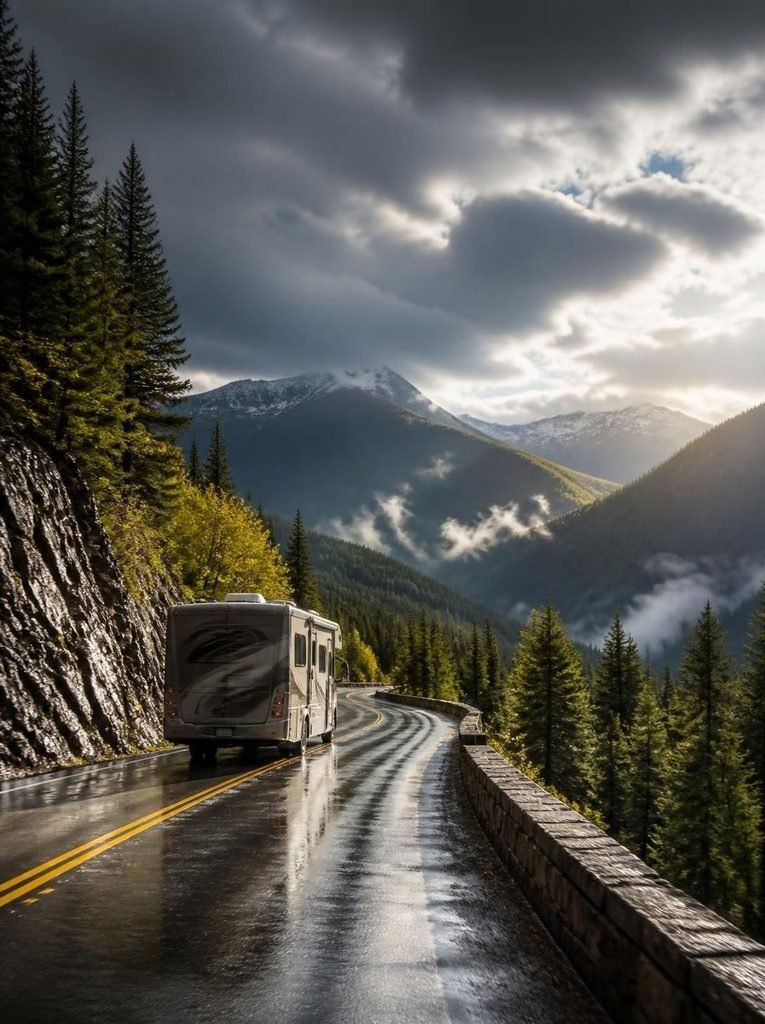
Weather can change an RV trip very quickly, especially when you are traveling long distances or visiting unfamiliar areas.
I have learned that checking the forecast should be part of trip preparation rather than something I do only after arriving. Strong winds, heavy rain, snow, extreme heat, and storms can all affect how comfortable and safe an RV trip will be.
Wind deserves particular attention if you are towing a trailer. A large RV or trailer has a lot of surface area, so strong crosswinds can make driving more difficult.
Before leaving, check the weather along your entire route instead of looking only at the forecast for your destination. Conditions can be completely different several hours into the drive.
I also pay attention to road conditions and potential closures when traveling through mountain areas or during severe weather.
If conditions become unsafe, changing your plans is usually better than trying to push through simply because you already have a reservation.
Having a flexible itinerary helps with this. You may have to arrive later, stay somewhere overnight, or change your route, but protecting your safety is more important than sticking perfectly to the original schedule.
9. Forgetting That RV Maintenance Is Part of RV Travel
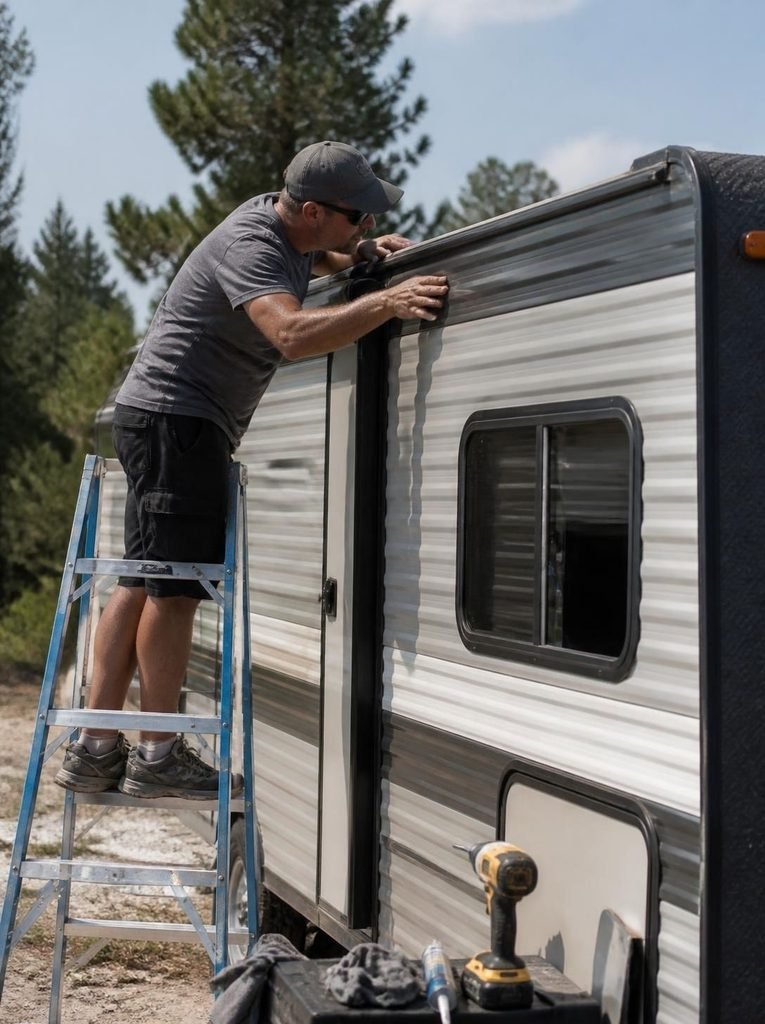
An RV needs regular attention, even when it is sitting in the driveway.
New owners can easily focus on the fun parts of RVing and forget about maintenance until something stops working. Unfortunately, problems with tires, batteries, seals, plumbing, appliances, or other equipment can become much more expensive when they are ignored.
Tires deserve particular attention. Check their condition and pressure regularly and make sure you understand the recommended specifications for your RV.
I also recommend checking the roof and exterior seals periodically. Water damage can become a serious problem if a small leak goes unnoticed.
Batteries, fluids, lights, brakes, awnings, slide outs, and other components should also be part of your regular maintenance routine according to your RV manufacturer’s recommendations.
Keeping a simple maintenance record makes this easier. Write down when you inspect or service important components so you do not have to remember everything from memory.
I have found that preventative maintenance is much less stressful than dealing with an unexpected repair during a trip.
It is also worth learning which jobs you can safely handle yourself and which ones should be left to a qualified RV technician. Saving money is useful, but knowing your limits can save you from creating a much bigger problem.
10. Trying to Make Every RV Trip Perfect
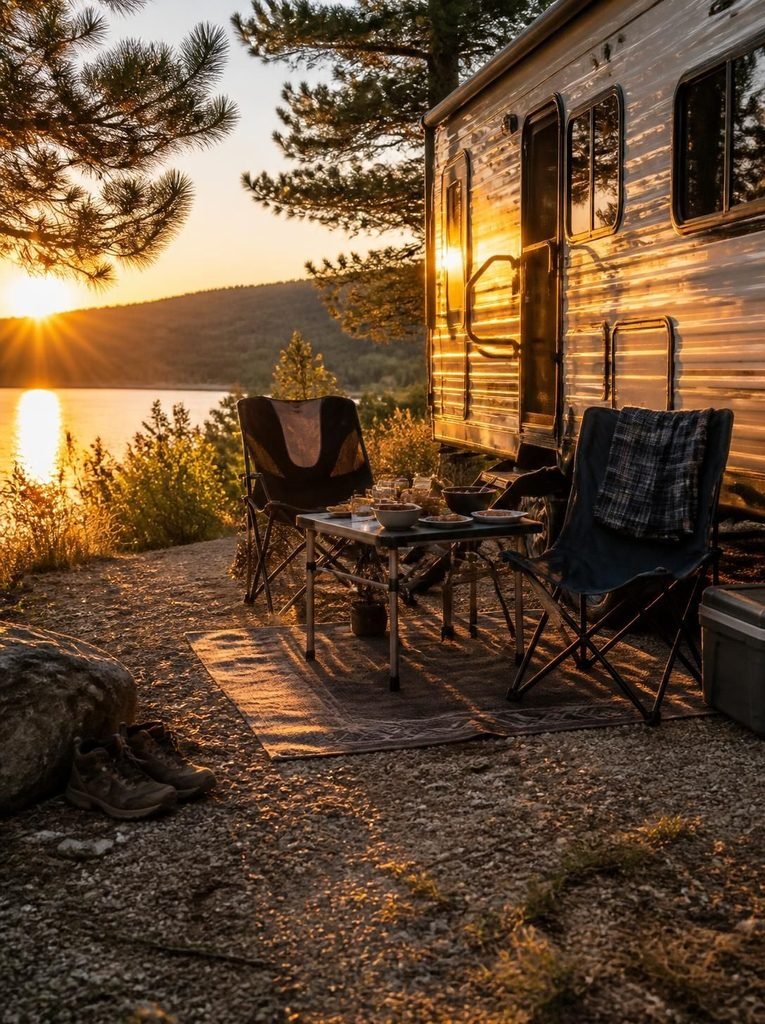
This might sound like a strange mistake to include on an RV list, but trying to make every trip perfect can take a lot of the enjoyment out of RV travel.
You can plan the route carefully, inspect the RV, check the weather, reserve a great campsite, and still have something unexpected happen.
A campsite might not look exactly like the photos. A hookup might be in an awkward location. Traffic could make you late. Something inside the RV might stop working. You might even discover that the activity you planned all week is not as enjoyable as you expected.
That is part of RV travel.
I have found that the best trips are usually the ones where I leave enough room for things to change. A flexible schedule makes it easier to deal with delays and gives you the freedom to stay longer somewhere you really enjoy.
It also helps to remember that every mistake teaches you something about your RV and your travel style.
Maybe you discover that you packed too much. Maybe you learn that you prefer full hookup campsites. Maybe you realize that driving four or five hours in one day is plenty for you.
Those lessons make the next trip easier.
RVing becomes much more enjoyable when you stop trying to do everything exactly right and start building a routine that works for you.
A Simple Newbie RV Checklist
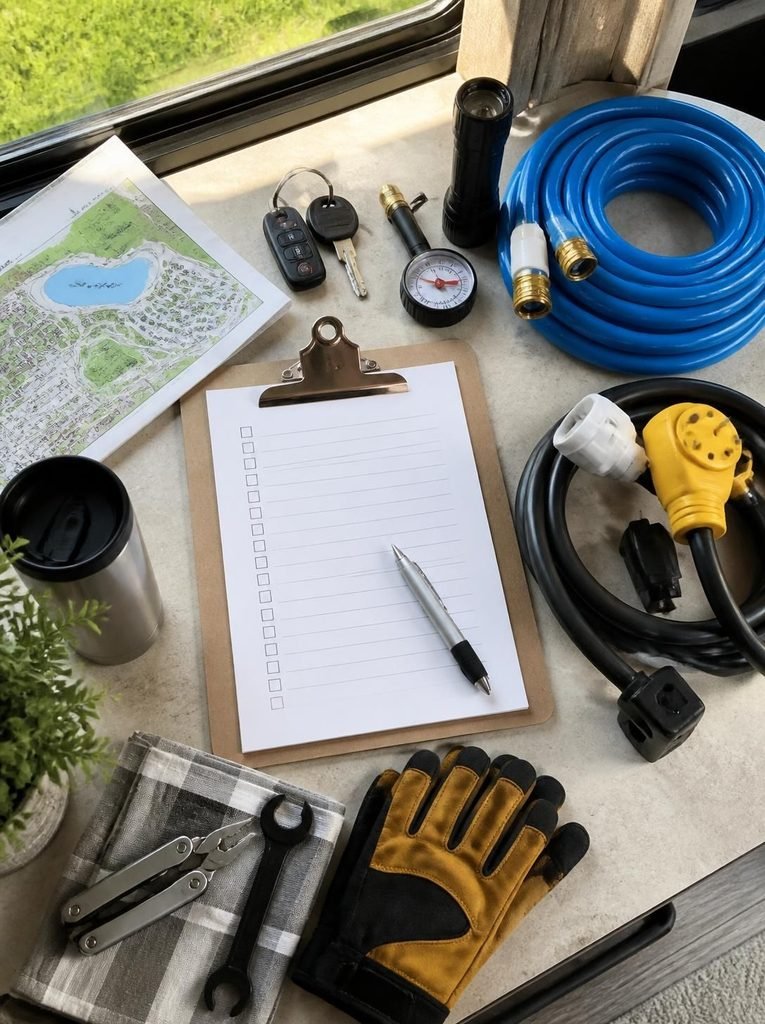
Before leaving for your next RV trip, take a few minutes to run through the basics.
Check your tires and tire pressure.
Make sure the hitch and towing connections are secure if you are pulling a trailer.
Check your lights and turn signals.
Secure cabinets, doors, appliances, and loose items inside the RV.
Confirm that your water, electrical, and waste systems are ready for the type of campsite you are visiting.
Check the weather and road conditions along your route.
Make sure you know where you plan to fuel.
Review your campground reservation and confirm the site can accommodate your RV.
Keep important RV documents and emergency supplies accessible.
Give yourself enough time to arrive, set up, and get comfortable without rushing.
Final Thoughts
RV travel gets much easier once you stop expecting yourself to know everything immediately.
The most useful lessons usually come from paying attention to what worked, what caused unnecessary stress, and what you would do differently the next time. That is how you develop an RV routine that feels natural instead of constantly having to figure everything out from scratch.
The biggest beginner mistakes are rarely complicated. They usually come down to rushing, overpacking, skipping inspections, failing to understand the RV’s systems, or planning a trip without leaving enough room for the unexpected.
Take your time, learn your RV before taking on ambitious trips, and give yourself permission to learn as you go.
You do not need to be an RV expert to have a great trip. You just need to prepare well, pay attention, and stay flexible when things do not go exactly according to plan.